
Beltane Moon of the Summer Solstice
 Reimagining Faith has been a project of mine since I slipped out of the Unitarian Universalist world leaving behind both Christianity and liberal religion, the first too narrow in its theology, the second too thin a broth. The stimulation for the project lay first in a decision I made to focus on my Celtic heritage for the writing I wanted to do. This commitment led me to the Great Wheel of the Year and its manifestation literally took root in the work Kate and I did at our Andover home.
When we bought the house there, it sat on a lot with the usual scraped earth look of new home construction. It had no lawn, no trees in front, no soil adequate for growing flowers. We hired a landscape architect and added several thousand dollars to the mortgage for his work which included retaining walls, perennial beds, wild prairie on two sides of our house and tiered perennial beds in the back with a patio at their bottom. Our goal was to enjoy the landscaping throughout the time we owned the house. And we did.
 In retrospect our request to him to make it all as low maintenance as possible seems laughable. He did as we wanted, putting in such sturdy plants as Stella D’oro, a species of daylily, shrubs, a bur oak and a Norwegian pine, some amur maples, a hardy brand of shrub rose, juniper, yew, a magnolia that Kate wanted, and a river birch. This work included an in-ground irrigation system and the very strange experience of having no lawn until one morning when the sod people came and rolled it out. Then we had a lawn that evening.
 We looked at it, saw that it was good and thought we were done. Ha. It began with a desire for flowers. I wanted to have fresh flowers available throughout the growing season, so I studied perennials. At that time I thought I was still holding to the low maintenance idea. I would plant perennials that would bloom throughout the Minnesota growing season, roughly May 15 to September 15, go out occasionally and cut the blooms, put them in a vase, repeat until frost killed them all back. Then, the next year the perennials would return and the process would recur. Easy, right?
No. Gardens are alive. They are dynamic. Species of flowers have very different horticultural needs. Some, like the spring ephemerals, grow early to avoid the shade of leafed out trees and shrubs. Some, like bleeding hearts and hosta, require shade. Others, like iris, a particular favorite of Kate, need an application of a pesticide to eliminate iris borers. Others, like tulips, wear out in the harsh weather cycles common to Minnesota. Trees planted around the beds grow, too, changing the sun and shade areas from year to year. Soil gets depleted as plants take nutrients from it to fuel their growth. Different flowers require different sorts of soil, too.
 Once this world opened up to us, we began to enjoy working with all these variables to create beauty around our home. Gardening for flowers, eh? Well, how about some vegetables. This led to a two-year project of cutting down thorny black locust, chipping the branches, then hiring a stump grinder. After this was done, Jon built us several raised beds. We filled them with good soil and compost. Tomatoes, potatoes, beans, garlic, leeks, onions, carrots, beets flourished. Vegetables, eh? Why not fruit and nuts?
 Ecological Gardens came in with permaculture principles and added apple trees, plums, cherry trees, pears, currants, gooseberry bushes, blueberry bushes and hawthorns. On the vegetable garden site they added raspberries, a sun trap for tomatoes, and an herb spiral. At that point then we were maintaining multiple perennial flower beds, several vegetable beds, fruit trees and the bees that I had started keeping.
We did later add a firepit and picnic area, but those were the main horticultural efforts. This was a twenty year long immersion in plants and their needs, the way the seasons affected them and our human responsibility for their care.
 When I stepped away from the Presbyterian ministry after marrying Kate, the Celtic pagan faith reflected in the Great Wheel began to inform my theological bent more and more. What was to come in the place of the Christian path? Perhaps it was a way of understanding our human journey, our pilgrimage as part of the planet on which we live rather than as separate from it or dominate over it.
Wicca, though, and the various neo-pagan movements seemed thin to me, not without merit as earth-based faiths, but often filled with gimcrackery and geegaws rather than guidance for the next phase of human existence here. I began to wonder about an ur-faith, a way of believing, of being religious, that could exist alongside, even below the other faith traditions, some path that could put us back in the natural world (from which we have never actually removed ourselves) and in so doing undergird the kind of compassion for our planet that might save humanity.
This is the concept behind reimagining faith. Is it possible to create a framework for an earth-based faith that respects science, yet offers ritual and private contemplative practices? What would a book look like that attempts to create a theology, conceptual scaffolding for such a faith? I got this far a while ago. But something has stopped me from moving forward. This post is about poking myself to move forward.
 I have finished 7 novels and am nearing completion of an 8th. So I can work on a long term project and see it through to completion. I’ve also been part of creating several organizations still in existence in Minnesota, among them MICAH, Jobs Now, and The Minnesota Council of NonProfits (originally the Philanthropy Project). These, too, are long term efforts that I helped see to completion.
Over time I’ve also worked with several other institutions in various roles that lasted for years: the Sierra Club, the Minneapolis Institute of Arts, Citizens for a Loring Park Community, the Stevens Square Community Organization, the West Bank PAC and the West Bank Community Development Corporation, not to mention the Presbyterian Church and the Unitarian-Universalists.
 I’ve had less persistence in my two non-fiction writing projects: an ecological history of Lake Superior and Reimagining Faith. Not sure why. Getting started on the research and idea end was not a problem, I have file folders, bookshelves, posts here on Ancientrails and various sketches for outlines. But I’ve never sustained the push to finish.
My now year long immersion in Reconstructionist Judaism, studying first mussar (ethics) and now kabbalah, has caused several sparks to go off for the Reimagining Faith work. I’m beginning to feel the urge to commit substantial writing time, thinking time to this project. What I’d like to do is produce a book that would lay out the skeleton and put some flesh on it. At that point I’d like Reimagining to become a collaborative project with whomever feels an attraction to it.
So let be it said, so let it be done. Yul Brynner, the Ten Commandments.
 I guess it’s time to admit it. I’m a deeply religious guy, whatever that means. It means at least that I find religion and religions fascinating, personally transformative. I have approached religion since high school with a mixture of deep skepticism and a willingness, no, a need to rethink, refeel, reexperience what I’m told.
 Since that day until now my ancientrail has always wound its circuitous path back to the big questions. I’ve explored Christianity, Islam, now Judaism, Taoism, existentialism, various spiritual disciplines like lectio divina, meditation, morning and evening prayers, contemplative prayer, even some modest peaks into Tibetan buddhism occasioned by my friendship with Gyatsho Tshering. Though I am now and have been for a while an idiosyncratic version of Taoist/pagan, I’m finding the Reconstructionist path in Judaism a surprisingly familiar one.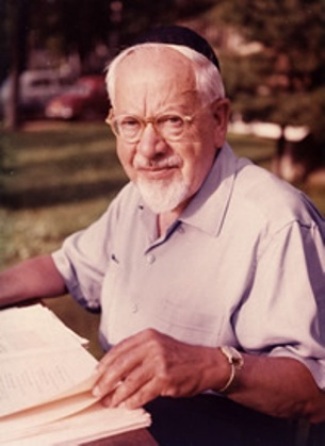
 Still working on how I will lead our mussar class next week. It’s been hard for me, mildly anxiety producing. First, I don’t have the depth, any really, in Jewish thought. The
  Thirdly, the whole Jewish immersion experience I’m having at Beth Evergreen is like learning a new language. I have some words and a very limited amount of grammar. I don’t want my naivete getting in the way of other’s learning.
 Kate and I sponsored the oneg last night at Beth Evergreen. Oneg means delight and in this use it’s a modest event after the sabbath service. It involves the kiddush prayer over wine, the passing of challah (a ceremony not coincidentally similar to the Christian eucharist) and having some sweets or other snacks. It’s similar to coffee after a Christian or U.U. service, but different in one significant regard. The Jewish sabbath, as a day of rest and renewal has a focus on good food and general delight, so the oneg both is that ideal and reinforces the larger sabbath ethos.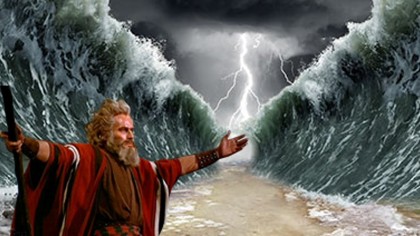
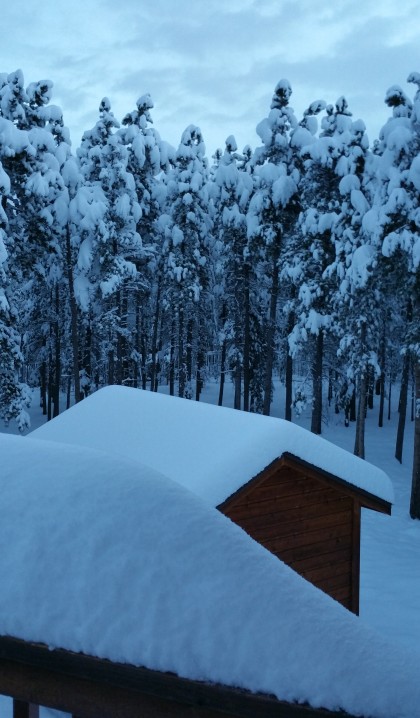 White and gray. The 18 inches or so of snow lies thick on our roof, solar panels hidden from our star. That unusual characteristic of snow to move upwards with the shape of an obstacle like a fence post, a statue, mailbox, or birdbath has created several objects in our yard with white caps reaching skyward, simulacrums in snow of the surface beneath them.
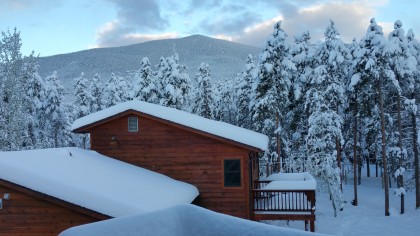 The storm seems to have quieted overnight. No snow falls now. The sun, already well up over Denver, has begun to light the clouds over Black Mountain, accentuating the blue sky. The whiteness of the scene from my loft window seems to impose a silence borne of the color itself, soundlessness corresponding to the fresh, but otherwise colorless, snow. Along with the silence comes a profound stillness, as if for the moment nothing moves. Perhaps the mountain lion has retreated to its den, the bear to its former place of hibernation, the mule deer and elk bedded down among the willows and dogwood out of the wind.
 Our next Sierra Club meeting will be on June 19th, one day before the summer solstice. Sierra Club work is paganism stripped bare of its mythic content. There is passion for sure, but not the poetry, no ritual, no inner work. It’s all outer work: hike, lobby, analyze, network, persuade. We may, for example, show the next Al Gore movie, Inconvenient Sequel: Truth to Power. See trailer below.*
 Somehow I need to find a way for my inner work to imbue my outer work. Todd, a long-time member of the Mt. Evan’s local group to which I belong, talked about a hike he took yesterday in Reynold’s Park. He named a particular orchid that he found and his face lit up. “A bullsnake, too.” It may be that these folks, tied to the very local region encompassed by our borders, find their inner work in being on the trail, hiking Mt. Bierstadt, taking the Mt. Evan’s road, helping clear trail.
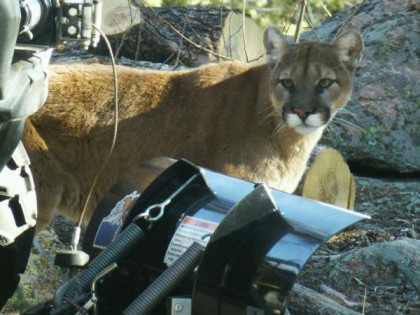 This morning I fed the dogs as I usually do, but I left them inside, no longer willing to risk a mountain lion attack. Mountain lions add frisson to life in the Front Range Rockies. It’s similar to driving in well below zero weather.
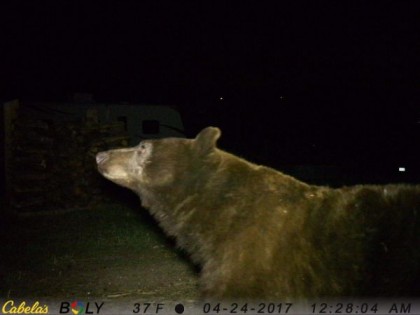 Mountain lions and bears, oh my, are not the only fauna here that can hurt you. At lower elevations there are timber rattlers. There are also black widow and brown recluse spiders, all venomous enough to cause great harm. In these hills we find not the sound of music, but the shake of a snake’s tail. Julie Andrews might not skip so blithely here.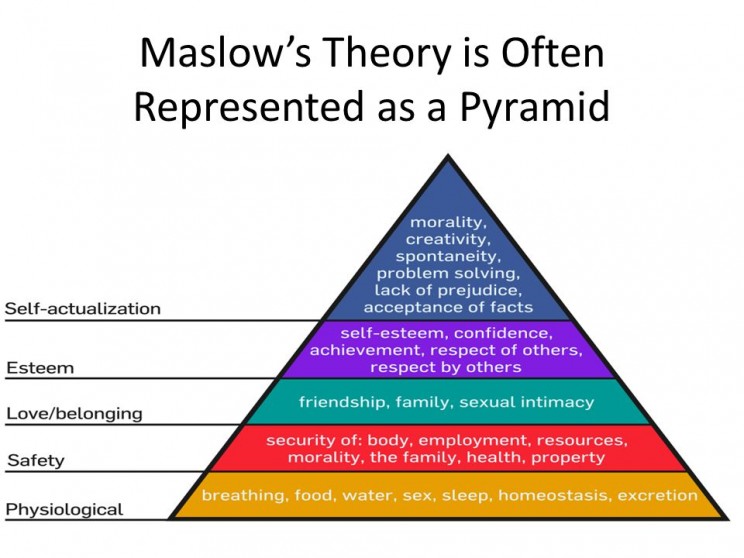
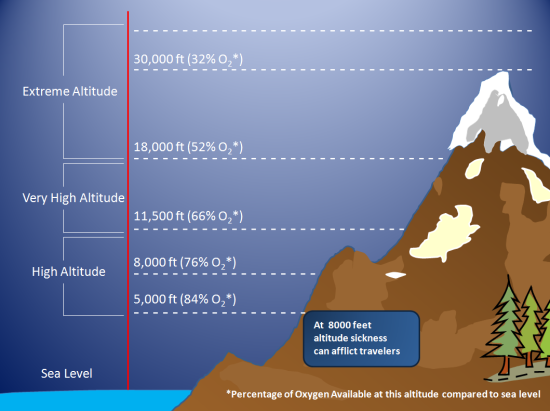 So. Because physics. No black tea up here, at least not at a proper temperature. Thanks Tom and Bill for your help. When you relieve the pressure, the water reverts to the pressure of the air and the temp goes down as it does. Sigh.
 Went into Kate’s hairstylist with her yesterday and got my ears waxed. Jackie put hot wax on my ears, then pulled it off, removing those hairs that seemed to follow receipt of my Medicare card. This is my second time. She says if we do this often enough, the follicles will not push up hair. I mean, hair on the ears is so last iteration of our species.
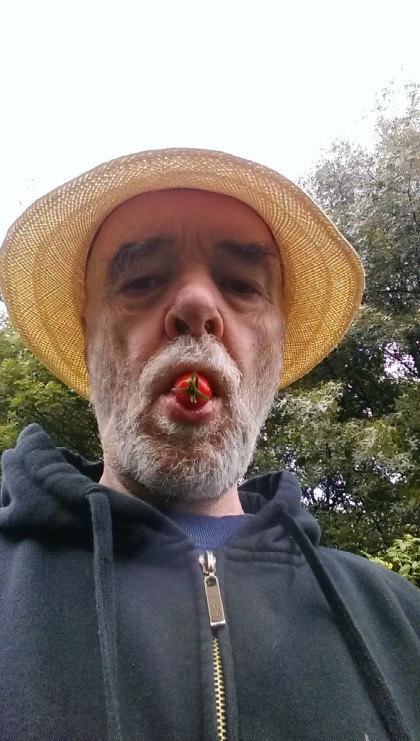 Planted a tomato plant yesterday in a five-gallon plastic bucket. When I opened the bag of garden soil (we don’t have anything a Midwesterner would recognize as soil), the smell of the earth almost made me cry. I miss working in soil, growing plants and my body told me so. A greenhouse went up higher on the priority list.