Category Archives: Great Wheel

The Simple Life. Bah, Humbug

Samain                               Moon of the Winter Solstice

“Simplicity, simplicity, simplicity. I say let your affairs be as one, two, three and to a hundred or a thousand. We are happy in proportion to the things we can do without.” – Henry David Thoreau

(Walden Pond, 2010)

When I bought my farm up near Nevis, Minnesota, Thoreau and I would have been on the same page.  The Peaceable Kingdom had its own well, a septic system and heat provided by the forest I owned.  Of course, that year the simple life saw a divorce, the temperature hit -50 and a heavier yet reliance on beer and scotch.

Don’t get me wrong.  I think simplicity is a beautiful thing.  Then again, so is complexity.  If my body simplified itself, there wouldn’t be much me left.  If my consciousness simplified itself, the rest would slip away.

There will always be, of course, the few who take the Taoist monk approach, a life lived close to nature.  There will be, too, those folks who just find wilderness better company than the rest of us and who’s to say they’re wrong?

Me, though, I love samsara, this whole roiling, boiling mess we have for a place to live.  I love computers and television and movies and books, philosophical and political thought and action.  I love relationships, messy and unwieldy and complicated as they can be.  I love art, often complex and difficult.

I suppose this means I’ll never have a Walden experience or the insight of wandering through the Tao.  I’m ok with that.  If you need simplicity, then seek it, make it so.

As for me, give me complexity or give me, well, what?  Greater complexity.
 

Reimagine

Samain                          Moon of the Winter Solstice

Jon sent these two links.  Wish I’d had’em when I owned that farm up near Nevis, Minnesota.  I might still be up there, motoring around on some of these very clever inventions.  They show what an ingenious mind can do when rethinking what appear to be over and done with ideas.

http://opensourceecology.org/
http://www.ted.com/talks/lang/en/marcin_jakubowski.html

Makes me wonder what other ideas need a complete rethink.  Computers have followed a pretty standard architecture up to now, one based on a central processing unit.  I read an article in Scientific American last week about a neural computer which, in essence, gives each unit of a computer a cpu, allowing for massively parallel processing as an integral part of the design. It’s modeled on, but not attempting to replicate, the human brain.

How about housing?  Cars?  Or, my personal quest and long time obsession, religion?  The family?  Electrical generation?  I’m interested in distributed generation where a cul de sac or an apartment building or a couple of blocks city residential units might get their electricity from, say, a combination of wind, solar and geo-thermal units sited in their immediate vicinity.

Here’s another one that could use a complete overhaul, reimagining:  nations.  The nation state is a relatively new phenomenon, most experts date its rise somewhere around 1800, perhaps a hundred years earlier in the instance of Portugal and the Netherlands.  In the wake of the globalization of economic life national boundaries have much different meanings that they did, say, 50 years ago.

Let’s go back to religion for a second.  Over the last several years, 23 to be exact, I’ve wrestled with the hole left by Christianity in my life and sought to fill it through what I call a tactile spirituality, one wedded to the rhythms of the seasons, of flowers and vegetables, of bees.  This direction took its initial impetus from an immersion in Celtic lore while I sifted for writing topics.

Then, I began to follow the Great Wheel of the seasons, a Celtic sacred calendar focused on 8 seasons, rather than four.  That led me to integrate gardening with my sacred calendar.  In the wake of these two changes in my life, I began to see the vegetative and wild natural world as more than tools for food or leisure, rather I began to see that they were my home, that I lived with them and in them, rather than having them as adjuncts to my anthropocentric life.

This whole change, this rethink of what sacred and holy mean, what the locus of my spirituality is and where it is, has had a long maturation, much thought and experimentation.  My hope is that my reimagining might provide a common religious base, a sort of ur-religion, which all humans everywhere can embrace.

As in times past this base religion could certainly have others layered on top of it, its essence after all is to be non-exclusive.  What I hope further is that reasserting, inviting, even luring others to see the sacred and the holy in our planet and its other living beings, they will be more likely to join in to see it healthy and vital.

Oh. Yeah.

Samain                           Moon of the Winter Solstice

We have entered my favorite season of the year, the slow slide toward the Winter Solstice, the longest night of the year.  Cue Robert Frost.

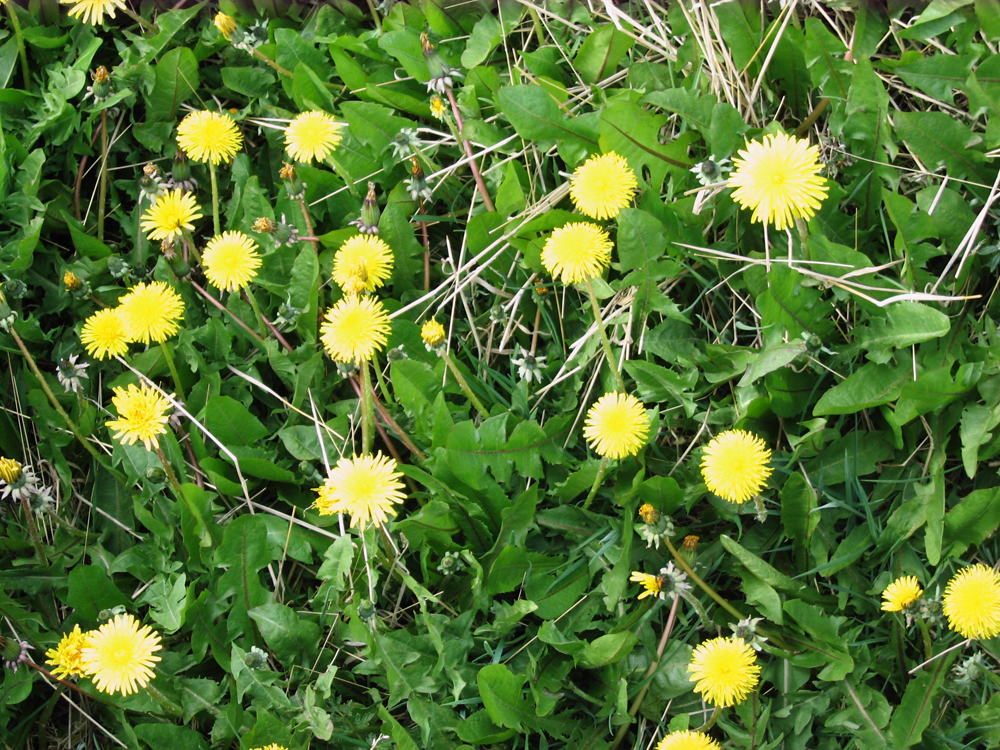
(Dandelions at Lapatia Bay, Kate)

In Ushuaia the sun did not set until 9:30 pm.  Here it sets at 4:30.  As we traveled south along the west coast of South America, the days grew longer and longer.  The evening I went into Ushuaia to have supper, it was 8:00 pm and still quite light.  People strolled the streets, window shopping, holding hands, glancing here and there at other walkers.

They’re headed for a date with December 21st as well, but for them it will be the summer solstice and the longest day of the year.  I knew this intellectually, but it was the little things, like taking pictures of the dandelions at Lapatia Bay, the southernmost harbor of Tierra del Fuego, that pressed its reality into my experience.  Let’s see.  Dandelions here.  Leafless trees at home.  Spring.  Autumn.  Oh. Yeah.


A Year of Two Springs

Fall                                                  Full Autumn Moon

A cool rain and a chilly fall evening with wet gold stuck to the bricks and asphalt, a low cloud cover and darkening twilight skies.

Though ready to travel there is a sadness in missing the rest of fall, the transition from this still part summer, part cooler season time to the bleaker, barren time of November.  It is a favorite season, the continuing turn toward the Winter Solstice.

We will leave it behind, first for the warmer, much warmer Western Caribbean, then sweaty Panama and hot Ecuador.  As we move south, we move into spring with milder temperatures, then, in southern Chile among the fjords and glaciers and around Cape Horn, the southern equivalent of the far north, where temperatures will be cooler.  So, for us, 2011 will be a year of two springs.

And, a shortened fall.

Meanwhile, Mark in Ha’il, Saudi Arabia faces 97 as a typical daytime high.  Gotta wonder what global warming has in store for the desert kingdom.  Sort of the old petrocarbons coming home to roost.

Making Pot Pies

Fall                                                       Waxing Autumn Moon

We had our final straight from the garden meal last night.  Roasted potatoes, onions, fennel, carrots and a lone beet.  Raspberries for dessert.  Marinated chicken for protein, not from here.

Today I cut up the leeks, cooked some chicken breasts, carrots, celery, peas and corn (none of these ours), and cooked the leeks in salt water for five minutes.  After shredding the chicken, a roux thickened the broth with the vegetables.  The shredded chicken went in the pie crust, then the leeks (our own), and after that the thickened broth and vegetables.

A rolled out pie crust for a top to the pies and they went in the oven.  4 chicken/leek pot pies, frozen now, treats we can have when we get back from South America along with raspberry pie.

Had an aha about our garden while cutting up the leeks.  We’re not feeding ourselves in any significant way with our garden, though we do eat several meals a year with our own produce and fruit.  What we can grow, and the leeks, garlic, heirloom tomatoes and heirloom potatoes are good examples, are specialty vegetables that, even if we wanted them, probably wouldn’t be available and would certainly not be available fresh from the garden.

We preserve tomatoes, store potatoes and onions, garlic and honey.  Kate makes currant jam and wild grape jelly.  We have raspberry pies frozen and now the chicken/leek pot pies.  We also freeze chard and spinach.  Our garden supplements our diet in ways that would not be possible without it.

It also gives us a joint project, a place we can work together, while keeping us in touch with the Great Wheel and the ways of the vegetative world.  We get a lot from our garden.

A Changeable Month

Fall                                                Waxing Autumn Moon

A warm fall night, a clear sky, a half moon high above it all.  The moon roof open on the Celica.  October in Minnesota.  A changeable month.

The Sierra Club set its legislative priorities tonight, though with this particular legislature a good deal, most, of our work will be defensive in nature.

Today saw final touches on my tour of ancient art for a group of Somali teens.  I did not know that Somalia was, most likely, the ancient land of Punt.  It covers the Horn of Africa like a cap, hugging the coastline north and south while extending in toward the interior.  Piracy is not a new activity here in this country positioned close to major shipping lanes for centuries.

Did some editing on Spiritual Resources for Humanists, or With No God, and found it could use some rewriting. I’ll get to that Friday or Saturday.


Partners and Co-Creators

Fall                                                       Waning Harvest Moon

Went out and picked raspberries for pancakes this morning.  With a definite chill in the air the garden felt different, a bit sleepy, ready to bed down for the cold season.  After a month or so of feeling burdened by it, wanting it to disappear, my spring affection reappeared.  This patch of earth, these beds, work together with the plant world and Kate and me.  We share a joint stewardship of this property, each in our way committed to making it healthy, beautiful and bountiful.

The soil has given of its nutrients, its water holding capacity, its sturdiness as a base for roots and stems.  The plants have combined the chemicals of the soil with that water and pushed themselves up and out of the earth, then blossomed and in many cases fruited.  Kate and I weed, tend the soil, watch the plants, picking bugs off of them, pruning, replanting.  We also harvest and, when the harvest ends, we replenish the soil with composted manure and mulch.

When we use the plants and their produce, we take the leaves and stems and other unwanted parts and put them in a compost bin to return to the soil.

This complicated working partnership among many different parties here is, in microcosm, the partnership we humans have with the natural world and the world of soils, air, water and sunshine.  It’s significant to note that the one unnecessary party to this the work is the human race.

Plants will grow.  Rain will fall.  The sun will shine.  Soils will improve.  Fruits and vegetables will be made and distributed, all whether humans enter in or not.  We exist only as part of a richly integrated chain of being and we exist as its wards, not benefactors.

We do have the capacity to intervene, but too often, far too often, when we do intervene, we disrupt what nature does willingly and foul the process, in the end harming ourselves.

I wish our gardens and our orchard were more than supplements to our diet, but that is all they are, to be otherwise would require a commitment to the work I no longer feel able or willing to give.  Even so, as a supplement, this growing of flowers, potatoes, tomatoes, beets, carrots, leeks, beans, onions, lettuce, chard, spinach and peas, this caring for bees and harvesting honey, does keep us intimately engaged as partners with the natural world, a partnership so often hidden from view in this, the most capitalistic of all possible worlds.

Fall Equinox

Fall                                                     Waning Harvest Moon

Meteorological fall begins on September 1st, but the ritual calendar of many earth focused traditions places the beginning of fall at the moment when the sun’s equator and the earth’s align, the earth, just for a moment, losing its tilt relative to the sun.  This means we are half way through a cycle that began in June on the Summer Solstice and will end in December on the Winter Solstice.

Here’s an explanation from Wikipedia:  “In the half year centered on the June solstice, the Sun rises and sets towards the north, which means longer days with shorter nights for the Northern Hemisphere and shorter days with longer nights for the Southern Hemisphere. In the half year centered on the December solstice, the Sun rises and sets towards the south and the durations of day and night are reversed. Also on the day of an equinox, the Sun rises everywhere on Earth (except the Poles) at 06:00 in the morning and sets at 18:00 in the evening (local time).”

What are the marks of autumn for you?  Is it the return to school, the burst of energy, enthusiasm that comes from strapping on the cultural expectations of our youth?  Or, are the leaves changing, the senescence in the plant world a key moment for you?  Perhaps the chill winds and cool nights, the clear night skies.  For some it could be the nearing of deer hunting, or the start up of the NFL and the college football seasons.  Some find the gradual slide into darkness a time of increasing depression, the beginnings of Seasonal Affective Disorder.

Whatever marks this change for you it comes along with the seasonal ones; changes marked by decreasing solar energy per square foot and the attendant cooling.

This is the second of the three harvest festivals in the Celtic calendar, the first happening on August 1st, Lughnasa, and the final harvest festival marking Summer’s End, Samhain, on October 30th.  This was an other occasion for a market fair, settling of debts and entering into contracts.

Seasonal Pilgrimage

Fall                                           Waning Harvest Moon

Each turn of the Celtic seasonal calendar I find ideas, personal reflections, astronomical or traditional lore to pass along.

This time I’ll pass along one from Waverly Fitzgerald who maintains a website, living in season.

She suggests a seasonal pilgrimage, a visit each turn of the year to a place that, for you, embodies the energies and essence of the new season.  This recommendation struck me because I have a place myself, next to the Carlos Avery Wildlife Refuge, the Bootlake Scientific and Natural Area.

To get to my sacred area I walk back through a field, it formerly held a house, now gone, traverse a crescent of young oak and birch to emerge in a circular meadow filled with furze.  Across the furze and to the northwest is a path back into the woods, not long, that takes me to a parcel of land between a pond on the south and the marshy edge of Bootlake on the north.

On this land between the waters stands an old growth white pine, a white pine with a crooked top, probably the main trunk broke off in a storm or lightning strike and a secondary branch took over, but at an angle from the main.  My guess is that this deformity allowed the old giant to survive the woodsman’s axe.

In a ring around this older tree are its offspring, a small grove of younger white pines who now stand sentinel around their older parent, a conversation now lasting at least a hundred years of more.

A portion of Tully’s ashes came with me one day.  I scattered them around the base of the tree, then sat down with my back to its trunk, snugged in between two great roots while I gave thanks for this Irish Wolfhound who had taken a special place in my heart.

At other times, often on New Year’s Day, I have visited this sacred grove, the air often below zero, snow crunching, black crows watching me from high atop leafless oak.

This small place, away from the city and the suburbs, a place intact, has been a refuge for me for over twenty years.  I visit it still, though less in the last few years.  It’s time to return.


Changes

Lughnasa                                                  Waning Harvest Moon

May I present Autumn?  It comes to us in russets and golds, grays and rain, with some chill and occasional warmth.  Autumn continues our seasonal review, following the spectacular summer with its heat and its emphasis on differing shades of green, a color wheel of blooms and food.

Autumn, like our earlier season, Spring, is a time of change, the gradual transition from the heat and bombast of the growing season to the bleak outer landscapes of the fallow months.

Autumn also marks the beginning of the academic year, a moment of new beginnings, a springtime of the inner world.  This part of the season has its own holiday, Michaelmas, the holy day for the Archangel Michael, and the traditional opening of the English academic year.

In my life change has blown in with the cold rain.  Mark will leave us sometime in the next few days, before the end of October.  The growing season has wound down with only potatoes, beans, leeks and chard left in the garden.  A long vacation grows closer by the day, less than a month away.

There is, too, a growing sense that a major life change may be imminent.  Just what it will be is unclear, though it feels like retirement may be in the cards, joining Kate in her journey beyond the world of work.  How would that manifest in my life, long ago cast off from the port marked Employment?

Leaving behind the era of productive engagement with the world feels premature for me, but a new freedom may emerge.  It may longer be necessary to lash myself to the mast while sailing between the Charybdis of success and the Scylla of ambition.

Mystery.  The once hidden ocean of mystery lies beyond the current horizon.  And I’ve already set sail.