Lughnasa Monsoon Moon
Computer keyboard problems this am in Chamberlain, South Dakota. No joy when I tried to write this morning. Now, I’m able at least to use the laptop keyboard. The ergonomic keyboard crashes all entry methods. Sigh.
Appropriately for Lughnasa I drove through country with corn, beans, and wheat. The contract combines are out scything their way through early Nebraska, South Dakota and Minnesota wheat. Outside Ainsworth, Nebraska I had a rural moment when I started onto Ne. Hwy 49 and it was filled, both lanes, with a combine.
Right now I’m in the very opposite environment, on the 12th floor of the Millennium Hotel on Nicollet Mall in downtown Minneapolis. I’d have to encounter a big street sweeper or an escaped Zamboni to have a similar experience.
I’m tired. The drive was long. Though I’ve done it many times, my body doesn’t seem to put up with the effort as easily. That’s ok, though. I’m back in Scandinavian inflected country, a place where the plight of each of us counts for something. The architecture here is more familiar. But, I didn’t feel that frisson of oh, I’m back home this time. Instead, I drove into the Welcome Center on I-90 just past the state line and felt like a tourist.
Here there are memories, so many memories. They tumble over each other. The old Chestnut Tree restaurant a couple of blocks from here. The 25 year plan for the year 2000 that I helped guide into existence-in 1975. The IDS which I watched emerge from the ground when I lived in the Mauna Loa apartment buildings across from the old Northwestern Hospital, now gone. Westminster Church and its associations with my work for the Presbytery. Getting married there to Raeone to Handel’s Water Music. And that’s all just in a few blocks from where I sit now, high above my past.
I’ve decided on my brief speech for Groveland. I’ll write out here before I give it.
Gonna go to bed tonight, then get out and start roaming around tomorrow. Probably over to Loring Park, the Sculpture Garden, eat lunch at the Walker. Like old times.
No pics for right now. I forgot to bring the cord that connects my phone to the computer. When I get back.
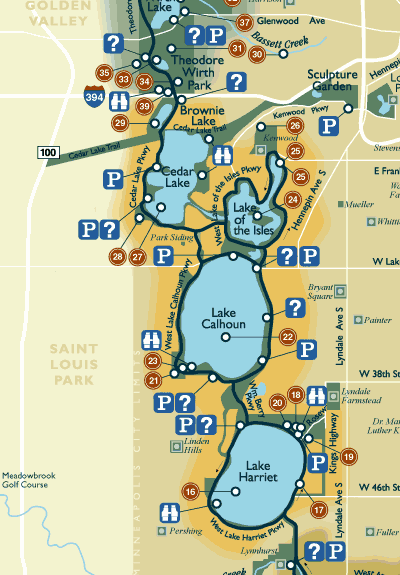 Inside the city limits of Minneapolis/St. Paul there are several lakes. Full sized lakes, not ponds or reservoirs, but lakes. This means getting to learn the streets takes a while since many have to curve at some point to go around a body of water. Not to mention, speaking of water, that the Mississippi is the river that runs through them.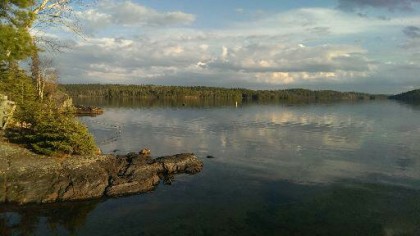

 Sixth dead tree down. All limbed, the slash moved to the road, and Elk Creek Fire Department notified. They have a new program this year. We put slash within 5 feet of the road and in 5 foot or so piles. They’ll come by and chip it. This is not a small deal since the last slash chipping I had done cost $600. Sometime in the next few days I’ll cut all six of them into fireplace sized chunks and stack them.
 A friend wrote about my life here in Colorado. He is, he said, intentionally simplifying, trying to have fewer obligations, yet I’m taking care of dogs, doing more work around the house, cutting down trees and teaching at Beth Evergreen. Now I happen to know that this same guy, who is older than I am, recently completed a show in which he made posters of all the bridges across the Mississippi in the Twin Cities. He has also found a patron who loves his art, so he’s producing larger art works across various media. Not exactly slowing down in that sense. Life in the old lane does force us to make choices about how to use the energy and time we have, but so does every other phase of life. Now though we know ourselves better so we can get more bang for the time and energy.
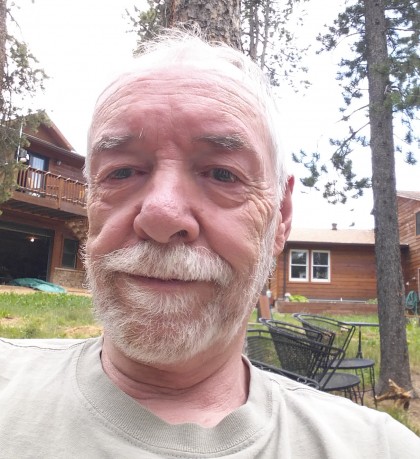 Here’s my situation. I have my chronic illnesses, collected along the way. I don’t hear worth a damn, have stage III kidney disease (stable), glaucoma, high blood pressure, an anxiety disorder (which, frankly, is much, much improved), arthritis in various spots. A repaired achilles tendon and a titanium left knee make my legs not what they were. All these are facts. If you ask me, I’ll tell you, though, that my health is excellent. None of this drags me down, either physically or emotionally.


 On the ground in South Korea a vital and energetic economy has created a vibrant country with feet both in the world of Samsung and the past. Riding on buses or trains through the country side, ancient tombs dot the hillsides. We visited this palace/fort in a city near Seoul. The procession of women in hanbuk at the international airport in Incheon, with the Bottega Veneta and a moving walkway in the foreground brings the two worlds together.
 Started a long project yesterday. I’m printing out all of Ancientrails. Been wanting to do a total backup and I will at some point, but if it’s going to be useful to my ongoing work, hard copy is better. Besides, think how satisfying it will be to hold a copy of all this. Then, I got to thinking. Oh, but a fire! I’m going to make a copy of the copy when it’s done, then make copies of all my hard copies of my novels. I’m going to ask Jon if I can store those copies in his garage in Aurora. Yes, all the novels are on flashdrives (and in a safety deposit box, all except my work on Jennie’s Dead and Rocky Mountain Vampire) and all of Ancientrails is in the cloud, but the hard copies are important, too. The things that come up before we fall asleep.
 If I’m understanding his primary argument, time at the Newtonian level is a result of blurring. This may seem like an odd idea, and it is, but it’s not so hard to grasp if you think about the blurring that is necessary for us to perceive the world around us. Example. If you shrank to the atomic level and tried to walk across a table top, you’d fall in. It’s blurring of the quantum world that makes the table seem solid to us. Time is a result, again if I’m getting this, of the blurring of the transitions from event to event which, at the quantum level have no prescribed order.

 In the present, which has never existed before and will recede as if it were never there, all things can be made new. This is a subtle idea, at once obvious and at the same time almost impossible to grasp. Yet it is true that the 71 years of my life have passed in moments, always in the now. Even in 1947 my life passed moment to moment in increments, the very same as the increments I experience today in 2018.
 Yesterday found me getting this done, that done, the next thing done. Even found an electrician to come install a ceiling fan in the bedroom. This last one is a feat close to finding a rainbow unicorn. By 11 am I’d accomplished more than I usually do in a day. Not sure why, just sorta got into it and kept going. This included a brief nap.
 OK. What now? Not much. The three hours or so before Jon, Ruth and Gabe came up were a bust in terms of getting things done. That’s ok, I don’t need to be productive all the time. Yet. I do like to engage things during the day, either write or workout or cook or do the laundry or fix the bell in the backyard. In the evening, I like to disengage. Watch TV, mostly. I know. I know. Still what I like to do. The blue collar me.
 So Sunday, Sunday. Gonna print out those novels. Try some more sumi-e, probably watch Youtube videos for instruction. One of these days, maybe today though I tend to want to do this stuff during the week when the Denver folks are working, I’ll head out with my sketching stuff and go do sketches of rocks and trees and mountain streams. Stuff to work with when I get out the brushes and ink.