Category Archives: Memories

Home, Sweet Home

Midsommar                                                            Most Heat Moon

Say it ain’t so. The 10 most white trash cities in Indiana.

Population: 5,145
Estimated White trash: 1,342.5
Welfare population: 25%
Single parents: 25%
Drug use: 3rd for cities above 5,000 residents in IN

Alexandria is a little place right outside of Muncie, Indiana.

It is definitely one of the “whitest cities” on our list. The number of drug-related crimes and aggravated assaults, combined with the high number of poor dropouts, makes this white trash central for Madison County.

Is that Ricky Bobby’s kid? Fair question, Alexandria. You’re located just northeast of the black and white checkered flag in Indy-land. Hey, don’t get your boxers in a bunch, we know the three things you don’t mess with in white trash country: racin’, drinkin’, and makin’ meth.

And if you live in Madison County, there’s a good chance you’re makin’ meth. Huffin’ ain’t easy people. You’re a true gem, Alexandria.

Alexandria, Indiana

Sluuump

Midsommar                                                                Most Heat Moon

slumpBack to exercising yesterday. Yeah! Still a bit foggy in the am and my energy level remains subdued. Might be a summer slump occasioned by the heat or I might need a vacation. It’s been a stressful time period since December 1st, when I had the total knee replacement. That in itself was plenty but Jon’s divorce and Kate’s health tripled down on our resilience. It’s pretty good, I think, but the challenges this last few months were severe.

The summer slump notion may explain it all. As with Sundays, I have a conditioned response to the summer. It’s a time for relaxing, for kicking back with a good book or going on a road trip. Oddly, I no longer believe this, preferring the fall for travel and I read all year round, but my body and my mind carry this memory, ingrained by years of education where the main business went on from September to May. A learned part of me wants to slow down, smell the pines and the fresh running streams, but the rest, the conscious and choiceful part, wants to continue working, getting things done. The frisson between these two states is contradictory, conflictual.

Today is a Sunday and a summer Sunday at that so my strong inclination is to watch sports, go to a movie, read the Sunday paper. Which is funny since I don’t watch sports and rarely make it to a movie. I don’t even read the Sunday paper in the thorough way I used to. Yet at 70 the past remains, lodged in subtle cues which call up attitudes shaped by the culture, by happenstance, really. I’m not a slave to them, hardly, but their pull, their unconscious rightness does affect me.

Today, this summer Sunday day, Kate and I will have a business meeting and attend a birthday party, a 70th birthday party, for Marilyn Saltzman, a friend from Beth Evergreen.

I’ve got that I have to rethink, repurpose my time and energy feeling. It usually comes over me when things get muddy. Sometime in the next few days I’m going to seriously rearrange my week, reassert priorities I’ve chosen like Reimagining, kabbalah, getting some projects done around the house. But I’ll be thinking of myself as lying in a hammock, sipping mint tea and reading Faulkner.

Summer Solstice 2017

Midsommar                                                                          Moon of the Summer Solstice

cropped0017As our habitable space ship races along its track, its tilt gives us seasonal changes and four regular moments, two with roughly equal days and nights, the equinoxes, and two extremes: the solstices. The longest days of the year occur right now with the sun rising early and setting late ignoring Benjamin Franklin’s early to bed, early to rise. Six months from now, in the depths of midwinter, we will have the winter solstice where darkness prevails and long nights are the rule.

Those who love the seasons of the sun find the heat and light of midsommar ideal. Even in northerly latitudes shorts and sandals and t-shirts or sundresses or tank tops can be worn outside. We who move upward by 8800 feet from sea level for the cooling effect of altitude find a different kind of joy at the winter solstice. Either way solstice days and nights, their temperatures, are remarkable.

IMAG0346At midsommar in the temperate latitudes where farms dominate the landscape, the growing season, which began roughly around Beltane, is now well underway. Wheat, corn, barley, soybeans, sorghum, sunflowers have risen from seed and fed by rain or irrigation make whole landscapes green with the intense colors of full growth. Midsommar mother earth once again works hard to feed her children.

Extreme weather follows in the wake of these solar extremes with tornadoes, derechos, hail storms and flooding in the summer, bitter cold and driving snow in the winter. Especially around the summer solstice such weather can put crops at risk of flailing by hail, drowning from overflowing creeks and rivers, being ripped out of the soil by rapid vortices. The vast blue skies of midsommar can turn gray, then black, or brackish green. It’s the natural way of moving water from one spot to another.

There can be, too, the absence of this sort of weather, drought. When aridity takes over, when moisture moves elsewhere for a season or a decade or more, these wet weather extremes disappear. Crops wither, food dies.

fire ban croppedOur seasonal dance is not only, not even mostly, a metaphor, but is itself the rhythm of life. When its regularities falter, when either natural or artificial forces alter it, even a little, whole peoples, whole ecosystems experience stress, often death. We humans, as the Iroquois know, are ultimately fragile, our day to day lives dependent on the plant life and animal life around us. When they suffer, we begin to fail.

So this midsommar I’m reflecting on the changes, the dramatic shifts to new high temperatures, more violent weather, less reliable rain. What the Great Wheel once brought to us as a season for nurturing crops and livestock may now become the season when crops and livestock struggle to survive. That means we will have to adapt, somehow. Adapt and reduce carbon emissions.

midsummer1The meaning of the Great Wheel, it’s rhythms, remains the same, a faithful cycling through earth’s changes as it plunges through dark space on its round. Their implications though, thanks to climate change, may shift, will shift in response to new temperature, moisture regimes. The summer solstice may be the moment each year when we begin, again, to realize the enormity of those shifts. It might be that the summer solstice will require new rituals, ones focused on gathering our power to both adapt to those shifts and alleviate the human actions ratcheting up the risks.

Blogged

Beltane                                                                            Moon of the Summer Solstice

bloggingYou may not know I have a second blog, ancientrailsgreatwheel.com. I plan to post on it regularly now, on Sunday mornings. It’s a blog focused on the great work, on reimagining faith, on climate change, all related in my world. Give it a look if you’re interested.

I know, blogging is so last millennia, right? Still, I got started back in 2005 with the help of buddy Bill Schmidt and just haven’t been able to stop, anachronistic as it may be. There are, right below me in fact (in the garage), shelves full of journals I’ve kept over the years, handwritten. It’s a habit of long standing and the work here continues it though with the added implication of readers.

blogging (1)These are bread crumbs, usually no more than that, of the predilections I have, of the circumstances of my life. I say I  do it for the grandkids or for folks I know, but really I do it for myself, to have a chance to speak out loud, to be able to follow my own life. So much of our daily life disappears (and probably should) under the onward spiral of time, but I find it interesting to know what June 18th in 2006 or 2010 was like for me.

Anyhow, like I told Rabbi Jamie last week, I don’t think I’m going anywhere, not away from Beth Evergreen or from ancientrails. So if you’re interested, you know where to find these fragments of my story.

Think Again

Beltane                                                                Moon of the Summer Solstice

images (1)Reimagining Faith has been a project of mine since I slipped out of the Unitarian Universalist world leaving behind both Christianity and liberal religion, the first too narrow in its theology, the second too thin a broth. The stimulation for the project lay first in a decision I made to focus on my Celtic heritage for the writing I wanted to do. This commitment led me to the Great Wheel of the Year and its manifestation literally took root in the work Kate and I did at our Andover home.

When we bought the house there, it sat on a lot with the usual scraped earth look of new home construction. It had no lawn, no trees in front, no soil adequate for growing flowers. We hired a landscape architect and added several thousand dollars to the mortgage for his work which included retaining walls, perennial beds, wild prairie on two sides of our house and tiered perennial beds in the back with a patio at their bottom. Our goal was to enjoy the landscaping throughout the time we owned the house. And we did.

2011 10 13_1265In retrospect our request to him to make it all as low maintenance as possible seems laughable. He did as we wanted, putting in such sturdy plants as Stella D’oro, a species of daylily, shrubs, a bur oak and a Norwegian pine, some amur maples, a hardy brand of shrub rose, juniper, yew, a magnolia that Kate wanted, and a river birch. This work included an in-ground irrigation system and the very strange experience of having no lawn until one morning when the sod people came and rolled it out. Then we had a lawn that evening.

2012 05 01_4112We looked at it, saw that it was good and thought we were done. Ha. It began with a desire for flowers. I wanted to have fresh flowers available throughout the growing season, so I studied perennials. At that time I thought I was still holding to the low maintenance idea. I would plant perennials that would bloom throughout the Minnesota growing season, roughly May 15 to September 15, go out occasionally and cut the blooms, put them in a vase, repeat until frost killed them all back. Then, the next year the perennials would return and the process would recur. Easy, right?

No. Gardens are alive. They are dynamic. Species of flowers have very different horticultural needs. Some, like the spring ephemerals, grow early to avoid the shade of leafed out trees and shrubs. Some, like bleeding hearts and hosta, require shade. Others, like iris, a particular favorite of Kate, need an application of a pesticide to eliminate iris borers. Others, like tulips, wear out in the harsh weather cycles common to Minnesota. Trees planted around the beds grow, too, changing the sun and shade areas from year to year. Soil gets depleted as plants take nutrients from it to fuel their growth. Different flowers require different sorts of soil, too.

06 20 10_Garden_0052Once this world opened up to us, we began to enjoy working with all these variables to create beauty around our home. Gardening for flowers, eh? Well, how about some vegetables. This led to a two-year project of cutting down thorny black locust, chipping the branches, then hiring a stump grinder. After this was done, Jon built us several raised beds. We filled them with good soil and compost. Tomatoes, potatoes, beans, garlic, leeks, onions, carrots, beets flourished. Vegetables, eh? Why not fruit and nuts?

400_late summer 2010_0163Ecological Gardens came in with permaculture principles and added apple trees, plums, cherry trees, pears, currants, gooseberry bushes, blueberry bushes and hawthorns. On the vegetable garden site they added raspberries, a sun trap for tomatoes, and an herb spiral. At that point then we were maintaining multiple perennial flower beds, several vegetable beds, fruit trees and the bees that I had started keeping.

We did later add a firepit and picnic area, but those were the main horticultural efforts. This was a twenty year long immersion in plants and their needs, the way the seasons affected them and our human responsibility for their care.

WheelofYear1GIFWhen I stepped away from the Presbyterian ministry after marrying Kate, the Celtic pagan faith reflected in the Great Wheel began to inform my theological bent more and more. What was to come in the place of the Christian path? Perhaps it was a way of understanding our human journey, our pilgrimage as part of the planet on which we live rather than as separate from it or dominate over it.

Wicca, though, and the various neo-pagan movements seemed thin to me, not without merit as earth-based faiths, but often filled with gimcrackery and geegaws rather than guidance for the next phase of human existence here. I began to wonder about an ur-faith, a way of believing, of being religious, that could exist alongside, even below the other faith traditions, some path that could put us back in the natural world (from which we have never actually removed ourselves) and in so doing undergird the kind of compassion for our planet that might save humanity.

This is the concept behind reimagining faith. Is it possible to create a framework for an earth-based faith that respects science, yet offers ritual and private contemplative practices? What would a book look like that attempts to create a theology, conceptual scaffolding for such a faith? I got this far a while ago. But something has stopped me from moving forward. This post is about poking myself to move forward.

HesseI have finished 7 novels and am nearing completion of an 8th. So I can work on a long term project and see it through to completion. I’ve also been part of creating several organizations still in existence in Minnesota, among them MICAH, Jobs Now, and The Minnesota Council of NonProfits (originally the Philanthropy Project). These, too, are long term efforts that I helped see to completion.

Over time I’ve also worked with several other institutions in various roles that lasted for years: the Sierra Club, the Minneapolis Institute of Arts, Citizens for a Loring Park Community, the Stevens Square Community Organization, the West Bank PAC and the West Bank Community Development Corporation, not to mention the Presbyterian Church and the Unitarian-Universalists.

2010 01 19_3455I’ve had less persistence in my two non-fiction writing projects: an ecological history of Lake Superior and Reimagining Faith. Not sure why. Getting started on the research and idea end was not a problem, I have file folders, bookshelves, posts here on Ancientrails and various sketches for outlines. But I’ve never sustained the push to finish.

My now year long immersion in Reconstructionist Judaism, studying first mussar (ethics) and now kabbalah, has caused several sparks to go off for the Reimagining Faith work. I’m beginning to feel the urge to commit substantial writing time, thinking time to this project. What I’d like to do is produce a book that would lay out the skeleton and put some flesh on it. At that point I’d like Reimagining to become a collaborative project with whomever feels an attraction to it.

So let be it said, so let it be done. Yul Brynner, the Ten Commandments.

“Do You Remember Your Childhood?”

Beltane                                                                      Moon of the Summer Solstice

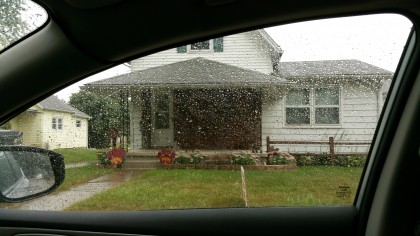
311 E. Monroe. We lived here until I was 12.

Took Ruth and Gabe to see Guardians of the Galaxy 2. Turns out I have a middle school aesthetic when it comes to certain sci fi flicks. We had a great time as Rocket Raccoon and Star Lord saved the Galaxy. Again. The best time though was afterward while we waited for Jon and Kate at Sushi Win in Evergreen.

Gabe looked at me, serious, “Do you remember your childhood?” I know, I thought. It was soooo long ago. Might have slipped away by now. “Yes. I do.” “Could you tell some stories?” OMG. The quintessential old man of the mountain moment. Speak to me of times long past.

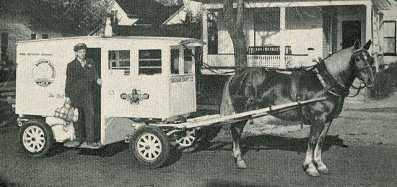
milkmanSo I told them both about the horse drawn wagon that delivered our milk. “We had insulated boxes on the front porch and the milkman would run up with a wire carrier that held the milk, cream, butter, whatever. While he delivered to the house next door, the horse would pull the cart in front our house so he could be more efficient in his work. Horses are smart; trucks aren’t.” Of course, this last statement may not stand much longer, but that’s what happens when time passes. The expression on their faces was priceless.

What else, Grandpop?

Kick.the_.can_.cover_“Well, there were about 25 kids my age on my block and we played together almost every night, especially in the summer. We’d play kick the can, hide and seek.”

Ruth asked, “What’s kick the can? Is it like soccer?”

“No, more like hide and seek. You have two teams, one hides and the other guards the can. Then you run around and try to kick the can if you’re on the team that hides.”

“Oh,” she said, “That sounds like fun.”

And it was. “We also threw rocks up in the air and watched the bats follow them down.”

As I went to bed last night, I thought about other stuff. The hill. The field. Collecting pop bottles in a wagon and taking them downtown to Cox’s Supermarket for refunds. Yes, I remember my childhood.


Mother’s Day

Beltane                                                                          Rushing Waters Moon

Mother’s Mothers dayday. It’s hard to write about Mother’s day. My mother’s death in 1964, when I was 17, drained the day of meaning. I suppose it didn’t have to be that way. I might have taken the opportunity to celebrate her on this day, but somehow it’s never felt right.

Even though I know it’s a Hallmark holiday, a clever way to sell cards and flowers and candy, it has a sneaky power that comes from the Judaeo-Christian admonition to honor thy mother and thy father. This is a simple phrase, easy to remember and oft repeated, but often difficult to fulfill. This sentiment is not unique to the West, of course. Asian cultures often have an exalted view of parents, extending even past death to care and grooming of graves.

Mom was a 50’s mom. She never learned to drive. She stayed at home, raising Mary, Mark and me though at the time of her death she was updating her teacher’s license so she could work again full-time. It was her plan to use her income to pay for our college costs.

cards-mothers-day-ad-1952She was not, however, fond of the typical duties of a housewife. That’s not to say she neither cleaned, nor cooked, nor did laundry. She did all these things, but only as necessities.
Mom’s been dead 53 years and my memory of her has faded, but the presence of her has not. That is, I can still feel the love she had for me, the countless hours she spent bringing me back from literal paralysis during my long bout of polio. In fact, in what is surely an apocryphal memory, I can recall being in her arms at the Madison County Fair surrounded by bare light bulbs strung through the trees, a cotton candy machine whirring pink spun sugar, and suddenly feeling sick with what would become that disease. But I felt safe with her. The memory may be a later construct, but the feelings behind it are genuine.

Since my relationship with my father soured during the Vietnam War, in 1968 to be exact, I have felt parentless, sort of adrift in the world without close family support. That’s a long time. And, yes, much of that experience was reinforced and maintained by my own actions. Nonetheless it has never changed. My analyst once described my family as atomized rather than nuclear. It was apt.

So, mom, today I want to say thanks for your love and your caring. Thanks for all the energy and attention you put into all of us. Thanks for the gift of recovery. Thanks for the vision of me as a capable person. Thanks for all the meals, the clean laundry, the clean house, especially since I know these things were not what you really wanted to be doing. Thanks for giving me life. It’s been a long time, but perhaps I can celebrate mother’s day now. For you.


Life. And Danger.

Beltane                                                                  Rushing Waters Moon

When the temperatures were in the teens below zero and winds whipped the trees, driving along a barren stretch of road meant a breakdown could kill you. That sensation is a major component of Minnesota macho, enduring the worst the north pole can throw at you. At times it was invigorating, at other times we were just glad to have survived it. It did make opening the door at home and going into a warm house a real joy.

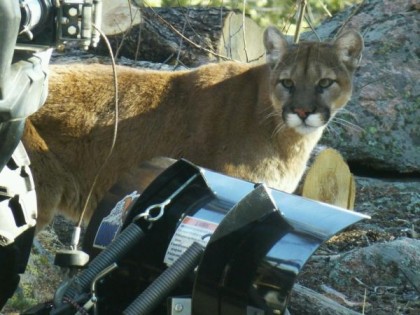
mtn lion richmond hill march 9 2017This morning I fed the dogs as I usually do, but I left them inside, no longer willing to risk a mountain lion attack. Mountain lions add frisson to life in the Front Range Rockies. It’s similar to driving in well below zero weather.
It’s also different. In the instance of weather the danger is without intention, the cold does not care whether you live or die. The mountain lion cares. To the mountain lion our dogs are food, perhaps a day’s ration of calories. So are we. Though mountain lion attacks on humans are rare, they do happen and as development presses further and further into their territory the chance of an encounter, fatal or not, increases.

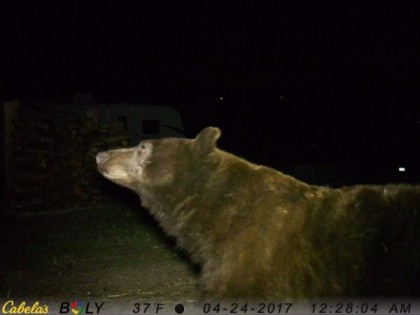
There are bears here, too. Unlike the mountain lion the bear will not hunt us, but if we interfere with a bear, say a sow and her cubs, she will hold her ground and defend her babies. Though the bear is not a predator of humans, they are a danger because an encounter can end in severe injury, even death.

BearMountain lions and bears, oh my, are not the only fauna here that can hurt you. At lower elevations there are timber rattlers. There are also black widow and brown recluse spiders, all venomous enough to cause great harm. In these hills we find not the sound of music, but the shake of a snake’s tail. Julie Andrews might not skip so blithely here.
Wild nature is neither our friend nor our enemy, whether it’s Minnesota cold or Rocky Mountain predators, Singapore heat, or California surf. We live out our short moment as reflective, aware extensions of the universe, as natural and as deadly as the mountain lion, as dangerous when surprised as the bear, as willing to defend ourselves with deadly force as the timber rattler, the black widow and the brown recluse.

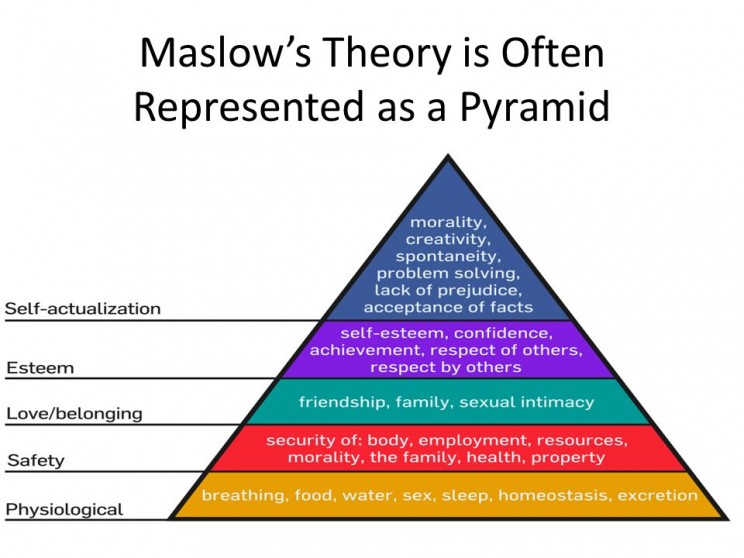
It is fragile, doomed to fail, this mystery we call life. Yet while we have it, be we bear or mountain lion, rattle snake or poisonous spider, we fight to keep it, do whatever we need to do to survive. This is the harsh reality at the bottom of Maslow’s hierarchy*, a necessary part of existence we share with all living things. It is better, it seems to me, to be aware of our shared struggle, to see ourselves as fellow creatures. Yes, we can reflect on our struggle, but that fact does not make us better than our living companions, it only makes us different from them.


*maslow

A Clashing of Spiritual Longings

Beltane                                                                          Rushing Waters Moon

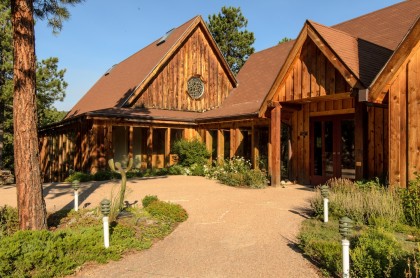
St. LaurenceIrv Saltzman invited us to a performance by his singing group, the Renaissance Singers. It was held in a wooden Episcopal Church, St. Laurence’s, which is near our home. Directed by a Chinese national, Hannah Woo, who is finishing her Ph.D. in musicology, they were 8, four men and four women. As a group, they matched each other well. April, a soprano, had a lovely clear voice and a large range. Irv, formerly a tenor, has now transitioned into a bass/baritone role. Their performance was wonderful. At a meal afterwards we discovered April is our neighbor.
musicRenaissance choral music and instrumental renaissance music has always captivated me. It’s easy to see courtiers in colorful costumes listening to this music in a palace, brown robed and cowled monks hearing it in a morning prayer service, or small groups performing at home for their own amusement. It’s also the music most often heard at Renaissance festivals. Sorta makes sense, eh?
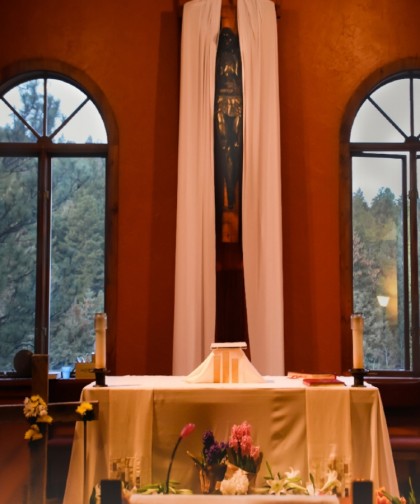
The sanctuary had a vaulted ceiling with exposed beams and two large, clear windows that looked out to the east, toward Shadow, Evergreen and Bear mountains. It rained while we were there and the mountains were in mist, the windows covered with raindrops slowly moving from top to bottom. There were individual chairs, padded with kneelers, arranged in a three sided configuration, making the sanctuary a sort of thrust proscenium stage, an ideal arrangement for a small group of singers.

A church artist had painted the stations of the cross and they were around the sanctuary, set off by bent sheet metal frames. A copper baptistry, large, sat over a cinerarium where the congregation deposits cremation remains and memorializes the dead with small plaques.

Edited+Holy+Week+2017-21Between the two windows hung a large crucifix, a cross made of bare, light wood and a bronze Jesus hung by two nails. I had an odd sensation while listening to this music I’ve often heard in monastic settings on retreat. It carried me back into the spiritual space of an ascetic Christianity that often comforted me. This time though I came into the space as a peri-Jew, identifying more with Marilyn and Irv and Kate, with the still new to me spiritual space of Beth Evergreen, than the theological world represented by this spare, but beautiful sanctuary.
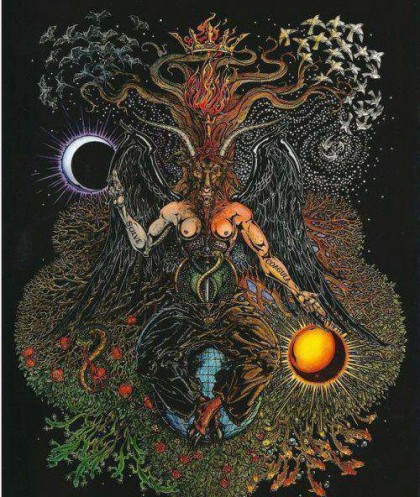
The crucifix stimulated the strongest, strangest and most unexpected feeling. I saw, instead of the Jesus of Christianity, a hung Jew, a member of the tribe. More than that, I felt the vast apparatus and historical punch created by his followers, followers of  a man who shared much of the new faith world in which I now find myself. It was an odd feeling, as if this whole religion was an offshoot, a historical by-blow that somehow got way out of hand.

These feelings signaled to me how far I’d moved into the cultural world of reconstructionist Judaism. I see now with eyes and a heart shaped by the Torah and mussar and interaction with a rabbi and the congregants of Beth Evergreen.

pagan humanismThis was an afternoon filled with the metaphysical whiplash I’ve experienced often over the last year, a clashing of deep thought currents, spiritual longings. This process is a challenge to my more recent flat-earth humanism, a pagan faith grounded not in the next world, but in this one. Literally grounded.
What’s pushing me now is not a desire to change religious traditions, but to again look toward the unseen, the powerful forces just outside of the electromagnetic spectrum and incorporate them again into my ancientrail of faith. This makes me feel odd, as if I’m abandoning convictions hard won, but I don’t think that’s actually what’s going on. There is now an opening to press further into my paganism, to probe further into the mystery of life, of our place in the unfoldingness of the universe, to feel and know what lies beyond reason and the senses.

Ancor Imparo I’m Still Learning

Beltane                                                                             Rushing Waters Moon

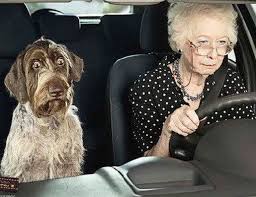
senior drivingTwo things. Turning left yesterday after visiting the Colorado Potters Guild spring show, I looked up and noticed I had executed a left turn in front of an oncoming SUV. We missed each other, though it could have been otherwise. Later, turning a corner onto 8th Avenue heading out of Denver, I banged the right rear of the Rav4 against a curb. It’s important to be honest about such a critical skill as driving and right now, I’m lacking something. Maybe it’s attention, maybe it’s an inability to drive and chew gum at the same time. I don’t know. But I need to do something about it.
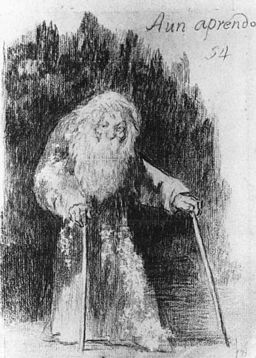

Goya_'I_am_Still_Learning'
Goya ‘I am Still Learning’

Second thing. When I was a little boy, my dad had two nicknames for me: tech and crit. Neither were positive. The first, tech, was short for technical. He said I was very precise, very techincal in an argument. I would pick at things that others wouldn’t notice or didn’t care about. True. Still do it. It is, for better and worse, the way my mind works.

The second, crit, summarized my tendency, linked to tech, to be more critical than most. True. If I see something, I say something. An irritating habit, I know, for those around me, but, again, it’s the way my mind sees the world. Over time I’ve become aware of the way these tendencies affect others, but being able to modulate them is very difficult for me.

Why? Well, later in life I found the Meyers-Briggs personality inventory and discovered my INTP personality type. It fits. Here is a recognized weakness of this personality type:

  • Insensitive – Oftentimes INTP personalities get so caught up in their logic that they forget any kind of emotional consideration – they dismiss subjectivity as irrational and tradition as an attempt to bar much-needed progress. Purely emotional situations are often utterly puzzling to INTPs, and their lack of timely sympathy can easily offend.

intp-personality-typeOh? Well. Tech and crit-me-manifested very, very early. Dad focused on an interactive aspect of my personality that is designed to irritate others. It’s not the only aspect, hardly, but having it emphasized was difficult for me. Actually, it still is.

(INTP at learning mind)

But here’s another way to look at it, this time as a strength:

  • Honest and Straightforward – To know one thing and say another would be terribly disingenuous – INTPs don’t often go around intentionally hurting feelings, but they believe that the truth is the most important factor, and they expect that to be appreciated and reciprocated.

This is a strength that has an obvious downside, or weakness. I want to modulate the hurtful aspect of this character trait through the middah of chesed, or loving kindness. This does not mean I will change the way my mind works. Don’t think I can after a good deal of experience. It does mean that I can introduce a pause between my observation, which will still exist, and its articulation. In that way I can assess whether the truth in a particular situation is helpful or hurtful.

My focus phrase for this will be: see the good, too. Always.