Category Archives: Minnesota

Maybe a New Show?

Lughnasa                                                              Harvest Moon

A Robert Indiana sculpture: Ahava, Hebrew for love

At Tu B’av, a minor holiday, now a celebration of love in Israel and dubbed by its restorers as Jewish Valentine’s Day, unmarried women would come together, all dressed in white, dance, and hope to find a partner. Matchmaker, matchmaker, make me a match.

We celebrated Tu B’av on August 15th at Beth Evergreen and Kate won a silent auction for a backstage experience at a local production of Funny Girl. We went last night. It’s tech week for Funny Girl and our friend Alan Rubin is a player.

I had nearly enough theater credits for a minor and acted quite a bit in high school, college and seminary. After that, nada, but Kate and I were regulars at the Guthrie. When I was in high school and middle school, our parents took us several years in a row to Stratford, Ontario, to the Stratford Shakespeare Festival. A passion, really, but one that has slowly faded.

TheatreJust before getting up this morning a strange, but somehow obvious thought occurred to me. While on the backstage tour we visited the dresser, an energetic guy who made or altered 490 costumes for the women in this performance. !. We saw the multiple props, a day bed, a drinks trolley, several doors with wheels, a set of steps for musical numbers, a kitchen table, a dressing table. Downstairs we saw the storage areas for costumes and prop making materials. We spoke with the dresser, the stage manager, the director, the actors, several of them, the lighting and sound people. All, to a person, warm and friendly.

We watched the rehearsal through until intermission at 9:30, then these old folks began to tire and went home.

Theatre2Here’s the thought. Going backstage, seeing all the accoutrements for staging a play, especially going into the basement area, made me think of id, ego and superego. Of the masks and personas we wear. Of our brain as backstage, where we store props, costume changes, makeup, where we put together the elements of the show that is our lives. The show itself, and its superego, the director, is the life others see, the one we present as we strut and fret our hour upon the stage, then are heard no more.

Let me extend (overextend) the metaphor in one more significant way. All these various elements costumes, props, actors, the stage itself alter themselves for each new script. In other words it is the nature of the theater to be plastic, to use familiar elements for telling unfamiliar stories.

As our life goes on, we often get stuck in Groundhog Day times when we simply repeat the same script over and over. We don’t hear the audience, we don’t see the repetitiveness, are not aware that we’ve been mounting the same play again and again.

Here’s the takeaway for me. Examine the script. Become aware of the lines you’re delivering, the plot you’re pushing forward. Is it still the one you want? Is there another play you can put together with the props, the roles you’ve already played, the stage to which you’re committed? Could be. We can put on new productions, use familiar elements for unfamiliar stories. Might even be fun.

The Journey, It’s Always About the Journey

Lughnasa                                                           Waning Summer Moon

The first day of our Latin American cruise

We may be inching toward a diagnosis for Kate’s nausea. As successive hunches and medical tests have identified nothing wrong with her G.I. tract, trés frustrating, one of Kate’s early notions might turn out to be correct.

She saw her rheumatologist, Dr. Westerman, yesterday and he conceded that gastroparesis may be the cause of her nausea. It’s a bugger. Something, usually unknown, causes the stomach to lose its motility. The result is that the stomach does not empty as well, sometimes, in severe instances, not at all. Weight loss, malnutrition, lack of appetite. All symptoms, all one’s she has.

Still, knowing the cause would mean we can begin to adjust things like diet for her. If gastroparesis turns out to be right, there are other things we can do, too, including possible experimental drugs.

this morning
this morning

Rain and chill here this morning, 43 and gray as the sky begins to lighten. All rain is welcome. Sleeping is much better with the cooler nights.

I zoomed again yesterday, this time with Jen Kraft of Moving Traditions (the b’nai mitzvah curriculum), Alan, Rabbi Jamie, and Tara Saltzman, director of religious education at Beth Evergreen. We were nailing down roles and expectations for the first night of religious school, tonight. My anxiety level has gone down as we approach the actual launch, which means I’ve prepared as well as I can. After that, inshallah.

hiit2Getting back to five days a week exercise. Always feel better. Trying to regain my former high intensity workouts on the off days from resistance work. These workouts increase cardiac fitness, important especially in the mountains. In my case I do two five minute sets, varying speeds each minute from medium intensity (30 seconds), high intensity (20 seconds), and as fast as possible (10 seconds), with a two minute rest between them. I like high intensity because it’s effective and short in duration.

625448_164319917056179_937468223_nLooked into stamina after last week’s exhausting day at CBE with Alan. Discovered that I’m doing, mostly, what can be done. The part I’d let drift away was the high intensity workout. So, I’ll return to that. But, the real message is that stamina decreases with age, even with good sleep, decent diet and exercise.

What’s happening for Kate and me, I think, is a difficult and grudging acceptance of certain physical changes. It’s easy, and understandable, to focus on what’s wrong, to look for the better tomorrow if only we can do this or that. Yet, and it’s a big yet, I feel there may be a tricky, more important, and nuanced reaction available. We need to also concentrate on what we can do well, even given the limitations of stamina and chronic medical conditions.

Back in the long ago faraway I went through a series of therapists, one a guy, Brian, I really liked. He was a former Catholic priest, insightful and well-educated. But, his approach, existentialist psychology, focused on what was wrong. Each session we would identify problems and seek solutions, changes in behavior or inner narrative. Each session. Problems, work for solutions. Always what was wrong, what needed to change.

Abandon all attachment to the results of action and attain supreme peaceI finally realized that a problem oriented therapeutic approach kept me trapped in a continuing circle of what’s wrong? What do I need to do? How can I change? In other words my life was always problematic. Like whack a mole for psychological issues. No relief, just unending work on what was wrong. What was wrong was me.

Nope. Needed to get out from under that weight, accentuate the resources I had, the strong parts. I needed a therapeutic approach (and, a concomitant approach to myself) that found strengths, that put my struggles in the broader context of a life that was not a problem, not a puzzle, but a human journey. Jungian psychology and John Desteian did that for me. What a relief and I finally got movement in my inner life.

yourselfKate and I, I think, are at a similar cross roads. We need to accentuate the resources, the strengths that we each have, and they are considerable. Loss of stamina and chronic diseases (which we both have) are part of our lives, yes, but they are not our lives. Our lives are about sewing, quilting, the board at CBE, old friends, grandchildren, sons, our life together. They’re about writing and teaching and hiking and reading. About filling our days with purpose and love. Death is a certainty, but we don’t have to reach for it. It will come for us, in its own time. Until then, carpe diem!

 

Waning Summer Moon and Orion

September 14, 2017
September 14, 2017

Lughnasa                                        Waning Summer Moon

Quite a combination greeted me in the southeastern sky this morning as I made my way to the loft. The Waning Summer Moon’s waning quarter stood just above a faint, but still clear Orion. My first sighting of him since April. I don’t look for him once I stop seeing him since I imagine he’s in the daytime sky, but apparently he’s visible at some time in all months except May through July, just not when I’m awake and outside.

The two of them together, the Waning Summer Moon and the constellation that is my winter companion appearing the day after Labor Day sends a strong autumnal signal in my world. Flecks of gold will start to appear in the aspen groves on Black Mountain.

The meadow at the base of Shadow Mountain Drive had hay bales in it a couple of days ago, all gone now. The sight brought back memories of alfalfa and timothy fields in Minnesota and Indiana, the smell of haylofts, hay rides. Apple picking.

September 17, 2013

In Andover this was the month of garlic planting, of soil amending in the perennial flower beds and the planting of bulbs, corms, rhizomes. Tulips, daffodils, iris, hyacinth, crocus, anemone. I would turn on Folk Alley radio, get out the kneeler and the Japanese garden knife. Sometimes the Andover High School marching band would be rehearsing a couple of miles away but still audible. Blue skies, the sun’s angle noticeably lower. The golden raspberries were ripe, too, and the dogs, especially Vega, would pick them off the canes that poked through the fence around our vegetable garden.

Later in the month will come Mabon, the second of the harvest festivals and the fall equinox. After that is Michaelmas, September 29th, the feast day of the Archangel Michael which Rudolf Steiner refers to as the springtime of the soul. I can feel the change, the buildup that begins with the victory of light on the Summer Solstice, the gradual lengthening of the night which will culminate in the Winter Solstice, my high holyday.

Time to get back to work.

A True North

Lughnasa                                                                Waning Summer Moon

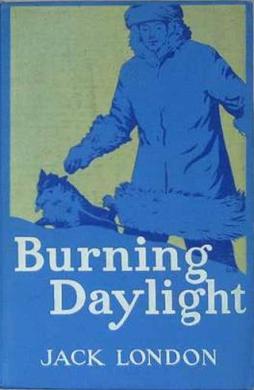
Still thinking about the north. In 1969 Judy and I left Connersville, Indiana, headed toward Appleton, Wisconsin. In my mind the landscape would be pine trees, glistening lakes, deer, lots of people in plaid shirts. Maybe still a lumberjack or two. Jack London’s White Fang, Call of the Wild, Sea-Wolf, Burning Daylight had made me a distant fan of a place closer to the Arctic, one where the wildness of our planet had not been consumed by factories and roads.

Burning DaylightTurns out the Fox River Valley was not that place. The Fox River which runs from the Green Bay through Appleton and finally into Lake Winnebago had no available oxygen for aquatic life thanks to years of dairies and paper mills, two of the worst polluters, dumping effluent. But you could see this north from there. In the Fox River Valley it manifested itself in a tortured way through snowmobile culture and the annual ritual of the deer hunt. Both were violent and dangerous. On winter nights the lights of snowmobiles rake the roadways and countrysides as riders drive their vehicles alongside the roads from bar to bar for a shot and a beer. It was often said that grudges got settled during deer season.

White Fang’s north also announced itself in the weather. That winter we had two feet of snow in one storm, an amazement to this long time Hoosier, resident of an agricultural and industrial belt that had confused seasons often with slush and ice storms in place of winter, northern winter. I learned about engine block heaters. Temperatures dropped to way, way below zero. And stayed there.

LondonWisconsin was a bad experience for me. Judy and I had married at 21 and 17. I had graduated from college that spring and had no idea what to do next. So. Get married. By Appleton neither one of us were sure why we’d said yes to the other. The long winter nights found us drinking beer by the case and playing sheepshead with Judy’s family. Her father, a convinced alcoholic, and I, just getting started in my addiction, didn’t really get along. He was a snowmobile racer, a deer hunter, an ink salesman and a Packer fan. I had little interest in any of those things. Our only common ground was his daughter.
By 1970 I’d found myself withering in Appleton. Too much alcohol. Judy and I had agreed on an open marriage, it was the sixties after all, but when she acted on it, I discovered I hadn’t meant it. I had three jobs in Appleton: life insurance salesman (never sold a policy, lasted three months), a baker making bread and pound cakes, but getting to work at 4 a.m for $1.50 an hour lost its charm quickly, and, finally, as a rag cutter at the Fox River Valley Paper Company. This was a distinct change from studying anthropology and philosophy, fighting the establishment. And not a good one.

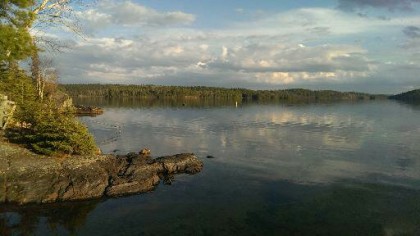
Seminary took me to Minnesota, where I did find my true north, not in New Brighton, of course, but up north in the boreal forest, among the 10,000 glaciated lakes and on the shores of Lake Superior. This was Burning Daylight territory. I stayed for forty-five years.

Burntside Lake, Ely
Burntside Lake, Ely

While up north, from 1969 to 2014, I discovered the insular nature of this land. The long blue ellipse of Lake Michigan made Michigan, Wisconsin and Minnesota, the Upper Midwest, lack a through route to the West. We were not on the way to anywhere. You had to want to go up there for some reason and most folks in the U.S. chose not to. Nothing there unless you fished or hunted or had business or family. Cold, too. Brutal winters. As far north as most folks got was Detroit or Chicago.

Especially distant, especially unknown were the Upper Peninsula of Michigan, northern Wisconsin and northern Minnesota with the Iron Range, the Arrowhead region, Lake Superior, Voyageurs National Park, the BWCA, Warroad. It is a culture that has some common ground, snowmobiles, snowshoes, ice fishing, hiking, mineral extraction, cross-country skiing, but little integration even with the states in which they lie. What integration there is tends to be that of tourist destination and tourist though of course the Iron Range and the copper mines of the Keweenaw, the laker supported transport of the Great Lakes, and such cities as Duluth, Superior, Sault St. Marie, and Marquette attract citizens as well as visitors.

Now living in a region dominated by the story of the vanishing frontier, the Indian wars, the cowboy, mountains, and the false allure of unbridled freedom, the north country has receded from view again. It is far away, not on the way to anywhere most choose to go, and largely unknown. Yet it still feeds my imagination and my memories there are warm and many. No, I never mushed a dogsled to take medicine to a plague ridden village isolated by a blizzard (Sergeant Renfrew of the Canadian Mounted Police), but I did mush a dogsled. I never caught a muskie or a lake trout, but I did spend many happy hours picking blueberries in the late August sun. It was the north of my Jack London induced fantasy and I loved it. As I now do the Rockies.


North

Lughnasa                                                                      Waning Summer Moon

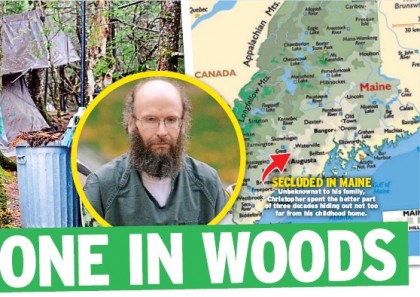
strangerReading two books right now, The Stranger in the Woods and Northland. They are oddly complementary. Northland recounts a three-year long journey by the author following the northern border across the U.S. It starts in Maine. This early part of his journey is through land very familiar to friends Paul and Sarah Strickland who live near the St. Croix River separating the U.S. and Canada. Stranger in the Woods tells the story of Christopher Knight, who grew up in central/northern Maine, graduated from high school, became a burglar alarm installer, then, at age 20 decided to disappear into the woods. He was found 27 years later after having spent the intervening time in silence, living alone in a rocky clearing and subsisting off of raiding cabins near his well-concealed home.

Porter Knox, author of Northland, says that land in the U.S. along the northern border is a land apart, distant from the rest of the country both for its inhabitants and visitors. Having lived in Minnesota for forty years, I know the Northland border there and in Michigan, too. It’s severe country in Minnesota with temperatures the rest of the country read about during the winter, lakes carved by the retreating glaciers of the last ice age and boreal forests. It’s also poor country with soil too rocky and thin for agriculture and too distant from cities for most commercial purposes. Tourism is the main economic driver there and that’s seasonal.

an album
an album

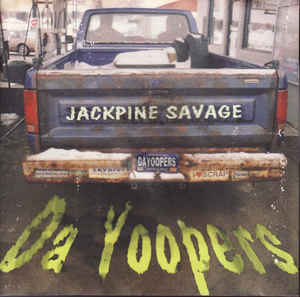
Knight’s family had developed a way of living in the Northland. They had a large garden, hunted, were clever with their hands and spent time with books, not media. It was a subsistence existence that reminded me of the movie Captain Fantastic. Christopher took the northland life style to a logical extreme, becoming isolated not only from the rest of the country, but from human community itself. In Minnesota and Wisconsin his family would probably have been called Jackpine Savages, which refers to folks who live off the land there, often taking multiple jobs while living mostly off game, fish and gardens.

As I write this from the top of Shadow Mountain, I can see how different and faraway this border and these lifestyles must seem to the rest of the U.S. In fact, it strikes me as odd how little known these northern lifeways are. Redneck culture, not the same, but also rural in origin, has a lot of visibility. So does the older Appalachian Scotch-Irish culture from which Redneck culture emerged. Cowboys were similarly isolated from mainstream U.S. culture, but their presence is large in U.S. history, too. Not so for the folks who live in the colder regions along the border with Canada.


Building a Self

Lughnasa                                                                           Monsoon Moon

The basilica, Minneapolis. From my hotel room.

Morning, Black Mountain out the loft window, cool air, dry. Home. Made supper last night. Pork cutlets, tomato, onion, cucumber salad, hash browns from left over tater tots. Put the dogs to bed. Fed and pilled the dogs a half hour ago. Took out the trash and retrieved the Denver Post from the newspaper tube. Sitting down at my desktop, ergonomic keyboard under my finger tips. Checked the calendar for the week and month ahead, plenty to do. Reinserted into mountain life. On the daily level it’s as if I never left. The stuff I do.

But. There’s now the 2018 trip to Minnesota. The one where I went to every place I ever lived in the Twin Cities metro. The one where I saw Tom, Mark, Bill. The one where Mark had his no good, terrible, very bad week. The one where I spoke at Groveland for their Covenanting Community celebration. The one where I discovered a profound grief about art, Asian art in particular. The one where I went into a funky basement room and listened to jazz. You remember. That one.

JazzCentral, Minneapolis

This slow accreting of memories is the essence of building a self. The same 4-year old boy who flinched when the dragon in the apartment building on Lincoln called for more coal has been collecting these moments for over 67 years. Throughout, of course, the strange fact of never leaving the present, never able to go back to any of those moments, yet holding them in reserve, as clues available right now about living.

Our Self is the internal agglomeration of that particular, that ultimately particular, set of memories, but not as static moments. No, they are the data we use to respond, to grow, to cry, to laugh, to plan, to hope, to learn what it means not only to be human, but to be the unique human that we are.

Have to go create a new breakfast memory. Gertie says so.


Last Day on the road

Lughnasa                                                    Monsoon Moon

On the road until 7:15 pm last night. Got misdirected (by myself) making the turn south toward Hot Springs. This time, even with maps and a phone that was still charged, I ended up further west than intended. No matter. I drove down 385 on the west side of Paha Sapa, seeing the gigantic Crazy Horse carving on the east side of the road.

Drove through Wind Cave National Park. I took the tour there long ago. There were buffalo right by the roadside and a huge field of prairie dogs. They stood up, looked alert, scampered away on prairie dog business.

I passed into the mountain time zone outside Rapid City, regaining the hour given away on the trip east. At some point I also passed the 100th meridian, too. Until climate change began inching the line eastward the 100th was the point marking the change from the humid east to the arid west. West of the 100th precipitation averages less than 20 inches a year. That’s often not enough for agriculture.

Passing the 100th means a return to my home region, no longer the northland I had just left, but the American West, land of corporate mining, ranching, water wars, and well-armed citizens.

In a few minutes I’ll hit the road again, this time heading out through South Dakota, then Wyoming on blue highways. Along these particular blue highways there will be, off the road aways, small rectangular patches of land protected by high fencing, motion sensors and cameras. Within the fencing lies a missile silo. This land is the contemporary field of dragon’s teeth sown by the ancient king Cadmus. Up from them will emerge mechanical warriors, tipped with nuclear bombs and already targeted for some enemy or the other. I don’t find them reassuring.

There is a freedom to the road, a disaffected and depersonalized freedom though, one populated by unfamiliar landscapes, unknown people and the slight sense (at least in the U.S.) of being far away from help. In this cone of the strange (to us) we carry with us the intimate familiarity of our body and our mind, the memories and quirks that make us who we are.

Been thinking about an article on personalism offered by Tom Bugby, new Woolly whom I met Sunday at the Black Forest. Written by David Brooks, it positions personalism as a middle way between radical individualism (the enlightenment) and collectivism (evil socialists and communists).

It occurred to me that each of these positions commits what Whitehead called a fallacy of misplaced concreteness. That is, each would claim to be the way things are. We are radically individual, unknown to others and knowing others only through their persona, darkly. We are in relationship, cannot know ourselves outside of relationships. We are simply one of the many, important, yes, but the many takes precedence.

No. We are, in turns, a radical individual, highlighted right now for me while I’m on the road, a person in relationship, intimate ones, friendship, casual acquaintances, and, a member of a town, a religious community, a state, a nation. We move along this continuum every day, this activity emphasizing the individual, this one relationships, and this one the larger communities to which we belong.

Totalizing perspectives, we are only individuals or we are only in relationship or we are only part of a broader group, are really finger pointing, blaming this point on the continuum for the problems we face. In fact life is complicated, made up of diverse moments when this facet of ourselves or that one gets to shine.

OK. So I had a long time to think about this.


Hoaxer

Lughnasa                                                    Monsoon Moon

Another interesting day. Wrote in the morning, then out to Lake Minnetonka for a few hours on the lake riding Falcor, Tom’s lucky dragon. It’s a Sundancer 280, capable of giving Tom a reminder of his youthful boat building days. He built his first boat at 10. He and Bill and I went from his slip over to Lord Fletcher’s, a restaurant that caters to the boating crowd. We all had walleye.

A truly Minnesota experience. A boat. Friends. A lake. And, walleye.

Coming back to the hotel, I took a nap, then went to the club lounge for appetizers. Enough for dinner.

Later, Jazz Central where I heard docent friend Grace Goggin’s son, Peter, play the sax in his band, Hoaxer. He’s good, really good, and Hoaxer is the real deal. They play a hard driving, innovative, energetic, even funny brand of jazz. They were, by turns, raw and sweet and passionate. If you get a chance, listen to them.

I stayed there until 10:30, way past my bedtime, then, for some reason, went back to my hotel and watched tv. Vacation mind, I guess. A little sleepy this morning. In an hour I leave for St. Paul, for the Groveland celebration, inside now due to thunderstorms.

Seeking God Is Not The Problem

Lughnasa                                                     Monsoon Moon

Liberal religion. An odd term. Maybe oxymoronic? I mean, what is more conservative than our human wonderings about death and about how to live? What is older than those questions?

And the variety of answers are endless. Taoism, Buddhism, Southern Baptists, Mithraism, Santa Muerte, Hinduism, Catholicism, Judaism and many, many others. Bahai, Druze, Islam. And, no, they don’t all have the same message, hardly.

Back in 1992 or so, I’d given up on one of those answers, Christianity. My reasons were emotional, the rationale came later. Mostly, I’d begun to find my spirituality in a very different locale, in my interior life and in the soil, in plants, in animals. Didn’t work so well in the pulpit.

I needed a place where I could be who I had become. I found a group of folks meeting in a round room over a library. A library. Worshipping in one of my favorite institutions, artifacts of human searching arrayed below us. This was the early Groveland. 25 years later here we are, celebrating your persistence, celebrating the spot you’ve carved out of humanity’s endless quest for knowing how things are with ourselves, with our planet, with time itself.

“The problem lies not with seeking God, but with those who think they’ve found God.” Mordecai Kaplan, founder of Reconstructionist Judaism. In an odd twist to my own seeking, Kate and I have become members of Congregation Beth Evergreen in Evergreen, Colorado, close to our home on Shadow Mountain. It’s a Reconstructionist congregation. No, I’ve not converted. They’re fine with me being what I call, for simplicity’s sake, a pagan.

“The past gets a vote, but not a veto.” Kaplan again. By this he means, quite heretically within traditional Judaism, that Judaism itself is always changing, always reconstructing itself and that literally nothing is sacred. He was not, for example, a supernaturalist.

I tell people that I’m not a Jew, but I am a reconstructionist. And, I am. Here’s the interesting part. According to Rabbi Jamie Arnold, Kaplan got his approach from, drum roll… Emerson. I don’t know that this quote is the exact place, but it’s sentiment is clearly Kaplan’s and current reconstructionist:

“Our age is retrospective. It builds the sepulchres of the fathers. It writes biographies, histories, and criticism. The foregoing generations beheld God and nature face to face; we, through their eyes. Why should not we also enjoy an original relation to the universe? Why should not we have a poetry and philosophy of insight and not of tradition, and a religion by revelation to us, and not the history of theirs? Embosomed for a season in nature, whose floods of life stream around and through us, and invite us by the powers they supply, to action proportioned to nature, why should we grope among the dry bones of the past, or put the living generation into masquerade out of its faded wardrobe? The sun shines to-day also. There is more wool and flax in the fields. There are new lands, new men, new thoughts. Let us demand our own works and laws and worship.”

I offer this brief excursion into Judaism as a way of underscoring the liberal religious pilgrimage. It is one that says, yes the questions of religion are important because they are deeply human questions, so important in fact that we should hold all of the answers loosely, hold them as clues, as trail markers, not as destinations. That we should remain open to new clues, new trails, new ways of approaching this ancient probing of what matters most.

When we do, as Emerson did, as you here at Groveland do, we can never tell the impact of it. We might transform that Muslim cleric, that Hindu priest, or, that Conservative Rabbi, Mordecai Kaplan.

“It is not the seeking of God that is the problem.” No, as Kaplan says, the problem is with those who calcify the pilgrimage, enshrine the past, stop up their ears, their eyes, close their minds. You, Groveland, are caravan serai on the oldest ancientrail of all. And, a necessary one. Necessary for what? Unclear. And that’s the point.

Unexpected

Lughnasa                                                        Monsoon Moon

70+ miles I drove yesterday morning. First over to Oak Grove, close to here, then to Stevens Square where I photographed the first Community Involvement Programs building, then the second one. I lived in both. Forgot the place on 1st Avenue, but I’ll get that. Over the course of the morning I visited streets and neighborhoods I’d come to know intimately, St. Paul, New Brighton, Andover, Minneapolis. More on the feelings from this homecoming later

The biggest surprise of the day came at the Minneapolis Institute of Arts. I got there about 2:30 or 3:00. Picking up my badge was long in the past, but my body remembered. Passed the guard desk by. The lobby area is completely, well, almost completely different. Tables, a big coffee shop, redone gift store. Pleasant.

I walked all the way back toward the rocks shaped in Lake Tai. Called scholar’s rocks their strange forms, curves, sharp edges, diversity reminded Chinese literati of the mountains, their power and mystery, but most importantly, of the Tao.

Up the first flight of stairs and I was in the Asian arts wing. It holds an extensive collection of Chinese and Japanese art as well as more modest exhibits of Indian, Tibetan, Vietnamese and Thai art. A collection I came to know very well. There were various Buddhas, some calling the earth to witness enlightenment, others with the mudras of reassurance, of wish granting.

A favorite part of the collection for me is the large hall containing Chinese paintings, just off the Buddhas display. Moving from one depiction of mountains to another, often scrolls longer than I am tall, there were the fantastical shapes towering up, up, up, with some small human, usually a lone scholar, sitting watching a waterfall, gazing up at the clouds. The closer I looked, and I examine these painting very carefully, the more an unexpected feeling crept me over me. Grief.

It was subtle at first, felt like simple nostalgia, a sort of sadness mixed with the wonder I’ve always felt among these objects. Slowly though, as I saw the Fergana stallions, the famed blood sweating horses from the area of the ‘stans, and noticed the upcurled lip of the copper sculpture, a rare, fine piece of work, and realized I’d never taken in his mouth before, the feeling became clear. I missed this place so much. It was an ache, a hole in my heart. Unexpected. Very.

The feeling stayed with me as I looked at a long scroll depicting a festival along a river, the Wu family reception hall, the new arrangement of the Japanese collection. It came most into focus when I looked at the tea implements, the tea house.

As I left the Asian collection and went into the excellent rearrangement of the African collection, the feeling dissipated. It did not return while I visited the Native American and Latin American galleries. Nor did it return when I saw a couple of my favorite paintings, Goya’s Dr. Arrieta and the MIA’s Kandinsky. I don’t recall its title. In theses collections I was merely a museum goer, a knowledgeable one, yes, one familiar with the art, deeply familiar in some instances, but no longer experiencing that hole in my heart.

I’m not sure what to make of it, but it was strong, very strong and it has a significance I’ve not yet sorted out.

From the MIA I went over to the Red Stag, sight of many Woolly meals over the years. Tom and Bill were already there. Ode, a colonoscopy prep victim on Monday, got good drugs at the procedure, enough to make him lose a whole day. He forgot. When reminded by Tom’s call, he came down.

It was a good visit, normal in its way. A place we’d been before, together. We’d been together many times, this was one more. Yet it was also abnormal since 900 miles separates me from this normal moment. These are life-long friends and life isn’t over yet.