Midsommar Most Heat Moon
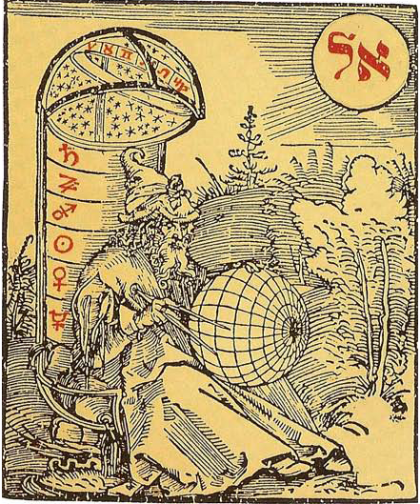 Kabbalah. It’s trying to pry off the empiricist covering I’ve put on my world. I say trying because I’m a skeptic at heart, a doubter, a critic, an analyst yet also, and just as deeply, a poet, a lover of myth and fantasy, a dreamer.
Last night’s conversation at Beth Evergreen was on miracles. As is my wont, I looked up miracle in the OED. The first definition, considered most important and most normative, says a miracle is an event that defies nature and is therefore the act of God or another supernatural being. Its root though is the Latin miraculum which simply defines miracle as something amazing, wondrous. The Hebrew word for miracle, nes, means banner, flag, trial, test, as well as miracle.
Rabbi Jamie, and kabbalah, pushes us to broaden our definition of miracle, or perhaps, deepen it. What is a miracle? Several budding kabbalists offered answers. The human body, animal bodies. Anshel, who has an identical twin, says their relationship is a miracle, “I can feel her pain. And she lives in Florida. We pick out identical birthday cards.” I said life, the ineffable animation of the inanimate.
 Rabbi Akiva says that nothing in nature is less miraculous than the rarest exception. This means, for example, that the water in the Red Sea (or, Reed Sea) is as miraculous as its parting. Or, for that matter, the Hebrew slaves pouring across it are, too.
It’s hard for me to articulate how this changes me. There’s a stubborn I will not be moved part of my psyche (I know. You know this already.) that keeps me from changing my perspective without a lot of thought. Good and bad. Makes me resolute in the face of adversity, but also mulish in terms of new ways of thinking. Reason can take me up to the wall, but will not push me past it. So I entertain a lot of new ideas happily, but absorb few of them There has to be an emotional component, a combination of reason and feeling.
The emotional/psychological element involved here is big. And, it’s not only about an attitude toward miracles, nor even toward kabbalah itself, but about an inner tectonic plate, one that needs subducting but that I have not been able to move for decades. This core substrata of my Self supports a continent and that continent is my productivity, purposefulness, agency. Messing around with it scares me.
 It is anxiety. I believe it infested my life in two early stages. The first was polio, a young boy’s physical experience of our human finitude. It happened once; it could happen again. The second was the death of my mother when I was 17. It happened once, to Mom. It will happen to me and could happen quickly.
Now, I believe anxiety has its purpose. It makes us attend to matters that might harm us in some way and it encourages us to resolve them by poking us psychically until we do. A good thing, in my opinion. Yet, when everything or many things seem harmful-like life itself-then anxiety becomes crippling, closing down joy, play, eagerness, and yes, the miraculous, too.
I can feel that plate beginning to grind its way under more positive parts of my inner world, kabbalah is one of the forces impelling it. So is, oddly, Kate’s health issues and my own, coupled with increasing age.
Seems contradictory, right, at least these last two? Yes, but here’s how that works. Both polio and my mother’s death have left me with a sense of impending catastrophe, not immediate, not right now, but…soon. And, of course, that’s both wrong and right. The sense of finitude that both put into bold face type on my inner sign board is real. I will die, there will be some final illness even more destructive to me than polio. That’s the right part.
 The wrong part is that it doesn’t matter. I don’t have to worry about it, fear it, be anxious about it. It is. Or, rather, will be. Maybe in the next ten minutes, maybe in the next ten years, maybe longer. I know this by reason, have known it for a long, long time, but I have not been able to displace the irrational fear in spite of that knowledge. That’s why I say reason can take me up to the wall, but not past it.
The shuddering that’s affecting my innerworld, a sort of psychic earthquake, is accepting the finitude, leaning into mortality, even embracing it. The wall that keeps this from happening is built of tangled vines. Will I work? Will I care about my projects? Will I just relax, sink into the hammock and never roll out of it? Cutting a gate through this wall to whatever lies on the other side feels like indulging myself, separating myself from the motivator/motivation that keeps me moving forward. That’s the resistance that anxiety has constructed in my soul.
 Yet, increasingly I find myself wanting a way through this. I can sense, and here kabbalah is playing a critical alchemical role, a different world, a better world now hidden from me. I can peek through the vines at times, can see the secret garden beyond. It’s this wall that holds up the substrata, keeps it from being ground other parts of my Self. This wall has its roots sunk deep into this tectonic plate, is a barrier to its movement. But I can feel the vines withering, their complicity in the substrata’s effect on my psyche weakening.
What lies on the other side? I really don’t know. That’s sort of the point, but it feels like a healthier, happier place. Perhaps soon I’ll find out.


 Kate’s doing a lot of self care. She’s eating more, trying to get her weight up, an irony lost on neither of us. She does facial saunas, sinus clearing saline, pays attention to the development of thrush and knocks it back. Yesterday was her third or fourth infusion of Remicade for her r.a. Her rheumatologist gave her a drug for her dry mouth, a saliva stimulator. She uses the oxygen concentrator at night and sometimes at naps. Its humidifier has been a big help. None of these aggravations are fatal, but they do rob her of energy and sleep, of time, of resilience. Hard. But, she’s a strong, smart woman and able to develop a solid care plan for herself.
 If you’re an alcoholic like I am, you learn early in treatment that the geographical escape won’t work. Wherever you go, there you are is the saying. It’s true that the addictive part of my personality follows me from place to place as well as through time. Even so, this move to Colorado has awakened me to an unexpected benefit of leaving a place, especially ones invested with a lot of meaning.
 While it’s true, in the wherever you go there you are sense, that these memories and social roles, the feeling of a continuous self that lived outside Nevis, in Irvine Park, worked at the God Box on Franklin Avenue remain, they are no longer a thick web in which I move and live and have my being, they no longer reinforce themselves on a daily, minute by minute basis. And so their impact fades.
 This is obvious, yes, but its effect is not. This unexperienced territory leaves open the possibility of new aspects of the self emerging triggered by new relationships, new roles, new physical anchors for memories. Evergreen, for example, now plays a central part in our weekly life. We go over there for Beth Evergreen. We go there to eat. Jon and the grandkids are going there to play in the lake this morning.
 This evening is the last of the introductory kabbalah classes. We’ll be discussing miracles again and hearing student presentations. Making it personal still seems like the right path for mine, how kabbalah has affected a decades long journey, a pilgrimage toward the world into which I’ve been thrown.
 Here’s a nice paragraph: “While the hermeneutic strategies to “open up the text” that Ricoeur presents are not simple or childlike, they’re only the first step in engaging with the ideas. If you understand “the meek shall inherit the earth” as a radical idea, what do you do with that? How do you apply it? How do you let it change you? Following
  The biggest change will be in how I sense the world around me. I will no longer be so reductive, imagining that even if there is an unseen world, that’s all it is, unseen. Perhaps this is how the reenchantment process works, seeing the living, intricately woven cosmos as manifest everywhere, visibly and invisibly. My pagan sensibility remains. I’m not sure that adding God language to the mix adds anything important.
 Next week we all give 5-8 minute presentations in our kabbalah class. The ostensible purpose is for us to have the chance to “learn as teachers.” It will be more than that for me. At first I thought I would work up something about tikkun olam, repairing the world, or, as the early kabbalists preferred, repairing God. The notion fits nicely within my political activism (now shelved)/reimagining faith work. But that would have been the more traditional student as presenter, a small talk focused on the content of what I’ve begun to learn.
 Kabbalah has reinforced and challenged a move I made many years ago away from the metaphysics of the Judaeo-Christian tradition as I understood it. I can summarize that move as a reaction against transcendence and its role in buttressing patriarchy. Transcendence moved me up and out of my body, up and out of my Self into a different a place, a place other than where I was, a better place, a place dominated by God. It didn’t really matter what image of God, what understanding of God you put in that sentence because it was the denial of the here and now, the embodiedness of us, that bothered me. The notion that transcendence puts us in a better place, a place only accessible outside of our bodies made us lesser creatures, doomed to spend most of our time in a less spiritual state. In the long tradition of a male imaged God it made that gender dominate because it was God that occupied the better place, the more spiritual place, the place, if we were lucky or faithful enough, that we might achieve permanently after death.
 This inner turn is what pagan means for me. It put spirituality more in the mode the Judaeo-Christian tradition terms incarnation, put a thumb on the scale for the notion of imago dei, rather than the three-story universe. Gardening and bee-keeping became ultimate spiritual practices. They made real, as real as can be, the whole immersion of this body in the web of life. Tomatoes, beets, leeks, garlic, raspberries, plums, apples, currants, beans, comb honey and liquid honey grew on our land, nurtured by our hands, then entered our bodies to actually, really become us. The true transubstantiation.
 When I moved away from transcendence, I moved toward this world. This world of sensation and my inner world became the whole, I sheared off the metaphysical almost as cleanly as my logical positivist philosophy had done, though for quite different reasons. No metaphysics, no God. No metaphysics, no transcendence. I switched to an ontology informed only by my senses or by the extended reach of our limited human senses occasioned by science. That meant this world, at both the micro and macro levels was the only world.
 After leaving the ministry, a gradual process of demythologization and disenchantment took over. In retrospect it’s not hard to see why. A primary motivator of the shift away from Christianity and toward a more pagan worldview came because transcendence bothered me. Transcendence takes us up and out of our bodies, or least out and away from our bodies.
 Then, at some point-the reimagining faith project signals that point-the flat-earth humanism of this pagan orientation no longer felt like enough. Could the warmth and the depth available to those in the ancient religious traditions somehow be suffused into this empiricist, anti-metaphysical worldview? Could, in other words, a feeling of religious awe and wonder emerge out of our relationship with the web of life and the cosmic experiment we know as the universe?
 Transcendence still seems suspect. Reimagining though has to take account of it in some way. Here’s one idea. The mystical experience, a well documented and not at all rare phenomenon, often carries the descriptor transcendent. I had one and I want to challenge that idea. In mine, which occurred in 1967 on the quad at Ball State University, I did feel a sudden and inexplicable connection to the universe, all of it. Threads of light and power emanated in a pulsing glory carrying with them a physical sensation of oneness.
 Yet again, I didn’t follow this one completely, but the Lurianic God is a God in exile, separated from the shards. So when the Jews go into exile, they do so as one with their estranged God. The purpose of the Jews is to remind humanity of this estrangement and that we all have a role to play in overcoming it.
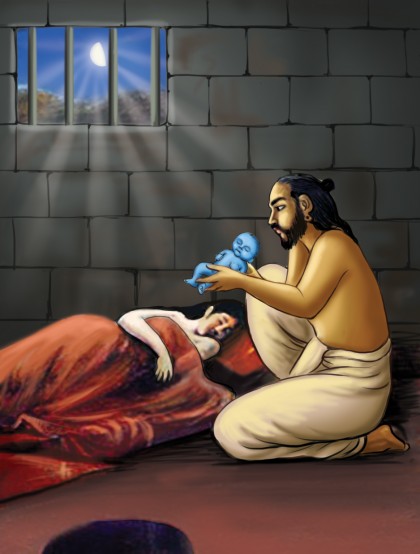 Looking for light in prison. An assignment for the kabbalah class tonight. Rabbi Jamie suggested watching a movie like Hurricane, about Rubin Carter. I thought of MLK and Letters from the Birmingham Jail and Nelson Mandela, too. Then I remembered a portion of the
 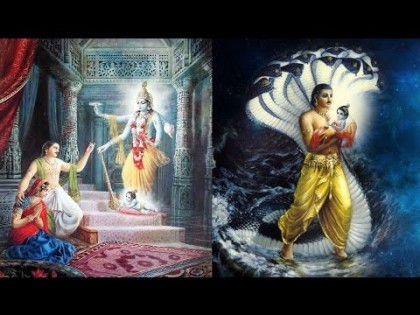 Finally, nine years later, Devaki is pregnant again, this time with the eighth son Kansa dreaded. This son is Krishna, an avatar of Vishnu.