For my unconquerable soul.” William Ernest Henley, Invictus
astronomy today, formation of the moon
The Winter Solstice. Today and tonight. 23.4 degrees of tilt. Explanation for the tilt is not settled science though at least part of the answer seems to lie in the accretion of matter and the occasional outright collisions that occurred during our planets formation early in the history of the solar system. Another interesting theory, perhaps part of the answer too, is that any large imbalance, say a supervolcano with a huge mass, could have caused the earth to tilt so that mass ended up near the equator.
Whatever the exact reason, the current tilt, which remains constant as the earth revolves around the sun, creates our seasons. As the earth orbits, the tilt causes a reduction and increase of the energy of the sun’s light by either concentrating it during the summer solstice (leaning toward the sun) or by spreading the light over a wider area (leaning away from the sun) during the winter solstice. Today at 9:28 MST the northern hemisphere will be at its maximum tilt away from the sun while, of course, the southern hemisphere is thrust toward the sun and celebrating its summer solstice.
All of this is a continuing evolution caused by forces set in motion by the big bang over 13 billion years ago. The fact that I’m sitting at 8,800 feet on a chunk of rock thrust up by the Laramide orogeny, watching snow drift down as the air up here cools toward below zero temperatures, waiting for the longest night of the year, 14 hours and 39 minutes here in Conifer, showcases the violent origins and their ongoing impacts on earth and her sister planets. When we settle into the chair tonight, or hike outside with a headlamp, or listen to some quiet jazz or Holst’s The Planets, the darkness enveloping us is an in the moment result.
As the earth leans away from the sun, we can lean into the darkness, the long night when the woods are lovely, dark and deep. As we do, we have the opportunity to sink into the fecund darkness within us, a soul link with the darkness all around us and our tiny solar system. In it we can recall sleeping animals in their dens, beneath chilled lake waters, in their lodges made of sticks and branches. In the darkness we can rest a moment beneath the surface of the snow and cold covered soil where roots and microbes work feverishly transmitting nutrients and available water into plants slowed, but not killed by the seasonal temperatures.
In the darkness we can attend to the dark things within us, the places in our souls where our own origins and their ongoing impacts create a climate for our growth, down below the conscious considerations of our day-to-day lives. We can embrace this darkness, not as a thing to fear, but as a part of life, a necessary and fruitful part of life.
I’ll sit in my chair this evening as the night unfolds (I love that imagery.) and consider death, my death, my return to the woods, lovely dark and deep. And, I’ll hug close to my heart the life I’ve been given and this opportunity, granted by the stars, to meditate on it.
I’m having a crisis of sorts, it will pass and life will return to normal, probably later today, but right now I’m having an identity crisis. Remember those?
Here’s a Psychology Today article about identity. As I took the short quiz at the bottom, I had two achieved statuses, politics and gender roles, one moratorium status, career choice, and a difficult to assess religious status. This latter status, religion, is perhaps more achieved than my current feelings suggest since I’m deep into a context which challenges my commitment regularly.
I’ll bracket the religious question for this post since I do have a position, one I’ve established over many years of thought and with which I’m comfortable. I think the oscillation, tension there is reasonable to expect given my current immersion in Judaism.
The other moratorium status, career choice, is a different matter. It may seem odd to have a career choice moratorium* at 70, but it is so. Unlikely to change now, too. Having this realization again, (it’s not new) is the emotional side of this crisis.
I thought I had my life direction nailed down. College, graduate school. Some sort of professional career, perhaps lawyer, perhaps professor, perhaps something not visible from within the boundaries of an Alexandria, Indiana horizon. Then, my mom died. That threw my final year of high school into turmoil. God, this hurts just writing about it.
No one’s fault. A random event, but one with devastating emotional consequences for me. I hit my first year of college, just about a year after her death, with high hopes, probably even fantasies. I’d gone through GQ issues over the summer and picked out a navy blue blazer, charcoal pants, oxblood shoes and a madras sport coat. I had a vested herringbone suit from my junior year. These clothing choices symbolized my desire to become someone new at Wabash.
Most kids heading off for college, especially in the fifties and mid-1960’s, had a similar desire. Shape that adult self. Live into an adult role. The expectation was that college would provide room for exploration, trying on this and that persona, in effect researching skills and passions, until something coalesced. Then, earning money and work would merge into an expression of who you were. That’s why college was called then, the moratorium years. College was explicitly a time to be low on commitment, but high on exploration.
Didn’t happen for me, in terms of career. At Wabash I picked up three bad habits: drinking, smoking and self-doubt. The first two were fraternity based, lots of drinking and smoking. This was 1965, just before the emergence of the drug scene, so I was conventional in those choices. But, I was also an addictive personality so drinking and smoking would require much time and energy later to overcome.
Self-doubt happened in a way not uncommon, I imagine, for small town valedictorians. Wabash, at the time, was highly selective, only 200 in each class, all male and each bright, accomplished. I was not only not the smartest person in the room, I wasn’t even in the middle. Over time I imagine this would have sorted itself out, but I was too emotionally fragile, still grieving. My dad tried to understand, tried to be supportive, but I didn’t let him into my agony.
identity-cover socionic
And so began a pattern. I left Wabash the next year, putatively over financial issues though I had a partial scholarship, but really it was the combination of drinking and feeling overwhelmed by the academic demands. I did well enough, mostly A’s, except for German, which almost resulted in my first D or F until I dropped it, but my nights were spent in anxious dreams, waking up with sweaty palms. I didn’t fit in. I hated the fraternity, but had no choice except to be in one due to odd Wabash rules for freshmen.
In 1966, a time of tumultuous change in the country, especially for college students and especially male, draft eligible college students, I chose, for reasons I don’t recall, to go to Ball State. It was close to home. That may have been the reason.
In another odd circumstance my love affair with philosophy, begun at Wabash, found me only a few credits shy of a major after four semester long philosophy courses I took in my freshmen year. That meant I could take a couple of philosophy classes, secure my major and move onto something else. Anthropology.
I loved anthropology, too. Enough, it seemed, to make it a career. I combined my interest in philosophy and decided to enter the narrow field of theoretical anthropology, thinking about how anthropology works, how it could work, how it should work. That turned out to be a mistake and one I didn’t recover from. I applied to, and was accepted, at Brandeis and Rice, for graduate programs. But because my field was theoretical anthropology, I got no financial awards. That meant I needed a fellowship and I was nominated for a Danforth. In the end though, the end of college and of a political career based on radical politics at Ball State, I chose to do nothing. Just. Nothing.
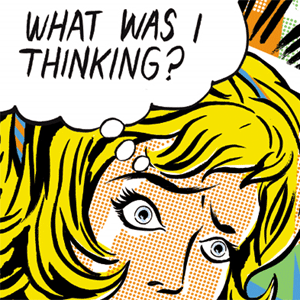
Judy came into my life right at that point. A someone. Another mistake. For both of us. I did end up in Appleton, Wisconsin with her, moving there after a disastrous few months as a manager trainee for W.T. Grant and Company. What was I thinking?
This question, relevant to career, would become synonymous with my choices, one after the other. Seminary. I stayed in and got ordained. WWIT? I worked as an administrator. WWIT? I became a church executive. WWIT? I left the church to write. In this case I knew what I was thinking, but never got all the way there as a writer so, WWIT? For a moment I went back to the ministry as a UU. I was serious enough to intern at a UU church in St. Paul where I agreed to be the development minister. In this case, a really, really big WWIT?
And so, here I am at 70, no career I really chose except writing and that one I couldn’t have sustained had it not been for the grace and love of Kate. There’s my identity crisis. Who have I been? What have I wanted to do with my life? Late in the game to ask these questions though to be honest they’ve surfaced right along since Wabash.
I could use help reframing all this. It’s not like I’ve drifted through life, doing nothing at all. I just never wrapped it up in a social role to which I felt like I truly belonged. Don’t know what that makes me at this point in my life. In a sense the third phase is the point when this question ceases to matter. That particular race finished a while ago and I’ve come into the pits. No more laps. Yet. What does, what did it all mean? I really don’t know at this point.
In yet another sense, and one I fully support with most of my being (ha), the answer doesn’t matter. I’ve lived. I’ve loved. I’m still doing both. The essentials. And, enough. I know. I know.
Yet the question lingers. What did I do?
“People high on exploration but low on commitment are in a category that Marcia called “moratorium.” This means that they have placed a hold on making the major decisions in their lives. They’re thinking hard about what they want to do but aren’t ready to commit.” from the article linked to above.
I also recalled yesterday that I’ve had this end of year let down often. When I worked for the Presbytery, I noticed that no congregation wanted a church executive around during the run up to Christmas and the week after, through New Year’s. This may have been a post-school rationalization to give myself a winter break. Whatever it was I think the pattern is probably there, triggered this time by the end of kabbalah.
It feels ok now that I know what it is. I’m going to ride it out through New Year’s, continuing to write Ancientrails and exercising, but other than that trying to follow a more unpredictable path. Getting some work done around the house. Reading outside my current Judaism concentration. Movies. More cooking. Enjoying holiday time and visits.
For lack of a better term, this is my winter break.
It also occurred to me that I live in the mountains, a spot in the U.S. that literally millions come to see every year, then go home. Maybe I’ll get out and about a bit more over the next couple of weeks. Strap on those snow shoes. Oh, yes, we did have snow. Not a lot, but enough for snow shoeing, I think.
After writing the post below, about slowing down, I realized I need a vacation. Time off. A break. A pause. I need to vacate the life I love for just a bit, to clear out the schmuz in my pistons. Confess I don’t know how to do that right now. Money. Visitors. Holidays. I’m considering how to do it.
So I’ve started cooking more. My joy in cooking is making stuff up. Last night I went through one of my favorite cook books, How the World Cooks Chicken. There were two large thawed chicken breasts in the sink.
Taking ideas from one recipe and adding them to another. I like that. So I saw quince in one, but you could substitute apples. I had apples. Parmesan cheese. Hmm. Sounds good. But, no parmesan. Well. Let’s see. There’s salmon in the freezer. Why did that come up? I like poached salmon. Wait. Why not? I could poach the chicken.
Two cups of water in the skillet. Some bullion. Paul Prudhomme poultry seasoning on the chicken breasts. Sliced up apple. Porcini and sea salt seasoning. Kate likes mushrooms. There was some Zatarain’s cilantro rice. That’ll go with the chicken. And some frozen peas. Easy peasy.
The poaching went faster than I thought so I had to toss the skillet in the upper oven, but everything got done. Not bad. Afterward I realized the chicken could get cut up, the leftover rice and peas thrown in with the chicken broth and voila! Soup. Nice. That was fun.
Anyhow that’s how I cook.
Afterward, kabbalah. Three presentations. One on the idea of the holy of holies. The temple looms large in Jewish thought, in many, many ways. One on the link between the ten sefirot and a Japanese inspired version of Chinese medicine, acupressure. One on the surprisingly pervasive influence of the kabbalists in the shabbat service. All were, in their own way, interesting. Having to come up with a presentation did cement the learning for each of us, that was clear. And, they led to interesting speculations.
The new class, ready in January, will be on the correspondence between the Hebrew letters and the 22 interconnections between the sefirot.
I got excited before my presentation at Beth Evergreen. It felt substantial and unique, so I was eager to see what others would think. There were three of us presenting last night. Anshel talked about the mezuzah and its correlation to the tree of life. CC presented Maslow’s hierarchy and laid it over the tree of life. It fits well. Seeing both of them wrestle with their material and its fit with the tree of life reinforced our learnings and gave us new insights.
Anshel, for example, explained that the placement of the mezuzah on the door post relates to the four worlds of the kabbalah and should be placed at the bottom of the top third of the doorway. The mezuzah protects against demons and will protect the whole house. It guards space and reminds us that the space about to be entered is holy.
CC’s work with Maslow sparked a conversation about the difference between human agency in moving up the pyramid as opposed to the necessity of God’s agency. Within my worldview this is a false dichotomy, but the conversation was fruitful. It’s a false dichotomy to me for two reasons. 1. How else would God move someone up the pyramid save through human agency? 2. Since I see energy moving up and down the tree of life, from the invisible to the visible and back through the visible to the invisible, this energy flow is the key agency involved, imh. I might call it chi, or prana, or l’chaim. Could also call it divine or vitality or consciousness. I don’t see that adding God to the conversation accomplishes much.
I got antsy during these two presentations, wanting to be sure I had enough time. I wanted the conversation over with. Not my finest hour. I’d gotten myself so enthused that I really wanted to see how people would react to my ideas. A teachable moment for me. I did reenter the moment during both presentations and was proud of myself for being able to.
When my turn came, it was past 8 pm and we usually end at 8:30. We quit around 8:45 or 8:50, so I ended up with plenty of time. The conversation was eager and engaged. Debra said the ideas “gave her chills” and Rabbi Jamie said it was fascinating. Because I didn’t outline my ideas, they flowed better, but I did leave out some key material.
In the end I felt heard and honored for my understanding of the relationship between the cyclical turn of the seasons and the meaning of the tree of the life to kabbalists.
This is a unique place, Beth Evergreen. I’m accepted as a full member of the community, in every meaningful sense, yet I’m on a divergent spiritual path from nearly every one else.
Reconstructionist Judaism and I approach religious matters in an oddly similar way, looking for the fit with real life, for the way to articulate ancient knowledge in a contemporary idiom. We share, in other words, a way of thinking about religion, though we do not share starting points. That’s tremendously exciting to me.
Add in, then, the kabbalist’s contention that all torah is metaphor and I find myself able to learn from the thousands of years of Jewish thought while maintaining my status as a fellow traveler.
Since I have long believed that the world’s religions are philosophy and poetry accessible to all, I remain eager to learn from them. Since I know their claims cannot all be true, I choose to remain outside them, yet to walk with them as part of my journey. During college, when fellow students were turning to Asian faiths: the hare krishnas, zen, tibetan mysticism, I believed that the religious traditions of the West were most culturally attuned to the American mind. I still believe that and find Judaism and its traditions and thoughts, like Christianity, trigger a depth of understanding I don’t get from the Asian faiths.
That’s not to say that zen, tibetan thought, and particularly for me, taoism, don’t have lessons and insights, too. Of course, they do. But, for me, acculturated in the Judaeo-Christian West, I find I learn best from within my cultural framework broadly defined.
Trying out another browser, Firefox Quantum. Changing browsers is a hassle, but the benefits of Quantum seem considerable. Right now I’m still on Chrome, but I plan to complete the transition today. I’ll let you know how the transition goes-for those who might care.
Spitting snow this morning, colder. 26. Heading into a cooler week, but then again, it is November 28th. A La Nina year.
Finally back at Jennie’s Dead. Again. Been bumpy. Holidays and “getting stuff done before winter sets in.” This latter is a holdover from 40 years in Minnesota. It’s a now thoroughly ingrained instinct inculcated by years of gardening, bee-keeping and brutal winters with little let up in the cold. Then, too, there’s Hebrew, kabbalah, the Evergreen Forum, ancientrails, all demanding in their own way. A good way.
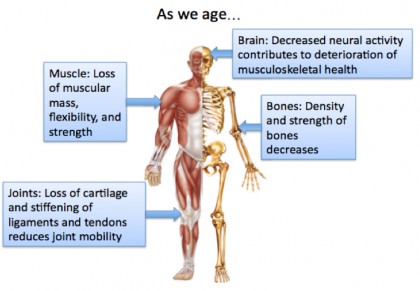
Set a time on Thursday to get a new workout. The old one has grown stale, but it brought me to a new level of fitness, one I can feel in day to day activities. Exercise kicks in endorphins for a right now feel good, but it’s most important role is health maintenance. Sarcopenia, the slow decrease in muscle mass that begins in our 40’s, accelerates in our 70’s. You know, opening jars, lifting boxes, pushing a snow shovel, cleaning up the garage, carrying in groceries, all those everyday uses of our body become harder and harder.
In a nod to this change in both Kate and me, for example, I’ve put blue masking tape on all of our round door knobs because our grip strength is less. Arthritis in the thumbs and fingers can make turning the knobs painful. The tape is a temporary fix, a workaround, eventually we’ll have press down door handles installed. Sarcopenia is a bitch.
Exercise is a way to push back against these changes. It doesn’t solve them, but it helps. The cardio work maintains the pump that literally keeps us alive, helps it respond to crisis modes without giving up. Been at it so long it’s just part of my day.
Restrung the lights out front trying to get even spacing between the two strands, but my skills don’t seem up to the task. However, I did not allow the best to be enemy of the good. They’re up and I like’m. Just the way they are.
Conversations with Ruth. Yesterday Kate wasn’t feeling so well in the a.m., nausea that plagues her mornings on occasion. So I was the breakfast guy for Ruth and Gabe, who stayed here starting on Sunday evening through last night. Ruth came down first, unusual because Gabe is usually the early riser. She fixed herself some ramen, she’s a good cook all on her own, learned from Grandma.
We started talking. She loves her new school, Mcauliffe. It’s not in a modernist soul stealing box like Sweigart, her elementary school. It has ornamentation, having been built in 1914, which she described in some detail. Gothic arches over drinking fountains, molding with inlays, stair rails with decor under the polyurethane, big windows and the exceptional cupolas visible in this photograph. She’s an arts oriented girl, very aware of the design of her surroundings. We both like this older, more whimsical era of architecture.
Ruth, Wilson, Kate at a cross country meet
Mcauliffe also has periods, unlike the daily grind in an elementary classroom where you only leave for recess and lunch. The freedom that grants her between classes means a lot to her. She’s taking Mandarin, robotics, math, language arts, gym, earth science and art. It’s a more challenging environment for EGT’s, extremely gifted and talented, which she’s finally beginning to embrace as describing herself.
Polaris is the GT middle school, but she chose Mcauliffe because all save one of her friends from Sweigart chose it, too. Her bffs Wilson and Annika in particular are at Mcauliffe. Annika is a competitive climber, traveling the U.S. to participate in timed ascents of climbing walls. Wilson ran cross-country as she did. They spend a lot of time together outside of school.
This transition to middle school, along with declining stress from the divorce, seems to have allowed her to open up, blossom in ways that are beautiful to see.
We also talked about books. She’s a voracious reader, currently focusing a lot of her reading on Jodi Picoult, though she just started Little Fires Everywhere by Celeste Ng. Of course, she also has books to read for school, the humorous part there being that the first book assigned to her she had already read. In the third grade.
She wanted to know who my favorite authors were. Always a stumper for me since I’ve been reading much like Ruth for over 60 years. Lots of typeface over the eyeball transom, not all of it stuck in the memory banks. Yesterday I went with Herman Hesse, Tolstoy, Dostoevsky, and William Gibson. Asked today I would add Philip Kerr, Kim Stanley Robinson, Kafka. Tomorrow another group. Not to mention poets and classical authors, playwrights and non-fiction writers.
I put together an Ikea reading chair for her and an almost identical one for myself. She sat in hers, me in mine. She also loves art and wanted to know what my favorite piece of art was here in the loft. I have an Andy Warhol print of soup cans that I like a lot. She likes my Mike Elko print satirizing the Bush terror propaganda.
She’s a young lady with many interests, including alpine skiing. She’s been skiing since she was three and at this point is very accomplished. She and Jon are going to ski on Friday at Arapahoe Basin, or, as it is more usually known here, A-basin. She also loves to cook. Yesterday she made banana bread, rosemary bread, a pecan pie and cut up the yams for caramelized sweet potatoes. Today she’s making deviled eggs to bring to Thanksgiving tomorrow.
She’s still very tender on matters related to the divorce, not yet ready to sort out how she feels about it. The more I see her on this side of it, the more I believe the negative effects of Jon and Jen’s explosive fighting were awful for her. She has an inquisitive spirit, is very observant, and, unfortunately, is not inclined to talk about her feelings. All of these facets of her personality have made processing the turmoil of the last few years difficult for her. In the extreme.
It’s exciting to see her beginning to know herself, to gain agency in her life in a positive, not angry way. I’m grateful to have her as a grandchild, one I see frequently.
You have entered the holiseason zone. Of course, it’s well underway since it begins now with Rosh Hashanah, but Thanksgiving, with its grocery shopping, tablescaping, bedroom preparing and gathering of family is a key moment, the holiday that marks the start of a remarkable run: Advent, Posada, Hanukkah, Winter Solstice, Saturnalia, Christmas, Kwanzaa, New Year’s. Wow. The metaphysical crackling in the air gets intense with lights and ideas and gods and astronomical night. It’s my favorite time of the year.
The Thanksgiving project for me is a golden capon with pancetta and fig stuffing. A lot of oranges are involved, too. The challenge of finding a capon found its match in finding fresh figs. A nice man at Whole Foods explained that northern hemisphere figs are available in the summer and southern hemisphere figs just before Christmas. Oops, not in time for Thanksgiving. Then, a Thanksgiving miracle! Kate found them at King Sooper after I’d called specialty stores like Whole Foods, Sprouts, Natural Grocers and gotten nada. Yeah.
The whole gathering in of items for pecan pies, Ruth made ours last night, and yams and green beans and potatoes is a simulacrum of growing it all, or hunting and gathering for the feast. And, yes, our finding a retailer with figs and capons is no match, but it did add uncertainty and joy in discovery.
A mountain Thanksgiving is like others, but with a lot more altitude.
After a very busy week, a good busy with friends and Hebrew, kabbalah and time with Kate, yesterday was a rest day. Wrote, did my workout (which takes a while), napped, had a wonderful lamb supper cooked by Kate, who’s a wizard with meat. Watched some more of the Punisher on Netflix. On seeing that on the TV as she went to bed Kate said, “I don’t like your choice of programs.” “I know,” I said. Eating red meat and watching TV are hangovers from my Indiana acculturation, neither of which would I recommend to my children or grandchildren, but which I also thoroughly enjoy. No excuses.
Admitting to liking television in the crowds in which I tend to run is like admitting you enjoy belching or farting in public. Declassé. And it is, I suppose. My rationale (or, perhaps, as is often the case with rationales, my rationalization) is relaxation, in particular relaxation from a day usually spent in intellectual and physical activity. I love stories and TV, especially right now, is full of good storytellers who use visuals to enhance their storytelling. I’m sure there’s a sophisticated psychology explanation for this habit, but TV serves a purpose in my life. So there.
Thanksgiving this week. I’ve got a Martha Stewart recipe for capon with pancetta and fig stuffing. Which, of course, requires finding a capon, a mystery meat, as I said yesterday, to Colorado butchers. Tony’s Market. I ordered one and I’m going to call them today just to make sure it’s really coming. I did try to find a capon on which to experiment, but the only one I could find was $63.00. Ouch. Thanksgiving will be the experiment.
I really like cooking, used to do a lot more. It requires mindfulness and produces a meal for others to enjoy. Just popping up from my days of anthropology: The Raw and the Cooked, by Claude Leví-Strauss. In this book the French anthropologist talks about the binary of raw food to cooked, prepared food, seeing the development of cooking as fundamental for the human species, a key movement leading toward civilization. (I’m not going to go into it here, too complex, but if you’re interested in dialectical thinking, the raw-cooked distinction is an example of binary opposition, a distinctively French version of dialectical thought which underlies Leví-Strauss’s idea of structuralism, a short introduction to it is here.)
My point in this last paragraph is that cooking is central to being human; so, engaging in it, at any level, links us directly to the story of human evolution. In that way we can look at Thanksgiving, or any big holiday meal, as linking a key step in our change from merely animal to animal with culture, to another key step, the abstraction of particular days, the elevation of particular moments in time, into holidays. The other night I realized that for dogs all days are the same no Tuesdays or passovers or superbowls, no Guy Fawkes or Mexican independence days, rather sequences of day and night, with food and friends, human contact.
We’re not like dogs in that fundamental sense. As Emerson observed, “The days are gods.” Another binary opposition is the sacred and the profane, like the holy and the secular, ordinary time and sacred time. We imbue, out of our speculative capacity, the passing of time with certain significance. The day we were born. The yahrzeit notion in Judaism, celebrating the anniversary of a death. A day to celebrate the birth of a god, or to remember a long ago war against colonial masters. We identify certain days, a vast and vastly different number of them, as new year’s day, the beginning of another cycle marked by the return of our planet to a remembered spot on its journey.
When we merge our speculative fantasies with the chemistry of changing raw food into a beautiful cooked meal, we can have extraordinary times. The natural poetics of wonder join the very earthy act of feeding ourselves to create special memories. Very often on those days we gather with our family, a unit that itself memorializes the most basic human purpose of all, procreation of the species. We don’t tend to think of these most elemental components, but they are there and are sine qua non’s of holidays.
So, cook, pray, celebrate. Laugh. With those you love. If you care to, take a moment to consider these amazing things, too. That we know how to transform a neutered rooster into something delicious, something that will undergo the true transubstantiation, the changing of soil chemicals, the bodies of animals and plants into a human body. That we have the idea of Thanksgiving, or the idea of Hanukkah, or the idea of Labor Day and mark out a chunk of the earth’s orbit as special for those ideas. That we choose to gather on them with our small unit of humanity’s long, long ancientrail of development and critical change and doing so honor all of these elementals.
Because we began our married life together in Rome, Italian restaurants have a special place in our hearts. Not to mention that the Italians really know food. We went to Coperta last night in downtown Denver. The name means blanket and connotes a warm, comfortable place. It was.
Realized we hadn’t done this in a while, gone out together, into the city. It was revivifying.
We mulled over the move, again, congratulating ourselves on doing it when we did; when we had tired of the work in Andover, but before we’d gone deep into old age. We love living in the Rockies, seeing wildlife and rock, mountain streams every day. Our house fits us perfectly and provided a good respite for Jon and the kids during the last 14 months. The dogs like the yard. Beth Evergreen has given us a community of like minded folks, all searching for their best selves.
January 2015
The first three years have had their challenges, most readers of this blog already know them: prostate cancer, Kate’s struggles with rheumatoid arthritis and now Sjogren’s Syndrome, total knee replacement, and Jon’s divorce, his moving in with us. It would be nice if the universe would let up on the lesson plan, give us some time to regroup, get our breath. Could happen.
27 years. 28 next March. Years of learning each other, of supporting each other through thick and thin, challenging each other, cheering each other. Last night we ate Italian and enjoyed the memories it evoked.


 In the darkness we can attend to the dark things within us, the places in our souls where our own origins and their ongoing impacts create a climate for our growth, down below the conscious considerations of our day-to-day lives. We can embrace this darkness, not as a thing to fear, but as a part of life, a necessary and fruitful part of life.
 I thought I had my life direction nailed down. College, graduate school. Some sort of professional career, perhaps lawyer, perhaps professor, perhaps something not visible from within the boundaries of an Alexandria, Indiana horizon. Then, my mom died. That threw my final year of high school into turmoil. God, this hurts just writing about it.
 Most kids heading off for college, especially in the fifties and mid-1960’s, had a similar desire. Shape that adult self. Live into an adult role. The expectation was that college would provide room for exploration, trying on this and that persona, in effect researching skills and passions, until something coalesced. Then, earning money and work would merge into an expression of who you were. That’s why college was called then, the moratorium years. College was explicitly a time to be low on commitment, but high on exploration.
 I loved anthropology, too. Enough, it seemed, to make it a career. I combined my interest in philosophy and decided to enter the narrow field of theoretical anthropology, thinking about how anthropology works, how it could work, how it should work. That turned out to be a mistake and one I didn’t recover from. I applied to, and was accepted, at Brandeis and Rice, for graduate programs. But because my field was theoretical anthropology, I got no financial awards. That meant I needed a fellowship and I was nominated for a Danforth. In the end though, the end of college and of a political career based on radical politics at Ball State, I chose to do nothing. Just. Nothing.
 And so, here I am at 70, no career I really chose except writing and that one I couldn’t have sustained had it not been for the grace and love of Kate. There’s my identity crisis. Who have I been? What have I wanted to do with my life? Late in the game to ask these questions though to be honest they’ve surfaced right along since Wabash.
 I also recalled yesterday that I’ve had this end of year let down often. When I worked for the Presbytery, I noticed that no congregation wanted a church executive around during the run up to Christmas and the week after, through New Year’s. This may have been a post-school rationalization to give myself a winter break. Whatever it was I think the pattern is probably there, triggered this time by the end of kabbalah.
 After writing the post below, about slowing down, I realized I need a vacation. Time off. A break. A pause. I need to vacate the life I love for just a bit, to clear out the schmuz in my pistons. Confess I don’t know how to do that right now. Money. Visitors. Holidays. I’m considering how to do it.
 Afterward, kabbalah. Three presentations. One on the idea of the holy of holies. The temple looms large in Jewish thought, in many, many ways. One on the link between the ten sefirot and a Japanese inspired version of Chinese medicine, acupressure. One on the surprisingly pervasive influence of the kabbalists in the shabbat service. All were, in their own way, interesting. Having to come up with a presentation did cement the learning for each of us, that was clear. And, they led to interesting speculations.
 CC’s work with Maslow sparked a conversation about the difference between human agency in moving up the pyramid as opposed to the necessity of God’s agency. Within my worldview this is a false dichotomy, but the conversation was fruitful. It’s a false dichotomy to me for two reasons. 1. How else would God move someone up the pyramid save through human agency? 2. Since I see energy moving up and down the tree of life, from the invisible to the visible and back through the visible to the invisible, this energy flow is the key agency involved, imh. I might call it chi, or prana, or l’chaim. Could also call it divine or vitality or consciousness. I don’t see that adding God to the conversation accomplishes much.
 In the end I felt heard and honored for my understanding of the relationship between the cyclical turn of the seasons and the meaning of the tree of the life to kabbalists.
 Since I have long believed that the world’s religions are philosophy and poetry accessible to all, I remain eager to learn from them. Since I know their claims cannot all be true, I choose to remain outside them, yet to walk with them as part of my journey. During college, when fellow students were turning to Asian faiths: the hare krishnas, zen, tibetan mysticism, I believed that the religious traditions of the West were most culturally attuned to the American mind. I still believe that and find Judaism and its traditions and thoughts, like Christianity, trigger a depth of understanding I don’t get from the Asian faiths.
 Trying out another browser, Firefox Quantum. Changing browsers is a hassle, but the benefits of Quantum seem considerable. Right now I’m still on Chrome, but I plan to complete the transition today. I’ll let you know how the transition goes-for those who might care.
 Set a time on Thursday to get a new workout. The old one has grown stale, but it brought me to a new level of fitness, one I can feel in day to day activities. Exercise kicks in endorphins for a right now feel good, but it’s most important role is health maintenance. Sarcopenia, the slow decrease in muscle mass that begins in our 40’s, accelerates in our 70’s. You know, opening jars, lifting boxes, pushing a snow shovel, cleaning up the garage, carrying in groceries, all those everyday uses of our body become harder and harder.
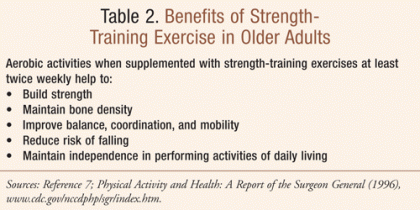 Exercise is a way to push back against these changes. It doesn’t solve them, but it helps. The cardio work maintains the pump that literally keeps us alive, helps it respond to crisis modes without giving up. Been at it so long it’s just part of my day.

 She wanted to know who my favorite authors were. Always a stumper for me since I’ve been reading much like Ruth for over 60 years. Lots of typeface over the eyeball transom, not all of it stuck in the memory banks. Yesterday I went with Herman Hesse, Tolstoy, Dostoevsky, and William Gibson. Asked today I would add Philip Kerr, Kim Stanley Robinson, Kafka. Tomorrow another group. Not to mention poets and classical authors, playwrights and non-fiction writers.
 She’s still very tender on matters related to the divorce, not yet ready to sort out how she feels about it. The more I see her on this side of it, the more I believe the negative effects of Jon and Jen’s explosive fighting were awful for her. She has an inquisitive spirit, is very observant, and, unfortunately, is not inclined to talk about her feelings. All of these facets of her personality have made processing the turmoil of the last few years difficult for her. In the extreme.
 The whole gathering in of items for pecan pies, Ruth made ours last night, and yams and green beans and potatoes is a simulacrum of growing it all, or hunting and gathering for the feast. And, yes, our finding a retailer with figs and capons is no match, but it did add uncertainty and joy in discovery.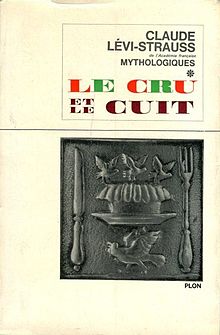
 I really like cooking, used to do a lot more. It requires mindfulness and produces a meal for others to enjoy. Just popping up from my days of anthropology:
  We’re not like dogs in that fundamental sense. As Emerson observed, “The days are gods.” Another binary opposition is the sacred and the profane, like the holy and the secular, ordinary time and sacred time. We imbue, out of our speculative capacity, the passing of time with certain significance. The day we were born. The yahrzeit notion in Judaism, celebrating the anniversary of a death. A day to celebrate the birth of a god, or to remember a long ago war against colonial masters. We identify certain days, a vast and vastly different number of them, as new year’s day, the beginning of another cycle marked by the return of our planet to a remembered spot on its journey.
 When we merge our speculative fantasies with the chemistry of changing raw food into a beautiful cooked meal, we can have extraordinary times. The natural poetics of wonder join the very earthy act of feeding ourselves to create special memories. Very often on those days we gather with our family, a unit that itself memorializes the most basic human purpose of all, procreation of the species. We don’t tend to think of these most elemental components, but they are there and are sine qua non’s of holidays.
 January 2015
.jpg" title="Fair use of copyrighted material in the context of The Raw and the Cooked">Fair use</a>, <a href="https://en.wikipedia.org/w/index.php?curid=45649279">Link</a>)