Samain Thanksgiving Moon
 Warmer, 31, and cloudy. The waning Thanksgiving Moon lit my morning walk to the loft through a veil of patchy cumulus. The neighbor in the rental put up an inflatable turkey with a pilgrim hat a week or so ago. Now there’s a Northpole sign on their mailbox, a Santa Claus and Christmas lights. They did wait until Thanksgiving was over. Most of us on our stretch of Black Mountain Drive have less glam. We have lights on at night all year, but just a strand in the front and along the walkway up to the loft. Holiseason brings out the inner kid. That’s Eduardo and Holly’s lights in the distance.
Kate’s still struggling. Her weight seems to have stabilized in the 80 to 81 pound range. She can’t get weight on in spite of eating and snacking. The nausea and the abdominal pain have returned. Her spirit seems good most of the time, but the lack of progress has begun to wear on her. I can see that. What happens next is a couple of more imaging studies this Thursday. Not really expecting that they’ll show anything. If they don’t, Dr. Rhee has agreed to consider tube feeding. She needs to get calories somehow and the traditional way isn’t working.
 I’m finding a peculiar satisfaction in domestic work. Dishes in the dishwasher right after use. Throw a load in the washer when I get up in the morning. Cooking what we have. There’s a thread through the day, things to do that are active and loving. I’ve come to like it. One of the things I noted a long time ago was that women’s work (in a stereotypical sense) dealt with life’s basics. Eat. Clean. Support. Repetitive. The clothes always get dirty. The dishes come after cooking. No matter what groceries and other supplies have to be purchased. Rinse and repeat. It makes sense to me now how homemaking is a noble art, a task unfairly distributed by past gender roles, yes, but so important to the well-being of a family.
Maybe if I’d ever paid attention to fixing things, I’d get traditional male role satisfaction there, too. But, I haven’t. Oh, I have my moments. The jerry-rigged deck with wooden palettes and horse stall mat walking surface. The cabinet doors finally fixed with longer screws. But really it just frustrates me to try make the physical world conform to what I want.

One thing that is different now from when Kate had shoulder surgery back in April is that we have a functioning dish washer. Boy, does that make a huge difference. When I cooked then, the dishes went into the sink, glaring at me until I did them. The added step after cooking and clean up wore me out. Now I get the dishes and pans in there right away and they’re off my mind. A mind saving as well as a labor saving device.
Annie goes home today. She’s had her hands full the last couple of days making funeral arrangements for a sort of ward of the Fatland family, Kate’s mom’s family. Barb was 98. Annie’s also doing a counted cross stitch of the Devil’s Tower. Fine work. She’s out of the jail now after 30 years inside, as a guard. A lot of adjustment as any major life shift like that requires.
Around 8:30 this morning I’m into Denver to the Denver City/County criminal court. Jon’s court date for the restraining order violation. Not sure what to expect. Jon seems to think it will not be too harsh. I hope he’s right. He has enough going on with his house and his car, being a single parent.
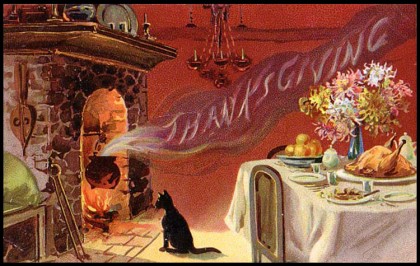 We put out our best aluminum tins from Tony’s. Mashed potatoes, sweet potatoes, sage stuffing, green beans almondine. I plunged the plastic bag of turkey gravy in boiling water. The turkey breast went in a shallow pan with a 1/2 cup of water. We have two ovens and the top one, the smaller of the two, did its job well for the potatoes and the stuffing.
 On the table sat our finest paper plates, a big turkey printed on them saying gobble, gobble, gobble. The napkins had pumpkins and vines and stuff. The meal was very good and aside from the now suspect ovens (I won’t mention that the other one went wonky, too.) exceeded my hopes.
 Kate’s two months from hell. A modest amount of this excellent meal sent her straight to bed. Not sure where we go from here. Smoothies and Korean food, maybe.
 Woke up this morning and did my gratitude practice. At night I consider all the gifts I got during that day, all the gifts I gave, and any trouble I caused. In the morning I start out with what I’m grateful for right now. Both practices seem to soothe me, put me in a place to receive and accept blessings. Life’s a hell of a lot better when I’m in that sorta space.
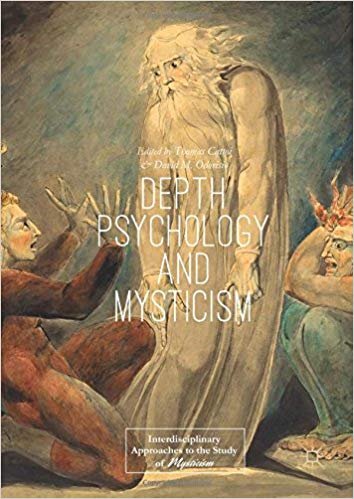
 One more turn to Tarnas before my consultation with Elisa tomorrow. He made his move toward a synthesis of the modern mind and the Romantic–equivalent to the distinction between the self shaped by the Copernican disenchanted cosmos and the primal, ensouled (enchanted) universe that went before. His initial step came through depth psychology, tapping the collective unconscious and the idea of synchronicity to suggest a permeable self influenced by the cosmos and influencing it. Having opened the door between Self and cosmos with depth psychology, he turned toward astrology.
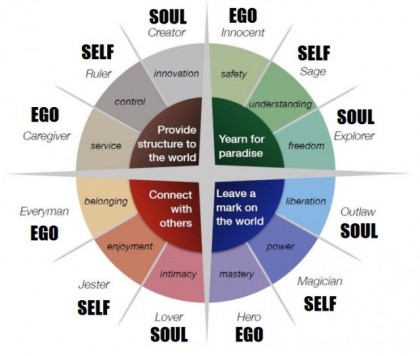 His argument about skepticism as a tool, not an end, was a wakin’ up moment for me. Oh, duh! Of course. Only I hadn’t seen it that way. Skepticism was a way of life for me and I treated the world of ideas as you might expect. I embraced almost nothing, held every philosophical and religious claim at a skeptical arms length. Yes. And no. I had let the tool use me, rather me using the tool.
 My only point here is that astrology, especially one linked as Tarnas does to the concept of archetypes, may provide us with aids to self-knowledge, aids that light up an enchanted universe, help it become visible. And if it does, I want to use it, include it in my tool kit. Right there alongside skepticism. But I don’t see it as the only, or even the most important, clue to an ensouled universe.
 When Orion rises, as he does each year, and I see him for the first time, it is the same feeling as seeing an old friend again. The same feeling. Orion has been with me and I with him since the guard shack in Muncie, Indiana where he graced my night shift attention. Orion is not merely starry objects far away, arranged in a distinctive pattern, though he is that. He is a part of the universe with which I have a personal relation. Is that relationship reciprocated? I don’t know. But, it feels like it.
 The current signature line on my e-mails is from John Muir, “You are not in the mountains, the mountains are in you.” Yes. In this discussion that includes depth psychology it’s appropriate to notice the synchronicity of living on Shadow Mountain, that massif within the psyche that contains all that we fear, that we reject, that we push away. How bout that? And beyond my study window is Black Mountain.
 As we try, some of us intuitively like me, some of us more systematically like Tarnas, to heal the rupture between the human and the living universe, we find a drag chute attached to our thought: 500 or so years of human autonomy, freedom, even liberation, 500 years of human probing, learning, knowing about the world seemingly disconnected from our Selves. The more classically educated you are, the more broad your learning, the more likely you are to feel something wrong with this line of thinking. It doesn’t add up. How can the universe have intention, consciousness? It’s the objective reality we probe with minds like Einstein, Bohr, Sagan, Darwin, Pasteur, Curie. We’ve found its regularities, its laws, its patterns, and we can use them to predict natural behavior and therefore exploit it.
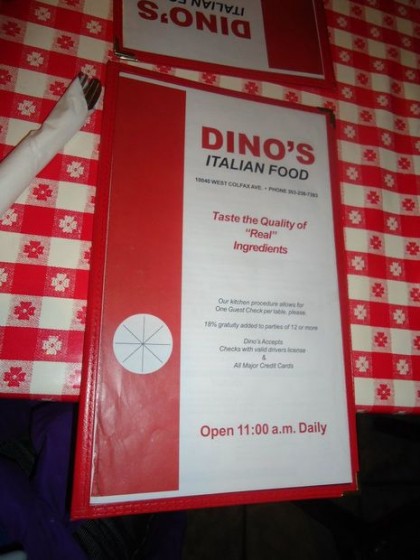 I’m at Dino’s on far west Colfax, near Kipling. This is an Italian place that my friend Alan Rubin used to visit when he grew up on west Colfax, further east, into Denver. The old orthodox neighborhood. Much like, I guess, the northside of Minneapolis at about the same time. His dad was a brilliant immigrant who ended up running a string of dry cleaners, doing very well. Dino’s, founded in 1963, hasn’t changed its decor since then, we both guessed. Great pizza.
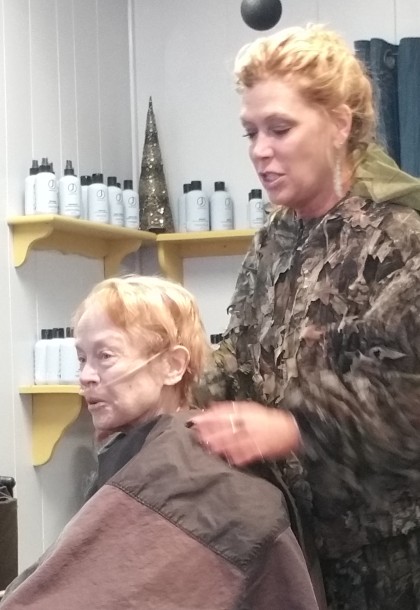
 Kate and I got coffee, sat down at our beetle-kill pine dining table, cracked open the mailers from the state of Colorado, and voted. Not a complicated ballot in terms of candidates, though the retention questions for judges left us both scratching our heads. Guess which way we voted? Blue wave, blue wave, blue wave. At least two water particles added.
 Then there were two that make creating both federal and state legislative districts non-partisan. Like campaign funding gerrymandering is currently a cancer in our democracy, both in their own way as serious as the orange tumor in our body politic. Voting yes.
 Colorado continues to be a strange political environment to this native Midwesterner. The libertarian streak in all American politics colors issues with a let me alone and don’t make me pay swoosh, here it’s a swoosh often as big as the entire running shoe. That can drive electoral decisions. There’s also the even more dramatic than in most states divide between the liberal Front Range and the remainder of Colorado. Rural and mountain Coloradans often complain that their views are ignored. True, too, to some extent. The rural vote is often reflexively against candidates and ballot measures that seem to reflect Front Range values.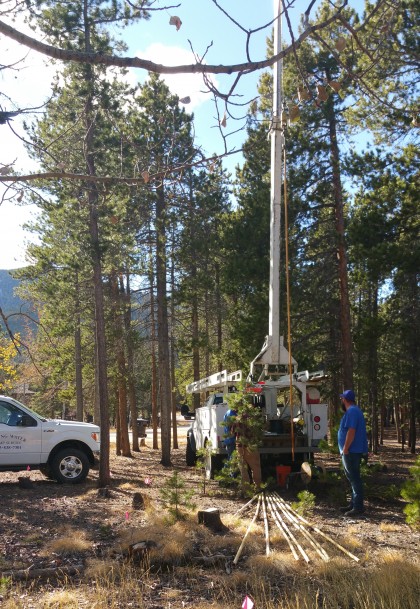
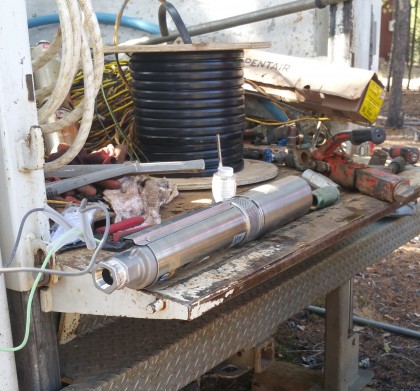
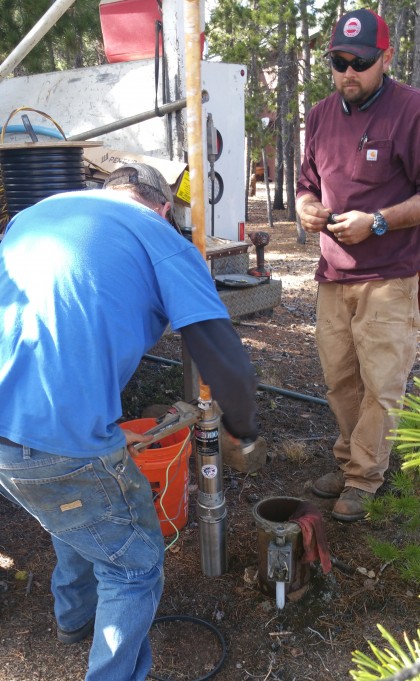
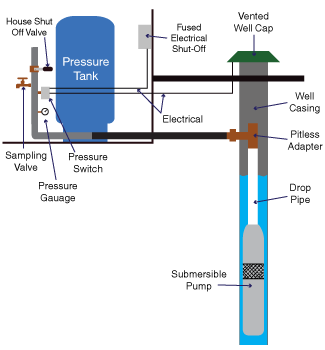 Well pump dead a couple of hundred feet under the surface. It will cost about the same as I’m projecting Kate’s hospital co-payments. Oh, joy. Right now I’m feeling beat down, labile.
 Then the pump. It labors on our behalf, in the dark, responding when the pressure tank calls for water to keep the house supplied toilets, showers, faucets, hoses, dish and clothes washers. The pump is most of the expense, this one coming in at $1,500. Other matters are metal sleeves for the new pump, new wiring, since the 1991 code requires all wells to have a ground and ours went down in 1982, and, of course, the men and the truck.