Samain Thanksgiving Moon
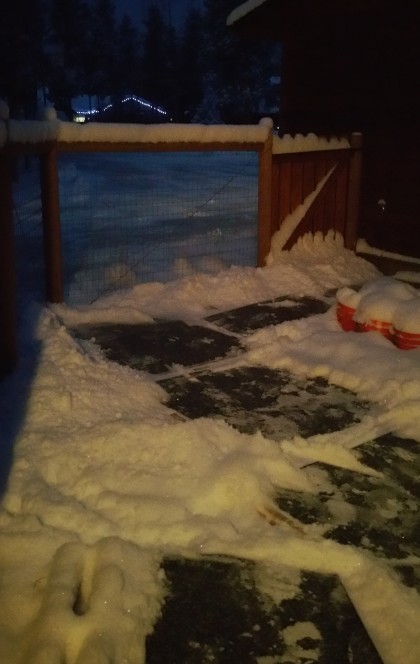 7 degrees this morning on Shadow Mountain. About 10 inches of fluffy powder since Saturday night. Fell yesterday clearing snow off our temporary decking, the palettes and stall mats I’ve shown before. Not hurt. Reminded, again, pay attention.
Cosmos and Psyche, by Richard Tarnas. Recommended by friend Tom Crane. I mentioned it a few posts back when I talked about skepticism as a tool, not a lifeway. This is an important work of intellectual history. I’ve finished the first section and, as I told Tom in an e-mail yesterday, my head is spinning. Tarnas points out, accurately I believe, the fundamental problem of our modern, Enlightenment inflected era. The application of reason and the scientific method created the Copernican revolution. Since that radical shift in humanity’s thousands of years old world view the ongoing advance of reason, buttressed, oddly, by monotheism, has in Max Weber’s wonderful phrase, disenchanted the world.
The primal world view, the one held before Copernicus showed the earth and the other planets orbited the sun rather than the reverse, believed in a permeable barrier between human experience and the experience of an ensouled universe. Our inner world and the outer world, the whole vast outer world, shared vitality, intention, consciousness. Gods. Faeries. Cyclops. Shiva and Krishna and Brahma. The pervasive sense that trees and bears and moose and squirrels and the grasses and buffalo were as alive, in a spiritual sense, as humans. The weather, the climate, the shifting seasons, the phases of the moon.
 But, as the human mind, using its sharpest tools, reason and skepticism, saw through this primitive perspective, and, as monotheistic religions posited a creator who made a special creature, humankind, in their God’s own image, a gap grew between the human and the universe. Now, in the modern era, we look out from within to a morally neutral cosmos, devoid of soul or spirit, moving with randomness according to physical laws that, since we have discerned them, reveal the trapped, the determined nature of, well, nature.
This disenchanted cosmos holds us, God’s special creation, categorically different and detached from the barren vastness that surrounds us. We are, in effect, alone, small, aware of our isolation, but with no purchase on anything outside the Cartesian split between spirit and matter. We have spirit and all the rest, matter, does not.
This disenchantment and isolation, this sense of uniqueness, is, when viewed from above (not from within) a simulacrum of Lucifer Morningstar’s fall from heaven. With our hubris we have challenged the creation and in turn been ejected from it, living our short lives with no sense of our place in the universe. We gradually fought a war against anthropomorphism of the physical world, pulling back first from the notion of the earth as the center of the universe, then from the ensouled moon and the spirits of the our forests and streams and oceans, finally we separated ourselves from the evolutionary process by positing ourselves as conscious and all other living things as mere automatons. We pushed ourselves out of the garden, left ourselves to wander the earth, having to toil under the heat of the faraway sun for our food.
The interesting turn comes next when Tarnas tries for a synthesis between the modern view and the primal view. Not sure where he’s going, but he has convinced me of the necessity to try. In another post I’ll talk about how, in an incoherent way, I’m already some ways down the path toward such a synthesis.
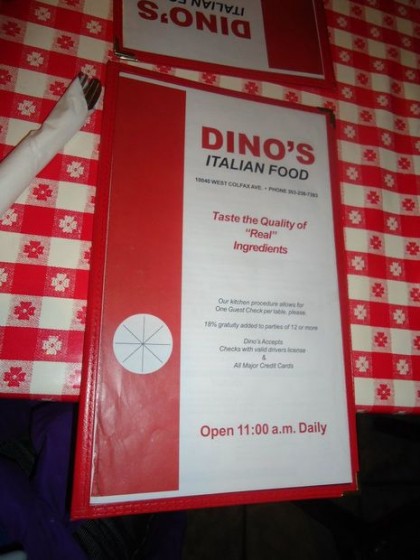 I’m at Dino’s on far west Colfax, near Kipling. This is an Italian place that my friend Alan Rubin used to visit when he grew up on west Colfax, further east, into Denver. The old orthodox neighborhood. Much like, I guess, the northside of Minneapolis at about the same time. His dad was a brilliant immigrant who ended up running a string of dry cleaners, doing very well. Dino’s, founded in 1963, hasn’t changed its decor since then, we both guessed. Great pizza.
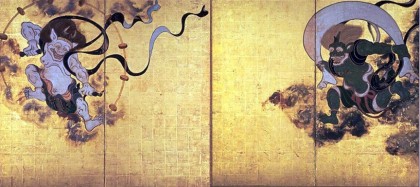 The weather gods have chosen an apt offering for the last day of fall, 8 inches of snow. In true Colorado fashion it will probably be here tonight and tomorrow, gone by Thursday if not late Wednesday. Looking forward to it. A difference between Colorado and Minnesota exists in forecasting snow. Here in Colorado people pant for the snow, welcome it, do celebratory dances. In Minnesota, not so much. It means work and slick roads in the Gopher State; here snow means beauty, tourist dollars, and will be gone conveniently.
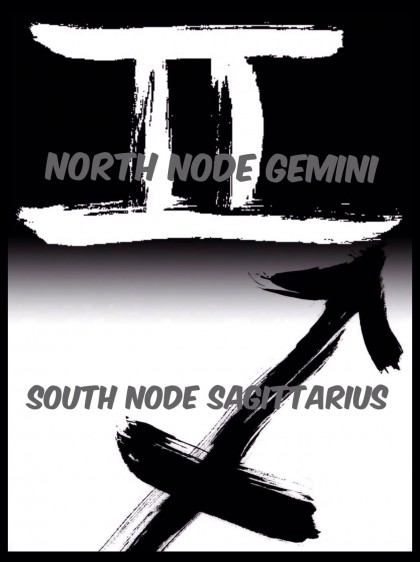 Astrology. Judaism has its weird side. Kabbalah, in particular. Turns out the kabbalist’s support astrology and if you follow the story of creation from a kabbalistic perspective, you can see why they might. At the shattering, the sharding of the divine light, ohr, pieces of divinity divided into minute pieces, atoms you might call them, and since then have created and recreated everything in the universe. That means that all things are connected, as part of the original attempt to create an undivided holy creation. In a sense it means that all things yearn for each other, to be rejoined, made whole again.
 The concept of the north/south nodes has some connection to the past lives notion, which seems far fetched to me, but I got opened up a bit here, so I was listening. The idea is this: the south node is your default approach to life, the one, if you’re a past lives enthusiast, informed by the accretion of knowledge from other lives you’ve lived. It’s comfortable, effective, easy. But. Not growthful.
 Went to mussar yesterday for the first time in three weeks. Lots of hugs. Lots of obvious caring for Kate. One of the ironies of this whole situation is that three weeks ago yesterday Kate and I co-taught a mussar session on compassion, rachamim. The next morning at 6 a.m. she was in the E.R. at Swedish. She’s been gone from home ever since.
 It was not the content of the discussion, but its nature that finally lifted my stress. Considering the meaning of truth, identifying the Jewish take on it, relating the search for truth to loving-kindness all stimulated my thinking, made me go deep. And that was the solace. Leaving the squirrel-in-a-cage stressors behind for a while, I went into that realm of memory and creativity where old ideas and new conditions meet, changing each other.
 There is, I’m coming to understand, a unique Jewish epistemology, one which places a possible truth on the table and passes it around to the many gathered in its presence. Each one comments, shares the part of the elephant that they can see. The process iterates since commentators will comment on others reactions. It does not mean that there is no truth, this is the key move, but that truth itself is multi-perspectival. It takes a village to know a truth.
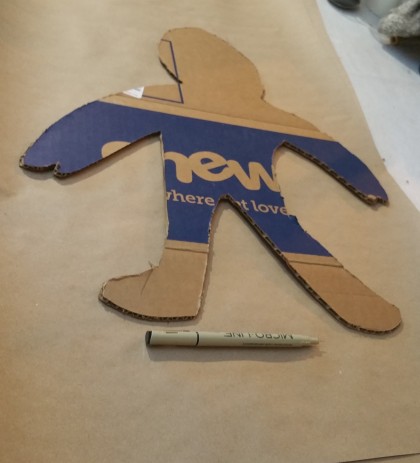 Odd experience yesterday. I led an exercise that involved body outlines I made from this template. (they actually looked better than this picture might suggest.) The kids responded to several prompts, among them: first school memory, early friends, where were you born, childhood hobby, childhood dream, then illustrated them on their body outline. The results are beautiful in many cases, revealing in all of them.

 As I drove home yesterday from


 End note. I realized as I wrote that last paragraph that a key sticking point right now is uncertainty. Will Kate’s various medical issues resolve? That is, will she get well enough to leave for rehab? If so, when? If she’s in rehab, how long? How much care will she need when she comes home? I’m not wracked by any of these questions, but they illustrate the fundamental issues in play right now, with no clarity about any of them available. That’s what makes knowing how I might react so difficult right now.
