A diverse day, yesterday. Down to Orthocolorado for a “class” about my knee surgery. Not bad, not great.
At 12:30 we drove over to Evergreen for mussar at Beth Evergreen. It was Rabbi Jamie’s birthday and each woman brought a cooked or purchased offering of some kind. We had cranberry juice with tea and mint, apple juice, brie and a wonderful soft cheese, warm carrots, pistachios, cashews, strawberries, grapes, melon, crackers, chips, guacamole, a birthday cake, sea-salt caramel and chocolate brownies (Kate, see pic), with Halloween plates and napkins.
Later in the afternoon, around 5, we went down Shadow Mountain and spent an hour or so at Grow Your Own. This is a hydroponics shop, a head shop, a wine shop and a place to hear local musicians. Last night there was a former member of Steppenwolf playing guitar, a singer from a group called the Bucktones and a guy named Stan, who looked like the aging owner of a hardware store, playing bass. Time erodes the vocal chords so the singing was spirited and practiced, but range and timber suffered. Guitar chops however seemed undiminished.
The crowd was Kate and me like, gray hair, wrinkles. That question that comes to me often these days was germane: what did you do in the sixties? I don’t ask, at least not yet, but I do wonder what long-haired, dope-smoking, radical politics lie beneath the walkers and penchant for the music of yester year.
Then home to a boiler that’s out. After just having been serviced. The perfect end to an interesting day.
Up early. Well, no. Not up early. Out early. We left home at 7am today headed for Orthocolorado. Much like Skyridge surgical hospital where I had my prostate removed, which admitted primarily urological patients, Orthocolorado admits only orthopedic surgery patients.
They must put happy pills in the drinking water for employees because everybody smiled, laughed and seemed overly f***ng upbeat. I yearned for dour Minnesota. I was not their friend, was not particularly happy to be there and wanted to get out as fast as possible. As I will after my surgery.
On the other hand. I now know where the hospital is.
Kate and I went to Bed, Bath and Beyond afterward. That Beyond part covers a lot of strange territory: systems to control your home with your smart phone, lots of candy, holiday decorations, including a Mensch in a Box and a wonderful wind-up Rabbi who apparently sings and dances. I’m not kidding. There was, too, a mashup of Hanukkah and Christmas, a large blue stocking with Happy Hanukkah embroidered on it in silver thread.
Kate bought a set of candles for a Hanukkah menorah and used them as birthday candles for Rabbi Jamie. He was 47 today. I remember 47. Sort of.
According to my countdown clock, we’re only 4 days plus a little from the election. May it come and go quickly.
Here’s a nice piece commenting on my favorite gubermental regulation:
Pain. Can make you tired. Can make it difficult to focus. Just plain hurts. My left knee has gone from bad to very bad. Trying various meds as a way to make it from now until January. Some success. Pain is a peculiar phenomenon, so assertive, so real; yet totally individual. Inaccessible to another. A message that, once sent, it would be nice to be able to turn off.
Superior Wolf continues to grow. 50,000 words. Writing is so much damned fun. Interesting to see a story unfold from the tips of my fingers, words and ideas following one another, no idea where they’re coming from. Doesn’t seem probable, but it happens. Everyday. Odd.
The aspens stand unclothed, their skirts dropped by the big winds we had last week. I’m glad they’re here. Realized yesterday that bare deciduous trees are a marker of fall for me, being a Midwest boy. We’re in that time between the falling of the leaves and the coming of the snow, a time with a skeletal aesthetic, when a senescence aesthetic with browns, tans, ochres in various shades colors the mountain meadows, an arid aesthetic with little rain, little snow, mountain streams at their low ebb. Samain, next Monday, is the holiday of this transition time, a holiday of the veil between this world and the Other World thinned. The growing season is well over, the season of harvest is ending. The fallow time comes next.
simchat-torah-beth-evergreen
Kate went to Simchat Torah at Beth Evergreen last night. This holiday marks both the end of Sukkot and the annual end of reading through the Torah. I chose not to go because it involves dancing and lots of standing. The congregation holds the Torah scroll at various points, symbolizing the year’s readings and the Torah’s ability to link the congregation together.
The rabbi, in this case Jamie, goes around and tells each person which portion of the Torah they hold. Kate had the story of Jacob and the angel at the Jabbok Ford. Probably my current favorite Biblical passage. I like the notion of struggle, of wrestling through the night, with the sacred. I like the suggestion that such a struggle can change your identity, give you a new name and a new purpose.
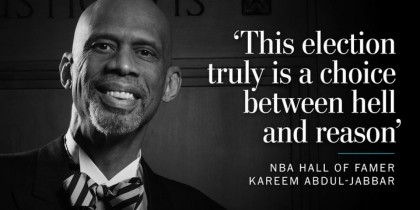
This dismal fucking election. Sorry, but that’s how I feel. At its apparent resolution on November 8th, according to Nate Silver’s 538, as many as 44% of voters will have cast their ballot for Donald Trump. 44%. It should be zero. But it won’t be. And the vote rigging rhetoric of the Donald’s now desperately pitched end game has the potential to create chaos. 44%. It should be zero.
Unless a Clinton wave sweeps Democrats to control of the House and Senate, the actual political result, in terms of governmental non-function, will be for Congress to be as it has been for the last six years. That combined with a large swath of angry white voters who believe Hillary stole the election could make the next few years awful. Perhaps even dangerous.
“Ruth,” I said yesterday, over breakfast, “Presidential elections are not usually like this. This one is a real aberration.” This precocious ten-year old looked up at me and said, “So I’ve heard.”
I suppose it’s similar to coming to political consciousness during the Vietnam War, or, later, during the Watergate mess. Being young when the impeachment of Bill Clinton was the big news. Or, when 9/11 happened. These were big moments in our recent history, each one with a totalizing grip on the news when they occurred. A child of those years could be forgiven a cynical attitude toward public life, just as Ruth, if she develops one, could be.
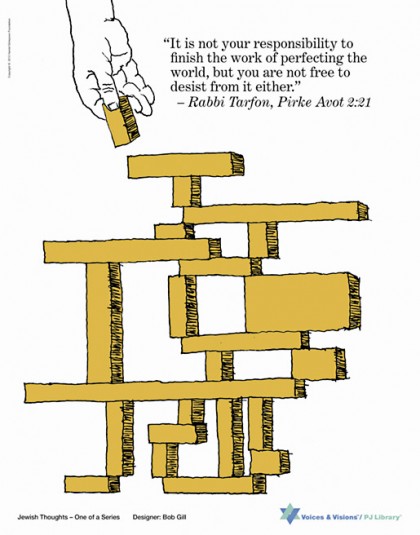
Yet. And this is incredibly important, they could be forgiven, but not encouraged. It would be possible for a child of the 60’s like myself to shake my head, sit back in the recliner, take out the remote and disappear into the realm of others’ imagination. However, my recent immersion in matters Jewish has offered a different way of framing all this.
Here is a bit more from commentary about Rabbi Tarfon:
“How can we possibly achieve tikkun olam, a repaired world? To get there, we will have to overcome the enemies of life: poverty, hunger, oppression, discrimination, war and sickness.”
“Rabbi Tarfon teaches: Do not be arrogant; do not think that you alone can finish the job. Trust in your children and generations yet unborn to take up the task. Know that you are part of the living chain of people who have dreamed, worked for a better world…” voices and visions
This is a plea for humility, no matter the times into which you are thrown. The arc of history is long and we are only a small part of it, a moment in time, yet our moment is important to that arc and we do
We had two ribeye steaks last night. After Kate and Ruth lit the shabbos candles, I said my piece about the cattle we knew from the meadow. The primary point was to say thank you to the animal who gave his or her life. The words felt clumsy and anachronistic in my mouth, but right. It was a simple moment, not long, but placing us, as brother Mark pointed out, among others from Jain to Native Americans who stop to honor their food.
It particularly felt right juxtaposed against the familiar Midwestern grace, Bless this food to the use of our bodies. The food is all about us. We can safely ignore the real animals, the real vegetables because God made them for us to eat. This is another way in which traditional Christian values deflect believers from the world around them to the world beyond or at least to a source beyond.
This was a pagan ceremony, one that directs us toward the vital and necessary web of interdependence that sustains us all. This particular cow was not a sacrifice to an abstract principle. In fact there was nothing abstract about it at all. This meat came from an animal that lived this year, ate grass that grew this year, nourished by rain that fell this year, breathed oxygen this year. And her essence did not reach the gods through an altar fire, rather it entered into the truest and most significant transubstantiation, the same transubstantiation that occurred when the grass entered her four stomachs, a transubstantiation facilitated by water falling from the mountain skies of Colorado and the true and astounding miracle of photosynthesis.
Ultimately our meal, not only the beef, but the green beans, the baked potatoes, the pasta and pineapple, the bacon bits and sour cream, was on the table, hecatombs for humans, by the power of nuclear fusion. The sun projects light and warmth into the solar system it holds in its gravitational thrall. On this earth the also miracle of evolution, began among the deep sea vents billowing out sulfur and heat from earth’s own interior, has found a way to embrace Sol, our sacred source of life and light. (eatsunshine) We eat sunshine. Reimagining faith then must embrace astronomy, evolution, plant biology, animal science, human culture. This embrace occurs most intimately each time we sit down to eat, no matter the culture or religious beliefs represented. We live and move and have our being thanks to the elemental forces driving our local star and the astonishing fact that our planet has shaped its own elements into hands and leaves and hearts and minds able to receive those forces into our own bodies. Quite amazing.
On erev Rosh Hashanah I went to Beth Evergreen with Kate. The beginning of the Jewish New Year, 5777. Last night I went to the kol nidre service which starts the holiday of Yom Kippur, the end of the 10 days of awe. This morning Kate and I went to the main service for Yom Kippur. It began at 9:30 am and finished at 1:00 pm. Surprisingly, it went so smoothly that I barely noticed the time passing.
Beth Evergreen’s sanctuary has multiple clear glass windows that offer views of Bergen Mountain and Elk Meadows. The view next to the Torah Ark had a mountain side filled with lodgepole and Ponderosa pine. Almost to the peak of the mountain though there was a small stand of aspen, golden still, in a perfect heart shape. All through the service I had a symbol, an accident of nature, created by my view, my perspective that synched up remarkably well with the overall theme of Yom Kippur, atonement. Also, up and to my right, at the roof of the sanctuary, a square window framed the tip of a Ponderosa pine. It looked like a painting by a member of the Kano school of Japanese art.
On this day Jews (and those of like mind) look back over the last year and consider the ways they have fallen short. A prompt to discover how you might have done so are the al chets. For example:
For the mistakes we committed before You through having a hard heart.
For the mistakes we committed before You through things we blurted out with our lips.
For the mistakes we committed before You through denial and false promises.
There are 44 such prompts at this website. A woman who spoke during the service made a very helpful distinction, “Christians,” she said, “are sinners. We sin.” And, Yom Kippur is a day when Jews can acknowledge their sin, atone for it and enter the new year a new creation. This makes abundant sense to me. We are limited creatures, bound to err, even as we strive not to. This does not make us essentially bad (original sin); it makes us human. It is no wonder that Yom Kippur is the most sacred day of the year for Jews.
There was much music. A choir. A jazz band. Last night a cello. Guitars, Rabbi Jamie Arnold and a former member of the congregation. A grand piano. The cantor Tara Saltzman. A lot of congregational singing. A congregational songbook of 30 pages contained songs for the congregation to sing, several of them written by Rabbi Jamie.
This was interspersed with events like members of the congregation lighting candles, taking the Torah in its full dress and carrying it throughout the congregation, short speeches and Torah readings. The Reconstructionist prayer book provided the traditional liturgy, but one filtered through the reconstructionist theology.
When the Torah in its red cover and its silver ketel (crowns) on its atzei chayim (the wooden shafts that hold the scroll itself) and a torah shield hanging from the atzei chayim went among the congregation on the shoulders of a congregant, people reached out with their with High Holy Day prayer books, touched it and kissed the book. Others with prayer shawls lifted a corner of the shawl and touched the Torah, kissing the shawl where it had touched the Torah.
At other moments those who had a death in the last week stood and gave the names of the one who died. Remembrance of those who have died and recognition of those in mourning are parts of each service, not just Yom Kippur. This recognizes the tribal nature of the congregants, their intimate relationships with each other through blood. The Yahrzeit, the year anniversary of a death, is also important and recognized during each service.
This was my first experience of the ten days of awe, the period from Rosh Hashanah to Yom Kippur. It reinforced my view of Judaism as a practical, humanistic faith, one that knows the human animal for what we are, not what we pretend to be. Yes, for many it still has a God at the center, but for many it does not. Oddly, it works just as well either way. At least from where I sit.
When Kate and I drove home from the kol nidre service at Beth Evergreen last night, the Hunter Moon lit up a sky covering labyrinth of white fluffy clouds. Occasionally, a few clouds would become very bright, then a hole would open, briefly, and the three quarter moon would not only backlight the cloud cover, but provide a luminous presence, too. It was a magical sky, a sort that seems particular to the onrushing fall. Aspens still blaze bright gold in some places, in others the leaves have turned brown and blown away leaving stands of naked branches as harbingers of the winter months.
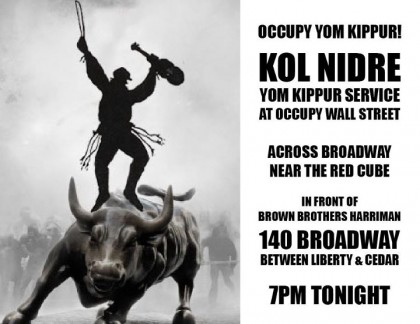
The kol nidre service starts Yom Kippur, the day of atonement, and has many elements, most elements, new to me. Even so, I could tell that this service with roots in the middle ages as well as the ancient past, spoke of a people, a tribe, with a nuanced understanding of what it means to be human. We are neither angels nor devils, rather we do good one minute and bad the next. Knowing this, placing it at the heart of the most sacred day of the year, makes Judaism a powerful poem. It teases out the curious mix of pride and shame that inhabits us all, says, yes, ok, but now let’s focus on next year. Let’s seek pardon and forgiveness for where we failed and reinforcement for what was good.
I feel odd at Beth Evergreen. My physiognomy is out of place. The language of many of the prayers and songs is foreign to me. I don’t feel, and don’t expect to feel, part of the tribe. Yet, Kate feels, is, part of the tribe. Also, much of the content resonates with my own faith reimagining project.
I’m learning, at 69, that analytical thought is not the best tool for religious insight. Rather, the heart and its contradictions, its powerful pushes and pulls, can create a warm and joyous place where even the most egregious of errors can be contained without problem.
Yesterday included three separate trips into Evergreen. First, I took Kate in for the morning Rosh Hashanah service at Beth Evergreen. Then, I came back to answer questions, be available for the electrician and the painter. At noon I went back to pick up Kate and eat the after service lunch with her. All these trips included waits in two spots on Brook Forest Road for culvert repair. Stop. Slow. Stop. Slow.
It was a glorious Colorado day with brilliant blue punctuated by puffy white, a soft wind, then a brisk wind blowing and temperatures in the mid to high sixties. Low humidity.
The service, as services often do, ran 20 minutes over so I sat on a concrete patio outside of Beth Evergreen’s event hall. The brisk wind stripped pine needles from the huge ponderosa’s on the hillside sending flotillas of the connected two needle bunches at me. Round top tables set outside on the patio had rocks on their table cloths. A table near where I sat blew over; the tablecloth, I think, acting as a sail.
There were kugels in aluminum pans, bagels with lox and cream cheese or chopped egg, fresh cut vegetables, fruit. Paper plates and plastic forks. Lots of eating and greeting. Some very short skirts. Some men carried small cloth pouches containing prayer shawls and yarmulkes. Kids ran around,
teenagers laughed knowingly to each other. The wind continued to blow.
Back home we napped while Caesar finished painting. The big thing unfinished is installation of the shower door. That will probably happen today. The result is even more pleasing than I imagined it would be.
Where the Books Go
The third trip into Evergreen was for the Evergreen Writer’s Group at Where the Books Go. Writing groups are fragile things, easy to get wrong. They focus on critiquing work, the very work you’ve been laboring over in private for hours, days, sometimes weeks and years. The internal stakes are high, no matter the outward stance individuals take.
If one of Kate’s sewing groups was similar, the women would bring in their current project and ask others what they thought. How are the seams? What about color choice? The fabric. Their intention for the work and whether they seemed to be achieving it. Most important, the event would not be collaborative as these groups are, but critical.
There might be something to learn here. Perhaps the writing group could be more collaborative, be more a place where we could write together, work on current projects or doing writing exercises together.
Anyhow this trip to Evergreen was without the stop. slow. stop. slow bit because the Jeffco work crews had shut down the skip-loaders, dump trucks and road graders and gone home.
Kate went with me, dropping me off at the meeting and going on to the Lariat Lodge where we ate a couple of weeks ago. She managed to get most of the reading done for our Mussar group, four chapters worth! She also bought supper for me.
With the grandkids coming last Friday night and leaving at 2 pm on Sunday, then erev Rosh Hashanah that night, and the three trips into Evergreen yesterday, it’s been a very busy few days for us. And, we’re not done yet.
This morning I’m seeing Lisa Gidday, our internist, to discuss knee replacement. We’ll also get our flu shots. The week calms down some after this.
Last night was a black moon, defined as the second new moon in a month. This is relatively rare, the last one occurring on March 30, 2014 and the next one on August 30, 2019. (earthsky news) This black moon precedes the rising, tomorrow night, of a sickle moon that will mark the start of the Jewish New Year on Rosh Hashanah. It’s also the beginning of the Muslim New Year.
Autumn is upon us now. Cooler nights. The possibility of snow next week. The Chinese, again according to earthsky news, say weeping is the sound of autumn, a part of its essential sadness. Not something to be avoided, but embraced, a regular part of the Great Wheel as it turns and turns again. My own response to this season used to be so pronounced that Kate and I had a phrase for her to say, “You seem to be slipping into melancholy.” That way I would know that my inner atmosphere had begun to mirror the outer, gray clouds and a wet chill had crept into my bones.
This conforms to Michaelmas as the springtime of the soul. Sadness is a way we consolidate past experiences and sort them out, learning from them and choosing which aspects of the past to embrace and which to let go. When our tears are over, we are cleansed and renewed, ready for the next phase of life. Autumn gives us an annual opportunity for self-renewal. This Great Wheel, natural cycle phenomena matches up exactly with Rosh Hashanah and its climax, Yom Kippur.
This is the time of soul renewal. And I’m ready for it. Bring on the gray skies, the inner turn. My favorite time of the year.
My fellow traveler shoes are beginning to get a lot of mileage on them at Congregation Beth Evergreen. The Rabbi there, Jamie Arnold, is a very sweet guy, empathetic, bright, learned, good singing voice. At the Mussar midday session yesterday we looked again at the first chapter of Mesillat Yesharim. There are many important ideas in it, two stand out for me right now.
The first is that delight and pleasure are primary to our lives. Why? Because the contentment and serenity they provide give us a life in which we can focus on what matters. I love the notion of joy as a, or even the, core attribute of our day to day existence.
The second idea is that we can be tempted, pulled away from delight and joy, by both prosperity and adversity. Recalling this simple, but far from obvious truth about the human condition helps us see that our material advantages are not the core focus of our lives. Our material success is incidental to the spiritual journey-unless it distracts us from it.
When the hour long learning session is over, we go into vaad, which is personal sharing. Yesterday’s sharing was so profound. The level of trust and intimacy in this group, a testament to Jamie’s leadership, is deep. When a person finishes, we say shimat, “I have heard you.” (I think that’s right.)
 At 12:30 we drove over to Evergreen for mussar at Beth Evergreen. It was Rabbi Jamie’s birthday and each woman brought a cooked or purchased offering of some kind. We had cranberry juice with tea and mint, apple juice, brie and a wonderful soft cheese, warm carrots, pistachios, cashews, strawberries, grapes, melon, crackers, chips, guacamole, a birthday cake, sea-salt caramel and chocolate brownies (Kate, see pic), with Halloween plates and napkins.
 Pain. Can make you tired. Can make it difficult to focus. Just plain hurts. My left knee has gone from bad to very bad. Trying various meds as a way to make it from now until January. Some success. Pain is a peculiar phenomenon, so assertive, so real; yet totally individual. Inaccessible to another. A message that, once sent, it would be nice to be able to turn off.

 I suppose it’s similar to coming to political consciousness during the Vietnam War, or, later, during the Watergate mess. Being young when the impeachment of Bill Clinton was the big news. Or, when 9/11 happened. These were big moments in our recent history, each one with a totalizing grip on the news when they occurred. A child of those years could be forgiven a cynical attitude toward public life, just as Ruth, if she develops one, could be.

 (
(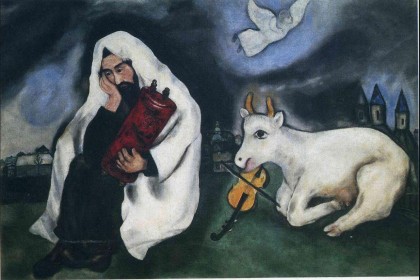
 Beth Evergreen’s sanctuary has multiple clear glass windows that offer views of Bergen Mountain and Elk Meadows. The view next to the Torah Ark had a mountain side filled with lodgepole and Ponderosa pine. Almost to the peak of the mountain though there was a small stand of aspen, golden still, in a perfect heart shape. All through the service I had a symbol, an accident of nature, created by my view, my perspective that synched up remarkably well with the overall theme of Yom Kippur, atonement. Also, up and to my right, at the roof of the sanctuary, a square window framed the tip of a Ponderosa pine. It looked like a painting by a member of the Kano school of Japanese art.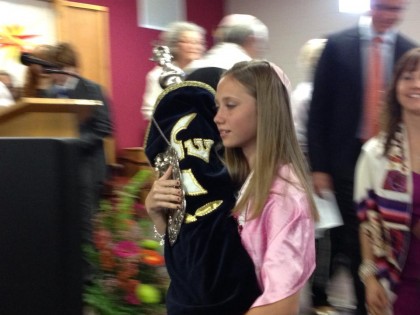
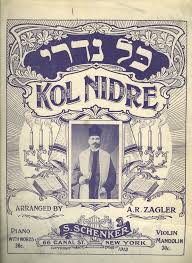 When Kate and I drove home from the kol nidre service at Beth Evergreen last night, the Hunter Moon lit up a sky covering labyrinth of white fluffy clouds. Occasionally, a few clouds would become very bright, then a hole would open, briefly, and the three quarter moon would not only backlight the cloud cover, but provide a luminous presence, too. It was a magical sky, a sort that seems particular to the onrushing fall. Aspens still blaze bright gold in some places, in others the leaves have turned brown and blown away leaving stands of naked branches as harbingers of the winter months.
 I feel odd at Beth Evergreen. My physiognomy is out of place. The language of many of the prayers and songs is foreign to me. I don’t feel, and don’t expect to feel, part of the tribe. Yet, Kate feels, is, part of the tribe. Also, much of the content resonates with my own faith reimagining project.
 Yesterday included three separate trips into Evergreen. First, I took Kate in for the morning Rosh Hashanah service at Beth Evergreen. Then, I came back to answer questions, be available for the electrician and the painter. At noon I went back to pick up Kate and eat the after service lunch with her. All these trips included waits in two spots on Brook Forest Road for culvert repair. Stop. Slow. Stop. Slow.
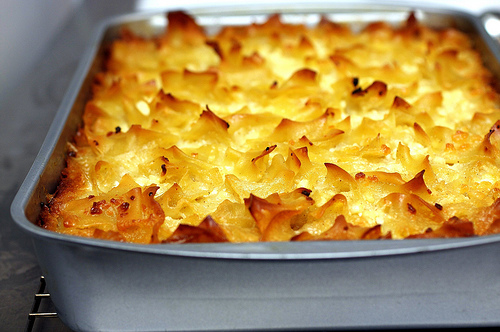 There were kugels in aluminum pans, bagels with lox and cream cheese or chopped egg, fresh cut vegetables, fruit. Paper plates and plastic forks. Lots of eating and greeting. Some very short skirts. Some men carried small cloth pouches containing prayer shawls and yarmulkes. Kids ran around,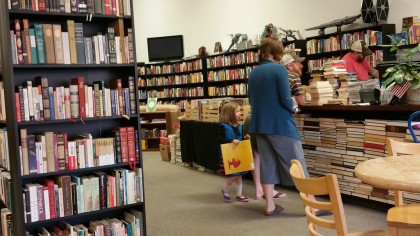
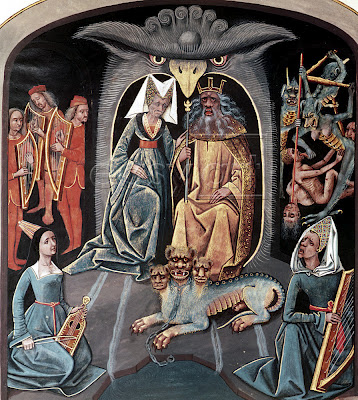
 This conforms to Michaelmas as the springtime of the soul. Sadness is a way we consolidate past experiences and sort them out, learning from them and choosing which aspects of the past to embrace and which to let go. When our tears are over, we are cleansed and renewed, ready for the next phase of life. Autumn gives us an annual opportunity for self-renewal. This Great Wheel, natural cycle phenomena matches up exactly with Rosh Hashanah and its climax, Yom Kippur.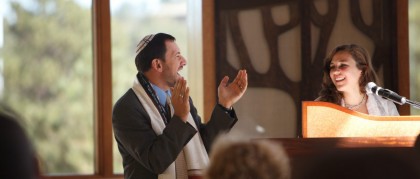
 My fellow traveler shoes are beginning to get a lot of mileage on them at Congregation Beth Evergreen. The Rabbi there, Jamie Arnold, is a very sweet guy, empathetic, bright, learned, good singing voice. At the Mussar midday session yesterday we looked again at the first chapter of Mesillat Yesharim. There are many important ideas in it, two stand out for me right now.
 The second idea is that we can be tempted, pulled away from delight and joy, by both prosperity and adversity. Recalling this simple, but far from obvious truth about the human condition helps us see that our material advantages are not the core focus of our lives. Our material success is incidental to the spiritual journey-unless it distracts us from it.