Spring Passover Moon
I may have found a way back into the art world, one I can sustain even from here on Shadow Mountain. A couple of weeks ago I decided to add links to several prominent museums to my bookmark bar: the MIA of course, the Chicago Art Institute, the Met, the Vatican Museum, the Uffizi, the Asian Art museum in San Francisco, the Getty Open Content site and the Google Cultural Institute. I’ll probably add more.
This started as an effort to collect places from which I could draw interesting images for Ancientrails. Many of these museums have made their collection’s images or significant portions of them available as open content. As far as I know, the Rijksmuseum in the Netherlands was the first to do this thoroughly. Every image on this museum’s website can be downloaded, used in any way. This even includes uses like those of Richard Prince, the well known appropriater of other folks’ work to create his own.
You may recall that I got myself in a bit of a twist over just this issue last year, so I’ve been eager to find image sources that won’t send me threatening letters from their lawyers. This growing movement among museums seemed like a solution. What better images could I find than great art?
Then, while poking around on these various websites, I clicked on the Google Cultural Institute. On its home page it has various teasers to get a viewer to go deeper. One of them up at the time I visited was a collection of works on mountains, some 4,000 +. Aha. Mountains. In art. I live in the mountains. There could be something here.
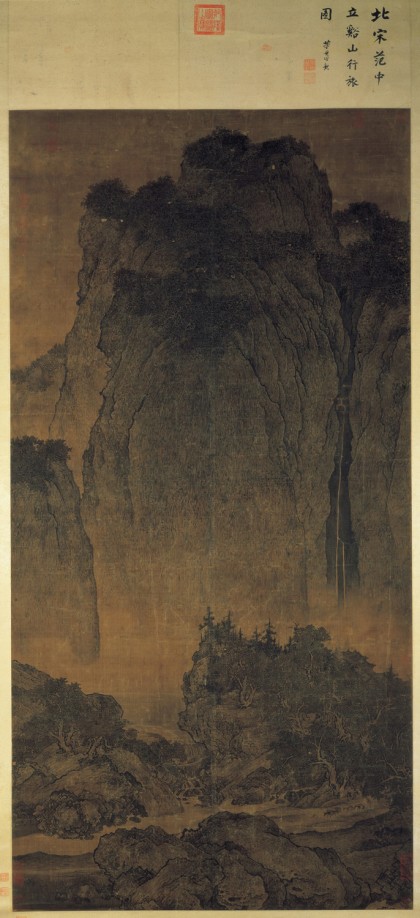
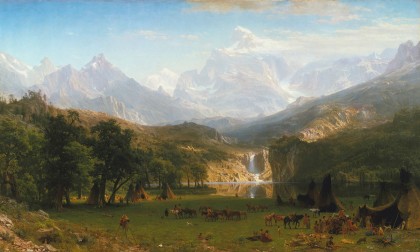
Yes, it occurred to me, I could investigate art focused on mountains. Hokusai’s “Views of Mt. Fuji.” Fan Kuan’s “Travelers Among Mountains and Streams.” Bierstadt’s views of the Rockies. And so many more. This could enrich my experience of my home terrain and provide a vein of exploration, a way to study art again with a purpose. Not to mention that I flirted briefly with the idea of becoming the Mountain Docent. This idea could add a double entendre to mountain docent.
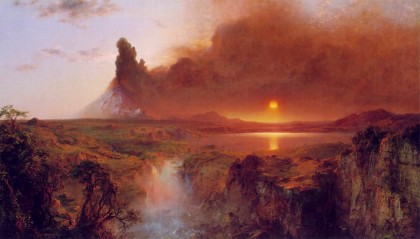
We’ll see if the idea sticks, but right now I’m excited about it. It connects well with the notion of becoming native to this place, too, and could serve as a resource for reimagining faith.
As I turned the idea around in my mind, it struck me that I have an intimate knowledge of another form of landscape, too: agriculture and horticulture. So, I may expand this project to include images of farming, of fields, of gardens, of seasonal change, the experiences of which led me to immerse myself in the idea of the Great Wheel.
Not sure where this will take me, but right now I’m pretty excited about it.
 Easter morning. Sunrise services somewhere. The celebration of the resurrection and, by implication, the incarnation. As Passover defines Jews, Easter defines Christians. Whether you find the idea of resurrection absurd or inspiring, it heralds, as does Passover, the coming of spring. It’s not difficult, at least for me, to see the power of resurrection in the emergence of spring ephemerals: daffodils, crocus, grape hyacinth, early tulips, snowdrops, pasque flowers, bloodroot.
 Moses reminds the slaves, and God, of the covenant made with Abraham long ago. That covenant is the bulb planted in the hiddenness and darkness of bondage. When God finally forces Pharaoh to let the slaves go free, the bulb begins to push its stalk toward the surface. Though it takes forty years of wandering for the stalk to break the surface in the Promised Land, the beauty of freedom’s flower has dazzled those struggling with their own personal or political bondage ever since.
 So on this great wakin’ up morn, I’m greeting the sun, the greening lodgepole pines, the daffodils, the pasque flowers and bloodroot with a religious fervor.
 Yesterday in mussar Jamie gave us a writing prompt: write about a want that occupies a lot of inner time and attention, then to try to find the root of that want. This was a lead in to talking about avarice.
 I’ve looked up the idea of the hungry ghost and I don’t think it really applies to me, but the caution evident in the bookstore example certainly does. Buying books represents a deep seated want, too. But what is it?
 So, the books represent my own struggle with the nature of mortality, my way of structuring my inner world. And, yes, it can be a problem if I refuse to recognize it for what it is. But, and here’s the liberating possibility for me in both books and writing, if I acknowledge what they are for me, if I embrace the underlying motivation, yet not its anticipated result, then I can continue writing and reading, using them not as shields against disappearing, but as ways of being in the world, not as ways of protecting myself.
 My ratzon for political work, which I critiqued in a past post, needs sharpening, focus. Part of my problem with Fighting Trump, my previous title for articles I saved in Evernote, was, I realized, that being against something is a weak ratzon for me. I need to be for something and the Trump resistance tends to focus on opposing him. He demands opposition and resistance, no question about that, but I need to be working toward a just society, an equitable society, a sustainable society, a compassionate society, not only, not even primarily, saying NO.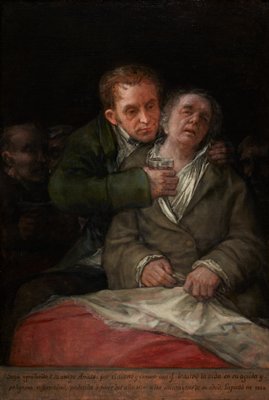
 These are only the most visible, too. There is Penumbra, of course, the Children’s Theater, the Northeast Art District, various jazz venues (Denver has excellent jazz.), Theater in the Round, the Cowles Center and many, many more.
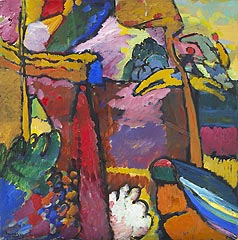
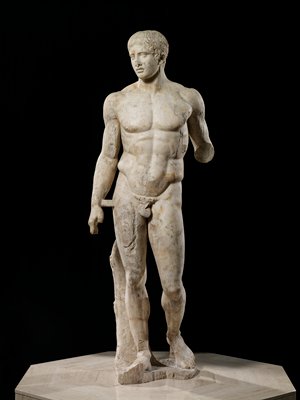
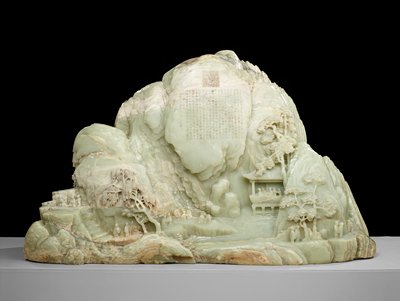 Even with all these though I miss the relationship I had with Goya’s Dr. Arrieta, or the Bonnard, the Doryphoros, the Chinese and Japanese collections so important to my own aesthetic. Germanicus, Lucretia, the Rodin, Caillebotte, Beckman’s Blind Man’s Buff and the Kandinsky. I guess it’s the aesthetic equivalent of Toffler’s notion of high tech, high touch. That is, the more we use high technology, the more we need regular interaction with other people. I need regular interaction with actual works of art and they are simply not available here.