Category Archives: Garden

Quiet

Beltane                                                                             Solstice Moon

Night has fallen, quiet has over taken our already peaceful neighborhood.  Today has just watched yesterday slip into its pajamas, ready now for the long sleep, our past as dead and gone as any mortal perished.

[Gulácsy Lajos – Daughters of the Night (1900)]

I have surfed again on the oceans of mood, now back to shore ready to resume life again.  Writing. Translating.  But first finishing up the work that must be done now:  finish the transplant aids, bag the apples, put down some jubilate along the rows of seedlings.  The natural world does not allow for waiting.  It has its pace and either you adapt to it or it will ignore you.


Moving Toward Optimal

Beltane                                                                       Solstice Moon

In 12 days we will have the summer solstice and it is now 56 degrees and rainy.  A peek at 80’s may come, but until then June will remain like May.

My enthusiasm for various aspects of my life seem to ebb and flow, not so much on tides of the fabled ocean, Inspiration, but more on inner rhythms I do not fully understand.  When I began reading the e-mails from Jon Frank of International Agriculture Labs, he reminded me, again, of the reason I cut down the black locust so we could have space for gardens in the back.  And, again, of the various moments in time when raised beds seemed like something we should have, and which Jon (Olson) built so well.  Then the permaculture river began to run and it turned the water wheel of my energy for a while.

Each one of these impulses has come from deeper roots, seeds sown in the 1960’s back to the land movement, then expressed by the purchase of a farm outside Nevis, Minnesota in northern central Hubbard County.  They have also been nourished by work of an intellectual mentor, Scott Nearing and his wife Helen, who wrote Living the Good Life.

Kate has been there at each of those rhythmic changes, helpful and supportive.  Each one has added a bit to the whole and now I believe we are poised for an optimal garden and orchard, one nurtured by years of steady effort though from episodic sources.  Next year I plan to focus on the orchard in the way I’m focusing this year on vegetables with the High Brix Garden.  My goal is a good quantity of high nutrient food grown in a sustainable way right here at Artemis Gardens and Hives.

My hope is that this is the last piece to the puzzle of vegetable and fruit growing for us.  Then, with the help of Javier and his crew for the heavy lifting and skilled landscaping work, we should be able to stay here and thrive here as long as possible.  Our flower gardens, extensive, we have gradually moved toward very low maintenance and I feel that part of our grounds we understand, have a good to excellent handle on.

With Javier’s removal of the ash tree from our garden area and the addition of the High Brix nutrient program, plus the narrowing of the types of vegetables we will grow and the bagging of our apples, I feel we’re within a growing season or two of being able to say the same for our food crops.

Gardens and Bees

Beltane                                                                 New (Solstice) Moon

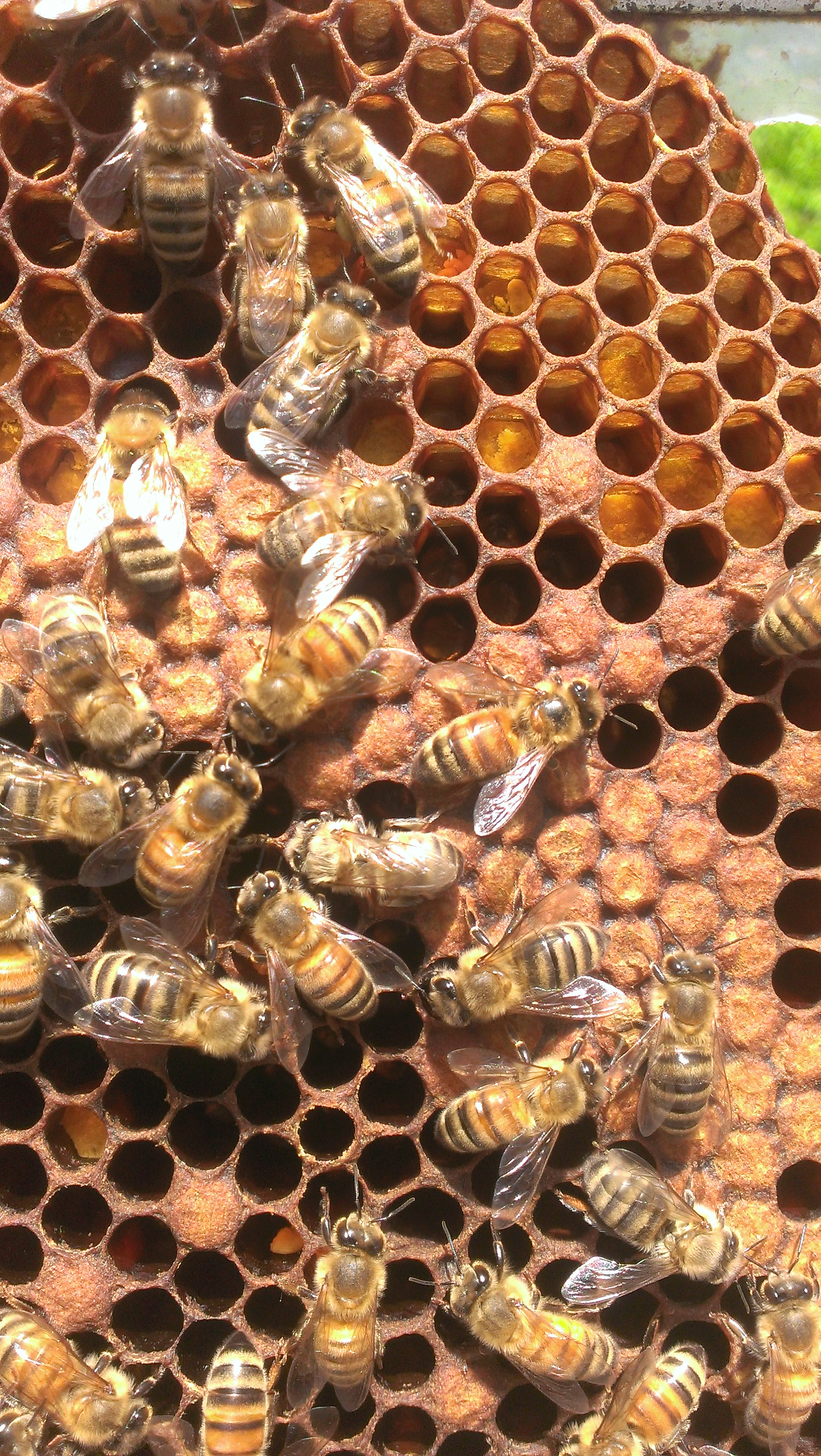
The day began with the bees, lively and growing, now well into the second box, already  filling two frames with brood, making honey and collecting pollen.  After the bees, more honeycrisp bagging.  Yes, this is a pain, but it’s a one and done pain.  That is, after you do it those apples are ok.  I may start a feeding program this year for the orchard,  but that’s separate from the immediate disease and predation prevention.

This is what horticulturists calls IMP or integrated pest management.  Basically you first support the plant because a strong plant can repel invaders.  Then you do physical things like picking the bugs off, bagging the apples.  Only after you’ve done these things–and there are many more than I’ve mentioned–do you consider a pesticide or fungicide.  I don’t resort to those, so my whole strategy comes on the first two legs of the stool.

After I got some bagging done, it was time to go pick up Bill Schimdt and head out to Plato, Minnesota to meet Luke Lemmer of High Brix Gardens.  Plato, Minnesota is about 5 miles west of Young America.  Luke is a husband and father trying to make a living selling bio-dynamic soil nutrients for gardens as an adjunct of International Ag Lab’s agricultural product line.

Luke had mixed the broadcast minerals and put our orders of drenches, foliar sprays and transplant aids in a box.  We spoke with him near the site of a new building he has planned.  He says this year his business has finally begun to take off.  His daughter came out, hugging him and looking down at the ground.  She had what sounded like a summer cold.  He explained the use of the various products and the schedule they require.

The site of his home used to house a hotel and beer garden back when Plato was more of a manufacturing hub.  It now has one factory and the grain elevator.  It’s on an east west railroad line.  A pretty little town, bucolic with all the green thanks to our rains of late.  300 souls.  A true small town.

Back home a nap, then I broadcast the minerals and dug them in on all of our beds and got most of the tomatoes, peppers, egg plants, kale and tomatillos treated with a transplant powder and water.  We’re really a bit behind the curve, since the broadcast will be done in the fall in the future and the transplant aids are made to use when putting the plants in the ground.  But we’re starting when we can.

Ready.

Beltane                                                              Early Growth Moon

Got my soil test results back from International Ag. Labs.  I plan to follow their recommendations and have sent an order into their local supplier.  Our goal here continues to be the same:  sustainable gardens producing high quality food using no pesticides and only biologically justifiable soil amendments.  This is a different approach from either permaculture or organic growing.  On the one hand it emphasizes soil optimization, reaching that goal through amendments whether organic or non-organic that support that end.  The end is a soil that produces high quality food in a manner sustainable over the long run.  Makes a lot of sense to me and I’m eager to get my order and start using it.

Last night at the Woodfire Grill Mark Odegard talked about a mushroom hunter friend who said that as long at the lilacs bloom, the morels can be found.  Our lilacs are still in bloom, so I wandered back in our woods.  First thing I saw when I entered the path was a giant morel.  I scooped it up, went looking for others.  Couldn’t find any.

I didn’t do a thorough search though due to my recent switch to a lower carb diet.  In the process I’ve lost about 15 pounds and my jeans, conformed to a higher carb me, now slip around my waist with no belt.  Which I had left upstairs.  So, with Gertie and Kona racing around, I wandered a bit, looking at the ground, grabbing my pants, looking some more.  When it started to rain, I gave up and came back inside, promising myself that I’d get that belt and look more methodically when it was dry.

p.s. More on this later, but I heard a news report about Singapore yesterday relating to urban agriculture.  In this case it’s vertical, four-story ag with, they kept emphasizing, no soil.  I know this is possible because I have a hydroponic setup myself, but it flashed through me what a tragedy it would be for the human race if we lose that primal bond with mother earth.

Don’t get me wrong.  I think this is a great idea.  It uses the energy of a 60 watt bulb, they recycle all the water and grow fresh vegetables with a very short garden to consumer trip.  My concern is that its prevalence might make us forget the planet which gave us birth and which receives us after death.

Outside

Beltane                                                              Early Growth Moon

Trying to reconcile everyday writing (a creative need and best practice) with everyday gardening (a practical need and also best practice).  Decided in conversation with Kate to get up at 7 AM regularly, eat breakfast, work an hour outside until 9, then come in to write.  Today was the first day of that new schedule.

(Summer – Pierre Puvis de Chavannes)

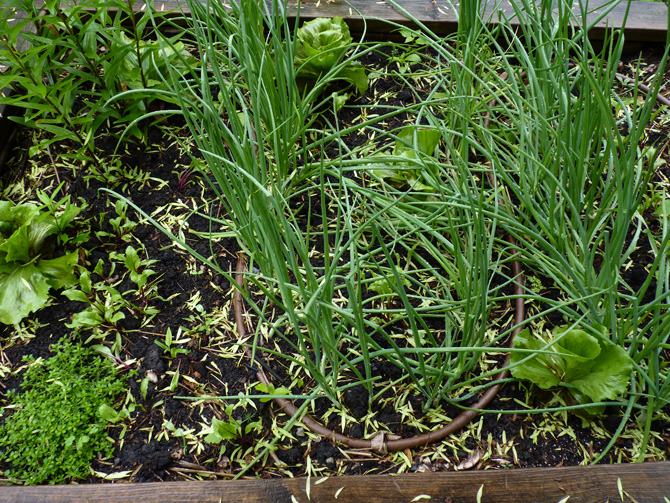
Mostly I weeded this morning among vegetable rows where a stealthy clover had crept in and those damned prolific chives, bright green beautiful spears.  Along the way I observed the onions, the kale, the chard, the beets, lots of beets and the carrots.  Unlike my garlic, which had a very low germination rate, the carrots, often a problem, have responded with vigor, many of them up, almost a solid line of small green feathery stalks in each of three rows.

Due to the removal of the ash, and possibly the river birch pruning, we no longer have as much as shade as we had.  A major part of the point in both actions.  Yet.  We planted hostas and ferns and hydrangeas in both spots.  The ones under the ash will need to go elsewhere, way too much sun.  Those under the river birch, I’m not sure.  It’s an east facing side and the tree is still there, plus the seven oaks on our hill shade them, too.  I’ll watch them.

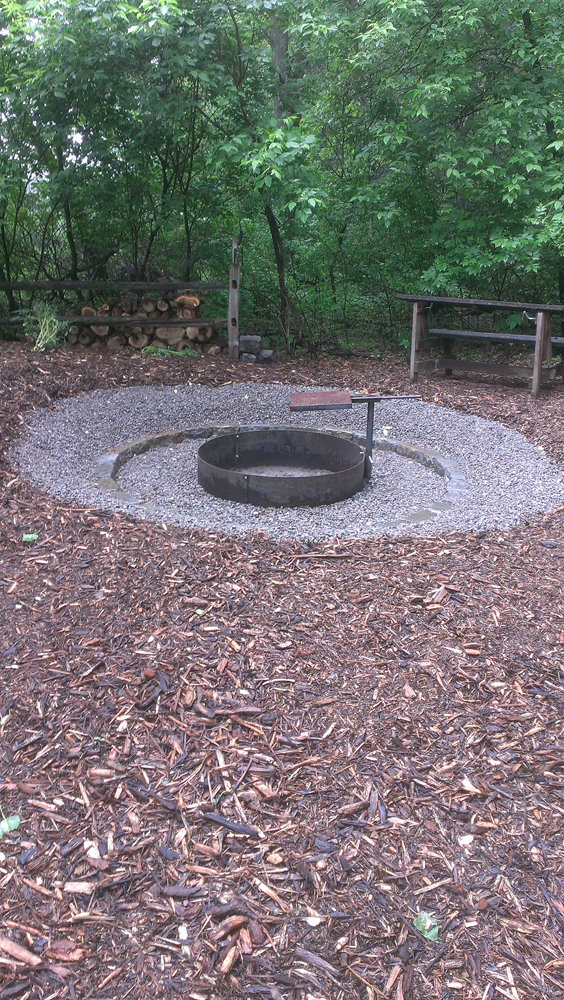
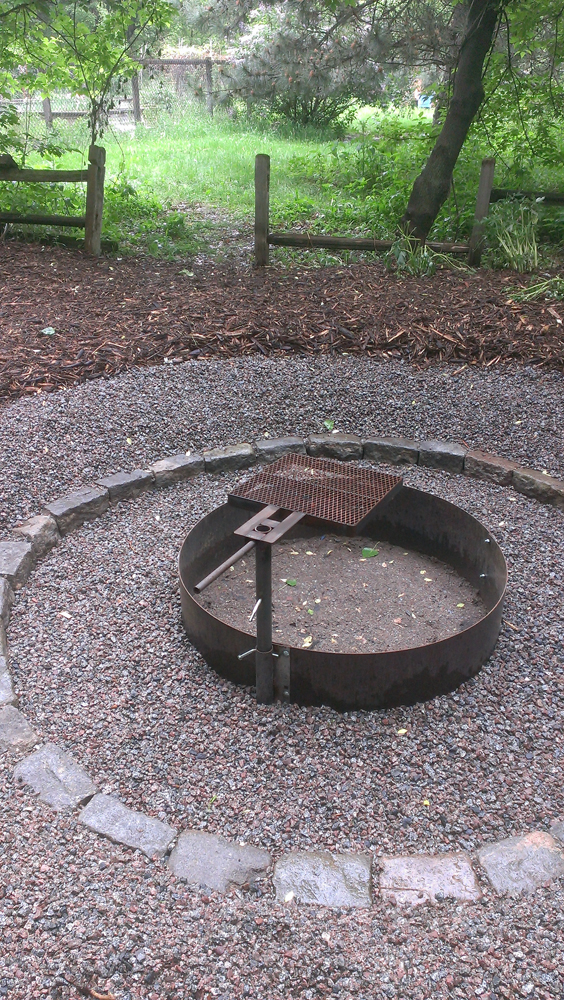
Javier and his crew finished the fire pit with crushed granite, extra thick landscape cloth and five cubic yards of shredded bark.  It’s ready for the grandkids, for the Woolly’s and for us, another outdoor room, this one away from the house at the edge of the woods.  There is a short path from the fire pit area to the grandkids play house.  It’s now a very spiffy area with a home for the imagination and a place to make smores nearby.


Bleeding Heart Liberals

Beltane                                                                            Early Growth Moon

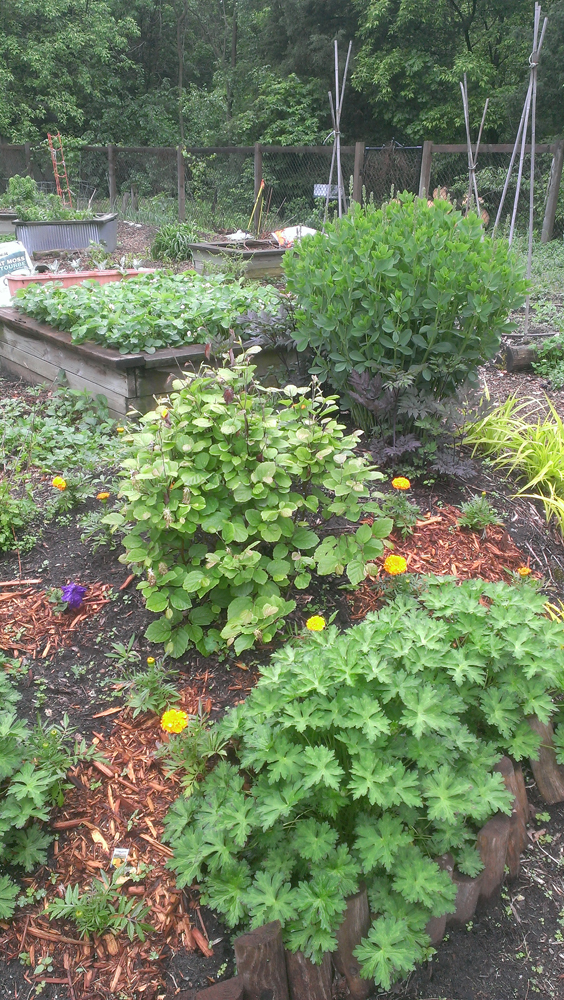
Yes, we transplanted bleeding hearts liberally in the area around our new fire pit.  They came out of a vegetable bed we had to transform to a shade bed when the small ash tree nearby got big.  Now the ash tree will be cut down and we’ll have more beds that get better sun, enough to grow vegetables.  I feel bad about cutting down the ash but it needs to go.

(2010)

Even so it did mean that we had a stash of dicentra, bleeding hearts, that could go to another shady location like the area north of the firepit.  And they are now there.  In the process I broke my spading fork.  Again.  I hadn’t mended it fully the last time and I put too much pressure on it.

Transplanting on a cooler, cloudy day with a high dewpoint is best.  It reduces transplant shock and helps the fine root hairs stay moist and alive between digging and planting.

Tomorrow a different task even though we’re not done with this one.  Bagging the apples.  The blossoms fell and fruit set is imminent, so we get those bags on before the fruits show.  Then, clean apples.


Garden and Exercise

Beltane                                                                           Early Growth Moon

The garden is well underway.  Beets, onions, chard, kale, carrots, cucumbers, sugar snap peas, tomatoes, peppers, leeks, egg plants and garlic all in various growth stages.  The garlic crop may be my weakest in several years.

Kate and I will transplant this morning.  We’re going to move hosta, hemerocallis and bleeding hearts to a mounded area near our fire pit.  Javier got the area prepared on Memorial Day and moved the fire pit into the center of the ring that Mark built.  He’ll fill the fire pit and the ring with a material that will be fireproof and weed proof.

Putting in some shade plants will give the area a more landscaped feel.  My goal is to have it ready for a visit by the grandkids sometime in July and for the Woolly meeting also that month.

The exercises I got from my physical therapist have already eased up the pain in my biceps.  My posture, which both Lervick (orthopedist) and Poulter (physical therapist) said tilted to the left, has changed, too.

The intensity workouts I’ve been doing work, too.  That’s the one minute of aerobics at the most flat-out I can stand, getting my body into the anaerobic range, followed by a set of resistance work while the heart rate goes down below 110, then another minute of aerobics, and repeat until 4 high intensity aerobic intervals and 4 resistance sets are done.


Roots

Beltane                                                                                  Early Growth Moon

“To be rooted is perhaps the most important and least recognized need of the human soul.”
Simone Weil


Not surprising this is an unrecognized need because for most people for most of human history being other than rooted was not an option.  You were born within the sound of a church bell or a muezzin or a farm dinner bell and never got beyond them.

(Jean-Léon GérômeA Muezzin Calling from the Top of a Minaret the Faithful to Prayer (1879)

It is only as the world has begun to urbanize that we have had to consider our roots, or the lack of them.  In the US only 5% of the population lived in cities in 1800, but 50% did by 1920.  80% do now.  This trend is global.  In 2008 for the first time in history over 50% of the world’s population live in cities.  Interestingly one website on urbanization made this point, since no more than 100% of a population can live in cities, urbanization will come to a foreseeable end.

It is, though, this great hollowing of rural areas that underlines our need for roots just at the point when we realize we no longer have them.  Or, rather, it is this realization that makes the need for roots evident.

Let’s stick to the vegetative metaphor.  Roots say where we are planted, where we have pushed organs for receiving nourishment deep into the soil, even into the subsoil of the place where we live.  Yes, you might want to talk about relationships and regular shops and schools and sports teams, yes, those things are part of a broad understanding of the metaphor, but I’m wanting to stay closer to the plant.

(I worked in this factory when I was in high school, 1968.  Johns-Manville)

If we eat local food, our bodies themselves become literally one with the earth in a particular locale.  Knowing where we are, not only in terms of street names and legalities, but also in terms of trees, food crops, fish, game, local meats, birds, flowers, grasses, even the so-called weeds is also part of having roots.  Embracing the weather, the local changes, as in part defining who you are, that’s having roots.

It is, I think, these things that disorient us the most when we move away from our home.  We think it’s the people or the customs or the new boulevards and highways, but in a deeper place, in the place where you know you are, it’s the Indian paintbrush that no longer shows up, the alligator not waiting in the pond,  the summer that fades too soon or lasts too long, these things make us not only feel disconnected from the place where we are; they are in fact the evidence of our disconnection.

(fall harvest, 2011, Andover)

If we have roots, we usually don’t know it; if we’re missing them, well…


Help.

Beltane                                                               Early Growth Moon

Kate has found a garden and landscape helper for us.  Javier does tree, gardening and landscaping with his brother.  They are very reasonable in their pricing.  If he works out, and I’m sure he will, a large part of the burden of maintaining our grounds will lift and Kate and I can concentrated on growing vegetables, fruit and flowers.  What we love doing.

For example, I planted 9 tomato plants and 6 pepper plants this morning, with three egg plants waiting for the removal of the ash in our vegetable garden. (part of the work Javier has agreed to do.)  We’ll probably put in a few more tomato plants with the added sunlight the vegetable garden will have sans ash.

It’s Memorial Day weekend though I have trouble conceiving Memorial Day as any day other than May 30th.  Growing up the Indianapolis 500 always ran right after Memorial Day and that was May 31st.  It was the 1968 Uniform Holiday Act that created all the Monday holidays and their resulting three day weekends.  That’s no way to run a holiday.  Holidays are about tradition, not long weekends.

Anyhow the race is tomorrow.