Category Archives: Garden

Big D

Spring                                                                Waning Bloodroot Moon

The weekly let down after my round of Ovid has set in, exaggerated by the two day drive-a-thon to Lincoln, Ne and back.  Let down may not be the best phrase.  An easing up, a lull, a caravan serai.  All better.  An internal nod to the energy of the week and the things accomplished, a time to enjoy, not focus.

The Sollie-Rigel wars have not yet fully waned, but they will.  Rigel rolled Sollie over on his back last night in the living room.  I thought that would settle things, but not wholly.  Dogs love to defend passage ways, a door, a cage entrance, a passageway around the couch, a gate.  Sometimes that defensive trigger gets punched and restraint soon flies away, giving way to bared teeth, raised ruffs and lots of snarling.  Very primal.

It is, I noticed, much easier to step into the midst of a fight when the contenders all weigh 100 pounds or less.  When the Wolfhounds fought, Tor and Orion for instance, it was 180 pounds against 180 pounds.  Puny human of not much account.  That’s the time for buckets of cold water.  Works surprisingly well.  When I got tired of the posturing last night, I barked myself, put a hand on Rigel’s collar and another on Sollie’s and finished it.

My leeks and herbs have not started.  Not sure what I did wrong, I might have fouled up on getting the potting soil wet enough.  Or something.  But, I have to start over at any rate.  A weekend task.

Each domain, vegetables, dogs, perennials, bees, Latin, art, politics, friendships, family has an inexhaustible number of lessons to teach us.  Staying open to learning is so important.  And sometimes pretty damned hard.

Our Own, Original Relation to the Earth

Spring                                                            Waning Bloodroot Moon

I’ve discovered an analogy between translation and science.  Coming to a premature conclusion about the meaning of a passage causes chopping and cramping to fit meanings, declensions and conjugations into the preconceived notion.  The better way lies in suspending judgment, collecting all the possibilities, then, sorting them out in context, both with the larger work and among themselves, to find the probable meaning the original author had.  In science, the old method, the deductive method, began with a premature conclusion about the nature of reality, say, the earth is the center of the solar system and then made observational data fit the conclusion.  Francis Bacon summed it up well.  If method were a foot race, then the wrong method would take you further and further from your goal, no matter how fast you ran; the right method (the experimental method) carries you toward your goal, again no matter how fast you run.

Biblical translation often suffers from this very problem.  Predetermined theological or dogmatic conclusions force particular choices in translation, choices that support or reject a sanctioned premise.

It is, too, unfortunately, a trap fallen into by many folks I know.  Using second or third removed “sources” for so-called teachings is not new, but it’s phony baloney and muddies even the best minds.  Let me give you an example.  Many of the Wiccan or neo-pagan folk refer with confidence and certainty to certain Celtic religious practices.  Here’s the rub.  All we know about the ancient Celts in other than an archaeological sense, comes from three exceedingly suspect sources:  Roman writers like Julius Caesar and Tacitus, Roman Catholic monks who wrote down some material about the Celtic folk religion and a romanticized version of Celtic lore that surfaced in 18th century England.  The Romans conquered and subdued the Celts militarily; the Catholics oppressed them spiritually; and  the English treated the Celts as second and third class subjects.  Yet it is the literature of these three sources that contain the deposit of information about early Celtic religious practices and beliefs.

Now, even this data, through careful scholarship and skilled literary criticism, can yield solid or at least strongly suggestive information.   We learn some things about the Triple Goddess Brigit, for example, through material written about the Catholic saint who co-opted her place in Celtic lives, St. Bridgit.

It’s an odd field, these contemporary attempts to recapture a relationship in the present with the attitudes toward the earth held in our deep past.  I count myself as part of it, though with a twist, rather than retrieving the thought world and ceremonies of our ancestors, I’m following Emerson.  We need an original relationship to the earth, one based on our experience, not theirs, a religion of our own “revelations” gleaned from the earth as she is now, not the record of theirs.

As one way of getting at it, I take a cue from an Iroquois shaman I met long ago who prayed for the winged ones, the four legged, the ones who swim in the rivers, lakes and oceans, the flying ones and the ones who crawl.  When I asked him why he didn’t he pray for the two-leggeds, the answered, “Because we’re so fragile we depend on the health of all the others.”

We don’t need to become faux Iroquois to grasp and incorporate this sensibility.  All we need do is realize the onrush of climate change and the danger it poses to our species.  In that one move we can shift over to a deep respect for mother earth and all her parts, the living and the inanimate.

That is the fear based way and I’m perfectly ok with it if that’s what it takes to move you because not all fear is baseless.

Another way is to step up your own intimacy with the living world by growing vegetables, keeping bees, growing flowers, participating in the local foods movement, shopping at food co-0ps,  This web of activities coupled with mindfulness about where you are and what you eat can increase your sensitivity to the thrumming, vital interdependence of which we are a real and intextrictable part.

Many use camping, hiking, bird-watching, weather forecasting, fishing and hunting to put themselves into this I-thou relationship with the earth.

There’s so much more here, but I want to plead for direct experience, not the cadging of other cultures, not the assumption that by associating ourselves with indigenous persons we become somehow more in tune with the earth.  No, the one you need to be associating with is yourself and your daily, lived experience.  Can we learn from others?   Of course.  Can we become them in any authentic way?  No.  Absolutely not.
Spring, 2011. The Great Wheel

Spring                                                       Full Bloodroot Moon

The winter solstice came under a full moon and now, so the does the spring equinox.  Last night the full Bloodroot moon was a super moon, both full and at its perigee; though here the system bringing rain most of the night, also blocked our view.

In most old religions the equinoxes and the solstices had special meaning, but not for the early Celts.  They divided the year between summer and winter, summer beginning on May 1st on Beltane and the new year beginning at summer’s end, Samhain, on October 31st.  The Celts did later add Imbolc that celebrated the triple Goddess Brigit and the freshening of the ewes and Lughnasa, on August 1st, which is a first fruits of the harvest festival.  At some point they added the equinoxes and solstices, in effect making them cross-quarter holidays to their already established four divisions of the year.  This was all before the advent of recorded history so the actual sequence and motivations behind these changes are matters of speculation.

Here in Minnesota the spring season, officially beginning at 6:21 pm today, can go by in a blink as the weather downshifts into a sharp curve from the cold of winter to the heat of summer.  Today I’ll get the leeks started in anticipation of getting them in the ground as soon as the soil can be worked.  The hydroponics are well underway and we’ll have our first greens from it in the next couple of weeks.  We’re using technology to smooth out the curve, make it a bit less violent for our garden.

The rain that beat against our bedroom last night won’t make the river folks happy since it speeds the snow melt, adds more moisture and puts both into motion over still frozen ground.  The river may be 10 feet high and risin’ in a couple of weeks, maybe sooner.

Home Is Where the Garlic Is

Imbolc                                       Waxing Bloodroot Moon

This journey has begun to bend toward home.  I”m more eager know to go home than I was to come here when I left.  That seems good to me.  Home is the place you know you’re away from when you’re gone.  No place else on earth has that lodestone attraction for me.

Home is where the heart is, yes, and my heart is with Kate, with Vega, Rigel and Kona, with the raised bed and the garlic, the asparagus, the strawberries, with the bees and the grandkids play house, with the flower beds and the woods, with our house which, in exactly the same way a church is sanctified, has become sacred.  The life and the love,, our history there, has made it a sacred realm, a realm of the heart and a sanctuary for our life.

I have two yellow pads, one full, the other on its way, scribbled with this story of another world and these people I’ve come to know over the course of writing it.  Brag, Constance, John, Aeric, Gullen, Arton, Isaac, Cern.  Well, maybe a couple of these are speaking animals and one is a god, but they’ve come alive for me over the months I’ve spent on Missing.  Their journey, I see now, has only just begun, will only finish its first phase as this novel draws to a close in another 30,000 words or so.

This writing is and has been such a strange act for me, virtually solitary save for Kate, who has stuck with me in my up and down moments, my more confident moments and, most important, in my melancholy.  Otherwise, I’ve written these novels, these short stories and they go in a  file or in a box and sit, George Plimpton once called an unpublished work of his, A Monster In A Box.  This will be my sixth or seventh monster.

Not complaining just observing that’s been strange.

An Expansiveness That Opens The Heart

Imbolc                                                New (Bloodroot) Moon

Immersed again in the history of ancient Rome, that interesting period when the Republic gives way to the reign of emperors, night has fallen, a clear night.  I’ve wanted a clear night because I want to see the stars here on the prairie, away from city lights.  That’s next.

Brother Dusty (James) Johnson has lived out here under the big sky of South Dakota for several years now and fell in love with it.  I can see why.  There’s an expansiveness that opens the heart, yet somehow too points back to the very spot where  you stand, a sort of universal and a particular in one moment.

In Andover due to tree cover our focus is resolute and local.  We see our yard, our neighbors, our woods, our gardens, our bees.  Out here you can see  your neighbor’s pasture, your neighbor’s cattle and their neighbors.  The weather doesn’t sneak up on you here, as it can in Andover, coming up over the woods to our west, it announces itself far in advance, scudding clouds, lightning, wind.  All out there.  There’s a frankness and an honesty in that.

I only have two more writing days left, Sunday and Monday, but I’m very pleased with the amount of work I’ve gotten done.  In fact, as I hoped, this intense focus on Missing has let me see what I’ve been missing, this anchor to my day, the writing anchor.  I’ve let the ship slip its moorings and float away on the winds of Latin, art, politics, bees and gardening.  I need to bring this ship of daily writing back into harbor, keep it where its protected.

It means, I know, a change in my schedule, an earlier rising and an earlier bedtime, but to be honest with who I am, I need to make the change.

This has to be done while not losing the gains I’ve made in those other areas, that will be the trick.

Walking and Talking

Imbolc                                        New (Bloodroot) Moon

Took a walk along the road that goes around the Monastery.  A beautiful day with a blue sky and sun.  The sun has, like me, been on retreat this last week, and it seems to have returned bright and shiny, ready to get on with its job of sending us truly elemental energy.

While walking, I talked to Kate.  Cell phone reception is fine outside the Monastery, but inside, nada.

It’s rare for a person to find someone whose life and lifestyle fit so well as Kate and mine do.  At least I think it’s rare.  We both enjoy time alone and we enjoy being together.

She says the plants, the dogs and herself are doing well.  The dog are outside and  have been nearly all day.  She’s been sewing and made grandson Gabe a new shirt, this one with trains.

Today I finished writing early, still putting out about 6,500 words.  I tried to go further but the well was dry so I’ve been reading Conspirata, the Robert Harris novel about Cicero’s Consul  year and his life immediately after.  Cicero is a favorite of the conservative classes, but he seems more pragmatic than conservative, at least as Harris portrays him.  It might be his deep suspicion of populist politics that gains their favor, but that seems more complicated in this fictional biography.

Just as I was in a Chinese phase last summer, I’m in a Roman phase right now, learning Latin, reading Roman novels, translating Ovid.

If our plans for a fall cruise congeal, at some point I imagine I’ll turn toward South America and its ancient and contemporary history.  Read a few travel books on various ports of call.  We’re leaning toward a 37 day cruise that starts in NYC and ends in Rio, passing through the Panama Canal and traveling around South America through the the Straits of Magellan and Cape Horn to Buenos Aires and Rio.

My lunch table  today had Hoosiers, monks from South Bend, north Terre Haute and Indianapolis.  We talked about the old home place, Wabash College, Indy, the crazy time change rules.

Hail, La Nina

Imbolc                                New (Bloodroot) Moon

A while back I asked John Harstad, then the naturalist at Cedar Creek Nature Center, a wonderful place run by the University of Minnesota and only about 15 miles from home, about first signs of spring.  His answer coincided with a local master gardener, “Bloodroot blooms.”  Since that should happen within the waxing and waning of this moon,  I’m choosing Bloodroot Moon for its name.

The snow began to come down this morning and has some legs.  The sky has turned sheet metal gray and the wind blows in from the northeast.  If I recall correctly, such wind direction can foretell deep snow.  Not predicted though.

This is the half-way point in my stay here at Blue Cloud.  I’m feeling it, too.  I’ve been working almost twice as long each day as I usually do when I write at home.  Though I love it, I’m getting tired.  Might be another 10 am nap coming on, too.

Conspirata, a novel about Cicero’s life, has been my casual reading.  I’ve finished 60% of it; I know this because the Kindle gives you a percent read number for each page since you don’t have the sense of the book’s length but its heft.

The other reading I’ve been doing is Livia Kohn’s introductory text on Taoism.  As with most things that interest me, I find as I get deeper into it that my opinion begins to change, split along certain lines where my own sensibilities face challenges.  In the instance of Taoism I find myself drawn more and more into the mystical, physical aspects:  the Dao, the exercises, meditation practices and pushed further away from the political implications, or wuwei (inaction) applied to political affairs.

This doesn’t bother me as I’ve learned, quite a while ago, that I don’t have to swallow the whole message to be enlightened by a school of thought.  Part of the creation of dogma comes as an institutional base emerges around any school of thought.  The dogma supports the creation of certain organizational structures, then the structures become a conservative force clinging to the original dogma, thoughts most often far removed from what Max Weber called the original “charisma.”

Thus, by the time most of us enter into a body of religious or philosophical thought the original genius behind it is hidden by layers of defensive structure and dogma hardened over time, often hardened against the danger of the original charism.

And so forth. Time to pick up the tablet and get to work.  Bye for snowy now.

The Growing Season Begins. Now.

Winter                                             Waning Moon of the Cold Month   -13 at 8 am today

Just slept 11 hours.  After a two-hour nap.  And ten hours the night before.  My body is at work, fending off this chest cold I have.  I feel pretty good right now, but I don’t think it’s quite done.  Still, fluids, steam baths and rest.  That’s the ticket.

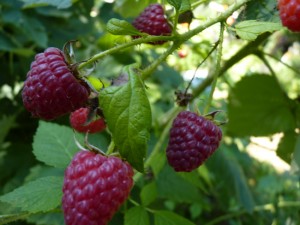
Today I put some seeds in their places:  leeks, lettuce and chard.  The lettuce and chard, once they reach two leaves in size, will go up into the hydroponics for use now.  The leeks will 06-05-10_leeksandpeas670keep on growing, too, also up in the hydroponics once they become youngsters and not babies, but they will go in the ground outside as soon the ground can be worked. (I think.  May be a bit later.)  Over February, March and April other plants will follow the same process, growing up to two leaves, then getting transferred to the nutrient baths of the hydroponics.  Each one, in its own time, will go outside to the waiting beds.  They will augment the garlic, the strawberries, the raspberries, the asparagus already growing there.

This year our planting will be more informed by several years of growing vegetables together, Kate grew some before.  We’ll plant what we need for canning, preserving in other ways like drying and freezing.  We’ve eaten well from our gardens over the last few years, but not as well as we could.  There’s always room for improvement.

One area for improvement is management of the orchard.  That will occupy some serious thought in March and April.  Fruits, especially trees, are different from vegetables, more vulnerable to insects and disease.  We’ll see what there is to do.

This will be the first growing season with Kate home full-time, so we’ll test out how that works.  Bound to help.

Then, too, in April, the bees begin to come out of their winter ball.  I over-wintered three colonies though I’m unsure about their survival.  I’d be surprised if all three pull through the 06-20-10_garden_6703winter, but delighted.  I’d understand if only two made it, but I’d be disappointed with one.  I’ve got a long ways to go before I’m a good bee-keeper, but I have years to go before I sleep.  Time enough.

Chainsaw and Snowblower. Watch out.

Samhain                                                  Waxing Moon of the Winter Solstice

An inside day today.  Tomorrow outside.  A little bit of chainsaw action on trees broken by the early wet snow in November.  Some snowblower work on the sidewalk, clearing a wider path to the front door.

I also have some mulch to lay down.  A bit late, not for mulching, but for the mulch which is in garden bags on our patio.  Frozen I imagine.  I might have to take a sledge hammer to it.

Maybe some soup making if I have any energy left in the afternoon.

The oldest cousin on my mother’s side, Ikey, has entered a nursing home for what sounds like hospice care.  He was the oldest son of Uncle Ike and Aunt Marjorie, my mom’s oldest sister.  When the sickle begins to bite into the generation of my family to which I belong, it has a frisson not there when my mother’s generation died off and eventually out.  I was never close to Ikey, but to most of the rest of my cousins I have relationships nurtured by at least every two year visits.  They’re mostly in Indiana, where I was raised.  A note for Ike, for peace and calm.

Stumbling

Samhain                                             Waxing Moon of the Winter Solstice

Hmmm.  The ablative absolute and the passive periphrastic did not get put straight into my brain.  I stumbled through my lesson today, learning by mistake, a common method for me.  Still, I added a few more verses of Ovid to my translated column, down to 52.  Greg is a patient guy, a good teacher.  I’m lucky to have found him.  He played the music at the Minnetonka UU when I preached out there two Labor Days ago.  We got to talking and he mentioned his Latin and Greek tutoring.  I’d never had a tutor, one on one teaching and I love it.

A nap.  Then a lot of organization stuff, some for the Docent Discussion group I facilitate, some for the Sierra Club’s legislative committee, some for next year’s garden.

On that last point I ordered leeks, kale, chard, cucumbers, tomatoes, cilantro, rosemary, spinach, lettuce and a Seed Saver’s Exchange calendar.  They’re on the docket now because cranking up the hydroponics is a before the end of the year chore and I need to have seeds to start.

Most I’ll wait a bit on, but chard, lettuce, cilantro and rosemary I’ll start right away and grow them out in the hydroponic tubs for winter eating.  Then, around the end of February I’ll get other seeds started, some earlier, some later, getting ready for the start of the growing season.  Right now I’m happy it’s all under snow and out of reach, but come March, April I’ll be eager, looking forward to a new growing season.