Samhain Bonfire

Samhain                                                             Samhain Moon

The first annual Samhain bonfire has happened.  Warren and Cheryl, Frank, Anne, Pam, Lydia and Jason, and Dawn came at various points.  I lit the fire at 6:15 and it was down to coals when we came in just now at 9:45.

We gathered as friends, chatting.  Then the ritual for remembering ancestors opened up the circle a good bit as we learned more about each other, and each others families.  It was a good night, ending in some rain.  I’ll write more tomorrow and include a few pictures.

Crossing Over

Samhain                                                               Samhain Moon

Javier delivered three wheelbarrows of two-year dry oak.  I’ve cut up the ironwood and cedar, split and stacked them.  This morning I cut five four foot lengths off the ironwood’s branches and upper trunk.  They will not be split and will go on the outside of the bonfire. The heat of the fire will ignite them through the bark and they’ll provide a long-lasting flame.

Kate’s gathered together makings for smores, mulled cider and snacks.  She’s also drilled pumpkins with arrows, clever and cute.  She’s also found fall color napkins and plates.  We’ll have bottled water and a warming house, complete with crystal chandelier that used to hang over the piano.

The center piece of the evening will be the fire.  And I’m planning a big one.  We’ve had a wet week so the fire danger is nil.

Doesn’t sound like too many folks can make it. Andover creates a good deal of resistance for city folk, the distance a good ways for an evening out.  We’ve gone low key with this one anyhow, figuring we’d learn what kind of work is necessary to pull one off.  We plan a winter solstice bonfire and one for Beltane, too.  We may skip the summer solstice due to the potential for fire problems.

(welsh holy well)

Tonight the ancestors can move more freely from the Otherworld, as can the folk of faery. At least so my Celtic ancestors believed.  It is interesting to consider that Mexican and Latino cultures also celebrate a similar idea as do some in the Christian church.  The anthropologist in me says that means there’s something here, something the folk beliefs have recognized, perhaps in some precognitive way.

Samhain, 2013

Samhain                                                                    Samhain Moon

Tonight is Samhain, also known as All Hallow’s Eve, and Halloween.  An abbreviated thick description (see post below for thick description) for this Samhain, in this place, 3122 153rd Ave N.W., Andover, Minnesota could begin with any aspect gathered in to this day and its night, but we’ll begin with the firepit.

Kate and I hired Javier Celis to finish a firepit begun several years before by me, worked on by brother Mark two years, but needing some finishing work.  Javier and his crew made the granite paving stones, from a cobbled street in Minneapolis, into a neat circle, lined the firepit with ground stone and put crushed marble around the outside of it.  They also laid down landscape cloth and thick mulch over the entire area, a former compost pile.

Kate’s family had a firepit in their home in Nevada, Iowa and we both enjoyed them at other’s homes.  The firepit hearkens back to campfires of native americans and pioneers here in the U.S., warming, lighting and provided heat for cooking.

The fire itself pushes back further to a fundamental separation between hominids and their close primate relatives, the domestication of fire.  Who knows how it happened? Embers from a lightning struck tree conserved overnight by accident?  A fire on the veldt which left grasses aflame and led to their use as early kindling?  This basic transition, an elemental moment, as essential to our future as a container for water, lives on in our fascination with fireplaces and bonfires.

Bonfires, especially, may be linked, probably are linked, to the fear of night stalking predators, meat eaters for whom human meant food.  So we feel safe around a bonfire, huddled around it, just a bit of the thrill left over when that thrill came from the very real possibility of death by fang or claw.

In the Celtic tradition, which we celebrate tonight, the bonfire had sympathetic magic at its core.  In the spring, on Beltane, the fire transferred its vital energy to the soil where it could quicken the seed and ensure a successful planting.  The opposite end of the year, Summer’s End, or Samhain, finds the bonfire a way of ensuring our warmth and protection from the cold and hungry months ahead.

My Celtic roots run through Ireland, the Correls, and through north Wales, the Ellises, and, perhaps, through County Kent, the Keatons.  The Correls came as potato famine immigrants in the late 19th century and we have no information about the Keaton immigration though it might have been in the same era.  The Ellises we know came here first in 1707 when Richard Ellis was put ashore by a greedy sea captain, sold as an indentured servant to pay his fare.  His mother had paid his fare in Dublin, Ireland where her husband, a captain in William and Mary’s occupying army, had recently died.

Searching in my own and the more general Celtic past led me to the Great Wheel of the Year.  It has gradually become a center point for reimagining my faith, helping me find the rhythms of the year and of human life as key sacred moments.  Thus it is, at least in part, that we go to our firepit this year, to build a bonfire and say the names of our ancestors, standing there around the universal symbol of human protection, warming our hands and waiting as the Great Wheel turns from the bounty of the growing season to the Great Rest of the fallow time.

Thick

Fall                                                                    Samhain Moon

Spent most of the day making chicken-leek pot pies.  Reading a French scholar named Bruno Latour today, for Modern and Post Modern His notion of thick description, of “gathering” the society of meanings and matters necessary to fully engage any thing, has got me excited.

(Latour)

So, just to try it out on chicken-leek pot pies, let’s play with the idea.

Leeks and Wales have a close association, like the thistle and Scotland, the shamrock and Ireland.  In war Welsh soldiers would wear leeks in their bonnets, as a Lakota might an eagle feather.  When this partly Welsh man genetically and Welsh named man, Ellis being Welsh and the family from Denbigh in northern Wales, sets out to make a leek pie, it is not merely a culinary but a cultural matter as well.

Perhaps it was that cultural matter that accreted years back, back when the same man decided to plant a garden.  A garden.  Well, there’s a thick matter.  Of course there’s the obvious garden of Eden, but in order to have an idea like the garden of Eden, the ne plus ultra of gardens, we had to have the idea of garden itself.

(“The Garden of Eden” by Lucas Cranach der Ältere, a 16th-century German depiction of Eden.”

Garden is, of course, over against the life ways of the hunter-gatherers, who, in a sense, saw the whole world, or at least the part they could reach on foot, as their garden.  But not exactly.  Yes, they saw it as their garden, a physical place which produced food for their consumption; but no, not a garden in the horticultural meaning, that is, a cultivated (cultured) place where plants no longer grew as they would, but as a gardener wanted them to grow.

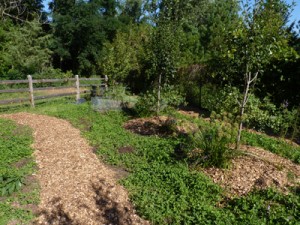
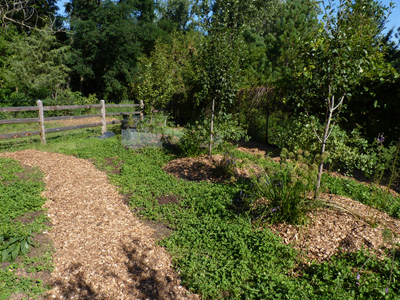
It was this horticultural understanding of garden that split us off from those early nomads and found us more or less rooted to a particular place so we could, as Voltaire recommended, tend our garden.  It’s that sense of a place chosen and planted, rather than one identified and harvested, that is behind the garden on our property.

In that garden, a human defined and cared for instance of the earth’s most basic life 400_late summer 2010_0175sustaining work, the growing of food, this Welsh descended man chose a plant regarded by his genetic ancestors as central somehow to their identity.  “According to legend, Saint David (the patron saint of Wales[2]) ordered his Welsh soldiers to identify themselves by wearing the vegetable on their helmets in an ancient battle against the Saxons that took place in a leek field.”  Wikipedia
Cooking too is a marker of one era of human evolution from another.  Levi Strauss, the French anthropologist wrote a famous book, “The Raw and the Cooked,” which explored this binary.  Cooking helps detoxify food, makes it more flavorful and allows for the mixing of ingredients.  We don’t bring the leeks in, chop them up and eat them.  Most of the allium family shallots, onions, garlic, leeks aren’t considered raw vegetables (except in salads and on sandwiches) by most Westerners, but here again we enter the domain of culture, choosing which food will be eaten in which way.

And the chicken.  Well.  Once the gardens got going, the domestication of animals was not far behind, probably led by the dog, but followed later by fowl, hogs, cattle, sheep and all the others that now find their place primarily in human defined environments. Early folks gathered a few scrawny birds and enclosed them somehow, perhaps initially for their eggs.  Later, they ate them.  Or, the reverse.  I don’t know.

(Gallus_gallus ancestor of the domestic chicken)

In Wales, and I imagine in other Celtic countries, poverty made chicken a primary meat, if any meat was available at all.  In Wales it’s perhaps no surprise that someone decided to cook chicken and leeks together.  Tasty.  Just when that combination became a pie, again, I don’t know.  But I do know that 8 instances of its most recent incarnation are on the counter upstairs, one of which will be cut open tonight for supper.

Lots more could be added here to a thick description of chicken-leek pie.  We could, for example, explore gender roles, the chicken industry, the Viking stove folks, the domestic natural gas industry, the lights that allowed the cooking to go on after the sun went down. There’s flour milling and grain cultivation, too.  Not to mention the corn and peas, frozen, in this instance which brings up refrigeration. This idea has some legs, I think.
Fall                                                                  Samhain Moon

more Lucretius

1. You who have born Aeneas, pleasure of man and god,

2. Bountiful Venus, gliding smoothly underneath the mark of heaven,

3. How thou dost enliven the ship-bearing sea and the fruitful earth

4. Everything since transformed into a living being

5  Is conceived through thou  and (we?) behold the light of life rising.

6. The winds take flight with thou, goddess, with thou, with thou the clouds of heaven (flee)

7.  And come suitably for you, for thou the skillful earth

8.  Causes to spring forth delightful flowers, the calm sea smiles upon thou

9.  And quieted heaven shines (forth) diffuse light.

(Titian’s Venus)


Those Leeks

Fall                                                                              Samhain Moon

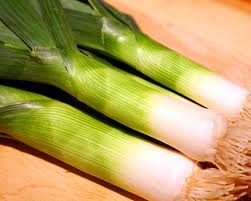
Those leeks.  Just cut’em up, trimming the hairy white afro of their root system from the leeksstem and cutting back to where the white ends and the green begins.  We want white with leeks.  A dirty job because leeks like to hold on to the soil, keep it close, even after getting pulled from the ground.

Chopped carrots, onions, celery and sauteed them in olive oil along with some dried garlic. Three pots going, me from one to the other with a wooden spoon, stirring stirring.  Watching that one with the thinner bottom more closely cause the veggies could burn.  Did burn a bit.  Till the onions and the celery become translucent.  Then I throw in white wine to deglaze, add a base note.  Let it simmer a minute.  After that water.

The chicken, a golden plump, parachuter chicken, Helgeson family heirloom chicken, green money to their clan, just meat to me, into the pot.  More water.  Salt, pepper, Paul Prudhomme’s poultry seasoning.  That last ingredient is a secret.  Don’t tell.

While they simmer for an hour and a half, I’m returning to Lucretius.  See what else is going on in the introduction to this work of Roman Epicurean science.  After I’ll go back to the chickens.  Have to cook the leeks.  Add the peas and some time.  Get the dough ready.

This is a lengthy process.  Into the afternoon before the pies themselves are done.

The Nature of Things

Fall                                                                        Samhain Moon

My first venture into Lucretius, De Rerum Natura:

Book I:

1. You who have born Aeneas, pleasure of man and god,
2. Bountiful Venus, gliding smoothly underneath the mark of heaven,
3. How thou dost enliven the ship-bearing sea and the fruitful earth
4. Everything since transformed into a living being is conceived through thou.

Wood and Leeks

Fall                                                                   Samhain Moon

Split wood from the two cedars and the ironwood stacked.  Plenty of kindling sized wood, some paper, smaller sized chunks of wood, plus two pallets to break up and split.  Then, out there, lying yet in the woods, the tapering trunk of the ironwood plus two thick branches, waiting to be cut into true bonfire sized logs for the outside of the fire.  Thought I might have to buy some wood, but no.  All I need right here.

All the leeks harvested, the tops trimmed off and waiting in the hod for the hoses to thaw out so I can wash the roots outside.  It’s chicken pot pie day here at Artemis Hives and Gardens.  After, that is, a visit to the city to see Audacious Eye and have lunch.

There will be three pots, a chicken in every pot, boiling away with garlic and onions, celery and carrots sauteed first, then the water, then the chicken.  The leeks in another pot, also boiling.  After some time, corn and peas and pearl onions into the chicken pots.  At that point the chickens come out and get plopped onto cookie sheets where the flesh comes off and gets cut up into smaller chunks.  Which get put back into the pots, again one chicken each.

Get out the pie tins with pie dough in them and the box of Pappy’s dough so it can soften.

Add the leeks to the pots and thicken with corn starch or Wondra.  Tricky step, probably will do it in smaller bowls.  The thickened chicken broth with chicken, peas, corn, leeks, pearl onions, carrots and celery spread out in the pie tins.

Flatten that Pappy’s with a rolling pin, always flouring the surface, make it big enough to cover the pie tin, put it on like a night cap, crimp the edges, make marks in it to let the steam out.  Toss in the oven.  Wait a while.

Chicken pot pies.  Most will be frozen, probably all but one.

Into the Weeds

Fall                                                                               Samhain Moon

Additional on post just below.  There is a tendency in quasi-religious, new agey thought to condemn doing and promote being, especially being here now.  Nothing wrong with being here now, of course.  Especially since we really have no other choice.  This seems like a false dichotomy to me however.

Even in our doing we are being and in our being we are doing.  This is only to say that doing entails presence to the world and to ourselves, albeit in a different way from the semi-mystical state of being here now.  If you’re a fan of Zeno and his paradox, then you might craft an argument about never changing out of the now, but in other ways of explaining reality, even being here now is impossible.  Why?  Oh, the earth moves around its poles, through the sky and your body digests food, engages in symbiotic exchanges, responds to changes in temperature and light, shifts nourishment into cells and waste out. Change, that old black magic, has its hooks so deep into the universe we often never notice it, even when it moves with the speed of light.

However, if you go back to the observations I’ve been making about circular time, the repetitive nature of change, how it loops back on itself in predictable patterns, perhaps, yes, in more of a spiral than a bicycle wheel, but still Fall then again Fall, and Winter then again Winter, and Birth then again Birth, and Death then again Death, well, if you consider them, then the cycle from one now to the next is Now then again Now.  We’re never ever out of the now, yet we experience movement.

These paradoxes point to being and doing as a false dialectic, not poles resonating with each other like, say liberal and conservative or life and death or true and false, but as alternating ways to explain the same thing, our hereness.  As Heidegger points out, we are thrown into the world at a particular place, to particular parents and in a particular time. I would push that one step further and say we are thrown into each moment in a particular place, in a particular time, with the unique, particular body/mind that is you.

In each moment our particular response to the now has doing characteristics and being characteristics.  Perhaps another way to say this is that part of us is at rest while other parts are engaged with the now, acting on it or being acted upon by it. We do both at the same time, being and doing.

So what’s all the fuss?  It’s about attention.  When all of our very valuable attention focuses on the action or work or active play of  a moment, then we draw ourselves from the beingness of that moment.  When we focus on the beingness, we draw ourselves away from the doing.  But both states co-exist, no matter on which we focus.

The key move here is about attention.  We can and do shift our attention from different aspects of our life to others, from ourselves to the world or moment into which we are thrown.  If we spend all of our attention on doing, then we neglect the deeper, more reflective aspect of our selves.  Conversely, if we spend all of our attention on being, then we neglect matters necessary for our survival.

In the rhythm of your day, your year, your life, you can choose to attend to the activity, the work, the “what you do.”  This might entail lists or calendar marking or goals and objectives or satisfying layers of cloth or manuscript pages.  Likewise you can choose to attend to the beingness, the what you are.  This might entail meditation, silence, counting breaths, noticing plant and animal life at a close, intimate level.

The point?  What do you do, is a valid question.  So is who are you?  They might have the same answer.

What Do You Do?

Fall                                                                     Samhain Moon

At Barbette’s last week.  The usual question.  And what do you do?  As always, sorting through the possible responses leaves me with no idea where to start, so I say, “I’m retired.”  With my hairline long ago fully receded and my beard white it seems like the easiest way to deal with a question something like, “What’s your major?”

Still it leaves me unsatisfied.  As if I’m denying the fullness of my third phase self.  The problem is there’s no handy hook, “Anthropology.”  “Clergy.”  “Organizer.”  No terms like those for gardener, grandfather, writer, apprentice Latin scholar, eternal student.

And I don’t want there to be.  One of the facets of the third phase I enjoy so much is the freedom to move between and among activities without feeling defined by them.  Of course, I’ve been fortunate enough to be able to do that for the last 25 years or so, yes, but it feels different post-65.

No easy answer here, I guess.  It will probably emerge over the next few years.