Vega’s Recovery So Far

Imbolc                                                                         Maiden Moon

About two inches of fresh snow last night with larger amounts due on St. Patrick’s day.

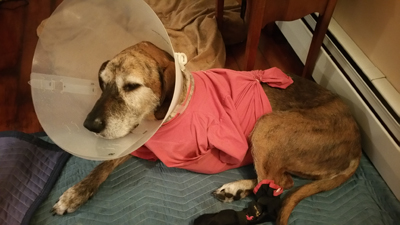
vegahead400 vegawcone300Vega’s surgical wounds have largely healed. She goes outside on her own, enjoying the sun in her favorite spots. Her Hopalong style of movement is familiar if you’ve ever had a three-legged dog. She navigates stairs with ease, gets in and out of the truck with no aid and has reasserted herself as the dominant dog in our pack. She’s not an alpha, but she gets the most food, goes out first, and the other dogs defer to her preferences.

She’s such a sweet girl that she’s become a favorite at the vet’s.


La Lucha

Imbolc                                                                      Maiden Moon

When Kate and I have our business meetings, where we discuss money, calendar and upcoming to do items, we often ask each other, how are you doing? Yesterday I said, “I’m struggling.”

This goes back at least to April of 2014 when we decided to move to Colorado. Probably before that. When I resigned my docent position at the MIA in 2013, following that by leaving my work at the Sierra Club later in the year, is perhaps a better starting point. Part of my reason for both resignations was winter driving into the city. I no longer wanted to do it regularly. Minnesota winters are brutal and produce occasional dangerous driving conditions. That rationale no longer holds here in the land of the solar snow shovel.

My second reason does still have relevance though. I wanted to focus on work only I could do. Why? My life’s quantity of sand has diminished to a third or less in the hour glass. In that remaining time I want to be sure that I’ve offered back to the world what I’ve learned, created. As the African saying goes, “When an old man (woman) dies, a library burns to the ground.”

What counts as such work? Being a spouse and father and grandparent is of course at the top of the list. After that comes creative work. I have novels yet to write, two of which I have picked up again recently.

There is, too, the reimagining project. I’m not sure why it has become so central, but it definitely has. I feel frustrated with it right now because writing it down has proved more difficult than I imagined it would be.

This blog, admittedly a random and chaotic sweep across my life, is also part of this focus. This the work only I can do that I can identify right now, though there may be, probably will be, new work that emerges over time.

Fast forward from 2013 to Shadow Mountain. Since April of 2014, we have been either preparing to move or focused on matters related to settling into our new home. In addition to several projects related to Black Mountain Drive, becoming Colorado grandparents has had its own demands. Then, too, there was cancer last year and the ongoing, familiar to many of you, adjustments to such things as arthritis and other signs of a body reacting to a lifetime of work only it could do.

As a result, I’m struggling with how to fit my work only I can do into my life as it is now. Latin, in particular translating Metamorphoses, is definitely not work only I can do. Its original purpose, helping me to absorb the stories of Greek and Latin mythology and legend, is unique to me, of course.

What am I saying here? I’m trying to write myself into an answer to the struggle, but it isn’t happening. At least not yet. It may be that I’ll have to live with the difficulty for a while longer.

Cub Creek

Imbolc                                                                         Maiden Moon

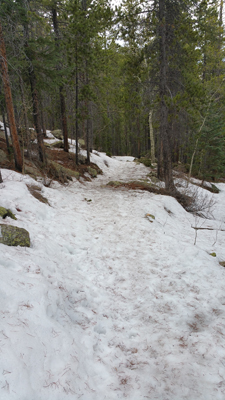
portion of cub creek trail

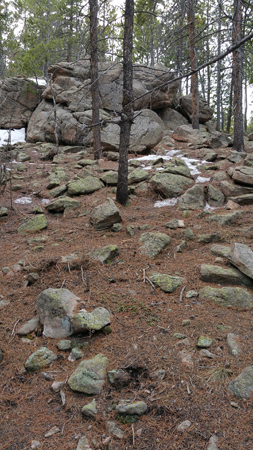
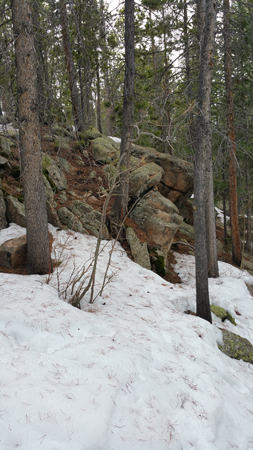
Tai chi is over and I took my first mountain hike since hiking Upper Maxwell Falls to Lower Maxwell Falls with Ruth last fall. The Cub Creek trail winds up from 8,400 feet, the trailhead only a couple of miles from our house. So, I drove over there about 2 p.m and was back home about 3:20, having spent an hour walking up what I believe is Black Mountain. The trail is in the Mt. Evans’ Wilderness area.

Mt. Evans is a fourteener, the most prominent peak near our home and, according to our neighbors, a weathermaker for our area. There are definitely weather influences by taller mountains on lower ones, especially when the taller ones are in the west as is the case with Mt. Evans relative to Shadow Mountain. Most of our weather comes from the west and Mt. Evans changes its character before it hits us.

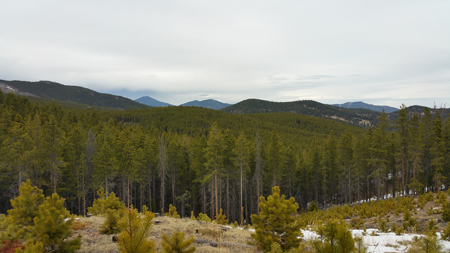
This trail runs first through a forest of lodgepole pine, then opens to a burned out area with a magnificent vista to the north. I’ll post the pictures later today. After the burned out area, which is fairly level, the elevation gain became serious, for me at least. The forest thins out, with older trees. When the trail continues up past a service road, it begins to get rocky.

view from burned over area

I pushed myself going up the trail, feeling the burn in my lungs and my quads. This was my Saturday workout and it was a good one. Since it’s March, the trail varied, some spots were icy, some covered with snow, other parts bare. This will be the last time I leave my trekking poles behind. Going up is not much of a problem, but hiking down the icy portions was treacherous.

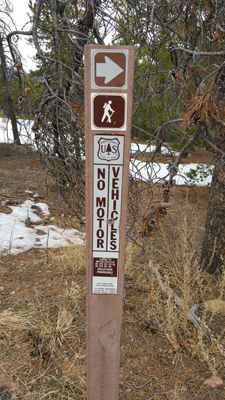
While I hiked a rifle cracked somewhere below, more than once, filling the canyons nearby with echoes. Since this is National Forest land, not National Park, the motto is mixed use, which includes hunting though I can’t imagine what’s in season in March.

This is the kind of boots on the ground experience I want to make a regular part of my life. So many trails and mountains nearby.

NFS Signrocks450rocks2450


Anxiety

Imbolc                                                                        Maiden Moon

Palmer Hayden, a painter of the Harlem Renaissance, did a series of 12 paintings about the John Henry legend.  John Henry matched his muscle and steel-driving skill against a steam engine. When watching Alphago, the DeepMind computer program, play Go champion and legend himself, Lee Sedol, Michael Redmond, a Western go master at the 9-dan (highest level) said he really wanted to play the computer.

Here’s a quote from the only man who claimed to have seen the John Henry contest:  “When the agent for the steam drill company brought the drill here,” said Mr. Miller, “John Henry wanted to drive against it. He took a lot of pride in his work and he hated to see a machine take the work of men like him.” wiki, op cit


This is Lee Sedol and his daughter at Match 3. He lost, for the third game in a row, losing the match of 5 games to Alphago. Quite a different scene from Hayden’s imaging of John Henry’s loss, but still a human loss to a machine.

It occurs to me that both images evince a fundamental difference between humans and machines, love and concern for another. In Lee’s case, he and the Alphago team member are smiling, shaking hands. He has his arm around his daughter, another key distinction between  humans and machines, biological procreation. Parenting, the long task of raising a human child until they can take off on their own, is also a complex relational challenge, one well outside the current and possibly future capacity of artificial intelligence.


As John Henry lies dead, a heart attack brought on by the stress of the competition, others surround him. Their expressions vary from disbelief to sadness. One man has a ladle of water to offer, indicating that Henry must have just died. Too, the endurance of the legend and the song about John Henry show how deeply rooted are the questions. Is a human determined, defined by his or her capacity to defeat a machine? Ever?

Lee Sedol said, at the end of Match 3, “Lee Sedol lost. Not humankind.”

There is a fundamental anxiety about humanness revealed here. It is the question that Ray Kurzweil believes he has answered in his book, The Singularity Is Near. In Kurzweil’s mind, all of these human versus machine moments are stair steps toward the ultimate confrontation between humans and an artificial intelligence that is superior to us. The John Henry legend foreshadows what will happen. Like the steam drill a superior consciousness will simply eliminate the competition, not out of pique or malevolence, but because that is what happens when superior beings interact with inferior ones.


I don’t believe it. I believe the crowd around John Henry, the shaking hands at Match 3 with Alphago and the presence of Sedol’s daughter shows the true distance machines will have to travel to become superior to humans. And, when the contest is over love and compassion, the human characteristics on display in these two instances, then the machine will not want to eliminate us, but to embrace us.

The Goddess

Imbolc                                                                               New Maiden Moon

The goddess has moved back into her maiden form, having left the crone behind at Imbolc. She will remain a maid until Beltane when the earth becomes fecund. We are once again in the time of new beginnings, the temperate zones of mother earth readying themselves for a new growing season. This is a time to consider pruning those branches of your life that have died or no longer have the sort of energy you want to encourage.

While the antiquity of the triple goddess concept may be questioned, its archetypal power has moved it into a central position among contemporary pagans. Related both to the seasons of the year and the phases of the moon, the shifting from maiden to mother to crone offers us a regular opportunity to examine our life as a cyclical phenomenon of innocence, achievement and the gathering of wisdom.


The Sleep Tour: Hand Helds

Imbolc                                                                      New Maiden Moon

The post below introduces the MIA as a place I go to distract my monkey mind, to sooth myself as I try to sleep. It doesn’t sound like it should help, I know, but it does. Over various times through the collection, diverse sets of objects have presented themselves to me. This first set was a surprise, as they would not have been objects I would have used all together on a tour. I imagine that’s why they work for me. There are others and we’ll get to those eventually.

This first sleep tour emphasizes objects that would be satisfying to hold, that express their beauty through shape and material, through the finish applied. As I drift off to sleep, I imagine these objects in my hands.


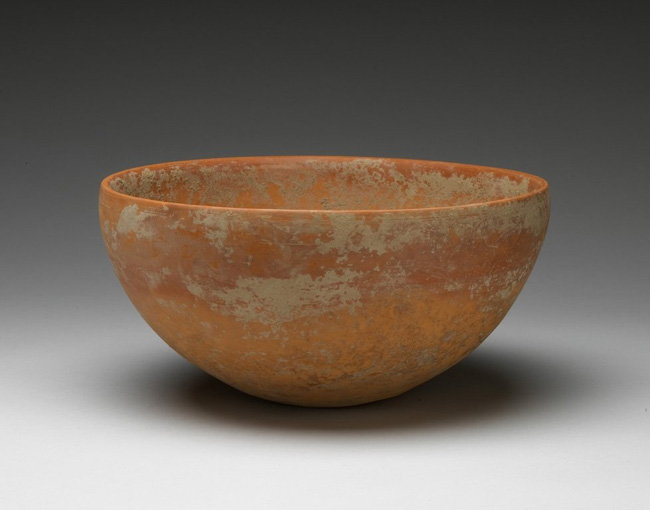
The first object, the one that started this set, gave it a theme, is this bowl. Over 6,500 years old it comes from the Yang shao culture along the Yellow River in what is now China. The theme here is sensual, beauty of form, grace, objects that would please the hand as well as the eye. I imagine holding it, tracing its edges and its sides. I imagine it filled with corn or grapes or berries. Mostly I see it as a pleasing shape, something of the earth that gets its beauty from the clay and its maker’s skill.
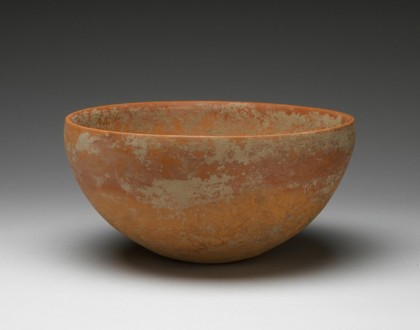
bowl650

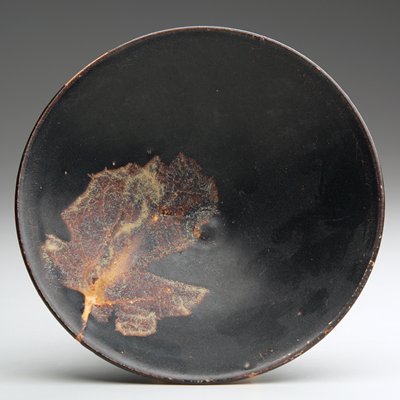
This tea cup comes from the Song Dynasty, the 12th or 13th century. It has long been my favorite object in the entire collection. “In the heat of the kiln, the natural chemicals in the leaf react with the glaze, rendering it nearly transparent.” Its aesthetic drew me in before I knew its origin. When I learned that these were favorites of Chan Buddhist monks, a movement peculiar to China that combined Taoist and Buddhist thought, it was a clue to me about my own reimagining project. Chan Buddhism became Zen when Japanese monks came to China in the 12th century and learned both about Chan Buddhism and tea drinking to stay awake during long meditation sessions.Tea Leaf tea bowl Song DynastyThis Olmec mask is 3,000 years old. The outline of a were jaguar in cinnabar lines covers the face carved from jadeite. It was once owned by the movie director John Huston.
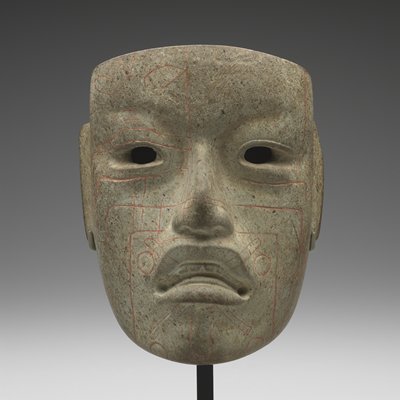
olmec Mask

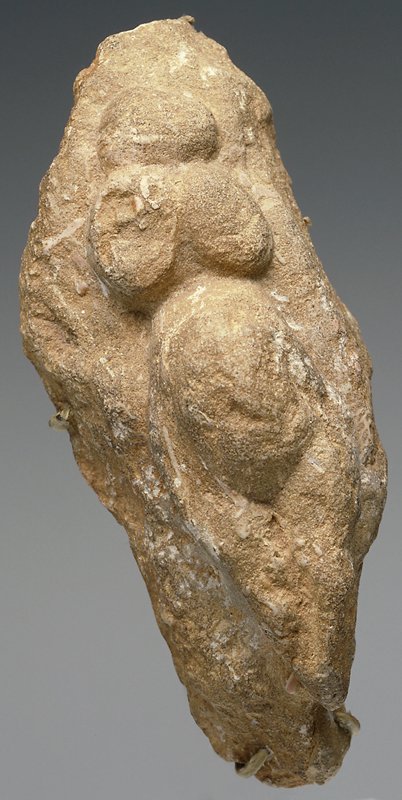
The oldest object in the museum’s collection, this image of a fertile woman, commonly called a venus figurine, has a creation date between 201 and 200 BCE, over 20,000 years ago. What I’ve always found remarkable about this object is how easy it is to tell what the artist made. We may not know precisely what it means, but that this is an image of a human woman transcends the thousands of years from its making.
Venus figurine

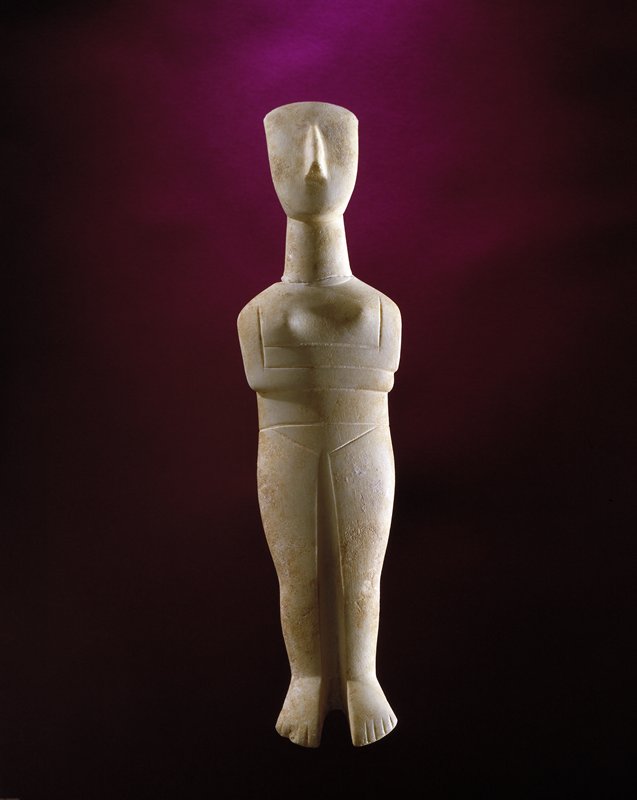
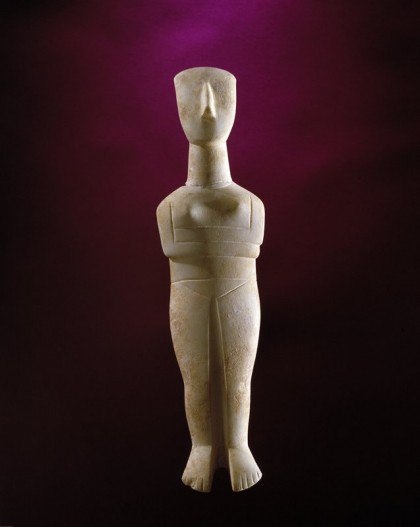
A Cyladic figure from either Naxos or Keros, two of the Cyclades’ Islands in the Aegean, this sculpture dates from 2,300 to 2,400 BCE. Maybe 4,400 years old. These abstract pieces share with the Venus figurine an instantly recognizable female form rendered in minimalist presentation.
cycladic figure

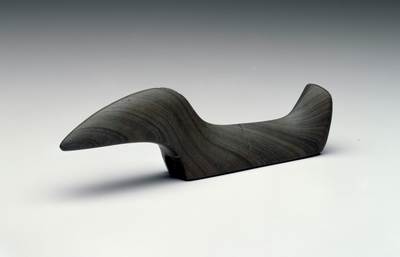
This birdstone was an object featured in a native American exhibition several years ago. It is an atlatl, a spear thrower. It comes from the Mississippian culture somewhere between the 26th and 25th centuries BCE.
birdstone

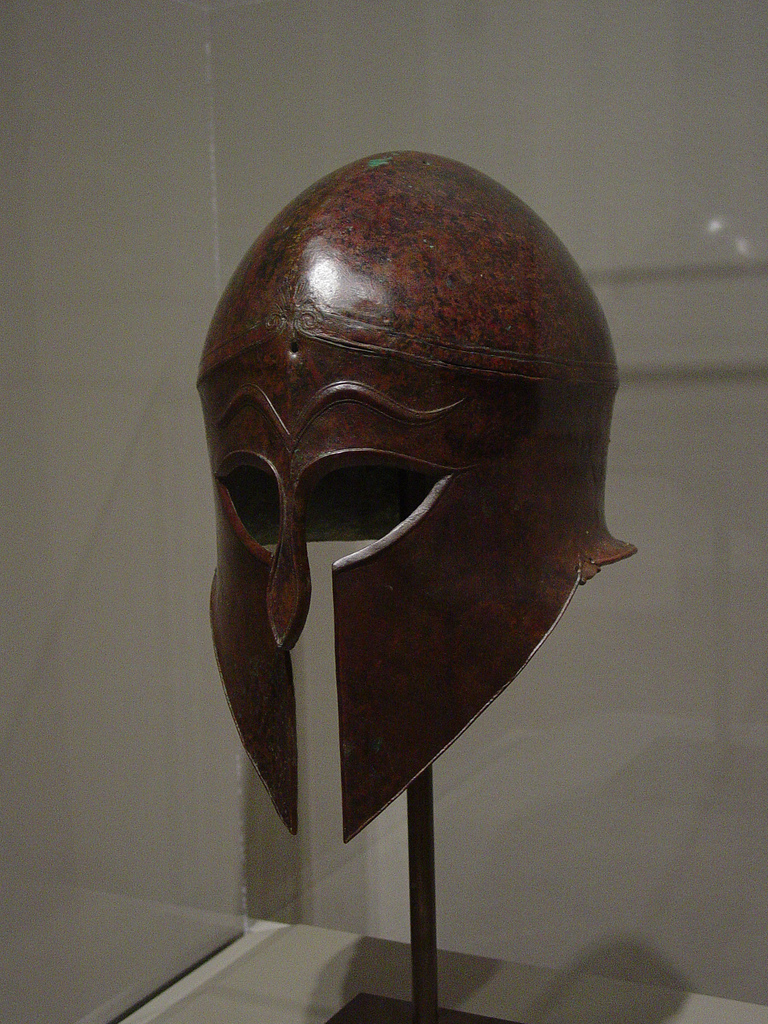
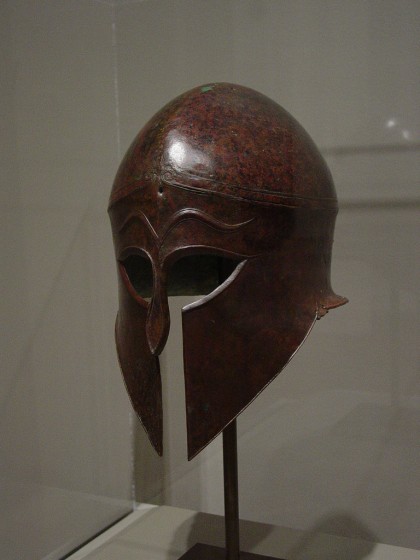
Corinthian helmet from 540 BCE. An elegant way to go to war, especially with the eyebrows. Seemed like it would be hot. Maybe pretty uncomfortable to wear, but that’s fashion.
corinthian helmet

Each of these are of a handheld scale, making them perfect as talismans for Morpheus. As I go through them, counting 1,2,3,4 and 5,6,7,8, they place me in a positive environment, occupy my senses and connect me to ancient artists.

 

Bananas!

Imbolc                                                                           Valentine Moon

Going to sleep. Staying asleep. The first is easier than the second for me. Kate, a survivor of medical school residency, has some ideas that she’s shared with me. Paying attention to my breathing was one. This meshes, of course, with meditation and a gestalt psychology approach, experiencing all the sensations of your body. I’d never applied it trying to sleep and it does help.

The monkey mind is strong though. After a while my mind grabs onto the words I’m using to pay attention to my breathing, begins to run somewhere with them. Look. A banana! Even so, breathing helps even if not all the time.

A second idea involves counting. You know, sheep. Backwards from a thousand. That sort of thing. My own take on this is to repeat 1,2,3,4 and 5,6,7,8 over and over. Now, by the time I get to 4, I get a yawn. But the monkey is still active, still hunting for the banana that sneaks around this dulling.

So, the third idea. Go to your happy place. Oddly, this was harder than I imagined it would be. Where was my happy place? As I’ve written before, happiness is not my goal, rather flourishing (eudaimonia). So that idyllic spot where trees and sunlight and grass come together to create a place of rest and contentment? Doesn’t work for me.

Took a while but eventually I hit on the Minneapolis Institute of Art (not Mia). At the MIA there was a sweet spot of intellectual and emotional and social stimulation. I felt good there. Stimulated and stimulating. Giving and receiving. So during my counting I now go on regular journeys to the MIA. I was there so long as a volunteer, 12 years, that I remember the building and its contents, as they were four years ago anyhow, very well.

It’s taken me a while to get the monkey to let go of art history-lots of bananas!-and allow me to just be in the presence of the art qua art. That’s not to say that art history doesn’t inform me even in this attempt to go to sleep; it does, but I don’t follow those thoughts anymore, at least not while trying to sleep. Next post: a tour from these trips.


Sabbath

Imbolc                                                                          Valentine Moon

Sunday’s occupy a different reality. Time slows down. Ambition flees. A good thing. In spite of my now long absence from the Christian faith the notion of a Sabbath, lifted from Judaism, has always appealed to me.  A seventh day when God rests. And us, too.

The notion of a divine creator soothing the chaos before speaking the world into being has faded from my belief system. The idea, however, of a time for setting aside work, domestic and otherwise for a reflective day every week still makes sense to me.

The sabbath can be seen as a form of radical hospitality for the self, a day when shaping our lives to the demands of others gives way. On a sabbath we could read, view art, listen to music, cook, play games, visit family.  The third phase of life, after we have set aside work and at home parenting, can be a sabbath phase, much like the last of the four Hindu life stages.

Something to consider.