Fall Harvest Moon
A couple of months ago I joined a new group at Beth Evergreen, one designed to provide leadership for continuing to integrate mussar (Jewish ethics and an approach to spirituality) into synagogue life. The group’s work involves deepening our own practice of mussar and through that enhancing the practice of others.
In the first month we focused on-hmmm, I don’t recall, which is telling. I felt embarrassed when we got together to discuss our practice because mine had not gone well. The next month, I resolved, would go better. That month, the month of Elul, ended on September 20th, the day before erev Rosh Hashanah, New Year’s eve, or the first of Tishrei. We meet again next next Wednesday.
Mussar identifies soul traits that come from within the Jewish tradition, but have universal application. That is, though mussar is a particularly Jewish approach to ethics, it can have application for anyone. According to Mesillat Yesharim, the medieval text we’ve been studying for the past year plus, these traits develop in a particular seder, or order.
The first trait, according to this book, is watchfulness. The subtle permutations of each soul or character trait get a good deal of attention in Mesillat Yesharim (The way of the righteous) but the first task is to get a grasp of the trait. Watchfulness correlates to mindfulness, to self-awareness, and I relate it most to the Greek know thyself.
 Awe, or hitlamdut* in Hebrew, being a learner, being in a constant state of curiosity/awe, was the middah (soul trait) for last month, Elul. This month, Tishrei begins with Rosh Hashanah, and its tenth day is Yom Kippur, the day of atonement. The period from Rosh Hashanah are collectively the Days of Awe, the High Holy Days in the Jewish liturgical year. Awe is central to the experience of the most sacred days of the Jewish year.
In my mussar practice for the month of Elul, I committed, once again, to journaling and to using a focus phrase. Mine was, Say Awe, a yellow post-it note is on my computer tower. Over the month I have noted moments of awe using Keep, a note-taking app on my smartphone.
The first morning of this new practice I got up at 4:45, fed the dogs as usual, then went outside to walk up the stairs to the loft. On clear nights, most nights here on Shadow Mountain, the starry sky is a wonder all on its own. This night though had something special to kick off my days of awe: Orion had risen. Readers of this blog may recall my special relationship with Orion, one begun on lonely nights in the guard shack where I worked during my senior year of college.
 Orion returns as the Great Wheel turns into fall, the beginning of my favorite half of the year, reaching its high point (low point?) on the Winter Solstice. Each year since 1968 Orion has returned as a friend, a companion during lonely, dark nights. It gladdens my heart to see him since he only visits during this time. His return on this particular night was awe-some. Orion got me started on a month of awe.
As the month has progressed, I have encountered many moments of awe: realizing the heat on my face had traveled 93 million miles through empty space, being aware that each night I go unconscious, taking myself out of the much more familiar waking world, Black Mountain appearing in the morning as the sun burned off its misty shroud, experiencing sonder-the realization that each person you pass has a rich, full life and that you will never know it. At the dentist’s office for a teeth cleaning, alone in the chair and waiting for the hygienist I went into a revery about light, light bulbs, electricity, the wonder of human invention, the evolution of teeth, the astounding reality that each of us are the current instances of an unbroken line of successful procreation, a line of procreation that began with the very first one-celled organism.
As I followed this practice, this mussar practice, deeper into awe, I discovered I could summon an experience of awe at will. And, that I’d been doing something like this for a long time.
 Here’s an example. Kate and I enjoy eating at the New York Deli, an authentic Jewish deli that happens to be on our route into Jon’s house. We went there a couple of weeks ago and I ordered a white fish platter. It was huge. There was white fish, dollops of cream cheese, capers, tomatoes, onions, lettuce. On the side were two bagels, sesame seed as I had requested. Awe was on my mind so I looked at the platter. This meat came from a white fish that swam in some lake, it’s a freshwater fish, not too long ago. It had to be caught, selected, preserved (probably through refrigeration), processed, packed, stored and shipped. Then it had to be opened, divided and placed on my plate. Imagine all the individual people involved, all the different modes of transportation: boat, truck, maybe rail, maybe airplane. The cream cheese: specific cows were milked, the milk pasteurized (Louis Pasteur), chilled, then sent to a dairy somewhere and used to create the cheese which likewise had to be transported here to end up on the plate. You can see how this goes. The wheat in the bagel: sowen somewhere, cultivated over a growing season, combines in formation harvesting it, more transportation, milling, mixing the flour with eggs and yeast, baking. Growing the sesame seeds. The tomatoes. The onions. The lettuce. Do you see what an amazing, awe-some thing that white fish platter was?
My conclusion, right now anyhow, is that awe, far from being an irregular, occasional moment of OMG, is a matter of the perspective we bring to each life moment. If we choose to probe deeper, we can find the awe in the awedinary.
So, as I learned at the dentist’s, say awe.
 A peculiar sequelae of my new schedule, afternoons remain inchoate. After the nap and before supper. Not sure yet what to do with that. Might be good for games and puzzles? I want to read then, too, and do Latin (or, Hebrew). Perhaps once kabbalah and Hebrew classes get cooking I’ll find this the natural time for that work. The issue is peculiar because once I’ve fed the dogs, gotten my writing done, finished items off my to do list and completed my workout, I’ve already had 7 plus active hours.


 So what I’m proposing is not another religion with a different origin story, a different set of scriptures, different roots from, say, Hinduism, Zoroastrianism, Christianity, Islam. And what I’m definitely not proposing is a reductionistic attempt to find out what all religions have in common, nor am I proposing a sort of tolerance for all faiths, an attempt to learn from each of them (though this is a good thing to do) and out of that shape a new faith.
 So, what are some of those fundamentals? Prayer, worship, gods, ritual, art, revelation, congregations, sacred space, the notion of sacred, divinity, after life, morality and ethics. How might a radical approach take the long history of prayer, for example, and reshape it, reconfigure it, reuse it for the person who chooses to stand outside particular traditions, but still wants to paint? Or, what about gods? How does the notion of powerful, unseen entities with various agendas fit into the life of persons no longer monotheists, no longer willing or able to see many gods?

 That’s especially important for workouts, which are easy to forego. On Mondays, Wednesdays and Fridays, I do 20 minutes of cardio, then resistance work, then 20 more minutes of cardio. On Tuesdays, Thursdays and Saturdays, I do the high intensity cardio plus 50 minutes or so slower cardio. If I miss a Monday, I go on to the high intensity, slow cardio day. If I miss a Monday and a Tuesday, I still go to the 40 minutes of cardio, resistance work day. For me, keeping the same workouts on the same days of the week keeps me from feeling guilty (I’ve missed so many workouts, it doesn’t make sense to even try and get back to my schedule.) and guilt stops the process altogether.
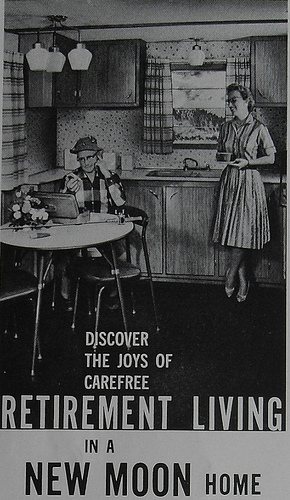 The third phase is new. It used to be that 65 or so meant the end of a working life, retirement happened, then death, often before 70. Those that made it into their seventies were often burdened with serious medical problems that drained energy and created obstacles to doing much else.
 70 is not the new sixty. It’s the new 70. What 70 is the new sixty really means is that for those raised in the 50’s, 70 now appears like age 60 did when we were kids. Big difference though…we’re in that sixties range of health, but we’re 70 and work has fallen away, the kids are gone. What do we do?
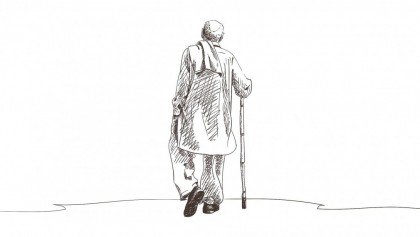 Yes, retirement and the life following it, the third phase as I call it, is just that, a new and different time of life, one in which the question of how do I live can have a radically different answer than in the first two phases. Who are you? Who do you want to be? If you want to be a person whose constant focus is recreation, who gets up in the morning for another day of adult recess, you can. If you want to be a dress designer after years as a forensic engineer, you can. Or, as in my case, the work before retirement age was satisfying, self-directed, so there’s little reason to change just because some age-related cultural turning point has been reached.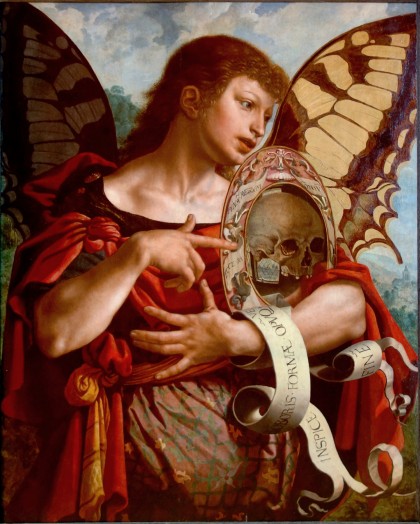
 Sites of Los Angeles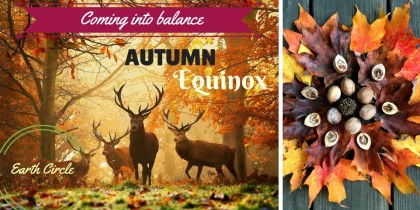
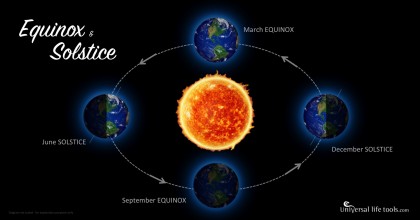 Here in the mountains the streams have long ago drained off last winter’s snowfall; the aspen have turned golden. The cervids have begun their annual procreational dance. Sex is in the air. We have snow in the forecast for Monday and night time temperatures are in the good sleeping weather range for Kate and me. In Minnesota we could hear the Andover marching band practicing and here the high school football season is already well underway. Coats become an item of consideration when leaving the house.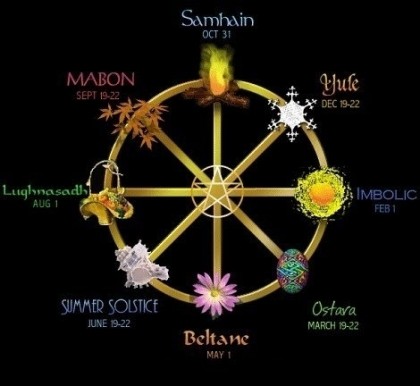
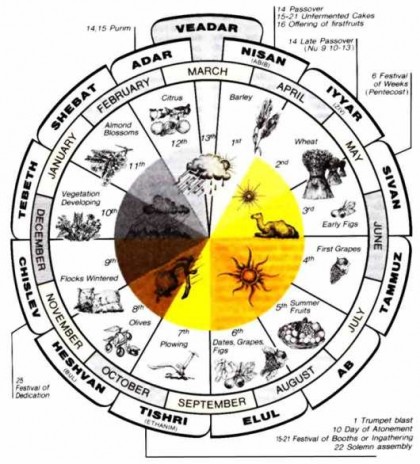
 “That’s us,” he said, sweeping his hand around the room. Of course, it’s not me, but I took the point. Israel, those Jews in the sanctuary at Beth Evergreen and in Rosh Hashanah services around the world last night, and those Jews not in the services, too, is a community which celebrates its most important memories every Sabbath with a parsha reading, a segment of the Torah.
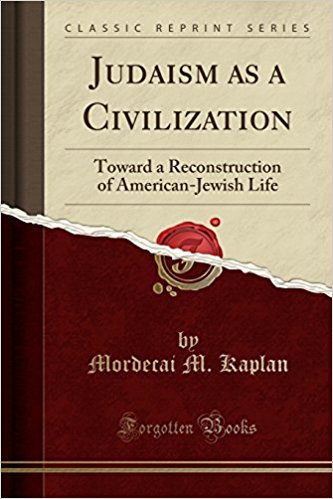 This is reconstructionist Judaism, an explicitly non-supernatural religion that nonetheless adheres to the traditions and customs of Jewish civilization, including Torah study, sabbath observance, comforting mourners, repairing the world and doing acts of loving kindness.