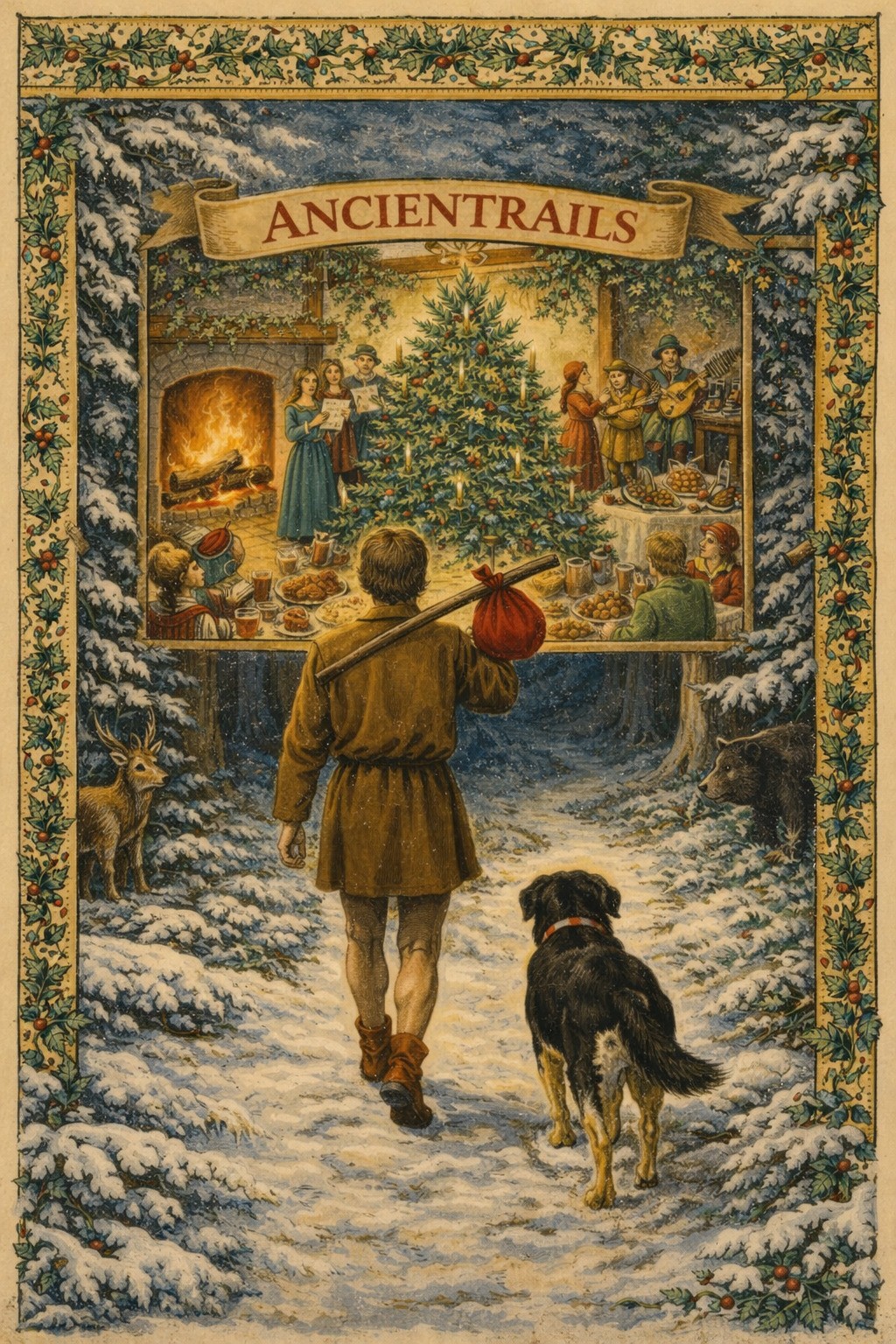
Winter Moon of the Long Nights
 “The more I have looked into the Quest for the Grail, it is clear it is a Western form of Zen. There is no grail, it is understanding that the veil is the mystery of existence, it is nothing, but our interactions with everyone and everything.” Woolly and friend, Mark Odegard
Mark is an artist, an author, a sweet guy and a friend of 30 years. He’s done many retreats at a Zen Buddhist retreat center in Minnesota and done calligraphy with that giant brush Zen monks use. He has an ability to come at ideas from the side, or behind, seeing what cannot be seen; the Zen work has informed his sight in substantive ways.
He’s asking the Woolly Mammoths this New Year’s question for their next meeting:
“What personal tool/skill do I need to refine for my quest for the grail’? I will write down your answer to this, and ask you again at the end of the year.
The story represents our own encounter with the mystery of life (often occurring in our late teen years). The meaning is veiled for us, what do you need to lift the veil.”
Mark’s question made me start because I’d just written this, only two or three days ago here on Ancientrails:
“Torah study is about loving attentiveness. It is a way of engaging the sacred world which we can know first from within our own person and which permeates that which we encounter throughout our lives…
God lit up for me. Ah, if I do Torah study, if I engage in loving attentiveness to my Self, my own Soul, and those of others and of the broader natural world, then I can find the knowledge which permeates all things, that very same shards of the sacred that shattered just after the tzimtzum to create our universe. That is God being available everywhere. This is far different from the Latinate imponderable of omnipresence, sort of an elf on the shelf deity lurking in every spot, finding you everywhere. And judging.
No. God is another word for the intimate linkage between and among all things, from the smallest gluon to the largest star. God is neither a superparent nor a cosmic Santa Claus writing down your behaviors in the book of deeds; God is a metaphor for the sacred knowledge which permeates the perceivable, and the unperceivable, world.” Ancientrails
I’m not trying to revive the word God here, nor am I trying to reinsert myself into the thought world which includes God. I’m on the same grail quest I started years ago in Alexandria First Methodist sitting beside the huge stained glass window of Jesus praying in the Garden of Gethsemane. Back then I read the Bible as history, not as mythology. Back then it mattered if there was a Jesus who prayed in that Garden that the burden of crucifixion be lifted.
I pushed those beliefs away long ago, passing through a moment, a long moment of second naivete with them, then moving into the world of the Great Wheel and the cyclical, spiraling time through which all life moves, in fact, all things. Over the last year or so my intense program of Jewish immersion has taken me another big step along this ancientrail, a true Grail quest began when, as a sixteen year old, I began to doubt the stories I’d heard growing up.

My true philosophical (qua religious) home, existentialism, found me in the aftermath of that doubting and my first encounter with philosophy at Wabash College. When I went into my Christian immersion, through seminary and in the Presbyterian years, my faith went mystical, seeing the divine as divinely personal, as a bright light shining within the darkness of my inner world, a light whose purpose was not to dispel the darkness, but to integrate, Taoist style, both of them.
Now, with Rabbi Jamie, I’m studying the kabbalah. Like Zen it insists on not seeing with eyes alone, but with the heart, with a poetic sensibility that understands religious language, I think all religious language, as metaphor, even and especially for the kabbalists, the written Torah.
The veil is a very important metaphor in kabbalistic thought. Like Mark observed above the kabbalists know there is a veil between us and the mystery of existence. The veil underscores the humility necessary for this work and without humility the quest will fail.

This idea is ultimately significant. Or not. We cannot penetrate the veil. Ever. Yet we all stand together on the other side of it. To see through the veil, to actually find the Grail, is not given to us, yet that place which we see through a glass darkly is the place where we stand right now. Yes, right now the Grail is in our hands, a cup from which we can drink at any moment.
This ancientrail, the quest for the Grail, the turning of the Great Wheel, the lifting of the burden of our crucifixion, flowing up and down with divine energy through the Tree of Life, is our life, is the life of this world, this cosmic pulsing brilliant reality. Yet we let so many things: work, fear, hope, pride blind us.
 The Woolly Mammoths have been my companions, fellow pilgrims, on the way to Canterbury. Or, fellow Tibetan Buddhists inch worming their way around the sacred mountain, Meru. Or, my fellow Torah scholars, davening as we read the sacred texts. Or, fellow Lakotas, our skin pierced and tied to the world tree during the Sun Dance. Or, friends traveling through this life together until it ends.
“What personal tool/skill do I need to refine for my quest for the grail?” Out of far left field, I’m going to answer, “A Sumi brush, rice paper, an ink stone. And the courage to use them.”
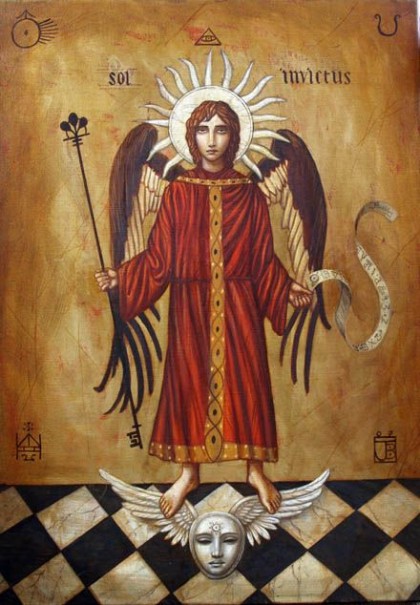 The solstices mark swings to and from extremes, from the longest day to the longest night, there, and as with Bilbo, back again. Darkness and light are never steady in their presence. The earth always shifts in relation to the sun, gradually lengthening the days, then the nights.
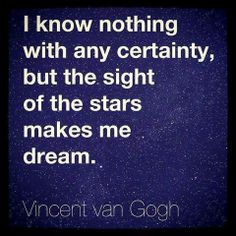 In these long nights the cold often brings clear, cloudless skies. The wonderful Van Gogh quote that I posted a few days ago underscores a virtue of darkness, one we can experience waking or asleep. Dreaming takes us out of the rigors of day to day life and puts us in the realm where ideas and hopes gather. So, the lengthening of the nights increases our opportunity to experience dream time. Whether you believe in Jung’s collective unconscious or not-I do, the rich resources of dreaming are available to us with greater ease when the nights are long and the cold makes sleeping a joy.

 CC’s work with Maslow sparked a conversation about the difference between human agency in moving up the pyramid as opposed to the necessity of God’s agency. Within my worldview this is a false dichotomy, but the conversation was fruitful. It’s a false dichotomy to me for two reasons. 1. How else would God move someone up the pyramid save through human agency? 2. Since I see energy moving up and down the tree of life, from the invisible to the visible and back through the visible to the invisible, this energy flow is the key agency involved, imh. I might call it chi, or prana, or l’chaim. Could also call it divine or vitality or consciousness. I don’t see that adding God to the conversation accomplishes much.
 In the end I felt heard and honored for my understanding of the relationship between the cyclical turn of the seasons and the meaning of the tree of the life to kabbalists.
 Since I have long believed that the world’s religions are philosophy and poetry accessible to all, I remain eager to learn from them. Since I know their claims cannot all be true, I choose to remain outside them, yet to walk with them as part of my journey. During college, when fellow students were turning to Asian faiths: the hare krishnas, zen, tibetan mysticism, I believed that the religious traditions of the West were most culturally attuned to the American mind. I still believe that and find Judaism and its traditions and thoughts, like Christianity, trigger a depth of understanding I don’t get from the Asian faiths.
 Just noticed a quirky reminder of Coco and the song that saves Hector, Remember Me. Each time I have to login into a site, I enter a username and a password. Then, just below the blanks for those is a small square to check or not. It says, remember me? It reminds me, too, of the posts of the dead on Facebook. I can’t think of anyone else right now, though I know there are others, but I still get the occasional reminder for Kathleen Donahue who died two years ago from lung cancer. In my instance there is the now quite long trail of bytes and bits that breadcrumb my life over the last decade plus. Perhaps we could create
  I’m thinking that an intentional celebration of Samain could reflect, in a Celtic idiom, the upbeat nature of Dia de los Muertos though Samain is a more somber, more dangerous holiday. It emphasizes the thinning of the veil between the living and the dead, the crossing over of loved ones, but also faery folk, those of the Other World. I guess in this sense it has more in common with the festival of Hungry Ghosts in the Chinese tradition, where the dead have to be placated.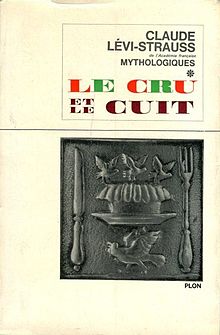
 I really like cooking, used to do a lot more. It requires mindfulness and produces a meal for others to enjoy. Just popping up from my days of anthropology:
  We’re not like dogs in that fundamental sense. As Emerson observed, “The days are gods.” Another binary opposition is the sacred and the profane, like the holy and the secular, ordinary time and sacred time. We imbue, out of our speculative capacity, the passing of time with certain significance. The day we were born. The yahrzeit notion in Judaism, celebrating the anniversary of a death. A day to celebrate the birth of a god, or to remember a long ago war against colonial masters. We identify certain days, a vast and vastly different number of them, as new year’s day, the beginning of another cycle marked by the return of our planet to a remembered spot on its journey.
 When we merge our speculative fantasies with the chemistry of changing raw food into a beautiful cooked meal, we can have extraordinary times. The natural poetics of wonder join the very earthy act of feeding ourselves to create special memories. Very often on those days we gather with our family, a unit that itself memorializes the most basic human purpose of all, procreation of the species. We don’t tend to think of these most elemental components, but they are there and are sine qua non’s of holidays.

 After carrying the two cushions and the remaining fabric, about 3 yards, out to the car, Kate and I drove off in a southeasterly direction toward the high plains town of Elizabeth. We turned east at Castle Rock on Colorado 86. 86 heads resolutely away from the mountains, which are in the rearview the whole way. Elizabeth is a small agricultural town, known to any Midwesterner in its general outline and types of stores and shops. That’s why I said not long after we moved that the Midwest washes up here against the solid reef of the Rocky Mountains and finally disappears. In Elizabeth Kate and I were on familiar turf.
 Cushions, a frozen beef quarter, groceries these are a few of the physical objects that we still use our truck to retrieve. I imagine at some point we’ll have an economy that divides itself between physical objects that have to be moved, including your own body to doctor’s appointments, for instance, and physical objects that can be purchased online and delivered. I know we’re already there with online sales, but I mean a situation where the economy consciously organizes itself by these categories. Right now we have a transitional situation between brick and mortar businesses built under the old, we have to go there to get it paradigm, and an online retail economy powered to our homes by the USPS, Fedex or UPS. It’s clumsy and not always transparent which is better, online or physical shopping. I think that will sort itself out over the next decade or so, maybe a bit more.
 The tree of life, the tree of immortality guarded by the angel with the flaming sword; the tree itself still growing in paradise, concealed by language, by our senses, by the everydayness of our lives; the path back to the garden often forgotten, the exile from paradise a separation so profound that we no longer know the location of the trail head and even harder, we no longer have a desire to search for it.
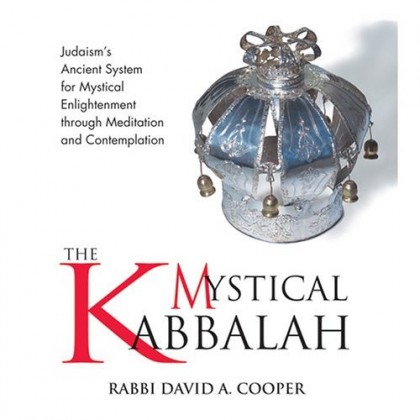 But here’s the trap. Metaphor, of course! I studied philosophy, religion, anthropology in college. Then, after a few years stuck in unenlightened instinctual behavior-the storied sex, drugs and rock and roll of the sixties and seventies-I moved to seminary. The trap tightened. I learned about the church, scripture old and new, ethics, church history. It was exhilarating, all this knowledge. I soaked it up. I remained though stuck in the intellectual triad, pushing back and forth between the polarity of intuitive wisdom, hochmah, and analytical thought, binah, often not going on to daat, or understanding. I learned, but did not integrate into my soul.
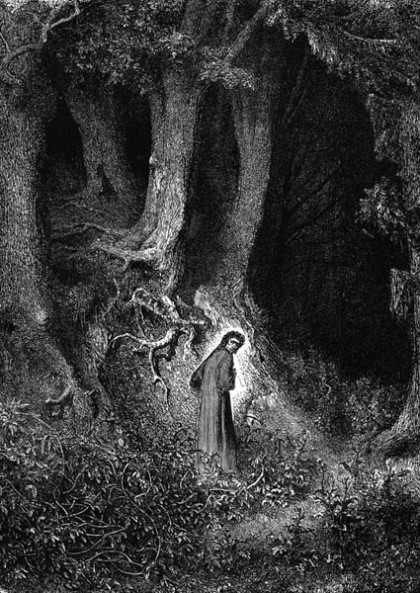 My heart knew I had gotten lost, in exile once again. In Dante’s words in Canto 1 of the Divine Comedy:
 At the time of its crumbling another path had begun to open for me. Fiction writing emerged when, ironically, I began writing my Doctor of Ministry thesis. Instead of working on it I ended up with 30,000 plus words of what would become my first novel, Even The Gods Must Die. Irony in the title, too, I suppose.
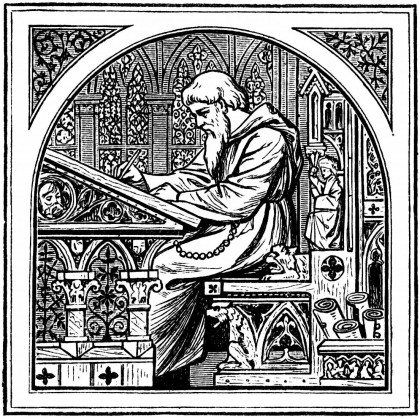 Even so, I sat behind the barrier, the flaming sword, the metaphor trap. Beth Evergreen and Rabbi Jamie Arnold have started me on a journey back to where I began, immersed in the dark. Seeking for the light, yes, but happy now in the darkness, too. The Winter Solstice long ago became my favorite holiday of the year.
 But. At Beth Evergreen I have begun to feel my way back into the fourth triad, the mystery I first encountered on the hard wooden pews in Alexandria, the one pulsing behind the metaphors of tenebrae, of crucifixion, of resurrection, and now of Torah, of language, of a “religious” life. I knew it once, in the depth of my naive young boy’s soul. Now, I may find it again, rooted in the old man he’s become.
 That’s especially important for workouts, which are easy to forego. On Mondays, Wednesdays and Fridays, I do 20 minutes of cardio, then resistance work, then 20 more minutes of cardio. On Tuesdays, Thursdays and Saturdays, I do the high intensity cardio plus 50 minutes or so slower cardio. If I miss a Monday, I go on to the high intensity, slow cardio day. If I miss a Monday and a Tuesday, I still go to the 40 minutes of cardio, resistance work day. For me, keeping the same workouts on the same days of the week keeps me from feeling guilty (I’ve missed so many workouts, it doesn’t make sense to even try and get back to my schedule.) and guilt stops the process altogether.
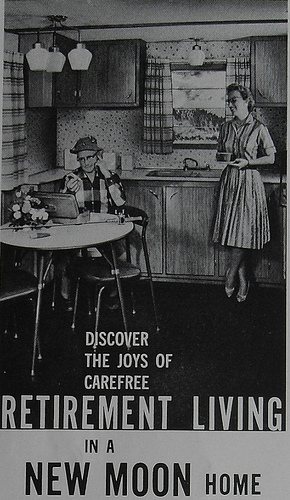 The third phase is new. It used to be that 65 or so meant the end of a working life, retirement happened, then death, often before 70. Those that made it into their seventies were often burdened with serious medical problems that drained energy and created obstacles to doing much else.
 70 is not the new sixty. It’s the new 70. What 70 is the new sixty really means is that for those raised in the 50’s, 70 now appears like age 60 did when we were kids. Big difference though…we’re in that sixties range of health, but we’re 70 and work has fallen away, the kids are gone. What do we do?
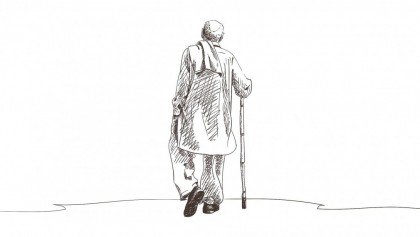 Yes, retirement and the life following it, the third phase as I call it, is just that, a new and different time of life, one in which the question of how do I live can have a radically different answer than in the first two phases. Who are you? Who do you want to be? If you want to be a person whose constant focus is recreation, who gets up in the morning for another day of adult recess, you can. If you want to be a dress designer after years as a forensic engineer, you can. Or, as in my case, the work before retirement age was satisfying, self-directed, so there’s little reason to change just because some age-related cultural turning point has been reached.
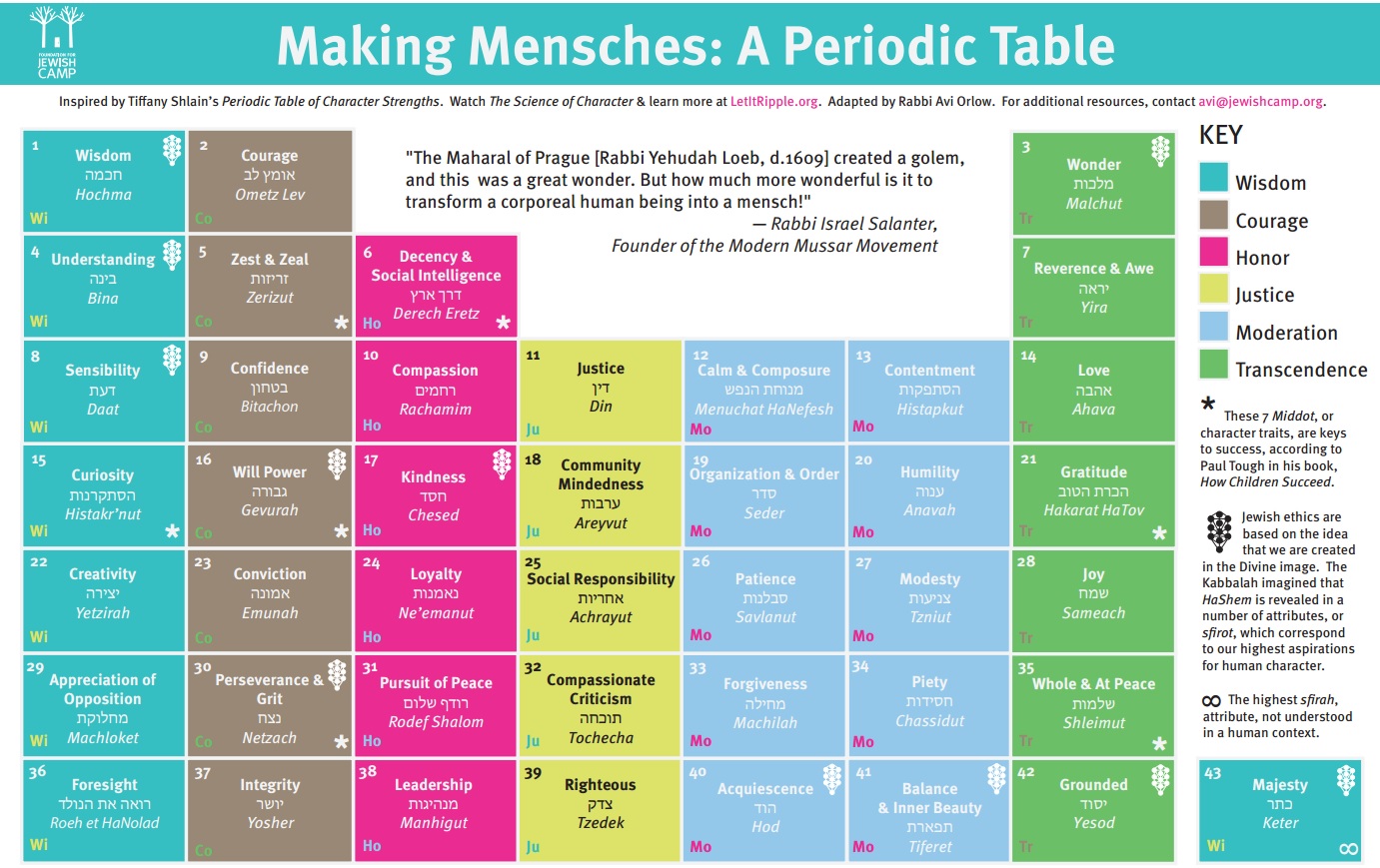 The mind and heart, so wonderful, so necessary, so amazing, but also so fragile. Take mine for instance. Yesterday was a full day, beginning, as my days do, around 4:45 am. I got the dogs fed, ancientrails written, Jennie’s 750 words written and went downstairs to eat breakfast and make two sugar cream pies.
.jpg" title="Fair use of copyrighted material in the context of The Raw and the Cooked">Fair use</a>, <a href="https://en.wikipedia.org/w/index.php?curid=45649279">Link</a>)