Category Archives: Travel

System D Economics

Winter                                  Moon of the Winter Solstice

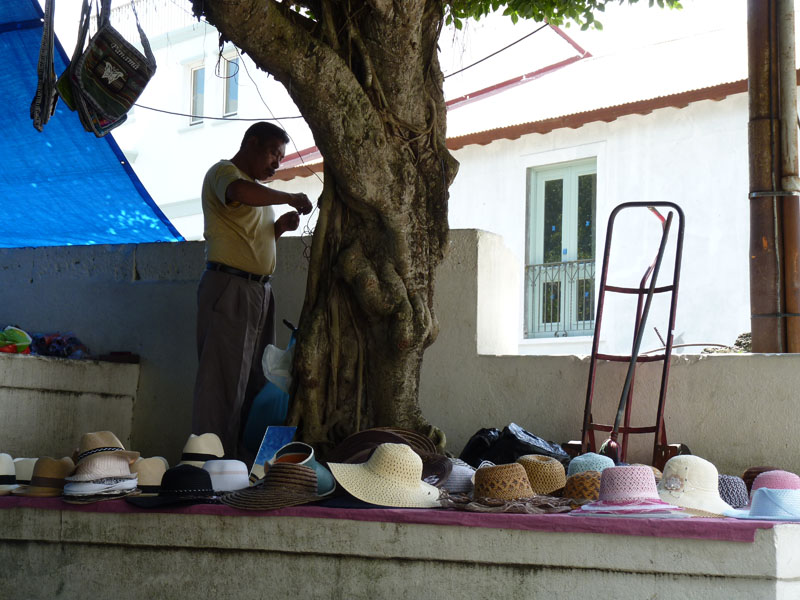
(San Blas woman selling mola’s in Panama City colonial district. cbe)

System D economics.  Never heard of it?  Read Wired magazine’s print edition this month. System D economics, named by an economist who studies system D, are the economics of the gray and black markets.

“System D is a slang phrase pirated from French-speaking Africa and the Caribbean. The French have a word that they often use to describe particularly effective and motivated people. They call them débrouillards. To say a man is a débrouillard is to tell people how resourceful and ingenious he is. The former French colonies have sculpted this word to their own social and economic reality. They say that inventive, self-starting, entrepreneurial merchants who are doing business on their own, without registering or being regulated by the bureaucracy and, for the most part, without paying taxes, are part

(Panamanian vendor along ocean. cbe)

of “l’economie de la débrouillardise.” Or, sweetened for street use, “Systeme D.” This essentially translates as the ingenuity economy, the economy of improvisation and self-reliance, the do-it-yourself, or DIY, economy…

The total value of System D as a global phenomenon is close to $10 trillion. Which makes for another astonishing revelation. If System D were an independent nation, united in a single political structure — call it the United Street Sellers Republic (USSR) or, perhaps, Bazaaristan — it would be an economic superpower, the second-largest economy in the world (the United States, with a GDP of $14 trillion, is numero uno).”  Freakonomics, quoting the Wired article.

Visiting South America introduced us to System D economies, especially in Ecuador, Peru and Brazil.  The most memorable instance was the shuttle service to the Rio International Airport.  As soon as we began moving away from the beaches, vendors began to show up.

At a particularly valuable location, a small v of land jutting out into two streams of traffic, four lanes on one side, four on the other a man stood with cups and bottles of an orange drink.  He sold cool liquid to drivers and passengers of vehicles slowed or stopped by rush hour traffic.  He was doing very well.

As we moved further away from the city, the action got stranger.  On the divided highway
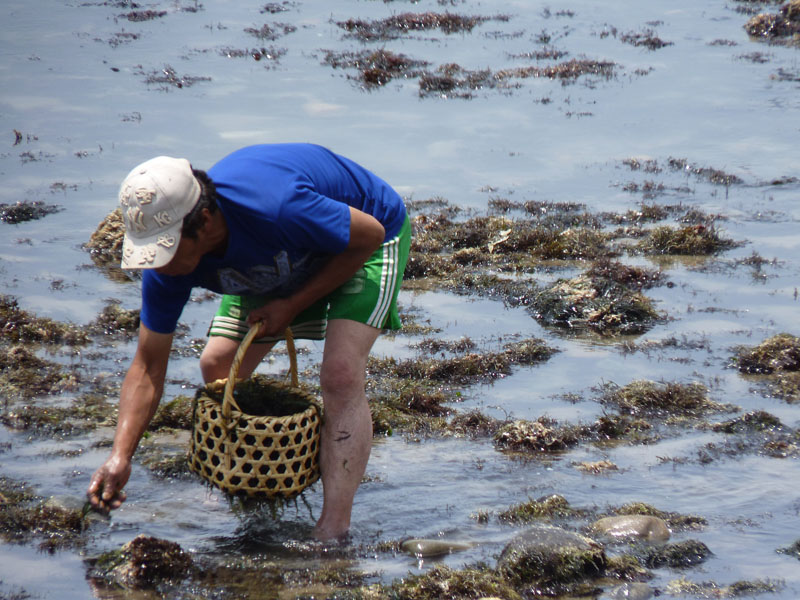
(seaweed collector, Trujillo, Peru. cbe)

(at least 4 lanes each way) leading directly to the airport, kids sold popcorn and nuts.  They vended their goods by standing in the small shoulder between the lane closest to the concrete divider and the divider itself.  As traffic came to a standstill from time to time, they would dart out into the traffic and sell a bag of colorful popped corn.

There weren’t just a few of them either.  Perhaps the oddest part of this came when Kate leaned over and said, “Look, there’s a guy a wheel chair over there.”  And, sure enough, there was, a vendor in a wheel chair.

The Dark Time

Samain                                   Moon of the Winter Solstice
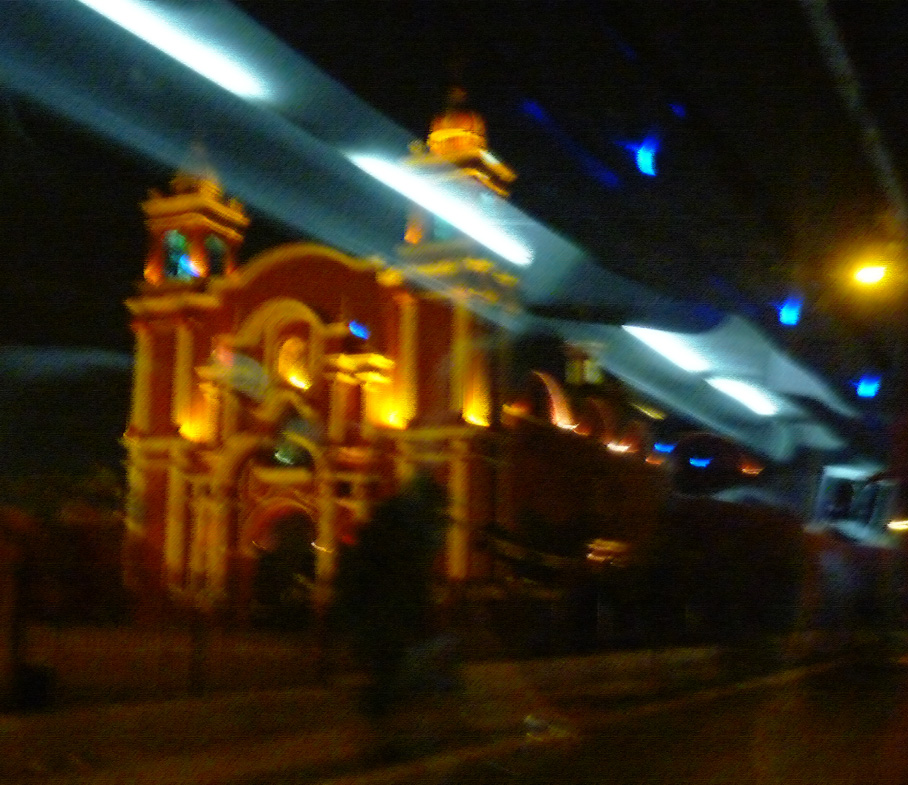
Samain in Lima, Peru.  We came back through Lima from a point on the far side of the city just as evening fell.  Even there, Samain’s pale memory, Halloween, saw children in Mickey Mouse costumes, princess costumes, carrying plastic pumpkins, many of them walking toward a large shopping mall in one area, a Halloween party rocking the joint.

These Latin cultures have a certain affinity with Samain as a festival when the veil between the worlds thins and the dead can cross, come back to visit family or to haunt them.  Cemeteries had fresh flowers at grave markers, grass had been cut, masses said, loved ones remembered.  In the White City, the vast and prominent cemetery in Guyaquil, Ecuador, the mausoleums and the multiple, tall columbariums, the markers climbing the hill in the back all speak to an engagement with death, a sort of living and ongoing engagement with death, so very different from the sterile, hospital based, don’t look culture we’ve created here.

Next week, a week from Wednesday, comes the Winter Solstice and Samain will be at an end.  In sorting material about the Winter Solstice, about Yule, about Saturnalia and even Deepavali and Hanukkah the emphasis is mainly on Sol Invictus, as the Romans called him, the Unconquerable Sun.  An emphasis on the long march of daylight that begins on the longest night.

Another, equal concept celebrates the Winter Solstice as the longest night of the year, the culmination of a steady progress by darkness to push back the realm of light.  Both have their mirror in the human mind.  The light of reason shines itself on the questions we have about the way things are.  How things work.  Why this happens and that does not.  Yes.

But.  A child lives in the warm dark for nine months before coming to the light.  Ideas often lie hidden, tucked away somewhere in the darkness of the mind, back there fermenting, gathering weight.  Dreams sometimes pick those ideas up and play with them.  Too, our life is not all rational, not all light, perhaps not even very much so.

Most of life comes from the irrational, the emotional, the intuitive and to worship the light can be a denial of these important elements in our everyday life.

The Great Wheel shows us the way.  We need the fallow time, the restfulness of winter and the cold, just as we need the sunny time, the growing season, the time of thinking.  These needs are not occasional but persistent, coming into our lives again and again and again just as the earth wheels through the sky, repositioning the sun’s light.  Blessed be.

Empanadas

Samain                              Moon of the Winter Solstice

Empanadas.  Kate and I came to enjoy this Latin perogi, or pasty, so we decided to make some ourselves.  This former baker did the dough while Kate made the filling and baked.  Cooking together is fun and I think we’ll do more of it as Kate eases in to full time retirement, possibly as early as March of next year.

By making more than we need we can then freeze some and have meals later from one morning’s work.

Whoa.  Ratcheted myself up about that presentation.  This happened because I agreed to do it before we left on our cruise, knowing I’d have barely a week to put it together when we got back.  It began looming as we hit Tierra del Fuego and turned north, the turn that in almost all my trips means heading home.

That meant I came home ready to cram, which I did.  After years of deadlines in college, papers and tests alike, I adopted an I’d rather get it done ahead of time attitude, so I prefer a relaxed pace, finishing something like a week before a due date.  I didn’t have that luxury this time.

The church did send me a nice e-mail a moment ago, so I feel good about that.

Since getting back from the cruise, I’ve begun a short burst training regimen.  That entails working at maximum effort for 45 seconds to a minute, I run on the treadmill at about 6.5 mph at 5% elevation right now, then getting off and doing resistance work or stretching, getting back on 4 minutes later, going full tilt boogie again, then off, until 4-5 minutes of maximum intensity have accumulated.

It’s fast and crams a lot of work into a short of period of time, plus, according to the literature I’ve read is much better than traditional workouts lasting much longer.  Even so, I also do a 50 minute low intensity treadmill workout on the off days.  I do the short burst three times a week.

Now, if I can figure out how to cut my calories in half.

How to Win A Nobel Prize

Samain                                  Moon of the Winter Solstice

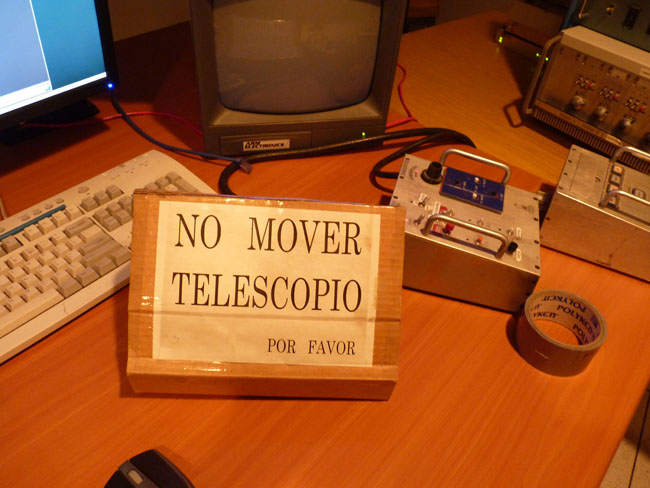
Perhaps my favorite photograph out of the way too many we took, maybe a couple thousand, digital allows profligacy, is this one.  I took it at the command center for the 4 meter telescope at Cerro Tololo, the one which Brain Schmidt used, with two others, to prove the universe is not only expanding, but accelerating, an achievement for which the three together won a 2011 Nobel Prize.  Polite, too.

A Few Pics From Glaciers to Rio

A glacier in the Chilean Fjords


Cape Horn


The Chilean Fjords

A juvenile Rock Hopper, alone and remote from the rest
Usuhaia, the southernmost city in the Americas


A Happy Traveler

Porters in the port at Rio

A gauchoThe escalator to heaven (for those too weak to use the stairway)

A tardis in Pt. Stanley, the Falklands

Mi Casa

Samain                                     Moon of the Winter Solstice

Much as I enjoyed the travel, the close time with Kate, the ocean, new cultures and places, I find this computer and my own keyboard, my reference shelf and my library, mementos from past trips, family, collected art like slipping into a pair of comfortable bedroom slippers.  At its best travel allows for renewal, challenge, broadening, but an unexpected and forgotten pleasure, perhaps never noticed before, is this lifting up of home.

Home as reality and as metaphor carries a special valence for all of us, one way or the other.  I moved so often for the first 40+ years of my life I never had the time, the digging into a place where I could really feel home.  Here in Andover, although the burb itself is nada as place, the home Kate and I have created nourishes both of us.  We have space for our mutual creative work, space for mutual work outside and in, leisure space and fitness space.

Over the years, as is the case with most family homes, our sons have developed memories here, now grandchildren and in-laws, too.  Animals, both present and past, inhabit the hallways and the woods.  Storms past, challenges met and overcome, Thanksgiving, Hanukah, Christmas, birthdays, honey harvests.  All here.

Home.  This trip made me appreciate it more than I ever have.

Oh. Yeah.

Samain                           Moon of the Winter Solstice

We have entered my favorite season of the year, the slow slide toward the Winter Solstice, the longest night of the year.  Cue Robert Frost.

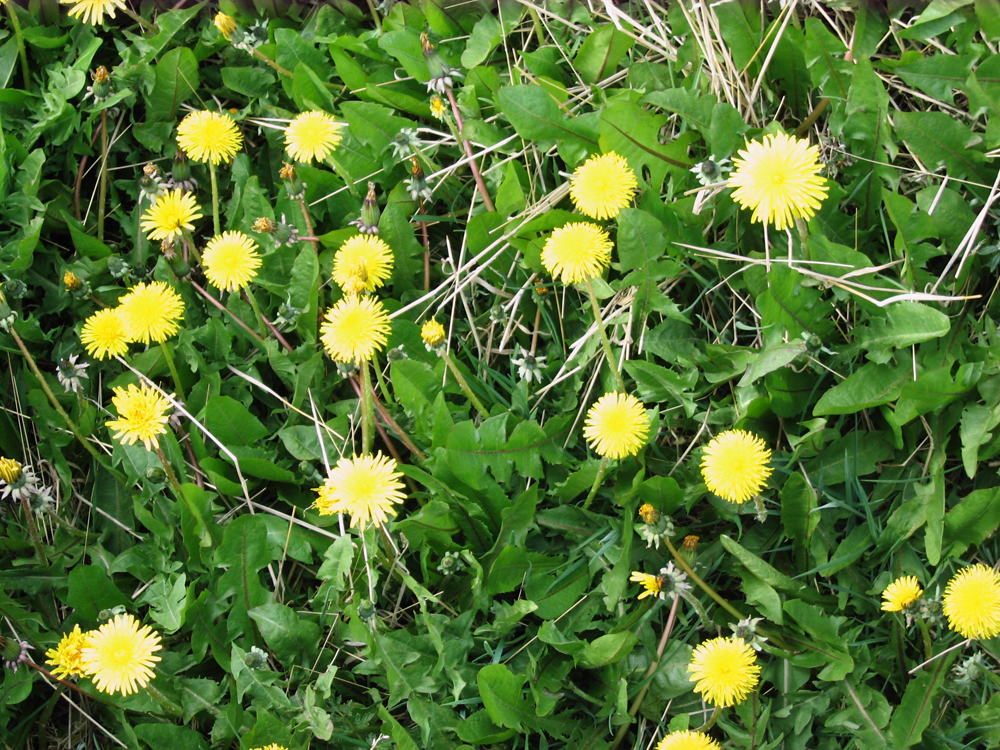
(Dandelions at Lapatia Bay, Kate)

In Ushuaia the sun did not set until 9:30 pm.  Here it sets at 4:30.  As we traveled south along the west coast of South America, the days grew longer and longer.  The evening I went into Ushuaia to have supper, it was 8:00 pm and still quite light.  People strolled the streets, window shopping, holding hands, glancing here and there at other walkers.

They’re headed for a date with December 21st as well, but for them it will be the summer solstice and the longest day of the year.  I knew this intellectually, but it was the little things, like taking pictures of the dandelions at Lapatia Bay, the southernmost harbor of Tierra del Fuego, that pressed its reality into my experience.  Let’s see.  Dandelions here.  Leafless trees at home.  Spring.  Autumn.  Oh. Yeah.


20,000 Miles Over the Sea (and some in the air)

Samain                        Moon of the Winter Solstice

According to the cruise log provided by the ship, we traveled 12, 800 statute miles by sea.  Counting the six thousand plus from Rio to Atlanta and another thousand to New York to get started, we covered over 19,000, close to 20,000 miles in 40 days.  That’s a long way.

It had to be over twelve thousand because we went from 45 degrees N to 45 degrees S (and then some) which equals 90 degrees, then 45 degrees S (and then some, I think we hit 55 degrees S in Usuhaia, if I remember correctly) to 45 degrees N again for 180 degrees which is pole to pole, so one half way around the world or roughly 12,500 miles.  Put that in your story problem folder.

Still digesting the trip, the experiences, its length.  If, as Marita, our guide in Buenos Aires, said, travel makes us bigger, I’m bigger in some ways.  Waiting for the outline of that greater bigness to emerge.

Yeah, You Betcha

Samain                        Moon of the Winter Solstice

Went out on an errand this afternoon as the sun began to set.  At 4:00 pm.  When I hit Round Lake, I saw a car in the rear view.  It had something on top.  A Christmas tree.  We have one of the metro’s favorite cut your own tree places about 6 miles north of us.

This triggered two memories.  The first, which you’ve encountered if you’ve traveled in the tropics during Christmas, is the jarring sight of Christmas trees, wreaths and lights all atwinkle at 80+ degrees.  In Rio they have applied to Guiness for certification of their floating Christmas tree in the big lake near the funicular for Corcovada (muy grande Jesus).  It’s supposed to be the biggest.  Among a crop of how many floating Christmas trees, I wonder?

An oddity I realized in Rio was that most of these Christmas decorations have a fir or pine as their exemplars.  That was the trigger with the Christmas tree on the car.  When I took my trip to Southeast Asia seven years ago, I was in Singapore at this time.  Same strange thing.  Christmas trees, wreaths, Christmas tree decorations all sprouting from vertical shopping malls in the air conditioned nation.

The second memory triggered by the car with the Christmas tree was the sight of golf carts all loaded up on flat bed trucks headed south for the winter season.  Soon we’ll have the rickety trucks coming to town piled high with cut wood sold door to door for fire places.

We do have a very distinct culture here and it’s visible to me right now, with South America so present to me.

One guy on the cruise asked me about ice fishing.  Seems the word of our palatial fish houses has spread to the larger world.

Yeh, you betcha, we’re our own culture up here.  For sure.

Climate Shock

Samain                           Moon of the Winter Solstice

Brother Mark wrote from Ha’il, Saudi Arabia and asked about culture shock for us as we returned to the US.  I said no, not much, since the Veendam is a floating exemplar of North American Western culture.  After heading to the grocery store this morning, I might modify that response a bit.

Specifically, I began to compare the 39 degree, gray, windy day here in Andover to the 82-86 degree days we just experience in Rio de Janerio.  While Cariocas and their tourist companions don their minimal beach garb, grab the nearest towel with an outrageous design and slather on the sun tan lotion, I put on my Ecuadorian alpaca zip up hooded sweater with llamas on it, my Usuhaia winter hat and the wool scarf Kate knitted for me during the first weeks of our trip, to buy groceries.

Geographers and historians warn, rightly I think, about attributing too much influence to climate and geography; still, the difference between a brisk sub 40 degree day and a sunny 85 degree one is substantial.  It affects the mind.  As I cranked up the Celica and pulled out of the driveway, I felt exhilaration and stimulation, a sort of well, let’s get on with it attitude.  My Carioca equivalent woke up, walked outside, felt the warm sun and his mind turned toward the beach, the beautiful women in their revealing swim wear and a night at a salsa bar.  Climate has its impacts.

Above the Tropic of Cancer sit the big cultural engines of the world:  China, the US, Europe, Russia.  That’s partly because of the imbalance of land masses in the north, 60+ % of Earth’s land is in the northern hemisphere and partly because of the geographic and climatological conditions.  It takes more effort to survive in temperate climates than in tropical or sub-tropical ones.  By that I mean it takes more energy expenditure.

That having to survive drastically different seasonal conditions would have an effect on culture is almost tautological.  That it has a positive effect is not so obvious, but it seems to have had at least an impact that requires temperate climate folk to work harder to make it through the long fallow time from late October through sometime in March.

As I went to the grocery store today, I felt this difference vicerally, being only a couple of days away from Ipanema and its sun oriented lifestyle.  I’ve never been a sun focused guy, see my post about not being a beach person, so I find the temperate climate suits me.  In fact I prefer it so much that I have moved steadily north in my life:  Oklahoma to Indiana, Indiana to Wisconsin, Wisconsin to Minnesota.

So, yes Mark, I did experience culture shock, from a hot one to a cold one.