Beltane Rushing Waters Moon
When the temperatures were in the teens below zero and winds whipped the trees, driving along a barren stretch of road meant a breakdown could kill you. That sensation is a major component of Minnesota macho, enduring the worst the north pole can throw at you. At times it was invigorating, at other times we were just glad to have survived it. It did make opening the door at home and going into a warm house a real joy.
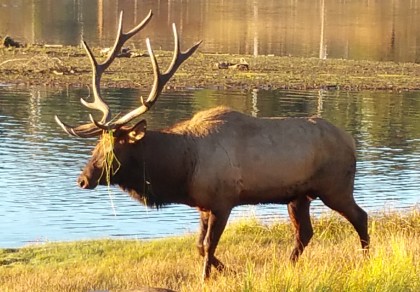
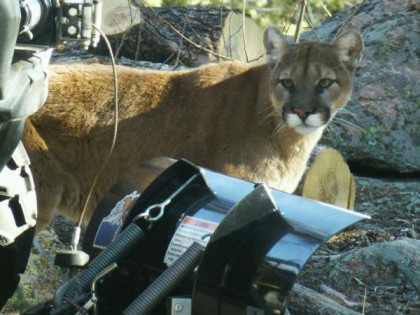 This morning I fed the dogs as I usually do, but I left them inside, no longer willing to risk a mountain lion attack. Mountain lions add frisson to life in the Front Range Rockies. It’s similar to driving in well below zero weather.
It’s also different. In the instance of weather the danger is without intention, the cold does not care whether you live or die. The mountain lion cares. To the mountain lion our dogs are food, perhaps a day’s ration of calories. So are we. Though mountain lion attacks on humans are rare, they do happen and as development presses further and further into their territory the chance of an encounter, fatal or not, increases.
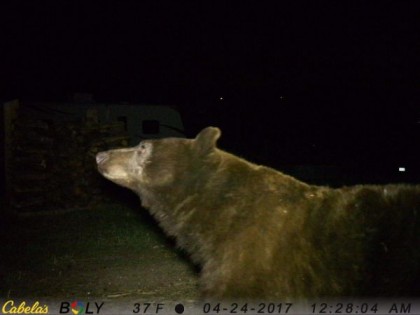
There are bears here, too. Unlike the mountain lion the bear will not hunt us, but if we interfere with a bear, say a sow and her cubs, she will hold her ground and defend her babies. Though the bear is not a predator of humans, they are a danger because an encounter can end in severe injury, even death.
 Mountain lions and bears, oh my, are not the only fauna here that can hurt you. At lower elevations there are timber rattlers. There are also black widow and brown recluse spiders, all venomous enough to cause great harm. In these hills we find not the sound of music, but the shake of a snake’s tail. Julie Andrews might not skip so blithely here.
Wild nature is neither our friend nor our enemy, whether it’s Minnesota cold or Rocky Mountain predators, Singapore heat, or California surf. We live out our short moment as reflective, aware extensions of the universe, as natural and as deadly as the mountain lion, as dangerous when surprised as the bear, as willing to defend ourselves with deadly force as the timber rattler, the black widow and the brown recluse.
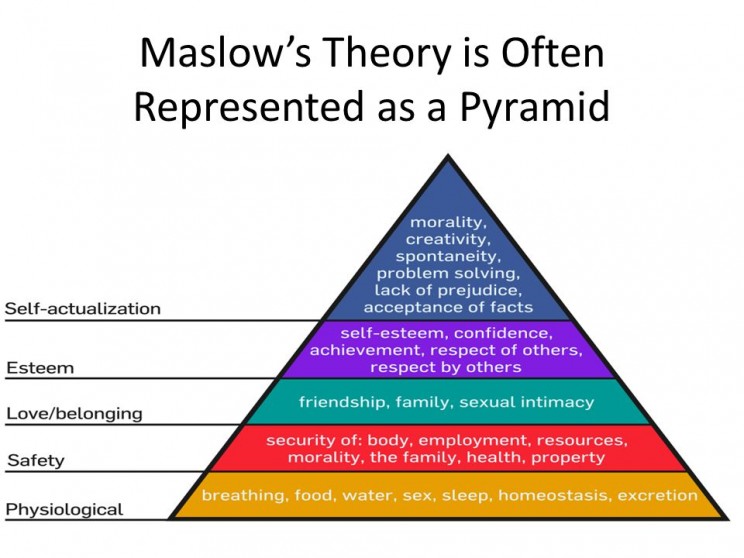
It is fragile, doomed to fail, this mystery we call life. Yet while we have it, be we bear or mountain lion, rattle snake or poisonous spider, we fight to keep it, do whatever we need to do to survive. This is the harsh reality at the bottom of Maslow’s hierarchy*, a necessary part of existence we share with all living things. It is better, it seems to me, to be aware of our shared struggle, to see ourselves as fellow creatures. Yes, we can reflect on our struggle, but that fact does not make us better than our living companions, it only makes us different from them.
*
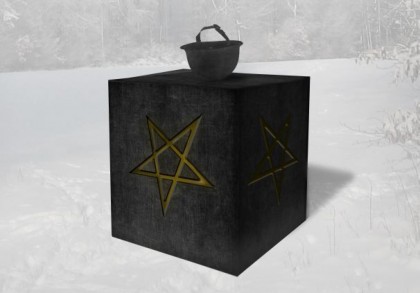


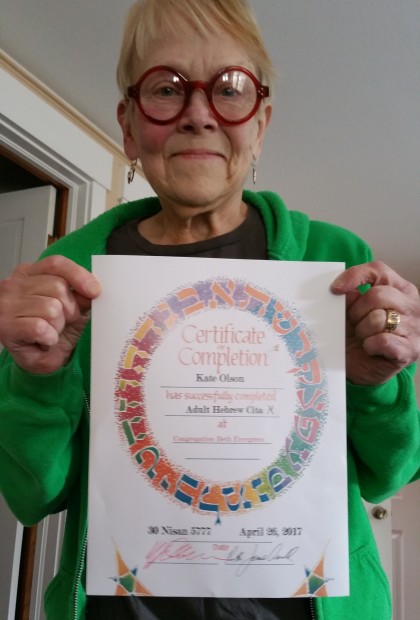
 Good news here on the medical front. After imaging and functional testing of her lungs, Kate seems to have some impairment, but nothing significantly bad. Also, her echocardiogram showed problems that are manageable and most likely related to aging and altitude. We met with her cardiologist yesterday, Tatiana, and she reassured us about my biggest concern, pulmonary hypertension. Turns out there’s a distinct difference with this diagnosis in Colorado and in, say, Minnesota. It often occurs in aging patients and can have its roots in lower oxygen supply at night, a problem with altitude. We have an oxygen concentrator now for Kate and her O2 levels at night have improved a lot. Also, earlier this year she had an endoscopy and a colonoscopy which found nothing.
 That’s why a healthy third phase life demands careful attention to all five areas. Since December 1st, date of my knee surgery, we’ve had physical (medical) matters figure prominently. Now that those concerns have ameliorated we can work on ways to maintain our health.
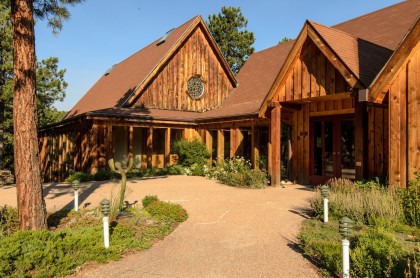 Irv Saltzman invited us to a performance by his singing group, the Renaissance Singers. It was held in a wooden Episcopal Church, St. Laurence’s, which is near our home. Directed by a Chinese national, Hannah Woo, who is finishing her Ph.D. in musicology, they were 8, four men and four women. As a group, they matched each other well. April, a soprano, had a lovely clear voice and a large range. Irv, formerly a tenor, has now transitioned into a bass/baritone role. Their performance was wonderful. At a meal afterwards we discovered April is our neighbor.
 Renaissance choral music and instrumental renaissance music has always captivated me. It’s easy to see courtiers in colorful costumes listening to this music in a palace, brown robed and cowled monks hearing it in a morning prayer service, or small groups performing at home for their own amusement. It’s also the music most often heard at Renaissance festivals. Sorta makes sense, eh?
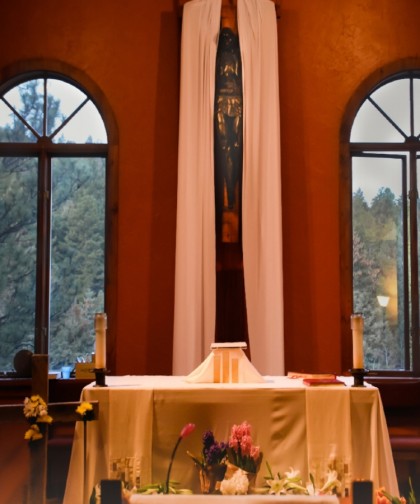 Between the two windows hung a large crucifix, a cross made of bare, light wood and a bronze Jesus hung by two nails. I had an odd sensation while listening to this music I’ve often heard in monastic settings on retreat. It carried me back into the spiritual space of an ascetic Christianity that often comforted me. This time though I came into the space as a peri-Jew, identifying more with Marilyn and Irv and Kate, with the still new to me spiritual space of Beth Evergreen, than the theological world represented by this spare, but beautiful sanctuary.
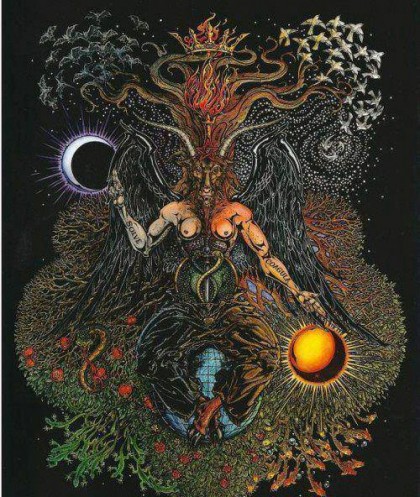 This was an afternoon filled with the metaphysical whiplash I’ve experienced often over the last year, a clashing of deep thought currents, spiritual longings. This process is a challenge to my more recent flat-earth humanism, a pagan faith grounded not in the next world, but in this one. Literally grounded.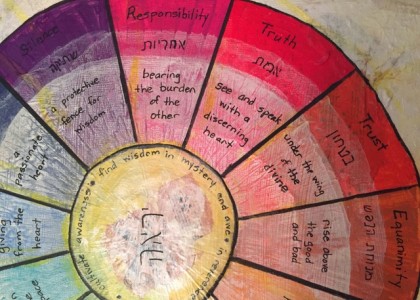
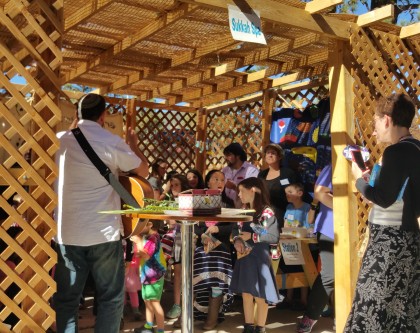 An intriguing pagan element runs throughout the Judaism I’ve been exposed to at Beth Evergreen. The Jewish liturgical year is on a lunar calendar. Shabbat begins at sundown on Friday and Friday shabbat services are held at night. Sukkot is a harvest festival, held outdoors in a sukkot booth. Tu BiShvat is new year for the trees. Judaism is also very body positive, actively opposing ascetic practices that exist in some forms of Christian monasticism, and encouraging the enjoyment of sex.
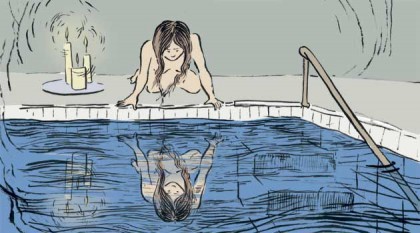 Water – Bonnie offered a quote from the novelist Julian Barnes: “Mystification is easy; clarity is the hardest thing of all.”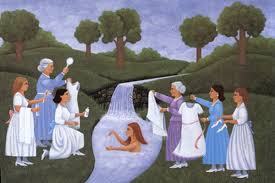
 Cue the couples out in the fields doing their sympathetic magic for the fertility of the crops. Light the bonfires for leaping over and the bonfires for driving the cattle between. Gather the naked Scots outside of Edinburgh for the great fire festival. Dance in the streets because the growing season has finally come round again, the Great Wheel has turned and food will begin to appear from mother earth.
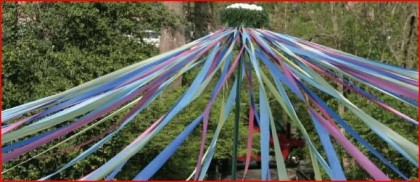 This is Beltane. Mayday. Collect women and men, girls and boys, give them streamers and ribbons, connect them to the tall pole and have everyone swirl, under and in and out and back again. Pick flowers for the table, for a basket, for your lover.
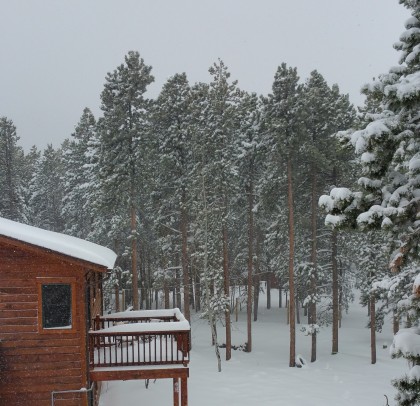 The last day of spring. Solar panels covered. Roof covered. Driveway plowed. 16-24 inches of new snow Friday night through yesterday. Delightful, but hardly springlike. In our spring fantasies, that is. The ones that have tulips and iris and crocus and lilacs and wisteria in them. For a mountain spring though, welcome and not unexpected.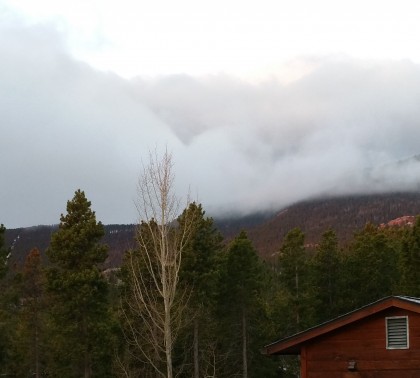
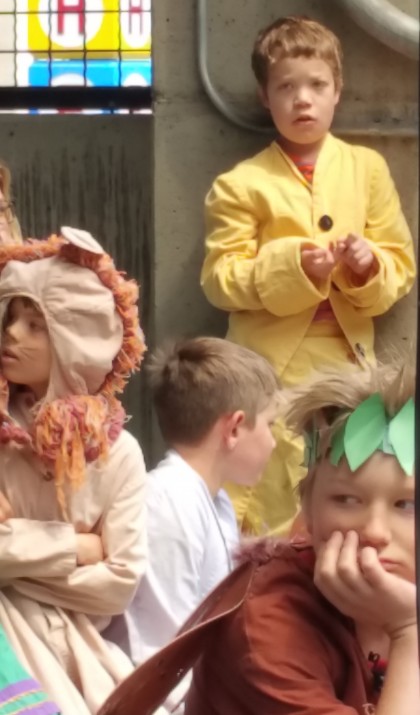 After getting home around 9:30 (our bedtime is 8pm) we got up the next morning and drove into the Denver Performing Arts Center to see grandson Gabe perform in the Denver Public Schools Shakespeare Festival. This ended up taking longer than intended, but we got home in time for a nap before returning to Beth Evergreen yesterday at 4:30. This time we helped set up for Rabbi Jaffe’s lecture, preceded by a congregational meal.
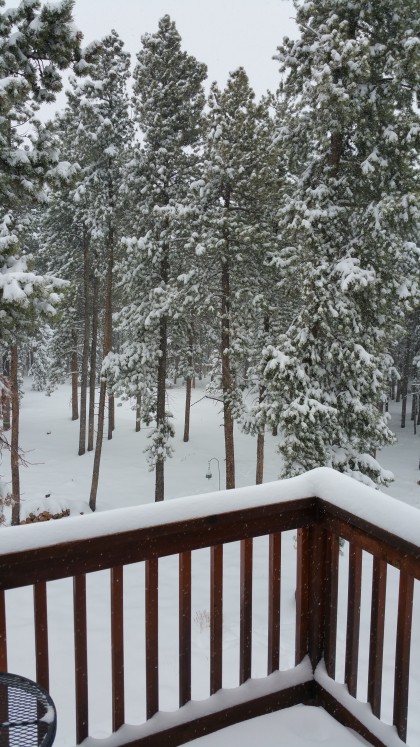 Today was the People’s Climate March in Denver, which I intended to attend, but the roads going down the hill are icy and snow covered. Climate change is, as I said in an earlier post, once again the focus of my political energy so I’ll only miss the gathering, not the action.
 Today I’m making chicken noodle soup and Kate’s making Vietnamese pho. We’ll serve this at a Beth Evergreen leadership dinner for
 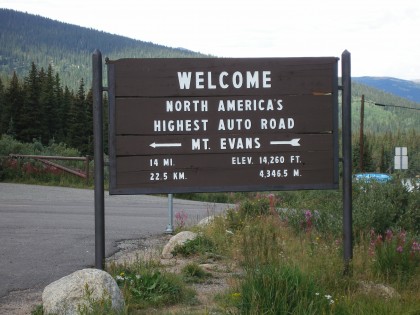 So I renewed my effort to connect with the Mt. Evans’ local group of the Rocky Mountain Chapter of the Sierra Club. Colorado seems to work more through these regional clusters than as a whole. There are nine of them, covering the entire state. The Mt. Evans’ group includes our part of Jefferson County, Clear Creek County and a northern portion of Park County. It’s titular feature, Mt. Evans, is a fourteener (over fourteen thousand feet high) which has the highest paved road in North America leading to its summit. According to locals here it’s also the weathermaker for our part of Conifer.