Category Archives: Commentary on Religion

Alan, demyelination, days with no nausea

Lughnasa                                                            Waning Summer Moon
Alan
Alan

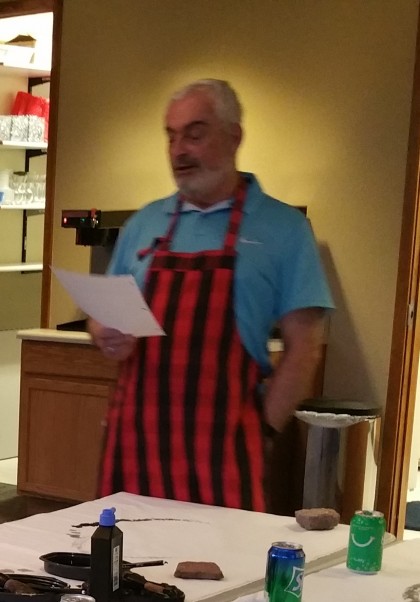
Alan came over for work on the religious school lesson plans. Kate made her oven pancakes (always delicious) and Alan told us stories about early Jewish Denver. West Colfax (think Lake Street) between Federal and Sheridan was an orthodox Jewish community when he grew up. He said on Friday afternoons with folks scurrying from the deli to the bakery to the kosher butcher it looked like, well I can’t recall exactly, but any typical European Jewish community.

His dad was going to be a University professor before the Holocaust. Instead he came here and ended up in the dry cleaning business. In those day Alan’s friends and neighbors were either children of Holocaust survivors or survivors themselves. That old neighborhood, like north Minneapolis, has completely changed. The first synagogue in Denver is now an art museum on the Auraria campus of the University of Colorado. The Jewish community concentrated itself in south Denver, more to the east.

We worked for a couple of hours, putting specific lesson plans on the calendar, deciding which days to do the Moving Traditions curriculum, which days for middah, which days for Jewish holidays, which days for our own lesson plans. I’m experiencing some anxiety about this since we start next Wednesday with the first family session of the Moving Traditions curriculum. This approach to the student preparing for their Bar or Bat Mitzvah will, apparently, be controversial because it doesn’t focus on the ritual of the morning service, but on the students’ social, emotional, and developmental needs. Alan, Jamie, and Tara will deal with that. Not me.
20180408_182236Kate’s had several days in a row with no nausea. Yeah! That means she feels better and can get some things done. In doing so, however, the extent of her loss of stamina, weight loss and Sjogren’s Syndrome, has become apparent. She still needs to rest frequently. If she can modulate the nausea, either through careful eating or an eventual diagnosis or using medical marijuana, the next step is to get some weight gain, some stamina improvement. If possible. Or, we may have to adjust to a new normal.

I’ve been absorbed in lesson planning, training for the school year, climbing my steep learning curve about matters Jewish and matters middle school. That’s my way. Dive into something new, leave most other things behind until I’ve gotten where I feel like I need to be. Not there yet, though I imagine after a few class sessions, I will be. Sort of a head down, blinkers on time. My writing has dwindled and so have submissions.

Over the last couple of weeks, while I work out, I’ve been watching a Teaching Company course on the aging brain. I recommend it. Highly. It’s helped me understand why this approach, head down blinkers on, is developmentally appropriate for me. For example, the aging brain, on average, loses some processing speed, executive functions, and crispness of episodic memory (memory tied to a person or place and seen from a first person perspective.) over each decade, beginning in the twenties.
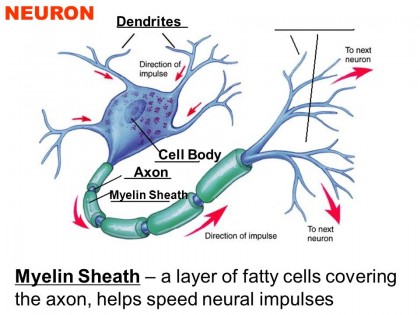
Myelin Sheath – a layer of fatty cells covering the axon, helps speed neural impulses.

The underlying issue seems to be gradual demyelination of the axons which constitute the white matter in our brain. With myelin sheathing over their length axons can carry information very fast, without it somewhere around 2 meters per second, or human walking speed. As our processing speed declines, so do brain functions like the executive management of brain activity by the prefrontal cortex. It’s this one, the decline in executive function, that requires the head down, blinkers on approach to new activity or to tasks we need to complete. As we age, we no longer handle distractions as well, getting pulled away from this to focus on the shiny that.

I like knowing this because it helps me understand my daily third phase life better. The thinking process itself is not impaired, just the speed and our ability to stay with a task. It helped explain a very uncomfortable moment for me at the Genesee Ropes Course on Sunday. Jamie and I were with the 6th and 7th graders. Adrienne, a ropes course employee had just explained the rules of a warmup game. One of the rules was that we had we could not throw a soft toy to someone who’d already gotten one on that round.
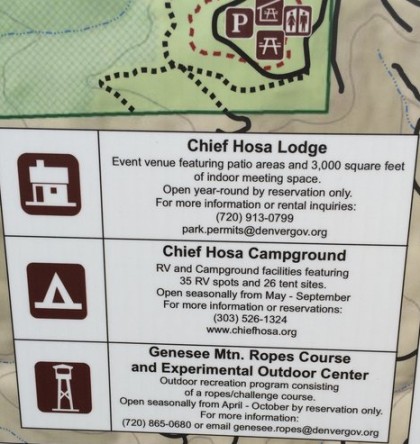
geneseeI got the stuffed unicorn on the third or fourth toss. When I tossed it to Alex, Adrienne asked, “Did he break a rule?” All the kids and Jamie nodded. Yes, he had. Why? Alex had already gotten the unicorn. Oh, shit. This was the first interaction between me and these kids as a group and I looked like a doofus. I didn’t remember the rule at all. There were plenty of things to distract me. The continental divide in the distance. A wind blowing through the trees. Trying to concentrate on learning kid’s names. General anxiety about not knowing the kids at all. Whatever it was, my executive function let me go, Oh, fish on bicycle, instead of hearing, no throwing to someone who’s already received it.

It still looks the same to the outsider. I missed the rule, and as a result, screwed up in its execution. But now I understand that this is not a sign of dementia or other deep seating problem, but rather a normal, though irritating, side effect of demyelination.


Ancora imparo

Lughnasa                                                                      Waning Summer Moon

January moon at Beth Evergreen

The full Waning Summer Moon hung just above Black Mountain yesterday, so I watched as it disappeared behind the peak. It surprised me how fast it sank. I watched only for 2, maybe 3 minutes, then it was gone. At its last it was a bright line among the Lodgepole pines marking the rocky contours where it had been. This morning it’s well above the peak, looking much like the earth in the earthrise photographs from the Apollo missions.

The moon and the sun remind us, as do the stars, that we are not only alone on this rock, but alone for millions and millions of miles. At least. That simple fact could bring us together as a species, but it doesn’t. And, frankly, I don’t understand why, since it means that this little spinning piece of debris from the formation of the solar system is our home and any other possible home is way too far away to move to in any numbers. If at all.

curiosity9When we were at the Beth Evergreen teachers’ workshop last week, Tara asked us what we thought we brought to the classroom. “I bring a spirit of inquiry, of curiosity,” I said, then surprised myself by voicing an insight I didn’t realize I’d had, “I’ve always lived the questions, not the answers.” True that.
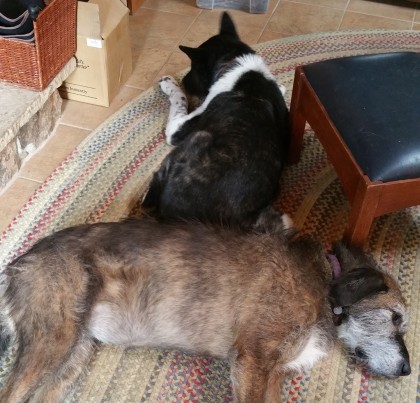
Sometimes, not often, I wish I could lean into answers, just accept a few, take them as settled law, stare decisis for the soul. But, no. Conclusions in my world are tentative, preliminary, awaiting new information. I think this is what the long ago psychiatrist meant when he said I had a philosophical neurosis. If so, so be it. As a result, I’ve been unendingly curious, never lacking something new to consider, never taking yes for an answer. Or, no.

I’ve modulated my approach so it’s not as acidic, not as relentless since I now realize that most people don’t share my intense, but actually (in my mind) playful attitude toward truth. Playful, I should note, in this age of “fake presidents,” but not stupid.

Ancora imparo.


Gifts. All day long.

Lughnasa                                                                Waning Summer Moon

Rigel and Kepler
Rigel and Kepler

What gifts did I get yesterday? The first question before I go to sleep. Woke up, emerged from unconsciousness to consciousness. Breathed the whole night long. Kate was next to me, sleeping, my partner. Kepler was, as always, happy to see me wake up. He rolls over so I can scratch his stomach, his tail goes up into happy mode. As the morning service says, the orifices that needed to open, opened, and closed when appropriate. There was water at the tap, always a gift in this arid climate. The meds that my doc has prescribed to help me extend my health span got washed down with some.

Gertie and Rigel were happy to see me, coming up for a nuzzle and a lean. The air was cool and the stars still out. Shadow Mountain stayed stable underneath me. The carrier brought the Denver Post and we read the collective work of its reporters, recorded by the printers on newsprint made most likely in Canada.

the loft
the loft

When I went up to the loft, I got on this computer, using electricity supplied by the Inter Mountain Rural Electric Association. As the sun came up, our own solar panels began translating its energy that traveled 93 million miles, generated by the powerful nuclear fusion of our star. My mind is still sharp enough to put words together, thoughts. My hands still nimble enough to pound the keyboard.

All these gifts and we’re only at about 6 am. The list goes on throughout the day. Kate at the table when I go down for breakfast. The workout created by my personal trainer. Time to nap. A mussar class focused on tzedakah and zaka, how can we purify our soul by gifting resources to others. A car that runs on gas brought here by oil tanker, trucks, a gift from the plant and animal life of long ago, crushed into liquid form by the power of geological processes. Back to Beth Evergreen for the second time for the annual meeting.

There the gifts of people, relationships built and nurtured over the last few years, granting both of us the opportunity to be seen, known, and the chance to offer who we are and what we have. Finally, the cycle ends with a return to sleep, to unconsciousness. Hard to avoid gratitude after doing this sort of exercise each night.

The Sweet Life

Lughnasa                                                                      Monsoon Moon

CBE (1)Discovering an odd phenomenon. My feelings bubble up with less filtering. I don’t feel depressed, not labile. Not really sure how to explain this, though it may be a third phase change? Or, maybe just me, for some reason.

At the MIA last week, for example, there was the strong feeling of grief in the Asian collection. Warm feelings for my friends in Minnesota were also strong. On the way home I was happy on the road. Noticeably. Kate triggers a powerful, more powerful than ever feeling of love. When I watched a TV program in which the main character’s mother died suddenly of a stroke, I was right with him emotionally. Yesterday, at the Bat Mitzvah of Gwen Hirsch, I kept shoving back the occasional tear. Her initial struggle with being upfront, her beautiful voice and the clear joy with which she overcame her fright, so evident when she carried the torah scroll around the sanctuary, made it appear she was becoming a different person, right then. Her transition/transformation was breathtaking and so sweet.

Ruth at DomoIn fact, there’s another example. Over the last few months I’ve been using the word sweet a lot. Our dogs are sweet. Ruth. The folks at Beth Evergreen. Minnesota friends. The loft. My life. I seem to see sweetness more now. I haven’t lost my political edge, my anger at injustice or a willingness to act, but the world has much, much more nuance now at an emotional level.
This change in my inner life has made me more resilient, I think, more able to identify the emotions, accept them, learn from them, respond or not, and move on. Enriched. It’s as if there’s more color in my day to day. Who knows? It might be a phase or I might be melancholy, my feelings are usually closer to the surface then, but I don’t think so. This feels like a permanent change.

Seeing the holy soul, my mussar practice for this month, accentuates this. I saw Gwen’s holy soul yesterday and it was a thing of beauty. I see the hosta struggling with a dry spell, but I know their holy soul makes them strong even in this sort of adversity. Gertie’s blind eye and painful rear quarter, her missing teeth have not dimmed her holy soul, it moves her into a bouncing, happy girl in spite of them.

slash from beetle killed lodgepole pine

I can, too, see the holy souls with damaged personas. Occasionally, I’ll see an aggressive dog or one that cowers, yet beneath those defensive outer layers, the warm and kind dog soul is still visible although it might be hard to reach. People, too. The young boy with violent tendencies, with a stubbornness that might be on the spectrum, with the sweetness for those who are sick, his holy soul is, even at this young age, hidden, so hard to find. Or, another, her reason so tortured by ideology, her essential kindness most often blocked by bitterness. Or a lodgepole pine dying of pine beetle infestation. Even as its needles turn brown and it begins to dry out, its holy soul keeps it upright as long as it can. We can never err when we search for the holy soul in others.

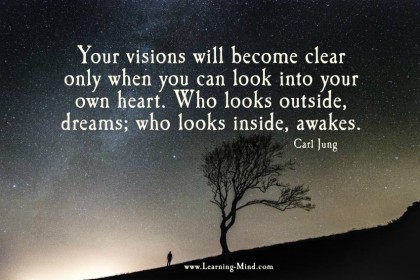
Look insideI see my own holy soul, now claiming more space, taking back some of the aspects of my life I had given over to achievement, to striving. This is strange because it comes as I’ve begun to reach for achievements I’ve blocked for decades. The work of submitting my writing feels both unimportant and necessary. I’m immersed in a community, Beth Evergreen, which encourages the growth and expansion of my holy soul. This is true religion, with the small r, the connecting and reconnecting of our inner life with the great vastness, our part in it highlighted, made clear at the same time as our limitedness.


Moral Minyan

Summer                                                                             Monsoon Moon

justice

Suggested to the woman who organized the immigration talk that perhaps the Beth Evergreen Social Action committee should be doing this kind of work. She passed my e-mail on to the Rabbi and to the chair of the Social Action committee. Lengthy response from the Social Chair chair amounts to, we do small things because they’re not political. Sigh. Same ol, same ol. Heard this all the time as a clergy in the Christian church, less so in the UUA. Say the word politics and you’ve touched the third rail.

Uncharacteristically, however, I intend to stay back from this conversation. I’ve got Jewish Studies Sunday Sampler and 6th grade religious school to prepare for. Perhaps the slight nudge will create a larger conversation. Hope so.

justice2

Kate and I are going to a protest at the Aurora ICE detention center next week. It’s led by the Moral Minyan*, a project of bendthearc. Family separation, though attenuated by the court ruling last week, remains a reality. Immigration is a distinctive American good, mixing our polity with new citizens from all over the world. It’s always been fraught with tension, with nativism, xenophobia, chauvinism, and, our record as a people with regard to persons of color is still miserable, but that French gift, Lady Liberty, with the poem by Emma Lazarus, represents the ideal toward which many of us strive. I believe most of us.

This notion that only a certain kind of person, usually white, can be a good U.S. citizen is racist at its core. The obvious rejoinder is the facebook meme of Indians confronting immigrants on the Mayflower. As Valentina said Tuesday night at Beth Evergreen, “Immigrants work hard. Immigrants pay their taxes, raise families.” Immigrants contribute to our national well-being and always have. In fact, immigrants created our nation.

justice obama

This current politics of meanness, of grudge-settling, of honoring foreign strongmen over our own government BY OUR PRESIDENT, the unleashing of the American id typified by the Charlotte rally and the way too many video clips of various individuals calling out persons they suspect of being “illegals” or “terrorists”, makes us all smaller. He who shall not be named is spending the capital accumulated since World War I which made this country a superpower. Shame on him.

Justice theodore-parker-bend-the-arc-email1

Parker was a Unitarian clergy, an abolitionist, and an activist who kept a loaded gun at his desk in case slave catchers showed up. Be like Theodore.


*In Jewish tradition, acts of public prayer require at least 10 people to gather to form a minyan.

In this moment of political crisis, we’re calling on progressive Jews across the country to gather to form Moral Minyans for acts of public protest, solidarity, and organizing as part of a national network of Jewish Resistance.

People who become leaders of Moral Minyans have a variety of skills and experience levels. We provide trainings and support for activists in our network who are organizing their Jewish community in living rooms and in the streets.


Concentration Camps, in the U.S., Right Now

Summer                                                                      Monsoon Moon

florenceSad. Mad. Incredulous. Shocked. Mystified. Hurt. The Florence Project. Kate and I went to Beth Evergreen last night to hear Valentina Montoya*. She’s a mental health attorney for the project, which means that her clients are not only caught in the detention trap, but have serious mental illness as well.

Reading about family separation, shaking our heads, how can they? That’s one experience. Hearing Ms. Montoya talk about children in detention, five month olds, toddlers, blind children, physically and mentally disabled children, children who have no apparent medical care or educational opportunities, children who know their parents as mama and daddy, but don’t know their given names, children separated from their parents with no tracking or identifying system in place, one four-year old boy, for example, who refused to change his clothes because he was afraid his parents wouldn’t recognize him, that’s another.

florence2Ms. Montoya became too emotional to talk. Several times. She answered question after question from this audience of maybe 75 people, all outraged, most wanting to do something. Kate stood up and asked what kind of medical care did these children receive? Ms. Montoya said no particular medical care was available. That means diabetes goes untreated. Other chronic conditions, too. Another asked what kind of education the kids were getting? Ms. Montoya said, “The kids speak Spanish; all the guards and caretakers speak English.”

This was an especially poignant topic for Beth Evergreen. As Renee said, “I’m a child of holocaust survivors. I’m uniquely qualified to call these what they are, concentration camps.” I hadn’t thought of it that way, but it’s true. No Zyklon B. For now. But, as Renee said, “If they can come for them, they can come for me. Maybe next, maybe three, four down the line.”

pic from Arizona Egalitarian

Here’s a thing I’d not paid attention to in the news reports. The families separated in Florence, Arizona, a distant, isolated location for an ICE detention facility (not an accident) are asylum seekers. That means they came to a U.S. port of entry and, as required by our law, asked for asylum. These are legal immigrants who have fled horrific conditions of gang violence, local drug cartels, domestic abuse, government oppression and seek refuge here. Let me say that again, these folks are LEGAL immigrants.

The bad elf, Jeff Sessions, has done everything he can to undercut the law by, for example, offering a biblical rationale for family separation, trying to defund basic legal orientation services. DHS lawyers raise jurisdictional issues in immigration proceedings to obfuscate and extend detention proceedings.

florence4Part of the problem for legal projects like Florence and Rocky Mountain Immigration Advocates is immigration law itself. It’s a hodgepodge of laws, rules, exceptions that have accreted like barnacles over the years, making it an area of the law for which even its specialists can claim only partial knowledge. That means even willing pro bono lawyers are often not competent to help. This makes it even easier for mendacious buffoons like Trump, Sessions and DHS Secretary Kirstjen Michele Nielsen to throw forks and knives into the wheels of justice.

It was, all in all, a heart rending evening. Unimaginable suffering. Detention is different from prison. In prison you know when you’re going to get out. Detention is indeterminant. Until Sessions quashed it, each detainee used to get a bond hearing every six months. That hearing at least offered a review of your circumstances and a possibility of release. With that bond hearing eliminated, there is no legal requirement for a time certain when your case will be heard. If at all. This out Kafka’s Kafka. And, it is definitely, a first step toward Nazi area solutions for folks we don’t like.


valentina-150x150*Valentina Restrepo Montoya was born in Boston to Colombian-immigrant parents. She earned her J.D. from Berkeley Law, where she advocated on behalf of asylum seekers, latinx workers, latinx tenants, and indigent defendants in criminal cases. Valentina clerked for The Southern Center for Human Rights, where she investigated language access to adult and juvenile courts. After law school, she joined The Southern Poverty Law Center, dedicating herself to litigation against The Alabama Department of Corrections for providing constitutionally inadequate medical and mental health care to prisoners, and not complying with The Americans with Disabilities Act. Prior to joining The Florence Project, Valentina was an assistant public defender in Birmingham, Alabama. She enjoys playing soccer, reading The New Yorker, practicing intersectional feminism, and rooting for The New England Patriots.

In My Dreams

Summer                                                                   Monsoon Moon

AbrahamSacrificesIsaacIcon_smThe strange things that come to me before I drop off to sleep. Thinking about Lycaon, the anti-hero protagonist of Superior Wolf. He sacrifices his own son, Nyctimus, at a once every four year festival, the Lykaia, to Zeus Lycaeus (Wolf Zeus). Stray thought then. Sounds like Abraham and Isaac. Oh. Wait. Abraham was a polytheist before his covenant with G-d.

moloch william blake
Moloch william blake

What if? What if the Abraham and Isaac story recorded a very different intention than the one we Westerners, long infected by the idea of monotheism, have imputed to it? What if the context was one of child sacrifice? In other words, the religions around Abraham, perhaps even his own previous to the covenant, might have required child sacrifices. I know about Moloch who certainly did.

In the context of gods requiring child sacrifice, the story would read more like this. This new God requires sacrifice, his beloved son Isaac. Nothing new there. Many gods require the sacrifice of children. Yes, it’s always fraught with heartache and pain, but that’s just what Gods do. What’s new here is that this God relents, aborts the sacrifice and accepts an animal in place of a human child.

In this reading then Abraham’s new God evolves from a ruthless eater of human flesh to one who says, no, we no longer do that. The story becomes one of triumph and joy, this new god is better, much better.

Learning to Teach

Summer                                                                 Woolly Mammoth Moon

Tu B'shevat Seder, 2018 Religious School, CBE
Tu B’shevat Seder, 2018 Religious School, CBE

I’m neck deep, ok maybe in over my head, in lesson planning, something I’ve not done before. I realized though that I did do a lot of educating over my twelve years at the MIA and I do have good facilitator, process skills. Even so, I’m having to learn about a key moment of Jewish development, the b’nai mitzvah, oddly, a marker of the very same transition Ruth is in right now. There’s as much culture as theology here, a cultural milieu with which I have little familiarity. But I’m picking it up.

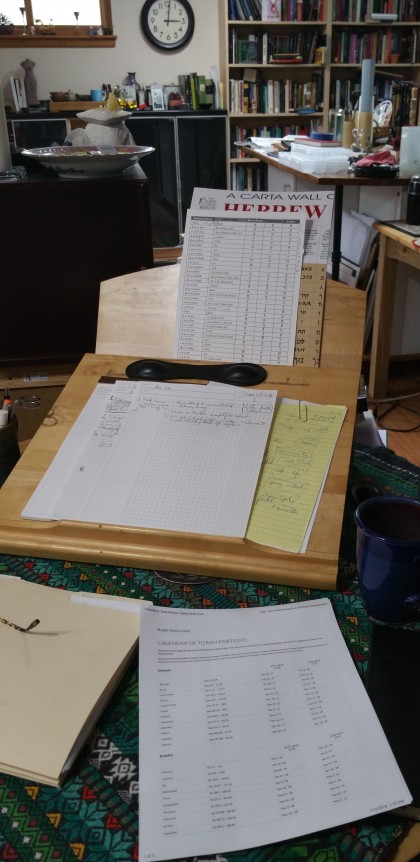
Yesterday I finally got an organizational handle on what I was doing. That’s the moment when a lot of study and thinking begins to sort itself out into recognizable components. In this instance it was a religious school year long calendar, each class for which Alan and I are responsible indicated by date. In other columns there are holidays that occur in a particular month, September, for example, has Rosh Hashanah and Yom Kippur and Sukkot; middah of the month, for example, again, September is hitlamdut or curiosity; a column with one of Maimonides 13 articles of faith for each month. There are also Hebrew letters for each class day, a progression throughout the year that will follow the kabbalist’s tree of life and links to the parsha (Torah portion) for each week.

20180315_080213With these elements identified lesson planning will be easier because content can be plucked from any of the columns to enhance a particular class. There’s another move in the process, integrating the b’nai mitzvah curriculum developed by a national organization called Moving Traditions with those classes for which Alan and I have to develop our own lesson plans. Once how we do that is decided and dates for the b’nai mitzvah classes show up on the calendar, we should be able to move fairly quickly to a plan for the year.

I love this stuff, the pulling together of disparate complexities into one whole. This is a big challenge and I like that, too. Not to mention that I really enjoy the people at Beth Evergreen.

Choose Life

Summer                                                              Woolly Mammoth Moon

Installing solar panels, 2015

Here’s a surprisingly existential sentence from economic journalist, Annie Lowrey, “The way things are is really the way we choose for them to be,” she writes. Her new book, “Give People Money: How a Universal Basic Income Would End Poverty, Revolutionize Work, and Remake the World” (Crown),is considered as part of a New Yorker article, “Who Really Stands to Win from Universal Basic Income?”

UBI is an interesting idea, made more interesting by Nathan Heller who offers a good summary of its possibilities and pitfalls, and I recommend the read; but, I’m much more taken by that single sentence of Lowrey’s. Lowrey is, as Heller says, a policy person, so her comment in this instance refers to our economic reality. Our economic life is not a divine endowment from a class loving God, rather it is the sum of choices we make as a people, choices reflected in our laws, our deference to the wealthy, our moralizing (Calvinist driven in large part) of personal income and wealth (more, better person, less, worse person), even the choices we make as consumers. In sum we live in a created society, one that we can choose to recreate or even uncreate.

IMAG0912Why are we so reluctant to recognize that racism, sexism, homelessness, income inequality, white fear are the result of decisions we’ve made collectively and individually? I think the answer lies in ideas Arthur Brooks identifies as the bedrocks of conservative thought. Below is a portion of that article, Republican or Conservative: You Have to Choose.* NYT, June 25, 2018. Though it may surprise readers of this blog, I have considerable sympathy for these ideas.

They challenge the Lockean idea of a social contract among independent actors, a notion at best abstracted from common life. They challenge the fabric of a liberal political worldview. I agree that we are not wholly autonomous individuals. Heidegger’s notion of thrownness underlines this point by reminding us that our life begins in a particular time, in a particular place and in particular circumstances over which we had no choice whatsoever. Brooks says something similar, “…individuals emerge out of families, communities, faiths, neighborhoods and nations.” To this point, I’m with him. There are unique realities that shape us.

IMAG0913But, to sacralize that unique reality, “…conservatives have always placed tremendous emphasis on the sacred space where individuals are formed.” says Brooks, serves to deny its perniciousness, its damning of so many to lives of desperation, marginalized from both economic and cultural blessings. Once we emerge in the era, the family, the town or neighborhood or rural place, the religious or areligious space gifted to us, the nation of our birth, once we are over being thrown into circumstances beyond our volition, we gain the power of choice.

It is decidedly not the case that though thrownness may come first, as Brooks says “The order comes first.” that “…individual freedom is an artifact of that order.” No. Order is neutral, neither a moral good, nor a moral constraint. If the order into which we are born nourishes lives, lifts people into their best possible existence, then, yes, let’s sustain it. If, however, the order into which we are born is itself pernicious, damning us to poor education, inadequate nutrition, a lifetime of social doubts about our worth, then we must recognize the truth of Lowrey’s wonderful encapsulation of the liberal perspective: “The way things are is really the way we choose for them to be.”


*”Conservatives said we…think you’ve got human nature wrong. There never was such a thing as an autonomous, free individual who could gather with others to create order. Rather, individuals emerge out of families, communities, faiths, neighborhoods and nations. The order comes first. Individual freedom is an artifact of that order.
The practical upshot is that conservatives have always placed tremendous emphasis on the sacred space where individuals are formed. This space is populated by institutions like the family, religion, the local community, the local culture, the arts, the schools, literature and the manners that govern everyday life.
Membership in these institutions is not established by rational choice. We are born into them most of the time and are bonded to them by prerational cords of sympathy and affection. We gratefully inherit these institutions from our ancestors, we steward them and pass them along to our descendants.”

The Emersonian Turn

Summer                                                                     Woolly Mammoth Moon

winter solstice yalda-night-persian-calligraphy
winter solstice, Yalda night, Persian calligraphy

Well, it’s incremental. Down from 14:59 to 14:58 today but the needle has begun to move. By the end of the month daylight will have decreased to 14:56, but, by the end of July, to 14:16. August 13:05. September 11:49. December 21 9:21. That’s for Colorado, of course. Other locations will vary. A lot. But the trend is the same. And, on top of this mountain, welcome.

Started working on lesson plans, a first for me. My task involves the 6th graders of our religious school. Rabbi Jamie has a worksheet I’m using with four columns: Hebrew, Torah, Middah, and Mitzvah. Guess what? The first column is in Hebrew. That makes it a challenge for me. But, in this wonderful age of quick information access I can plug in the word to google’s task bar and get at least a clue quickly.

Glad I learned the quote, “Confusion is the sweat of the intellect.” After yesterday’s work on the lesson plans the metaphorical sweat came easily. It’s no easy feat stepping into another tradition, even one with which I have some familiarity. Yet, it is also rich, resonant.

Not a Jew, but a reconstructionist. That realization about my comfort level at Beth Evergreen has given me a broader insight. It’s a little strange, so bear with me, please.

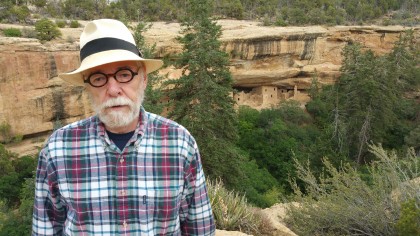
Spruce Tree House, Mesa Verde

I love definite, strong connections to the past, both Christianity and Judaism offer that to their adherents. So does travel. And reading. Among my favorite places to visit are ancient ruins like Ephesus, Angkor Wat, the Great Wall, sites of ancient Rome, Pompeii, Bath, Delphi, Delos, Cahokia, Mesa Verde, Chaco Canyon, even the castles of North Wales like Conway and Dinas Bran, encyclopedic art museums, and worlds created by writers like Ovid, Homer, Dante.

This could make me a conservative, a thinker and an actor with a preference for things as they were, a reluctance to change what works. But, oddly, it has had the opposite effect. I find in the ancient world a panoply of human possibility, ways of coping with this odd gift, life. How we think today, how we feel, has its roots in this vast web of life’s journey. We don’t have to experience everything as brand new, don’t have to figure everything out for ourselves. Others have loved, have doubted, have feared, have wondered, have hoped. So can we.

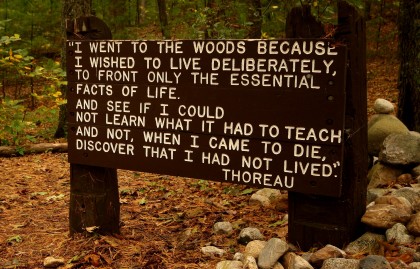
thoreaus_quote_near_his_cabin_site_walden_pondBut, and I might call this the Emersonian turn, we cannot use the offerings of the past without remembering his introduction to Nature: “The foregoing generations beheld God and nature face to face; we, through their eyes. Why should not we also enjoy an original relation to the universe? Why should not we have a poetry and philosophy of insight and not of tradition, and a religion by revelation to us, and not the history of theirs?”
When we wittingly or unwittingly chain ourselves to the experience of others, especially those others from the distant past, we disrespect both them and ourselves. We disrespect them by claiming their authority as if something we had earned. We disrespect ourselves because we cheat ourselves of the present, of our own deep intuition, of our own revelations.

When we recognize though that those previous generations did behold God (bracket content) and nature face to face, that they did have an original relation to the universe, that they did create poetry and philosophy of their own insight, that they did create their religions by access to their own revelation, we learn an important, perhaps the important, lesson. We too live in this world with the same faculties, the same powers of observation and discernment that they had.

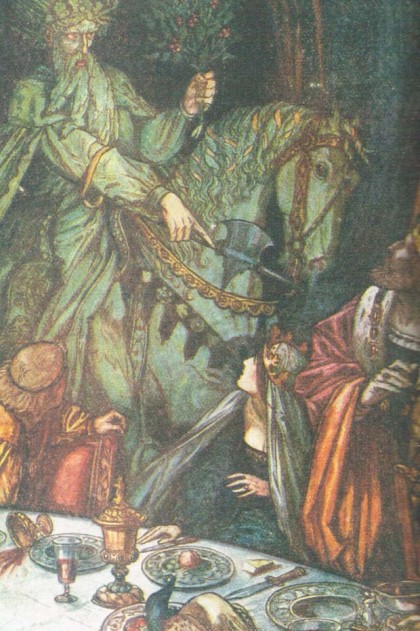
Gawain and the Green Knight

It was not those who had a religion of revelation to them that blinded us though. It was men, yes mostly men, of institutions, who tried to make the words of the past govern us. Those who declared scripture inerrant and infallible meant they knew what it meant, once and for all, and we had to obey. Well, I call bull shit on that. Those original beholders of God and nature opened themselves, in their present moments, to the awe and wonder all round about them. What a thing of beauty! Think how the mere record of their lives has effected us down to this day.

It is, though, the record of their lives. Only that. In our present, in this sacred moment, we have the same opportunity that they had, we have the same responsibility that they had. Think how the mere record of your life might effect others as distant from us in tomorrow as those are in yesterday.

Open up. Lighten up. Dance to the music of our time. Rip back the cloth from the temple gate in your life. Peak inside. Tell us what you see. We need to know.

Remember this. Always. “In the coming world they will not ask me—Why were you not Moses? They will ask me—Why were you not Zusya?” Rabbi Zusha of Hanipol