Category Archives: Great Wheel

Head, Heart, Hands and Health

Lughnasa and the Lughnasa Moon

Sunday gratefuls: The framers. Jon’s print. Ode’s. Ruth’s painting. Kate’s heirloom needlepoint: Love is Enough. All beautiful. Art by friend and family. Pho. Singapore noodles. That woman and her kid who needed money. Ruby and her air conditioning. Driving through Evergreen with the window down and the AC on. Allergies. Sympathy for my father. Blue skies, cool nights. No wildfire so far. Lughnasa

Lughnasa in the mountains. Lughnasa is a first fruits harvest festival. In ancient Celtic life it would have meant, like all the major holidays do, a market week. Games, trading, drinking and feasting, contests. State fairs and county fairs are Lughnasa influenced. They tend to fall between August 1st, Lughnasa and the autumnal equinox, or Mabon.

The Madison County 4-H Fair, which was held in Alexandria, my hometown, rather than the county seat of Anderson, Indiana, is a good example. I don’t recall, or maybe just don’t know, the reason Alexandria’s Beulah Park got the honor, but it was great for us as kids.

A carny setup strings of lights, cotton candy machines and hot dog stands, rides, and games. We would go early, watch them setup. Mom holding me on her shoulder, a blue blanket wrapped around me, a string of lights above my head is my first memory. A faint chill shuddered through me. I’ve always believed that was the first sign of my polio.

Local men erected tents with thick stakes and strong rope. Vendors of all sorts came to the fair. My favorite one was the dairy that passed out dixie cups of chilled buttermilk. I’d sprinkle mine with salt and pepper, going back as often as they’d allow it.

Car dealers brought out new model cars. I saw my first 1957 Chevy at the Madison County Fair. Farm equipment dealers brought tractors, hay balers, wagons. Those big yellow and green John Deeres. The red Massey-Fergusons. Tires taller than all of us kids with deep tread.

There were entertainers: magicians, singers, choirs, local celebrities. A queen contest. But the most important part of the fair, the Madison County 4-H fair, were the 4-H exhibits and shows. Some of you city folks may not know about 4-H: Head, Heart, Hands and Health.

4‑H Pledge

I pledge my head to clearer thinking,
My heart to greater loyalty,
My hands to larger service,
and my health to better living,
for my club, my community, my country, and my world.

This was small town America, rural America at its best. That pledge works. Can you imagine djt taking the pledge, for example?

4-H, the county extension office, and the cooperative extension offices from public land grant universities made room for kids with sheep, pigs, cows, rabbits, chickens, ducks, geese, horses. The kids came with their animals, often slept in their stalls during the fair. They made room for kids who cooked, baked, painted, did seed art, crafts like crocheting. County extension offices sponsored contests for wood-working, pie baking, honey making, quilting. County 4-H’ers could win blue ribbons, go on to the State Fair in Indianapolis.

Walking through the stalls with Holsteins, Guernseys, Jerseys, Angus, Hereford, and smelling farm smells, the ordure mixed with hay and urine. Seeing the biggest Boar lounging in his pen, his testicles usually visible and the scene of much laughing and pointing. The fancy Pigeons and high-strung Banty roosters. Rabbits with their long ears and velvety fur.

The buildings held jars of pickles, honey, jam. There were live Bees, honeycomb, and jars of amber honey ready to be judged. Decorated cakes. Plates of cookies. Bird houses and hobby horses, hand made. Quilts. And much more.

We knew where food comes from. Our friends and family grew it in their fields, raised it in their barns and pens. This was, and is, a celebration of Mother Earth.

The 2020 Madison County 4-H Fair was canceled due to the pandemic. But it will be back, spreading the country gospel of head, hearts, hands, and health. What we need right now.

Leaning In. To the Sun.

Beltane and the Moon of Sorrow

Saturday gratefuls: The Moon of Sorrow comes to an end. Rain. The smell of the Forest, Pine needles and Pine resin, wet Soil. Petichor. A perfume created by the mistress of all perfumery: Mother Earth. Extra bonus: smelling it while I walked out to get the newspaper. Seoah’s wonderful time with us. She helped us through Gertie’s death, through the Murdoch/Kepler wars, and the coming of the coronavirus. Family. Yes. The sun at its most northerly. And, the longest day.

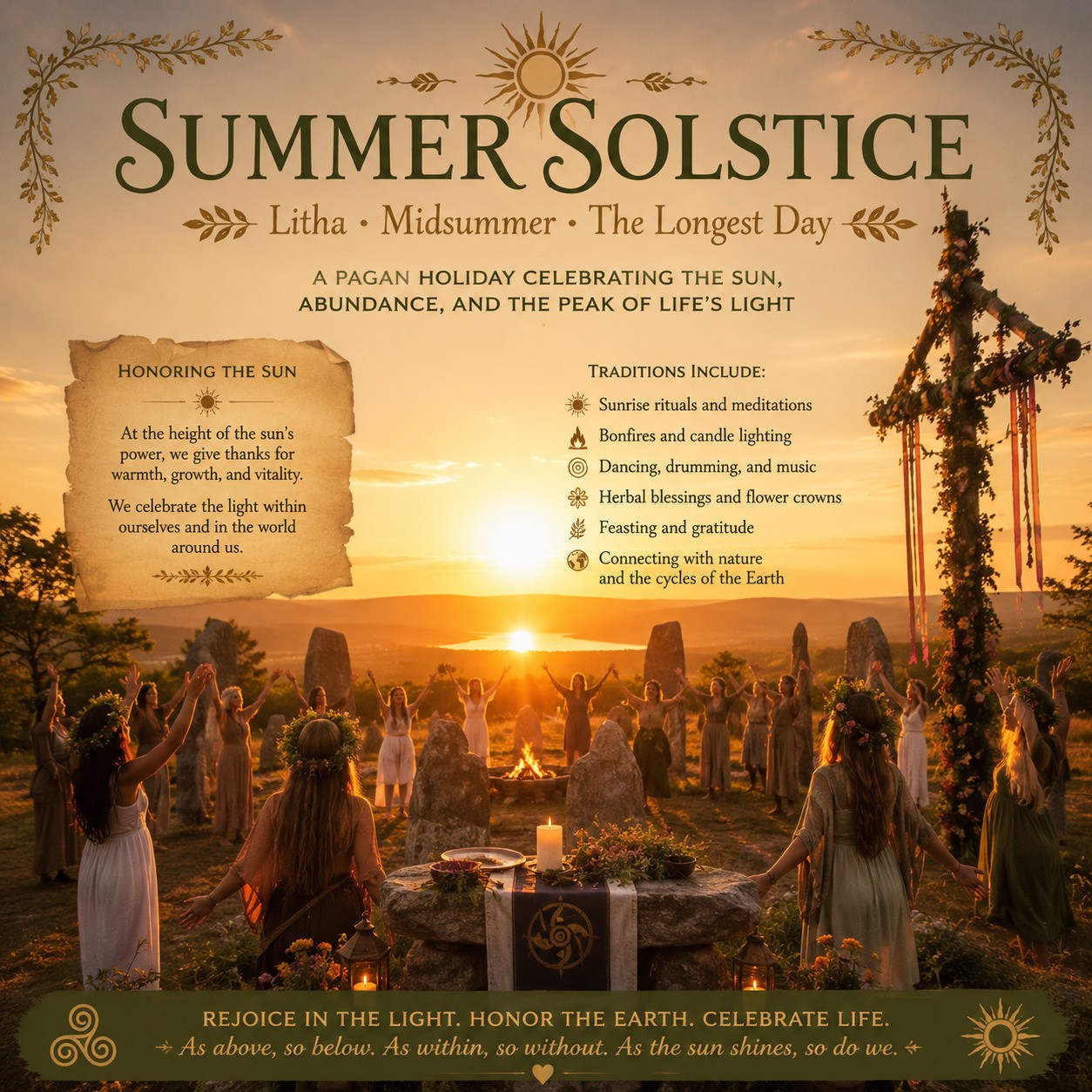
To a world on fire with virus infections, economic destruction, and spreading demands for real, permanent change, the sun climbs to its highest spot in the north for the year. The Summer Solstice. A fire festival.

Though most of the new age pagan types see the Summer Solstice as a masculine, Sun god holiday, I’m more drawn, again, to the Asian understanding, specifically the ancient Chinese who had the summer solstice as the peak day for yin, feminine energy. They saw this holiday as an earth focused holiday.*

Yin makes most sense to me since the next months grow the crops, fertility as a feminine focus. (BTW: just so we’re clear. Animus and anima, yang and yin, masculine and feminine, active and receptive modes are in all of us-all of Us).

The Earth gives birth to the foods that feed Us all. Us=all living things. Yes, a few exceptions like extremophils which subsist on sulfur or cyanide, but for the rest of Us-Mother Earth or Mother Ocean. The Sun is yang energy, Mother Earth yin. Both required, necessary. Each complementary to the other. This is a day to get naked and dance around the bonfire. If you’re Swedish. If not, you can go ahead. I give you permission.

This holiday celebrates fecundity, mutuality, heat, procreation, gestation. It celebrates those aspects of our lives which support our work, inner or outer. Whatever has emerged from your garden, again inner or outer, will need care to bloom, to fruit, to nut, to mature. Celebrate what you do to lift up yourself, your family, your friends. Make sure that part of your life has enough sustenance, so those relationships, your projects, don’t wither, turn brown before the harvest.

The Earth tilts fully toward the Sun today. 3:44 pm MDT. 23 degrees and 26 minutes, pointing the Tropic of Cancer directly toward our Star. And, it rises as high in the northern Sky or as low in the southern Sky, as it will all year.

Which brings to me my favorite fact about today. This is the longest day of the year. From this day forward the nights grow longer until we get to the yang holiday of the Winter Solstice. Hello, darkness my old friend. I’ll come to visit you again.

*see Ancient History for a brief summary

At Her Funeral

Beltane and the Moon of Sorrow

Thursday gratefuls: Gauze sponges. Wax o-rings for Kate’s leakage. Stoma powder. The chance to care for Kate. A forty degree morning on Shadow Mountain after 92 degrees in Denver on Monday. That silly Rigel, not acting her age. At all. Kep, the serious. Dog groomer today. The Kabbalah class. Folks liking my presentation. Workout yesterday.

Pine pollen season. Yellow streaks on the asphalt. Pollen lying on wooden tables, adding some color. The winds rushing through the Lodgepoles, shaking loose enough for a yellow storm. Part of the turning of the Great Wheel. That I could do without personally. But, how would we get baby Lodgepoles otherwise? Sneeze and bear it.

Wildfire danger remains high. Dry, Windy. Yesterday the Humidity in the loft was 2%, outside 6%. The arid West. A positive note. It was 80 degrees up here and a slowly rotating fan was all I needed to stay cool. Rigel, we’re not in Andover anymore.

A woman in my kabbalah class wants my Grammar of Holiness read at her funeral, “…whenever that may be.” A strong positive reaction to it from the class. Rabbi Jamie’s going to reprint in the synagogue newsletter, the Shofar.

Always thought my reimagining faith project would be a book, a radical theology with chapters and footnotes and acknowledgements. Nope, two pages. There it is. It feels said to me. We’ll see if I continue to feel that way.

After reading several pieces about Covid and underlying medical conditions, Kate and I have decided to become coronavirus hermits. Our hermitage, Shansin, on top of Shadow Mountain. We’ll ride it out with as little flesh and blood contact as we can stand. Would sound bleak, but Zoom helps, and we’re introverts, happy with each other, ourselves, and our dogs.

And, given recent news, I will add: white, privileged, financially secure, and aging with good medical care.

Still no word from the Singapore government. Seoah may fly there next Tuesday. May not. Covid has impacted lives in so many different ways. This is just one of them, but it’s personal, right here.

From Shadow Mountain, where the sun is rising and the morning is cool.

A Year Ago

Beltane and the Moon of Sorrow

Tuesday gratefuls: Lululemon, it delights Seoah so. Arlet, the clerk at Lululemon who wants to be Seoah’s friend. The Highlands neighborhood of Denver. Its shops and restaurants. Hwy. 285. I-70. All those other drivers. Evergreen. Safeway. Curb pickup. The Mountains. Snow on the Continental Divide. The winds.

Had an idea for yard cleanup. I’m going to text my neighbor Derek, see how much of our wood he wants. Then, I’m going to post on Nextdoor Shadow Mountain for anyone else who heats with wood. Free fuel. You move it, it’s yours. That’ll get rid of the trees. The slash will go to the curb for chipping. I should be able to handle the rest along with Jon. Some of the remaining stuff belongs to him.

One year ago today two Elk bucks jumped in our yard and began eating Dandelions. Shansin, or his Rocky Mountain avatar, sent those angels to our house. You belong here, Charlie. Neighbor.

Resonated then, and now, with the Consolation of Deer Creek Canyon from 2015. The Mountains rising on either side of Deer Canyon Road spoke, but I was still deaf to the full meaning. The unimaginable age of these young mountains, millions and millions of years since the Laramide orogeny pushed them up, let me put my diagnosis, just received, in a different context.

I drove back from Dr. Eigner’s office, stomach hollow and sour, thoughts flitting from imminent death to it’s a mistake to I can handle this. I can handle this. I can handle this.

Deer Creek Canyon helped me see it was just death. Nothing more. How many deaths since the Laramide mountain building? Uncountable. Insects. Deer. Elephants. Mammoths. Humans. Dogs. Whales. Barracuda. Coral. So much death. Yet, these Mountains were young. My death had nothing unusual about it. I would become part of that uncountable number. That soothed me. Not sure why. Maybe because I didn’t feel singled out, picked on, targeted.

With the recurrence a lot of those old fears and those old reassurances came marching back onto the field. No, said the Angels. This is new. We have come, neighbor, to tell you it is both new and old. The Mountains will embrace you each day as you drive to and from the radiation. Our brothers and sisters will hold you in their wild hearts, as you hold them in yours. We know death and pain and whatever your journey, your ancientrail becomes, we will not abandon you.

Three Mule Deer bucks stood in my backyard on Samain, 2014, when I came for closing on the house. We spent a long time together. They were the wilderness welcome I didn’t even know we needed, yet there they were.

This year three Elk bucks came. This year, probably not until November, I’ll find out whether I have a cure. Again. Reassurance again, from the wild hearts beating all over our home in these Rocky Mountains. More than enough for me.

900 lbs .10 oz

Beltane and the Moon of Sorrow

Friday gratefuls: Shavuot. Rabbi Jamie. Tara. Marilyn. Alan. Ron. Rich. Judy. Susan. Sleeping well, always good. Oxygen concentrators. The engineers who designed them. As Mark said yesterday in an e-mail, remember your well pump. Wildfire. Soap. Lysol. Used in the right places, of course. Bleach. Shampoo. Laundry detergent. The world beyond our driveway. The moose and the hummingbird.

I saw a moose! About a half mile from home. A mature, and very big, female. She was in a neighbor’s yard, heading toward the back. I could see her against the house so scale was pretty obvious. Moose cows can be be up to 1,100 pounds though I doubt she was that big. Maybe 900? And tall. Around six feet at the shoulder.

Moose do wander around our area, though they’re not common. Folks have seen them at Flying J Ranch, in the meadow at the bottom of Shadow Mountain Drive, Kate and Gabe saw a female at the pond in the little meadow about a mile down the hill from us. This one was in the opposite direction, on Black Mountain Drive headed toward Evergreen.

She looked back over her shoulder at me as I drove by, then sauntered off toward the forested incline that began behind the house. If you go up and over Black Mountain or Conifer Mountain near our house, you find yourself in Staunton State Park, a large and beautiful place. No roads that way though. To reach it by car you have to get on Hwy 285 and drive a few miles. I imagine that’s where they come from.

But, wait. That’s not all. Both Kate and I rescued hummingbirds yesterday. One was in the loft and the other in her sewing room. My little guy wanted to get out the window facing Black Mountain Drive. After opening the window and trying to let him out on his own, I picked him up in a kleenex and let him fly away. Kate used cloth.

The moose was fun. But, the hummingbirds seem meaningful since both Kate and I did the same thing, maybe to the same bird, on the same day. Gonna have to think about it. Let it sink in.

Hummingbirds are sort of the local bird. Many people put out hummingbird feeders. They come here in large numbers. We have a feeder, still hanging in the same place it was when we moved in. I don’t fill it because feeding wildlife of any kind leads to habituation. And, habituation is not good for wild animals.

Based on some quick googling, I’d say mine was a broad-tailed male. Our eyes met when I opened the window and his small body moved slightly toward me. I could feel his intelligence and his calm. He was not anxious, just wanted back outside. When I picked him up, he did not struggle. I used the Kleenex to keep my scent off of him. It fell to the driveway as he flew quickly away.

The female moose, maybe 900 pounds. The hummingbird, .10 ounces or 3.16 grams. Life in its extremes. Both living in these mountains. Both with intention and mobility. Our neighbors. Our wild neighbors.

Lucky we live in the Rockies.

A Druid. A Priest.

Beltane and the Corona Lunacy II

Friday gratefuls: Beau Jo’s pizza. A rain cloud creeping down Black Mountain. What’s your fire? Ode’s question for Sunday. Mussar folk. Silence. Clean speech. Jews. CBE. Alan on zoom yesterday. The Denver Post. The Washington Post. The New York Times.

Charlie. You’re a druid! That was the Reverend Doctor Ackerman, my spiritual director. He was on staff at Westminster Presbyterian, the big downtown church in Minneapolis. He was my second spiritual director, the first being a nun in St. Paul.

The nun, whose name I don’t recall, had me write a gratitude journal. She told me that gratitude was the root of all spirituality. I’ve heard similar things many times since, but she was the first one to open my eyes to that important link between spirit and gratitude.

Ackerman was a psychologist as well as clergy. By the time I got to him I’d had many years of Jungian analysis with John Desteian, a rich and transformative experience. Jung understood better than any other psychotherapist/psychotheoretician the link between the religious journey and individuation. Going into the ministry and marrying Raeone (in the Westminster chapel) had evoked deep fissures in my psyche, places where my old, wounded self pulled apart.

The deepest rift lay between my 17th year, when mom died, and the adult persona I had crafted. I did not face her loss. I ran into the black abyss of her absence and hid there, afraid to venture out, fearful something new and awful might happen. Over that abyss I built bridges to the adult world.

The most obvious one and the easiest for me was academics. I plunged into philosophy, anthropology, geography, theater history, and later the vast intellectual world of Christianity. When I was in a library, with books on the shelf of a carrel, head down, pen in hand for notes, the anxiety disappeared. The world of ideas both excited and distracted me. This bridge still stands, the sturdiest and least pathological.

The most unconscious bridge construction came in my freshman year at Wabash College. Mom had just died. I was in a school where many of the 200 other freshmen were also valedictorians, leaders in their high schools. I was, for the first time in life, among intellectual peers. Wabash was tough.

We had to pledge a fraternity. Upper classmen got first choice on dorm rooms, filling them. Freshmen had to live on campus. So. I became a Phi Kappa Psi. Drinking, smoking. That’s what I got from being a Phi Psi. They slipped into my life, those two, and I would spend my twenties captive to both. I also picked up philosophy there, a companion for my life pilgrimage.

The addiction bridge, a destructive way to navigate the fissure, both helped to assuage the anxiety and to increase it. That bridge began to break down in my late twenties, but not before I’d decided to finish seminary and, later, marry Raeone. Both were mistakes.

Ackerman caught me as the Christian bridge, a potholed one from the beginning, had begun to crumble. About three-quarters through the Doctor of Ministry program out of McCormick Seminary in Chicago I had discovered fiction writing. I already knew then that I had to get out of the ministry.

The last bridge to adulthood I had built was marrying Raeone. Not her fault my construction project wasn’t about her, but about a need to have someone in my life, someone close. When I got sober, both the Christian and Raeone spans began to have structural problems.

To feed my growing interest in writing fantasy novels I decided to look to my past, my family. Richard Ellis had come to this country in 1707, his father a Welsh captain in William and Mary’s occupation of Ireland. The Correll’s were famine Irish. Celtic. It was the Celts who changed my life forever.

Celtic Christianity, a branch of Christianity that preceded the Roman Catholic Church in Britain, welcomed the folk religion of the Celts, incorporated it. An odd thing happened when I met, through the Celtic Christians, this ancient Celtic faith. I switched sides. It took a while, but the concept of the Great Wheel of the Seasons came to make more sense to me than any redemption or resurrection narrative. Discussing these realizations with Ackerman lead to his, You’re a Druid!

Later, after divorcing Raeone and leaving the ministry, detonating those bridge behind me, Kate and I began to build adult lives that did not need the bridges over our pain. I was sober when I met her. My mistake with Raeone had been acknowledged. With Kate I began to write, to garden, to keep bees, live with many dogs, cook, be a better father; and, much later, to wend my way with her into the large world of Jewish civilization.

That’s my adult life, this last paragraph. The only bridge remaining from the frenetic years after my mother’s death is academics. I still love it, still read, think, write. Judaism honors the academic, the intellectual. The members of CBE have gathered both of us in and hold us close.

Here’s the punchline. Following my academic inclinations, I’ve been studying Kabbalah with our very bright rabbi, Jamie Arnold. He knows me now after several years of collaboration and classes. In class on Wednesday he referred to the four covenants: the Noachic, the Abrahamic, the Mosaic, and the Davidic. These identify different aspects of Israel’s relationship with the One: between Humanity and the One, between the seeker and father of faith and his descendants, between Israel and the law, between Israel and the monarchy, the nation. We need a fifth now, Jamie said, one between us and the earth. This is the endpoint of Art Green’s argument in Radical Judaism.

“I’ll join up with that one,” I said. “Oh,” Jamie said, “I think you’re already a priest of that one.” Still buzzing in my head. More on this in another post.
Shansin. Again.

Beltane and the Corona Lunacy II

Monday gratefuls: Shansin. Four Mule Deer Does in the yard this morning. Romertopf. The Chicken that gave its life for our meal. Potatoes. Onions. Carrots. Garlic. Sesame oil. Old friends: Tom, Bill, Mark, Paul. Poetry. Wine for Kate. Those who wear masks. Those who don’t. These Mountains. Their Trees. Their Water. Our Wild Neighbors.

At a time of frustration and anxiety Shansin, our home which honors the Korean Mountain Spirit, and Shansin Himself, have gifted me a token of peace. At 5:30 this morning I went out for the newspaper, as I have hundreds of times since we moved here in 2014. A Mule Deer Doe looked up at me from the yard. Good morning, I said. She looked at me, her huge ears standing out from her beautiful face, alert.

Somewhat further away three of her Sisters ate, too. Good morning. Good morning. They each looked at me and continued eating. As I walked along the driveway to the mailbox, they continued eating, occasionally looking up as I moved by them. I’m glad you’re here. I’m glad you’re enjoying the grass.

Paper in hand, the latest coronavirus news buzzing off its front page, I walked back to the house, to Shansin with Shansin. They all grazed, content. I was part of their morning, They were part of mine. Neighbors on Shadow Mountain.

Yes, we belong here. Together. Whatever might be elsewhere, we belong here. Our lives continue in mutuality with those others who live among us. Fox. Cougar. Bear. Elk. Moose. Pine Marten. Canada Jay. Magpie. Raven. Crow. Spider. Mouse. Vole. We are all under the protection of Shansin.

At crucial moments in our Mountain time Shansin has sent his angels, his messengers. That first day here on Samain of 2014 when the three Mule Deer Bucks and I met in the back. The first day of radiation therapy when two Elk Bucks jumped our fence and stayed a day and a night eating dandelions. This morning, when my patience and emotional reserve had frayed, left me feeling beleaguered.

It may be the apocalypse(s). It may be. But here on Shadow Mountain I am part of something that will survive. That will flourish in spite of and in part because of them.

This is what the end times look like up here. A newspaper in its tube. Four Mule Deer grazing on our land. A cool Mountain morning underway.

Beltane 2020

Beltane and the Corona Lunacy II

Friday gratefuls: Dr. Gustave and his care for my glaucoma. Another Colorado sunny day, blue sky. The ski runs on Black Mountain still have snow, like our backyard. Bernard Cornwall, historical fiction writer. People who write. Buddy Mark Odegard’s Starry Night. A slow workout yesterday.

Ennui. A word for a pandemic. Punctuated though by what Woolly Jim Johnson referred to as the perennial. It’s Lambing time on the Casper’s ranch outside Aberdeen, South Dakota. This is an ancient ritual honored first on the Great Wheel by Imbolc on February 1st. Imbolc means in the belly and refers to the pregnancy of the Ewes.

Imbolc, which marks a season by the fertility of a farm’s Ewes, is one of four Celtic cross-quarter holidays. Cross-quarter holidays come between the equinoxes and the solstices. Thus, Imbolc is halfway between the Winter Solstice and the Spring Equinox.

Beltane, the next cross-quarter holiday, is today, between the Spring Equinox and the Summer Solstice. In the deep past the Celts only had two seasons, the fallow time beginning at Samain on October 31st, and Beltane, the growing season, which started on May 1st.

Beltane marked the beginning of a market week when villagers would come together to sell goods made over the fallow time, livestock, and any foodstuffs in surplus. Couples interested in each other as potential partners could do a handfasting, marriage for a year and a day. Workers made contracts for the growing season with farmers.

Bonfires blazed at night. Cattle were driven through them to ward off disease and women wishing to quicken would leap over smaller fires. Men and women made love in the fields, hoping to transfer their fertility to the soil.

Beltane’s coming means the Great Wheel has turned toward growth, fertility, abundance. In spite of a human pandemic Daffodils*, Crocus, Grape Hyacinths, Bloodroot, spring ephemerals that bloom before the trees leaf out have come. The Lodgepole Pines have their new cones. The Aspens have buds. Robins and Hummingbirds have returned to the mountains. The Black Bears forage while yearling Mule Deer hunt for good food amongst all the greening.

Look for what is growing within you. Within your relationships. Outside your front door. The coronavirus will wane. You need growth. This is a wonderful time to seek what’s pushing through the Soil of your Mind.

*I’m adopting Robin Wall Kimmerer’s suggestion to capitalize names of those things animated by the Great Spirit, Ohr, the One. This signals my respect for the living world. I’m also adopting her understanding of animacy which includes all things except those made by human hands. So, for instance, Rock. Black Mountain. Grass. Soil.

AC/DC

Spring and the Leap Year Moon

Thursday gratefuls: Snow pellets hitting me as I walked out for the newspaper. Blue gray sky as the sun rises behind clouds. Corned beef and cabbage. The equinox, today. Brother Mark, learning new skills. Seoah taking Murdoch for a walk. Kate, a strong woman as friend Debra said. Our world, changing.

First. Welcome Spring! Welcome. We have never needed your message of renewal, growth, emergence more. Even after fallow times, even after the cold and the dark of winter, even after the longest night, you come. You come in the midst of what will be a long darkness, perhaps a long fallow time. You mean, you are, the direct, the tactile hand of mother nature reaching out to each one of us sheltered at home. You will bring us flowers and green leaves and birds singing and fields being planted. Thank you.

More crucial. You will demonstrate for the us the cycle of life. Again. Still. Always. We are uncertain. We don’t know what this afternoon will bring. Tomorrow? Even murkier. But we do know that light follows the dark. That even the longest of winters give way to the gentle spring. So it will be with this virus.

Renewal can take many forms, however, and what the renewal after the coronavirus will look like may surprise us all. Here are two articles that I found useful. Our New Historical Divide B.C. and A.C. by Thomas Friedman in the NYT, and, We’re Not Going Back to Normal by Gordon Lichfield of MIT’s Technology Review.

Friedman, of the St. Louis Park Friedmans, places some hope in advanced biotechnology, but admits it’s not yet ready for a rapid enough response to make a big difference. He quotes a friend, University of Maryland professor, Michele Gelfand on the difference between tight and loose cultures. Tight cultures, with many rules and punishments already in place, think Singapore, Austria, Korea, China, can lock in a broad response quickly and expect that it will be heeded. (She does not mention the bureaucratic paralysis of China.) No parties in the Asian equivalent of Bourbon Street. Loose cultures like the U.S., Italy, Brazil have a tougher time putting responses together and a tougher time enforcing them. She and Friedman believe our political culture may have to change.

Lichfield is clearer on the dilemma. Even though mitigation can help, it’s severe restrictions on movement that will do the most. There are problems. Severe measures are hard to enforce and get harder over time. ICU admissions, a rough metric, can give us a sense of the effectiveness of mitigation or restriction. As admissions trend downward, some loosening of the restrictions can happen. But. New cases will emerge and the spike in hospital admissions will start up again. Until it starts to go down again thanks to reimposed restrictions. According to the study he cites from London’s Imperial College response team, this will happen again and again in waves for 18 months!

It is both the length of time to resolve this, as much as 18 months, and the economic shocks inevitable over that time (and already red light flashing visible now) that will forge a new way of being together. Will you choose to help guide that new world order or resist it?

First Draft Presentation

Imbolc and the Leap Year Moon

                                Shadow Mountain Midrash

We need to reshape our religious languages in such a way that they will inspire the great collective act of teshuvah, “return” or “repentance,” required of us at this moment.” Radical Judaism, Art Green, p. 8

Green’s book is honest and radical, character traits I admire. His rejection of supernatural theology stated baldly and often, makes this a radical work. His commitment to remain, however, within the Jewish condition makes it honest. He is what he is. Perhaps the most radical claim in the book is this, “As a religious person I believe that the evolution of the species is the greatest sacred drama of all time.”[i]

I want to make two moves that are different from Green. First, I want to push the scope of his sacred drama all the way back to whatever is the beginning, bereshit. The Big Bang. Or, its equivalent as science and kabbalah press further into its truth. I believe that evolution of the cosmos is the greatest sacred drama of all time. Second, I no longer have a pathway home, back to the tradition of my childhood, or my professional ministry. I cannot follow him into a tradition.

That means I’m left with my Celtic inflected paganism.[ii]

I’m using the word in its sense of outside religious institutions, or religious outsider. A Latin word for rustic, villager, or peasant pagan got its current connotations in relation to the accelerating reach of the Roman Catholic church. As the church took hold in Europe north of Italy, it had to push out the then existing folk religions to gain converts.

This effort was effective in cities and towns where churches and priests could divide the area up into smaller, easily manageable parishes. In the countryside, however, where the peasants and other rural folk lived scattered from each other, where rural agricultural traditions still held sway, the old religions tended to hang on, resist assimilation. The Roman Catholics were relentless, however, and eventually most traditional religions found themselves sequestered among stubborn believers who often had to hide the practice of their beliefs. The old religions held on among villagers and peasants, pagans in the Latin usage.

Paganism then, as I use it, is a placeholder for those of us who share with Green his notion of the sacred as “an inward, mysterious sense of awesome presence, a reality deeper than we normally experience.”[iii], but do not share his devotion to tradition. Instead of panentheism, then, I’m neologizing: panenpneuma.  Spirit in all and all in spirit.

There is a love of wild Nature in everybody, an ancient mother-love ever showing itself whether recognized or no, and however covered by cares and duties.” ― John Muir

Could there be a pagan midrash? A friend of mine often quotes a mentor, “See what you’re looking at.”[iv] A good beginning for a midrash of the natural world.[v]

Is this even a sensible question to ask? I think so, since Green himself says: “We thus make the same claim for Torah that we make for the natural world itself: remove the veil of surface impressions, go deeper, and you will find there something profound and holy.” Green, p. 116 If we look beyond the veil of surface impressions, go deeper, we’ll find the profound and holy. How to do this in the natural world? Midrashim of the Torah rely on repeated words, etymological similarities and differences, gaps in the flow of a text, gematria, the meanings of individual Hebrew letters.

The naïve viewer of nature might, instead, see the wonderful cumulus clouds over Black Mountain and think, they’re so high, so far away that they don’t have any connection to me at all. She might, though, wait and watch. When the rains begin, she might wonder. Hmm. They water the forest, don’t they?

Consider the bumblebee and the butterfly. The bumblebee, according to aerodynamic theory, shouldn’t be able to fly. So, which is right, aerodynamic theory or the bumblebee? Later information has sorted out the problem. Turns out bumblebees don’t flap their wings up and down, but back and forth. This was learned in 2005 when high-tech cameras and robotic bee model investigated the question. See what you’re looking at.

What if you were a child like me, who watched caterpillars intently? I followed them as they munched on leaves, as they put themselves in splendid isolation, as that isolation got broken by a creature as light as the caterpillar was stolid. And, it could fly!

The lodgepole pines on my property have a clever snow removal trick. When the snow gets too heavy on a branch, the branch dips down, the snow falls away.

Those are all scientific observations in one way or another, but they meet Green’s criteria, at least to me, of revealing the profound and the holy.

Here’s another midrashic method for nature. When we bought our house on Shadow Mountain, I came here from Minnesota for the closing. It was Samain, Summer’s End, the Celtic New Year. October 31st. I mention that because at Samain the veil between the worlds thins and creatures can pass both ways, out of the Other World to our world and out of this world to the Other World.

The next morning, on the rocky soil behind our new house, there were three mule deer bucks standing on what I now know is our leech field. I looked at them. They looked at me. I moved a bit closer and they didn’t shy away. I’m not sure how long we stood there, but it was long enough to establish a wordless communication.

As I considered this remarkable (at least to me) event, I decided that the mountain spirits had sent these angels (messengers) to say we were welcome here. I’ve felt welcome among our wild neighbors ever since.

Second event. I have prostate cancer and am right now going through a recurrence. Last June I started radiation therapy, five days a week for seven weeks. The morning before I started radiation two elk bucks jumped the five-foot fence around our back and began eating dandelions. They stayed in our yard that night and left the next day. They were the only wild animals I’ve seen in our back since the mule deer visitation five years ago. The mountain spirits had come to reassure me, calm me. It worked.

A friend challenged me to find a name for our property. I’d thought about it before but most of what I considered seemed corny or pretentious or just silly. Then my Korean daughter-in-law came for a long visit. Her presence led me to pay more attention to things Korean and I realized the person she’d called her mentor was in fact a Korean shaman.

When I looked up muism, or Korean shamanism, I found one of the mountain gods was called Sansin. Seemed right for our house.

From another, very different angle. Transubstantiation. The Catholic doctrine that the host and the wine are the body and blood of Jesus Christ. OK on the mythic level, sure, but in reality? Odd at least. There is, however, transubstantiation of a different sort. When you eat bread, the wheat becomes you. That steak. You. Brussel sprouts. You. Even chocolate. You. Everyday we transform food into our own bodies. How amazing, profound, holy is that?

What midrashim do you have about the natural world? What methods could we identify to help people see what they’re looking at?

Creating a sustainable presence for humans on this earth is the Great Work for our time. Thomas Berry


[i] Green, p. 16

[ii] Neo-paganism, Wicca or Druidism or Asatru (Nordic), for example, has shallow roots, most in nineteenth century Victorian fancy. I’m not referring to this sort of paganism.

[iii] Green, p.. 4 

[iv] Carey Reams

[v] I’m using natural world here in a restricted sense, that is, the non-artificial world, the non-humanbuilt world. This is wrong on the face of it since humans are of the natural world and our homes, for example, are no different than a swallow’s nest or a bear’s den in meeting our particular requirements. I believe we should avoid anthropocentrism if at all possible, as Green says we are neither the pinnacle nor the end of evolution.