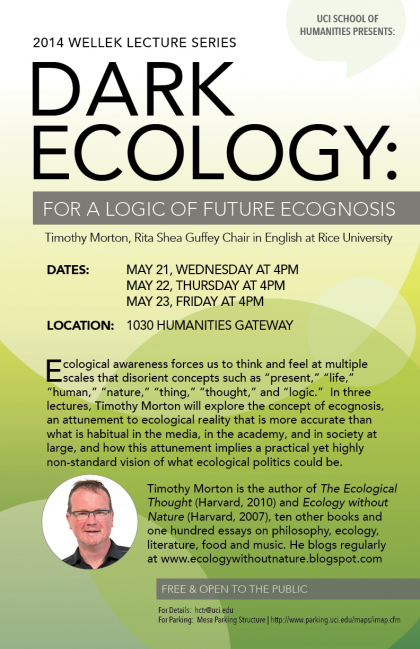
Though I haven’t begun to read them yet, William Vollman’s two volume work: No Immediate Danger and No Good Alternative, the Carbon Ideologies paints a bleak picture. So does the IPCC‘s latest report. I also reported here, quite a while back, about a new movement called dark ecology that, like these three works, takes a dim view of our (that is, the world’s) willingness to execute the necessary carbon emissions restrictions.
Much as I hate to admit it, I believe these darker, more hopeless perspectives about the struggle against climate change might be right. If they are, we may be walking down a path that leads to an HG Wellian Time Machine world with the poor morlocks wandering the face of the earth (think the 99%) and the eloi burrowed into her mantle, using their great wealth and power to survive the heat and climatic chaos.
If we cannot slow down the rate of climate change (which is the most we can do, since so much climate change is already baked in), then we move to mitigation and adaptation. Geoengineering will become a buzz word as various strategies are tried. Climate refugees will become more and more disruptive across the world, especially those moving from coastal areas into interiors and onto higher ground. The already underway shifts in plant and animal eco-systems, climate refugees all, will bring them with different disease vectors, disruption to agriculture and sea life.
We will not be known for Vietnam, civil rights, feminism, ruining health care, electing fascists to high office, but as the generation that allowed an earth compatible with human populations to slip away. Hard as it is to imagine the results of this inaction will be far, far more damaging than all the wars, holocausts and pogroms. How will we explain this to our grandchildren, to Ruth and Gabe in our instance? I understand the political and economic forces that have gotten us here, but explaining them will not alter the misery.
As Kate’s rehab improves her strength, the middle of the recovery process is underway and underway well. She’ll have gains to make at home, weight gain chief among them, and I won’t consider this incident over until she’s gained at least ten pounds.
In an interesting NYT article on refugia* I began to think about those searing moments of our lives when their landscape changes forever, denuded of the familiar, apparently ruined. Most of us have at least a few, some have many. College often sets loose a wildfire of realizations as the mind encounters strange ideas, ones that can wreck the delicate eco-system of childhood beliefs. Death of someone close, my mom, for example. A failed marriage, or two. Substance abuse and recovery. Children of our own. Moving away from familiar places. (and these are just from my life.) Getting fired. Getting hired. Selling your business. Finding a new, strong purpose.
Kate in the E.R., September 28th
In the heat of the fire itself, Kate’s visit to the emergency room and the various procedures, recovery from them, for example, it can seem as if all will be gone, nothing left of the old life, maybe not even anything worth living for. This sense of total destruction is often inchoate, a visceral curling up under one of those fire shelters the hotshots use. But there comes a time when the fire has used up all the available fuel, when it goes out, becomes the past, rather than the present.
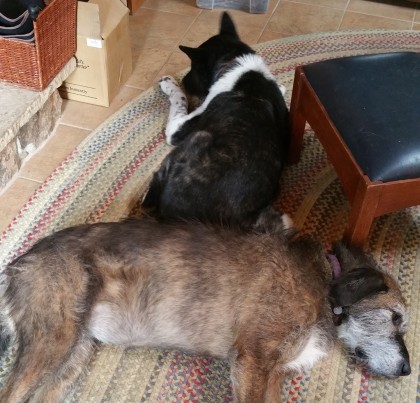
In that transition from crisis to life in the burned over section, that’s where the refugia are critical. “These havens shelter species that are vulnerable to fires. Afterward, they can be starting points for the ecosystem’s regeneration.” Our love remains, protected by its watercourse way, cool and flowing even during the heat. The dogs and their rhythms remain, a furry oasis shielded from the fire by distance. This loft remains, a literal haven, not untouched, but intact. The house. Our friends who’ve followed Kate on the Caringbridge, near and far. Our family.
Today
But the old forest, the one that stood when the flames rushed up the hill toward us, is gone. Kate will not return to the same house, not even to the same dogs, for they and she have transformed. The homeness of our house remains, but its configuration will change, how we use it will change, how we see it and understand its role in our future will change. The companionship of the dogs remains, but their lives will have to adapt to the new, and while adapting, will change the new in their way.
I cannot yet see how the refugia will repopulate the forest of our life. The fire is not yet out, the crews of hotshot nurses, physical therapists and occupational therapists are working to find hotspots and put them out, to build fire breaks and clear out old fuel. When their work is done, Kate and I will rebuild the wild forest that is our time together, our small contribution to the ongoingness. There is opportunity here, a chance to reexamine old habits, old dreams, old hopes, to reconsider them in light of the altered landscape. What will it give us? I don’t know. But, when Kate returns home and begins to heal here, on our old forest’s ground, we’ll find out.
*”The fires left scenes of ashen destruction, but they did not wipe out everything. Scattered about the ravaged landscapes were islands of trees, shrubs and grass that survived unharmed.
It’s easy to overlook these remnants, which ecologists call fire refugia. But they can be vital to the long-term well-being of forests. These havens shelter species that are vulnerable to fires. Afterward, they can be starting points for the ecosystem’s regeneration.” NYT
1605–15; < Latinresectiōn-(stem of resectiō) a cuttingoff,trimming,equivalent to resect(us) (seeresect) + -iōn--ion
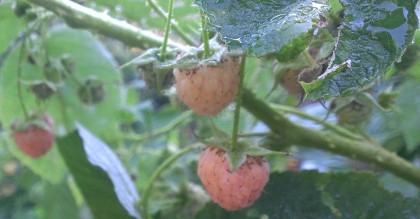
pruning gooseberries
Always had trouble with the word resection. Why can’t doctors just say, cut out, excise, remove? After Kate’s bowel resection for her bleeding, I decided to finally figure out this word.
As with most technical language, it’s more precise than removing a piece. Instead of cutting out a piece of the colon, a surgeon resections it. Resecting can mean any degree of alteration in an organ from outright removal, to partial removal, to altering it in some way short even of partial removal. The best synonym I found, the one that helped me finally get it was this. Pruning.
As a former horticulturist, I did a lot of pruning. Cutting this diseased part of a plant away. Removing an errant branch or stem. Thinning blooms to create larger flowers. Resecting all along and didn’t know it. Sometimes there was total resection of a plant no longer healthy, or of plants out of place (otherwise known as weeds).
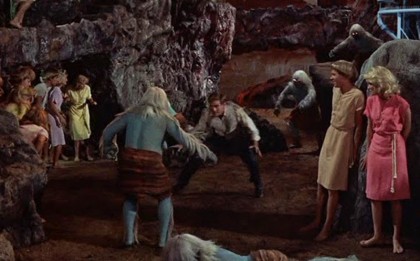
down the hill and through the woods to Grandma’s room we go
I’m belaboring this etymology because I realized how useful this word was for describing what I’ve done for the last two weeks or so. I temporarily resectioned my life. I pruned away all that was not essential. That left being with Kate, understanding her medical condition, showing up for procedures and recovery, sitting with her. It left giving the dogs as normal a life as possible. After all, they don’t understand the situation. It left feeding myself and getting plenty of sleep. It left writing Ancientrails and posting on the Caringbridge website about Kate’s progress. Everything else got pruned away.
No CBE work. No writing. No exercise. Minimal grocery shopping, some work outside. Filling the car with gas, getting the oil changed. Necessary maintenance.
2014, Andover
I chose to prune away parts of my life so I could attend to an unusual occurrence, an anomaly that required most of me. With Kate now in rehab, her bleeding behind her, that severe pruning, like I would do to the raspberry canes at the end of the season, cutting them off to the ground, will fade away. Though. When she comes home, there will still be home care for her, of course. But, the driving and leaving the dogs behind for hours at a time will be over.
Our lives can require these rescections. Sometimes they’re temporary, as this one will have been, sometimes they’re permanent, like Kate’s surgery. If Kate had needed more home-based care, this resectioning might have become more permanent. This can happen in the third phase, when one partner requires a good deal more care.
Tomorrow we peek over the transom toward the fallow season. Six more weeks of harvest, the heart of the harvest season is now, then Samain, summer’s end. Up here the temperature cooled off overnight and we’re at 35 degrees right now, getting close to a first frost. There’s even a small hint of snow for next Wednesday. As I wrote earlier, Pike’s Peak and the much closer Mt. Rosalie had snow last week. Happy with the change.
Deb Brown, my personal trainer at On the Move Fitness, really made me feel good yesterday. “You move better than most of the 30 & 40 year olds I see. And, you’re strong.” She was sincere and I was touched. I told her about the odd finding I got from the 23&me folks; I have the same genetic muscle profile as elite power athletes. “Well, you’re capitalizing on it.” “My wife said, ‘What happened?” “Tell to her to ask you that again when you’re 108!” We laughed. Left me smiling.
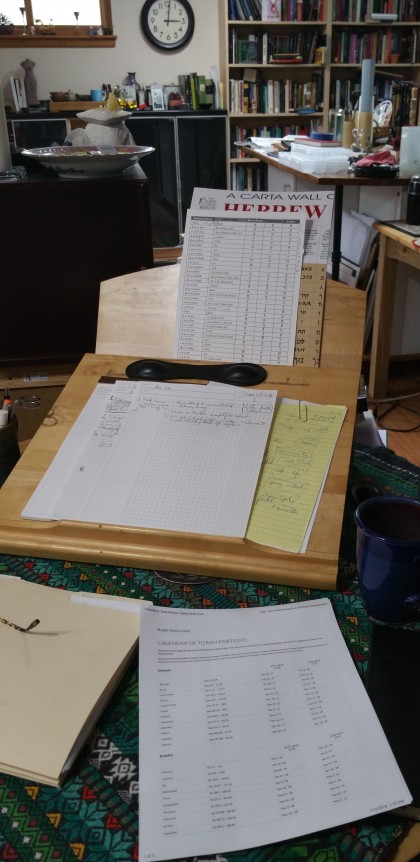
The book of life closed on Wednesday. It was a fast day, unusual in Judaism which finds asceticism puzzling, but on this day, once a year, there is a fast for the whole of Yom Kippur*. That’s from evening to evening. The point is to make us tune into our bodies, to remember that the body carries our soul, and to make the final push for teshuvah, return to the holy soul our body carries.
OK. I’ll admit I surprised myself, right here, with this keyboard. It happens, but not often like this. I wrote “make us tune in to our bodies.” Oh. It may be, as Bill Schmidt suggested obliquely earlier this month, that this Jewish experience runs deeper than I’m admitting.
*“The purpose of fasting is to bring one to repent, and true repentance brings about a change in actions. However, repenting without fasting is not enough,” Jewish educator Aliza Bulow explains on Aish.com.
Although there are medical exceptions to fasting, the Yom Kippur tradition dates back to biblical times, according to Chabad.org. When the Jewish people were wandering in the desert for 40 years after enslavement in Egypt, they worshiped a golden calf — which is contradictory to the religion’s monotheistic tenets — and Moses went to Mt. Sinai to ask for God’s forgiveness. Moses came down from the mountain after God forgave (them) him, and that day became known as Yom Kippur. The tradition of Yom Kippur continued when the Jews reached the land of Israel — Jews gathered in the first two temples until they were destroyed — and persisted again when they were ultimately exiled and dispersed across the globe.” Time
Lughnasa and the Harvest Moon. We are in the season of reaping what has been sown. From the first of August or so until Samain on October 31st gathering in is the main theme on the Great Wheel. The fall equinox, Mabon, is near. September 22nd. It comes with the Harvest Moon, that fluke of planetary dynamics that has lit up farm fields at just the right moment for as long humans have been farming.
No longer a Midwesterner, I don’t see the combines in the long rectangles of wheat, the corn pickers going through the tall stands of sturdy green, the hay balers saving alfalfa and timothy for feed. There are no ads here for hay rides through the apple orchards, no pick your own gardens for late season fruits. That sort of agriculture depends on rain and once past the 100th parallel, oops now the 105th as the arid West creeps eastward across the Great Plains, average rainfall becomes less, often much less than 20 inches a year.
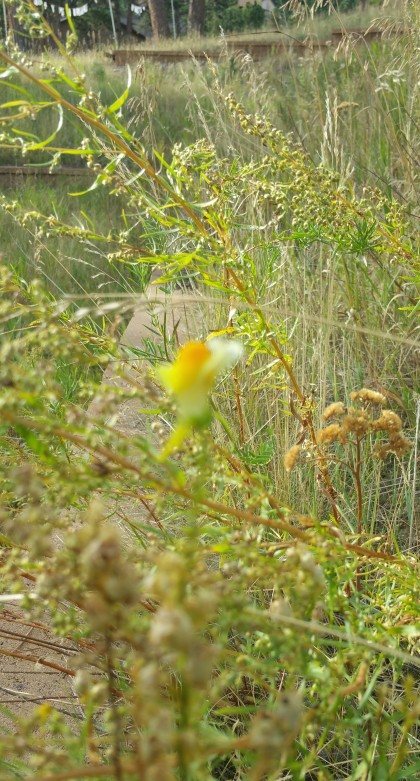
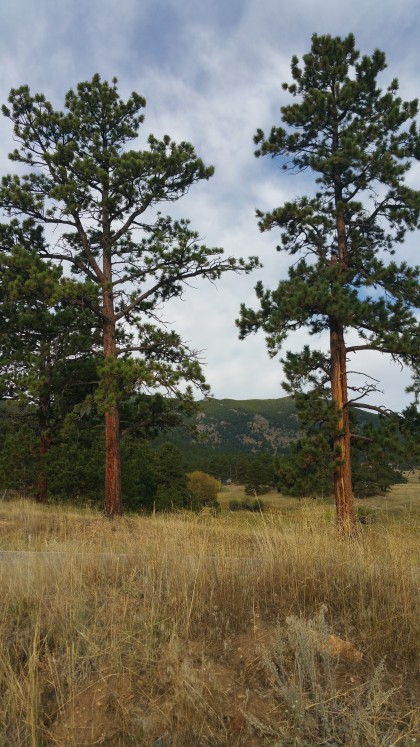
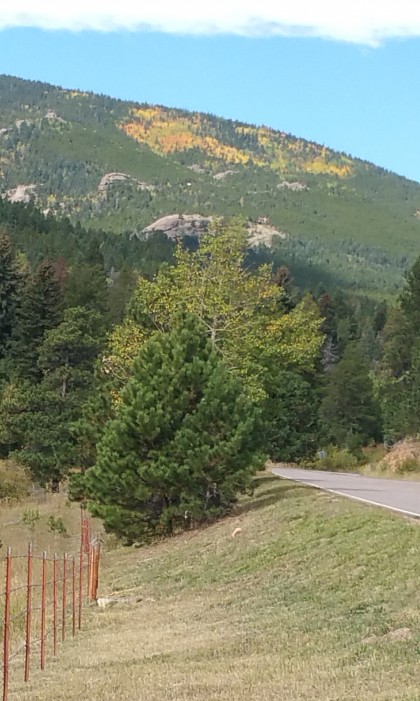
Here fall and Mabon announce themselves in the gold of the aspen, jewel like groves set among larger stands of forever green lodgepole pine. Along the mountain streams Maxwell, Cub, Bear some dogwood flashes bright red. Low lying marshy areas turn a green gold and the cattail spikes stand proudly. Too, the mule deer and elk begin to come down from their summer fields, following food. There will be, in a week or two, the elk rut, with that strangled sound the bull elks make, a bugle. There will also be many more tourists here this week and next. The come for the jewels on the mountain sides, scenes I can see from my study window.
The Great Wheel turns, but its turning is the original local expressing a universal. Here the golden aspen in the Midwest the great harvest machines lumbering through fields. In the Midwest stunning colors here a dichromatic palette. How the harvest season manifests depends on weather and here in the Rockies altitude. Pikes Peak and Mt. Rosalie near Bailey, for instance, have already had their first snow, passing out of the harvest season.
The expression of the season also depends on the plant species that have adapted themselves to a particular locale. One dominant deciduous tree, the aspen, makes our montane ecosystem much different from the remnants of the great woods that dominates the Midwest. Then there are the animals. Pheasants in the Dakotas and Nebraska. Elk and mule deer on the Front Range. Coordinates matter, too. Fall is different here at latitude 39 degrees than in, say, Warroad, Minnesota at 49 degrees. The other marker, the longitude, we’ve already referred to.
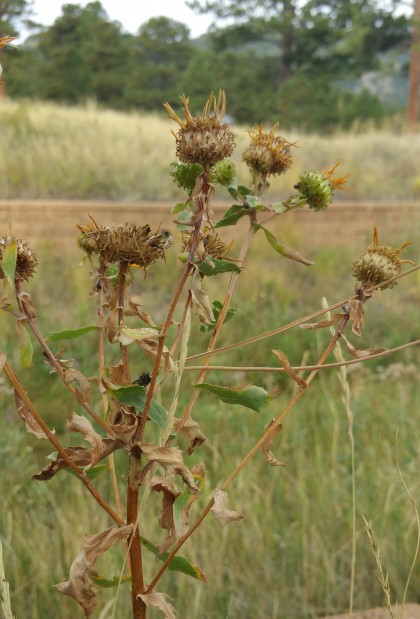
green knight
I celebrate the turning of the wheel, await its changes with anticipation. There is comfort, at least to me, in the regularity and predictability of the seasons. They tell me that time is not linear, that it is instead a spiral, cork-screwing its way through spacetime. They tell me that eternal return is written into the way of the universe, that even our life and its mayfly like time compared to the mountains on which I live, is, too, part of a great coming and going, a leaving and coming home. Somehow, through some mechanism now hidden to me, this life I’ve lived will matter and its significance, like your own, will revisit humanity, tempered and changed by the seasons of the universe. I suppose, in this way, we are all immortal, at least until the cold death of this cosmos. But, perhaps, even in that case, we will live on in one of the infinite multiverses, offering our harvest of human consciousness to feed other souls.
Tomorrow, in our second religious school class, this one unscripted by Moving Traditions, we’re going to do a get to know each other exercise. Your life in 5 objects. Taking my cue from the American History in 101 Objects display at the Smithsonian, I’ll start with my own five objects: a newspaper, a globe, artemis honey and apples, great wheel, family picture.
I’ll ask the kids to bring their objects, 7th graders next class and 6th graders the next. My hope is that as they look back over their life they will begin to reflect on childhood, their childhood and childhood in general. The dominant theme of this year is the huge transition underway for them from childhood to adolescence.
This will also help me get to the know the kids better since they’re all unfamiliar to me beyond names right now. Looking forward to it since the barrier between never having done this and being a rank amateur has been breached. I’m now a novice learning how to help others learn. I can work with that.
Kate and I went in early yesterday morning to help prepare the board’s luncheon for those attending the Rosh Hashanah service. I peeled laser cut lox off salmon fillets while Kate put schmeer on tiny bagels. The lox went on the bagels. Lois and Fran were making egg salad bagels. We set up water, lemonade, coffee stations, put out trays of cookies, dressed round tables with flowers, cutup fruit and vegetables. A platter with sliced apples and honey is traditional for Rosh Hashanah, dipping an apple in honey is symbolic of a wish for a sweet new year.
The service is long, over two and a half hours, so folks are hungry when it’s over. Kate and I got there about 8:50 to help with the prep. That lasted well past the service’s 9:30 start. The prayers and chants, Jamie’s sermon, were all in the background as we worked in the social hall. When we finished, most of us went into the sanctuary. Folks get up and move around, go to the bathrooms, even chat during the service itself. It is, in that sense, more casual than most Sunday morning Christian services.
all dressed up with some place to go
Bill Schmidt said something on our zoom session a couple of Sunday’s ago that keeps coming up. You may be more Jewish than you’re willing to admit, something like that. He could be right. I’m in this sort of hokey-pokey relationship to the tribe, one foot in and one foot out, then I shake it all about. I believe he made this comment when I said something like I’m becoming a Jew by osmosis.
We’ll see. I tell myself that I don’t want to join another religion, I’m happy with the earth/solar-centered focus of my own spirituality. And, I am. Further, I got sucked into Christianity by its unexpected (to me) intellectual depth, the beauty of its history. I can feel the same lure every time I encounter new things about Judaism, which is constant. My mind is so open that I can confuse excitement about learning new things with a personal commitment. The difference here, I suppose, is that I’m staying around, getting more deeply involved, not only because of the odd amalgam of tradition and anti-supernaturalism that is reconstructionist thought, but mostly because of the people.
Not sure where all this ends, but for now, I’m excited about my involvement at Beth Evergreen, happy to have new friends, and committed to this congregation. Beyond that? Not clear. Maybe there is no beyond that.
As the moon’s change, so does the Jewish calendar. We’re now in the month of Tishrei, its first day, Rosh Hashanah, the new year of the world. All over the world, throughout the diaspora and in Israel, Jews will be celebrating the new year, shana tovah. This is short for l’shana tova tikateyvu, “May you be written [in the Book of Life*] for a good year.”
This is not, as may be inferred from the paragraph below, primarily a message of judgment. Rather, it is a call for cheshbon nefesh, an accounting of the soul. That is, instead of judgment, the focus is on introspection about the last year, honestly acknowledging areas of life where we’ve missed the mark and then, developing a plan for a new year that includes both atonement and teshuvah, return to a path of holiness. This is an iterative process, it happens every year because there is no achievement of perfection; but there is, as one writer said, the opportunity in this life to become very good.
The soul curriculum of mussar, Jewish ethics which focus on incremental gains in character virtues, acknowledges both the strengths we have and the areas where we can improve our character. “My practice, for example, for this month, for the middot (character virtue) of curiosity, is to greet judgement with curiosity. That is, each time I feel a judgement about another come up, I’ll add to that feeling a willingness to become curious about what motivated the behavior I’m judging, what might be the broader context? Am I being reactive or am I seeing something that does concern me? Or, both? Does my judgement say more about me than what I’m judging?”
I thought about two boys of a man I know. I pictured them both, slovenly and overweight, and thought, what went wrong with them? I had added to those two judgments an assumption that they were lazy, had not fulfilled whatever potential their father, a successful and kind man, hoped for. Since I don’t know either of them, it’s obvious this reaction said more about me than about them.
Arthur Szyk (1894-1951). The Holiday Series, Rosh Hashanah (1948), New Canaan, CT
However, I woke up to the judgment and used it as a prod for curiosity. What are they really like? Why did I make those assumptions? What about my own fears did this judgment express? That I’m not in good shape, that I don’t always present my best self? That I had not fulfilled my own potential? Ah. Well, there we are. My judgment was not about them at all, but about me. Yes, I’m curious to know more about them, to learn about their lives because they’re the sons of a man I respect; but, that particular curiosity is not the one most useful here. In this case the curiosity needs to be turned back on my own soul.
So, curiosity is on my soul curriculum. When I’m incurious, I tend to be judgmental. When I’m curious, I learn new things, I can adjust my behavior. Also, when we’re incurious, we simply don’t learn. Because there is no need. That reinforces our judgments and makes us slaves to our biases and prejudices. Curiosity can be a sort of soul broom, sweeping away our assumptions to make room for new insights, new relationships.
It is this hopeful, supportive type of cheshbon nefesh that the metaphor of the book of life and the book of death encourages. We can have a sweet new year, one dipped in honey, if we are honest, acknowledge our strengths, and work to add to them.
*The language of our prayers imagines God as judge and king, sitting in the divine court on the divine throne of justice, reviewing our deeds. On a table before God lies a large book with many pages, as many pages as there are people in the world. Each of us has a page dedicated just to us. Written on that page, by our own hand, in our own writing, are all the things we have done during the past year. God considers those things, weighs the good against the bad, and then, as the prayers declare, decides “who shall live and who shall die.”
Quite a combination greeted me in the southeastern sky this morning as I made my way to the loft. The Waning Summer Moon’s waning quarter stood just above a faint, but still clear Orion. My first sighting of him since April. I don’t look for him once I stop seeing him since I imagine he’s in the daytime sky, but apparently he’s visible at some time in all months except May through July, just not when I’m awake and outside.
The two of them together, the Waning Summer Moon and the constellation that is my winter companion appearing the day after Labor Day sends a strong autumnal signal in my world. Flecks of gold will start to appear in the aspen groves on Black Mountain.
The meadow at the base of Shadow Mountain Drive had hay bales in it a couple of days ago, all gone now. The sight brought back memories of alfalfa and timothy fields in Minnesota and Indiana, the smell of haylofts, hay rides. Apple picking.
September 17, 2013
In Andover this was the month of garlic planting, of soil amending in the perennial flower beds and the planting of bulbs, corms, rhizomes. Tulips, daffodils, iris, hyacinth, crocus, anemone. I would turn on Folk Alley radio, get out the kneeler and the Japanese garden knife. Sometimes the Andover High School marching band would be rehearsing a couple of miles away but still audible. Blue skies, the sun’s angle noticeably lower. The golden raspberries were ripe, too, and the dogs, especially Vega, would pick them off the canes that poked through the fence around our vegetable garden.
Later in the month will come Mabon, the second of the harvest festivals and the fall equinox. After that is Michaelmas, September 29th, the feast day of the Archangel Michael which Rudolf Steiner refers to as the springtime of the soul. I can feel the change, the buildup that begins with the victory of light on the Summer Solstice, the gradual lengthening of the night which will culminate in the Winter Solstice, my high holyday.
What gifts did I get yesterday? The first question before I go to sleep. Woke up, emerged from unconsciousness to consciousness. Breathed the whole night long. Kate was next to me, sleeping, my partner. Kepler was, as always, happy to see me wake up. He rolls over so I can scratch his stomach, his tail goes up into happy mode. As the morning service says, the orifices that needed to open, opened, and closed when appropriate. There was water at the tap, always a gift in this arid climate. The meds that my doc has prescribed to help me extend my health span got washed down with some.
Gertie and Rigel were happy to see me, coming up for a nuzzle and a lean. The air was cool and the stars still out. Shadow Mountain stayed stable underneath me. The carrier brought the Denver Post and we read the collective work of its reporters, recorded by the printers on newsprint made most likely in Canada.
the loft
When I went up to the loft, I got on this computer, using electricity supplied by the Inter Mountain Rural Electric Association. As the sun came up, our own solar panels began translating its energy that traveled 93 million miles, generated by the powerful nuclear fusion of our star. My mind is still sharp enough to put words together, thoughts. My hands still nimble enough to pound the keyboard.
All these gifts and we’re only at about 6 am. The list goes on throughout the day. Kate at the table when I go down for breakfast. The workout created by my personal trainer. Time to nap. A mussar class focused on tzedakah and zaka, how can we purify our soul by gifting resources to others. A car that runs on gas brought here by oil tanker, trucks, a gift from the plant and animal life of long ago, crushed into liquid form by the power of geological processes. Back to Beth Evergreen for the second time for the annual meeting.
There the gifts of people, relationships built and nurtured over the last few years, granting both of us the opportunity to be seen, known, and the chance to offer who we are and what we have. Finally, the cycle ends with a return to sleep, to unconsciousness. Hard to avoid gratitude after doing this sort of exercise each night.
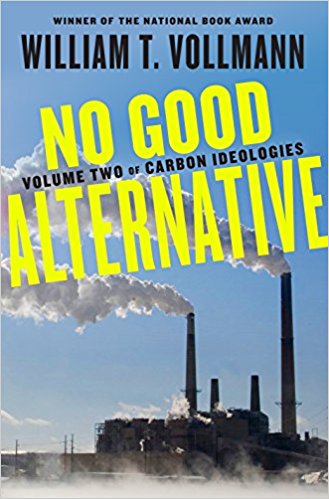 Though I haven’t begun to read them yet, William Vollman’s two volume work: No Immediate Danger and No Good Alternative, the Carbon Ideologies paints a bleak picture. So does the IPCC‘s latest report. I also reported here, quite a while back, about a new movement called dark ecology that, like these three works, takes a dim view of our (that is, the world’s) willingness to execute the necessary carbon emissions restrictions.
 If we cannot slow down the rate of climate change (which is the most we can do, since so much climate change is already baked in), then we move to mitigation and adaptation. Geoengineering will become a buzz word as various strategies are tried. Climate refugees will become more and more disruptive across the world, especially those moving from coastal areas into interiors and onto higher ground. The already underway shifts in plant and animal eco-systems, climate refugees all, will bring them with different disease vectors, disruption to agriculture and sea life.
 We will not be known for Vietnam, civil rights, feminism, ruining health care, electing fascists to high office, but as the generation that allowed an earth compatible with human populations to slip away. Hard as it is to imagine the results of this inaction will be far, far more damaging than all the wars, holocausts and pogroms. How will we explain this to our grandchildren, to Ruth and Gabe in our instance? I understand the political and economic forces that have gotten us here, but explaining them will not alter the misery.


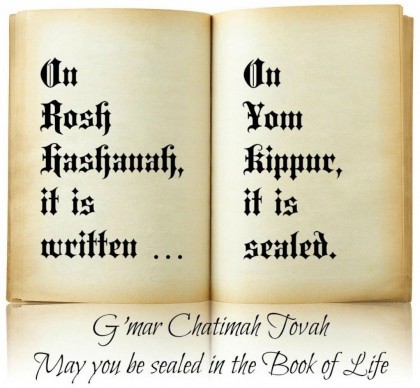 The book of life closed on Wednesday. It was a fast day, unusual in Judaism which finds asceticism puzzling, but on this day, once a year, there is a fast for the whole of Yom Kippur*. That’s from evening to evening. The point is to make us tune into our bodies, to remember that the body carries our soul, and to make the final push for teshuvah, return to the holy soul our body carries.
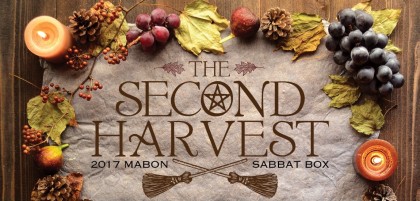 Lughnasa and the Harvest Moon. We are in the season of reaping what has been sown. From the first of August or so until Samain on October 31st gathering in is the main theme on the Great Wheel. The fall equinox, Mabon, is near. September 22nd. It comes with the Harvest Moon, that fluke of planetary dynamics that has lit up farm fields at just the right moment for as long humans have been farming.
 The Great Wheel turns, but its turning is the original local expressing a universal. Here the golden aspen in the Midwest the great harvest machines lumbering through fields. In the Midwest stunning colors here a dichromatic palette. How the harvest season manifests depends on weather and here in the Rockies altitude. Pikes Peak and Mt. Rosalie near Bailey, for instance, have already had their first snow, passing out of the harvest season.
 Tomorrow, in our second religious school class, this one unscripted by Moving Traditions, we’re going to do a get to know each other exercise. Your life in 5 objects. Taking my cue from the American History in 101 Objects display at the Smithsonian, I’ll start with my own five objects: a newspaper, a globe, artemis honey and apples, great wheel, family picture.
 Kate and I went in early yesterday morning to help prepare the board’s luncheon for those attending the Rosh Hashanah service. I peeled laser cut lox off salmon fillets while Kate put schmeer on tiny bagels. The lox went on the bagels. Lois and Fran were making egg salad bagels. We set up water, lemonade, coffee stations, put out trays of cookies, dressed round tables with flowers, cutup fruit and vegetables. A platter with sliced apples and honey is traditional for Rosh Hashanah, dipping an apple in honey is symbolic of a wish for a sweet new year.
 As the moon’s change, so does the Jewish calendar. We’re now in the month of Tishrei, its first day, Rosh Hashanah, the new year of the world. All over the world, throughout the diaspora and in Israel, Jews will be celebrating the new year, shana tovah. This is short for l’shana tova tikateyvu, “May you be written [in the Book of Life*] for a good year.”
 I thought about two boys of a man I know. I pictured them both, slovenly and overweight, and thought, what went wrong with them? I had added to those two judgments an assumption that they were lazy, had not fulfilled whatever potential their father, a successful and kind man, hoped for. Since I don’t know either of them, it’s obvious this reaction said more about me than about them.