Category Archives: Memories

Rambling

Winter                                                       Cold Moon

When I worked for the church, the days between Christmas and New Years were an enforced break. No church wanted Presbytery executives in that time frame, everyone was coming down from the Advent, Christmas Eve, Christmas push. I took to using the time for research, usually on one topic. In those days it was organizational development, urban politics, a political issue coming to prominence, matters related directly, in some way, to my work.

This might be a way to use this enforced down time. Until the knee pain goes away and I’ve returned to a more normal routine, I could use the time to research a given topic. Not sure what yet, but something will occur to me.

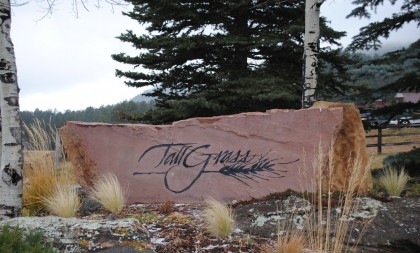
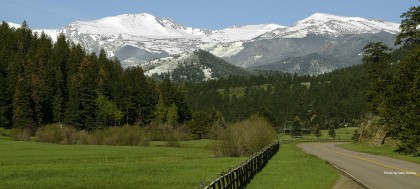
Realized the other day that I’ve gone from an office halfway underground in Andover to a second story loft on a mountain. The Andover house was a walkout. The basement was open to the outside on two sides and built into the earth in front. Here on Shadow Mountain I look out at Black Mountain to the west and can see the sunsets. In Andover I saw sunrises.

Weary of the whole pain, stiffness thing. I know it’s part of the healing process. I know it’s going to recede and eventually vanish. Yet yesterday it got to me. Too damned long with a painful knee, reminded of its presence at every step, every sitting and rising. I couldn’t sleep, couldn’t get comfortable sitting or lying. Next morning now and I got some sleep last night so feeling better.


Roots

frosty-santa-1951Winter                                                                Moon of the Winter Solstice

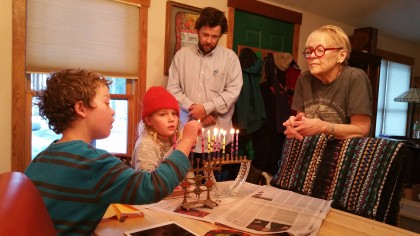
Christmas eve. I could measure my distance from my roots by the casual, almost unaware attitude I have to these two days. When I was a child, I had the same Santa dreams, the sleepless nights, the hopeful journeys downstairs to the Christmas tree that now infect millions of children worldwide. Tonight we celebrate the first night of Hanukkah. It’s not the Jewish ritual that marks the distance but my overall lack of engagement in Christmas music, decorations, gift buying, church going.

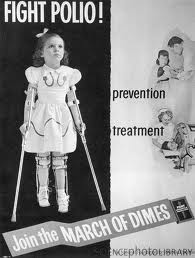
Though there is one way that I am not distant from my roots, not distant at all. It came to me yesterday. I got a heart level glimpse into the mind and will of my two-year old self. It was that two-year old who ignored, because he couldn’t understand, the doctors who said he’d never walk again. Paralyzed on the left side for six months and spending some time in an iron lung, the conclusion was that I’d missed the chance to walk, could not relearn it.

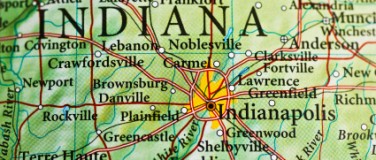
polio-posterMy mother and my Aunt Virginia helped me. At the family farm in Morristown, Indiana I drug myself along the sofa, my head often collapsed on the floor, getting rug burns as I pulled it along with the rest of my body. They helped, but it was only that young boy who could move his legs, drag his body along. He did it. Since then, I have identified walking upright in the world as a major theme of my life.

The connection came during my physical therapy, walking for the therapist so she could check my gate. That little guy, so far away now in time, brings tears to my eyes. I’m grateful to him for the chance I have now at 69 to regain use of my left knee.

Knee, Birthday, 60s, Cold

Samain                                                                       Thanksgiving Moon

A diverse day, yesterday. Down to Orthocolorado for a “class” about my knee surgery. Not bad, not great.

20161103_130418At 12:30 we drove over to Evergreen for mussar at Beth Evergreen. It was Rabbi Jamie’s birthday and each woman brought a cooked or purchased offering of some kind. We had cranberry juice with tea and mint, apple juice, brie and a wonderful soft cheese, warm carrots, pistachios, cashews, strawberries, grapes, melon, crackers, chips, guacamole, a birthday cake, sea-salt caramel and chocolate brownies (Kate, see pic), with Halloween plates and napkins.

Later in the afternoon, around 5, we went down Shadow Mountain and spent an hour or so at Grow Your Own. This is a hydroponics shop, a head shop, a wine shop and a place to hear local musicians. Last night there was a former member of Steppenwolf playing guitar, a singer from a group called the Bucktones and a guy named Stan, who looked like the aging owner of a hardware store, playing bass. Time erodes the vocal chords so the singing was spirited and practiced, but range and timber suffered. Guitar chops however seemed undiminished.

The crowd was Kate and me like, gray hair, wrinkles. That question that comes to me often these days was germane: what did you do in the sixties? I don’t ask, at least not yet, but I do wonder what long-haired, dope-smoking, radical politics lie beneath the walkers and penchant for the music of yester year.

Then home to a boiler that’s out. After just having been serviced. The perfect end to an interesting day.

Racism. Long. Hard.

Fall                                                                               Hunter Moon

540546_405303126228787_1694483271_nRacism. Is complicated. Very complicated. And, yes, I believe all white Americans are part of its grip on our culture. I’m going to try to boil down a very thorny subject into a few words, see if I can convince you that you are part of the problem if you’re white and live in the U.S.

Power. Racism is not about prejudice, it is about power. An analogy is rape. Rape is not about sex, it’s about power. So, just as rape is about power, not sex, racism is about power not race. Race, a spurious concept in the first place, not supported by DNA evidence, is a cultural idea, not a biological one.

At the beginning of our country, as the founders drafted the much admired and revered U.S. Constitution, a beacon of liberty and freedom for all nations, there was conflict between southern slave holding states and northern states. It concerned how to count slaves for the purposes of determining a state’s population. In our system of government the number of representatives a state gets in the House of Representatives follows from the state’s population. More population=more representation.

antislavery_medallion_largeSlaves did not vote, but if counted as full persons for population purposes they would have given slave states and the whites who did vote greater representation in the U.S. House. This would have unbalanced power between the North and the South.

The three-fifth’s compromise was the result, stating, in our founding document, that slaves were only three-fifths a person for census purposes. From the start both North and South willingly manipulated the fate of the enslaved for their own purposes. Not only did the north instigate the three-fifth’s compromise, they did it to retain slavery in the U.S. Slavery was then a powerful economic engine that underwrote a large amount of the total U.S. economy.

This legal idea of a slave as a three-fifths a person contributed to the general devaluation of the enslaved. And who benefitted? Every citizen of the new country who benefitted from the slave economy. Everyone did. Thus whites in the U.S. had from this early date in our history an unearned advantage, an unearned economic advantage over persons of African descent.

build-a-tableThey also had an unearned advantage in their social status as at least higher than that of the slave, the three-fifths of a person enslaved. This unearned social status gave low income whites, often share-croppers, a psychological and social boost which had nothing to do with their personal merit. They were better, at least, than those who toiled without compensation and freedom. That unearned and undeserved lift in personal status persists in the minds and hearts of all white Americans.

The advantage in economic circumstances held by whites in the aggregate over the descendants of the enslaved has its roots in this wholly unequal economic baseline. Our wealth, as whites, depends in part on the advantage we had as a segment of the U.S. population, a segment that received the economic benefit of goods and agricultural products made cheap by the unpaid labor of the enslaved.

chomskyThe civil war, you might say, shows the inherent goodness of the north and the hostile debasement of southerners. You might say that if you don’t factor in the unearned economic and social advantages even northerners gained from the enslaved. You might say that if the wreck of reconstruction hadn’t resulted in Jim Crow laws throughout the south. You might say that if you hadn’t grown up near Elwood, Indiana which had a sign at its city limits, No Niggers In Town After Sundown. This was taken down only after the civil rights act in 1964.

You might say that if the disparity in white/black economic fortunes hadn’t persisted to this very day. You might say that if prisons were not filled disproportionately with persons of color, especially African Americans. You might say that if systematic attempts to prevent African-Americans from voting weren’t front and center in this very election-all those cries against non-existent voter fraud and for voter i.d. laws that would make it difficult for the poor to vote at all.

i-am-not-a-racist-i-am-against-every-form-of-racism-and-seggrationHow have all these terrible realities managed to remain in place? Because those with power rarely give it up willingly. We white Americans, through our avoidance of these issues, have capitulated to the structures already in place. Why? Because those structures: biased employment choices, biased voting requirements, lack of affordable housing, lack of available health care, still unequal education, are on the fringe of our lives, happening to someone else, some other African-American self. And to fix them would cost us in taxes, in our unearned advantage in employment, in our ability to control local and state and national elections.

Are these conscious decisions for most of us? No. But they do not have to be. It is our assumption that the way our culture organizes itself is just and fair that makes us all complicit. This is institutional and institutionalized racism. It is the result of either our conscious decisions or our unconscious capitulation to things as they are. We, we white Americans, are all part of this, and, in this very real and potent sense, racist.

Sexual Aggression.

Fall                                                                                  Hunter Moon

sexual-aggressionSexual aggression and its effects. #PussysGrabBack is a hashtag encouraging women to vote and to vote against the would be pussy grabber in chief. The Access Hollywood video tape with its lewd, rude, casually mentioned and approved sexual assault language has caused an outpouring of actual stories from women in all walks of life and of all ages.

I want to add a male perspective, not because it’s more profound, it isn’t; but, because its relative rarity can underscore the climate of fear this despicable breaching of personal boundaries produces.

When I was young, my parents not only allowed me to travel by myself, but actively encouraged it. I would go down to the Greyhound Bus Stop by Stein’s Tailor Shop, load my suitcase underneath and go up the stairs to my seat. On my lap would be a fruit basket from Cox’s Super Market. Wrapped in a colored cellophane would be apples, bananas, perhaps some grapes, food for the journey.

greyhoundThe Greyhound was not then the dismal transportation method it has become today, but an affordable way of moving long distances. And I traveled long distances, going from Alexandria, Indiana, 60 miles east of Indianapolis, to Oklahoma City, Oklahoma. All of my father’s side of the family lived in or near Oklahoma, so this was a way for me to get to know them. And never, on any of those trips, did anything untoward ever happen to me.

It was different though when I boarded the train headed for Arlington, Texas. This was a really big adventure for me, my first time riding a train. When we reached St. Louis, I had a long layover so I put my bag in a locker (this was before the time of bombs in lockers), took my brownie camera and went out into the humid heat of a Missouri summer afternoon.

brownieA Sunday, downtown was empty of workers and there were no tourists on the streets. I had stopped by a doorway to stand in the shade while I took snapshots of buildings. A man came back, noticed me squatting down changing the film in my camera. He said something, I don’t recall what and I replied because I was a courteous boy from the Midwest. He squatted down, pretending to be interested in my camera.

Then his hand was in my crotch, kneeding my testicles. I stood up, bolted up more like it, said, “You shouldn’t do that,” collected my camera and clutching it to my chest ran back to the train station where I remained until the train came that would carry me onto Texas. He didn’t pursue me, gave me no resistance. But I was shaken in a way that at that age I could barely comprehend. I was maybe 11 or 12.

During college there were various situations in which gay friends came onto me in a sexual manner, but I never considered that assault. It was the exploratory process, learning how to be sexual in a time of drastically altered mores, the late 1960’s and early 1970’s.

Just three weeks ago, in Minnesota, I had a very unsettling experience. I had driven for two days, leaving Conifer on a Wednesday, staying overnight in Lincoln, Nebraska, then on the road Thursday. It was about 4 pm and I was tired, my leg hurt and I was looking forward to getting to my hotel.

ford-truckWhen I reached the intersection of Broadway and Central in Northeast Minneapolis, I noticed a Ford pickup, black with large tires that made it ride high. The driver gunned the engine, came up suddenly on cars in the lane beside me. Jerk, I thought. Then, he did it again. Very aggressive driving.

The second time he did this brought him parallel to me. I looked up, wondering what the guy (I assumed it was a guy.) looked like. He turned his head toward me. Cupping his right hand, he moved it back and forth in front of his mouth while pressing his tongue against the side of his cheek. A rude gesture, especially in a very casual, momentary encounter. He nodded at me, took his right hand and gestured again, this time to himself, then to me and indicated that I should follow him. He was much bigger than I was and had a rough looking face.

I turned my head away, looked forward and turned left away from him. He was in a lane that had to go straight. The encounter ended. It was brief and reasonably safe. I was in my own car and would have had no difficulty losing him even if he had decided to pursue me. But it didn’t feel safe, not at all. It shook me. I felt frightened and, yes, violated.

Neither of these two instances, and they were 50+ years apart, resulted in any physical damage. Both of them resolved quickly. Yet, they both left me repulsed and feeling vulnerable. They both made me rethink my normal assessment of the world as a safe place to be.

I can only imagine how I would view the world if I experienced these encounters regularly, as seems to happen to women. (I say seems because I’m not a woman.) I would feel that my world required constant diligence, constant attention to dangerous surroundings. My sense of safety in the world would probably be compromised beyond repair. And this is in the usual, the day to day.

It does not include a time when a candidate for the Presidency openly brags about such aggression, about the privilege that celebrity brings, about being able to do whatever he wants. This is a validation of sexual aggression, a lived experience for many, many of us, most women, a granting of legitimacy to these acts from a person vying to become the nation’s leading political authority figure.

Adding this abomination to the gradual accretion of insults caused by cat calls, by presumptive hands or body checking, by date rape and rape culture, makes our common space seem fraught with peril, even on a normal day. This is not acceptable. Fear is not the norm we want for our daughters, granddaughters, wives and mothers, sisters.

It’s a problem only solvable by alliances between men and women. Let’s strengthen them over the coming weeks and months.

Do You Know Any Stars?

Fall                                                                             Hunter Moon

orion_head_to_toe-www-deepskycolors-comLooked at Orion on the way up here this morning. He warms my heart like a familiar friend, a friend who comes for the season. I have greeted his return each autumn for 48 years. We first became acquainted during the 11-7 shift at Magnetic Cookware in Muncie, Indiana. I worked there as a security guard. When I see him in the southern sky, I smile.

Hokusai, the great Japanese ukiyo-e printmaker, followed the Northstar sect of Buddhism. In one sense we obviously project our sensibilities on these celestial objects. That’s clear when we look at the different names various cultures have given to the same identifiable stars or constellations.

In another sense, and more important to me, we see the Drinking Gourd, or the Big Dipper, or the Great Bear, or Orion as distant reminders of the changing seasons here on earth and we use them as sailors and caravans in the Rub al Khali, as farmers and hunters have used them, as guides. They are not, therefore, far away from us in the collaborative sense. The vast distances that separate us from these solar engines are irrelevant to their purpose as way finders and markers of seasonal transitions.

northstarNo wonder, in a world lit only by fire, that the stars were the work of gods. We might think we know them better now, now that we can identify their chemistry, understand their age and locate them in a 3-D universe, but that’s only a material, physical way of knowing. Important in its way, yes. Perhaps even key to the future of human existence. Still, very different from that night beacon lighting the way to freedom for escaping slaves. And, very different from Orion as my friend and companion for 48 autumns and winters.

In these latter uses the stars are important parts of our life right here on this planet, giving us direction and even emotional sustenance, clueing us to the coming of spring or the dog days of summer or the fall harvest.

As the squat Welshman asked me at St. Winifred’s Holy Well in Holywell, “Do you know any stars?”

photo credit: Orion Head to Toe, by Rogelio Bernal Andreo, creative commons license at Orion

Soul Renewal

Fall                                                                            New (Hunter) Moon

medieval-hades-and-persephone

Last night was a black moon, defined as the second new moon in a month. This is relatively rare, the last one occurring on March 30, 2014 and the next one on August 30, 2019. (earthsky news) This black moon precedes the rising, tomorrow night, of a sickle moon that will mark the start of the Jewish New Year on Rosh Hashanah. It’s also the beginning of the Muslim New Year.

Autumn is upon us now. Cooler nights. The possibility of snow next week. The Chinese, again according to earthsky news, say weeping is the sound of autumn, a part of its essential sadness. Not something to be avoided, but embraced, a regular part of the Great Wheel as it turns and turns again. My own response to this season used to be so pronounced that Kate and I had a phrase for her to say, “You seem to be slipping into melancholy.” That way I would know that my inner atmosphere had begun to mirror the outer, gray clouds and a wet chill had crept into my bones.

michaelmas_175This conforms to Michaelmas as the springtime of the soul. Sadness is a way we consolidate past experiences and sort them out, learning from them and choosing which aspects of the past to embrace and which to let go. When our tears are over, we are cleansed and renewed, ready for the next phase of life. Autumn gives us an annual opportunity for self-renewal. This Great Wheel, natural cycle phenomena matches up exactly with Rosh Hashanah and its climax, Yom Kippur.

This is the time of soul renewal. And I’m ready for it. Bring on the gray skies, the inner turn. My favorite time of the year.

Springtime of the Soul (& the Equinox)

Fall                                                                                       Harvest Moon

“Just as we can experience the Death and Resurrection of the God in the Easter season in spring, so can we experience in the autumn the death and resurrection of the human soul, i.e. we experience resurrection during our life on earth…”  Festivals and Their Meaning, Rudolf Steiner

The Archangel Michael (left), Gabriel (right) and Raphael accompany Tobias. Francesco Botticini, 1470; Galleria degli Uffizi, Florence. Source: Joachim Schäfer
The Archangel Michael (left), Gabriel (right) and Raphael accompany Tobias.
Francesco Botticini, 1470; Galleria degli Uffizi, Florence.

Today is Michaelmas, the feastday of Michael the Archangel. British universities start their terms today, the Michaelmas term. Following Steiner, I have, for some years, seen Michaelmas as the beginning of a long period for soul cultivation. It is not, I think, an accident that the Jewish New Year, Rosh Hashanah, falls in the same period.

These are, too, harvest festivals, falling near the autumnal equinox. It makes sense to me to begin the New Year as the growing season ends.  Samain, Summer’s End, in the Celtic calendar, marks the finish of the harvest festivals and the beginning of the fallow time. It is also the Celtic New Year.

Last night at Congregation Beth Evergreen I waited for Kate while she took Hebrew. Where I chose to sit filled up with religious school kids, bouncing with tweeny energy. Rabbi Jamie Arnold came down to talk to them about the shofar and the upcoming New Year. He talked about Rosh Hashanah and described it as a moment when the creation can begin anew. It is possible, he said, for each of us to start life anew on Rosh Hashanah. I like this idea and the question it poses: Who do you want to be in the New Year?

Marc Chagall, Shofar

I’m going to consider this question over the next few days before Kate, Jon and I attend the Rosh Hashanah service on October 2nd at Beth Evergreen.

Another way to pose this question is, how do I want to nourish my soul in this, its springtime? What practices can I use? Kate and I have begun to seriously wrestle with the Jewish spiritual practice of Mussar, as I’ve mentioned here before. It will be one lens through which I approach the possibility of a new being, a new me.

Yet. That new me will have a strong relation to the man who harvested years of friendships over the last week in Minnesota. He will have a strong relation to the man who hears, Grandpop!, from Ruth and Gabe. He will have a strong relation to the man who loves Lynne Olson, and Kate, too. He will have a strong relation to the man who is several dogs’ companion. He will have a strong relationship to the man who writes novels. He may be a new man, yet still the old one, too.

A Fellow Wanderer

Lugnasa                                                                              Harvest Moon

Caspar David Friedrich Wanderer Above the Sea of Fog (1818)
Caspar David Friedrich
Wanderer Above the Sea of Fog (1818)

Fellow traveler. Back when America was great, like the 1950’s or sometime, fellow traveler was an epithet that indicated a person with sympathies for the communists. To be a fellow traveler meant shared understandings if not complete agreement.  The aim of communism, an egalitarian society with the basic needs of all met, is still my dream. But, how to achieve it is as muddy to me now as it has been all my political life. True: I voted for Gus Hall for President in several elections.

There is, though, another sense to this term. A fellow traveler can also be one who is with, but not of, a particular group or thought-world. It occurred to me this morning that being a fellow traveler is an important part of my life.

This may be a deep flaw, but it is and has been an ancientrail on which I have walked often in my life. Let me explain. The most salient example right now is my involvement with Congregation Beth Evergreen, or CBE as they often shorten it. Being a fellow traveler with Jews and Judaism has been a consistent thread in my life since early college. That is, I admire Judaism as a culture and have found many friends among observant and non-observant Jews-not to mention a wife. Jews tend to approach the world as curious, skeptical, engaged people, people embedded in history and tradition. That worldview has appealed to me since my first anthropology assignment took to me a synagogue in Muncie, Indiana.

Maurice Denis Jacob Wrestling with the Angel
Maurice Denis
Jacob Wrestling with the Angel

Kate’s a converted Jew and feels herself part of this ancient tribe. I do not. But Judaism continues to speak to me in its ethics, its ability to withstand constant suffering and abuse, its tribalism and in its ritual and spiritual practices. I am gradually becoming in, but not of, Beth Evergreen.

Even in seminary, I felt more like a fellow traveler with Christianity. Though I did immerse myself in the Christian tradition and its beliefs, its intellectual and cultural practices, its political message was more important to me than its metaphysics. Let justice roll down like an everflowing stream. Do unto others as you would have them do unto you. Suffer the children to come unto me. What you do to the least of these, you do to me.

I tried to merge my political passion with a religious sensibility, but in the end it became clear that I had got the stick wrong end round. Political purpose preceded religious conviction. Within any religious way that’s backwards. As a result, over time I became more of a fellow traveler with my colleagues and friends in the Presbyterian Church than a true believer. Throughout my ministry after ordination in 1976 I felt in, but not of, the church. Eventually, the tension between my purpose and the church’s purpose became too strained and the link between the two broke.

build a tablePolitically I feel and have felt in, but not of, mainstream American politics. That is, political action has been another key ancientrail in my life, but I’ve had to engage it from a stance left of even the further edges of liberalism.

There are other examples, but you see the point. It is my habit to be with groups, but not of them. This is the deep flaw I referred to above. That same curious, skeptical, engaged, embedded in history (but not tradition) fellow feeling I have with Judaism keeps me just to the side of certainty, a seeker with little probability of arriving at his goal. By this point in my life I find this outsider role familiar and, for the most part, comfortable. But I wonder what it would be like to enter the world of the convinced, the believer? Am I missing out on an important element of life? I don’t know.


When the Frost Is On the Pumpkins and the Fodder’s in the Shock

Lugnasa                                                                   Harvest Moon

mother11Palisade, Colorado has had a bumper peach harvest. There is a small area on the Western Slope that has an ideal peach growing microclimate. They have other crops, too: lavender, apples, sweet corn, strawberries and vegetables. The newspapers have carried photo spreads of workers in the orchards with peach baskets gently picking and placing the delicate fruit into baskets. Back in Andover, this time of year, the honey harvest would be in, the raspberries just beginning. I would be out planting garlic and pulling the last plantings of carrots, beets, leeks and onions. This is the peak harvest season, when the land and its workers combine to feed millions, even billions of people.

Sitting up here on Shadow Mountain, with a heavy mist slowly creeping down the face of Black Mountain, the harvest season has little sway. A few folks have gardens, true, but there is no large commercial agriculture. The cattle company that raises grass fed beef, for example, has five cows, four angus and one hereford, grazing in a mountain meadow about half way down Shadow Mountain.

2010 10 04_0347Being so far removed from farms and large truck gardens feels strange to this former Midwestern lifer. No more so than in this long harvest season. Corn pickers and combines have begun to roll through fields. The state fairs have swept up 4-H’er raised cattle, pigs, sheep, chickens. The vegetable harvest has peaked. Self pick apple orchards have hayrides and cider stations set out. Not there, though.

In the mountains this season sees the first glints of gold across the evergreen forests of lodgepole pine. The aspen begin to turn. The nights cool down. Canadian blue skies dominate our days.

20151104_101553Labor Day does mark the winding down of one season long harvest up here: tourist dollars from Denver folks. July and August are the heaviest tourist months for our favorite mountain town, Evergreen. We’re not a winter tourist destination, at least not like the ski resorts, so the roads will have less traffic and fewer visitors in Evergreen’s restaurants.

Soon it will be time to start splitting the logs I cut last fall in the first round of fire mitigation. Takes about a year for pine to season. The remaining logs in the back will be seasoned next spring. Log splitting is a seasonal activity both here and in the Midwest. Looking forward to it.