Category Archives: Memories

Mom

Beltane                              Waning Flower Moon

Already down to 33.  Bound to head lower.  Glad I covered all the tender plants.

Mother’s day has little resonance for me.  Mom has been dead now for almost 46 years, meaning she’s been dead as long as she was alive.  I passed her 17 years ago.  It feels strange to have lived into areas of life which my mother never experienced:  near retirement age, grandkids, dealing with the inevitable losses of friends and loved ones other than your parents.

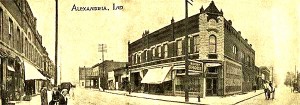
It’s not that I didn’t love my mom.  I did.  It’s just that home faded away for me the year after she died.  I went off to college, then got involved in the political radicalism of the 1960’s and became estranged from Dad.  In essence that meant I became estranged from Alexandria, Indiana, too.  I grew up there from age 1 and a half on, experiencing those magical years of pre-teen life when the world has not much larger compass than your street, your friends, your parents, but after age 18 I returned only very occasionally, for ten years, not at all.

Of course, Mom was important in my life.  She loved me and believed in me.  She and my aunt Virginia nursed me back to health after a serious bout with polio.

What we remember and what actually influenced us, of course, are not always (ever?) true to the lived experience, but they are true for our psychic life and I have a particular memory of Mom that was formative.  One year a garden spider built a web over the window in our kitchen, the window next to the kitchen table where we ate breakfast.  All spring and summer Mom and I watched that spider, watched her repair the web, spin up her prey, eat them.  What I recall most from that was the sense of wonder, of awe that came off Mom in gentle waves.  She also took insects outside in a kleenex and let them go.  I do, too.

I also remember times when she took to me an ice-cream parlor when I got straight A’s on my report card, which was all the time so I got a lot of ice cream, but more than that, I had the attention and time with Mom.  I was close to her side of the family, the Keatons, growing up and have continued my close connection with them over the years.  In part it was my way of staying connected to Mom, to her values and to the people and places that shaped her.

But Mother’s Day?  Nope.  Doesn’t work for me.  Too much Hallmark, too little real sentiment.

Leeks, Shame and Ancestry

Spring                                                           Waxing Flower Moon

The new dog food must be a mistake.  The whippets did not eat at all this morning, the big dogs ate little.  Hilo (our smallest whippet) is in her crate with what I take to be a belly ache since she doesn’t look seriously ill.  How do I know?  Well, I don’t really, but I’ve seen multiple dogs in extremis over the years and she just doesn’t look like one.  I diagnose it to be a tummy revolt against the salmon and sweet potato I found so alluring.  I bought six bags at 35 pounds a bag.

As any good chef, if the public refuses to eat the food I’ve chosen, I have to have a different menu selection.  In this case it will be food they’ve always liked.  Off to Costco.  Oh, and I can get that salt for the water softener, too.

Leeks, basil, thyme, fennel, marigolds, lettuce and oregano starts sit in the front yard right now, still in the cardbox carriers Mother Earth Gardens gave me for them.  Later today, in the mid-afternoon, when it warms up into the high 50’s, I’ll continue planting this year’s garden.

The leeks especially excite me because I want to learn how to grow this delectable vegetable.  It is, after all, the crown vegetable of Wales.  By that I mean Welsh soldiers would often wear a leek stuck in their hats.  No, I don’t know why, but the leek and Wales have a long standing relationship.  The ancestry I can trace most clearly is Welsh; I can put us in 17th century Denbigh, so I gotta learn how to grow leeks.  Besides, I really like them.  Their delicate onion like flavor is great in soups and wonderful as an addition to vegetable dishes, too.

Welsh Leek on Reverse of 2008 Proof Gold One Pound Coin
Also Used in 1985 & 1990

The time while Kate’s been gone has been busy even adventure packed, though all the adventures were domestic in nature:  hiving bees, doing the complete reversal on the over-wintered colony, buying vegetables and herbs, dogs and their diet and today–the garden.

Forgot to mention something that warmed my heart yesterday.  I called Kate yesterday and she put Ruth (granddaughter) on the phone.  Ruth told me she was about to go gymnastics and a few other things even Grandpop’s good ear couldn’t grasp through cell phone reception and voice quality.  When she gave the phone back to Kate unexpectedly, I told Kate to tell Ruth I loved her.  Kate told her.  Over the phone came a loud and confident, “I know.”  Gossh.

Also, while on the drive out to Nature’s Nectar yesterday I began to analyze my feelings when I get under pressure.  I had a bit of those feelings then and noticed a faint, dull ache in my lower left abdomen.  To make it feel better I could tell my body wanted to lean forward and down, then to bow my head.  Oh.  Shame.  Explained a lot.  Somehow either pressure triggered shame or shame triggered pressure, perhaps both.  So, when did I remember shame and pressure together?

When I was maybe 12 or 13, the Ellis family had moved from rental quarters on East Monroe Street into our first home purchased with a mortgage, and our last for that matter.  This house, 419 N. Canal, has that magical valence that home has.  It also had a basement that flooded during heavy rains.

Dad was not a handy man, if anything, he was the anti-handy man.  When the basement flooded, his solution was to bail it out with buckets.  Yeah, I know, but I’m sure it was the best he could think of at the time or else he considered other solutions too expensive.  I don’t know, but I do know I had to join him often at night  in the damp to carry buckets of water up from the basement to dump outside.  I didn’t like it, hated it in fact.

I couldn’t get away from it though and I remember having more than one fight with him over doing it.  That’s the memory I have, the one that came up when I thought about pressure and shame.  It was the perfect metaphor, too.  Bailing out a flooded basement is what my defensiveness and short-temper try to do when I sense myself backed into a corner.  Too much in the id, the just below the mainfloor area in my psyche, needs to get taken out somehow, but I still don’t like the work.

One solution to this, if I can remember it when pressure hits again, is to stand up.  I’m an adult now, not a 12 year old and I can make my own choices about bailing the basement.  I can choose another option, like, buy a sump pump, put in a drain field, landscape the area around the house so that it slopes away from the foundation.  Lots of options. I don’t have to bend over, bow down and be conflicted.

Just to be clear.  This is not Dad’s fault. It was the way I responded to what he thought was the best way to handle a difficult situation.  One that probably caused him pain and shame, too.

The Moratorium Years

Spring                                   Waxing Flower Moon

As the moon makes its circuit from its crescent form in the west to its fullness in the east, it passes over the skylight in our living room, at about half full.  It was there tonight, shining and visible to me as I sat in my chair.

To get my sunglasses back I had to park in University parking, then wend my way through skyways and the labyrinth that is the University of Minnesota’s medical complex.  In several buildings there is the school of dentistry, the medical school, a hospital, a heart hospital and a children’s hospital plus numerous organizations that have some relationship to the world of medicine.

There were kids with backpacks leaning against stoplights, chatting in small groups, a girl sitting cross-legged on a high wall reading a novel, signs:  Are you bipolar?  Pediatric Grand Rounds.  University Brain Tumor Center.  What a time, those university years.  Hormones on high, ambition oozing, a heady mix of freedom and new ideas all combine to create the combustible reality that is and has been college for several decades, perhaps even centuries.

A grand time and one I wouldn’t revisit.  Getting older has much to commend it and among its sweeter pleasures is a certain calmness, a centeredness impossible, at least for me, to obtain when I was in college.

Kate came back from work tonight with sad news.  Her colleague Dick Mestrich, who has been battling multiple myeloma for 2 years plus, has begun to die.  He’s Kate’s age and had just begun retirement when he got sick.

Friends

Spring                                                  Waxing Flower Moon

The Woollies met last night at Stratford Wood where Bill and Regina live.  The topic of the evening was friendship, requiring time one said, trust another, play yet another.  We evoked our history as a group of men who have given each other time, trust and vulnerability.  We talked about the vessel, the container we have created, a place of safety and love.  We wondered about men and the trajectory of men’s lives that leads away from the easy friendships of youth and into the barren land of male competition and ambition.

One of us spoke of his wonderful physical.  His doctor commended him on lowering his blood pressure through diet alone.  All looked well.  Until the phone call.  Which said his hemoglobin numbers were well below normal.  Since then he’s been endoscoped, colonoscoped and even put on film by a small bowel camera.  No joy.  No explanation.  Only shortness of breath going upstairs and fatigue.  He sees a hematologist this week.  Kate thinks the hematologist will probably take a bone marrow biopsy.

My swollen hand and bruised middle finger got some attention.  We discussed, again, the bees.  Charlie said I should get an epi pin right away.  Kate, who sees a lot of bee stings in urgent care, has a more moderate evaluation.  A localized reaction to multiple stings.  I think she’s right.

Cybermage Bill Schmidt’s brother in Iowa still lives, though in hospice care.  Another brother, Bob, had a near deal with sepsis.  Life is fragile and wonderful, treat with gladness.

Scribo, ergo sum.

Spring                                           Awakening Moon

An outside day today.  Planting onions, garden planning and repair.  I’m itchy to get back to learning more Latin and translating the Metamorphoses, but the rhythm of nature waits for no one.

Writing is always an exercise in self-disclosure, no matter what kind of writing you do.  The subjects you pick, the ones you don’t, the style you use, the one you avoid, the words you choose, the ones you don’t know all reveal inner workings most folks prefer to keep to themselves.  Even with my modest public writing–this blog, sermons, the Sierra Club Blog last year for example, I’ve gotten the occasional emotional jolt that comes when the inside becomes the outside.

If you click on the comments about John Lampl, you’ll see an example of what I mean.  This comment came right out of left field, a comment about a post I’d written a year and a half ago about events in my life that happened, let’s see now, 36 years ago.  36 years.  What’s amazing about that is the rocket ride back to feelings of the past, that particular past, I went on when I read the post.

To gauge the difficulties of those years is like comparing a Caterpillar 73f to a Tonka Truck.  Today is a Tonka Truck life in terms of angst.  Those days I bled angst from every pore.  I married a wonderful young woman, Judy Merritt, at the height of the sixties, 1969.  We got married on an Indian mound in Anderson, Indiana, received two pounds of marijuana as a wedding present and recessed to I’m So Glad by the Cream.  Butterflies landed on my shoulder.  Really.  Five years later my alcoholism had grown worse–ironically during my time in seminary–and I pushed Judy away.  No wonder Johnnie was there to catch her.

There is, too, an inescapable amount of self-absorption in writing.  I’ve kept journals for years, I have three bookshelves lined with them.  The last five years I’ve kept much of my journal-type writing on line in this blog and its Frontpage predecessor.

This post made me wonder why I do this.  Not from an, oh my god why did I ever do this perspective, but from a Why do I do this point of view.   The easiest and probably the truest explanation is that it is just what I do.  I write.  I write about politics, about fantasy worlds I create, about my life, about thinking through the liberal faith tradition, about art.  My dad wrote.  I write.

Scribo, ergo sum.

Poison Fruit

Spring                                        Waxing Awakening Moon

Spring has sprung, then it sprang back.  23 today.  Not prime gardening weather yet.

The conservative embrace of right wing populists has begun to bear poisoned fruit again.  They referred to Obama and African-American congressmen as niggers, Barney Frank as a faggot and phoned in death threat to several members of the House who switched their votes on health care reform.  The great irony of the moral majority, Christian right, tea-party tea bags is that by all normal political calculation they should vote Democrat.  They are, in the large part, blue collar folks, some living on minimum wage, many no doubt eligible for the health insurance provisions just passed by Congress, but conservative strategists have intentionally chosen to underwrite their social prejudices against people of color, homosexuals and folks with a college education in order to collect them into the party’s ranks.

This is not a deal with the devil; it is the devil making a deal.

I know these folks because I grew up with them in Indiana.  They first came to national notice in Indiana when 30% of the Hoosier electorate voted for George Wallace for President.  They were first and second generation folks from Appalachia, Mississippi, Arkansas, Alabama and Tennessee and worked in the automobile and other heavy manufacturing centers in the Illinois, Indiana, Michigan and Ohio area, the area long since identified as the rust belt.  Union workers in the 1950’s and 1960’s, these constituencies voted a straight Democratic party ticket in line with their economic self-interest.

After LBJ and the passage of the Civil Rights Act, George Wallace made an independent run for the Presidency aiming himself squarely at southern Democrats, the diaspora of southerners working in the north and those other bigots nationally willing to sign up.  This came to the attention of Kevin Phillips, then a strategist for Richard Nixon.  He conceived of the moral majority, corralling the Wallace voters and conservative Christians, sometimes the same group into a winning base for conservative Republican politics.  This was the time of Jerry Falwell and Pat Robinson.

Right wing populism has a long and unsavory history in the US.  The KKK, anti-semite, homophobes, anti-Darwinists and love it or leave it patriots are just a few examples.  The Southern Poverty Law Center has made a career for Morris Dees and his compatriots filing suit against various organizational expressions of these folks.  When economic insecurity marries the all-too human propensity for discrimination, a violent firestorm will result.  It is no different now than it was in the post-Reconstruction days, the days during the Great Depression or the years after passage of the Civil Rights act.

True conservatives should be ashamed.

The Colosseum of the Soul

Imbolc                                                Waning Wild Moon

Fake Nostalgia for a Pre-Therapy Age Past

“I can tell you one thing,” he announced, as I recall. “Back in my day, you didn’t have young kids going around talking to shrinks, yakking about their fee-ee-ee-lings, getting all doped up on medications.”

This article in the March 8th NYT made me think, or better, recall.

In early October of 1964 my family was intact:  Mom, Dad, Mary, Mark and me.  We had extended family on both sides that we saw regularly, Mom’s more so because she was Indiana born and Dad’s less so because of his Oklahoma origins.  After my bout with polio when I was a year and a half, our lives had settled into a usual routine of those years, the late 50’s and early 60’s.

Mom stayed home, doing volunteer work for the church and being available to us, the kids.  She did occasional substitute teaching, but it was rare.  Mary and I moved our way through our small town school system where we were known and knew everyone else at least by sight. Mark was still at home.   Summers were long idylls of bike riding, game playing and lazy reading.  Dad worked at the newspaper, coming home with ad layouts from time to time, marking them up with a ruler and a thick pencil.

Of course our lives had the usual family dramas, the deaths of grandparents, an aunt’s long term confinement in a mental health facility, but for the most part things were calm, normal.

In late October of 1964 my 46 year old mother was dead and our lives would never again be normal.  Grief has its own rules, its own storm sewers of emotion and they track in and out, colliding with the needs and fears of others.  Our small family suffered and suffered a lot, both from the grief, the natural grief that follows an untimely death of a parent, Mom, and the sudden compression of the family into a new, undefined life, a life defined by loss and uncertainty.

Life happens as it does and we relate to the changes as best we can.  That was true then, true long ago in the past and will be true in the future.  I have wondered though what our lives, our mutual lives, the lives of the survivors in our family might have been like if we had access to even the most basic of therapeutic assistance.  If we could have, if I could have, for I can’t speak for Mary, Mark and Dad, grieved Mom’s loss and then moved on with my life, rather than heading toward a ten to fifteen year period where emotional ups and downs, too much drinking, too much smoking, too little in the way of sound relationships eventually forced me to do what I was unable to do in those horrible months following her death.

This is not a regret, for it is not what happened, rather it is a what if.  It is a what if informed now by many, many years of therapy, therapy that helped me see myself as I really am, accept myself and my feet of clay, feet not so different from everyone else’s. Analysis, Jungian analysis, that in the end gave me a place to stand that was my own, not a place over against the grief and the abandonment of those years.  Analysis that afforded me a chance to live into my own Self, live my own life and find, now, in my 60’s, a way of life that has a measure of peace and more than a measure of contentment and happiness.

I agree with the author of the article referenced in the beginning.  It was not a better time, those pre-therapy years.

Remembering Dad

Imbolc                           Waxing Wild Moon

The year moves forward, sun higher in the sky, temperatures inching upward, some snow melting, though  piles of slowly melting hard pack, driven to curbs and driveway ends, darkens and begrimes the landscape.  A bright February sun catches a light snowfall, refracts it in mid-air, giving the day a sparkle, as if a glitter queen shook her hair in the heavens.

The winter olympics continues, too, with this sport and that.  I liked ski cross.  It looked fun.

Today is the anniversary of my father’s death in 2003.  The dead, to paraphrase somebody, are not in the past;  they’re not even dead.  No, nothing metaphysical here, I’m referring to the fact that those important to us take up lodging in our memories, in our inflections and in our perspectives.  We sometimes see the world literally through their eyes, hear things with their ears, interpret something with their sensibilities.  This happens during their lives, of course, but it also continues on past their temporal death.

(The Woolworth Building.  It opened twelve days after dad’s birth.  It was the tallest building in the world until 1930.)

If I see a  person with too much flab (me, these days, for instance), I can hear Dad say, “He likes his groceries.”  In quick train there is, too, his advise about weight loss, “Push-ups.  Push ups away from the table.”  I can feel his scowl when pictures from the sixties appear in the newspaper or on tv.  He didn’t think much of the politics or the movement persons of those days.  Unfortunately for our relationship, I was one.

When I sit down to write, especially here, I feel the ghost of my father, Curtis, hovering over my shoulder.  He is a benign angel in this case.  I fancy my writing style here takes a certain amount of its defnition from his frequent  column, “Small Town, USA.”  When I’m in the other room, working on the novel, I’m reminded of his ambition to charter a boat, sail the coast of Mexico, then write a book about the trip.  He never made it, WW II got in the way.  He never wrote a book either.

So, according to one school of Jungian thought, I write books to fulfill my father’s dream.

He was a man of his times, liberal in his  social politics, virulently anti-communist and suspicious of both patriotic zealots like the John Birch Society and the anti-patriots like myself of the 60’s and 70’s.  His father abandoned his family, Dad never did.  He was there, day in day out.

So, his body no longer walks the earth, but his mind, his dreams, his biases and his humor still does.

Memories

Imbolc                              Waning Cold Moon

Night again.  Lying on my desk here are some items sent to me by my cousin Kristen.  She’s a devoted genealogist and packrat.  Right now she’s redistributing some of the things gathered from various sources over the years.

This packet from her includes an obituary in a Shelby County newspaper for my mom:  Mrs. Ellis, 46, Dies in Hospital.  A small card with a stained glass window covered with white lilies has moms name inside, Gertrude  E. (Trudy) Ellis.  It also contains the name of Karl M. Kyle funeral home, which sat catty-cornered from our house on Canal Street.  Ed Grant did the service, the same Ed Grant who had the early morning study sessions on the Screwtape letters that seemed so adult and intellectual to me.  This was all 46 years ago.  That’s strange.  46 years later these documents of a family disaster have come home.

A small package of photographs show mom in uniform.  She was, an enclosed brief news piece says, a private in the Women’s Army Corps.  This notice said she had arrived at Allied Headquarters in Algiers after having been left behind with sprained ankle.  She looks happy, formally dressed, but ready, eager.  In another photograph she leans against an iron railing at St. Peter’s dome in the Vatican State.  The year, the back of the photograph says, is 1944.  In this one she stands behind a jeep, posed again in her uniform, now in North Africa.  Still 1944.  She sits at a table with sharp bands of light falling on a wide checked pattern on the table cloth.  She’s half hidden behind a carafe while a friend seems to be speaking to her and smiling.  In the last one she a friend, Paty, lean against a small iron fence.  They both have on long pants that come up to their waist, blouses with two pockets in front.  Here the writing indicates Paty and me, Rome, ’45.

Shards of a life, pot shards with a piece of her life’s design.  How to fit them into a whole?  How to place them in the life of the woman I knew?  I don’t know Paty.  I’ve still not been to North Africa, nor Algiers.  I have a hard time imagining my  mom as a single woman in uniform traveling Italy, going to Capri, then onto Algiers.  She spoke often of gay Capri.  She loved the song Three Coins in the Fountain and recalled the Trevi fountain with fondness.

She was my mother for only 17 of her 46 years.  We talked about the war years, of course.  Mom and dad met at the end of the war, both having served its entire duration or pretty close.  Those were conversations all predicated on the assumption that there would be plenty of time to flesh them out, a life time.  But the life, her life, was cut short.

A photocopy from 1934 completes the material.  This one talks about Benjamin Keaton, my first ancestor to live in the Morristown, Indiana area.  It has several oddities.  I’ll cite two here.

It starts with these two paragraphs:

Thomas and Rebecca Young Keaton, the grandparents of Aunt Zelda Haskett, were born in Philadelphia.

The United States capital at that time was in Philadelphia, and Rebecca, then a small child has often related to her children how her mother carried her to the window to watch the presidential parade go past at the time George Washington was inaugurated president.

Later, this note about Benjamin.

On the 14th day of December, 1837, Benjamin Keaton and Mary Spurrier were joined together in the holy bonds of wedlock by a minister who was a stranger and soon after took his departure.

Thrashing in the Desert

Samhain                                     Waning Wolf Moon

Oh, my.  The day after the Viking’s thrashing in the desert, the mauling in the sand, the collapse in the sun brings…not much.  Favre admitted they got outplayed and that he, in particular, succumbed to old ways, win it himself by throwing, throwing, throwing, avoiding the question of open receivers and the running game.

A fan’s emotional response to their team’s victories or losses has been studied and found to have a link to mood in the days and weeks after a game or season are over.  No surprise there, I guess.  Still, it’s funny, isn’t it?  If I go to the Guthrie and see a weak play, I don’t feel bad about myself.  I think they may not have rehearsed enough or cast poorly.  If I go the Chamber Orchestra and there’s a few squeaks and chirps, flats and sharps, I don’t drive home wondering how that could be and how, in a visceral way, it reflects on me and the whole Twin Cities, Minnesota.

Now I’m not saying I feel bad about myself because the Viking’s lost, but I feel a slight down note today, a mild OMG.  Why is that?  It may be that the theater and music fit well into my upper middle class, educated lifestyle, entertainments that have an intellectual side honed over decades.  I have a critical reaction to them, a reasoned and analytical response, more like a newspaper movie critic than a fan.

Neither baseball nor basketball engage me, hook me, the way football does.  It’s surprising basketball doesn’t hook me because it certainly did when I lived in Indiana.  When the Alexandria Tigers played well, especially in the sectionals, I felt great.  When they lost, I felt bad.

Now, football.  As I watch a game, my body often moves empathically, curving around a defensive player, lowering a shoulder to get past an offensive linemen.  There is a distinct emotional connection, an emotional connection not related to how I analyze the game, but to the men, these giants and superstar athletes.  When they hurt, so do I.  When they jump up and down, so do I.

Maybe that’s it.  The boy who ran the bases in a pick-up baseball game or who played flag football with fervor comes to the fore, the line between watcher and the watched blurs, crosses over the line.   He does not analyze the game, or the play or the theater.  He merely feels dejected if he loses or happy if he wins.  Why?  Why is not a question he wishes to answer, knows how to answer.  He feels.  That’s it.