Thursday gratefuls: Rigel’s strength. The docs at VRCC. Tara. Kate. Amber, two gratefuls for Amber. Wildfires. Extreme Fire Danger. Kep. Ruth. Kate’s sisters. Shadow Mountain. Black Mountain. The Arapaho National Forest. All the wild critters that live within it.
Rigel. Steroids bringing her fever down. Down into normal range. Seeing now if that can last. If so, she may come home today. If not today, tomorrow. She’s strong, otherwise healthy. Dr. Baylis, who diagnosed her allergy to chicken protein, said yesterday that a six week course of oral anti-biotics could find her back to normal. The stroke risk remains though I don’t know how to evaluate it. Guardedly optimistic.
Had a dream last night. A big brown dog bounded through the house. I turned to Kate and said, “Oh, you went in and picked up Rigel!” She’s in my heart. Forever.
Kate seems to have found her advocate about her feeding tube. Amber. Amber is physical therapist with a specialty in wound care. Since the feeding tube goes through the skin, it is a permanent wound. Healing it requires preventing fluids from leaking out onto Kate’s skin.
We’re now thinking that the tube, which was placed in a small part of her stomach left after bariatric surgery, may need to go where we originally thought it was going, into her jejunum. A J-tube. Would require surgery again. Grrr. But if that’s what it takes, we’ll go there.
Amber got the operative report yesterday and found a denser nutrient supplement for Kate’s feedings. That might help, too. It would supply more calories per unit and allow her to slow down the rate of feeding without making it take a really long time. That could help with the leakage.
We’re going back to see Amber today. Might have some news on this later.
Meanwhile my friend Tara has talked me through the recent disturbance in my psyche. She asked me how things were going on, I think, the same day that I told Kate I couldn’t clean the house and cook as much. I told Tara how things were right then. She offered to do many things, but the one I needed was to talk.
So we’ve met for an hour each week since. Three weeks. I calmed down after the first conversation. Over the course of our three talks I’ve come to realize that stuff here: Kate’s, Rigel’s, the house’s, The Denver Olson’s: Jon, Ruth, Gabe, occupy most of my free mental territory. That’s what I meant when I said I could no longer clean and cook as much. Or, rather, at that point stuff occupied more mental territory than I had free. My hard drive had crashed.
With Tara and the Ancient Friends and the Clan I’ve opened up some space and feel better now. Thanks to you all.
Monday gratefuls: Sweet potato pizza. No, really. Seoah found it on a Korean youtube cooking channel. Kate’s good days. Sleep. Lots of it. Bernard Cornwall and the TV adaptation of his Saxon novels: The Last Kingdom. The blue sky. The sun. Black Mountain. Cogency.
Sleep. Until 6:45. Usually up at 5:30 (or, 4:30 in the true time). Dreaming, unwilling to rise. Even though Kep jumped on me. Rigel barked. Kate poked me. Couldn’t. Get. Up. Finally. Still not awake. Writing anyhow.
Don’t know what to say next.
Check on the idiot. Who spent seven hours tweeting, retweeting. On Sunday. A nod to his evangelical sycophants? Not sure about that, but I am sure, after having read a Washington Post article that this guy is decompensating. He seems scared, isolated, unsure of what to do next. Imagine the prison a high profile, powerful job like President could be if you no longer felt you could do it. Instead of anger I’m beginning to feel sorry for DJT. Out of his depth, no tools. Months more in office with a crisis like no other roiling the waters.
If you love him, let him go. How his followers, his base base, should act toward him now.
Got further on reorganizing the loft. A periodic task which, when complete, energizes me. Will finish this week if the banker boxes come.
Of course, I have to wake up first. Soon. I hope. Things to do, but no places to go.
Tuesday gratefuls: The Geminid Meteor Showers, peaking on Dec. 13th. Kate. Always Kate. The cooling as we move deeper into December. Chickens and their eggs. Seeing, really seeing. Colors. Especially dark blues. Princeton paint brushes. Glass. A wonder on its own. [after finishing this. Lupron.]
As I wrote before, lupron clouds the source of my feelings. Here are three things this week that have moved me to tears.
Most recent. Reading about the North Dakota capital’s county commission voting to continue admitting immigrants. Compassion trumps Trump.
The videos of women singing the rapist is you (see video below) in protests across the world. Claiming your own power makes you powerful.
A dream I had the other night in which my mother hugged me.
People coming down on the side of compassion instead of cruelty. My heart stands with them, wherever and for whatever reason. Right now the North Dakota vote says no to humans in cages, to separated families, to the cold hearts and small minds resident in the White House. When humans act like humans, I’m shaken in a good way.
Empowerment, especially taking back power stolen by the patriarchy or whiteness or greed, reaches deep into me, makes me feel glad. Over againstness in the name of women, of people of color, of the poor is a sacred duty, a holy duty. When an oppressed group faces off against their oppressor, my heart sings, overwhelms me. Bless them all.
My mother died 45 years ago, her yahrzeit is in October. Since then, I can recall no dreams of her. I must have had some, but they disappear on waking. For the first time I remember in those 45 years, I dreamed of her. She was mute, curled in an almost fetal position, but awake and aware. She hugged me, smiled. I felt her warmth and her love. Her physicality.
She lay in a position very like the one in which I last saw her. We rode up together in an elevator for a surgery that failed to save her life. She was on a gurney. Her eyes looked away from me, but I could tell the stroke had made that the way she could see me best. Her lips moved and she said, “Son.” The last word I ever heard from her.
Tears come as I write this. The power of feeling her close to me, of her hug, so long gone. A dream long suppressed or repressed.
It felt to me as if the grief of her death had finally come to resolution, as if she were forgiving me and blessing me. Forgiving me for living on. Blessing me for living on. Breathtaking.
Maybe the lupron does not cloud the source of my feelings. Maybe it opens me, flushes out excuses I give myself for not being moved.
A confusing time for me. But. Not without its merits.
Årsgång, The Year Walk. According to Swedish folklore, the year walk was a method of divination in which practitioners would, on either Christmas Eve or New Years Eve (I’ll bet on the Winter Solstice, too.), sit in a dark room with nothing to eat or drink until it was night. Then they would set off into the woods with no technology, no flashlights.
As they wandered, they would have supernatural encounters (lots of supernatural entities in the Northwoods.) In one case they would place themselves far enough away so they could not hear the cock’s crow, not eat or drink, and not look into any fire the day before the walk.
After they set off, they would walk until they came to a road. When morning came, they could see funeral processions, including their own if they were to die that year. The village field beyond the road would show if the crops were to be good or not. They might see, too, if a fire was going to break out in the coming year. We could use this info up here on Shadow Mountain.
If we didn’t live in the mountains, I’d be tempted to try this. However. Cliffs and ravines. Oh, my. The Year Walk fits well with my winter solstice night vigil, even though I rarely make it through the whole night. Never thought of divination, but it would be interesting to try. Must have been pretty scary.
In the dark woods with no light. Even with no cliffs and ravines nighttime woods have many obstacles. Fallen trees. Undergrowth. Ponds. Marshes. Perhaps the occasional nocturnal animal. Add to those the supernatural and it would take a hardy or desperate soul to take a year walk. Wanna go?
There’s a cheap, six dollars, video game based loosely on this idea. I bought it. I’ll let you know about the game.
The glacier is gone. I looked out the window and where, yesterday, there had been a small glacier, the hillside was clear. My heart sank. Later, I would tell friends it was gone. And cry. The depth of my grief about it startled me.
Slept fine. But there is a certain heaviness this morning. A matter of this news, this cancer (see post below), seeping in to my psyche, I suppose. A dullness, compensation for the sharp knife. It wasn’t apparently, my rational side, that said things would be fine, but that part that hopes, that imagines life as a straight line. If our Colorado years have had a lesson, it is that life zigs and zags, even in the third phase.
I had a dream three nights ago. Seems prescient now. I was in a non-descript house or building, bare of furniture. Someone, or something, was in the basement. I could hear gun shots. I hunted for entrances to the basement and found two, one a door and one a grate.
Down there were steel pillars covered in concrete. Whoever or whatever down there wanted to bring the building down. The blue painted concrete had shattered on many of the pillars exposing steel beams. They still stood strong.
Somebody handed me a rifle. I readied myself, though frightened, to go down and save the building.
In Jungian dream interpretation, as I learned it, any house or building is your psyche. The top floor is the supergo, the ground floor the ego, and the basement is the unconscious. This building might well have had a top floor, but it didn’t figure into this dream, all ego and unconscious. My unconscious sent up a clear message, our home is in danger. Get down here and take care of it before the foundation crumbles.
A year theme. I mentioned buddy Paul Strickland’s choice: Bumping into Wonder. A few resolute type sentences* laid out some trails I want to follow in the new year, trails I’m already on, none of them new.
If there’s a thread underlying them, I don’t see it. There is, however, a potential theme occasioned by my reading of Cosmos and Psyche. In it Richard Tarnas taught me that skepticism is a tool, not a lifestyle. He chooses to deploy this insight as he begins an apology for astrology. I’ve followed him down that rabbit hole, ending up in a Wonderland that has Chesire cats, Tweedledees and Tweedeldums, Red Queens, and a few rascally rabbits.
What I’m seeking in Wonderland is a synthesis Tarnas contends is necessary for us now, a different sort of Great Work than Thomas Berry’s, yet related to it, I think. Berry, if you recall, said that the Great Work of our time is the creation of a sustainable human presence on earth. Not goin’ so well. Tarnas wants to take the ancient, ensouled universe that prevailed until the Enlightenment, mash it into the disenchanted universe occasioned by rationalism and the hegemony of science, and come up with a Hegelian synthesis that can move us out of the stuck place created by their tension.
Ensouled and disenchanted, the sequel. Living into the next. Curing metaphysical skepticism. Myth and reason, together at last. Seeking a new enchantment. (note: not a re-enchantment since that implies a return to the old ensouled universe.) This is hard. These two worldviews are so far apart it’s difficult to see the path forward, past them.
Not there. Hmm. Mining for ohr. That’s not bad. Ohr = the primordial light of creation now inhabiting every thing in the universe, fractionated, but wanting to be whole. Dreaming a new world. Also not bad. Seeking a new ancientrail. Well, these are a start.
Unergründlich (The Unfathomable), 1874.
Seeking a myth beyond reason. I like that. Might be it.
*Eat no processed meats. Write new novel. (primal ensouled universe/enlightenment disenchanted universe. Next?) Keep painting, learning more techniques. Back to 3 days resistance, 3 days cardio. Learn how to read birth charts. Become a better teacher. Cook Korean and salt/fat/heat/acid. Continue kabbalah and mussar. Hike.
Our house in the early morning, light on Shadow Mountain
Tarnas uses Jung to make a bridge to astrology. First, he credits depth psychology, especially Freud and Jung, with moving Enlightenment rationality into the realm of a neo-primal worldview. The collective unconscious is a vast sea in which we all swim, our inner life effected by and effecting this outer context. That makes the modern self at least a semi-permeable membrane. Synchronicity, a Jungian notion, encourages us to look to how the outside may be speaking to our inside and vice versa.
I was with him on this line of thinking. It was synchronicity that brought the three mountain spirits, mule deer bucks, to our backyard here on Shadow Mountain the afternoon I closed on the purchase. We spent time together, present to each other, maybe thirty feet apart, seeing each other and being seen. It was clear to me that the mountains welcomed us, had given us their blessing for moving here.
Kate and I saw a stand of aspen that leafed out before all the others. Yes, I wondered about it from an arbor culture perspective, what made them favored over the many other groves? But, I also saw it as an affirmation of growth at different rates, even among members of the same species.
When Orion rises, as he does each year, and I see him for the first time, it is the same feeling as seeing an old friend again. The same feeling. Orion has been with me and I with him since the guard shack in Muncie, Indiana where he graced my night shift attention. Orion is not merely starry objects far away, arranged in a distinctive pattern, though he is that. He is a part of the universe with which I have a personal relation. Is that relationship reciprocated? I don’t know. But, it feels like it.
There is more. Long ago, after reading the Creation of Patriarchy by Gerda Lerner, I saw the perniciousness of transcendence, a move that diminishes the human by placing our ultimate validation outside the Self. Tarnas critiques this, too, as a transcendent god emptied out the cosmos, disenchanting the universe by creating a special creature, humans. Thus, the locii of significance, of vitality, of meaning was either in the godhead, up and away from creaturely existence, or in his creation, humankind. All else was an object created for the pleasure or sustenance of one or the other.
By choosing to locate my spirituality in the garden, its plants, in the animals who were our neighbors, in the community of other humans that I experience and deep within my own self, going in and down into the collective pool of archetypes and symbols Jung called the collective unconscious, I pushed at the boundaries of my Self as an isolate, beginning to break down the formidable, even hermetic, seal around it banged into place by Enlightenment reason.
The current signature line on my e-mails is from John Muir, “You are not in the mountains, the mountains are in you.” Yes. In this discussion that includes depth psychology it’s appropriate to notice the synchronicity of living on Shadow Mountain, that massif within the psyche that contains all that we fear, that we reject, that we push away. How bout that? And beyond my study window is Black Mountain.
When I got a cancer diagnosis back in 2015, I wrote about the Consolation of Deer Creek Canyon and during Kate’s recent crisis, about the Laramide Consolation. In both cases the mountains spoke to me. I imagined their rootedness, their difficult and wrenching time as they were pushed up, up, up by the tectonic motion of our planet’s crust, the deep geological time that they represent, lives millions of years long already, with millions more before they become low ranges like the much older Appalachians. Our mayfly life compared to these stolid eminences. The particulars of our mortality vanish in the mountains. We are water running down from the peak, coursing through Maxwell Creek, emptying into Bear Creek, then the Platte, onto the Mississippi and the Gulf of Mexico. We join the vast ocean of the dead.
As we try, some of us intuitively like me, some of us more systematically like Tarnas, to heal the rupture between the human and the living universe, we find a drag chute attached to our thought: 500 or so years of human autonomy, freedom, even liberation, 500 years of human probing, learning, knowing about the world seemingly disconnected from our Selves. The more classically educated you are, the more broad your learning, the more likely you are to feel something wrong with this line of thinking. It doesn’t add up. How can the universe have intention, consciousness? It’s the objective reality we probe with minds like Einstein, Bohr, Sagan, Darwin, Pasteur, Curie. We’ve found its regularities, its laws, its patterns, and we can use them to predict natural behavior and therefore exploit it.
How’s that going? Our hubris is killing us. We can find oil, so we do. We can refine oil for many different uses, so we do. We burn oil and let its byproducts drift off into our atmosphere. You know the end of this tale. An earth too hot for most human life. Would a sensibility that places us in the cosmos AND of it, do something so stupid? Or, perhaps better, once we discovered the implications of what we were doing, would we continue? No.
Tarnas, in the last pages of the second section of his book, suggests astrology as a means of expressing the intricate dance between our selves and the cosmos into which we were thrown at birth. Just how this works in his understanding I don’t know yet; but, I do know that his analysis of the crippling anomie occasioned by our Selves walled off from the rest of the place we inhabit has compelled me to give this idea a fair hearing.
Friday was a domestic day with laundry and groceries, a workout. Saturday was one of those days when I couldn’t get traction, took two naps, felt tired all day. In the afternoon, after an email from friend Mark Odegard featuring a sumi-e youtube video, a friend of his showcasing some of his work, I told Mark I was going upstairs and pick up my favorite large brush. I did.
Somehow draining my self of current concerns, holding the brush, and then in one stroke laying ink down on paper helped me, gave me the sense that the day was no longer chaotic.
A familiar fall feeling had begun to make to itself known. Melancholy. Sleep had not been good for a couple of nights. We’d had a busy week, tiring. The religious school class was emotionally draining. And, we’re heading into the time period, now 54 years ago, when my mom had her stroke and died. I was also feeling my side of Kate’s predicament, the uncertainty, the frustration.
But. Gone after my session with the sumi-e. Art therapy?
Got that old debil feeling in this mix. You know. What I have done with my life? Here I am 71 years old, with much less time. Much less time to do whatever it is that floats like a dark cloud out of reach. Too little discipline. Too much fear. Too little desire. Too much distraction. Oh, look, a new book! A movie. TV. Yet this has been my life. Always. Work hard, rest, work hard again, rest.
Things have happened in my life. Housing has gotten built. Greedy corporations turned back. New businesses started. Unemployed folks got jobs and paychecks. Immigrants got enough cash for a green card application. Books have gotten written, stories, too. Gardens have flourished, bees kept, an orchard maintained. Two boys raised into men. A steady, soul supporting love. Friends for life made and retained. New friends made, too. Religion has passed through me like a fire, burning down old values, letting me peek into the world beyond, challenging my ethics and pushing me to be better. Perhaps, no, not perhaps, certainly, this is enough for one life.
Yamantaka
So why does what have I done with my life arise then? It’s not fear of death. Yamantaka and I resolved this. It seems to emerge when other matters press too hard against my soul, deform it. Then, I’ll look at someone else, like DaVinci or Richard Love or Herman Hesse or Rilke. Look at what they did. Look at what I’ve done. Oh.
Might keep Rabbi Zusya on my computer for a while, just to remember. Rabbi Zusya, when he was an old man, said, “In the coming world, they will not ask me: ‘Why were you not Moses?’ They will ask me: ‘Why were you not Zusya?’
Had an interesting dream last night. Tor, a 190 pound Irish Wolfhound, and a very sweet boy, had run away from home. I don’t recall the context, but I was doing something away from home, including yet another instance in which South Carolina came up. No idea why South Carolina keeps recurring in my dreams. But, suddenly, there was Tor. He wasn’t wheaten in the dream though, more of a strawberry blonde. We reconnected. He recognized me for sure, but seemed a bit reserved. Why had I abandoned him?
Over the course of the dream I saw him wander off again with a German Shepherd buddy, but he did come back. I couldn’t wait to call Kate and tell her I’d found him.


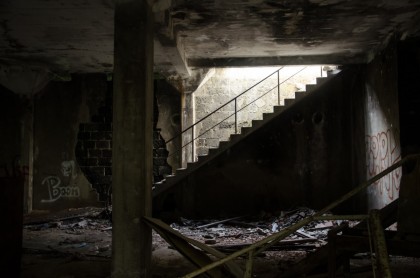 I had a dream three nights ago. Seems prescient now. I was in a non-descript house or building, bare of furniture. Someone, or something, was in the basement. I could hear gun shots. I hunted for entrances to the basement and found two, one a door and one a grate.
 What I’m seeking in Wonderland is a synthesis Tarnas contends is necessary for us now, a different sort of Great Work than Thomas Berry’s, yet related to it, I think. Berry, if you recall, said that the Great Work of our time is the creation of a sustainable human presence on earth. Not goin’ so well. Tarnas wants to take the ancient, ensouled universe that prevailed until the Enlightenment, mash it into the disenchanted universe occasioned by rationalism and the hegemony of science, and come up with a Hegelian synthesis that can move us out of the stuck place created by their tension.

 When Orion rises, as he does each year, and I see him for the first time, it is the same feeling as seeing an old friend again. The same feeling. Orion has been with me and I with him since the guard shack in Muncie, Indiana where he graced my night shift attention. Orion is not merely starry objects far away, arranged in a distinctive pattern, though he is that. He is a part of the universe with which I have a personal relation. Is that relationship reciprocated? I don’t know. But, it feels like it.
 The current signature line on my e-mails is from John Muir, “You are not in the mountains, the mountains are in you.” Yes. In this discussion that includes depth psychology it’s appropriate to notice the synchronicity of living on Shadow Mountain, that massif within the psyche that contains all that we fear, that we reject, that we push away. How bout that? And beyond my study window is Black Mountain.
 As we try, some of us intuitively like me, some of us more systematically like Tarnas, to heal the rupture between the human and the living universe, we find a drag chute attached to our thought: 500 or so years of human autonomy, freedom, even liberation, 500 years of human probing, learning, knowing about the world seemingly disconnected from our Selves. The more classically educated you are, the more broad your learning, the more likely you are to feel something wrong with this line of thinking. It doesn’t add up. How can the universe have intention, consciousness? It’s the objective reality we probe with minds like Einstein, Bohr, Sagan, Darwin, Pasteur, Curie. We’ve found its regularities, its laws, its patterns, and we can use them to predict natural behavior and therefore exploit it.

 Got that old debil feeling in this mix. You know. What I have done with my life? Here I am 71 years old, with much less time. Much less time to do whatever it is that floats like a dark cloud out of reach. Too little discipline. Too much fear. Too little desire. Too much distraction. Oh, look, a new book! A movie. TV. Yet this has been my life. Always. Work hard, rest, work hard again, rest.