A question for the Woolly Mammoth meeting of this Monday: “…think back over time – older and newer – was there a piece of music, a song, or a musical video that had an impact on you, or that shaped your thinking, or who you are in some way, at some important juncture in your life, or time in your life.” Scott Simpson
Here’s my reply:
I can still hear the others singing, feel the resonance of my voice joining theirs, marching, marching, marching. So many times. The song was the old spiritual, We Shall Overcome. I sang it in protests again Vietnam, in labor solidarity rallies, on the occasional Sunday morning. I sang it alone, in the shower, driving in the car.
Whenever I hit the line, we shall over come someday, and even writing this, I tear up.
This song could be my heart’s theme song. It’s a musical answer to Shakespeare’s famous query, “To be, or not to be: that is the question: Whether ’tis nobler in the mind to suffer The slings and arrows of outrageous fortune, Or to take arms against a sea of troubles, And by opposing end them.” I’ve always been on the take arms side.
Though, parenthetically, I’m also a follower of the Tao which suggests wu wei, or non-doing as an answer. Both seem true to me. In the end I cannot just let things happen to me, or to the people and the society that I love.
So here’s my summary of the last 17 days. I got ill. My doc thought it was influenza A. That lasted 10 days, then I got really sick. The pneumonia is clearing. I have more energy each day, though I’m still weak. Eating and sleeping. Still the main activities.
All these mortality signals keep whizzing by. The third phase is an existentialist phase no matter your theological orientation. Somewhere in the no longer so distant future is a personal and permanent extinction event. Made me read the news of Opportunity with a pang I might not have otherwise felt.
The struggle we have over these deep questions in our own day to day has gotten interlaced with our creations. It seems like taffy or a Chinese finger puzzle. The more we try to answer them the tighter the puzzle grips our finger. And when a plucky, brave, dogged machine just keeps on ticking, year after year, moving and sensing and communicating, all on a planet not our own, we see its slow, but confident progress, its unwillingness to stop until the last trickle of current ran from its batteries, as life itself. Until we say it out loud. Do we put quotations marks around death? What do we do with the emotions we feel for something made of silicon and metal?
“Our beloved Opportunity remained silent,” Thomas Zurbuchen, associate administrator for NASA’s Science Mission Directorate, said Wednesday… Her power dropped to a trickle, and she was last heard from on June 10…Keri Bean was among those who helped send that last radio signal. Losing Opportunity, she says, is like a death in the family…But at least it was Mars that killed her — it wasn’t the rover failing or something else. It was Mars. And I feel like that’s really the only appropriate death for her at this point.” NPR
It’s possible that we’ve been making a category mistake all along about death. We assume that we are individuals, clothed in an impenetrable skin with a mind mysterious and often hidden even from its self. What if that is too narrow? Way too narrow. What if we are also those things in which we invest our life? That is, I am not only the meat sack that turned 72 yesterday, but I am also Kate, our house, the dogs, even our Rav4. I’m not making a weird boundary issues statement here. I’m trying to point to what Buber calls the I-thou*. Buber saw the I-thou as a relationship with another that is permeable. I love this idea, but want to say that we can extend it, in some instances, even into the realm of what Buber calls I-it relationships.
Andover
Those instances are not as few as we might think. Yes, family. Yes, friends. Yes, members of a community important to us. Yes. But also the dog who sleeps in your bed. The tree you care for each spring and fall. The flowers that you plant. And, yes, the machines that extend your self into the wider world. These machines, like Opportunity, do function independently from us, are definitely an it in the usual understanding of the term, but perhaps we misunderstand the distance, the separateness. “Our beloved Opportunity remained silent.” “Like a death in the family.”
Opportunity was not only the physical entity on Mars. It was also a literal physical extension of those who made it, those who guided it, interacted with it, and gathered its data. It was like a hand or an eye, an arm or a leg, not separate, though able to operate independently. As such Opportunity’s death was just that, a death, the loss of an I-thou relationship.
How do these relationships happen? I believe this quote says it very well:
“Real isn’t how you are made,” said the Skin Horse. “It’s a thing that happens to you. When a child loves you for a long, long time, not just to play with, but REALLY loves you, then you become Real.”
“Does it hurt?” asked the Rabbit.
“Sometimes,” said the Skin Horse, for he was always truthful. “When you are Real you don’t mind being hurt.”
“Does it happen all at once, like being wound up,” he asked, “or bit by bit?”
“It doesn’t happen all at once,” said the Skin Horse. “You become. It takes a long time. That’s why it doesn’t happen often to people who break easily, or have sharp edges, or who have to be carefully kept. Generally, by the time you are Real, most of your hair has been loved off, and your eyes drop out and you get loose in the joints and very shabby. But these things don’t matter at all, because once you are Real you can’t be ugly, except to people who don’t understand.” chewy.com
*Buber’s main proposition is that we may address existence in two ways:
The attitude of the “I” towards an “It”, towards an object that is separate in itself, which we either use or experience.
The attitude of the “I” towards “Thou”, in a relationship in which the other is not separated by discrete bounds.
One of the major themes of the book is that human life finds its meaningfulness in relationships. In Buber’s view, all of our relationships bring us ultimately into relationship with God, who is the Eternal Thou. wiki
Chronic illnesses must have some similarity in their psychological impact. Maybe related to grieving. In the first days of a diagnosis there is confusion, distress, yet also relief that this thing has a name. Searching for a cure becomes a family enterprise, the internet glows red hot with old medical journal articles, new experimental this or that, group therapy by fellow sufferers. This serves to educate everyone, yet it also embeds the illness more and more firmly in daily life. There are no days or nights when the illness isn’t there. It hovers, even on good days or weeks, a known guest, but not a welcome one.
Small victories: a good day, a promising new drug, another imaging study, a procedure, surgery. Yet the illness remains. Perhaps attenuated for a bit. Perhaps not. Often there are cycles to the disease in which it extracts maximum discomfort only to relent and calm down for a bit.
An unspoken conclusion may arise. This is forever. He’s never going to get better. Will this uninvited guest kill him? Stratagems come and go. Certain foods. Nap schedules. Walks. Getting out. Staying in. The internet goes cold, having coughed up what it could and added little, showing the vast abyss between knowledge and useful information.
Perhaps a detente occurs. Everybody does their part. No big improvements, but no big backward steps either. The illness sits down to breakfast with everybody, goes to the grocery store, snores at night.
This is not the end. The armistice finally crumbles under a sudden resurgence of symptoms. Or, new ones. Or, the failure of a remedy. Despair. Perhaps depression. Maybe it is forever. I just thought that in a moment of exhaustion, but what if it’s true?
Each iteration of this cycle increases the psychological pressure on the afflicted and their caregivers, their loved ones.
You see, we expect problems to have solutions. Sure, there can be some unpleasantness, we know that. For sure. But somewhere in the world of helpers is the one who can fix this. Make it go away. Let us go back to life as it was before. If we can recall what that was like.
Hollywood happy endings may have been imprinted on our neurons, at least here in the U.S., but life knows better. Sure, there is my friend with ovarian cancer, stage 4b, who responded so well to chemo and successful surgery that her doctor is now talking cure. Yes, these instances do occur. When we hear about them, they raise our hope. Maybe. Just maybe.
Better to suspend hope for results. Better to stay with the day-to-day. Better to focus on spirituality, on matters of the soul. Why this latter in the time of Christopher Hitchens and Richard Dawkins, flat earth atheists? Because the one thing illness does not touch is our soul, that part of us that links us to the eternal, to the cosmos, to the ongoingness of things.
In our inner world we are not ill, the illness rages in the blood stream, the brain, the heart, the gut, the muscles, but we have our sanctuary where our soul lives on. If we allow the illness to corrupt our soul, to plummet us into despair, then we will be finished. If the illness itself is intractable, and even if it’s not, the souls journey goes on, traveling the ancientrail you have been on since birth. The illness is part of the journey. But only part of the journey.
We are the end of a cycle on Shadow Mountain. Some symptoms have been vanquished, others not. Kate’s continuing misery has taken a brutal toll on her and has been tough for me, too. As I’ve written numerous times over the last couple of weeks, I don’t know where we are. I don’t know what’s next.
I’m finding practices designed to undergird my gratefulness, my joy, my equanimity have their limits. When I’m sick, as I have been since last Wednesday, they seem to slip away, leaving with me only the emotional fragments of my life, many of them painful. I refuse to stay in this place. What I do now is my choice. What do I need to choose?
The waxing moon has not brought the weight gain I’d hoped. Maybe next month. We talked yesterday about eating disorders and their relevance to Kate’s situation. Through a combination of aversive conditioning, nausea and cramping triggered by eating, the dry mouth issues of Sjogren’s that can make food unpalatable, a generally depleted musculature that makes it difficult to work up an appetite, and a feeling of malaise we’ve not been able to shake, eating has become problematic. Sounds like an eating disorder. If it quacks…
One sobering reality driven home by my illness (on the way out, but not gone) is how much the two of us depend on me to live in this house. If I got to Kate’s level of dysfunction, we’d have to move. When I was sick, especially Wednesday and Thursday, my body tingled. Arthritis in my left hand, thumb, knuckles, finger joints and the thumb of my right hand got bad enough that I couldn’t unlock the front door or open a package of sliced turkey. My stamina was almost nonexistent and I had no hunger. This lead me to the conclusion that my workouts are now a matter of marital necessity. They keep me strong, agile, healthy. We need to protect my schedule so I can always get them in. I’m sure this moment comes for many couples as they age, where one partner’s fragility makes their mutual independence more at risk.
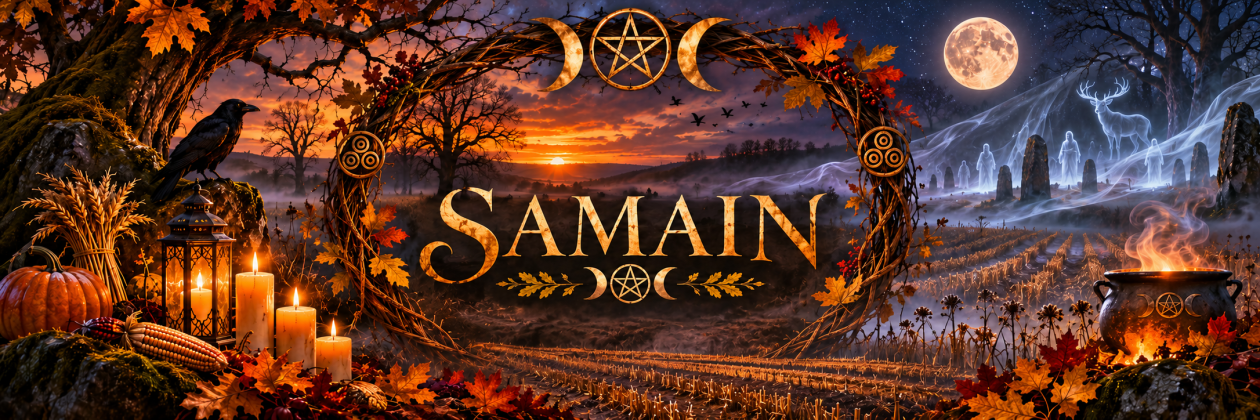
Much as I like the dark, the cold, the snow, I also love the growing season. Imbolc, Feb. 1st, (or, as for all Celtic holidays, a full week of markets and dances), marks the turn from winter, the season just past, toward spring, or Ostara, which we celebrate on the spring equinox. That’s what Groundhog Day celebrates, Imbolc, and a European belief that if a furry rodent saw it’s shadow, there would be six more weeks of winter. In Germany it’s the badger that is the predictor. The Pennsylvania Dutch apparently shifted to the groundhog.
Whichever, shadow or not, and usually not accurate, the attention to mother earth while snow’s still on the ground, occurs because the Great Wheel has turned past the Winter Solstice, allowing light to begin it’s slow increase, culminating in the heart of mid-Summer on the Summer Solstice.
Imbolc then, is the first season of a new agricultural year. Imbolc, in the belly, referred to the freshening of ewes whose pregnancies would finally bring some long awaited milk into the family larder. The lambs also add to the flocks. It was a signal that the fallow time that began back in October of the previous year at Samain, summer’s end, would again be followed by a fertile season. The growing season itself doesn’t begin, on the Great Wheel, until Mayday, Beltane. But Imbolc assures us that there will be food produced this year, even if the days are still dreary and cold.
Near Seoul, Kate. April, 2016
What is freshening my soul these days? What seed has been fertilized and begun to grow? Imbolc is important; even when the world seems to have gone fallow for us, we find the Great Wheel still turning, still pushing us toward the next growing season.
Kate’s bleed happened on September 28th, the day before Michaelmas, Steiner’s “springtime of the soul.” The sequelae has lasted through the last of Fall (Mabon), through Samain, through Winter, and now into Imbolc. Imbolc suggests that somewhere buried in the detritus of ten units of blood, bowl resection, rehab, multiple imaging studies, the stent placement, and continuing insults from Sjogren’s and weight loss lies a lamb, or at least a ewe’s egg. Finding it will not be, hasn’t been easy; but, I believe it’s there, that the Spring Equinox will find us moving forward into a new growing season for Kate’s soul and her body. May it be so.
Big excitement this morning. Into Stevinson Toyota for a Rav4 oil change. Last oil change came on the Monday of Kate’s no good, very bad, horrible weekend at the end of September. That oil has degraded over the whole twilight circus of events since then. This fresh oil comes as the news begins to look better. It will degrade as the Waxing Moon works and puts the unhappy last quarter of 2018 to rest. Looking for a better story in the first quarter of 2019.
Painted some yesterday. Both sumi-e and oil painting have put me back in a tactile world gardening occupied in Minnesota.
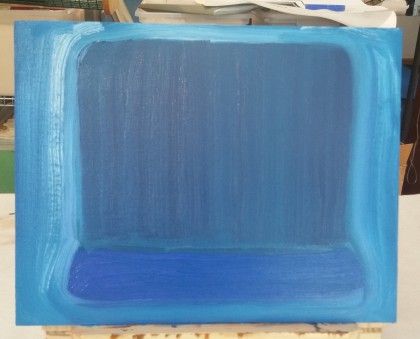
Here’s my latest, akeda. Akeda means binding in Hebrew and in Jewish tradition evokes the binding of Isaac by Abraham.
Akeda
Yesterday morning I created a lesson plan for the religious school. Yirah. The akeda could be used as an example of yirah. How terrible, how frightening. Sacrifice the son whom Sarah bore in her 90’s. Isaac means, he laughed, to remember Abraham and Sarah’s response to the news that she would bear a child. Not only was Isaac the improbable son of Sarah’s old age, he was also the son who would fulfill the covenant God made with Abraham that his descendants would be as numerous as the “stars in the sky.” Killing him as a sacrifice would mean the end of Sarah’s miracle and the promise of God. Yet, he went ahead with the akeda.
A friend of mine in Minnesota, a Sierra club activist, was in an accident on January 14th. Her 18 year old son, Henry, a freshman at Bowdoin college, drove. She was in the passenger seat. A pickup truck drifted into their lane. The wreck killed Henry. Sarah survived with non-life threatening injuries. Since her brief announcement on facebook, “Devastating news. We lost Henry in a car accident. Only 18. So much potential,” I’ve been cycling through imagining the awful pain of losing a child.
Took Kate to Bailey yesterday, the social hall of St. Mary’s of the Rockies. She stayed several hours for a meeting of the Bailey Patchworkers. It was the first time she’d been back since August, a session when she piled up the good eats for a quilt documentation day. That was also the day I backed into her friend’s car. With said friend in it. Sigh. Kate’s stamina has improved markedly. So good to see.
After Bailey, I drove not home, but to Evergreen where I had lunch with Tara and Alan. Murphy’s sits right on Bear Creek, a lovely place in the spring, summer, and fall for an outside lunch. Tara and Alan and I talked CBE religious school. Alan returned Saturday from a couple of weeks in Argentina. In Patagonia, at a national park, he was told, no, you can’t walk on the glacier. You’re over 65. Didn’t know glaciers took notice of such brief lifespans; but, it was Argentina.
I’m responsible for the next lesson, tomorrow, as I was last week, but with Alan as back up this time. Last week we worked with the middah, character trait in the Jewish ethical discipline of mussar, chesed, or loving-kindness. This week we stay in mussar, but focus on yirah. Yirah often translates as fear in the Torah, as in “the fear of the Lord.” I prefer awe as a translation, but it does mean both and we’ll use that in the class.
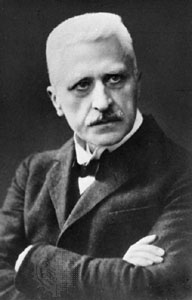
Rudolf Otto, a famous theologian of the early 20th century, wrote a book called, The Idea of the Holy. I mentioned his thinking from this work in a post a couple of days ago. It’s one of a handful of theological texts that have had a radical effect on my thinking. Another is Moses and Monotheism by H. Richard Niebuhr. In both cases the authors try to dig behind religious concepts often simply accepted to find their phenomenal roots. Otto wants to understand the strange nature of the sacred. Niebuhr was after the psychic meaning of monotheism.
Otto’s work has a lot to do with yirah. His idea of the numinous, a distinctive feeling we often equate with the holy or the sacred, has two components: mysterium tremendum et fascinans. When we encounter the numinous, we encounter mystery, a mystery that both attracts us, we want to move toward the experience (awe, yirah, fascinans), and repels us, (fear, yirah, tremendum).
I have had many encounters of this kind and they vary in which characteristic of the Holy they emphasize. I’ve written before about my mystical experience on the quad at Ball State. Fascinans dominated. I wanted to be there, in a state of total linkage with all. I wanted to stay. In high school I attended a summer church camp at Epworth Forest in Indiana. We learned a lot about communion and in particular I took to the heart the idea that if we didn’t reconcile with others, we might “eat and drink our own damnation.” OK. I was an impressionable guy in that moment. But the fear occasioned by that idea made me find a young woman whom I’d teased and ask for her forgiveness. Stepping into the Sistine Chapel. Awe. Driving to Bailey and seeing the Continental Divide capped with snow. Awe. Contemplating my own death. Fear moving toward awe.
Another. In Ely, Minnesota at the International Wolf Center, during a week long wolf studies immersion, we did a necroposy on a collared wolf that had been hit by a car. When we opened his rib cage, a space opened up in front of me where the mystery of life and death vibrated, took me in, absorbed me. This was both fascinans and tremendum. I wanted to look away, to be elsewhere. Right now. I wanted to dive in, swim in the galaxy revealed by this too intimate experience.
How about you? Got any experiences of the holy or the sacred? I especially encourage considering Otto’s point that an experience of the Holy is without moral freight. It simply is. We apply the morality later, much later.
iottoru001p1
*”In his most famous book, Das Heilige, Otto turned from a critical philosophical account of the possibility of religious experience to a descriptive psychology of the content of that experience and its relationship to the “rational,” symbolic dimension of religion. To designate religious feelings at their most distinctive he coined the word numinous, which referred, he said, to the Holy or Sacred minus the moral dimension. But he soon encountered a methodological limitation. Conscious experience is only available to the person who has it; therefore, it is possible to formulate a descriptive account of religious feelings only on the basis of introspection, informed by apparent similarities in what others have said. In other words, in order to study the experience that is the ultimate source of religion, a scholar must have a sensus numinis, an ability to experience numinous feelings—just as the description of color in painting or pitch in music requires certain kinds of perceptual abilities. Those who have such abilities, Otto suggested, experience the numinous as a mysterium tremendum et fascinans. As a mysterium, it is completely other, beyond the realm of ordinary existence, apprehensible but not comprehensible, evoking in human beings the feeling of stupor and stunned silence. People find this mysterium both attractive (fascinans ) and repulsive (tremendum ). On the one hand, it arouses the sense of grace, love, and mercy. On the other, it arouses feelings of terror and awe and the conviction that human beings are in reality nothing—feelings to which Otto, countering tendencies to equate genuine religion with love, gave a great deal of attention.” encyclopedia.com
Encountered something yesterday, a dark vessel that rose up from 33 years deep. Grief. I’d forgotten. When I lost my hearing in my left ear at the age of 39, it happened suddenly. Over a period of six months it waned, then was gone. At the time I was doing a bible study in Horn Towers, an affordable living senior high rise on the West Bank in Minneapolis. The women there, probably of my age now, helped me through this first mortality signal. That was the first insult. My body, which had worked just fine up until then, could fail. And, not in minor ways, but in ways that effected my life on an ongoing basis. (polio was a memory more than an experience.)
Since then I’ve dealt, sometimes well, sometimes poorly with the disability. Three years ago the hearing in my right ear began to diminish enough that I required a hearing aid. One good thing about that deaf left ear, I only needed one hearing aid. Cheaper! The hearing aid, while light and unobtrusive, is still a foreign object on my ear. It gets in the way of my glasses, sends sharp feedback noises if I put my watchcap on over it, requires batteries and maintenance. It helps. Not as much as I’d like, or need, but it does help. Even so, I don’t like wearing it.
When I went downstairs yesterday after a hard day at the easel (hah), I had my hearing aid in, but still didn’t hear something Kate said. I asked her to repeat it. She waved me off dismissively. Most of the time, I get it. It’s no fun having to repeat yourself. It can feel like I’m not paying attention or being respectful. Over and over. For some reason though, the dark vessel constructed in those first days of my deafness in my left ear, a vessel built to carry the notice that my body would someday fail me altogether, surfaced.
33 years I’ve had to contend with an invisible disability, one that manifests, for others, only briefly. A huh? Or, ignoring you if you’re speaking to me from my left. Or, if there’s a lot of people, or waterfall like noises, or a loud air conditioner, a plane overhead. It screams at me occasionally when an unheard or misheard emergency vehicle suddenly appears as if out of nowhere.
Most of the time, as with most disabilities I imagine, it’s background, forgotten for me. Up here in the loft, for example, I rarely wear my hearing aid. No one to listen to, a quiet room. When driving, I often reach up and turn it off because a whooshing noise gets amplified into an annoying cascade of sound.
In the wake of Kate’s dismissal 33 years of grief, of annoyance, of having to explain, of being handicapped-always, broke into consciousness. I felt overwhelmed by the accumulated sadness, anger, discomfort. Didn’t know I carried within me this complex. I’m imagining a black submarine navigating the seas of my inner world. When its bow first broke through the waters of my attention, it stunned me. Knocked me back. I took it out on Kate. Not good.
Calmed down. We talked. Got through that maelstrom. Happens once in a while. Surprised by the freight.
I’m sure we all have our dark vessels, a divorce still knifing away at the gut, a lost job, an embarrassing public moment, a failed opportunity. When they surface, these dark vessels, chthonic gods James Hillman would call them, demand our fealty. Maybe even sacrifice. Taking the Jungian approach these vessels carry gold, keeping it to themselves, for themselves, but when they pierce the barrier of consciousness, that gold can be recovered, reclaimed, salvaged.
Not sure quite yet what’s in the chest I took off the sub, but I suspect it will become clear. Someday.
I’m gonna say between 12 and 15 inches over the last 36 hours. We’ve been plowed twice and our contract specifies 6 inches as the minimum for a push. I’ve cleared the back decks 4 times, or 5, and this morning it was as much as it was yesterday morning, maybe more. I’m pretty weary from it. With the new palette/deck it increases the amount of snow I have to move and reduces the places I can put it. Creates a tough situation.
All of us up here love the snow, in part for the beauty and in part for the practical reasons I mentioned yesterday. That doesn’t mean it’s always easy to remove or a joy to drive in. Right now, I could wait a bit for our next big storm. Nothing on the horizon right now.
Considering some snow shoeing. I’ve not done that much here. Great cardio and beautiful, quiet here in the mountains.
Gonna look at material for the religious school class on the 16th. Alan will be back from Argentina. Our lesson theme is yirah, awe. Getting fifteen inches of snow over 36 hours creates yirah. We do not impact the weather, at least not directly. Yes, climate change is effecting the sorts of weather we get, but we don’t get to choose the diverse effects of our self-genocide. Fifteen inches of snow is like a volcanic eruption or a tsunami or a tornado, sudden, unpredictable except just before the fact, a natural act that changes the immediate environment dramatically. Though not as devastating as those violent manifestations, a great snow storm does show the power of the natural world, something to which we have to adapt rather than something we can manage.
Those of us inside homes with heat, water, plumbing, a full refrigerator, a kitchen can, and often do, ignore the rain, the snow, the high winds, perhaps only remarking casually, “Listen to the rain.” “The snow’s so beautiful.” “Those winds are really howling.” In doing so we shield ourselves from yirah. Yirah is the Hebrew word often translated as fear in the Torah, as in fear of the Lord. Remember Moses and the burning bush? Yirah.
Yirah and kadosh, holy or sacred, go together. Rudolf Otto defines sacred as an experience of awe, yirah, and the mysterium tremendum et fascinans: mysterious, awesome, urgent, attractive in spite of our fear. “As mysterium, the numinous is “wholly other”– entirely different from anything we experience in ordinary life.” Kenyon College. I disagree here. We experience natural acts, acts that have a cause in the world we know, that are so far beyond our control that though we do find them in ordinary life, they are also, at the same time, wholly other. Ask anyone who’s seen the ocean recede, then come blasting in as a tsunami hits. Ask anyone who’s felt the earth, the solid stable never-changing earth, shake beneath their feet. Anyone who’s been been faced with pyrocastic flow.
When I was 10, back in 1957, I visited my aunt and uncle in Mustang, Oklahoma. About 3 am one morning, my uncle Rheford came in and shook me awake. “We have to go.” I followed him out the backdoor of the house and into the ground. Wind and rain battered us as we went down the steps into the storm shelter. The wooden doors closed behind us and a thick chain was passed through inside door handles then linked to a hook set in the concrete floor. When the tornado crossed over us, the oxygen got swept up and out of the shelter, the doors banged and clanged like living things. Afterward, we went back up the stairs, fearing what we might see. The post office, attached to the front of Uncle Rheford and Aunt Ruth’s house, was gone. Just. No. Longer. There.
Something experienced in ordinary life but also wholly other. I’ve been following a sailing race, the Golden Globe, in which several skippers competed against each other in solo jaunts around the world. Ask any sailor, solo or not, who’s navigated the roaring forties about yirah and mysterium. They’re manifesting every day, every hour in places most of us will never go; but, a few do. Wholly other, but also part of the same puzzling universe which coughed us up into life.
A long road to an old observation, the sacred in the ordinary. Religion has too long tried to cordon off the domains of holiness, of the sacred, of the divine. And not only cordon them off, but claim control over the experience of them. This is human, yes, to identify our own experience as unique, as special to us and ours. But it is not true that either awe or mysterium tremendum et fascinans, is only wholly other, and it is especially not true that Christianity or Hinduism or Tibetan Buddhism or Islam or Mormonism has the only safe way to encounter them.
In just a moment I’m going to go back downstairs in a world transformed by snow. It’s awesome and mysterious. And right here, right now.
Kate’s wanting to get out and not just visits to medical facilities. Her stamina has improved some, she’s eating more. She’s still in the 80-82 zone, but I’m looking forward to her cracking 83. Then up from there. She’s laughing and smiling, things I didn’t see often over the last three months. Enjoying these moments. Both of us.
My Jewish Studies January event is past. My solo act as teacher of the 6th and 7th graders was yesterday. Both of these, the Jewish Studies and the religious school class weighed on me. In both cases I had the full responsibility for them and that old bugger, what if things don’t go well and what can I do to take make sure that they do syndrome. Not a bad thing under normal circumstances, even ordinary, but in these two instances I felt exposed, reluctant. I suppose it was garden variety anxiety, but it clouded my days for a week plus.
Tara teaching Hebrew with my class
When I went to H-Mart with SeoAh, I picked up ingredients for an Israeli salad. I had collected stories of loving-kindness, made a plan for using them. When I got to CBE, the vegetable dicer came out, a knife from the drawer and I got to slicing and dicing. Red pepper. Crunch. Whack. Roma tomatoes. Deseed, cut. Whack. Crunch. Persian cucumbers. Garlic. Parsley. Whack. Whack. Whack. A little olive oil, some lemon juice, a bit of mint. Toss. All the time I was talking to Leslie, a retired architect and city planner. She wanted to know how Kate was doing. The conversation veered to art. Leslie’s a docent at D.A.M., the Denver Art Museum. She offered to sponsor me when the next docent class comes up.
The kids began to come in. Isaac and his brother from the charter school up the hill. Sam from gymnastics. They trickled in, signing their names in Hebrew as an attendance check. Ryan, always on Ryan, came in with his mischievous smile. Robbie, tall Robbie. Charlie Mulvihill, whose bar mitzvah is on the 16th of February. Gwen. Liya. Jordan and Adam. Aaron. Gabe, who keeps bees with his dad, Dan.
Ryan, Tara, Liya
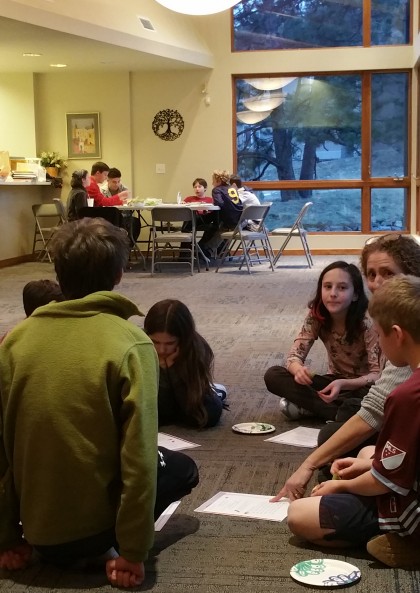
The class went well. The kids were attentive during a discussion of loving-kindness. I read stories of kindness from within the Jewish tradition and asked them to match me story for story. Soon they were pulling out stories from movies, books, their personal lives. Several mentioned Hunger Games. Witness. Wonder. One girl bought her sister a toy her sister couldn’t afford. Another gave $20 he’d received for toys to a homeless man. Tara, the director of religious education, then came in and did a Hebrew class on chesed, loving-kindness, reinforcing what we’d experienced from stories.
At 5:30, we start at 4 and finish at 6, they’d been so responsive, I suggested we play games. These are 6th and 7th graders and they have a lot of energy. They come to religious school directly from school so they’ve also been behaving all day. Fortunately we have the whole carpeted social hall for our class. We played (yes, I got down on the floor, thank you work outs) duck, duck, goose. Statue. And zap, the rules of which I never understood. At 6 they weren’t ready to leave.
My point in recounting this is to say why I continue to do these things. They bring such joy, if I can manage my anxiety. Which I usually can. With a little help from Zoloft, years of analysis, and a generally positive disposition. It’s a balance, taking responsibility and living a retired life. It can, and does, get out of whack like it has for me recently. When other matters keep up a drumbeat of stress and vigilance, the teeter totter can suddenly take a dive.
A good class, for example, reminds me why I put myself out there. Sheer joy.
Richard Feynman, the physicist, had a technique for learning. It’s pretty straight forward in its explanation:
Choose a Concept
Teach it to a child
Identify Gaps and Go Back to The Source Material
Review and Simplify (optional)
I’ve not used it before, but I’m going to try now with reimagining/reconstructing faith. I hope that by clarifying it this way, I can further my year theme: Seeking the myth beyond reason.
To Gabe. What do you need to stay alive? Food, yes. Oxygen, yes. Anything else? A house or place to live, yes.
OK. Let’s start with food. Where does food come from? The grocery store. Well, that’s where we buy it. But where does the grocery store get the food? From trucks? OK. How about the trucks. Where do they get the food?
From farms? Right. And, gardens. And, orchards. And, the ocean. Can you guess my next question? Where do the farms and the gardens and the orchards and the ocean get the food? What’s that? Plants and animals? Right again. You’ve got this, Gabe.
Think about the animals for a minute, Gabe. What kind of animals do we eat? Pigs and chickens. Check. Cows. Check. Fish. Check. Shrimp and turkeys. Check. That’s enough for now. So. Where do the pigs, chickens, cows, fish, shrimp, and turkey get their food? You don’t know? What’s that? Grass. Yes, good. Cows eat grass don’t they? What about chickens? Insects? For sure. How about pigs? Well, some pigs eat acorns. Others eat roots, fruit, fish. Yes, fish. That seems strange doesn’t it? What about shrimp? What do they eat? They eat tiny, tiny plants that live and grow in the water. Fish? What do they eat? Some eat plants that grow in the water, some eat insects, some eat other fish and other ocean animals.
Did you notice that a lot of the food the animals eat comes from plants? Acorns, grass, roots, tiny plants that live in water? What about the rest? Insects, other fish? What do insects eat? Some do eat other insects, that’s right. Praying mantises, for example. But most insects eat plants. Grasshoppers do. Leafchewers. Some eat plant roots. Some eat the nectar, like bees.
Here’s the thing, Gabe. When you really, really look at what animals eat, even if they eat other animals, you’ll find that the animals they eat get their food from plants. That’s strange isn’t it? Does that mean we all get our food from plants? Well, yes, in a way. If the hamburger you like tastes good, it’s because the cows ate grass and corn and beans. Can you guess my next question?
Exactly. Where do the plants get their food? What an interesting question. Land based plants dig deep into the soil with their roots. Their roots take water from the soil and some other things the plant needs to live. Here’s what might seem like a weird question. What color are plants?
Green. That’s right, Gabe! What part of the plants are green? Their leaves. Right again. What? Oh, their stalks, too? Yes. On many plants that’s right. They’re green, too. Here’s the really, really weird part, Gabe. Those green leaves? They make food for the plant from sunlight and water and vitamins from the soil.
How do they do it? Even scientists have a hard time explaining it, but somehow the leaves take sunlight, water, and other things from the soil and make what the plant needs to live. Amazing, right? Sunlight, water, and nourishment from the soil. Nourishment? What does it mean? It just means anything that helps you live, or helps plants live. And you know what’s also amazing? Guess what the plants send out into the air when they’re done making food? Oxygen! That’s right, plants feed animals and they give off the thing we need to breathe to stay alive. Wow. Go, plants!
Now let’s see. Where are we, Gabe? You told me you need food to stay alive. And, oxygen. What’s that? Water. Water, too. We tracked down where food comes from, didn’t we? It all starts with plants and the sun and the soil and water. Plants get what they need from the sun, from mother earth and from the water on mother earth.
Sun. Mother Earth. Oxygen. Water. Without any of them, Gabe, you and Ruth and your mom and dad couldn’t stay alive. You’d die without oxygen which plants put into the air. You’d die without food, which plants create from the sun and water and nourishment (remember what nourishment is?) from mother earth.
Sol Invictus by Jake Baddeley
When it comes to what I’m thankful for Gabe, I’m grateful for you, of course, and your family, but I’m also grateful for the sun. The sun provides us with light, heat, and now we know it also plays a key role in providing us with food. Without sun the plants can’t make their own food. I’m grateful for mother earth. She provides nourishment for the plants and through them for us. I’m grateful for the water we have to drink. Did you know it gets made good to drink by going into clouds and coming back down as rain and snow? It’s true. I’m grateful for clouds and rain and snow, too. I like fresh water to drink.
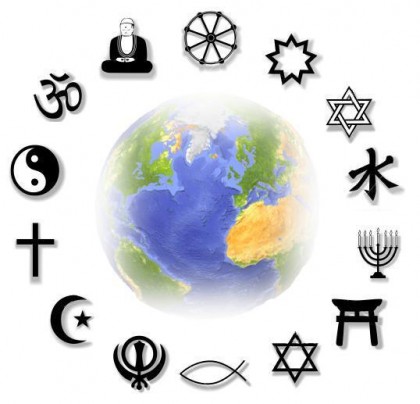
Gabe, I know you’ve been raised Jewish. That’s the religion of your mom. I don’t know how important it is to you right now, but I remember it was important enough that you didn’t like Christmas when you were five. There are a lot of religions, aren’t there? Let’s see if we can name some. Christianity. Judaism. Islam. Hinduism. Do you know that one? It comes from India. Buddhism. Taoism. You may not know that one. It comes from China. Lots and lots more, too.
I used to be a Christian, a while back. But, not anymore. What is a religion, do you think? There’s so many different ones that it’s hard to say. To me religions are about what is most important to you. What matters. It might be your relationships with your mom and dad, or Ruth, or your friends. How are you supposed to treat those close to you? It might be about animals and how you’re supposed to treat them. Do you remember when Herschel died? Your great-grandma? Your great-grandpa? Did you ever wonder what happened to Herschel and your great-grandparents after they die? Me, too. I’m not sure, but it is a question most religions try to answer.
Do you suppose a religion could be about food and where it comes from? Oxygen and where it comes from? Staying alive is pretty important. We agreed on that earlier. Right now my religion, my thoughts on what are most important, is about food, oxygen, and the things that make them. The sun and mother earth are like a god and a goddess to me. Together they make it possible for you and me to be alive. Through their children, the plants and the animals, they make possible the whole wonderful world of zebras, dogs, Ruth, you Gabe, forests, seaweed, whales, tuna, peanuts, apples, and oranges. Pretty amazing.
Think of it, Gabe. The sun, that distant star that gives us daytime, the one we see everyday, provides us with the heat and energy to live. Mother earth, the ground we walk on everyday, that holds us up, that we see in parks and farm fields and mountains, provides a home for us and nourishment for the plants. The plants provide food for animals. And animals and plants make food for us. They also make our oxygen. You just breathed some in right now.
That’s enough for me, Gabe. The sun, mother earth. Their children. Us. When I drive through the forest, I’m driving in my church, my synagogue. When the rain or the snow falls on my head, it’s a holy act made possible by mother earth through her clouds. What’s that? You don’t know the word holy?
I think of the holy as something both amazing and mysterious. Imagine all the time you spent inside your mom’s womb, growing from two cells into the boy you are now. Amazing and mysterious. Think about a plant’s leaf taking energy from sunlight, mixing it somehow with water and nourishment from the soil to create food, give off oxygen. Amazing and mysterious. Or, how about the change from winter to spring when the cold goes away. Flowers come up. Trees put out their leaves. Grass turns green. Up here in the mountains you see fawns and elk calves. Amazing and mysterious. All holy.
And here’s one more amazing and mysterious piece. You were born on April 22nd, Earth Day, a day dedicated to Mother Earth. And, guess what. April 22nd was a Sunday that year. So you were also born on the day of the week that honors the sun. The sun and mother earth. You share a special relationship with them, Gabe.
 I can still hear the others singing, feel the resonance of my voice joining theirs, marching, marching, marching. So many times. The song was the old spiritual, We Shall Overcome. I sang it in protests again Vietnam, in labor solidarity rallies, on the occasional Sunday morning. I sang it alone, in the shower, driving in the car.

 “Our beloved Opportunity remained silent,” Thomas Zurbuchen, associate administrator for NASA’s Science Mission Directorate, said Wednesday… Her power dropped to a trickle, and she was last heard from on June 10…Keri Bean was among those who helped send that last radio signal. Losing Opportunity, she says, is like a death in the family…But at least it was Mars that killed her — it wasn’t the rover failing or something else. It was Mars. And I feel like that’s really the only appropriate death for her at this point.”

 Chronic illnesses must have some similarity in their psychological impact. Maybe related to grieving. In the first days of a diagnosis there is confusion, distress, yet also relief that this thing has a name. Searching for a cure becomes a family enterprise, the internet glows red hot with old medical journal articles, new experimental this or that, group therapy by fellow sufferers. This serves to educate everyone, yet it also embeds the illness more and more firmly in daily life. There are no days or nights when the illness isn’t there. It hovers, even on good days or weeks, a known guest, but not a welcome one.
 This is not the end. The armistice finally crumbles under a sudden resurgence of symptoms. Or, new ones. Or, the failure of a remedy. Despair. Perhaps depression. Maybe it is forever. I just thought that in a moment of exhaustion, but what if it’s true?
 Better to suspend hope for results. Better to stay with the day-to-day. Better to focus on spirituality, on matters of the soul. Why this latter in the time of Christopher Hitchens and Richard Dawkins, flat earth atheists? Because the one thing illness does not touch is our soul, that part of us that links us to the eternal, to the cosmos, to the ongoingness of things.
 The waxing moon has not brought the weight gain I’d hoped. Maybe next month. We talked yesterday about eating disorders and their relevance to Kate’s situation. Through a combination of aversive conditioning, nausea and cramping triggered by eating, the dry mouth issues of Sjogren’s that can make food unpalatable, a generally depleted musculature that makes it difficult to work up an appetite, and a feeling of malaise we’ve not been able to shake, eating has become problematic. Sounds like an eating disorder. If it quacks…
 Much as I like the dark, the cold, the snow, I also love the growing season. Imbolc, Feb. 1st, (or, as for all Celtic holidays, a full week of markets and dances), marks the turn from winter, the season just past, toward spring, or Ostara, which we celebrate on the spring equinox. That’s what Groundhog Day celebrates, Imbolc, and a European belief that if a furry rodent saw it’s shadow, there would be six more weeks of winter. In Germany it’s the badger that is the predictor. The Pennsylvania Dutch apparently shifted to the groundhog.

 I’m responsible for the next lesson, tomorrow, as I was last week, but with Alan as back up this time. Last week we worked with the middah, character trait in the Jewish ethical discipline of
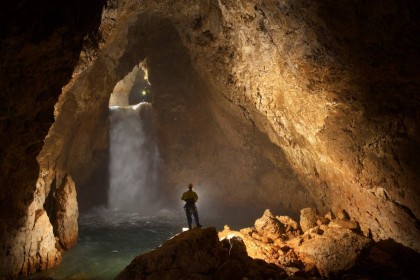 I have had many encounters of this kind and they vary in which characteristic of the Holy they emphasize. I’ve written before about my mystical experience on the quad at Ball State. Fascinans dominated. I wanted to be there, in a state of total linkage with all. I wanted to stay. In high school I attended a summer church camp at Epworth Forest in Indiana. We learned a lot about communion and in particular I took to the heart the idea that if we didn’t reconcile with others, we might “eat and drink our own damnation.” OK. I was an impressionable guy in that moment. But the fear occasioned by that idea made me find a young woman whom I’d teased and ask for her forgiveness. Stepping into the Sistine Chapel. Awe. Driving to Bailey and seeing the Continental Divide capped with snow. Awe. Contemplating my own death. Fear moving toward awe.
 Winter Waxing Moon
 When I went downstairs yesterday after a hard day at the easel (hah), I had my hearing aid in, but still didn’t hear something Kate said. I asked her to repeat it. She waved me off dismissively. Most of the time, I get it. It’s no fun having to repeat yourself. It can feel like I’m not paying attention or being respectful. Over and over. For some reason though, the dark vessel constructed in those first days of my deafness in my left ear, a vessel built to carry the notice that my body would someday fail me altogether, surfaced.
 In the wake of Kate’s dismissal 33 years of grief, of annoyance, of having to explain, of being handicapped-always, broke into consciousness. I felt overwhelmed by the accumulated sadness, anger, discomfort. Didn’t know I carried within me this complex. I’m imagining a black submarine navigating the seas of my inner world. When its bow first broke through the waters of my attention, it stunned me. Knocked me back. I took it out on Kate. Not good.

 Gonna look at material for the religious school class on the 16th. Alan will be back from Argentina. Our lesson theme is yirah, awe. Getting fifteen inches of snow over 36 hours creates yirah. We do not impact the weather, at least not directly. Yes, climate change is effecting the sorts of weather we get, but we don’t get to choose the diverse effects of our self-genocide. Fifteen inches of snow is like a volcanic eruption or a tsunami or a tornado, sudden, unpredictable except just before the fact, a natural act that changes the immediate environment dramatically. Though not as devastating as those violent manifestations, a great snow storm does show the power of the natural world, something to which we have to adapt rather than something we can manage.
 Yirah and kadosh, holy or sacred, go together. Rudolf Otto defines sacred as an experience of awe, yirah, and the mysterium tremendum et fascinans:
 Something experienced in ordinary life but also wholly other. I’ve been following a sailing race, the Golden Globe, in which several skippers competed against each other in solo jaunts around the world. Ask any sailor, solo or not, who’s navigated the roaring forties about yirah and mysterium. They’re manifesting every day, every hour in places most of us will never go; but, a few do. Wholly other, but also part of the same puzzling universe which coughed us up into life.
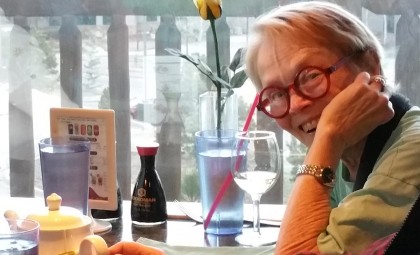 Kate’s wanting to get out and not just visits to medical facilities. Her stamina has improved some, she’s eating more. She’s still in the 80-82 zone, but I’m looking forward to her cracking 83. Then up from there. She’s laughing and smiling, things I didn’t see often over the last three months. Enjoying these moments. Both of us.

 Richard Feynman, the physicist, had
 OK. Let’s start with food. Where does food come from? The grocery store. Well, that’s where we buy it. But where does the grocery store get the food? From trucks? OK. How about the trucks. Where do they get the food?
 Did you notice that a lot of the food the animals eat comes from plants? Acorns, grass, roots, tiny plants that live in water? What about the rest? Insects, other fish? What do insects eat? Some do eat other insects, that’s right. Praying mantises, for example. But most insects eat plants. Grasshoppers do. Leafchewers. Some eat plant roots. Some eat the nectar, like bees.
 How do they do it? Even scientists have a hard time explaining it, but somehow the leaves take sunlight, water, and other things from the soil and make what the plant needs to live. Amazing, right? Sunlight, water, and nourishment from the soil. Nourishment? What does it mean? It just means anything that helps you live, or helps plants live. And you know what’s also amazing? Guess what the plants send out into the air when they’re done making food? Oxygen! That’s right, plants feed animals and they give off the thing we need to breathe to stay alive. Wow. Go, plants!

 I used to be a Christian, a while back. But, not anymore. What is a religion, do you think? There’s so many different ones that it’s hard to say. To me religions are about what is most important to you. What matters. It might be your relationships with your mom and dad, or Ruth, or your friends. How are you supposed to treat those close to you? It might be about animals and how you’re supposed to treat them. Do you remember when Herschel died? Your great-grandma? Your great-grandpa? Did you ever wonder what happened to Herschel and your great-grandparents after they die? Me, too. I’m not sure, but it is a question most religions try to answer.
 Think of it, Gabe. The sun, that distant star that gives us daytime, the one we see everyday, provides us with the heat and energy to live. Mother earth, the ground we walk on everyday, that holds us up, that we see in parks and farm fields and mountains, provides a home for us and nourishment for the plants. The plants provide food for animals. And animals and plants make food for us. They also make our oxygen. You just breathed some in right now.
 I think of the holy as something both amazing and mysterious. Imagine all the time you spent inside your mom’s womb, growing from two cells into the boy you are now. Amazing and mysterious. Think about a plant’s leaf taking energy from sunlight, mixing it somehow with water and nourishment from the soil to create food, give off oxygen. Amazing and mysterious. Or, how about the change from winter to spring when the cold goes away. Flowers come up. Trees put out their leaves. Grass turns green. Up here in the mountains you see fawns and elk calves. Amazing and mysterious. All holy.