Category Archives: Reimagine. Reconstruct. Reenchant.

Yom ha-Sho’ah

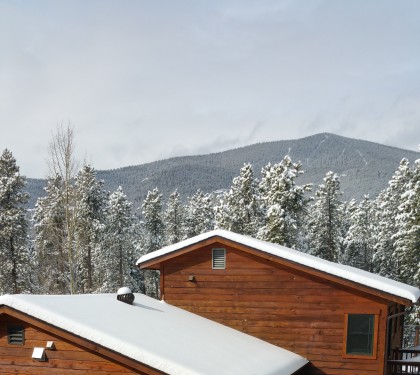
Spring                                                                        Mountain Moon

Holocaust Is Fading From Memory, Survey Finds. NYT

Anti-Semitic Incidents Surged 57 Percent in 2017, Report Finds. NYT

20180415_155755Sho’ah is Hebrew for catastrophe and has come to refer explicitly to the catastrophe for Jews after slavery in Egypt, the Holocaust. On the 27th of Nisan, April 12th this year, Jews celebrate Yom ha-Sho’ah, or Holocaust Remembrance, on the anniversary of the Warsaw Uprising. This is a crucial twist to Holocaust remembrance because it frames the day with a symbol of Jewish resistance to the Nazi’s.

One thing I’ve been privileged to observe over our time so far at Beth Evergreen is the complicated relationship Jews have with the Holocaust. It is horror beyond imagining, yet there are photographs and family memories and its dispiriting constancy in everyday Jewish life. Rabbi Jamie tries, each time he refers to the Holocaust, to inoculate the congregation against an attitude of victimization. Victims have little agency and the worst sequelae of the Holocaust would be a self-enforced powerlessness.

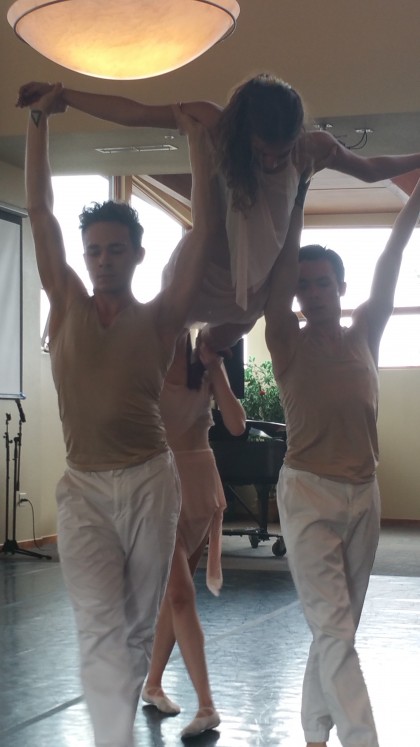
20180415_155411It’s a tragedy so outsized, so without precedent as an act of calculated evil, that how to approach its remembrance, its historicity, is fraught. Words and analysis, though important in certain venues, cannot touch the emotional complex around its reality. Congregation Beth Evergreen, this Sunday, tried another approach. Dance and music.

Beth Evergreen commissioned The Thomas Dance Troupe, five members of the Colorado Ballet who work together outside of the Ballet, to come up with works that could serve as, well, I’d say, a cri de coeur. They performed with a select few members of the Evergreen Chorale, a pianist, and a violinist.

It was a powerful program, aimed straight at the heart and it arrived. Many of the most important truths which we humans can access are not communicable in words, in the language of reasoned discourse. Those we must find in art.

Old Man of the Mountain

Spring                                                                              Mountain (New) Moon

Filling the Rav4 with gas, Legault Mountain behind me

Today the new shoulder moon sets. Since I name the moons each month, either using a traditional name or one I’ve created, I sometimes use them to remind me of something over the course of the month. Without melancholy this time I’ve come to an additional revelation, a sudden insight into who I am here in Colorado. Sorta obvious, but I’m a mountain man, a man of the mountains.

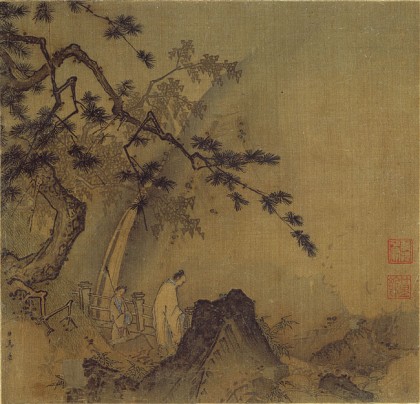
Song dynasty
Song dynasty

However. I’ve been reading a lot of the mountain poetry of China, a very old tradition extending from the Eastern Jin Dynasty into the present. The Eastern Jin Dynasty began in 317 A.C.E. T’ao Ch’ien (365-427) began writing poetry about his mountain life.

I’d long felt these mountains and lakes

Calling, and wouldn’t have thought twice,

But my family and friends couldn’t bear

Living apart…

After Mulberry-Bramble Liu’s Poem, T’ao Ch’ien

I just ordered more books of Chinese mountain poetry and I’m going to start looking for more poetry about mountains. If you know any, I’ll appreciate the reference. Not just poetry though. I’m also looking through my books of Chinese art, especially the (many) paintings that feature mountains, often scholars and poets by streams or in mountain huts. I want to learn from these how to use sumi-e to paint mountains. Lots of them here to serve as subjects and they politely remain in their pose. There are also many paintings in the Hudson School tradition: Bierstadt, Cole, Church, e.g.

Cotopaxi, Frederic Edwin Church

Too, I’m fascinated by the geology and orogeny of the Rockies. How did they get here? Where are they going? How do they compare to other mountain ranges?

And, even more obvious. Get out there, dude. No use repairing the knee if you don’t use it to wander in the mountains. To be my kinda pagan you need to immerse yourself in the local, the around you. It’s not only the soil, the animals, the plants, the trails, the streams and lakes though they are essential. It is too the human deposit of art about the place to which you’ve become native. Science, too. Also, if you can, adding to the expressive vocabulary that art shares with the world.

So, this is the Mountain Moon and I’m under it, nourishing another new turn in my attention.


Tarot and Craft Beer

Spring                                                                    New Shoulder Moon
Intrepid Sojourner Beer Project

Went out last night to an Atlas Obscura/Denver event. Yes, this funky website now has local, meet-up like events in various cities. The one last night was on tarot, a presentation at the only in Denver, Intrepid Sojourner Beer Project. The presenter, Joy Vernon, has been reading tarot cards since 1991 and presently works out of the unfortunately named Isis Book Shop. Isis has since changed its name to Goddess Isis Bookshop to distinguish itself from the new caliphate.

20180409_194615Besides the quirky reputation of Atlas Obscura, which draw me in, I also went because Joy said she would discuss qabbalah and the tarot. Only a couple of mentions but they were there. Here’s a for instance in this blurry photograph of one of her slides. In another spot she mentions the correspondence between qabbalah (translation note: Rabbi Jamie says the q is the correct translation) and the qabbalistic Tree of Life with its ten sephirots. Not a detailed examination of the relationship, but enough to make me want to explore it further.

Joy was knowledgeable about her subject and an entertaining speaker. To pass over the “dry” history portion (her word) she suggested a drinking game. We were in a pub after all. Each time she mentioned a place or a Tarot card with Bacchus on it came up, each person had to say Bacchus and take a drink. The crowd, mostly millennials, was into it. So when she mentioned Milan, for instance, someone in the crowd would yell, “Bacchus!” and people would drink. Pretty modestly, but hey!

20180409_194857Tarot by itself has fascinated me for a long time and I have three decks of my own. I like the iconography and the mythical, archetypal leanings of current Tarot readers. That doesn’t mean I put much stock in the readings themselves, though I do believe any sincere examination of self, whether occasioned by a hallucinogen, meditation, an analyst or a Tarot reader can be of benefit.

The next Atlas Obscura event in Denver is a presentation by a crime scene cleaner. Wish I could go but it’s on April 22nd in the evening. On that night we’ll be dining at Domo, the rural Japanese style restaurant, with Ruth and Gabe and Jon in honor of the kid’s birthdays, Ruth on April 4th and Gabe’s on the 22nd, 12 and 10.


Yesterday and Today

Spring                                                                  New Shoulder Moon

exerciseMade it to three sets on my workout. This is slow for me since I’ve had this routine for over six weeks, the time frame in which I usually go back for new exercises. No matter. Things have been busy. Feels good to be have gotten this far given the situation.

Dream last night. I had been called to organize a protest at a factory, Johns-Manville, where I worked during high school. The rationale (which I forget) was good; I saw a clear path to getting folks ready to take on management. The meeting was held at the factory and lots of workers had come. However. Just before I was to get started, everyone suddenly left the room. They came back in, slowly, and while they were coming I looked at my self in a mirror, getting ready to go onstage. My hair was a mess. I couldn’t get it to lie down.

ruins of the old Johns-Manville factory in  Alexandria
ruins of the old Johns-Manville factory in
Alexandria

By the time I got onstage I could tell that management had a plan and it involved disrupting the meeting by distracting the audience. It worked. People kept coming and going. I started out with a question, “Did any of you work here in 1964?” One older man, his back turned to me, raised his hand. “Well, you might have seen me here as a shipping and receiving clerk.” (actual job) That got the reaction I’d hoped for, a mild bond. After that the meeting dissolved.

As I began to leave the dream and wake up, I was frustrated, disappointed. Then I thought. Ah, I see the mistake. We let the meeting happen at the factory. The next one will be in the union hall.

20180408_121101SeoAh made a Korean chicken soup. Her mother’s recipe. It was wonderful. She used the leek, some mushrooms, spring onions, and rice noodles. SeoAh used silver ware and I used chopsticks.

She came at just the right time. Kate’s recovery has begun to accelerate. She’s sleeping better, doing her exercises, getting outside and walking. SeoAh has relieved the pressure on me by cooking, cleaning. Next week Kate starts physical therapy. I can see the arc of this moving up now. Makes a big difference.

But the best part is the deepening relationship with SeoAh herself. “You are my parents. Do you understand?” Yes, we do. And, we feel the same way.


Liberated and Vital

Spring                                                                        New Shoulder Moon

Tteokguk
Tteokguk

The full new shoulder moon hangs over Black Mountain right now. It’s the middle of Nisan in the Jewish lunar calendar, the first month of the year. Passover is a spring festival, not unlike the ones in Asia that we tend to call Chinese and Korean New Year. It’s especially similar to the Korean Spring Festival. At that festival the whole nation eats tteokguk, rice cake soup. When they finish the soup, they are all one year older. Passover reinforces a sense of tribal (national) identity for Jews all around the world through eating the Seder meal.

Matthias Grunewald
Matthias Grunewald

It was also Easter yesterday. Easter marks out Christianity’s most unusual and defining theological belief, that Jesus died on the cross and rose three days later, defeating death. Strip away all the institutional hoo-hah accreted over the last two thousand plus years, all the dogma spun out of the dross of fevered thought, and this is what Christianity means: death is either an illusion or temporary. Without the resurrection Christianity is a watered down Judaism, a Middle Eastern faith borne of a particular moment in time in a particular ethnic space. Resurrection is its bid for universality and a good one.

It was a big weekend for Middle Eastern religion, two of the three distinctive monotheisms, the Abrahamic faiths, celebrated key events in their sacred years. I feel both part of these events and to the side of them. I have incorporated the secular understanding of liberation and Jewish identity underscored by pesach and the pagan meaning of resurrection found in the rites of spring. They are part of me now.

Happy holidays.


Ancient Holidays

Spring                                                                       New Shoulder Moon

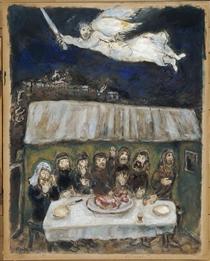
Chagall, Pesach
Chagall, Pesach

It’s the second night of pesach tonight and tomorrow morning is easter. Liberation and resurrection, or liberation and death’s final bow. Resurrection is hard to integrate since its hard proof lies beyond the veil of this world. Liberation, on the other hand, is much easier to integrate because it applies to so many this worldly situations: slavery, imprisonment, forced poverty, mental illness, racial and gender and sexual preference discrimination, being in Trump’s America.

Both are important to me. I long ago left behind the death is no more school of theology. It seems cruel to me, an assertion confounded at every death bed, every school shooting, every war. Death still rides her pale horse, galloping through the living world and pruning, pruning, pruning.

I do, however, retain my confidence in resurrection; that is, the power of the changing world to incorporate death and decay as precursors for life. Each spring, as our temperate latitude winter fades away, bright green shoots spear their way through the soil’s surface. Flowers bloom. Vegetables grow. Trees leaf out. Lambs and kids and calves and piglets are born. All these are evidence of transubstantiation, the literal changing of grapes and bread into our bodies. This transformation happens regularly and green burial will help us remember that we humans do participate in it, that concrete, water-tight “vaults” and expensive coffins do not shield us from our part in the web of life.

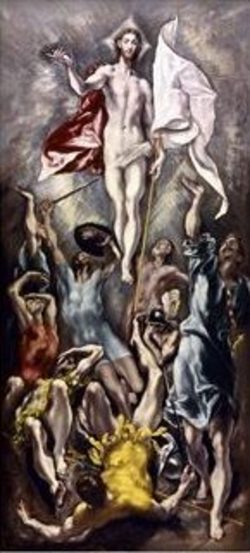
El Greco
El Greco

This weekend presents to us two powerful stories, stories that have changed the world: the exodus from Egypt of Hebrew slaves and the crucifixion and resurrection of Jesus, known by many as the Christ. Narratives have real potency, the ability to change lives, turn the pages of history, answer our deepest questions, quiet our deepest fears. Oddly, you can see this power even more clearly if you take a stance just outside the metaphysical claims, but not in the camp of folks like the new atheists, who are simply boring.

I’m neither Christian nor Jew, my metaphysics is bound up in the ongoing evolution of the universe and literally rooted in the soil of the midwest and the hard rock of these mountains where I now live. Even so, liberation and resurrection, through the stories of the passover and easter, are important to me, tell me about human possibility, about the human capacity to face enslavement and grief with hope, with the chance to turn both into moments of human triumph.

Though it has taken me a while to learn the rudimentary geology of our immediate neighborhood, I now know that we live among three mountains. We live on Shadow Mountain, up a valley that runs from its base to our home. On the opposite side, the west side of this valley, is Conifer Mountain and then, the mountain most visible from our house, Black Mountain.

Black Mountain
Black Mountain

Think of the changes evidenced by these huge landforms. This is rock that was once, millions of years ago, imprisoned far below the earth’s surface, held there by weight and history, perhaps even put there by accretion when another planet slammed into the still forming earth. Yet now I live on it, can see it clearly, far above the surface, pushed out and up by forces wielding power unimaginable, unavailable to us humans.

Is this liberation and resurrection? Not from a human perspective, but from the perspective of our planet, very much so. And yet it does not end there. Once liberated from their stony dungeons wind and water act upon them taking these high mountains gradually down to sea level, then into the ocean itself. In the soil formed in this way plants will grow, animals will feed off the plants. Liberation and resurrection are everywhere, if only we see what we’re looking at.


Resilience

Spring                                                                    New Shoulder Moon

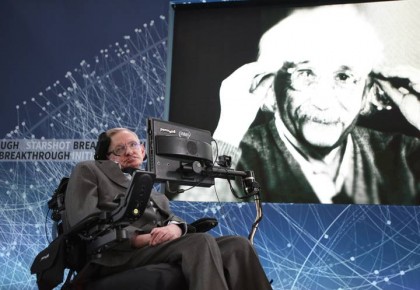
stephen-hawking-albert-einsAs one of Dr. Agronin’s youngest informants said, even when physical decline and losses restrict one’s options, there remains the capacity to appreciate and approach each day with a sense of purpose. “It’s all about how you frame what you have,” she told him.

He cites the concept of “positive aging” developed by Robert D. Hill, a psychologist in Salt Lake City, that is “affected by disease and disability, but not contingent upon avoiding it.” Rather, it is “a state of mind that is positive, optimistic, courageous, and able to adapt and cope in flexible ways with life’s changes.”  Finding Meaning and Happiness in Old Age, NYT, March 20, 2018

The third phase of our lives, the one that we enter when career and creating a family have faded in importance, or ended, has a mental image for most of us past 65 of decline, of a gradual decrease of abilities and agency. This image comes from our childhood when retirement was predominantly of the finish line sort, work was over, now we wait. That waiting often wasn’t long with heart disease or stroke or a bad fall ending it.
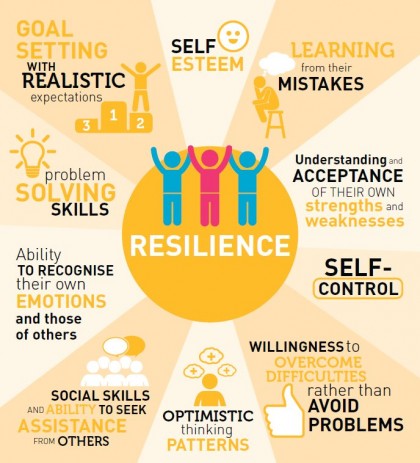
resilenceHopefully, our children, the millennials among them, will look at us and come to that phase of their lives with a different image. My hope is that they will see that aging is the accumulation of years, not a time of diminished hope and diffuse fear, but life continuing. If that image can become dominant, it will look like the diverse approaches people have to their first and second phases. In other words the third phase will have as many distinct trajectories as there are people who enter it. It will not be dormancy, or a pause before dying, but life itself.

Is the third phase the same, then, as the first two phases, just creakier? No. Like the first two, when education dominates, when building a career and raising a family dominates, it has its distinctiveness. Perhaps its most salient characteristic is open endedness. In the third phase there is, at least now, no culturally limned outline; perhaps that will change, I don’t know, but right now, thanks to the old finish line model of retirement, the third phase has no particular flavor. Or, perhaps, it has a negative flavor as I indicated above, of decline and loss of agency. Even that negative flavor though leaves the third phase open.

That very undefined nature daunts a lot of people. If your life counted on work for self-definition, if your family, with children or not, made your life worthwhile, the thought of years, maybe as many as 25 or thirty, with no such hooks for meaning can make the future look bleak, as if you were entering a time when life flows on around you, in spite of you, even without you.
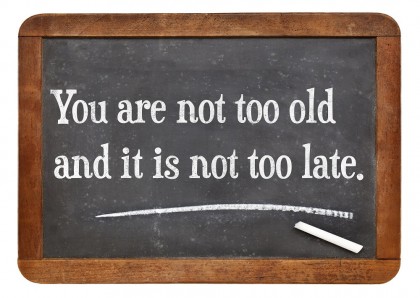
positive-agingI like Robert Hill’s definition of positive aging: (It’s) “affected by disease and disability, but not contingent upon avoiding it.” Rather, it is “a state of mind that is positive, optimistic, courageous, and able to adapt and cope in flexible ways with life’s changes.”

The idea of resilience has gotten a lot of play recently. My sense is that is key to positive aging.

A telling article on resilience in childhood from the Harvard Center for the Developing Child has some hints for us third phase folk. For instance, here are some factors that enhance resilience in children:

  1. facilitating supportive adult-child relationships;
  2. building a sense of self-efficacy and perceived control;
  3. providing opportunities to strengthen adaptive skills and self-regulatory capacities; and
  4. mobilizing sources of faith, hope, and cultural traditions.
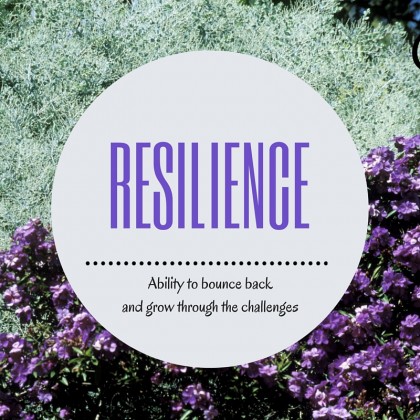
ResilienceNot only in children, I think. Resilience can allow us to accept the changes of the aging body without losing hold of the power of our own lives. With a resilient personality even ALS will not cause us to stop growing. Just look at Stephen Hawking.

As we enter the third phase, or as we cope with its vague demands, focusing on enhancing our resilience will help us adapt, remain flexible. Perhaps resilience is nothing more than following the tao, finding the energy and flow of the universe no matter what externalities are present in life. I’d like to think so.
The Future of Food

Imbolc                                                                           New Shoulder Moon

third plate Mentioned The Third Plate a few posts ago. A book by chef Dan Barber, owner of the Blue Hill restaurant in Manhattan and a principle in the Stone Barns Center for Food and Agriculture in Westchester County.

SELECT TASTING OR DAILY MENU
Rotation Grains
smoked farmer’s cheese and broccoli pistou
~
Maine Diver Scallop
bacon, winter squash and kohlrabi
~
Stone Barns Pig
tsai tsai, horseradish and pickled grapes
~
11 day dry-aged bolero carrot steak
mushroom, kale and onion rings
~
blue hill farm milk
yogurt, turmeric and ginger
~
Malted Triticale porridge
White Chocolate, quince and Beer Ice Cream
Stone Barn Center for Food and Agriculture
Stone Barns Center for Food and Agriculture

He uses four big concept areas, pictured at the top: Soil, Land, Sea, Seed to tell a story about what he sees as the future of food. He’s trying to take the conversation about food beyond the now well known critiques of books like Hard Tomatoes, Hard Times, Michael Pollan’s The Omnivore’s Dilemma, Aldo Leopold’s The Sand County Almanac, and any number of books published in the late sixties like Eull Gibbons, Stalking the Wild Asparagus, Small is Beautiful by E.F. Schumacher. Throw in Wes Jackson’s Becoming Native to This Place, almost anything by Wendell Berry and the thought world championed by John Muir and Edward Abbey and you can see the big conceptual field Barber has tried to plow.

He seems on to something. Using examples like the dehesa in Spain that produces jambon iberico, The Bread Lab run by Washington State plant geneticist Stephen Jones, the farm of Klaas Martens who teaches him about reading the language of the soil, Veta La Palma, a Spanish aquaculture corporation set up in an estuary of the Gulf of Cadiz, and Anson Mills, a fascinating concept by Glenn Roberts who uses landrace farming to resurrect old grain crops and nurture new ones, he seems to propose a recursion to localized crops, that is, wheat, for example, that grows best in upstate New York.  This recursion includes animals, too, where their rearing takes on the characteristics that oenologists call terroir in wines.

nutrition

This recursion would have chefs take their cues, their menus, from what farmers can grow in their immediate area and from those sites with a focus on sustainability and ecosystem regeneration. The fascinating aquaculture experiment that is Veta La Palma  uses the Guadalquivir River and the salt water of the Gulf of Cadiz to farm high quality sea bass. The focus does not have to be only local or regional but can include instances of food production with ecosystem supportive techniques.

This seems similar to the disaggregation idea in power production, local solar and wind and geothermal and hydro.  Anything that deemphasizes the industrial and the corporate in favor of the local and ecological.

EatLocal

He talks about his idea in agriculture as middle agriculture, that is agriculture smaller than corporate, but larger than the small family farm or the boutique garden. He’s trying to get to scale sufficient that it could actually feed large numbers of people.

It makes me want to cook in the way he suggests. That is, find food grown here in the Rockies, use it along with food sourced from the Veta La Palmas, the dehesas or the Bread Labs, and build our menus at home around it, changing with the seasons. Right now that would take a good bit of work, but it might be possible and it would certainly be worth it.

A continuing theme.

Great Wheel go bragh!

Imbolc                                                                 New Shoulder Moon

Erin go braghMade corned beef and cabbage for dinner last night. Erin go bragh! When I decided to write novels, now long ago, Kate suggested I find an area that I could relate to. I chose my Celtic heritage, both Welsh and Irish. It is a fertile realm, filled with gods and goddesses, fairies and banshees, this world and the other world. Not so deep into it right now with one exception, the Great Wheel.

The Great Wheel, though, continues to inform my spiritual journey, a steady point on an often changing ancientrail. The Great Wheel is us, homo sapiens, using consciousness to ground ourselves on this planet and to its fate. Still seems a good place to start thinking about our relationship to the whole, better than any text. Great Wheel go bragh!

Took a sack full of food into the Aurora Olson’s yesterday afternoon. Jon, Ruth and Gabe have all been home sick since Tuesday. Gabe has pneumonia, Jon and Ruth the respiratory illness that preceded it for Gabe. Another positive of being close enough. Ruth sent a text Friday night, “Yo. Can you bring us some food?” I didn’t stay because neither Kate nor I want to get sick before her surgery on Thursday.

art

As long as I was in Denver, I drove to Meiningers. This is the big art supply store in the Denver area. It’s filled with paints and papers and brushes and pens and tape and pencils and cutting tools. A wonderful place, its existence alone stimulated me, and I’m sure every customer who goes inside.

yasumotoIts sumi-e material material, though, was feeble compared to the hole in wall (by comparison), Red Herring. Meiningers’ selection of brushes were all cheap, beginner’s brushes. They did have a couple of Yasumoto inks that I bought, an Ultra Black and a Black Gold. I also picked up an Olfa knife to cut paper, from the kraft roll that came last week and from the rolls of rice paper I bought from Red Herring and Blue Heron, an online sumi-e store.

Not sure why this has become so important to me in so short a period of time, but as I said below melancholy allows the heart to catch up with decisions already known to the subconscious.

Life flows on, in endless song, I can’t help singing.


Regress to advance

Imbolc                                                                             New Shoulder Moon

“All changes, even the most longed for, have their melancholy; for what we leave behind us is a part of ourselves; we must die to one life before we can enter another.”
– Anatole France

melancholyThe last letters of the Hebrew alphabet now have renderings in sumi-e, lying on my table ready for quotes and the chop. A member of Beth Evergreen last night referred to me as an artist. Oh. I thought he said audience. Artist is not a word I’ve ever associated with myself so my brain heard something else. A revealing moment. How others see us is not always, perhaps often, not the way we see ourselves.

An obituary on Terry Brazelton had this summary of a major finding of his research: “Development does not occur on a linear path, with each skill building on earlier ones. Rather, it unfolds in a series of major reorganizations in which children temporarily regress before mastering a new developmental milestone.” NYT

Well. That explains melancholy, at least as I’ve experienced it. There’s a plateau effect, then a hesitation, a pause while the psyche incorporates a new way of being, one probably not available to consciousness at the time of the pause. Since it’s inchoate, the reorganization seems like a regression, a stutter. The mind and the body both slow down, awaiting something they don’t understand. Result: melancholy.

 Van-Leyden St. Jerome in his Study by Candlelight (1520)
Van-Leyden St. Jerome in his Study by Candlelight (1520)

If you’ve read my posts over the last month or so, I think you’ll see what I’m talking about. My psyche had moved on, already aware that I needed more tactile moments in my daily life, already aware that it was time to resort my priorities based on a new constellation of possibilities made real by our move.

Last night at the shabbat service a rabbi friend of Jamie’s gave a short reflection. She had us consider an unusual moment in the Torah when the former Hebrew slaves remembered fondly the foods they had in Egypt. Using this seemingly inscrutable nostalgia for a time of bondage, she suggested that during transitions, a time of instability, wandering in the dessert for example, we often want to return to the stable state we know to ease the anxieties and uncertainties of a transition. Thus, when faced with a period of eating manna during an often frustrating movement toward the land promised, but not yet reached, even slavery seemed to have its charms.

That nostalgia, I think, is the root of melancholy, a hope that the past can ease the upset of the present. The psyche knows that’s a false hope, a trap, but is unable to articulate why. So, stasis, moving neither forward nor backward, which the ego interprets as negative without knowing why. Really, the moment is gestational, a new way awaits its birth. Not back to Egypt, but on to the promised land. Not back to the life of forty years in Minnesota, but on to the new life developing in Colorado.