
Category Archives: Feelings

Fear and Honor

Lughnasa                                                                 Monsoon Moon

After a swim, from September, 2015
After a swim. September, 2015

Yesterday and today are about reentering mountain world. Tired yesterday, probably today, too, from the journey. The electric panel needed a gentle push to return power to the eastern wall of Kate’s sewing room. E-mails needed to be sent back to the auld home, thank yous and follow ups. Pushed Superior Wolf out the door to an agent, the biggest toe I put back in the world of daily life, save one.

The biggest. Mussar Vaad Practice (MVP) group last night. I have three clusters of commitments in Colorado: family/home, Beth Evergreen and the Sierra Club, my writing. The time last night with the MVP was a return to the world of Beth Evergreen. Both Kate and I had significant matters to share.

The practice this last month focused on bitachon, trust. We placed bitachon on a continuum with trust at one end and fear on the other. I chose to concentrate on fear, specifically the fear that has held me back for almost thirty years, fear of submitting my work for publication. While on the Durango trip, I read an essay about setting a rejection goal and, as I said before, I set 100 rejections as my goal for the year. Pushing that article together with my commitment to practice facing my fear resulted in my first organized and disciplined approach to submitting my work.

Aboard the lucky dragon

In group last night I admitted/confessed/shared the results. Each rejection I’ve received, two so far, hurt, made me ashamed of my Self in such a deep way that I can’t describe it. Like the grief I experienced at the MIA last week the shame in this instance came unexpected. Why shame?

At one point last night I buried my head in my hands to emphasize both that searing feeling from the rejections and the less searing, but still real, shame of not facing this fear before now. After I talked, I didn’t disappear, melt down like the Wicked Witch of the East. No one ran out of the room, too disgusted to still talk to me. In fact, the reception of my experience was careful and kind. As I like to think I would be to someone sharing something similar.

Now, in the way of these things, the angst drained out by exposure, I imagine submitting work will become a routine matter. These dates, this agent, that magazine, following up. Writing more work. Continuing the work of writing.

20180725_171404
At the ICE protest. July, 2018

Kate shared an even more profound realization. While it’s really hers to share more publicly, I can report that after she spoke, her confidence level rose and I could hear, see a lighter Kate. Both of us helped ourselves change our own lives. That’s a powerful result for an hour and a half.

Kate remarked that kavod*, honor, is not only person to person, but can be applied to a community. We both regard Beth Evergreen with great respect. That’s the character virtue, soul trait, for next month.

My practice is seeing the holy soul. At the meeting I said my practice would be seeing the holy soul in others, but on reflection, I want to see it also in myself and in animals and plants. This broadening of the practice came when I realized last night that I have a gift for seeing the holy soul of dogs. I relate to all dogs as if they were presenting their most sacred self. I see cows and horses, mule deer and elk the same way, though with much less experience. And, can I treat my own holy soul, my own most sacred self as respectfully as I treat that of others. This last may be the key challenge for the month. We’ll see.

Rigel, being beautiful, July, 2018
Rigel, being beautiful. July, 2018

The term meaning honor and respect is very important in any society, but even more so in Middle Eastern societies. The English word “respect” means “look back (again), regard”; honor means “regard with great respect, dignity.” The Hebrew kavod is related to kaved, meaning “heavy.”* Indeed, until not long ago, the heavier a person was, the more respectable he or she was, for rich people could afford to eat whatever they wished, whereas poor people were undernourished, eating very little and looking light, unimportant. A related word is kibbud, meaning “honoring (parents, teachers)”; as well as “(serving the guests) refreshment” (thus showing them respect).

*Also related to kaved “liver,” the bodily organ assumed to be the source of dignity, just as the heart is the source of emotions and intellect.Jewish Journal

Unexpected

Lughnasa                                                        Monsoon Moon

70+ miles I drove yesterday morning. First over to Oak Grove, close to here, then to Stevens Square where I photographed the first Community Involvement Programs building, then the second one. I lived in both. Forgot the place on 1st Avenue, but I’ll get that. Over the course of the morning I visited streets and neighborhoods I’d come to know intimately, St. Paul, New Brighton, Andover, Minneapolis. More on the feelings from this homecoming later

The biggest surprise of the day came at the Minneapolis Institute of Arts. I got there about 2:30 or 3:00. Picking up my badge was long in the past, but my body remembered. Passed the guard desk by. The lobby area is completely, well, almost completely different. Tables, a big coffee shop, redone gift store. Pleasant.

I walked all the way back toward the rocks shaped in Lake Tai. Called scholar’s rocks their strange forms, curves, sharp edges, diversity reminded Chinese literati of the mountains, their power and mystery, but most importantly, of the Tao.

Up the first flight of stairs and I was in the Asian arts wing. It holds an extensive collection of Chinese and Japanese art as well as more modest exhibits of Indian, Tibetan, Vietnamese and Thai art. A collection I came to know very well. There were various Buddhas, some calling the earth to witness enlightenment, others with the mudras of reassurance, of wish granting.

A favorite part of the collection for me is the large hall containing Chinese paintings, just off the Buddhas display. Moving from one depiction of mountains to another, often scrolls longer than I am tall, there were the fantastical shapes towering up, up, up, with some small human, usually a lone scholar, sitting watching a waterfall, gazing up at the clouds. The closer I looked, and I examine these painting very carefully, the more an unexpected feeling crept me over me. Grief.

It was subtle at first, felt like simple nostalgia, a sort of sadness mixed with the wonder I’ve always felt among these objects. Slowly though, as I saw the Fergana stallions, the famed blood sweating horses from the area of the ‘stans, and noticed the upcurled lip of the copper sculpture, a rare, fine piece of work, and realized I’d never taken in his mouth before, the feeling became clear. I missed this place so much. It was an ache, a hole in my heart. Unexpected. Very.

The feeling stayed with me as I looked at a long scroll depicting a festival along a river, the Wu family reception hall, the new arrangement of the Japanese collection. It came most into focus when I looked at the tea implements, the tea house.

As I left the Asian collection and went into the excellent rearrangement of the African collection, the feeling dissipated. It did not return while I visited the Native American and Latin American galleries. Nor did it return when I saw a couple of my favorite paintings, Goya’s Dr. Arrieta and the MIA’s Kandinsky. I don’t recall its title. In theses collections I was merely a museum goer, a knowledgeable one, yes, one familiar with the art, deeply familiar in some instances, but no longer experiencing that hole in my heart.

I’m not sure what to make of it, but it was strong, very strong and it has a significance I’ve not yet sorted out.

From the MIA I went over to the Red Stag, sight of many Woolly meals over the years. Tom and Bill were already there. Ode, a colonoscopy prep victim on Monday, got good drugs at the procedure, enough to make him lose a whole day. He forgot. When reminded by Tom’s call, he came down.

It was a good visit, normal in its way. A place we’d been before, together. We’d been together many times, this was one more. Yet it was also abnormal since 900 miles separates me from this normal moment. These are life-long friends and life isn’t over yet.

Losing Daylight

Summer                                                                Monsoon Moon

The big Dodge Ram sits in our garage, so it won’t get hit with hail in case we have a thunderstorm. Nothing says I don’t give a damn like returning a pock marked car to the rental folks. Supposed to go back today.

Kate had a couple of days clear of nausea, then got hit hard yesterday. It’s difficult to describe how debilitating it is to experience this inner discomfort regularly. I can see it. I can sort of imagine it, but she’s dealing with it. No. Fun. At. All. I feel bad for her, with her.

Here in Conifer we’ve already lost 20 minutes of daylight since the summer solstice, 14:59 on June 21, 14:39 today. I go to bed at 9 pm and I can already tell the difference. It’s beginning to get dark now at 9. The darker it gets the happier I am and, as an added bonus, the darker it gets the cooler and wetter it gets, helping sleep and mitigating wildfire probabilities.

Feeling a little sad this morning. Kate and I had an argument last night. It happens, but I never feel good when it does and the feeling lingers. Reminds me that our moods are fickle, sometimes referented, sometimes not, but always changing. Not becoming attached to one mood or another, up or down, being equanimous (yes, it’s really a word. either that or it was made up in our Mussar group) helps level out our moods. Although, I do appreciate both a good up and a good down. Vitality does not lie in sameness.

Looking forward to seeing Minneapolis and friends the first week of August. Groveland Unitarian-Universalist celebrates becoming a Covenanting Community in the UUA on August 4th. They wanted me to come and I’m pleased they do. Like the days in Durango I’ll get a chance to catch up with folks with whom I’ve had long term relationships, seeing Woollies and I hope docent friends as well as the Groveland folks.

Plus, I’m staying at the Millennium Hotel which is on the edge of Loring Park. I lived in Loring Park up on Oak Grove, a wonderful third floor apartment that, thanks to its location on the hill, had a beautiful view of downtown. That was back in 1975/1976. Which is, wait for it, 43 years ago or so. 28. Whoa.

I’ll get to see the statue of famed 19th century fiddler, Ole Bull. When I was chair of Citizens for a Loring Park Community,  we turned down the Daughters of the Sons of Norway who asked us to let them move it somewhere cleaner and safer. Than our neighborhood? Come on. I’ll also get to walk to the nearby Walker Art Museum and the somewhat further away Minneapolis Institute of Arts. When I head to the MIA, I’ll pass through Stevens Park, which was my first home in Minneapolis. I was a live-in weekend caretaker and janitor for Community Involvement Programs. The old Abbott Hospital was right across the street. Lots of Stevens Park stories.

Not to mention that wonderful road trip across the Nebraska plains. Which I actually enjoy when enough time lapses after I’ve done it.


Fear and Bitachon, trust

Summer                                                                     Woolly Mammoth Moon

article-new-ehow-images-a07-ti-j3-duties-literary-agent-800x800Spent most of yesterday on submissions. I revised School Spirit, taking 2.0 down to 2,700 words from 4,800, and submitted the revision to Mysterion. I developed a table in Word to track my submissions. It has these columns: submission, work, publisher, response, rejection, acceptance, contract, published. Later on today I’m going to begin revision of Superior Wolf, which I want to get out as soon as I can get it where I want it.

I now have an Evernote file for Novel and Short Story markets which contains 25 new markets and I will build that file. I need another log to track reading periods, periods when a particular market opens to submissions. They are often only a month long, so you have to both have work that fits their interests and know when to send it. Once I get a rhythm going here, I’ll get back to agent submissions, arguably more important than submissions to markets.

tumblr_mh1q88lsfr1s19s9xo1_500So, I’m facing my fear, not only that, I’m leaning into it, grabbing it by the scruff of the neck and saying, “Come on, now. Message received. Stop already.” This is partly mussar driven, the practice I wrote about on July 6; but, it’s also driven by self talk that long preceded mussar, though ineffectually, and even a bit by the shame and embarrassment.

What, exactly, has the fear been doing for me? It’s tried to protect me, fence me off from disappointment and failure. It feels the pulse of shame before it rushes through me and says, go another way, that feels bad. Just keep your head down, don’t poke it up, make yourself visible. And, of course, in spite of that self-protective urge, the result has been that for 30 years I’ve felt disappointed and I’ve failed at publishing because I never took the risk.

Fear, like doubt, is good. To not fear the fall from a high cliff is stupid. Getting a flu shot makes sense because fear rightly says the flu is worse. Slowing down around a mountain curve? Sure, fear tells me I’d fly off into the void otherwise. But fear is pluriform, it responds to many things. When on the Savannah, a fear of vulnerability probably sensed a predator nearby, or an enemy. Pay attention. Hide. Be ready to defend yourself against death. Having a red light moment is adaptive, until it isn’t.

2011 05 06_0875Publishers and editors and agents, even critics and readers, are not lions or hyenas on the veldt. The fear I’ve allowed to rule me for the past three decades however has believed them so. The shame then is a complicated emotion which recognizes the self-deception and self-protection. It knows I’ve chosen the critique of intimates, why hasn’t Charlie ever published, to the critique of possible readers. That’s embarrassing, but it’s where I’ve been for a long, long time.

Now, however, a strange, new moment is on the rise. In part I got tired of the narrative I’d been telling myself, been telling others. “I’m just not good at marketing.” I call bullshit on that. In part I read this article about setting a rejections goal and this time it made sense to me, a sort of akido move, use the power of your adversary against them. In part it was this month’s mussar practice of facing fear in order to learn about trust.

Yesterday, for the first time I can ever recall, I felt like I was getting down to the business side of writing. Yes, I’ve made submissions before, but I have never made as organized and concerted an effort as now. It feels good.

But, if I’ve begun to push the fear, tried to educate it that this is not an arena where it’s helpful, which I have, I’ve begun to wonder about it, too, from the mussar perspective. If I face the fear, face it down, then does trust appear? If the student is ready…

CBE (1)I know that fear vitiates trust. If we’re afraid of another person’s motives, we’ll never get to know them well. If we’re afraid of public speaking, no one will hear us. If we’re afraid of our own motives, we’ll take few risks. In these cases, if we face the fear, listen to it, talk it down, choose to act differently, then we may find love, may discover that people want to know what we have to say, may open ourselves to the world’s rich opportunities.

I’m starting from the fear, however, not trust. If I eliminate the fear, if I continue (and I’m pretty sure I will) to organize, revise, submit, and create new work, will trust appear? In what? The question I’m asking is this, does eliminating or modulating fear create trust, always? If so, in what?

20180624_095408
seeing through the fear goggles on

In this instance, for example. If I have pushed back the fear, acknowledged the shame of constant wheedling about submitting my work, and have finally gotten somewhere with both, in what do I now have trust? That eco-system of publishing and readers will therefore embrace my work? Not really up to me beyond getting my work out there. That I’ll be a better person? Maybe. Since the fear has weighed heavily on my psyche for all these years, lifting it might have, probably will have, a positive effect on my sense of self. Perhaps I’ll trust life more, be less reticent. This would be huge, obviously.

Don’t think this is the heart of it though. Somehow the trust that emerges is, more importantly, in acceptance of vulnerability, trusting that when I’m afraid, or even ashamed, that I can still be in this world. We’ll see, of course, if this is true, but it feels right. Fear, then, can be seen as a tool, an important and necessary one, but one to pick up and then set down. It’s not a tool we want to always have to hand and when it is in hand, we need a plan to get it back in the toolbox after it’s done its work.


99 to go

Summer                                                                              Woolly Mammoth Moon

shame-1-1-2-638Ouch. I got this note back:

Dear Charles,  Thank you for sharing your writing with us! We received a very large volume of submissions and can only accept a small number; unfortunately, we are going to have to pass on your work this time. We wish you well as you continue writing, and we encourage you to consider submitting to us again in the future.” submission to the Metz Review, School Spirit

When I read it last night, a sharp flash of shame and embarrassment went through me from top to bottom. The old familiar response came, too. Not gonna do that anymore and I marked the e-mail done to get it off my screen.

shame 2Then, I paused. Wait. This is the moment I wanted. Lean into the shame and embarrassment, see what it means. Why do I feel that way? So many reasons. Personal competence. A big risk taken with no results. Kate’s been so supportive of my writing. Most of all though it’s my work, being rejected. And it feels bad.

OK. So, I feel all those things. I’m vulnerable, made myself vulnerable, put myself and my work out there. And, I’m not dead. I didn’t shrivel up like the Wicked Witch of the East. The fear is me trying to protect myself from rejection, from disappearing, yet it will cause, has caused me to reject my work myself; to write, then let the work lie in bits and bytes, hidden on my hard drive.

Maybe it’s like a phobia, the more times I expose myself to rejection, the less painful it will become? I don’t know, but in any case I know I have to lean into rather than flee from it. This fear is real and painful.

shame 3Not sure here all of a sudden. It was shame that I felt when I read this note. Didn’t realize it, name it until I began writing this. Why though? Why shame? Perhaps it’s from that old, underlying conundrum, am I living up to my potential? Who’s to say? Perhaps it’s wanting to be seen as a creative person, a writer of books, yet secretly suspecting that I’m not worthy of those identifiers. Perhaps it’s as simple as failing and being ashamed of failing?

shame3What I do know, for sure, is that this shame, a hot desire to hide, to cover myself, to flee works against me, is not for me, in any way. And I could identify that paradox in another, in Kate or one of the Woollys, or a friend at Beth Evergreen. I would have compassion for it, yet also have a tough love move against it. It’s not who you are, it’s an attack on yourself from within. Perhaps we could call it Shaitan, the Devil because it is evil to push yourself down or to push another person down. Why? Because living is all we have and shame makes us shrink from life.

Shame, huh? Gonna have to give this more attention.

Face the Fear

Summer                                                                            Woolly Mammoth Moon

300px-Gutenberg_pressAt the Mussar Vaad Practice group we all come up with a practice for the coming month, a practice based on that month’s middah or character trait. Each month the congregation has a middah of the month. Emunah, or faith was the middah last month. My practice focused on sharpening doubt, a practice that made me feel more alive, more grounded in faith as a necessary human act.

This month I’m getting even closer to the bone of my inner skeleton, as we focus on bitachon, or trust. This radical confidence is a natural sequelae of emunah. Like doubt is on the same continuum as faith, but at one end of it, trust is on a continuum, too, with fear. In the Jewish approach to these matters it’s not doubt bad, faith good, fear bad, trust good; it’s about knowing how to deploy them at the appropriate times, or if not deploy them, be able to feel them, to know them without hiding.

Following on the rich experiment with sharpening doubt, I decided to go with the same approach, the far end of the continuum, and focus on fear. I said as much at the MVP, but the fear I wanted to confront embarrassed me (probably making it an excellent candidate), so I didn’t name it there. I will now.

Albert Camus 1955
Albert Camus 1955

My fear, the core fear, is exposing my writing to publishers and critics. Ancientrails doesn’t ignite that fear for some reason, maybe because it’s seen by only a few, but sending off my novels and short stories and poems to publishers causes my fear to burst into a wildfire.

It’s quiet, though. How it works is I think about submitting work, I make a move or two toward that end, then abandon it. Often not intentionally, at least not overtly, but I allow this or that to get in the way. Query letter? I can’t do a good one. Mail the manuscript? Too much hassle. Find an agent? The old writing ouroboros rises from north sea. Nothing published? An agent won’t want my work. Yet, I need an agent to get my work published. A problem that constantly eats its own tail.

artistsThat same fear is the one I faced after the Durango trip, writing here about setting a rejection’s goal. I have made two submissions so far, one of Missing, a novel, and one of School Spirit, a short story. By focusing on my fear of rejection, the vulnerability it exposes, the possibility that I’ve been wasting my time for over 20 years now, I hope at least to get my work out in the world. Whether any one wants it is, well, up to them.

MAKING ART copyI’m embarrassed to write this, ashamed I’ve been so fearful, yet I have been both embarrassed and ashamed for most of the most of the time I’ve been writing. Now is not different. The only way I can make it different is by finding publishers and agents and getting my work to them.

I’ll let you know how it goes. I just got a new shot of magazines and book publishers open to submission today. That means tomorrow I’m going to be reading submission guidelines, looking at finished work and getting stuff out there. Staying at it is the key, I know that. Persistence. Something I’m usually pretty good at.


Reenchanted

Beltane                                                                                  Mountain Moon

kilauea fissure 7, opening on May 5th
Kilauea fissure 7, opening on May 5th

Still fascinated by the eruption of Kilauea. The Leilani Estates, houses bursting into flame, residents standing dazed by their vehicles after evacuating, monster movie scenes like the one below, show humans as do many Song dynasty paintings, small and insignificant next to mountains and rivers.

Listening to residents of the Leilani estates describe the shock is a lesson in reenchantment of the world. There were expressions of grief, of course, and bewilderment. All knew this possibility existed, but, like residents of flood plains and the wildlife-urban interface (us here on Shadow Mountain), hoped they would be spared. The lure is beauty. Always beauty. We take risks to live in beautiful places.

At the Columbian Exposition

Some said things like, “Well, if madame Pele wants the land…” “Pele goes where she wants.” There was, in these remarks, no irony that I could detect. No wink, wink, you know what I really mean. The native Hawai’ian’s faith in Pele, given witness by the offerings at Halemaʻumaʻu Crater and numerous legends and dances, has, at least partially, reenchanted the Big Island for haoles (non natives). Whether they believe in a real, physical goddess or not, probably not, I sense the feelings of awe and the mysterium tremendum et fascinans that Rudolf Otto associates with the numinous, the essential components of the holy.

What’s happening at Leilani Estates is similar, perhaps the same, as my experience here on Shadow Mountain when I came for the closing on our home. The three mule deer bucks in our backyard, curious and welcoming, were mountain spirits blessing our move. I knew it while standing there with them, present with them in this new, strange place. It is not, in other words, that the numinous has disappeared from our encounters, only that we have unlearned how to know it. The reductive nature of scientism, that attempt to totalize our understanding with numbers and equations and laws, and the restrictive arrogant nature of religions certain that they know truth, has blinded us to the numinous.

numinousReenchantment has a precursor experience, a moment when we embrace the awe and the mystery, a feeling that we each experience, perhaps even experience often (childbirth, death, sunrise, the greening and flowering of spring, a snowstorm, bitter cold, blazing heat, the vastness of the ocean, love), but a feeling we have allowed others to reframe for us. The laws and beauty of scientific understanding do not explain away, as many assume. They are descriptive, a language of their own about the world in which we live. But they have not stripped out awe and mystery though men like Richard Dawkins, Sam Harris, and Christopher Hitchens insist on it. Empiricists, fed by scientism, want to suggest only through data and analysis can we know the truth.

numinous universe-2Or, the experience of the Celts and the Roman Catholic church is instructive here, one faith’s certainty can leave no room for the numinous anywhere but in their dogma, their rituals. Catholics built churches over Celtic holy wells. They deployed words like heretics and blasphemers and pagans to undercut the authority of the old faith. They appropriated Celtic holidays by turning Lugnasa into Lammas, Samain into All Saints. Mordecai Kaplan, the founder of Reconstructionist Judaism says it well, “It is not the seeking of God that is the problem, it is the certainty of those who believe they have found God that is the problem.”
We can learn from the residents of Leilani Estates. We live in a wild universe, one well beyond our capacity to either control or understand. When we can set aside the certainty of others, the narrow thinking, and open ourselves to awefull and wonder of wilderness home, then we can know the ordinary holy, the secular sacred, the profane faith of those whose revelations no longer come from books or laboratories, but from that wilderness itself. That is reenchantment, that is reconstruction, that is a reimagined faith.

A Dark Mystery

Spring                                                                       Mountain Moon

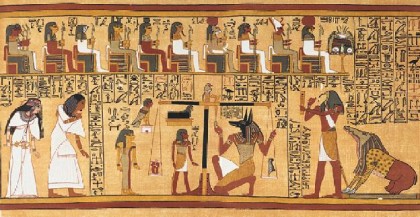
death book of the deadSuicide. A dark mystery. It closes off communication, denies explanations. Though it seems cruel to me, the Roman Catholic prohibition against suicide puts a moral weight on the individual’s scales. Says, wait. Pause. They see it, clearly I think, as self-murder, but there is no nuance in the stance. No admission that life sometimes becomes a heavy burden, heavier than can be borne.
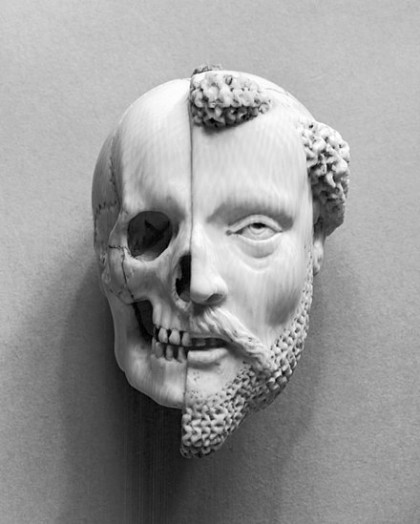

Among people I know, I know of two suicides, one a software programmer, an adult, and another, recent, a young man with apparently psychotic tendencies. I also know, closer to home, of an instance of suicidal ideation. That’s the difficulty, it’s so easy to proceed from considering suicide to a brash act, a momentary lapse in judgment that becomes tragically permanent.

Death Pendant_with_a_Monk_and_Death_-_Walters
Pendant_with_a_Monk_and_Death Walters

I applaud the hot lines, the counseling centers, the encouragement to see a person slipping away and to do something concrete about it, now, before nothing can be done. I’m also sure that no number of such services and attitudinal shifts will stamp out suicide.

The French existentialists posited suicide as the ultimate moment of human freedom, choosing how to die expressing a final raised fist against the crowd, against ennui, against the absurd. And, as an instance of individual choice, I agree. It is this stance toward suicide that carries forward into the debate about choosing death when a terminal illness allows for no hope.

Death remains the barrier about which we all wonder and about which we have no reliable information. Is it an extinction level event for the individual? Or, is it merely a passage way to a different mode of existence? How about reincarnation? I have no idea. I do know that our body returns its star dust to the great pool where it will resurrect in some other form.  I do know that though the dead no longer have agency, they can continue to influence life through wills, through creative work, through those they affected.

isle of the dead, arnold brocklin

It is this profound and blanket uncertainty that gives death and, by extension, suicide, their fearsome reputation. Yet it does not need to be so. As I read recently, every generation finds entirely new clerks at the grocery store, politicians in office, farmers and factory workers, scholars and dancers. Death itself is not an uncertainty and in that intransigence gives away its secret. Death is not abnormal, in fact it is a perfect example of normal since it affects 100% of humans, of all living things save for a handful. That which is normal is just that, normal.

No one, to paraphrase Garrison Keillor, is above average when it comes to dying.

OMG

Spring                                                             New Shoulder Moon

anxietySurprising, sophisticated, jawbreakingly awful sign on a conservative church sign board: “Anxiety is just unbelief in disguise.” If you live in Christworld, there is a certain sense in which this appears to be true. If only your belief were strong, you would need have no worries. Look at the lilies of the field.
However, assume for just a moment that your metaphysic is wrong. Then, this sentiment is cruel. It doubles up the anxiety for those of us who are anxious, a whole big bunch of us*, by adding weak faith to the angst we already feel. And, even if God is watching out for you in a way totalizing enough to assure you in every situation, punishing anxiety as weak faith is not going to move you closer to faith. The opposite. It will push you deeper and deeper into the slough of despond.

Now, what’s funny is that I saw this sign on my way to The Happy Camper, the dispensary just over the Park County line near Bailey. Picking up our regular supply of thc, a sleep aid we’ve been using for a while now, is a monthly or so trip. Why do I need it? Anxiety is a bitch goddess who demands sacrifice as soon as my head hits the pillow. Has been true to a greater or lesser degree since high school.

Anxiety is not as much of a problem now as it has been, but the long established habit of chewing over the day once the lights are out has become a regular time for my brain to turn on, consider relational or political or philosophical matters. A habit I’ve been unable to break.

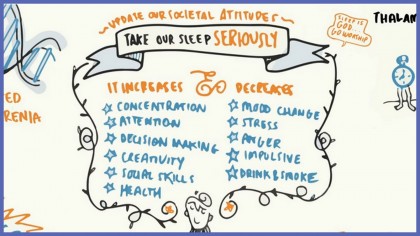
sleepFriend Tom Crane sent me a book, he does that every so often, “Why We Sleep,” by Matthew Walker. This is an excellent review of the latest in sleep science and daunting as a result. Sleeplessness has drastic health ramifications, enough to make the favorite yuppie mantra, “I’ll sleep when I’m dead.” ironic. What I can’t understand, and Walker says the same, is the lack of attention the medical profession gives to sleep. Many of us are desperate to get to sleep. And by desperate I mean desperate. Yet the help offered is often better sleep hygiene, a good idea, I practice it, doesn’t do the trick for me though. If help is offered at all.
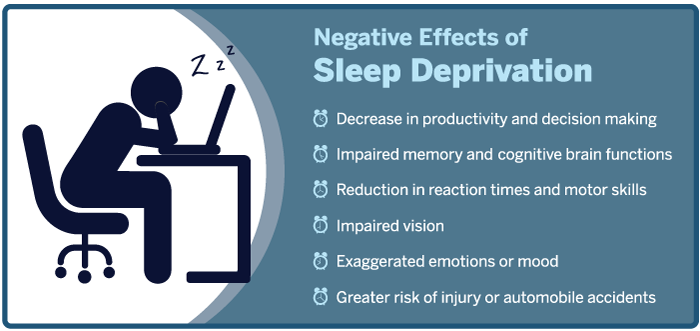
I hate to add this idea to all those others out there, but this is a NATIONAL CRISIS. Especially for those of us in the third phase when sleep becomes harder for a variety of reasons.

SleepDeprivation3We have elaborate protocols for people with pulmonary issues like COPD or emphysema, cardiac issues of many nuances, joint replacements for tired and painful knees, shoulders, hips; but, what do we have for a part of our lives that constitutes a third of our time use each 24 hours? Yes, there are sleep centers, but they’re not on offer often and besides it seems that cognitive behavioral therapy is the current gold standard. Problem is not many CBT folk specialize in sleep and we’re certainly not referred to them anyhow.

It’s enough to make a guy lose sleep.


*Anxiety disorders are the most common mental illness in the U.S., affecting 40 million adults in the United States age 18 and older, or 18.1% of the population every year. Anxiety disorders are highly treatable, yet only 36.9% of those suffering receive treatment.  AADD

Regress to advance

Imbolc                                                                             New Shoulder Moon

“All changes, even the most longed for, have their melancholy; for what we leave behind us is a part of ourselves; we must die to one life before we can enter another.”
– Anatole France

melancholyThe last letters of the Hebrew alphabet now have renderings in sumi-e, lying on my table ready for quotes and the chop. A member of Beth Evergreen last night referred to me as an artist. Oh. I thought he said audience. Artist is not a word I’ve ever associated with myself so my brain heard something else. A revealing moment. How others see us is not always, perhaps often, not the way we see ourselves.

An obituary on Terry Brazelton had this summary of a major finding of his research: “Development does not occur on a linear path, with each skill building on earlier ones. Rather, it unfolds in a series of major reorganizations in which children temporarily regress before mastering a new developmental milestone.” NYT

Well. That explains melancholy, at least as I’ve experienced it. There’s a plateau effect, then a hesitation, a pause while the psyche incorporates a new way of being, one probably not available to consciousness at the time of the pause. Since it’s inchoate, the reorganization seems like a regression, a stutter. The mind and the body both slow down, awaiting something they don’t understand. Result: melancholy.

 Van-Leyden St. Jerome in his Study by Candlelight (1520)
Van-Leyden St. Jerome in his Study by Candlelight (1520)

If you’ve read my posts over the last month or so, I think you’ll see what I’m talking about. My psyche had moved on, already aware that I needed more tactile moments in my daily life, already aware that it was time to resort my priorities based on a new constellation of possibilities made real by our move.

Last night at the shabbat service a rabbi friend of Jamie’s gave a short reflection. She had us consider an unusual moment in the Torah when the former Hebrew slaves remembered fondly the foods they had in Egypt. Using this seemingly inscrutable nostalgia for a time of bondage, she suggested that during transitions, a time of instability, wandering in the dessert for example, we often want to return to the stable state we know to ease the anxieties and uncertainties of a transition. Thus, when faced with a period of eating manna during an often frustrating movement toward the land promised, but not yet reached, even slavery seemed to have its charms.

That nostalgia, I think, is the root of melancholy, a hope that the past can ease the upset of the present. The psyche knows that’s a false hope, a trap, but is unable to articulate why. So, stasis, moving neither forward nor backward, which the ego interprets as negative without knowing why. Really, the moment is gestational, a new way awaits its birth. Not back to Egypt, but on to the promised land. Not back to the life of forty years in Minnesota, but on to the new life developing in Colorado.