
Spring Anniversary Moon
 The third phase, that phase after the career and nuclear family focused portion of our life has come to an end or is winding down, has its own delights and horrors. Auto-didacts, those with pleasurable, but challenging hobbies, those with adequate funds, those with a close network of friends and family have a good chance of enjoying the third phase more than any other part of their life. It’s a time when the pressures of achievement and child-rearing recede. They may not disappear, but their initially critical significance shifts to the margins.
This leaves the possibility of centering on who you truly are, expressing the soul/Self, the unique you created when sperm hit egg all those years ago. A rich time, filled with creativity and exploration, can be the result. It certainly has been that way for Kate and me. We’ve traveled, gotten closer to our kids and grandkids, gardened, raised dogs, moved to the mountains. She’s quilted, sewn, cooked and finally taken up the spiritual journey she started so long ago with her conversion to Judaism. I’ve continued to write and study, my primary passions. We’ve both nourished friendships from our Minnesota life and begun to develop friendships here in Jefferson County, Colorado.
It is also in the third phase, however, when the body begins to signal its eventual end. Even if there are no presenting issues of the moment, the third phase, by its very definition occurs as our age passes into the mid-60’s and beyond. The implications of this becomes clear when we make the calculation about doubling our life span so far. At 50 it’s just possible to conceive 100; but at 60, 120 is a stretch. At 70 the notion of reaching 140 is ridiculous.
 With prostate cancer two years ago and a total knee replacement last year my body has given notice that its sell-by date is approaching. Yes, both of those have resolved well, at least so far, but they are concrete proof that I will not live forever. Something, sometime. Now it seems to be Kate’s turn to face her mortality. She has a cluster of medical issues that are challenging, making her low energy and too thin.
The horrors I mentioned above are not these, these are normal, though disconcerting. We age. Our bodies break down, then stop. Hundreds of thousands of years worth of hominid deaths makes this all too common.
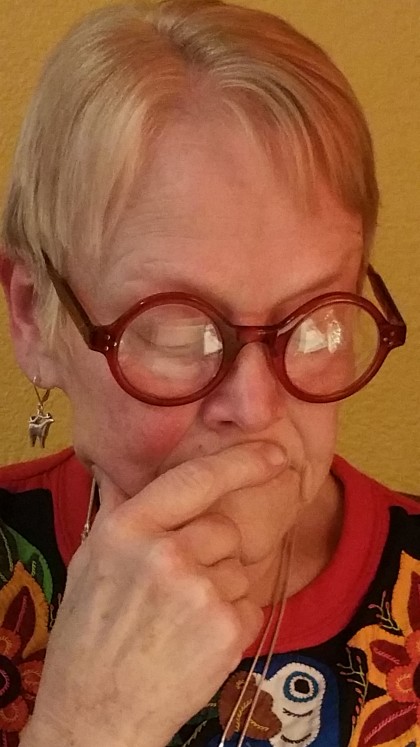 The horrors are the loss of the one you love, the person whose life has become so entwined with your own, not enmeshed, I don’t mean here a situation where life going on without the other is inconceivable, but the loss of a person whose life has been a comfortable and comforting fit with your own, a bond of mutual affection. Imagining life without Kate leaves me with a hollow feeling.
This loss, too, is common. Just read the obituaries and see the list of “survived by.” It is different from your own death because your life goes on with a big hole. I know this feeling too well. My mother died when I was 17. This is horror. Is it survivable? Of course. But life after the death of a spouse is a change none of us who are happily married seek. Yet, it seeks us. It is the nature of two finite creatures bonded through love. One leaves first.
These matters are on my mind today as we try to hunt down and fix what’s ailing Kate. I’m not ready, will never be ready, for life without her. May it be far in the future if it happens for me at all.

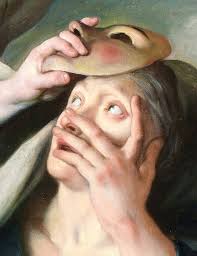 The idea here is to know your own masks without judgment, then order them from core masks to peripheral. What masks can you not take off without removing some skin? Those are core (actually near core) and the most resistant to change. The core itself, the I am, is pure awareness and has no mask. I have an issue here with the kabbalah, not sure how a soul, a self, the core of me, can put on a mask. The donning of a mask seems contradictory to pure awareness, how would the motivation to mask up occur? How could it be actuated? This is important to my philosophical analyst mask though, as Jamie pointed out, the practical application of these ideas doesn’t require an answer.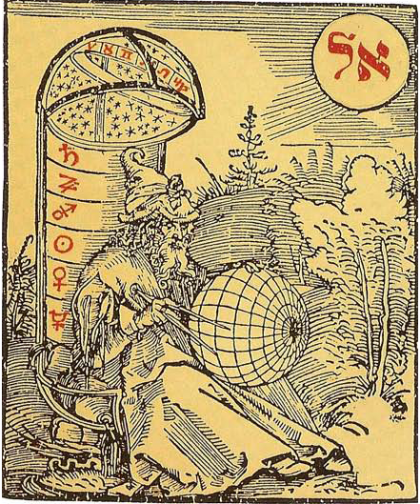





 Kate’s clear, up and down. Endoscopy and colonoscopy show no problems. That’s a relief. When we came out of Swedish hospital (I know, the Scandinavian touch was right for these two former Minnesotans), the day was one of those gifts Colorado gives frequently bright blue sky, luminous sun, even a bit warm. As in the weather, so in our hearts.
 Jon’s grown weary of all the moving, as well he might. Moving stuff carries a physical cost, but even more, it carries a psychological cost. There’s the velveteen rabbit in reverse grief, the burden of baggage, the repetitive actions, but most of it comes from the constant reminder of a huge change. Even when the move is voluntary, the psychological cost is high. When the move has the additional overlay of divorce and animosity, the cost can sometimes exceed our capacity to absorb. That can leave us depleted in heart and body.
 aspect of it is a cultural transition similar I imagine to the introduction of the telephone in its impact.
 Jon moves the last of his things out of Pontiac Street today. I’m hopeful this will be a sharp demarcation point, maybe a turning point in the whole divorce process. His considerable work on that house made it a difficult place to leave and to be shut out of for the last nine months. The restraining order made it so. Finally removing the physical objects that bound him there will help him look forward, no longer tethered by dishes, records, bicycles, pots and pans and books still lodged, like something between the teeth, in his former home.


