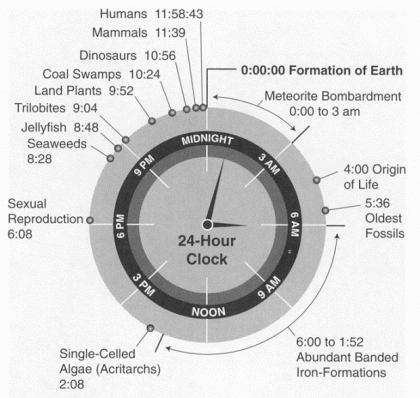
While the world burns, at least the Trump world, kabbalah suggests a bigger world, more worlds, right next to this one. There is, as Rabbi Jamie said, a bigger picture. I learned a similar lesson from Deer Creek Canyon during my cancer season two years ago. These Rocky Mountains, still toddlers as mountains go, were and will be present when we are not. In their lifetime humanity will likely have come and gone.
It’s tempting to use this perspective-and I believe it’s real, I want to emphasize that-to diminish the swirl of issues like climate change, decent health insurance, jobs that no longer pay a living wage. In time they will be finished, one way or another. We were neither present during the Rockies orogeny, nor will we be present when they become as smooth as the Appalachians. Just so, you may say.
Yet. We do not live either in the deep geological past nor in the distant geological future, we live now. Our lives, our mayfly lives from the vantage point of geological time, come into existence and blink out, so we necessarily look at the moment, the brief seventy to one hundred year moment into which, as Heidegger said, we are thrown.
This is all we know of life, this moment. In it our whole awareness comes into existence, matures, then winks out. From that mayfly perspective then climate change, decent health insurance and a living wage are not insignificant. Albert Camus spoke of the great river which carries us toward the ocean of all souls. Ram Dass reminds us we’re all just walking each other home. And Lord Keynes famously said in the long run we’ll all be dead.
Somehow we have to realize that though our lives are small compared to the immensity of the universe and the imponderable nature of time, they are everything while we have them. As for me, I find all this comforting. Putting my efforts in the larger perspective gives me peace, putting them in the immediacy of my life gives me energy. We will not complete the task, no, we will not. But we are not free to give it up either.
Here are three instances of amazement, still resonant, still filling my inner world.
ipperwash sunset
When I was 12 (1959) my family went to Stratford, Ontario for the Shakespeare Festival. We camped at Ipperwash Provincial Park a few miles outside of Stratford. One evening I wandered down to the rocky beach of Lake Huron and sat watching the sun go down. As it fell behind the turning earth, the colors lit up the Great Lake, making me feel as if I were surrounded by the lake, the sky, the coming night. It didn’t make me feel insignificant, rather it made me feel part of a great mysterious colorful whole.
I studied philosophy as an undergraduate. In the fall of my sophomore year, 1966, I took metaphysics. After a class about the process metaphysics of Alfred North Whitehead, I wandered out of the humanities building onto the quad. The maples and oaks on campus had turned, making the grounds glow with red and gold leaves. Just as I stepped out of the building and onto the quad, my interior life lit up with red and gold. Then my connection to that time and place dissolved. A feeling of calm fell over me and threads linking me to the rest of the universe, red and gold threads going out and coming back in vibrant motion, filled me. The sense of calm transformed into wonder as I knew, just knew, that I was part of all this, all this amazing universe. This was not intellectual knowledge, not a feeling, but a direct knowing. The universe and I were one. I’ve known this to be true ever since.
Photo by Oystein Lunde Ingvaldsen, Nordnorsk Reiseliv
In September of 1974 I moved to the farm that Judy and I bought near Nevis, Minnesota. One evening soon after I took my fishing rod and tackle down to a small lake set in a bowl of earth with reasonably high sides. As was my usual experience, I caught no fish, but the air was warm, so I stayed as night fell. The Aurora Borealis lit up the night sky. Great flashes of green shimmered up from the base of the sky to its domed center. The same display hit the lake and suddenly I was adrift in space. The Aurora vibrated all round me, carrying me higher and higher and higher, then further and further out of time. I don’t know how long it lasted, but I stayed until the Aurora played itself out.
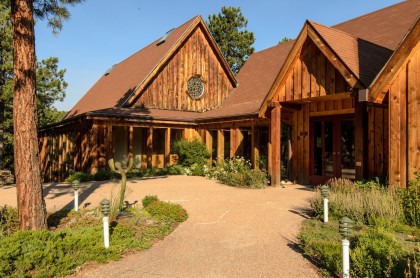
Irv Saltzman invited us to a performance by his singing group, the Renaissance Singers. It was held in a wooden Episcopal Church, St. Laurence’s, which is near our home. Directed by a Chinese national, Hannah Woo, who is finishing her Ph.D. in musicology, they were 8, four men and four women. As a group, they matched each other well. April, a soprano, had a lovely clear voice and a large range. Irv, formerly a tenor, has now transitioned into a bass/baritone role. Their performance was wonderful. At a meal afterwards we discovered April is our neighbor.
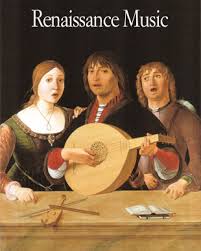
Renaissance choral music and instrumental renaissance music has always captivated me. It’s easy to see courtiers in colorful costumes listening to this music in a palace, brown robed and cowled monks hearing it in a morning prayer service, or small groups performing at home for their own amusement. It’s also the music most often heard at Renaissance festivals. Sorta makes sense, eh?
The sanctuary had a vaulted ceiling with exposed beams and two large, clear windows that looked out to the east, toward Shadow, Evergreen and Bear mountains. It rained while we were there and the mountains were in mist, the windows covered with raindrops slowly moving from top to bottom. There were individual chairs, padded with kneelers, arranged in a three sided configuration, making the sanctuary a sort of thrust proscenium stage, an ideal arrangement for a small group of singers.
A church artist had painted the stations of the cross and they were around the sanctuary, set off by bent sheet metal frames. A copper baptistry, large, sat over a cinerarium where the congregation deposits cremation remains and memorializes the dead with small plaques.
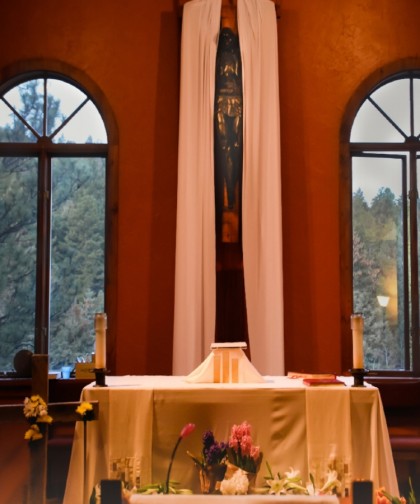
Between the two windows hung a large crucifix, a cross made of bare, light wood and a bronze Jesus hung by two nails. I had an odd sensation while listening to this music I’ve often heard in monastic settings on retreat. It carried me back into the spiritual space of an ascetic Christianity that often comforted me. This time though I came into the space as a peri-Jew, identifying more with Marilyn and Irv and Kate, with the still new to me spiritual space of Beth Evergreen, than the theological world represented by this spare, but beautiful sanctuary.
The crucifix stimulated the strongest, strangest and most unexpected feeling. I saw, instead of the Jesus of Christianity, a hung Jew, a member of the tribe. More than that, I felt the vast apparatus and historical punch created by his followers, followers of a man who shared much of the new faith world in which I now find myself. It was an odd feeling, as if this whole religion was an offshoot, a historical by-blow that somehow got way out of hand.
These feelings signaled to me how far I’d moved into the cultural world of reconstructionist Judaism. I see now with eyes and a heart shaped by the Torah and mussar and interaction with a rabbi and the congregants of Beth Evergreen.
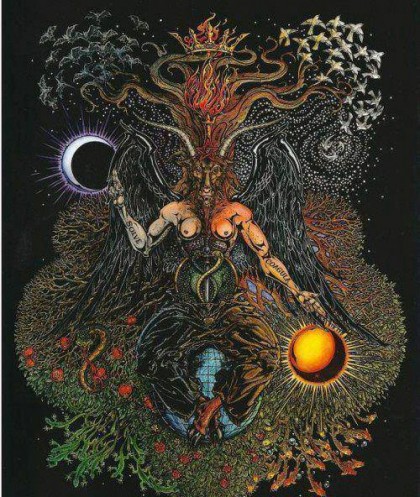
This was an afternoon filled with the metaphysical whiplash I’ve experienced often over the last year, a clashing of deep thought currents, spiritual longings. This process is a challenge to my more recent flat-earth humanism, a pagan faith grounded not in the next world, but in this one. Literally grounded.
What’s pushing me now is not a desire to change religious traditions, but to again look toward the unseen, the powerful forces just outside of the electromagnetic spectrum and incorporate them again into my ancientrail of faith. This makes me feel odd, as if I’m abandoning convictions hard won, but I don’t think that’s actually what’s going on. There is now an opening to press further into my paganism, to probe further into the mystery of life, of our place in the unfoldingness of the universe, to feel and know what lies beyond reason and the senses.
The sound of radio waves from Cassini as it crosses Saturn’s rings and the gap between them and the planet itself. Dust particle hits make most of the noise in the second clip. I found hearing these sounds an eery, literally other worldly experience. An extension of our human senses is actually out there, between Saturn and its rings. That’s what this sound said to me and said it in a way multiple photographs for some reason cannot.
The mountain streams we see regularly: Shadow Brook, Maxwell Creek, Bear Creek, Cub Creek have begun, a bit early, I think, their post-ice plummet toward sea level. In May these streams are often boiling, filled with snow melt and pushing the limits of their banks. On any given day driving past them as they speed downhill, down the mountain, they look interesting, worth watching for the tumult; but, in fact, these racing streams are much more than merely interesting.
They are the levelers of mother earth. They take the mighty and strip them down to size, pebble by pebble, rock by rock, chunks of soil by chunks of soil. A defining characteristic of a mountain is its imposing size, its thereness. Mountains dominate their landscape, putting up barriers to human passage that often forced the pioneers of nineteenth century America to go around them rather than over them. They seem, in the moment, eternal.
When living in or visiting a relatively young mountain range like the Rockies, no reasonable person would ever expect them to look any different than they do right now. Colorado is proud of its fourteeners, those summits exceeding 14,000 feet. Mt. Evans, for example has a summit of 14,265 feet. That’s precise. And, would you add it to a website or book or road sign if you expected it to change? No.
Near Bailey, 2015
But it will. One only has to drive east toward the Atlantic to see what’s in store for even Mt. Evans. Look at the Appalachians. Their mountain building episode (orogeny) happened around 480 million years ago. When it was done, the Appalachians stood as tall as the contemporary Rockies. The Rocky Mountain orogeny was a quite recent, geologically speaking, 80 million years ago. They too will wear down.
In the spring we see this process at its most obvious as mountain streams from every summit in every range of the Rocky Mountains, including here in the Front Range, obey gravity and try to find the lowest points available to them. Of course, the streams are not the only process at work. Drive on Highway 285 out of Conifer, as we do often going down or returning from Denver, and you will see large steel mesh hanging over some cliffs. In other places there are bolts driven into the side of rock faces, giving them a slightly Frankensteinian look. In other spots massive retaining walls of concrete encase an especially troublesome chunk of mountain.
These CDOT efforts are not always successful, witness the many Watch for Falling Rocks signs sprinkled throughout Colorado. Freezing and thawing splits the rock faces and they come tumbling down, creating talus or road obstructions. Just this last year, near Glenwood Springs, a large boulder broke loose from its millions of years long position and crashed down on an SUV on I-70, killing the driver. Winds, too, often reaching high double digit speeds, also wear away the rock.
These forces are slow, miniscule in appearance, but massive in their results over long periods of time. When driving by a mountain stream in full force, remember the Appalachians. They’re coming, but not soon, to a Rocky Mountain range near me.
While writing the pendulum piece yesterday, I began to consider my inner life in a way I hadn’t before. It occurred to me, probably obvious to you, but not to me, that the inner world is timeless. It’s not part of the body (I’m not sure what I mean by this.) and does not participate in the changes of aging. That world, one we each carry within us (or about us, or as us), is quiet relative to the constantly moving, pulsing, buzzing blooming nature of reality beyond it. (Thanks to William James.)
chalice well, Glastonbury
Perhaps this is what the New Testament means when Jesus says, “The kingdom of God is within you.” Not only is the within timeless, it’s also boundaryless, extending into an infinite realm, not all known, at most partially. That’s not to say it’s static, not at all, just ask your dream life.
This is exciting to me, considering the world within. The weird part, the somewhat new part for me, lies in the metaphysics of the within. As I consider it, feel its reality, my inner world seems separate from the physical realm altogether. I know, in terms of contemporary neuroscience, that this could be challenged; but, in spite of that, this private place seems untethered from both the outer realm and my body and, oddly, my mind.
The mind, in my use of it here, is a tool, a way of managing the interface between my body and my current concerns in the world. It does have a Janus faced quality in that it can look out to the world as the dasein of Heidegger suggests; but, it can also look inward, into my inner world. Using the mind as a point of reference, it becomes a mediator between inside and outside, but, in a manner similar to the inner world, a part of neither.
So, when I say the inner world is not part of my mind, I say that because the mind is the tool I use to know that world, as it is the tool I use to know and interact with the outer world.
Therefore, we can ask, what is the ontological character of the inner world? Does it have being in the way of, say, a rock, a tree, a dog, another person? I don’t know the answer to this question. It is, in the sense of isness, real since it can be perceived as Bishop Berkeley put it, but its isness seems different qualitatively from my body or the world in which it moves and lives and has its being.
This inner world is the homeworld of the imagination, of the interplay between ideas and intuition. It is the realm of memory and the alteration of memory, of the creation of memory. It is the place of fairy tales, of myth, of legend, of gods and goddesses. It can be explored with some difficulty. It often manifests after it has done its own work, throwing up a new way of seeing. In fact, my understanding of it as timeless and spatially infinite is just such a new of way of seeing for me.
Canto 3
I’m not saying this well. What is amazing to me, what is pushing me to explore this idea is the vastness of the inner world and its unique nature for each human being. Maybe for each dog and cat, wombat and shark for all we know. In other words in a room full of people we see them in this familiar world as distinct entities, yes, but still in this world. Yet, each person is a holy well that, like the holy wells of Ireland and Wales, provides entrance to another world, a world sui generis.
So, in fact, that room full of people is not only what it appears to be, but is also a collection of unique worlds, worlds unseen by any eye but each person’s inner eye.
Existentialism is a philosophy for the third phase. No matter what other metaphysical overlays you may have the tick-tocking grows louder as you pass 65. When this clock finally strikes, it will take you out of the day to day. Forever. Strangely, I find this invigorating.
In case you don’t get it the occasional medical bomb will go off to make sure you pay attention. Last year, prostate cancer. This year, that arthritic left knee. Kate goes in for an endoscopy on January 3rd. She’s waiting approval for a biologic drug to help her rheumatoid arthritis. All these are true signs of the pending end times, but they are not the end itself. These medical footnotes to our lives press us to consider that last medical event.
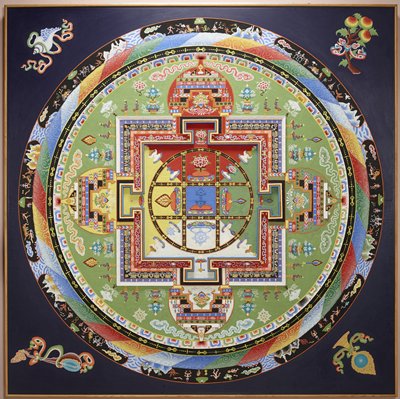
I’ve followed, off and on, the Buddhist suggestion about contemplating your own corpse. I imagine myself in a coffin, or on a table somewhere prior to cremation. This is the work of Yamantaka, the destroyer of death, in Tibetan Buddhism. I’m not a Buddhist, nor do I play one on TV, but I became enamored of Yamantaka while learning about the art of Tibet and Nepal at the Minneapolis Institute of Art.
yamantaka-mandala
This mandala is a profound work of art on view in the South Asia gallery (G212). Adepts of Tibetan Buddhism use this mandala as a meditation aid to make the journey from samsara, the outer ring representing the snares that keep us bound to this world, and the innermost blue and orange rectangle where the meditator meets the god himself. The impact this work and the portrait of Yamantaka that hangs near it have had on me is as intimate and important as works of art can evoke.
Death is more usual, more understandable, more definitive than life. Life is an anomaly, a gathering of stardust into a moving, recreating entity. Death returns us to stardust. Yamantaka encourages us to embrace our death, to view it not as something to fear but as a friend, a punctuation point in what may be a longer journey, perhaps the most ancientrail of all. Whatever death is, aside from the removal of us from the daily pulse, is a mystery. A mystery that has served as muse to artists, musicians, religions and poets.
Yamantaka has helped me accept the vibration between this life and its end. That vibration can be either a strong motivating force for meaningful living (existentialism) or a depressive chord that drains life of its joy. I choose joy, meaningful living. Perhaps you do, too.
Late night phone calls this time of year, every four years, are most likely poll takers. Got one last night. I take the time to answer them because I want my voice to matter statistically, perhaps have a slight reinforcing effect in the larger mess.
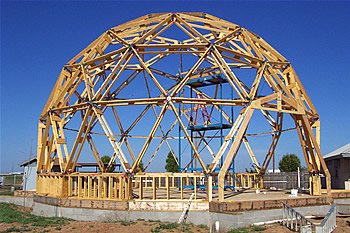
If the Donald wins, I’m not leaving for Canada. That would just leave the country to him and his kind. Not acceptable. But I will build a transparent dome around our house. The dome will have a semi-permeable membrane for its skin. Only healthy, clean, non-stupid ideas will be able to come onto our property whether delivered by newspaper, internet, or television. I haven’t figured out what to do when we leave our dome home, a work in progress.
In addition to being the most irritating, unenlightening, miserable f***ing presidential campaign of my entire life (probably of our entire history as a country), this election season has been notably short of ideas. No dearth of feelings, but few ideas. What major policy position, of either candidate, can you name other than Trump’s wall? I thought so.
I despair for our democracy, not just in light of this last year, but since 9/11. The Forever War has eroded and corrupted our Federal budget, our ethical sensibilities and killed thousands. To what end? I know the stock answer, to keep the terrorists at bay, away from the homeland. But is military force the only way to accomplish that goal?
Since 9/11 our politics have become polarized, mean, unbending. The Donald has only ridden that cresting wave; he did not create it. Like any demagogue he has an instinctive feel for the anguish of ordinary citizens and an ability to say things that seem to give it voice. As a representative democracy, we rely on politicians for taking the pulse of their constituents. Yes, that’s true.
But, we used to be able to rely on politicians to dull the uglier proclivities lying underneath. We have, of course, always had a George Wallace, a Pat Buchanan, a Father Coughlin, even our Andrew Johnson’s who instead of dulling the lesser demons of our nature, stoked them. They have, however, been marginal, except for that period in the 1920’s when the KKK rose to political prominence in many states.
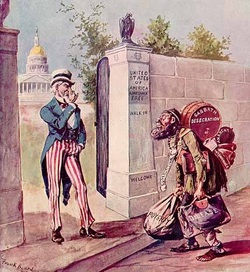
Now Trump and his incoherent, id-based politics has given roots and wings to those who would push others down, rather than lift them up. He wants to pull up the drawbridges spanning the Atlantic and the Pacific, leaving us here to rejoice in our fastness. These are emotionally driven policy shapers, not policy themselves. They play to what is the cheapest and lowest among us. Not hard to understand, no. Impossible, however, to accept.
This fissure in our commonweal will not heal when the election is over. In fact, it may well grow broader and deeper. Though it’s a canard, I believe in this instance it is true. We are in a struggle for the soul of our nation.
Divorce matters seem finally to be breaking Jon’s way. Can’t say more than that right now, but I’m glad.
Took a long ride with Kate out to Elizabeth, Colorado to the Elizabeth Meat Locker. We purchased a quarter side of beef from the Carmichael Cattle Company and they have a contract with the Elizabeth Meat Locker for butchering. We’d not been out this way, south and east of the Denver Metro, so it was an interesting drive. Passing through Parker we both commented on the area’s similarity to Chanhassen, Chaska, Jordan in Minnesota. Then the hilly country began to look like 169 headed to Mankato. Of course, to maintain these similarities we had to keep our eyes from the west where the Front Range rose.
Elizabeth itself is a small rural community that could have been anywhere, usa. It has a small historic downtown; that is, older retail buildings repurposed into boutiques and a fiber art store and antique shops. Mainstreet is Co. Highway 86 and there is the obligatory Walmart anchored, downtown killer of a strip mall on the edge of town.
We ate at the Catalina Diner, a restaurant that would have felt at home in southern Indiana. It had automobile, 1950’s automobiles, posters, high-backed white booths, two lunch counters. Comfort food.
shootout-in-elizabeth
This whole journey was an unusually difficult one, emotional in a way I’ve found strange for over a year. Let me explain. Each time we headed down Shadow Mountain Drive for Aspen Park or Denver, we passed two small fields carved out of a narrow mountain meadow that sits under Conifer Mountain. It has two ponds, a few stands of trees, but is mostly grass.
Over the course of the year Carmichael Cattle has fed three angus and one hereford there. As we drove past, I would look for these cattle, tails twitching, heads down. Or, huddled together in the shade in a hot summer sun. Each time I was glad to see them. Glad these animals were there as we drove by. Part of my enjoyment of them was a tie to my rural roots in the Midwest. I miss the ever present signs of agriculture: fields of corn, fields of soybeans, tractors, combines, dairy and beef cattle. These cattle gave me a link back to the roadsides of my former life.
But. I also enjoyed them as individuals, seeing them interact with each other, wander off in search of a good spot to graze, standing next to each other. Each time I went past them I knew it could be that later in the fall I would be eating one of them. This made me sad and a bit forlorn, knowing that my heart was in conflict with my head.
My head says ethnobotany. Our culture chooses our diet for us, decides which foods are tasty, which gross, which taboo. Our bodies are neither obligate carnivore nor obligate vegetarian. We are designed by evolution as omnivores, able, thankfully, to eat what the world places in front of us, be it plant or animal. This is a great advantage for us as a species and has allowed us to thrive in many diverse climates. There is nothing wrong, then, about eating meat, either from a biological or cultural perspective. Meat is simply one source of food.
But. I enjoyed seeing them as individuals. I knew they were individuals. I could tell by they way moved through the field. One seemed to gravitate toward the shade. Another seemed more social, following its colleagues closely. They were, in fact, separate from each other, unique, not cattle sui generis, but this cow, that bull. They were not, in other words, meat in the abstract, but meat on the hoof, meat as the muscle of living creatures, muscle that functioned within these animals I enjoyed.
To purchase their meat was to kill them as surely as if I took a rifle out and shot them. Back in 1974 I moved onto the Peaceable Kingdom, a farm Judy and I bought in Hubbard County, Minnesota, the county home to the headwaters of the Mississippi. We had goats and decided we wanted to barbecue some goat meat. Johnny Lampo, the man who rented our fields and farmed them, gave me his rifle and I killed one of our our goats. I’ve not been the same since. I can’t even euthanize our dogs.
Though raised in the agricultural Midwest, though I attended 4-H fairs in my youth and state fairs in Indiana and Minnesota, though I knew well the connection between actual animals and the wrapped packages of hamburger, the sirloin steak, the lamb chop, the pork tenderloin, I had still been insulated from knowing that this cow, this bull was the source of my pot roast.
It was this awakened sensitivity, perhaps a sentimental one, ok, definitely a sentimental one, a sensitivity awakened in brief moments passing cattle in a mountain meadow that put my heart into conflict with my head. Even in my heart I don’t feel eating meat is wrong, but I do feel that knowing the animal from which my meat comes changes things. A lot.
So this evening when Kate cooks the ribeye steaks thawing right now in our sink, I plan to add a small ritual to the lighting of the shabbos candles and the sharing of challah. We will remember the animal that died so that we may eat, so that our bodies might be strong. We will thank this particular individual for the role he or she plays in our daily life. We will acknowledge the cycle of life, the interlocking web of life and our mutual parts in it.
This is, I think, one of the missing parts of our 21st century life, honoring the plants and animals that have to die to keep us alive. Without the heart connection we are rapers and pillagers of our environment, no better than Big Ag and its ruthless exploitation of the chain of life for profit.
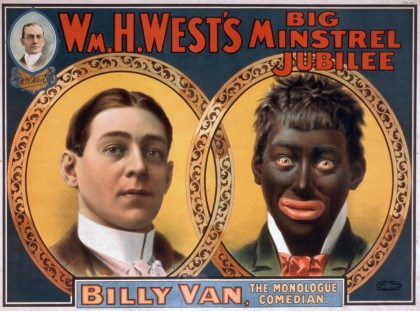
Ruth wanted to see the Queen of Katwe, the story of a poor Uganda country girl who became a chess champion. So we did. It was a good movie, not great; but, its almost all black cast reminded me of Luke Cage, which also has an almost all black cast. I have been and am suspicious of the idea of appropriation* as bad, but these two media pieces have made rethink it.
The problem I have with the idea of cultural appropriation is its clash with the aims of art. We could not write books, make movies, script plays, probably even compose music if we did not borrow both from the realm of our personal experience and from the experiential realm of others. At its most fundamental, a man could not write about women, or a woman about men. And, to drill even deeper into this morass, since we can never know the interior life of another, I could not write about anyone else.
Also, to have no characters or roles or melodies that have roots in cultural experiences other than your own would make novels, films, plays and music monuments to cultural isolation. Too, the voice of one culture’s representative commenting on another’s is the stuff of art and provides important information, reflection for our common life as members of a diverse human community.
Having said that I found myself intrigued with both Luke Cage and Queen of Katwe because they had almost all black casts. The voice of the characters, the setting, the narrative drive had an integrity, a cohesiveness different from a white dominated movie or television program. The vulnerabilities, tensions, outright conflicts reflect immersion in Uganda and Harlem. They help open up a world, a way of being, a certain thrownness, as Heidegger put it, that is well outside my white, male, middle class, small town Midwest USA experience.
This presentation of the panorama of black and African characters humanizes them, makes them real, in a way that appropriated roles often cannot. What I’m saying here is that the positive argument stemming from the idea of cultural appropriation, that members of a group or culture can tell their own story best, seems validated for me by this particular movie and this television series.
However. The notion of silos, common in critique of bureaucracies, corporate or governmental or academic, seems to me to apply here, too. Silos are self contained domains, segments of a differentiated work place. The easiest place to see silos is in academe where biology and physics occupy different departments, often different buildings, and usually do not communicate. The internal culture of the military makes it secretive while congress wants transparency, the EPA is a separate agency of quasi-cabinet rank, so it is separate from the department of Agriculture where many matters of critical environmental concern receive attention. The critique is that while the silos differentiate and protect, the world is not so divided. Biology and physics operate within each organism. In the world as it is, Federal Superfund sites, under the administration of the EPA, interact directly with farms and municipalities. There was no bureaucratic barrier between the toxic waste pouring from the Gold King Mine and the waters of the Animas River.
Sorry to have belabored that but my point is this: even if cultural appropriation was to become a norm, it would create its own problems by cordoning off the experience of one culture from another, creating silos of African-American experience or LGBT experience.
It seems to me that the best world would allow and encourage both works by members of all cultures that include and therefore reflect on other cultures and works by and about members of one culture. Let the reader, or the movie goer, or the symphony audience experience the tensions and conflicts. That’s the way to a richer and more intense dialogue among and between all people.
*Cultural appropriation is the adoption or use of elements of one culture by members of another culture.[1]Cultural appropriation is seen by some[2] as controversial, notably when elements of a minority culture are used by members of the cultural majority; this is seen as wrongfully oppressing the minority culture or stripping it of its group identity and intellectual property rights. wikipedia
 While the world burns, at least the Trump world, kabbalah suggests a bigger world, more worlds, right next to this one. There is, as Rabbi Jamie said, a bigger picture. I learned a similar lesson from Deer Creek Canyon during my cancer season two years ago. These Rocky Mountains, still toddlers as mountains go, were and will be present when we are not. In their lifetime humanity will likely have come and gone.
 Yet. We do not live either in the deep geological past nor in the distant geological future, we live now. Our lives, our mayfly lives from the vantage point of geological time, come into existence and blink out, so we necessarily look at the moment, the brief seventy to one hundred year moment into which, as Heidegger said, we are thrown.
 Somehow we have to realize that though our lives are small compared to the immensity of the universe and the imponderable nature of time, they are everything while we have them. As for me, I find all this comforting. Putting my efforts in the larger perspective gives me peace, putting them in the immediacy of my life gives me energy. We will not complete the task, no, we will not. But we are not free to give it up either.

 Irv Saltzman invited us to a performance by his singing group, the Renaissance Singers. It was held in a wooden Episcopal Church, St. Laurence’s, which is near our home. Directed by a Chinese national, Hannah Woo, who is finishing her Ph.D. in musicology, they were 8, four men and four women. As a group, they matched each other well. April, a soprano, had a lovely clear voice and a large range. Irv, formerly a tenor, has now transitioned into a bass/baritone role. Their performance was wonderful. At a meal afterwards we discovered April is our neighbor.
 Renaissance choral music and instrumental renaissance music has always captivated me. It’s easy to see courtiers in colorful costumes listening to this music in a palace, brown robed and cowled monks hearing it in a morning prayer service, or small groups performing at home for their own amusement. It’s also the music most often heard at Renaissance festivals. Sorta makes sense, eh?
 Between the two windows hung a large crucifix, a cross made of bare, light wood and a bronze Jesus hung by two nails. I had an odd sensation while listening to this music I’ve often heard in monastic settings on retreat. It carried me back into the spiritual space of an ascetic Christianity that often comforted me. This time though I came into the space as a peri-Jew, identifying more with Marilyn and Irv and Kate, with the still new to me spiritual space of Beth Evergreen, than the theological world represented by this spare, but beautiful sanctuary.
 This was an afternoon filled with the metaphysical whiplash I’ve experienced often over the last year, a clashing of deep thought currents, spiritual longings. This process is a challenge to my more recent flat-earth humanism, a pagan faith grounded not in the next world, but in this one. Literally grounded.


 If the Donald wins, I’m not leaving for Canada. That would just leave the country to him and his kind. Not acceptable. But I will build a transparent dome around our house. The dome will have a semi-permeable membrane for its skin. Only healthy, clean, non-stupid ideas will be able to come onto our property whether delivered by newspaper, internet, or television. I haven’t figured out what to do when we leave our dome home, a work in progress.
 Since 9/11 our politics have become polarized, mean, unbending. The Donald has only ridden that cresting wave; he did not create it. Like any demagogue he has an instinctive feel for the anguish of ordinary citizens and an ability to say things that seem to give it voice. As a representative democracy, we rely on politicians for taking the pulse of their constituents. Yes, that’s true.
 Divorce matters seem finally to be breaking Jon’s way. Can’t say more than that right now, but I’m glad.
 Elizabeth itself is a small rural community that could have been anywhere, usa. It has a small historic downtown; that is, older retail buildings repurposed into boutiques and a fiber art store and antique shops. Mainstreet is Co. Highway 86 and there is the obligatory Walmart anchored, downtown killer of a strip mall on the edge of town.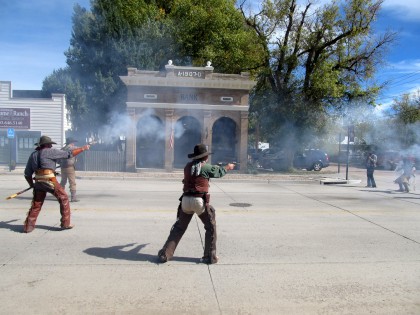
 My head says ethnobotany. Our culture chooses our diet for us, decides which foods are tasty, which gross, which taboo. Our bodies are neither obligate carnivore nor obligate vegetarian. We are designed by evolution as omnivores, able, thankfully, to eat what the world places in front of us, be it plant or animal. This is a great advantage for us as a species and has allowed us to thrive in many diverse climates. There is nothing wrong, then, about eating meat, either from a biological or cultural perspective. Meat is simply one source of food.
 To purchase their meat was to kill them as surely as if I took a rifle out and shot them. Back in 1974 I moved onto the Peaceable Kingdom, a farm Judy and I bought in Hubbard County, Minnesota, the county home to the headwaters of the Mississippi. We had goats and decided we wanted to barbecue some goat meat. Johnny Lampo, the man who rented our fields and farmed them, gave me his rifle and I killed one of our our goats. I’ve not been the same since. I can’t even euthanize our dogs.
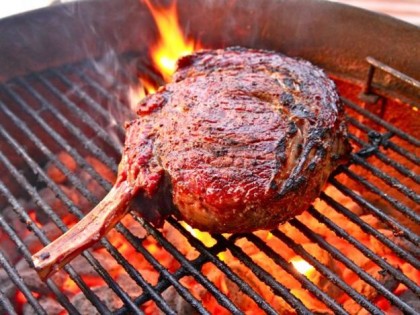 So this evening when Kate cooks the ribeye steaks thawing right now in our sink, I plan to add a small ritual to the lighting of the shabbos candles and the sharing of challah. We will remember the animal that died so that we may eat, so that our bodies might be strong. We will thank this particular individual for the role he or she plays in our daily life. We will acknowledge the cycle of life, the interlocking web of life and our mutual parts in it.
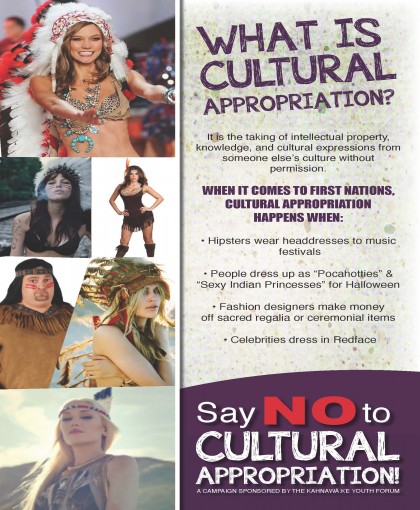 Ruth wanted to see the Queen of Katwe, the story of a poor Uganda country girl who became a chess champion. So we did. It was a good movie, not great; but, its almost all black cast reminded me of Luke Cage, which also has an almost all black cast. I have been and am suspicious of the idea of appropriation* as bad, but these two media pieces have made rethink it.
 Having said that I found myself intrigued with both Luke Cage and Queen of Katwe because they had almost all black casts. The voice of the characters, the setting, the narrative drive had an integrity, a cohesiveness different from a white dominated movie or television program. The vulnerabilities, tensions, outright conflicts reflect immersion in Uganda and Harlem. They help open up a world, a way of being, a certain thrownness, as Heidegger put it, that is well outside my white, male, middle class, small town Midwest USA experience.
 However. The notion of silos, common in critique of bureaucracies, corporate or governmental or academic, seems to me to apply here, too. Silos are self contained domains, segments of a differentiated work place. The easiest place to see silos is in academe where biology and physics occupy different departments, often different buildings, and usually do not communicate. The internal culture of the military makes it secretive while congress wants transparency, the EPA is a separate agency of quasi-cabinet rank, so it is separate from the department of Agriculture where many matters of critical environmental concern receive attention. The critique is that while the silos differentiate and protect, the world is not so divided. Biology and physics operate within each organism. In the world as it is, Federal Superfund sites, under the administration of the EPA, interact directly with farms and municipalities. There was no bureaucratic barrier between the toxic waste pouring from the Gold King Mine and the waters of the Animas River.