Category Archives: Plants

Hey, Pardner

Beltane and the Moon of Mourning

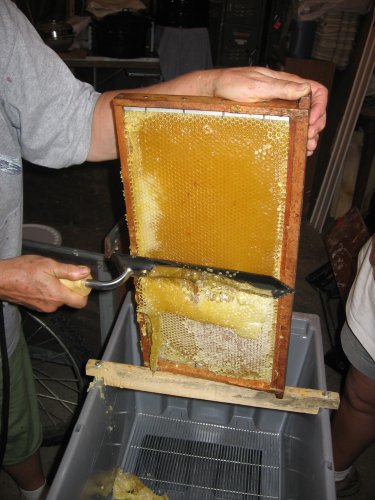
Saturday gratefuls: Kate, sticky with the honey harvest. Kate, shepherding me into a shower, giving me antihistamines after multiple bee stings. Kate, Celt, and I at the St. Kate’s art fair in St. Paul. Cody Wise, a Wells Fargo Banker. Rich Levine, bee keeper. Rabbi Jamie. Mark Koontz, of Primitive Landscaping. He will extend and replant the Iris bed and put in three Miss Kim lilacs in the back. BJ live on the radio with Schecky.

Sparks of Joy: Beekeeping. Getting tasks done.

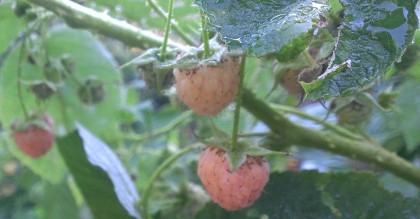
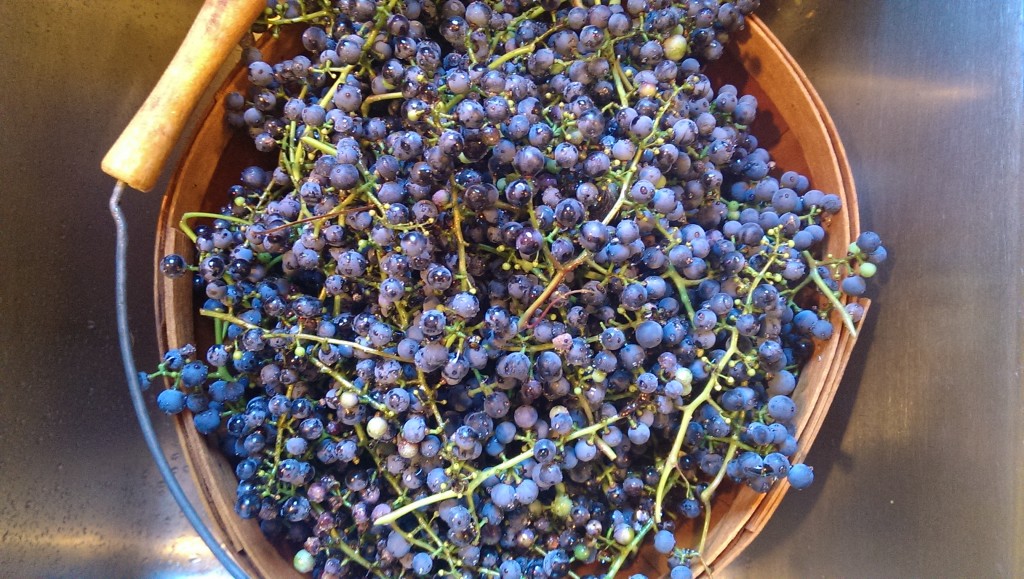
Wild grapes waiting for Kate to turn them into jelly

Yesterday afternoon I pulled out all the honey harvesting equipment: uncapping knife and rake, solar wax renderer, motorized extractor, buckets, and filters. Took it to the driveway so Rich could pick it up for our work this morning with Sofia.

As I moved these objects, each last touched by us in 2014 when we moved, a wave of sadness and longing swept over me. Kate and I were partners. We grew flowers, picked fruit in our orchard, planted and harvested vegetables, managed a pack of dogs. My partner is dead. I missed her so much in that moment. Went back inside, sat down, cried for a bit. Not paroxysmally, but tears running down my face.

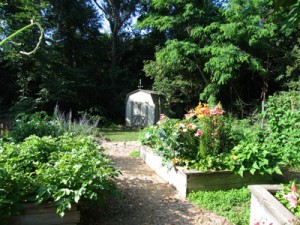
We were bound together by those things of the soil, of the four-leggeds, of the six-legged. It was a good life until the physical burden of became onerous. The move to the mountains, here on Shadow Mountain, came at a time when we needed to set down those tasks, pass them onto the younger couple that bought our Andover home.

We partnered again, living in the move. It took us most of 2014 to get ready and we worked hard. Once here in the Rockies we found ourselves tested by cancer, by Jon’s divorce, by Kate’s medical issues. Through it all. Partners.

Even to the last. Death with dignity. Yes, the right choice for you, I said. Even beyond the last. I’ve hired a landscaper who will fulfill two of Kate’s last wishes, a larger Iris bed in front and Lilacs planted in back. Half of her ashes will go into the Iris bed in August when family gathers to honor her on her birthday, August 18th.

Those tears, that sadness. It was for the good stuff. The way we lived together, always. Yes, I miss my pard, as we might say here in the West, but the knowledge and memory of how we were together does and will sustain me as I move forward.

Grief is the price we pay for love.


Tough

Ostara and Kate’s Moon

Saturday gratefuls: Kate’s clear head, her choices. Death with dignity as an option. The Ancient Friends. Rabbi Jamie. CBE. Sleep. Kep and Rigel.

Sparks of Joy: Sarah calling the Long Term Care folks. A Golden with his head out the window of a pickup truck.

I know about true love. And, about bad love. Kate and I lived and loved into each other, saying yes. Saying of course you can. Of course we can. In bad love you hear and say no, you can’t do that. I don’t want to. Not now.

We bring out the depth of each others soul. Kate’s needle gifts, her love of Mother Earth, Flowers, Vegetables, Dogs, Fruit. Grandchildren. Sons. My writing. My love for Mother Earth, Flowers, Vegetables, Dogs, Fruit. Grandchildren. Sons. Not hidden, not wished for, but acted upon.

Supporting each other, even when the world might not agree. Have 7 Wolfhounds and two Whippets? Sure. Put in an orchard? Of course. Go around Latin America. No question. Move to Colorado? Not only that, let’s go up in the mountains. End life on your own terms? Yes, if that’s what you need.

This ancientrail of human life may have come close to an end for Kate. She wants to consider death with dignity. I imagine she’ll choose it. Does it make me scream inside? Yes. Does it make me sad? Yes. Will I support her? Yes, as in all things.

This is stark. It means a time certain, not an ambiguous, drawn out process. But, the end is the same. And, it’s coming for Kate, as it is for us all. Just sooner for her.

I cried a lot last night. Sat up with friends talking. Then, slept well. No anxiety. This is sad. Not unexpected. No details yet. It’s not decided decided. But I know Kate. Once she broached this idea, her mind was close made up.

It makes sense to me. She was told she’d have to wear the bipap at least at night from now on. She hates it. It’s intrusive, invasive, and claustrophobic. There is no hope she’ll come off of it. Also, she’s exhausted from a two and a half year struggle with first this, then that.

She’s so frail, her breathing labored, her movement restricted to bed, mostly. No magic bullet. No procedure. No medications left.

What would you do?

Easter Morning

Ostara and the Ovid Moon of Metamorphoses

Sunday gratefuls: Broad spectrum antibiotics. Kate’s will. Jamie Bernstein. Easter and Passover and Spring. Friends. Rabbi’s. Countryfolk. Mountains. Dogs.

Sparks of Joy: Kate’s blood cultures negative for infection. Exhaustion, but exhaustion held in the care and concern of so many others.

Kate at Mama’s Fish House

Been thinking, a lot, about the holidays: Ostara, Easter, Passover. How they hold the wonder and awe of Spring and apply it to our human lives. On Maundy Thursday (no, I never remember what that means) Kate was in severe crisis. She had a crowd of nurses, physician’s assistants, respiratory therapists, a pulmonologist. All working carefully, quickly, urgently.

I had a hushed conversation in the hallway with the physician’s assistant and Dr. Fenton, the pulmonologist, about resuscitation.  Asking hard questions. Trying to be true to the situation, to her wishes, to the possible.

She survived the crisis, her blood pressure down and her breathing more stable. She moved to the 10th floor where she could be treated with nurses who work with more complicated cases.

Her situation got better, but death still seemed as plausible as recovery. On Good Friday, her lucidity returned, she made it off the bipap (a small mask that is actually a treatment for the pneumonia, among other things), and her white cell count continued to come down.

Yesterday we found her blood borne infection was gone. Though it still needs a four to six week bout of IV antibiotics to make it sure it doesn’t resurface. She passed her swallow study so she can drink and eat. Prognosis still guarded, but less so now.

Her friend, Jamie, reported she looks good. Jamie stayed all night with her.

It’s Easter morning.

They Say It’s His Birthday!

Spring! and the Ovid Moon of Metamorphoses

Shoutout to birthday boy Publius Ovidius Naso, or Ovid as we know him in the English speaking west. He’d be two thousand and fifty-four today.

Saturday gratefuls: Safeway pickup. Kabob skewers. Kate’s fluid flowing. Psalms class finish. New class start April 9. Writing poetry. Colorado Mountain Sun. Ancient ones on Justice. Vaccines. April Fool’s Day: shot II for me.

Sparks of Joy: Unclogging Kate’s feeding tube and avoiding another ER adventure. Wu wei, the Way of my life.

March 1, meteorological spring. No romance in that one. March 20, today, 5:37 MST, the Vernal Equinox. Spring. Ostara. Bunnies and crosses and parting of seas, oh my! Lots of romance, lots of theological pulling and hauling. This religion defining moment: resurrection and another: the Exodus. I settle these days for the Sun and the Earth’s celestial equator. See this explainer if you need more. More or less equal hours of Sun and night.

Yes. We’ve moved from the transitional time of Imbolc to the birthing blooming buzzing time. Spring. No wonder the Anglo-Saxons, those Northern European ancestors of so many of us, chose a fertility goddess, Eostre, to celebrate. Estrogen. Ostara. Easter. Yes, the Catholics took her name, added it to the resurrection celebration, and, voila: Easter!

Jesus as Eostre. A dying and rising God like Tammuz, Adonis, Attis, Dionysus, Osiris, or Jesus seem like good company for a fertility goddess. Any gardener can testify to the thrill of planting dusty brown clumps of vegetative matter in the Fall of the year and in the Spring of the next year, the rapture of a moistened bed pierced by green shoots, then Tulips, Crocus, Grape Hyacinth, Iris, Lilies in colorful flower.

Isn’t resurrection a matter of taking a dead thing, or what appears to be a dead thing, putting it away, and having it rise out at the right time? If you listened to the Southern Gospel Revival’s rendition of “Ain’t No Grave” )two posts below this one), you heard the line, “Ain’t no grave, can keep my body down.” Further on, “When that trumpet sounds, I’m a risin’ from the ground.” Could be sung by every Tulip bulb I ever planted.

This is the right time to celebrate those things you may have planted a while back, projects or dreams that have needed some time in the grave or the soil or the unconscious.

It’s also the right time to look at the bed you’ve tended, the one in which you planted them, your life. There might be weeds, or, as I prefer, plants out of place. Note that this means you may have good habits or plans or projects that have become plants out of place in your life. You may have to remove them so your new projects and dreams will flourish.

Ask Eostre for help. You might find her in your anima, perhaps buried in your shadow. She’ll burst out, give things a boost up, if you let her. I’m sitting right now on Shadow Mountain, imagine what lies beneath.

Heal Yourself with the World

Sent by friend Bill Schmidt. Good advice.


Advice  from María Sabina, Mexican healer and poet – “Heal yourself with the light of the sun and the rays of the moon. With the sound of the river and the waterfall. With the swaying of the sea and the fluttering of birds. Heal yourself with mint, neem, and eucalyptus. Sweeten with lavender, rosemary, and chamomile. Hug yourself with the cocoa bean and a hint of cinnamon. Put love in tea instead of sugar and drink it looking  at the stars. Heal yourself with the kisses that the wind gives you and the hugs of the rain. Stand strong with your bare feet on the ground and with everything that comes from it. Be smarter every day by listening to your intuition, looking at the world with your forehead.  Jump, dance, sing, so that you live happier. Heal yourself, with beautiful love, and always remember … you are the medicine.”


Acts of Creation

Imbolc and the crescent Wolf Moon

Sunday gratefuls: Beau Jo’s pizza. Easy Entree’s Chicago beef sandwiches. Keepin’ me sane. Kate. Somewhat better days. Trying new things with her nourishment. That crescent Moon. Sleeping through the night. Invisible City, a short Netflix series featuring Brazilian folklore. Latin American magical realism. 100 Years of Solitude. Marquez.

Folklore. Legend. Fairy tales. Mythology. Religion. Art. These are some of my favorite things.

Just finished the short series, Invisible City, on Netflix. It features Brazilian folktale creatures like the Saci, the Cuca, the Cucupira, the pink River Dolphin. Green Frontier, a Colombian series from 2017, focuses on the Amazonian forest and the supernatural.

Netflix and to a lesser extent, Amazon Prime and HBO Max, keep offering films and television series from all over the world. I love this, especially the original programming on Netflix produced by local creatives in their own language and in their own thought worlds. The supernatural dramas draw me in though they vary a great deal in quality.

I also love dramas and mysteries that show life in different places. Gomorrah, organized crime in Naples. The Alienist, turn of the century (19th to 20th) New York, Monarca, contemporary Mexico City, Wild District, contemporary life in Bogota and the lives of guerillas. Many others.

Since I can’t get out, get around, these days, travel comes to me. The anthropologist in me loves the folktales, the cultures, the different mores. And the ticket price is far lower.

Reading lately. Finished a few chess related novels after watching the amazing Queen’s Gambit on Netflix. Finishing Theodora Gossa’s European Travels for Monstrous Women and will pick up Kim Stanley Robinson’s, the Ministry of the Future next. Science fiction and fantasy also live in the fairy tale, folktale, legendary realm.

Writing. Jennie’s Dead. Ancientrails. Writing a Psalm for the Rabbi Jamie class. Not as much as I’d like, more than I’ve been doing. Just bought some Brazilian folklore books. Might be good basis for a new novel.

I have another novel idea I’ve been kicking around for years, one that would examine white supremacy, maybe militias. This one emerges not from the favorite things I mentioned above, but from my growing up years in Indiana. Like my buddy Mark Odegard this work sustains me, even though it may never see the light of day.

My birthday’s coming up and I’m playing with the idea of a podcast or a Patreon website on which I would read my own novels, figure out some sort of subscription service. Not a new idea, novels were sometimes published in newspapers, magazines, in serial fashion. Combine my speaking voice with my creative voice. The birthday part of this is buying items for a podcasting studio.

Friend Alan Rubin has a lot of experience in audio recording and has created a studio for himself to do voice overs and commercials. He’s advised me. I’ve watched Youtube videos and just bought Audio for Authors, a book about this sort of project.

So, yes, the creative me stays alive, is never far from my consciousness.

The only rule is to work. From a list of rules by John Cage. That’s the trick. Persistence.

Distaff Day

Winter and the Moon of the New Year

Christmastide, Day 10: St. Distaff’s Day

Monday gratefuls: CBE services online. Kate’s sisters. Bridgerton. Writers. Books. Ovid. Tolstoy. Ford. Cather. Oliver. Shelley. Whitman. Emerson. Camus. Berry. Electricity. Lights. Darkness. Stars. Ruth’s wisdom teeth. Out today. 16 days. Farewell, so long. Auf wiedersehen. Please be a stranger. Welcome, sanity.


Distaff day. Not sure about the St. That sounds like a Catholic appropriation to me. A quick search indicates that’s correct. There is no St. Distaff. The addition of St. to this more ancient day reveals patriarchal and misogynistic appropriation. Not to put too fine a point on it.


Partly work and partly play
Ye must on S. Distaff’s day:
From the plough soon free your team,
Then come home and fodder them.
If the maids a-spinning go,
Burn the flax and fire the tow;
Scorch their plackets, but beware
That ye singe no maidenhair.
Bring in pails of water, then,
Let the maids bewash the men.
Give S. Distaff all the right,
Then bid Christmas sport good-night;
And next morrow everyone
To his own vocation.

Robert Herrick, Hesperides


Written in the 17th century by poet and cleric, Robert Herrick, this poem gives you the essence of Distaff Day. On this day the Midwinter festival came to an end. Women returned to spinning and weaving. Hence, distaff day. The men, a few days later, would celebrate Plough Monday when they returned to the fields with their teams of oxen.

A return to ordinary time. To domestic and agricultural labors. But not without some play. On Distaff day the men would set fire to the flax or wool the women tied to their distaffs for spinning. The women would have buckets of water ready. To put out the wool and flax, yes, but also to dump on the rowdy young men. Not sure, but it seems neither gender was quite ready to give up the play of the festival time.

Plough Monday, the traditional start of agriculture in England, fell on the first Monday after the Epiphany. This year Plough Monday falls on January 11th. A plough might be pulled through the village by young men, one dressed as a Fool and another as a purser.

The purser would go from house to house collecting money. If the money received seemed adequate, the young men would plow an acre, then dance around it. If the villagers were miserly, they would plow up the street.

I’ve been readying my space for a return to ordinary time after Christmastide. Each morning I’ve taken down a bit of the decorating I did. This morning I removed two wooden bowls in which I’d placed Christmas ornaments. On other days I’ve returned Santa globes to their shelves, folded up Christmas cloth and packed it away.

Tomorrow: the Eve of the Epiphany

Evergreen, Pine, and Conifer

Winter and the Moon of the New Year

Christmastide, Day 9: Evergreen Day

Sunday gratefuls: Coffee. Cold coffee. The Denver Post. All print newspapers still at it. An informed citizenry. Trump, for exposing our weakness. 17 days. Buh, bye orange one. 2021. 2020 in the rear view.  Tara. Marilyn. Rabbi Jamie. Lobster and ribeye.

Vega in the snow

Once again. Pine, Conifer, Evergreen. This is our day in Christmastide. This day and the Snow day have no festivals associated with them, so we celebrate aspects of midwinter that bring us joy.

Matthews cites an interesting Cherokee story about the origin of the evergreen. The Great Spirit created plants and wanted to give them each a special gift, but could not decide which gift would go to which plants.

Second and third year cones. Cones have a lot of resin.

Among the trees, the Great Spirit decided on a contest. He asked all of the trees to keep watch over creation for seven days. After the first night, all the trees remained awake, excited at the opportunity. On the second night some fell asleep, but woke right back up.

As the nights went on, most of the trees began to fall asleep, unable to stay alert for so long. By the seventh day, all but the pine, the cedar, the spruce, the holly, and the laurel had fallen asleep.

“To you,” the Great Spirit said, “I shall give the gift of remaining green forever. You shall guard the forest even in the winter when all your brothers and sisters are sleeping.” And so they do to this day.

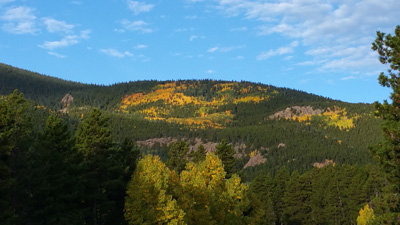
At our elevation the Lodgepole guard the Aspen whose golden leaves in the fall proceed their winter sleep. At lower elevations the Ponderosa, the Spruce stand guard. At the treeline ancient Bristlecone Pines patrol. In other parts of Colorado the Douglas Fir, the Engleman Spruce, the Pinon Pine, the Rocky Mountain Juniper, and the White Fir watch. The Great Spirit reminds us each Winter of the Evergreens special gift.

Here is a special Solstice salutation from Italy’s sixteenth century:


I salute you!

There is nothing I can give you which

You have not.

But there is much, that while I cannot give,

You can take.

No heaven can come to us, unless our hearts find

Rest in it today.

Take Heaven!

No peace lies in the future which is not

Hidden in this present instant.

Take Peace!

The gloom of the world is but a shadow.

Behind it, within our reach, is joy.

Take joy!

And so at this Christmastime, I greet you,

With the prayer that for you, now and forever,

The day breaks, and the shadows flee away!

Matthews, p. 200

Here’s to Thee, Old Man Apple Tree

Winter and the Moon of the New Year

Christmastide, day 7: New Year’s Day

Friday gratefuls: Sherlock Holmes. Cribbage. Ribeye and lobster. Mashed potatoes. Deli salad. Tony’s. Cold. Snow. Low wildfire risk. Rigel between us, sharing her head. Kate’s pillow. Mine. Kep at his spot. 19 days til 1/20 at 9 am. See the back of his head. Tom’s mother, Evelyn. Tom. His sister.


           Andover, 2012, Bees and Apple Blossoms


Paul, here’s an English New Year’s ritual for you. Wassail. You may have heard the word used in relation to wild parties. That’s good too of course. But. In England folks go out to the oldest apple tree in their orchard, usually around noon, and pour cider from a bowl around this tree.

In Devon and Cornwall they add bowing three times to the “Apple-Tree Man.” I like this. The idea is to encourage a large and healthy crop for the fruit season. Pieces of cake and toasted bread were hung from the branches. This was called wassailing the tree. Wassail comes from wase haile, or good health.

They sing:

Here’s to thee, old apple tree

Whence thou may’st bud and

Whence thou may’st blow.

And whence thou may’st

Bear apples anew.

Hats full, Caps full, Bushel,

Bushel sacks full.

And my pockets full too?

Huzzah

Or.

Blow, bear well,

Spring well in April,

Every sprig and every spray

Beat a bushel of apples against

Next New Year’s Day.   

Matthews, 193 for both


Another New Year’s custom from the Faery Faith involves dressing the wells. In the ancient Celtic way artesian springs were considered dwelling places for faery folk and pathways to the Otherworld. Like some Native American nations, prayer rags tied to trees and shrubs near the well were common. Also, bouquets of flowers, small candles.

In 1995 I visited St. Winifride’s Holy Well in Holywell, Flintshire, Wales. Called by some Catholics the Lourdes of Wales, her well has a stone well casing about three feet high and a large pool which the well fills. When I was there, wheelchairs and crutches lined one of the walls.

St. Winifride’s Holy Well is one of the few locales mentioned in Sir Gawain and the Green Knight. Sir Gawain goes there on his journey to find the Green Chapel. Winifride was a Celtic legend long before the Roman Church and the connection to the tale of the Green Knight involves her beheading by Caradoc, a jilted lover.

The spring rose from where her head hit the ground. Her uncle Beuno, probably a Druid, reattaches her head, and healing became associated with her well.

May the healing power of Beuno and the well of Winifride wash over this new year, this new decade. May our 2021 heal as much as it can, cheer as many as it can, especially on January 20th at noon.

Green


Winter and the Moon of the (highly anticipated) New Year

Tuesday gratefuls: The great conjunction of Jupiter-Saturn. Bertilak de Hautdesert. Gawain. Morgan Le Fay.  Arthur. The Celts. Germans. Swiss. English. Irish. Joseph’s new job. Hawai’i. Maps. Friends.


Sir Gawain and the Green Knight summary.* This long poem is part of the Arthurian tales, perhaps the best known outside of Malory’s Le Morte D’Arthur.

The Green Knight is the most important figure in the poem for our Solstice purposes. Sir Gawain takes on the heavy burden of showing the contradictions between courtly love and chivalry. His role is less significant for Solstice thoughts.

Here a few lines from the poem itself.

Great wonder of the knight
Folk had in hall, I ween,
   Full fierce he was to sight,
And over all bright green.
the hair of the horse’s head was of green, and his fair, flowing locks clung about his shoulders; and a great beard like a bush hung over his breast, and with his noble hair was cut evenly all round above his elbows, and the lower part of his sleeves was fastened like a king’s mantle. The horse’s mane was crisped and gemmed with many a knot, and folded in with gold thread about the fair green with ever a fillet of hair and one of gold, and his tail and head were intertwisted with gold in the same manner, and bound with a band of bright green, and decked with costly stones and tied with a tight knot above; and about them were ringing many full bright bells of burnished gold. Such a horse or his rider were never seen in that hall before…” wayback machine

He and the horse he rode in on. Green. Green. Green.

At Camelot the great New Year’s feast only awaits the exchanging of gifts to begin. The knights of the round table, Arthur, and Guinevere sit at long trencher tables, chatting and drinking. Their anticipation fades when a commotion erupts. A knight on horseback has ridden into the hall on his horse.

Arthur, not wanting Camelot to look cowardly, agrees to the Green Knight’s challenge after silence in the hall. Cut off his head tonight. In a year and a day find him and offer your neck in return.

Sir Gawain, not wanting Arthur to put his kingship at stake, takes his place. Off comes the Green Knight’s head. It rolls toward the head table and after a bit of searching the green, headless body finds it, and jumps gracefully back on his saddle.

On New Year’s day a year hence Gawain, after a long search starting on All Saint’s Day, finds the Green Chapel. I am known as the Green Chapel Knight, he told Gawain.

The Green Chapel though is no church building. It’s a green mound with openings, like a burial mound. The Green Knight appears.

After three swings, two missed, and one knick on the neck, the Green Knight declares Gawain’s pledge satisfied.

I see two related, but different, relationships to the Winter Solstice in this story. The first, perhaps obvious, perhaps not, concerns the turning of the Great Wheel.

The Green Knight comes to the festive hall on New Year’s eve, not long after the Solstice. The world is still cold. The sun low. Plant life browned and enervated. Chopping off the head of the Green Knight corresponds to the harvest. Even after losing his head, his body, his roots, can find it. He lives yet. Just as plants whose bowed stalks and brown leaves live on underground, ready with stored food for the coming of spring.

All the eating, even the feasting, of the fallow time cannot kill the vegetative life represented by the Green Knight. On the Solstice we stay in the depths, in the darkness, but we also know that on the coming night the light will begin to overtake it. Slowly. Gradually. Until all the Green Heads previously fallen pick themselves up again.

The second correspondence concerns Morgan Le Fay, the withered woman contrasted to the fresh young wife of Bertilak de Hautdesert. A witch and half brother of Arthur, it is Morgan Le Fay who turns Bertilak de Hautdesert into the Green Knight.

Magic. Earth Magic. The green covered burial mound is a chapel. The place of Morgan Le Fay, and the Green Knight may represent the older, nature focused magic, a magic that honored the chaotic reality of the natural world. A magic that confronts the civilized world of revels and knights and governments and agriculture. The organized world. Which can only understand death as finality, not as part of an ongoing cycle.

Christianity adopted a linear view of time. You can see it in a world ending second coming somewhere in the distant future. You can see it in the ominous nature of death. A time of testing, of being sorted, wheat from chaff. Fearing death makes sense if eternal judgment awaits.

Earth magic and the vegetative power of renewal that the Green Knight displays remains in the cyclical world of the Great Wheel. Death. Then, life. Life. Then, death. Decomposition and decay as a good, a way of transforming death into a process, a part of the ongoingness of the Great Wheel.

In both of these interpretations a more ancient, wilder world stands against human conceit. Buildings. Honor. Kings. Not necessarily to displace them, but rather to disrupt them. To remind them of the context of their lives.

Whatever layers we create that push away from the natural world: skyscrapers, airplanes, medicine, family and corporate farms, highways and cars, the natural world is always foundational. Inescapable. The necessary in a contingent world.

Maybe this New Year’s, at a feast near you, a Green Knight will ride in on his Green Horse asking you to cut off his head. What will you do?


*The Green Knight came into Arthur’s hall and asked any one of his knights to trade blows.

Sir Gawain accepted this challenge and he was allowed to strike first. He cut off the Green Knight’s head. The latter calmly picked it up and told Gawain to meet him on New Year’s Morning for his turn.

On his way to this meeting, Gawain lodged with a lord and each agreed to give the other what he had obtained during each day of Gawain’s stay. On the first day, when the lord was out hunting, Gawain received a kiss from his wife which was duly passed on. On the second day, he received a brace of kisses which were also passed on. On the third day he was given three kisses and some green lace which would magically protect him, but only the three kisses were passed on.

Having left the lord’s residence, Gawain arrived at the Green Chapel where he was to meet the Green Knight. He knelt for the blow. The Green Knight aimed three blows at Gawain, but the first two did not make contact and the third but lightly cut his neck.

The Green Knight turned out to be the lord with whom he had been staying and he said he would not have cut Gawain at all had the latter told him about the lace. The Green Knight was called Bertilak and he lived at Castle Hutton.