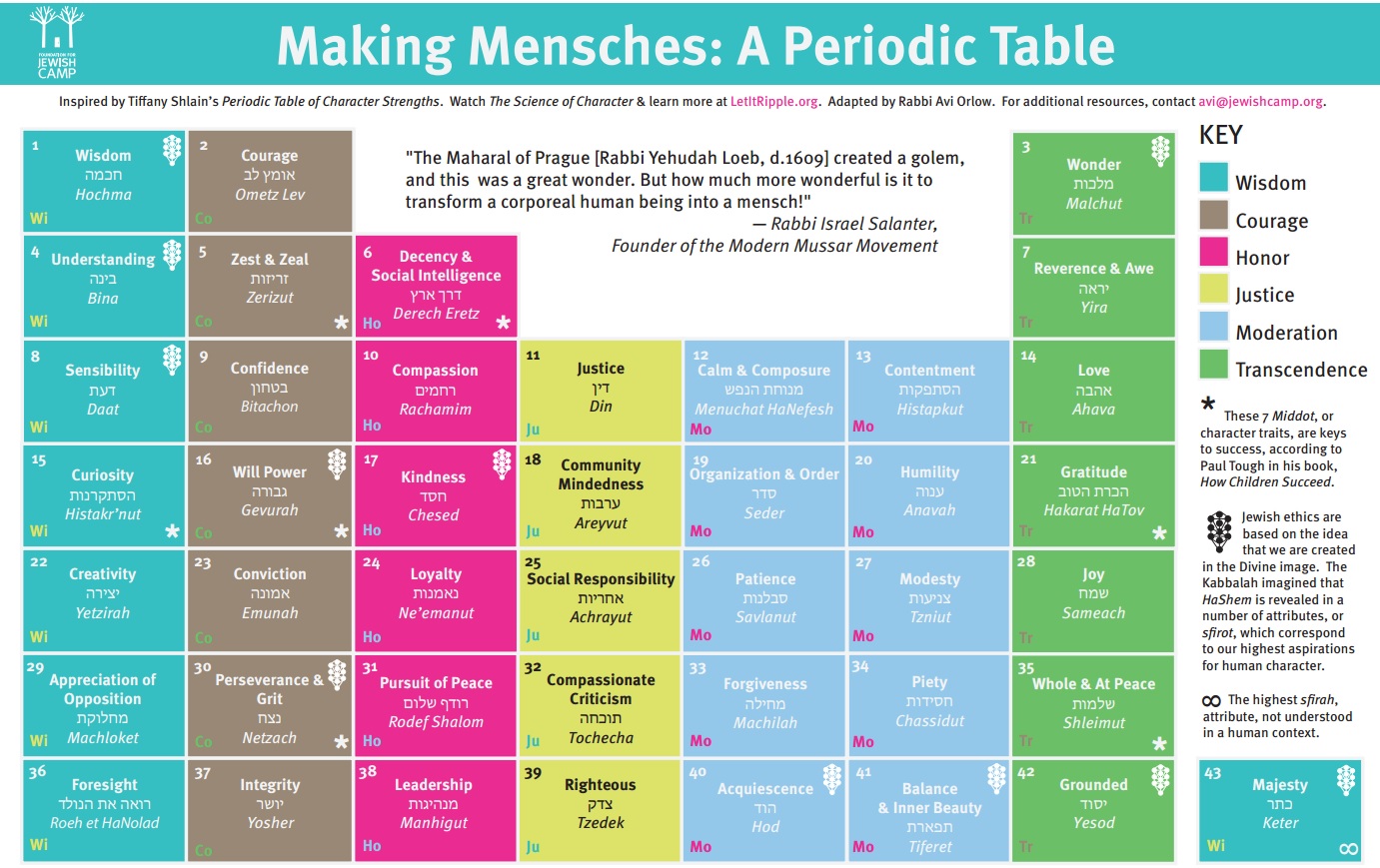
Say awe. My focus phrase for this month’s middot: yirah, or awe. (middot=character trait)
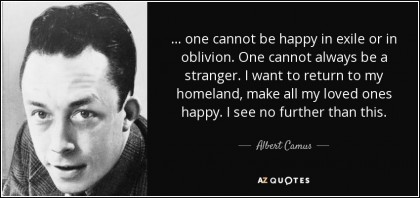
Albert Camus. One of my favorite theologians. It occurred to me that the abyss Camus mentions may be what gets crossed when we experience awe. Somehow we let the absurd in, or the mute world gives us a shout.
“For Camus … [our] astonishment [at life] results from our confrontation with a world that refuses to surrender meaning. It occurs when our need for meaning shatters against the indifference, immovable and absolute, of the world. As a result, absurdity is not an autonomous state; it does not exist in the world, but is instead exhaled from the abyss that divides us from a mute world. ‘This world in itself is not reasonable, that is all that can be said. But what is absurd is the confrontation of this irrational and wild longing for clarity whose call echoes in the human heart. The absurd depends as much on man as on the world. For the moment it is all that links them together.’ …”
Here’s another way of thinking about awe from Alan Morinis, a mussar guru:
“Awe is the feeling of being overwhelmed by a reality greater than yourself and greater than what you encounter in ordinary life. A curtain is drawn back and the little human is overtaken by a trembling awareness that life is astounding in its reality, vastness, complexity, order, surprise. Experiences of awe awaken a spiritual awareness.”
yggdrasil
Immanuel Kant used the phrase ding an sich, the thing-in-itself, to name that from which our senses separate us. We experience the ding an sich, the mute world of Camus, only through our senses, through our sensory experience of certain qualities, qualia, that the thing-in-itself presents. We do not, in other words, experience that which has the qualities, but only its qualia and then only those within the very limited range of qualia accessible to our senses.
The ding an sich, the abyss, a reality greater than yourself all name a something beyond ordinary experience. There are many ways of articulating the gap between us and the ding an sich, the things in themselves.
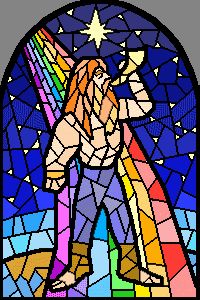
Here’s one I like. Bifrostis the rainbow bridge of Norse mythology. As in this illustration, bifrost connects Asgard, the realm of the Aesir (Odin, Thor, Freya), and midgard, or middle earth, the realm of humans. Awe could be a brief moment when we stand not on midgard but on the rainbow bridge, able to catch a glimpse of the realm beyond us.
Or, we might consider the Hindu concept of maya. Among other meanings maya is a “magic show, an illusion where things appear to be present but are not what they seem”” wikipedia
What all of these ideas suggest, I think, is that a gap exists between an individual and the really real. An important religious question is what is beyond that gap, or what constitutes the gap, or what is the significance of the hidden for our spiritual lives.
I don’t know how to answer that question. Camus’ notion of the absurd makes sense to me. If that’s not an oxymoron. What I do know, for sure, is that the only tool we have for answering it is our experience. Awe may help us. It may allow us a momentary peek into the abyss, or place us on bifrost, or pierce the veil of maya.
What has awed you this day? This week? This year? In this life?
The mind and heart, so wonderful, so necessary, so amazing, but also so fragile. Take mine for instance. Yesterday was a full day, beginning, as my days do, around 4:45 am. I got the dogs fed, ancientrails written, Jennie’s 750 words written and went downstairs to eat breakfast and make two sugar cream pies.
I met Rabbi Jamie for lunch in Evergreen, drove back to Shadow Mountain and took Kate to Bailey for her Patchworker’s gathering. Stopped by Happy Camper on the way back home. A 30 minute rest, then back to Evergreen for a meeting about the first ever Evergreen Forum.
Here’s the tricky part for me, the tricky part for moving more fully into the space of Beth Evergreen. My responsibility for the meeting was to get the four panelists there. I reminded them all in an e-mail a week plus ago, but only Rabbi Jamie and Rev. Dr. Judy Morley of the Science of Mind church showed up. I was embarrassed. Of course, they’re adults and had plenty of prior notice; still, I felt I failed at part of my task. Not a great feeling. The planning went fine though and we got the work done.
However. This meeting preceded a second meeting, Mussar Vaad Practice leadership, of which I am also a part. (MVP, get it?) At this one I’m part of a group of six taking responsibility for continuing the integration of mussar’s character development work into congregational life. This was the meeting for which I baked the pie.
During this meeting, I fell into a dispirited place. Dispirited is such an interesting and evocative word. Exactly right here. My spirit, my ability to engage as me, waned during the course of the time. Why? Well, MVP intends to lead by deepening our own personal practice of mussar. Part of that practice involves focusing for a month on a particular character trait, last month’s was self-awareness, this month’s is awe.
The practice involves using a focus phrase, mine was be aware, to keep our attention focused on how we are with that particular trait over the month. I said I’d journal my awareness. Others made lists twice a day of how they made choices, another put a note on their car dashboard asking, Where I am going, why, Where I am going, how, and another turned off the radio in their car and used that time to focus, while yet another checked in on how they were eclipsing themselves, hiding their true feelings behind socially expected behavior.
At check in we said how it had gone over the month. Most of the folks had very fruitful months with some behavior changes I would describe as significant. When it came my turn to check in, I couldn’t remember any of the things about which I’d journaled and I admitted that the journaling didn’t last long. As my Woolly friends who read this will know, I love assignments and am diligent about fulfilling them. Comes from all those years as a student. Except I hadn’t this time. Again, I felt embarrassed.
Too, this meeting went until 8:30 p.m. I’m in bed at 8:00 p.m. since I get up at 4:45 or 5:00 to feed the dogs and start my day. I’m not sure, but I think as my mind begins to move toward sleep, at least at this age, my emotional resilience goes down, especially when I’m out.
The end result of this was that I came home feeling like a failure. Too big a word? Not really. The good news here is that I recognize the context for this feeling, why it came over me and that it was contextual, not core. I told Kate I’d feel better after some rest. And I did.
Being older means having gone through this cycle before and being self-aware (hah, ironic, eh, in light of last month’s character trait?) enough to know the feeling will pass. This is so important, though it may not be obvious. If I allow my embarrassment to mutate into shame, then it could well weaken the bonds I’ve begun to develop at Beth Evergreen.
Shame at not being able to fulfill my obligations could make me much more reticent in future meetings and in general with the people involved. It could push me away from Beth Evergreen. But that only happens if I see the embarrassment (my reaction) as being produced by the other’s shaming me. If I understand and own the reaction as my own, and as a reaction to circumstance, not as a character flaw, then I can continue in community.
The waning Eclipse Moon stands high in the southern sky this morning above Orion’s head and shoulders. The brightness of even a half moon obscures many stars, a good reminder that light does not always reveal. It can hide things, too.
Today is a busy one. Once I’ve finished my writing, ancientrails and Jennie’s Dead’s 750 words, I’m going to make two sugar cream pies. One is for home, the other for the mussar leadership group that meets tonight. Sugar cream pies are a distinct cultural marker for the Hoosier state, but more than that, they’re really delicious. Why I don’t make them often.
At noon Rabbi Jamie and I are going to eat at Sushi Win, a sushi joint, excellent, in Evergreen. We’re going to discuss the Evergreen Forum, in particular the meeting with the four participants at 4:00 p.m. this afternoon. We have to decide on format, setup, a questionnaire. The topic, prayer and worship in each person’s tradition, is already chosen.
Judaism, evangelical Christianity, science of mind and Islam will present this coming Saturday night. This will be the first of what we plan to be quarterly events. I’m excited about it, a little nervous, since it’s my idea, but Beth Evergreen is a collaborative place and many others have helped move the concept to this point. Next up will be a Buddhist, a Sikh, a Hindu and a Native American. That will be December 5th. A visiting scholar will present in the first quarter of 2017 on Reconstructionist Judaism’s thinking on these topics.
After lunch with Rabbi Jamie I’m going back to Shadow Mountain. Kate needs to get to the library in Bailey for her patchworkers group which meets there. I’ll take the opportunity to to go over to The Happy Camper and pick up some edibles.
Back home for a nap, then over to Beth Evergreen for the meeting at 4:00. Following this is the mussar leadership group at 6:30. Home around 8:30 or 9:00 p.m. A very full day.
OK. Cataracts. The good news. Stable and not too bad. Bad news. The same. Sigh.
Had a nightmare last night. Not often I have those. This one involved a gradual decompensation from ordinary life to forgetfulness to a social worker coming to help me as a vagrant, finding me in a dilapidated house with some others, also disoriented. Frightening. Might have been instigated by a pun game I played last night at Beth Evergreen. I wasn’t very quick, sometimes had nothing. I felt a bit embarrassed, slightly intimidated. It had been a long day, I was tired and the games went on past my bedtime, so it wasn’t the best circumstances for me. Still.
This morning I’m off to Stevinson Toyota to see if I can get the air conditioning revved up again. Ironic because it was 40 degrees when I got up this morning. Down the hill is hot, record breaking hot over the last week with DIA hitting 96 two days ago, and we’re going in more often with Jon’s move to Aurora still underway. So. Fix the air con.
Electrical problem fixed. A wonky main circuit breaker. Fortunately Brian of Altitude Electric was nearby and had time in the early afternoon.
Kate had problems with hypoxia yesterday. The wildfires further west have filled our skies with particulates and ozone, making air quality tough on those with respiratory issues. Once she hooked up with her O2 concentrator, she improved quickly.
So. Life’s sine curves oscillate through our days. Yesterday had more trough than peak.
Arthur Szyk (1894-1951). The Holiday Series, Rosh Hashanah (1948), New Canaan, CT
Judaism as a civilization, a culture, appeals to me on several levels. As practiced at Beth Evergreen it focuses on ethical living through character development, mussar, offers solace to mourners through kaddish at regular services, nourishes a vibrant community where folks actually care for each other and their daily lives, and punctuates the year with the celebration of meaningful holidays. There are also multiple opportunities for learning. This fall I will participate in the adult education series Words, Words, Words, take Hebrew and later the second kabbalah class.
Mussar yesterday focused on forgiveness. It was timely. Forgiveness couples with the energy of a new year during the high holidays, Rosh Hashanah and Yom Kippur. Giving and seeking forgiveness for wrongs committed in the past year is on the hearts of everyone in Jewish communities around the world. There are of course more involved theological reasons for both holidays, but at its humanist level Yom Kippur, the day of atonement, underscores the impulse to punish others in ways great and small for their actions that hurt us. And reminds us forcefully to resist it by forgiving those actions in others and seeking forgiveness for the wrongs we have done to them. In a small community where relationships really matter, like Beth Evergreen, like your extended family, forgiveness makes ongoing community life possible, reducing rancor and hostility while opening relationships up for movement into the next, new year.
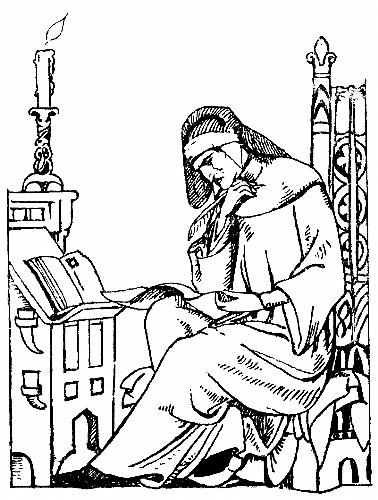
Trying to seat a new work habit. Write ancientrails, then my 750 words for Jennie’s Dead and after breakfast, do my 30 minutes on reimagining. Still cutting and filing posts. Workout. Lunch. Nap. Then, Latin and reading. After the writing, and before breakfast, catch up on the news. Worked yesterday. Ha. Takes awhile to get the body and mind to expect what I want at certain times of the day.
Kate went in to Jon’s new house on Tuesday after I got my hair and beard cut. New look! She took bedding for the kids. But going down the hill right now is fraught because our air conditioner has decided that above 85 degrees is just too hot for it to work. It blows, but it doesn’t cool. Denver, in the late afternoon, has been hitting the mid-90s. Kate’s not a warm weather gal. Not in any way. She got overheated and it’s taking her a bit to recover. And, yes, the ac goes to the shop on Tuesday.
Artemis Honey, a good year
I went over to Rich Levine’s house last night for pizza and a salad. He’s the lawyer who did our estate work and a member of Beth Evergreen. He has also put lot of work into the new Beth Evergreen preschool project. The old preschool was about to shut down, taking with it not only the service provided to the kids, but a revenue stream for the synagogue. Rich and a few others, including Hal Stein, the new board president and Rabbi Jamie, who was a preschool teacher, led the effort to keep the preschool going under Beth Evergreen’s aegis.
The evening was cool and his beautiful house, which sits above Evergreen on the aptly named Alpine Drive has a mountain lawn; that is, one filled with boulders and native rock. After supper we walked up from his house, first on a short boardwalk, then on a trail over exposed rock, the mountain side, really, to a large open deck with an enclosed room where he does his academic work. Rich teaches constitutional law at the Colorado School of Mines.
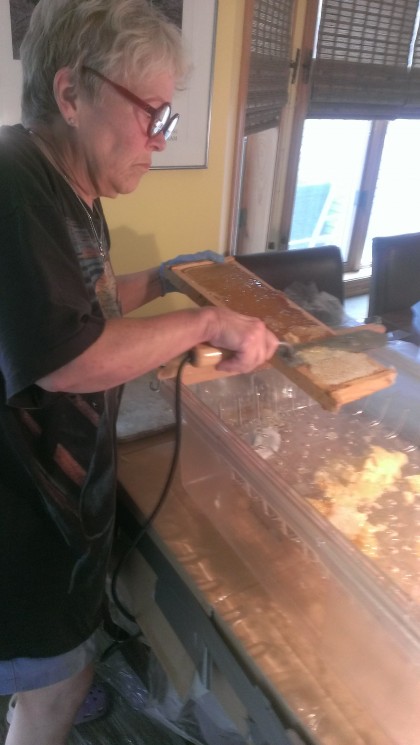
Kate, decapping with the hot knife
The preschool’s Bee Alive theme this year correlates to Rich’s bee keeping project, which he began a year ago. We looked at his hives, he wanted my advice. His bee hives hang from a steel cable attached to a roof beam for the deck and about 50 feet away, a large ponderosa pine. This is a novel set up, mimicking, but with beehives, the way many people suspend bird feeders. Bears create the need. They love bird food and honey. A pulley system allows him to raise and lower the hives. Having their homes hanging in the air is just fine for bees.
I’m now, I think, an unofficial consultant and fellow worker in the preschool Bee Alive program. A lot of bee related work ahead. I have to do some research about mountain beekeeping.
I’ve not written about politics here for awhile. A welcome relief to both me and, I suspect, you, the reader. My political energies have become subdued, mostly as I decided to turn my focus to reimagining work, Jennie’s Dead, Ovid and Beth Evergreen. That feels right to me now, though the news pings me daily. What are you going to do about Charlottesville? What are you going to do about climate change? What are you going to do about Korea? What are you going to do about electing a new representative to the Colorado House of Representatives? Of course I know I can do nothing about them alone, the nature of politics is communal, so the choice is to remain isolated.
Beth Evergreen has absorbed my communal energy. Tara Saltzman, director of education for Beth Evergreen, wrote in a note about the bee-oriented hike up Mt. Pennsylvania, “Being Jewish is being in community.” I feel that. I’m part of the community there, doing my part, glad not to be a leader. They accept me, a peculiar offshoot of the Christian and UU ministry, a pagan.
Next Tuesday those worlds, the political and the Jewish communal, conflict because I volunteered to set up for the adult education events all year, Tuesdays with Morim. At the same time at Grow Your Own, a nearby wine bar cum music venue, Tammy Story, a candidate for the Colorado House is going to speak to the Conifer Alliance for Action. Her opponent, Tim Neville, doesn’t believe education should be public among other strange notions. I’m going to set up chairs and tables at the synagogue.
Trump is still there, of course. Over the course of the last couple of weeks he’s given aide and comfort to white supremacists and neo-nazis, pardoned a sheriff who broke the law and engaged in inhumane treatment of immigrants. He also made Hurricane Harvey a campaign event. He’s a child, maybe 8 or 9, going off instinct, refusing history and decency. He is the greatest test our democracy has faced in my lifetime, more dangerous to our national fabric than the war in Vietnam and the Cold War. He must be challenged, over and over again, until he final slinks away into the dark place from whence he came. I’m glad there are many engaged in doing just that. I’ll do my part here from time to time, but that’s the balance of my political work for now.
Took off yesterday morning about 7:30 am and drove west (or south) on Hwy 285 headed toward Park County, Bailey and Fairplay. I stopped at Grant, a place made visible only by its single, as near as I can tell, business, the Shaggy Sheep. There’s one of those yellow diamond signs just after it with a black silhouette of a bighorn sheep. This is one of several instances of displaced chefs seeking less frenetic lifestyles in the mountains. I mentioned the Badger Creek Cafe in Tetonia, Idaho in my eclipse post. There are others.
The breakfast I had was a deconstructed carnitas hash with green chili and two eggs on top. The deconstructed hash had carnitas laid over cut up chunks of potato, not mixed together as in corned beef hash. It was delicious. While I ate, I read a brand new book by an author from Boulder, Colorado, Megafire. Michael Kodas analyzes the sudden uptick of catastrophic wildfires since the 1970’s and why they’ll keep coming. It pleased me to see that the Shaggy Sheep had opened a second room, meaning they may stay in business, a far from certain conclusion for anything retail up here.
South Park (to the right) from Pennsylvania Mtn.
After breakfast, I drove on toward the Kenosha Pass, a cut through a huge granitic batholith that forms the western boundary of the Front Range. After the 9,997 foot pass, Hwy. 285 descends sharply, a 7% grade, into South Park. Yes, that South Park. At the top of the pass South Park spreads out below, a wide treeless plain that stretches to another range of mountains beyond. They mark the continental divide. That was where I was headed.
A Fairplay favorite, the Java Moose
Fairplay, the county seat of Park County, is a not unusual, for Colorado, meld of old mining town, tourist destination and current mining. A dispute reported in last week’s Flume concerns whether or not to rezone residential plots for mining so a gold mine, yes, a gold mine, can expand its operations.
Those of us hiking up Mt. Pennsylvania met at a Sinclair truck stop on the east side of Fairplay. I went in the car with our two guides and Rich Levine, a member of Beth Evergreen and the lawyer who drew up our new estate documents. On the drive we went past the disputed zoning plat. The gold mine, it’s no longer grizzled old men in long underwear with pans and picks, looked more like an aggregate pit.
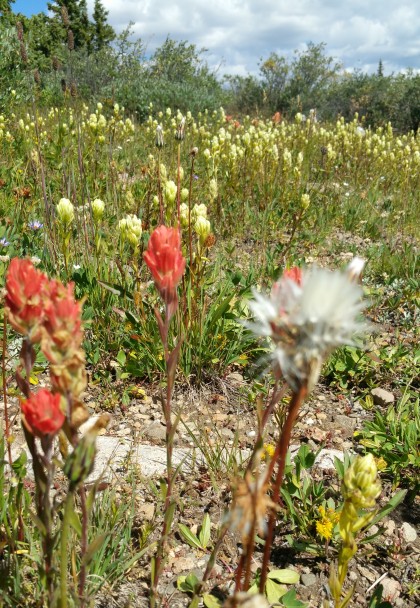
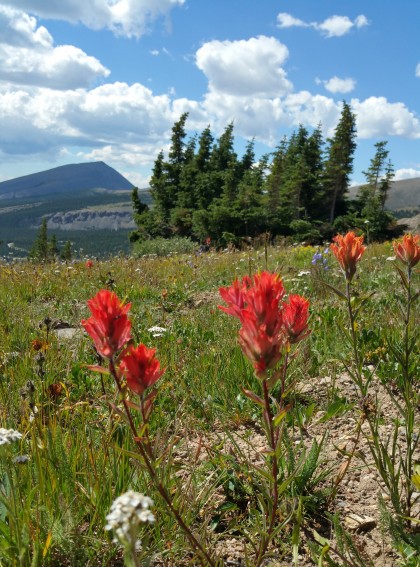
Indian Paint Brush
At the trailhead we began our hike at 11,700 feet through willow, lodgepole pine and a surprising abundance of wildflowers. The trail meandered a bit while traversing another 500 feet up to 12,200. We passed through the krummholz layer, crooked trees, that mark the tree line. Trees right at the tree line are stunted and crooked due to the inhospitable climate. It’s the tree line, after all.
After the krummholz comes tundra, flat and bare except for plants that hug the ground, mat plants, and a few hardy flowers. The air is thin here on Shadow Mountain at 8,800 feet, but 12,200 is thinner yet. It was a struggle to get to the highest point of the hike, requiring breath breaks for most of us; not, however, Tara’s three teenagers who seemed to run with exasperating ease (to this old guy) up the trail. As did Marley, their dog.
A tree island at the krummholz level
Those of us from Beth Evergreen were there because of the research being done on Pennsylvania Mountain. Forty years worth of investigation has been conducted there into alpine bees and some of the plants that they pollinate. Native dandelions, for instance, may be under threat from the expansion of the familiar, but invasive dandelion probably growing in your yard right now. Unfortunately, the scientists had vacated the site, presumably due to the academic year just getting underway, so we were left mostly with the stunning scenery as a benefit.
There was one other gain. The Beth Evergreen pre-school, now a wholly owned subsidiary of the congregation, has as a theme for the year, Bee Alive. It came up in the conversation that Kate and I have beekeeping experience. Rich has started two hives, which he has very cleverly suspended on steel cable high above the ground to foil bears. Otherwise an electric fence, and a strong one, is necessary. Rich invited me over to his house next week for a pre-school staff meeting. Kate and I may end up sharing some of our equipment and knowledge. Should be fun.
This old body doesn’t bounce back like it used to. Driving 13 hours from Idaho to Conifer means a slow return to normal. It’s still underway today, Saturday, after our late Wednesday night arrival back home. Not at all unexpected. Still.
On Thursday we had to return the RV, pick up the dogs and chose to attend mussar, so Thursday during the day was not a time for recuperating. Yesterday was easier, some unpacking, our business meeting and going to the post office for held packages.
Today and tomorrow are slow, too, since the grandkids are with Jen for a hemophilia walk. I’m driving to Fairplay for a hike with Beth Evergreen to see an alpine bee research project on Pennsylvania Mountain. Tomorrow Kate and I will take a load of stuff in to Jon’s new house. He has the kids during the week for the first time this coming week, so he has to get ready for them. The 50/50 parenting arrangement takes effect now that he has a house. A big change for all involved, including us. He will move in over the next couple of months.
Gradually replenishing the battery. Realized just now that I’m like an older lithium-ion battery. I take longer to recharge and the charge doesn’t last as long.
A saga of small proportions, but a saga nonetheless. After a late pickup of the RV due to the previous renter breaking a large outside storage container door, we were cramped in getting stuff into it. Ruth and Gabe slept in it in our driveway on Friday night and we finished packing Saturday morning.
We left around 7:30 am. Due to dire traffic predictions I picked a route that would minimize traffic though it would take a while longer to get there. I don’t mind using time on my own volition, but backed up bumper to bumper on an Interstate? Not so much.
Being a little bleary from the previous day I ended up missing the route I had chosen and finding the exit for an alternate instead. Instead of taking the turn for Empire and Granby, right next to Rocky Mountain National Park, we drove to my first idea, a routed going north out of Dillon on Co. 9. Some of the driving was on roads with narrow to no shoulders and I was still getting used to the hippotamus like wallowing of this big beast. One slight run off the road scared the bejesus out of me.
In an attempt to get back to the Granby route I took off east on Co 14. This was fun because it took us through the vast high plain known as North Park. There are three parks, South Park, Middle Park and North Park. South Park is in Park County, close to our home. We turned north again at Walden, a quaint little town that calls itself the moose viewing capital of the state.
Ruth, above the cab
Somehow though, after we passed into Wyoming, I missed Wy 130 and in the process took us off through the Medicine Bow National Forest. This was also beautiful, but much further south than I intended. This meandering took us about 100 miles out of the way. All good from a not all who wander are lost perspective, but it had a negative effect later on.
By the time we made it to Jackson, after a trip through another National Forest with mountains blued out as the sun sat behind them, a river flowing north beside the road, it was dark. Both Kate and BJ recommended against taking the Teton Pass at night, so I listened. We found a temporary home for the RV in the Jackson KMart parking lot.
For about three hours. At 12:30 pm a knock on the door and very bright lights outside announced the Jackson police department. Contrary to what we had heard KMart does not welcome overnight stays and “Jackson has an ordinance against illegal camping.” Oh. Well. If you put it that way.
So, again bleary eyed, this time after 12 hours or so of driving I put on pants and shoes, started the hippo and we moved away from KMart. Kate suggested we try the Motel 6, a place Jon stays when he comes to ski. $63 a night. They said rooms were $248 a night, a special rate just for the eclipse. Ha. However, the desk clerk kindly said we could stay in their parking lot for free. We did.
About 7 o’clock Sunday morning we fired up the hippo and drove to, wait for it, McDonalds for coffee, potato type food and an egg mcmuffin. We wanted to get out of Jackson and onto the Teton Pass. Which we did.
It’s not a difficult drive in the light, but it would have been treacherous in the hippo at night. Again, beautiful. Natural beauty surrounds us here in the West, especially following the Rocky cordillera north as we did. Sort of.
Once down the Teton Pass we passed into Idaho at Victor, then turned north toward Driggs. BJ, Kate’s sister, lives a half hour out of Driggs, up the side of the bowl that the mountains create here, a small version of a Park. Her home is rustic with wood flooring, weathered porches and an outbuilding that includes a sauna and a greenhouse. It’s quiet here, the opposite of Broadway and 78th in NYC, where she lives in the Beacon Hotel.
Tomorrow is the eclipse. We’ll see it from a meadow near here. More after that.
Losing the Sun
8/22/2017 Eclipse Moon
Kate, BJ, and Jon. On BJs deck.
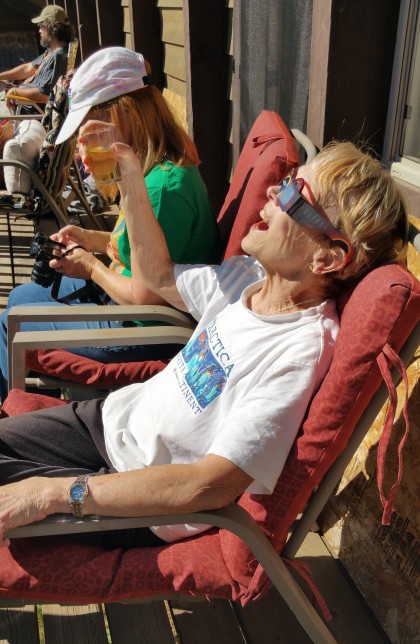
A black sun. Coronal flares shooting out, white against a blue-black sky. No birds flying, a sudden cool silence. Two minutes and twelve seconds passing fast. At 11:35 am, against a clear, just moments before hot blue. Gasps and exclamations came over these lower hills of the Big Horn Range, the ragged Tetons across the Tetonia valley, mute.
A moment of the occult revealed by darkness. The sun always moves across our spinning planet with those vast, hot flames reaching for the edges of the solar system. Unseen. Even the sun itself, except at a quick glance, or in the periphery of vision, stands hidden in its own brilliance. Not yesterday. Not for two minutes and twelve seconds.
A sight reminiscent of a secret society. Only initiates can see the truth. And it is so. It may be a secret society of millions or billions, but it is exclusive, often, as for me, happening, if at all, only once in a lifetime.
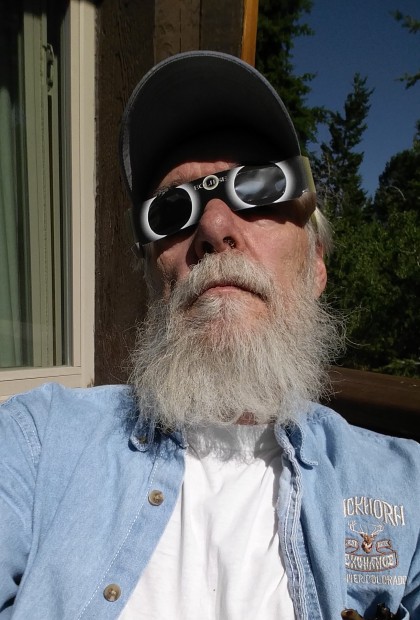
Six Olson/Johnsons: Jon, Ruth, Gabe, Anne, BJ, Kate and one Welsh Teuton sat on BJ’s east facing deck, eyes covered in glasses dark enough to make walking with them on impossible. At first we baked, heat from a late Idaho summer crackling down from the sun, naked and fierce as it can be at midday.
Totality
A small pinch of black intruded on the faded yellow globe we could see through the eclipse glasses. Baily’s beads, sunlight bouncing through valleys created by lunar mountains, shimmered for just a second then disappeared. The small pinch became a bigger one as our usually nocturnal moon, and a new moon, usually invisible, at that, showed up, its shadow cone moving at hundreds of miles an hour, racing across the U.S. from Portland to Charleston, passing us here just across the Big Horns from the vast potato fields of southern Idaho.
That image, black sun, coronal flares across the deeply bruised heaven is now a permanent resident in my memory. Brief though it was, its violation of the natural order so consistent over my life time, much like an earthquake disturbs our sense of the stability of the earth on which we walk, was so intense that it will stay available to me.
How often in a life do we get to shock ourselves in such a way? The sun shines in through the window of the RV as I write this, back to its old dangerously luminous self, too shiny for my eyes. “There are more things in heaven and on earth than are dreamt of in your philosophy, Horatio.”
Our common sense philosophy allows us to move through our days without recourse to constant surveillance. The earth is solid. The air breathable. Night follows day. Our heart beats. During the day the sun shines unless obscured by clouds. When our experience deviates from these home truths, our inner world shakes. Can’t get enough oxygen? Heart pauses? Earth moves. Night comes near noon on a cloudless day. Even if we know the why, the empirical fact of such an insult to the received wisdom of our lives alters our confidence in what we believe. Alters it in a deep and profound way.
Alpine glow during totality, looking toward the Tetons
Perhaps such events are the key to humility. What we assume is true may be mistaken, mistaken in some fundamental way. Once one pillar of our inner temple is shaken, we may need to examine them all.
August 23, 2017 Lughnasa Eclipse Moon
The day of the eclipse has come and gone. Jon, Ruth, and Gabe left that day for Colorado. The eclipse was on the first day of Gabe’s fourth grade year and Ruth, though already in school for a week or so, missed classes on Monday, too. They had to get back. It took Jon 11 and a half hours to get home.
BJ, Kate, Anne at Kates birthday party apres eclipse
Later that day Kate’s two sisters, Annie and BJ, Kate and I, drove into Driggs for a post-eclipse return to this earth. Traffic in that small Idaho farm town was heavy, a traffic jam slowed us down getting to the art fair which was our destination. There were mumblings about how the expected 100,000 people had ended up being only 10,000 and artists seemed disappointed in their sales.
Since we never left BJ’s deck to see the eclipse we escaped any traffic getting into place for a viewing and the traffic coming up from Conifer was never heavy, even on I-80, so that small Drigg’s experience was it for us. Fine with me.
Annie and BJ put together a birthday party for Kate with a happy birthday banner, glow in the dark bracelets, flowers and color changing small candles. We had salmon, potato salad, baked beans and fruit for dessert.
Tetonia
The next morning we had breakfast up at the big house. (what Kate and I from the RV perspective called BJ’s place) Kate ended up feeling crummy and left early to spend the morning resting. I wrote a bit, read, talked with Annie and BJ.
In the afternoon Annie, BJ and I drove 15 minutes over to Tetonia, a smaller town than Driggs, with the same name as the county. As you drive east away from the Big Horn foothills where BJ lives, the Tetons dominate the horizon, especially four jagged peaks that have a distinct alpine feel. The tallest and most severe of the peaks is Grand. Between the Big Horn foothills on the west and the Tetons in the east is a flat plain dotted with fields of wheat, alfalfa and pastures with Angus and horses. There are barns with hay lofts, Harvestor silos, grain elevators and farm equipment dealers on the main road. If you bracketed out the mountains, it could be a location in Iowa or southern Minnesota.
We visited a small shop in Tetonia, a show case for Steve Horn, who makes furniture, carves wood into whimsical fire place mantels with dancing bears or curious elk. The quality of his work is high and the prices reasonable. There were also other local crafts such as white turquoise jewelry and woven pine needle baskets, various rugs of a rustic cabin sort and a few scattered antiques.
Ankole-Watusi Horn, an African breed of cow
There were also four horns, two smaller and two larger, that made me wonder what animal could possibly have worn them. So I asked. The owner came down from her office area above the store. “You know, I’ve been meaning to look them up. Give me a minute.” I did. “Come on up here, I’ll show you.” These were the horns of a central African cattle breed called the Ankole-Watusi. The largest horns of any cattle breed. The pictures she pulled up showed large cattle, perhaps oxen size, with enormous horns.
BJ wanted to eat lunch at the Badger Creek Cafe, a Tetonia restaurant a couple of blocks beyond Steven Horn’s place. “Put together by two chefs from NYC. Really good food.” Also closed on Tuesday and Wednesday. We all liked the name of a small woodworkers shop nearby, Mortise and Tenon.
Because BJ’s realtor and friend, Bobbie, had invited us over for dinner, we went back into Driggs to pick up some dessert. The Austrian pastry shop was closed as was Cicerolls, so we went to Broulin’s, a local supermarket. While there, I told BJ I liked it. For those of you familiar with Minnesota supermarkets, it would have been between a Lund’s and a Bylery’s, nicer than Colorado’s King Sooper.
from Bobbie and Barney’s deck
Turns out the locals, Bobbie for instance, view it as an intrusion by Jackson Hole prices and tastes into the area over the Teton Pass in Idaho. Probably so.
Later we met Bobbie and Barney at their home which overlooks the large agricultural plain with the craggy Tetons on display on its eastern edge. A very peaceful place.

 Albert Camus. One of my favorite theologians. It occurred to me that the abyss Camus mentions may be what gets crossed when we experience awe. Somehow we let the absurd in, or the mute world gives us a shout.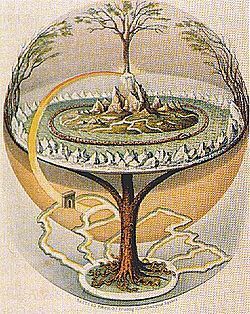
 What all of these ideas suggest, I think, is that a gap exists between an individual and the really real. An important religious question is what is beyond that gap, or what constitutes the gap, or what is the significance of the hidden for our spiritual lives.
 The mind and heart, so wonderful, so necessary, so amazing, but also so fragile. Take mine for instance. Yesterday was a full day, beginning, as my days do, around 4:45 am. I got the dogs fed, ancientrails written, Jennie’s 750 words written and went downstairs to eat breakfast and make two sugar cream pies.
 Today is a busy one. Once I’ve finished my writing, ancientrails and Jennie’s Dead’s 750 words, I’m going to make two sugar cream pies. One is for home, the other for the mussar leadership group that meets tonight. Sugar cream pies are a distinct cultural marker for the Hoosier state, but more than that, they’re really delicious. Why I don’t make them often.
 Had a nightmare last night. Not often I have those. This one involved a gradual decompensation from ordinary life to forgetfulness to a social worker coming to help me as a vagrant, finding me in a dilapidated house with some others, also disoriented. Frightening. Might have been instigated by a pun game I played last night at Beth Evergreen. I wasn’t very quick, sometimes had nothing. I felt a bit embarrassed, slightly intimidated. It had been a long day, I was tired and the games went on past my bedtime, so it wasn’t the best circumstances for me. Still.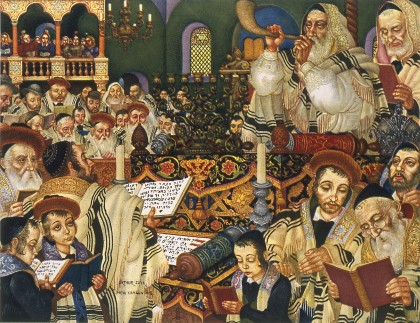
 Trying to seat a new work habit. Write ancientrails, then my 750 words for Jennie’s Dead and after breakfast, do my 30 minutes on reimagining. Still cutting and filing posts. Workout. Lunch. Nap. Then, Latin and reading. After the writing, and before breakfast, catch up on the news. Worked yesterday. Ha. Takes awhile to get the body and mind to expect what I want at certain times of the day.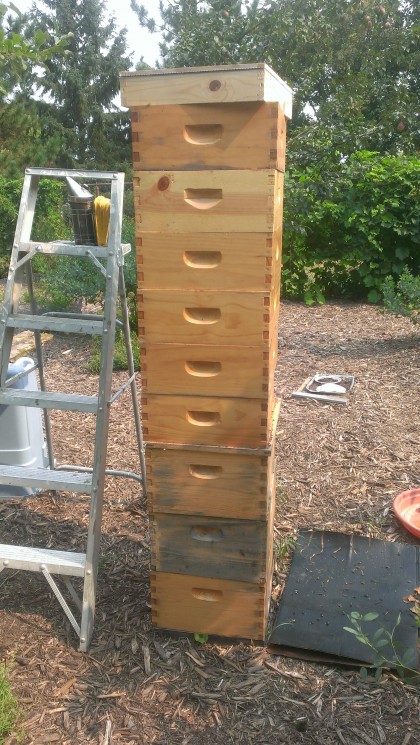
 I’ve not written about politics here for awhile. A welcome relief to both me and, I suspect, you, the reader. My political energies have become subdued, mostly as I decided to turn my focus to reimagining work, Jennie’s Dead, Ovid and Beth Evergreen. That feels right to me now, though the news pings me daily. What are you going to do about Charlottesville? What are you going to do about climate change? What are you going to do about Korea? What are you going to do about electing a new representative to the Colorado House of Representatives? Of course I know I can do nothing about them alone, the nature of politics is communal, so the choice is to remain isolated.
 Next Tuesday those worlds, the political and the Jewish communal, conflict because I volunteered to set up for the adult education events all year, Tuesdays with Morim. At the same time at Grow Your Own, a nearby wine bar cum music venue, Tammy Story, a candidate for the Colorado House is going to speak to the Conifer Alliance for Action. Her opponent, Tim Neville, doesn’t believe education should be public among other strange notions. I’m going to set up chairs and tables at the synagogue.
 Trump is still there, of course. Over the course of the last couple of weeks he’s given aide and comfort to white supremacists and neo-nazis, pardoned a sheriff who broke the law and engaged in inhumane treatment of immigrants. He also made Hurricane Harvey a campaign event. He’s a child, maybe 8 or 9, going off instinct, refusing history and decency. He is the greatest test our democracy has faced in my lifetime, more dangerous to our national fabric than the war in Vietnam and the Cold War. He must be challenged, over and over again, until he final slinks away into the dark place from whence he came. I’m glad there are many engaged in doing just that. I’ll do my part here from time to time, but that’s the balance of my political work for now.
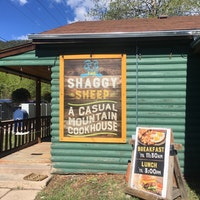 Took off yesterday morning about 7:30 am and drove west (or south) on Hwy 285 headed toward Park County, Bailey and Fairplay. I stopped at Grant, a place made visible only by its single, as near as I can tell, business, the Shaggy Sheep. There’s one of those yellow diamond signs just after it with a black silhouette of a bighorn sheep. This is one of several instances of displaced chefs seeking less frenetic lifestyles in the mountains. I mentioned the Badger Creek Cafe in Tetonia, Idaho in my eclipse post. There are others.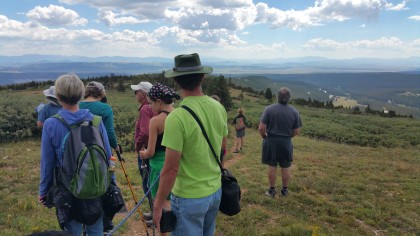
 This old body doesn’t bounce back like it used to. Driving 13 hours from Idaho to Conifer means a slow return to normal. It’s still underway today, Saturday, after our late Wednesday night arrival back home. Not at all unexpected. Still.