Category Archives: Aging

The Anti-Rogaine Hair Loss Treatment

Winter                                       Garden Planning Moon

On a round of errands.  First stop.  CVS.  Two items:  a knee brace, number 2 for my left knee, now complaining because I’ve left it unsupported.  I think.

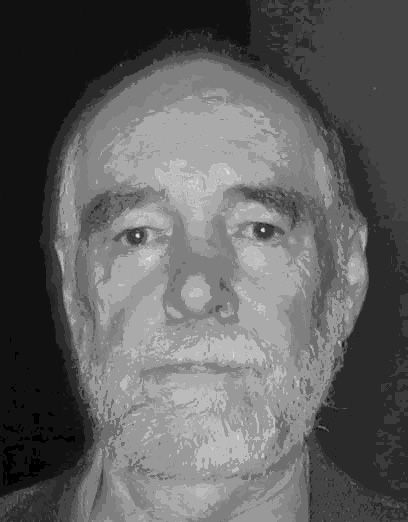
And, of all things, Nair.  For my head.  Yes, that’s right. I’m about to try something I consider weird.  Sort of the anti-Rogaine approach to hair loss.  This stems from a period, recent past, when my hair grew out and the remaining hair on top insisted on standing up and imitating a mohawk, a really wispy, faint mohawk.  What to do?

Comb it over?  Didn’t work.  Static electricity kept popping it back up.  Kate cut it with the rest of my hair but then the remaining lawn on top had a raggedy look.  So, I took the clippers and shaved the edges.  Ah.  More symmetrical.

Still.  Looked silly.  Next stop.  The razor.  Yes, I shaved my head.  I know, but hey, I said adjusting to the last third of life had its moments.  This is one of them for me.  Kate suggested a hypoallergenic depilatory.  Say that one ten times fast.

I find this product on shelf space devoted to waxing.  Specifically Brazilian bikini waxing.  I know.  Do I want products like that on my head?  Fortunately, the old standard from long ago, Nair, comes in several flavors, one of them for sensitive skin.  Mine.  Gonna try it.

What’s next?  Johnson’s Wax for that all day shine.

Under the Garden Planning Moon

Winter                                   New (Garden Planning) Moon

In the next couple of weeks I’ll order two packages of bees, 2#, to install in mid-April. Two hives produce plenty of honey for us and some to sell.  I have no desire to create a bigger operation, but working with bees has its soothing aspects and its downright fascinating aspects.

Also, over the next couple of weeks Kate and I will sit down and plan our 2012 garden.  We now have all the beds installed, the orchard has begun to produce, albeit still at modest levels and our perennial beds have taken more or less to running themselves with the occasional weeding foray and bulb planting episodes.

My short burst workouts, which include four sets of resistance work in between the all out sessions of 30 seconds and one minute, have begun to show results, so this summer I plan to have more muscle which makes gardening both easier and more fun.

We have a fire pit, dug out fully by Mark last summer with a large metal fire ring and cooking grates ready to be installed come spring.  Once it’s in place we’ll have a nice area near the grandkids playhouse for twilight and nighttime fires, roasting marshmallows and wienies.

With Kate at home much more now, we’ll be able to take even better care of the yard.  Wisely, Kate let the grass cutting go a couple of summers ago, enabling her to concentrate on weeding and pruning, tasks, for some inexplicable and yet joyous reason (from my perspective), she enjoys.

The Past Is Never Dead

Winter                                              First Moon of the New Year

Saw “Midnight in Paris.”  Not much of a movie goer, I’m more of a movie bringer, so I tend to see things late.  I don’t mind.  Kate and I picked this one for our movie night on Friday.

The professor teaching a class in contemporary art theory at the Walker, I took this class back in, what, March, gushed about this movie.  A post-modern film.   A love letter to the past and present of Paris.  A love story.

She was right.  This is a wonderful film, a film that challenges our notions of chronos, that says, up front, that the past is never dead; it’s not even past, it’s right here with us.  A Faulkner quote from Requiem for a Nun.

Owen Wilson and Rachel McAdams play an engaged couple with very different priorities.  Hers is to live the rich life with a successful Hollywood screenwriter (Faulkner was one.)  and his is to find a garret in Paris and write his novel about a man who owns a nostalgia shop.

A gateway opens to his golden era, the Twenties, when a fancy car from that era stops near him, just after midnight, its passengers hailing him.  He get in and discovers he’s riding with   F. Scott Fitzgerald and Zelda.  Along the way he meets Hemingway and Picasso and Gertrude Stein.

Later, another gateway opens for Owen and Adriana, mistress to Picasso, Hemingway and Braque.  This takes them to Adriana’s golden era, the Belle Epoch. There she meets Gauguin, Lautrec and Degas.  She decides to stay behind.

Like Murakami’s 1Q84 I’m not sure if this is a great movie, but it might be.  It will need more time, more exposure.

It’s lightness almost allows the more profound aspects of its structure to slip away in a froth of Hollywood champagne bubbles.  The easy transit between Paris now and Paris then, given physical content, a sense of this is now actuality, occults the truth behind a glittering persona.

Any of us who read seriously, who attend to cinema for more than diversion, who haunt the   hallways of museums the world over, who wander ancient ruins or immerse ourselves in ancient languages or religions, who visit places like civil war battlefields or the Hudson Valley looking for the painters inspired by it or any well preserved neighborhood in any major city, those of us to take politics seriously know the truth of Faulkner’s observation.

When wandering the ruins of Angkor in Cambodia, the Khmer kings live again, their great monuments speaking their story in the language of stone and symbol.  Walk the streets of Ephesus in Turkey.  You stroll with the Romans who lived there.  Head over to the amphitheatre where Paul spoke to the Ephesians.  He’s still there.

Have you read War and Peace?  Then you’ve danced in 19th century Russia.  Steppenwolf?  You’ve been to the magic theatre.  Magic Mountain.  The life of a tuberculosis sanatorium.   Great Gatsby?  American Tragedy?   Romance of the Three Kingdoms?  You fought in the wars at the end of the Han Dynasty.  Monkeys Journey to the West?  A trek to India from the heart of Buddhist China.

When I translate Ovid, I encounter him.  Words he wrote, arranged, gave meaning and sense and poetics.  He is there on the page and I converse with him.

Walk the halls of any art museum and have an encounter.  Let’s say Rembrandt’s Lucretia at the MIA.  She cries in front of you, her heart broken and her spirit damaged beyond repair.  She bleeds, clutches the rope with her left hand.  All while remaining regal, somewhat aloof.  At this painting you stand in the room with her, at the end of the Roman monarchy occasioned by her grief and her violation while you also stand in Rembrandt’s studio, applying the last bit of paint, perhaps some varnish.  Remarkable, wouldn’t you say?



What? No TV?

Winter                                     First Moon of the New Year

Business meeting this morning.  Some drastic pruning budget wise to squeeze our spending into line with our post-retirement income.  Example:  dropped cable tv.  I know.  It feels almost unamerican.  My mom and dad raised me to watch at least three to four hours of television a night and I feel like I’m letting them down.  Not to mention CBS, NBC and ABC.

The impetus for this came after the trip to South America.  We watched no TV over the cruise and when we got back I settled in with a good book in the evening.  We still have a blu-ray player, Netflix and I just signed us up for Hulu Plus, so we’re not leaving the big box behind in toto, just the absurdly expensive piped in Comcast version.

The internet connection?  Well, we kept that.  There’s TV and then, there’s the internet.  No comparison.  We’re not totally TV broadcastless as it turns out.  To keep our lower rate for the internet I agreed to a $12 a month “antenna” service from Comcast.  With the broadband the total was lower than internet alone. You get a discount on the broadband if you have any other services.  Weird, huh?

None of this feels draconian, just adjusting things to keep pace with changing reality.

We’ve also decided that with Kate retired we can go with one car.  We’ve done that for a couple of months anyhow since the Celica blew a tire.  Again.  I’ve decided to let it set until warmer weather.  I’m gonna give it away.  It’s been a great car and we didn’t make it to 300,000 miles together, but it still feels like time to let go.  I’ve driven it since September of 1994.


Memory and Forgiveness and Death

Winter                                           First Moon of the New Year

Finished the Art of Fielding.  A book about striving and letting go, about loving and letting go, about baseball and Moby Dick, about heterosexuality and homosexuality, about living and dying.  All in the compass of northeastern Wisconsin, around Door County.  A fine read.

In the movie Patton, George C. Scott as Patton, in reviewing a harsh slap to a soldier with shell-shock, what we would call post-traumatic stress syndrome, recalls the morale of the other soldiers in the Third Army, “It was,” he says, in an explanation and a confession, “on my mind.”  Scott’s gravely delivery has lodged this sentence in my mind.

It reveals to me the awful and the beautiful truth about memory.  We can stand condemned by our past, but in our remembrance of things past (proust), we can confess in that Catholic way, a heartfelt acknowledgment of our complicity and yet our need and our opportunity to live beyond it and, if necessary, in spite of it.

This thought occurs to me after Marian Wolfe’s funeral, after all funerals, all deaths.  Whether there is a great judge who puts your soul on the scale against a feather or a sudden extinction, the moment after death is no different than the next moment in life.

This may seem a shocking thought, but consider.  At any one moment in time we carry what miners call an overburden, the piled up soil and stones and boulders and tree roots and unessential rock of our life experience.  At any one moment in time, too, we may cease to be.  In fact, at some moment, soon or late, we will cease to be.  And the moment after we die is no different than the one that comes next.  Right now.

Think of it.  When we die, that living slate gets wiped clean, a lifetime folds up and gets tucked away.  This is the same opportunity we each have, every moment, if we can only open ourselves to our past, receive it in all its humanness, accept it and move on.

You may say we live in the memory of others.  Well, the memory of you lives on in the lives and memories of others, also perhaps in land you’ve loved, books you’ve written, paintings you’ve created, houses you’ve built, quilts you’ve made, but these are not you.  They are the memory, the imprint of you.

You are that whole universe lived within your Self, in the body and in the mind and in the spirit or the soul.  That others can never know, can never see, can never experience.  That universe experiences its apocalypse at the moment of your death.

This is very liberating.  We need only accept the death of our private universe to realize how tiny each event that looms so large in our memory is.  It will be swept away.

Hmm. getting tired here and don’t want to dig this further right now.  But its important to me anyhow.


Man On Fire

Winter (?)                              First Moon of the New Year
Kate’s off at work.  The dogs are quiet and I’m finishing up some work before I work out.  Just mailed the Sierra Club legcom’s agenda for next week’s meeting.  Moved Gertie and Kona’s crates up stairs.  Read a couple of chapters in The Art of Fielding. (Bill Schmidt, this novel takes place in a college that reminds me of St. Norberts.  You might want to take a look.  Mine is an e-book or I’d lend it to you when I’m done.)

(This is what I think I look like while I’m doing short burst training.)

Now I’m drinking my cup of Awake tea, two tea bags worth.  I read somewhere that caffeine helps workouts and I can report that it’s true.  I don’t get nearly as exhausted 

(This is what I really look like when I’m done.)

These workouts are known as short burst training.  You run or bike or do push-ups, whatever, as hard as you can for 30 seconds or a minute.  Then, you quit and do resistance work, stretching, balance work until your heart rates drops back to base-line.  At which point you do another minute at hard as you can.  You keep this up for four or five short bursts.

The advantage to it is that in between you get all your resistance work done and, when you’re in peak shape, you can do the whole work out in 30 minutes.  It takes me 40 + right now, because my heart rate takes longer to drop back down after the third burst.  But that will change.


On Moving Toward Doing the Work Only I Can Do

Winter                              First Moon of the New Year

Spent yesterday shifting to my new work schedule.  A couple of hours on Ovid, plus analyzing some of Caesar’s Gallic Wars.  Edited three portions of the Tailte Mythos:  Book I and began clipping postings from Ancientrails to consult for my first essay in the Reimagining project.

Also learned that I can’t go to sustaining status at the MIA until I’ve had 8 years as a docent.  Sustaining would cut my tour requirements in half.

This means I’m going to have duck out of the Sierra Club sooner than I had planned.

No plant starts this year.  I’m going to buy already started plants and of those only those we decide to grow for particular, planned uses.  We’re going to shift our gardening now toward minimalism, toward those things we’ll preserve.  Two colonies of bees.  Emphasizing less maintenance everywhere, planting towards a time when the gardens will need even less, eventually very little care.

Life’s focus changes as our lives change and now I’ve become focused on those kind of things only I can do.  Only I can write the Tailte books.  Only I can set down my scattered thoughts about a sort 0f ur-faith, a common reverence all of us on the planet might share.  Others might/will translate Ovid, but only I will work toward a beginner’s level commentary, one similar to Pharr’s commentary on Vergil.

Not sure why now for this shift except to say that I know my time is finite.  Yes, it always has been, that’s true, but now it seems existential.  No, I’m not covering something up here, I’m not ill, in fact, I just got a set of labs that Kate says are typical of a 40 year old.

Long ago, in my 20’s, I read an article about when certain professions reach their maturity.  You know the material about mathematicians and scientists, early ripe, but certain other professions matured much later, writers and artists, for example, with the oldest age of maturation according to this reckoning being 50, for philosophers.

Factoring in my drinking and an early career emphasis on politics and the practical side of religion, I don’t find 65 to far out of range for me.  I feel mature in my thinking and writing skills now and I need to deploy them or my unique contribution will be lost.

2012

Winter (snow, at last!)                           First Moon of the New Year

OK.  I stayed up until midnight.  Now what?

Another year.  Didn’t we just do this last year?  The whole new year’s thing.

Kate and I shared champagne flutes of a Fre sparkling wine, toasted her retirement, our family and friends, the next year together, our 22nd as a married couple and then she went to bed, she who usually goes to be around 8pm stayed up until 11:30.

We watched a Netflix streaming movie, Mao’s Last Dancer, a so so movie about a Chinese ballet dancer who chose to stay in the US after a year with the Houston Ballet.  This was the mid-80’s.  The movie barely makes sense in current time.  China’s much different, more confident and we’re much different, less confident.

So, Happy New Year to each of you and all of you, all at once!

How the New Year Might Look

Winter                                           First Moon of the New Year

At an inflection point with the Latin.  Either I keep the pace I currently follow, maybe 6 hours a week; or, I ramp up, say to 10 or 12, maybe a couple of hours each day.  Some analysis of other texts–maybe Caesar or Suetonius or Julian, I have all of these in Loeb Library volumes–plus more translating of the Metamorphoses.  My inclination is to ramp up, do more, focus on Latin and the novel.  That’s what my heart tells me.

That other project, too.  The one I’ve got slotted for 5,000 word essays each month next year.  Where I’m going to give voice to my whirling ideas about the earth, about ge-ology, about what would help us help our home planet.  That one, too.

When you add these things together, they constitute real work and I feel good about that, not trapped or bummed.  Now all I need is a way of allocating my time so I can work them all in and still manage the art, the garden, the bees and family.

That may be my new year’s work.  Pruning activities and creating a new schedule.


Ovid. Again.

Winter                              First Moon of the New Year

An Ovidian morning.  Holding words, conjugations, meanings, clause types, prepositions and adverbs in the head while whirling them around like a Waring blender.  It’s satisfying when a sentence finally pops up, like a good smoothie.  Not always a straight on logical process, though logic can critique the result.

About ten verses a week now.  Takes, hmmm, 4-6 hours.  So, if there are 15,000 verses, that’s 1,500 weeks or 6 to 9,000 hours.  Which is, what?  3 to 4.5 working years full-time or 30 years a week at a time, taking some time off for vacation.  Mmmm.  Don’t look for that book jacket anytime soon.