No Kate in the bed last night. Kep was there, though. Medical procedures upend regular life in so many ways. Kate had to stop most of her meds, use special cleansing soaps, sleep on clean sheets (yes, that was a requirement), stop eating. Then we have to leave our home, drive in to the hospital early, always early. Once there the ritual of checking in and paying, followed by pre-op disrobement, placing of iv’s, lots of conversation about medical history, warm blankets, lying in hospital bed on your back connected to various machines with many different numbers: O2, blood pressure, heart rate among others.
This is a gradual relinquishing of control that culminates in anesthesia and allowing someone, paying someone, to violate one of the most persistent taboos in our culture, the literal integrity of your body should not be disturbed by another. The surgeon cuts into the skin, goes inside where we never see, into the most private and intimate of spaces. And, in this case, takes out bone and cartilage, sets aside nerves, and installs titanium in a location known before only to flesh and blood.
Portrait of Dr. Samuel D. Gross (The Gross Clinic) Thomas Eakins
The process begins to reverse in the recovery room as questions about nausea and pain depend on your answers for treatment. Modest control returning. Once in your room you begin to eat again, determine your pain medications, walk, use the bathroom. Finally, if no complications arise, the wheel chair ride to transportation home. Even at home the post-op plan governs a lot of your life. How much and how long of course depends on the procedure. Not sure quite what this looks like in Kate’s case yet, we’ll learn that today.
We agree to all this because we trust, more or less, the institution of medical care and the people who make it work. Of, if we don’t exactly trust, then we realize our options are few if we want the painful right shoulder to stop hurting, become useful again.
As a physician and a former nurse anesthetist, Kate knows the parts of surgery usually invisible to a patient due to anesthesia. This is, as the Bible says, a blessing and a curse. It’s a blessing in that there are fewer unknowns to give anxiety, but a curse in that surgery does not always go well and she knows that from personal experience.
I look forward to picking her up today, bringing her home and helping her through recovery. As Schneider’s interviewee said, then she can live on and give on.
The new shoulder got placed this morning in a procedure that started at 9:30 and ended before 11. “Easy peasy,” said the surgeon, David Schneider. A good guy. In an interview for a book Schneider’s writing an informant told him he wanted those who benefited from his device to “Live on and give on.” Schneider added, “My new hip allowed me to do just that.” Very refreshing to meet a doctor, especially a surgeon, who sees his work as people’s bettered lives. May he live long and prosper.
Kate was a bit nervous, helped down from a lot nervous by conversations about Sjogren’s and all of the medical team taking her concerns seriously. I came home right after talking to Schneider because I wanted to feed the dogs and let them out. Headed back to Ortho Colorado in just a bit.
We’ve been heading toward this for quite a while and I’m relieved the surgery is over. Hopeful it will give her a painless shoulder, aiding sleeping, her right hand and her stress level.
As one of Dr. Agronin’s youngest informants said, even when physical decline and losses restrict one’s options, there remains the capacity to appreciate and approach each day with a sense of purpose. “It’s all about how you frame what you have,” she told him.
He cites the concept of “positive aging” developed by Robert D. Hill, a psychologist in Salt Lake City, that is “affected by disease and disability, but not contingent upon avoiding it.” Rather, it is “a state of mind that is positive, optimistic, courageous, and able to adapt and cope in flexible ways with life’s changes.”Finding Meaning and Happiness in Old Age, NYT, March 20, 2018
The third phase of our lives, the one that we enter when career and creating a family have faded in importance, or ended, has a mental image for most of us past 65 of decline, of a gradual decrease of abilities and agency. This image comes from our childhood when retirement was predominantly of the finish line sort, work was over, now we wait. That waiting often wasn’t long with heart disease or stroke or a bad fall ending it.
Hopefully, our children, the millennials among them, will look at us and come to that phase of their lives with a different image. My hope is that they will see that aging is the accumulation of years, not a time of diminished hope and diffuse fear, but life continuing. If that image can become dominant, it will look like the diverse approaches people have to their first and second phases. In other words the third phase will have as many distinct trajectories as there are people who enter it. It will not be dormancy, or a pause before dying, but life itself.
Is the third phase the same, then, as the first two phases, just creakier? No. Like the first two, when education dominates, when building a career and raising a family dominates, it has its distinctiveness. Perhaps its most salient characteristic is open endedness. In the third phase there is, at least now, no culturally limned outline; perhaps that will change, I don’t know, but right now, thanks to the old finish line model of retirement, the third phase has no particular flavor. Or, perhaps, it has a negative flavor as I indicated above, of decline and loss of agency. Even that negative flavor though leaves the third phase open.
That very undefined nature daunts a lot of people. If your life counted on work for self-definition, if your family, with children or not, made your life worthwhile, the thought of years, maybe as many as 25 or thirty, with no such hooks for meaning can make the future look bleak, as if you were entering a time when life flows on around you, in spite of you, even without you.
I like Robert Hill’s definition of positive aging: (It’s) “affected by disease and disability, but not contingent upon avoiding it.” Rather, it is “a state of mind that is positive, optimistic, courageous, and able to adapt and cope in flexible ways with life’s changes.”
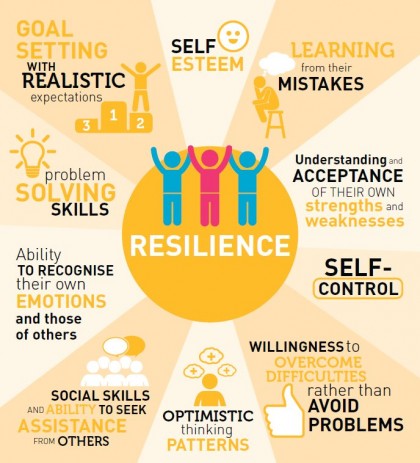
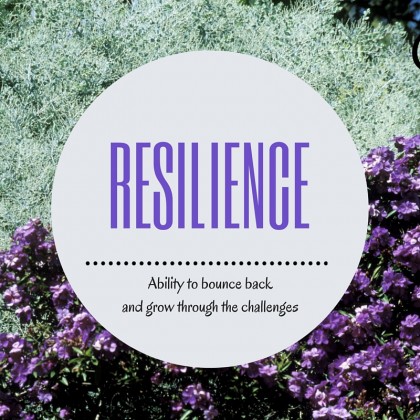
The idea of resilience has gotten a lot of play recently. My sense is that is key to positive aging.
A telling article on resilience in childhood from the Harvard Center for the Developing Child has some hints for us third phase folk. For instance, here are some factors that enhance resilience in children:
building a sense of self-efficacy and perceived control;
providing opportunities to strengthen adaptive skills and self-regulatory capacities; and
mobilizing sources of faith, hope, and cultural traditions.
Not only in children, I think. Resilience can allow us to accept the changes of the aging body without losing hold of the power of our own lives. With a resilient personality even ALS will not cause us to stop growing. Just look at Stephen Hawking.
As we enter the third phase, or as we cope with its vague demands, focusing on enhancing our resilience will help us adapt, remain flexible. Perhaps resilience is nothing more than following the tao, finding the energy and flow of the universe no matter what externalities are present in life. I’d like to think so.
Kate has the power of a resurgent earth, ready to fluoresce, and the power of a waxing moon, growing stronger every night, to boost her this week. She’ll need them plus a good surgeon, anesthesiologist, and nurses. Without her pain meds, which she’s had to eliminate prior to surgery to prevent bleeding, her shoulder has become debilitating, or, I should say, more debilitating.
Kep’s digestive tract remains upset. He threw up more overnight. Yesterday, after our physicals, we went to the Wash House Laundromat in Littleton, put the comforters and quilts in two giant washers and waited in the car while they went through the 28 minute cycle. A bit of sticker shock for me since each washer, we used two, was seven dollars and twenty-five cents. Worth it though.
In a bit of nostalgia for me all the seats in the place were taken up by residents from a group home for the developmentally disabled. A young man with a plastic helmet to protect against seizures, another autistic young man davening and crying out, and four Down’s Syndrome young women. When I worked with the developmentally disabled, which I did from 1974 to 1980, taking clients out to places like the laundromat was a pleasant diversion, teaching independent living skills and being away from the residence.
Kate’s preop physical yesterday cleared the way for the procedure on Thursday. It will not come soon enough. Today we go to see her rheumatologist.
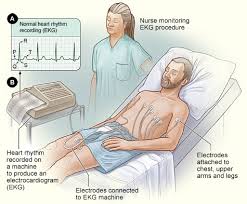
My physical was, at least so far (before lab results), unremarkable. Dull is my favorite medical term. Boring. Nothing happening here. My ekg was like last years. My blood pressure is low enough that Dr. Gidday wondered if I was over medicated. No, I said, I want to keep it low. All those strokes in the family of origin. O2 saturation fine, as it always is when I descend 3,600 feet to her office. Knee? Fine. Other knee? Surprisingly fine. Prostate? Still gone. PSA’s good. No hernia. Lungs and heart sound good. Still upright and moving.
I’m doing well, able to help Kate, care for the dogs, feeling centered and calm. I understand my limits and know that staying present, not fretting about tomorrow or holding onto yesterday, keeps me sane. The tao of this time flows through us all and I’m following its course, traveling with the fluctuations. The tao right now is my nurse, my comforter, my energy.
It is the tao of springtime reminding us that winter passes, too, as will all the difficulties; and, that even in the midst of a tough season, underneath is the movement of life itself, struggling to emerge, to take back the moment. All we need to do is follow its cues.
Sometimes. Well. So, the washer failed first, on Thursday. Then, a day or so later, the dishwasher. 1 Stop appliance, the folks who do Samsung repairs up here, only have two days in Conifer, Monday and Wednesday. Monday was full, so Wednesday. That’s the day before Kate’s surgery.
Then, this morning around 4 am, Kepler began to puke. On the comforter. On the quilt. On the carpet. OK. Kate woke up first and as is our agreement, first one aware cleans up. I got up, too, carried comforters and quilts to the laundry room. (but, if you’ll recall from paragraph one, the washer is not working.)
Last night we got about 4 inches of snow, too. That figures into all this because we have our physicals this morning in Littleton. And, obviously, afterwards, I have a trip to the laundromat.
“Monday, Monday, so good to me
Monday mornin´, it was all I hoped it would be.” Good song, but posted here, as you might have already guessed, ironically.
Made corned beef and cabbage for dinner last night. Erin go bragh! When I decided to write novels, now long ago, Kate suggested I find an area that I could relate to. I chose my Celtic heritage, both Welsh and Irish. It is a fertile realm, filled with gods and goddesses, fairies and banshees, this world and the other world. Not so deep into it right now with one exception, the Great Wheel.
The Great Wheel, though, continues to inform my spiritual journey, a steady point on an often changing ancientrail. The Great Wheel is us, homo sapiens, using consciousness to ground ourselves on this planet and to its fate. Still seems a good place to start thinking about our relationship to the whole, better than any text. Great Wheel go bragh!
Took a sack full of food into the Aurora Olson’s yesterday afternoon. Jon, Ruth and Gabe have all been home sick since Tuesday. Gabe has pneumonia, Jon and Ruth the respiratory illness that preceded it for Gabe. Another positive of being close enough. Ruth sent a text Friday night, “Yo. Can you bring us some food?” I didn’t stay because neither Kate nor I want to get sick before her surgery on Thursday.
As long as I was in Denver, I drove to Meiningers. This is the big art supply store in the Denver area. It’s filled with paints and papers and brushes and pens and tape and pencils and cutting tools. A wonderful place, its existence alone stimulated me, and I’m sure every customer who goes inside.
Its sumi-e material material, though, was feeble compared to the hole in wall (by comparison), Red Herring. Meiningers’ selection of brushes were all cheap, beginner’s brushes. They did have a couple of Yasumoto inks that I bought, an Ultra Black and a Black Gold. I also picked up an Olfa knife to cut paper, from the kraft roll that came last week and from the rolls of rice paper I bought from Red Herring and Blue Heron, an online sumi-e store.
Not sure why this has become so important to me in so short a period of time, but as I said below melancholy allows the heart to catch up with decisions already known to the subconscious.
Life flows on, in endless song, I can’t help singing.
The new life moon, which hung in the sky during the Jewish month of Adar, gives way this evening to the new shoulder moon in the month of Nisan. On March 22nd, under a waxing new shoulder moon, Kate will meetup again with Dr. David Schneider, this time at Ortho Colorado, the same hospital where Dr. William Peace put in my new knee. If all goes well, her new shoulder will be in place that day and she will return home on Friday to begin six weeks or so of recuperation.
Her right shoulder has become, no pun intended, unbearable. Not only does its pain restrict the utility of her right arm, the pain at night has interfered with her sleep for months. I’m hopeful that this procedure will at least eliminate the pain and at optimum, through rehab, restore her right arm to her. She’s a quilter, an organizer, a clothes folder, a grandma, a food cheiftess, and my favorite hugging partner.
Hugging has been an issue for some time since her shoulder pops and cracks, audibly, even to me. We’ve developed a half body hug that preserves her shoulder, but I’m ready to go back to full body and so is she.
Sjogren’s syndrome presents some obstacles during and immediately after the surgery with dryness, especially in her eyes and mouth. We have a sheet of protocols other Sjogren’s patients have used. We’ll hand it out to the surgeon, the anesthesiologist, and the recovery room/hospital room nurses. Ortho Colorado and Panorama Orthopedics both have extensive and well-followed procedures for following a patient’s medical history, so I’m hopeful here, too.
Too, the new shoulder moon will rise over the first day of spring on March 20th. That means Kate will have the energy of a waxing moon and the power of nature resurgent working in her favor. Can’t hurt.
There is, as well, another factor. Beth Evergreen. Kate has a community that cares about her and will help us through her surgery and recovery if we need it. We probably won’t need help, but if we do, we know Beth Evergreen is there for us. For two folks living in a new place, with ties of forty years severed by leaving Minnesota, this is a huge comfort. Being part of a beloved community. A gift for which we are both grateful.
Had a strong sense yesterday of the tao. Often elusive for me, yesterday had a distinct flavor, a wind blowing through the events of the day and I rode with it.
Gabe’s sick, a croupy respiratory bug. Now, Jon has to deal with this as a single parent. A sick kid and two working parents is hard, but a sick kid and two divorced working parents is harder.
Into Aurora yesterday at eight a.m. to pick Gabe up and bring him up here. It was daylight saving time, the next day, and I felt loggy, off, a mild buzzing in my head and stomach not quite settled. There’s only one route to Aurora from here, Hwy 285 which becomes Hampden Road in Denver. Hampden runs through southern Denver, four lane at points, six lanes at others, lots of businesses, especially past Interstate 25 headed east.
I’d waited until eight to leave to avoid rush hour. The tao of the day laughed. At about Swedish hospital traffic seemed to slow, slow, slow, then crawl. And, occasionally, stop. Three lanes of traffic clotted. And, the clot lasted. Usually, from Swedish Hospital to Colorado Avenue is about a three minute drive. Thirty minutes. A lot of it with plenty of time to read the warning label about the semi-fluid lubricant in tire bearings on the semi sitting next to me.
It was jaggedy, edgy tao, putting up barriers, then releasing. Gabe had his own struggle with this tao. I was forty minutes late picking him up.
We drove back to the mountains in silence. My hearing aid battery died in Lakewood, about thirty minutes from home. Even with the hearing aid, the noisiness of the Rav4 makes hearing Gabe’s soft voice from the back seat impossible for me.
Once home Kate had to leave for a mani-pedi, so I remained in the house in case Gabe needed anything. He came with a cooler containing ginger ale and cheese.
I felt jangly, stomach still off. Reading the Third Plate kept my mind distracted, a positive barrier to temporary discomfort. This book has a lot to teach. Of the many key learnings so far, one that keeps coming back like a ruminant’s cud was a short encounter between Dan Barber, the author, and Wes Jackson, a hero of mine who runs the Land Institute in Kansas.
Stone Barns and Dan Barber’s Blue Hill restaurant
Dan had visited an organic farmer in upstate New York who “listened to the language of the soil,” reading soil health from the weeds that grew in his fields. This particular formulation, language of the soil, grabbed me because I had come to the same metaphor over my years of gardening in Andover. The soil speaks, tells you what it needs. You just have to see what you’re looking at. This farmer’s attention to that language resulted in an organic farm, growing mostly heirloom varieties of corn, wheat and other grains, intermixed with soil healing crops like spelt and clover.
After Dan told Wes about this farmer, he nodded. “Yes, Dan. He sounds like a great guy, but it won’t last.” Someone else, he went on, will buy the farm and all of the careful reading of the soil’s language will disappear. The chemical/industrial farming ethos will return. When Wes recognized Dan’s disappointment, he said to him, “What can I say? We live in a fallen world.”
This anecdote has stuck with me, I think, because of the sale of our land in Andover. We did so much, worked hard at creating soils that would grow healthy, vibrant plants, but then we moved on.
It was the tao of Monday, a slow pulsing tao that put up obstacles, then took them down. It placed Gabe’s illness alongside a huge accident with ambulances and fire trucks, wreckers, clean up crews and three lanes of traffic forced down to one lane. It put Wes Jackson’s sigh alongside my sensitive stomach, alongside Kate’s beautiful nails, calming her and getting her ready for surgery next week. Rigel once again pushing her nose into us, pacing. An obstacle. Back on the metronidazole.
Riding with this tao I let the obstacles and their resolutions wash over me, not as frustrations (mostly), but as the way of this Monday. When the day was over, I was glad, especially glad to have been sensitive to the tao.
“The noun simcha is mentioned in the Bible 94 times and is derived from the verb samach, which appears 154 times in the text. It is rooted in the Akkadian word shamahu meaning sprout or flourish.” Simcha, The Dayton Jewish Observer
A thing of beauty is a joy forever. So says Keats in his Endymion. Kate and I are leading the mussar class on Thursday, focused on joy and sadness. What else is a joy forever?
Most of the material I’ve read about joy distinguishes it from pleasure with a time distinction. A bite of food, a kiss, a winning hand, a new toy brings pleasure in the moment, but the pleasure dissipates quickly. Joy, to paraphrase Keats, is a thing of beauty forever. Joy, in other words, is lasting.
Rabbi Jamie says true joy can be recalled and experienced again whenever we want. Not fully sure about that, but a finger on the scale in favor of a lasting experience seems right to me.
Chagall, Fiddler
Kate has come up with an exercise that will get us started on considering joy in our own lives. She designed a sheet with three columns: single-digit, adolescence, adult. We will write as many instances of joy as we can recall from each of these life phases. My hope is that in telling our stories of joy that we can experience them again and help others experience them with us.
How can we increase joy in our lives? Can we? (A)…rabbinic teaching concerning simcha points to the inner self as the source of contentment and joy. “Aizehu ashir? Hasameach bechelko, Who is rich? He that rejoices in his own portion (Avot 4:1).” ibid
So at least part of joy is perspective. What makes our life rich? Joyful? Knowing what is enough. What is enough? No less than we need, no more than we require. This seems to link joy to gratitude. If we have enough, we are grateful for what we have. Our life gains in simplicity since we don’t end up on the constantly promoted hedonic treadmill.
With simplicity, then, we know deep satisfaction. Not only do we have enough, but we do not waste our energy and our worry on getting more. Ah.
Last week at mussar we had a fascinating conversation on the essential dourness of both Jewish and northern European cultures stimulated by the Norwegian concern that they had won too many medals in the winter Olympics. In both cases happiness, and by correlation, joy, are suspect. Why are you so happy? What makes you think that will last?
In the Jewish instance this trait seems to correlate with the multiple times in Jewish history, starting with slavery in Egypt, that a golden age or at least a comfortable existence had been destroyed by pogroms, the expulsion from Spain, the holocaust. Are you happy now? Just wait.
In the northern European instance it seems to have more to do with seriousness. “For the soul is dead that slumbers, And things are not what they seem. Life is real! Life is earnest! And the grave is not its goal; “Dust thou art, to dust returnest,” Was not spoken of the soul.” Psalm of Life, Henry Wadsworth Longfellow
early cave painting
Both cultures, in other words, find joy and delight and glee and exultation, ecstasy and exhilaration suspicious at best and distracting at worst. Distracting from what? From the possibility of life’s stability being snatched away in an instance. From the need to keep the shoulder to the grindstone, quite literally. From the guardedness that protects us from disappointment, suffering, pain. Joy may make us vulnerable.
So it’s no wonder that joy is a middot, a character trait that needs cultivation. The soil for it is rocky, like that in our backyard here on Shadow Mountain, at least in these two cultures.
Joy Brown, creative joy
How to do that? I chose to scan my life looking for joyful moments. My hope is that I can begin to identify in the now, embrace them, live in them. Looking at my list (it’s posted here.) I can see some common threads. Intimacy: seeing Orion at night, dogs nuzzling, the mountain night sky full of stars, hugging Kate, hearing from Tom, Bill, Mark, seeing them. Challenging myself: learning Latin, using my sumi-e brushes, grinding ink, having a new idea, reading a new book, writing ancientrails. Letting the world in: driving over Kenosha pass and seeing South Park laid out ahead, the golden aspen among the lodgepoles on Black Mountain, paying close attention to the natural world. Being in community: working with Marilyn and Tara and Anshel, setting up for adult education events at Beth Evergreen, having an idea, sharing it, seeing something happen. Travel: hearing the howler monkeys on the road to Angkor, leaving for a trip, rolling retreats (roadtrips), the earthen smells when getting off the plane on Maui, Kauai, Hawai’i. Inner moments: the moment of mystical connection with the universe in 1967, meditation, remembering the two year old me who learned to walk after polio, mindful cooking.
One track for increasing the joy in my life then would be to seek intimate moments, identify new ways to challenge myself, stay alert and let the world in, continue at Beth Evergreen, travel, allow time to cultivate the inner life.
“On the bright side, simcha is a word laden with exhilaration and festive activities. Simcha expresses not only the joy of an event, but it is also the noun which means a happy event.
A holiday is a simcha, a family gathering is a simcha, a wedding is a simcha, the birth of a child is a simcha and a Bar or Bat Mitvah is a simcha.
The host of an event is a baal simcha and the sound of joy resonating from the event is kol simcha.
Simchat yetzirah, a joy of creativity, is a way to describe the exhilaration one feels while being engaged in a creative process…
(A)…rabbinic teaching concerning simcha points to the inner self as the source of contentment and joy. “Aizehu ashir? Hasameach bechelko, Who is rich? He that rejoices in his own portion (Avot 4:1).” ibid
The melancholy has done its work. Still listening, paying attention, but here’s what I’ve discovered this time. My life was out of balance. I needed more time working with my hands, using my body. Also, I had neglected reading of certain kinds, especially reading that advances my reconstruct, reimagine, reenchant project.
This latter work has gotten quite long in the tooth, has become more of a forever, at least until I die thing. And I don’t want that. I want to write at least some essays, preferably something book length.
It was also time to slough off some of the Minnesota based, second phase lingering work. Especially the political. I am going to the caucus this Tuesday; however, I no longer see myself as a dedicated activist. But, and I consider this great news, Ruth told me she was walking out on April 9th, standing outside Mcauliffe, her middle school, for seventeen minutes, one minute for each of the Parkland victims. She’s doing it in spite of the fact that adults tell her no one will listen. Go, Ruth!
And writing. Not giving that up, yet I feel the need now to shift at least some of that energy to the three R’s. I’ve felt this way before, yes, but something feels different now. Not sure what exactly.
The melancholy also uncovered a tension I’d been feeling between leaning in to the domestic, cooking, for example, and Kate and mine’s presence in the Beth Evergreen community, and what I consider my work. Recalibrating second phase expectations about work, which I have not yet fully done, feels like a task for this time. In fact, I enjoy the domestic part of our lives and it feels good to devote more energy to it.




 As one of Dr. Agronin’s youngest informants said, even when physical decline and losses restrict one’s options, there remains the capacity to appreciate and approach each day with a sense of purpose. “It’s all about how you frame what you have,” she told him.
 Hopefully, our children, the millennials among them, will look at us and come to that phase of their lives with a different image. My hope is that they will see that aging is the accumulation of years, not a time of diminished hope and diffuse fear, but life continuing. If that image can become dominant, it will look like the diverse approaches people have to their first and second phases. In other words the third phase will have as many distinct trajectories as there are people who enter it. It will not be dormancy, or a pause before dying, but life itself.
 I like Robert Hill’s definition of positive aging: (It’s) “affected by disease and disability, but not contingent upon avoiding it.” Rather, it is “a state of mind that is positive, optimistic, courageous, and able to adapt and cope in flexible ways with life’s changes.”
  Not only in children, I think. Resilience can allow us to accept the changes of the aging body without losing hold of the power of our own lives. With a resilient personality even ALS will not cause us to stop growing. Just look at Stephen Hawking.
 In a bit of nostalgia for me all the seats in the place were taken up by residents from a group home for the developmentally disabled. A young man with a plastic helmet to protect against seizures, another autistic young man davening and crying out, and four Down’s Syndrome young women. When I worked with the developmentally disabled, which I did from 1974 to 1980, taking clients out to places like the laundromat was a pleasant diversion, teaching independent living skills and being away from the residence.
 My physical was, at least so far (before lab results), unremarkable. Dull is my favorite medical term. Boring. Nothing happening here. My ekg was like last years. My blood pressure is low enough that Dr. Gidday wondered if I was over medicated. No, I said, I want to keep it low. All those strokes in the family of origin. O2 saturation fine, as it always is when I descend 3,600 feet to her office. Knee? Fine. Other knee? Surprisingly fine. Prostate? Still gone. PSA’s good. No hernia. Lungs and heart sound good. Still upright and moving.
 It is the tao of springtime reminding us that winter passes, too, as will all the difficulties; and, that even in the midst of a tough season, underneath is the movement of life itself, struggling to emerge, to take back the moment. All we need to do is follow its cues.
 Sometimes. Well. So, the washer failed first, on Thursday. Then, a day or so later, the dishwasher. 1 Stop appliance, the folks who do Samsung repairs up here, only have two days in Conifer, Monday and Wednesday. Monday was full, so Wednesday. That’s the day before Kate’s surgery.
 Made corned beef and cabbage for dinner last night. Erin go bragh! When I decided to write novels, now long ago, Kate suggested I find an area that I could relate to. I chose my Celtic heritage, both Welsh and Irish. It is a fertile realm, filled with gods and goddesses, fairies and banshees, this world and the other world. Not so deep into it right now with one exception, the Great Wheel.
 Its sumi-e material material, though, was feeble compared to the hole in wall (by comparison), Red Herring. Meiningers’ selection of brushes were all cheap, beginner’s brushes. They did have a couple of Yasumoto inks that I bought, an Ultra Black and a Black Gold. I also picked up an Olfa knife to cut paper, from the kraft roll that came last week and from the rolls of rice paper I bought from Red Herring and Blue Heron, an online sumi-e store.
 The new life moon, which hung in the sky during the Jewish month of Adar, gives way this evening to the new shoulder moon in the month of Nisan. On March 22nd, under a waxing new shoulder moon, Kate will meetup again with Dr. David Schneider, this time at Ortho Colorado, the same hospital where Dr. William Peace put in my new knee. If all goes well, her new shoulder will be in place that day and she will return home on Friday to begin six weeks or so of recuperation.
 There is, as well, another factor. Beth Evergreen. Kate has a community that cares about her and will help us through her surgery and recovery if we need it. We probably won’t need help, but if we do, we know Beth Evergreen is there for us. For two folks living in a new place, with ties of forty years severed by leaving Minnesota, this is a huge comfort. Being part of a beloved community. A gift for which we are both grateful.
 Had a strong sense yesterday of the tao. Often elusive for me, yesterday had a distinct flavor, a wind blowing through the events of the day and I rode with it.
 It was jaggedy, edgy tao, putting up barriers, then releasing. Gabe had his own struggle with this tao. I was forty minutes late picking him up.
 This anecdote has stuck with me, I think, because of the sale of our land in Andover. We did so much, worked hard at creating soils that would grow healthy, vibrant plants, but then we moved on.

 Last week at mussar we had a fascinating conversation on the essential dourness of both Jewish and northern European cultures stimulated by the Norwegian concern that they had won too many medals in the winter Olympics. In both cases happiness, and by correlation, joy, are suspect. Why are you so happy? What makes you think that will last?


 It was also time to slough off some of the Minnesota based, second phase lingering work. Especially the political. I am going to the caucus this Tuesday; however, I no longer see myself as a dedicated activist. But, and I consider this great news, Ruth told me she was walking out on April 9th, standing outside Mcauliffe, her middle school, for seventeen minutes, one minute for each of the Parkland victims. She’s doing it in spite of the fact that adults tell her no one will listen. Go, Ruth!
 The melancholy also uncovered a tension I’d been feeling between leaning in to the domestic, cooking, for example, and Kate and mine’s presence in the Beth Evergreen community, and what I consider my work. Recalibrating second phase expectations about work, which I have not yet fully done, feels like a task for this time. In fact, I enjoy the domestic part of our lives and it feels good to devote more energy to it.