Mid-Season Garden Evaluation

Summer                                                               Moon of First Harvests

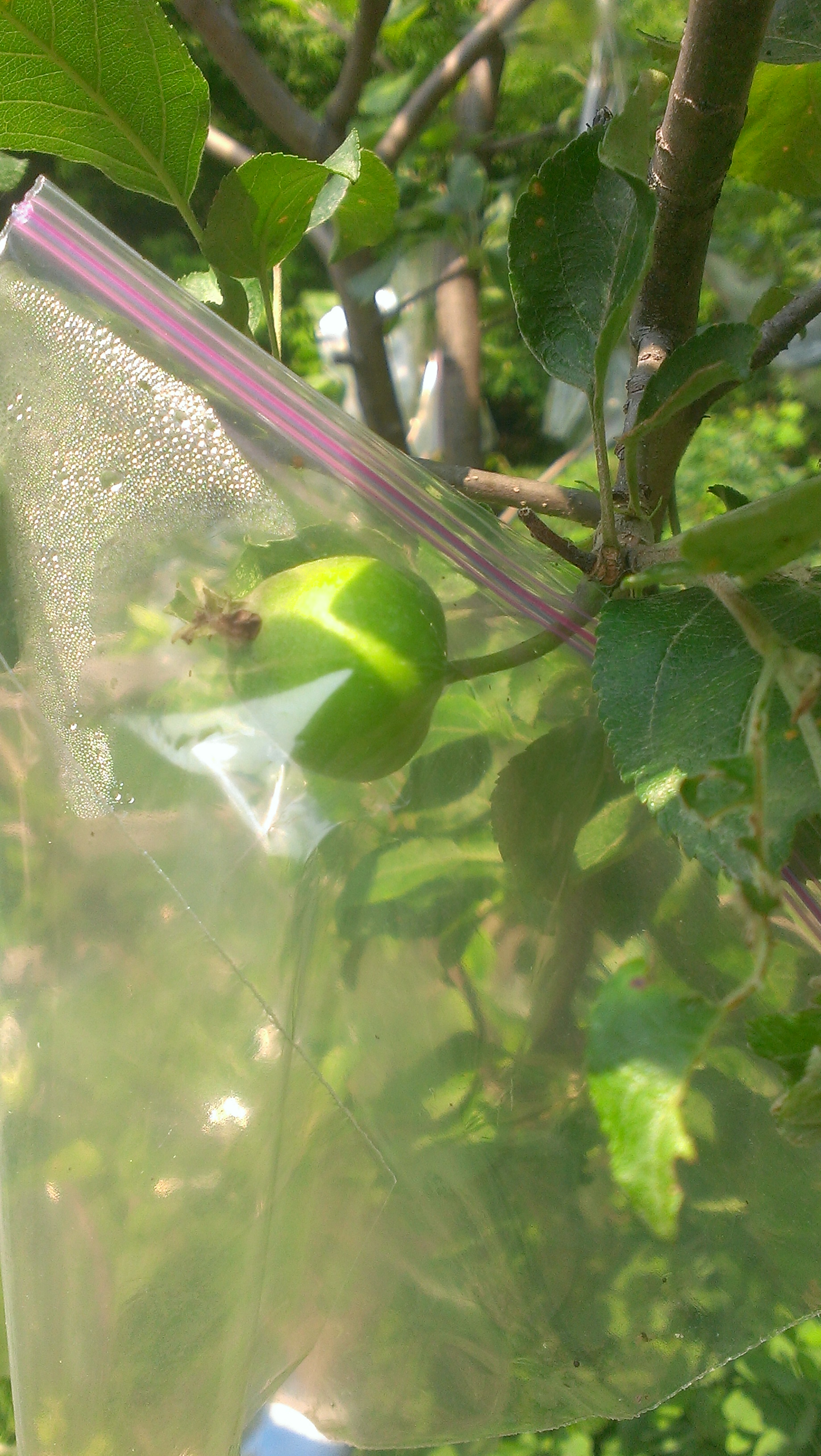
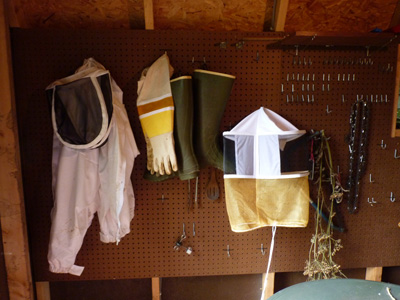
We have had heat and just a bit of rain, perfect for ripening stone fruits like cherries and plums.  It helps avoid brown rot.  The bees have worked hard, likely laying in one of our better harvests with only a first year colony, one that can be (and I hope will survive) overwintered and divided next spring.

Last year Kate had the idea of growing what we had in diminishing supply in our pantry, freezer and dried foods.  We decided to focus on garlic, peppers, onions, tomatoes, beets, carrots, leeks with a few sugar snap peas, cucumbers and eggplants for eating during the year.  It was a good idea, helping us focus our work and give garden space to foods we wanted to preserve in some way for winter.

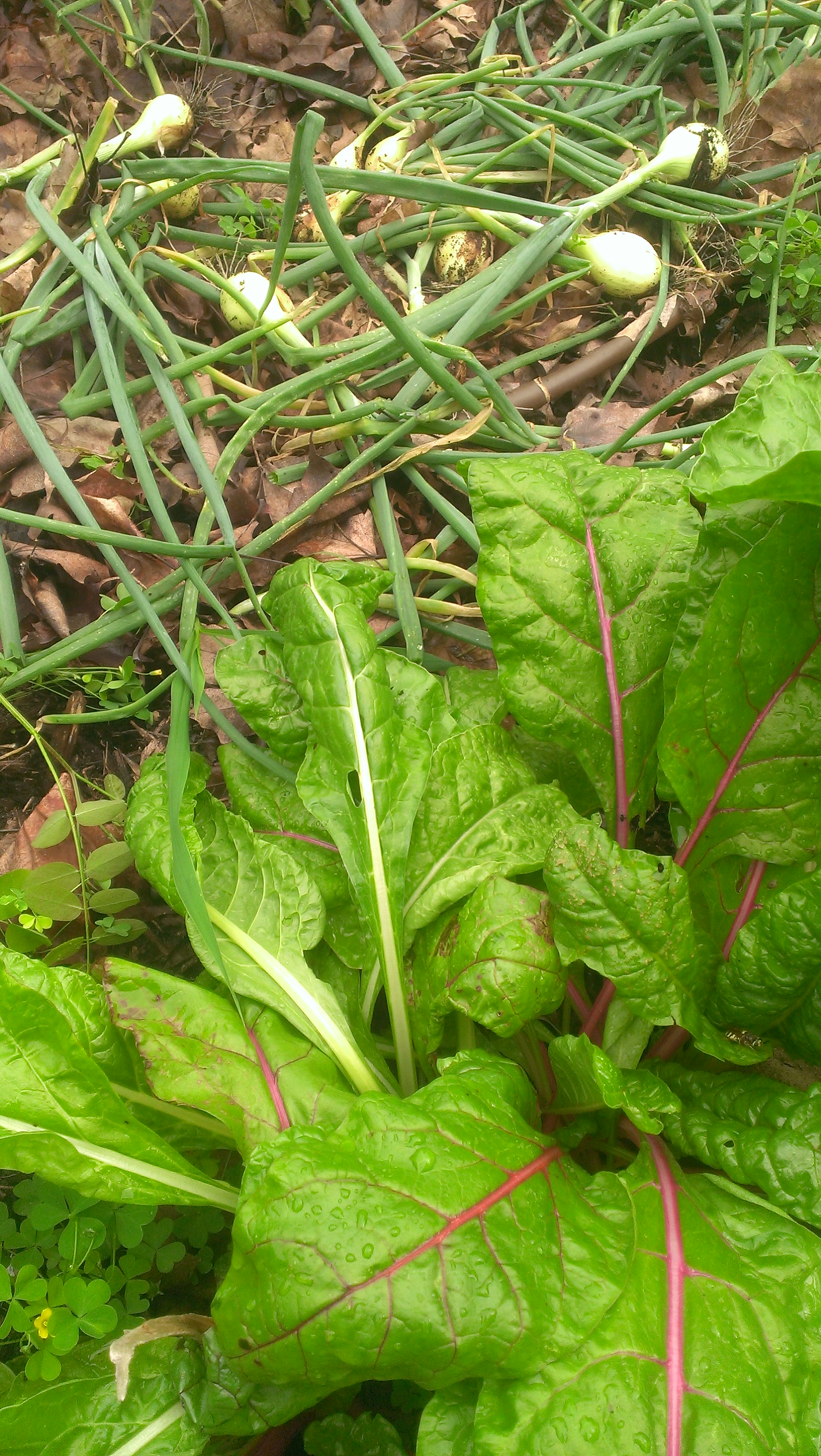
The combination of heat and the International Ag labs high brix garden supplements for the soil and foliar sprays have given us a banner year for beets, carrots, greens, a year not over yet which looks like it will give us a great tomato yield, peppers, tomatillos and eggplants, too.  My best guess is that the leeks will also have a very good year.  That means we’ve almost run the table as far as vegetable gardening goes.

The strawberry crop was solid, too, though not amazing.  I find the cherries hard to gauge because this is the first year we’ve had many fruits at all.  My guess is that this is a middlin year for our cherries.  Our currants are ripe now and the plums have begun to ripen though so far all the ripe ones I’ve seen are on the ground.  The pears and apples have a good ways to go yet, though we definitely have substantially more pears than any other year.  The raspberries, the latest crop of all, look, based on the plants, as if they will put out a good yield this year, as well.

Next year I’ll do a soil test and get a program for the orchard, too.  Bump up production and quality there, too.

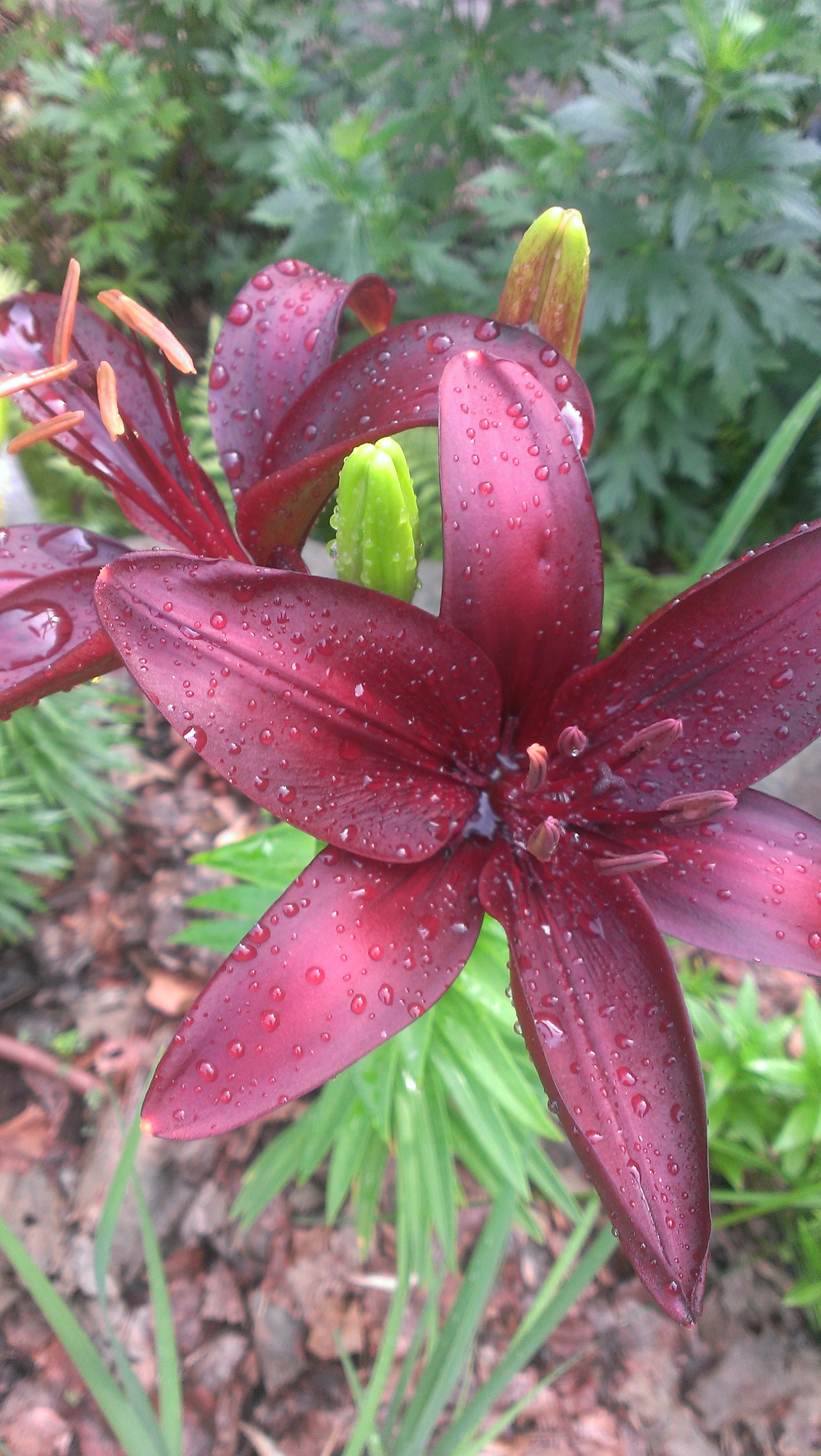
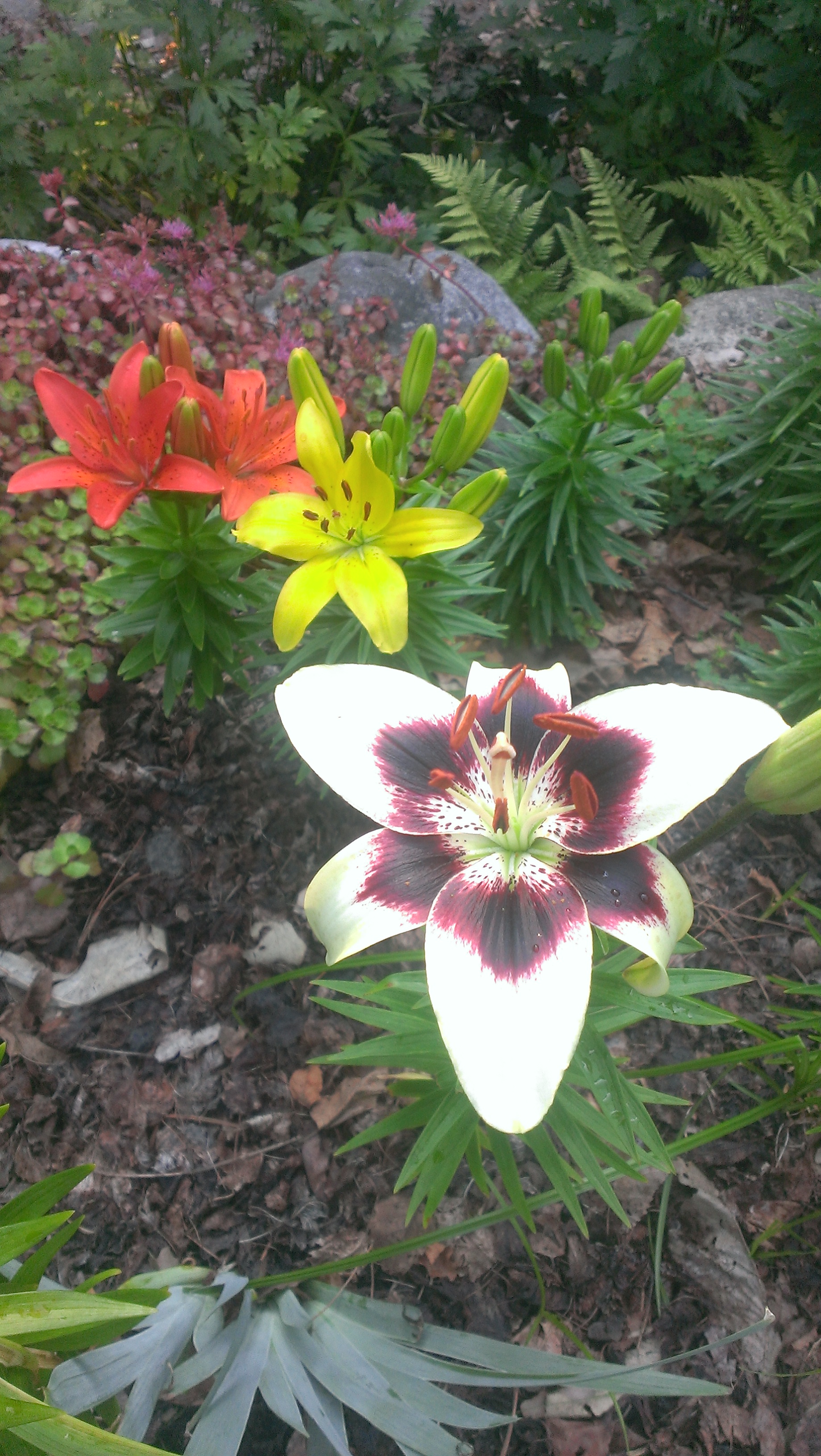
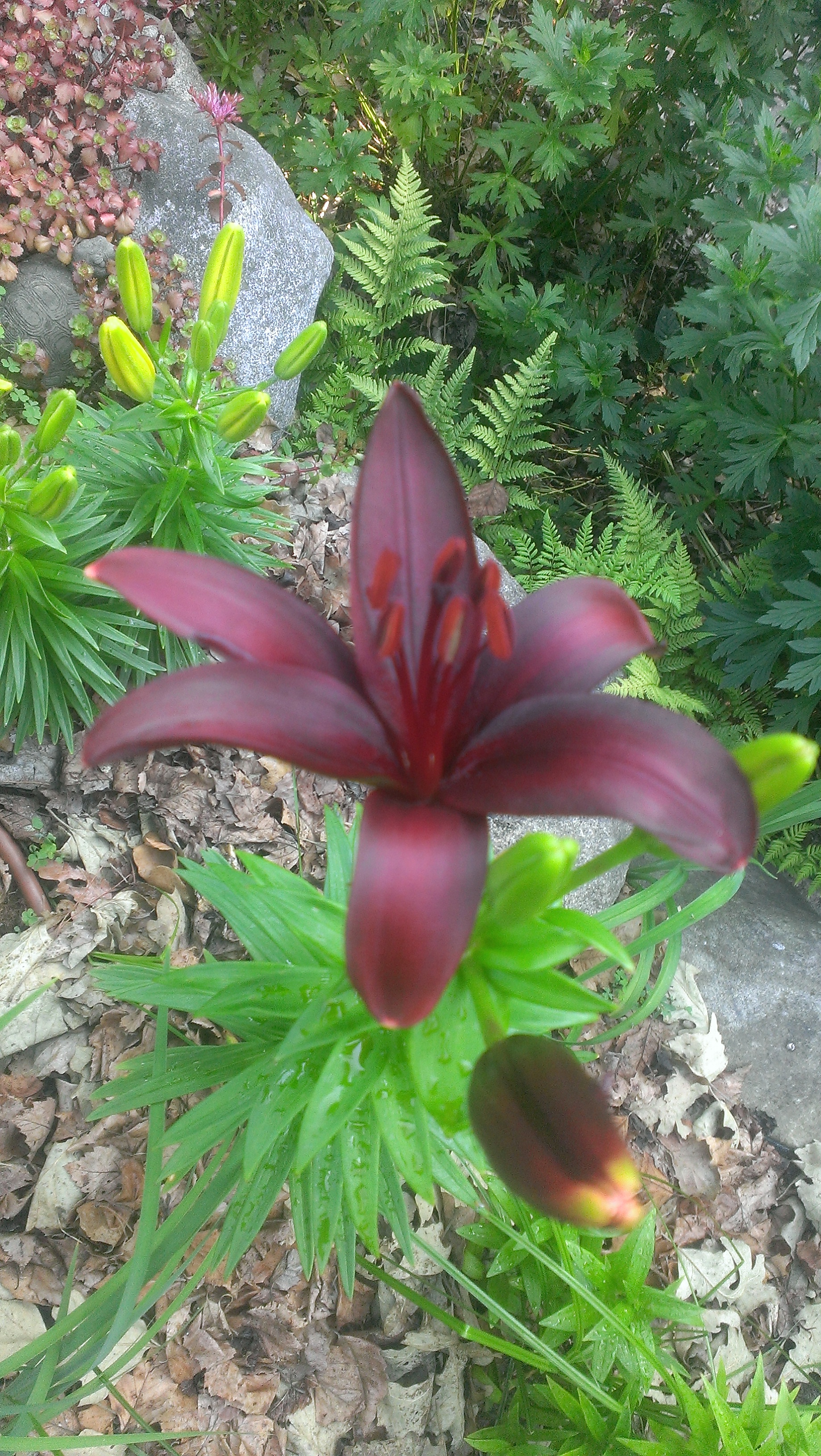
The lilies are in bloom now and the new varieties from the Northstar Lily Society sale have exceeded their promise. (see picture above)

Waiting for Woollies

Summer                                                      Moon of the First Harvests

Picked cherries this morning, then went out to assist Kate in stringing lights.  She ran the lights along the old cedar fence.  I helped string across the gate well above head level.  Wire, that all purpose garden tool.  Handy stuff.

While she put the lights in place, I moved tree limbs, uprooted buckthorns and smaller wood clearing debris from an area near the kid’s playhouse, which, by the way, now has a wonderful crystal chandelier.  It will be lit in the background.

Then the rain began to fall.

Home

Summer                                                       Moon of the First Harvests

Home.  Back in the early 90’s when we lived on Edgcumbe Road in St. Paul, I felt a sense of homecoming when I crossed Ford Parkway.  I had crossed into home turf.  It’s taken a long while for a similar feeling to take hold here in Andover, but now, as I turn off Highway 10 onto Round Lake Boulevard, that sense of homecoming greets me.

Yes, it’s marked by Baker’s Square, Wendy’s, Conoco, Burger King and a Holiday station, but, they’re our franchises, there for our use.  The feeling gets even stronger going up Round Lake and begins to thicken at Round Lake itself where the water is on the left and the peat bog fields of Field’s Truck Farms are on the right.  Those fields are the remains of an old lake, eutrophied completely, a process that has advanced a good ways in Round Lake.

As I turn onto 153rd Ave NW, our property shows up about 1,000 feet in and I see the 6 foot chain link fence we had installed because Celt, our earliest Irish Wolfhound, climbed the four-foot fences to go greet passers-by on the street.  This particular fence was put in place after a derecho felled a large poplar and destroyed the one we had originally extended from four feet to six.  There is, too, the truck gate, 10 feet wide that we had installed because we wanted to get trucks from nurseries and our own trucks back onto our property.

The trees have grown up, grapevines have covered them, the prairie grass has morphed over time but has a pleasing current configuration.  On the six foot fence itself, the border of the prairie grass, grows our wild grapes.  Wild grapes that we pick in the fall for jams and jellies.

The driveway, the sloped driveway that creates its own stories in the winter, goes up to the three car garage that makes our house look as if we live as an adjunct to the garages.  On the right going up is a rusted and unused basketball hoop, an emblem, as at so many homes, of a boy, now gone.  In the garage itself we have a unique five stall dog feeding set up that we used when our pack was at its peak and we had five Irish Wolfhounds at once.

Do you see what I mean?  Home has an accretion of memories, memories attached to physical things like lakes and peat bogs, fences and basketball hoops.  This is not somebody else’s memories but our memories, our family’s memories.  It is those memories, those thick layers of past embraced constantly in the present, that make a home.

Inside the house are the same layers of memories, of guests and friends and immediate family, of dogs and workmen, nights and days, meals and passion.  It is the thickness, the particularity of it all, that makes this our home and not someone elses.  After 20 years, we have laid down many layers of smiles, tears, hard work and love.  That’s why this is home.

Lotsa Quotes Out There

Summer                                                              Moon of the First Harvests


“You should become the person you are.”
Friedrich Nietzsche – Ecce Homo
“There is a basin in the mind where words float around on thought and thought on sound and sight. Then there is depth of thought untouched by words, and deeper still a gulf of formless feelings untouched by thought.”
Their Eyes Were Watching God, Zora Neale Hurston
“I have a recurring fantasy that one more article has been added to the Bill of Rights: the right to free access to imagination. I have come to believe that genuine democracy cannot exist without the freedom to imagine and the right to use imaginative works without any restrictions. To have a whole life, one must have the possibility of publicly shaping and expressing private worlds, dreams, thoughts and desires, of constantly having access to a dialogue between the public and private worlds. How else do we know that we have existed, felt, desired, hated, feared?”
Reading Lolita in Teheran, Azar Nafisi

“Until then I had thought each book spoke of the things, human or divine, that lie outside books. Now I realized that not infrequently books speak of books: it is as if they spoke among themselves. In the light of this reflection, the library seemed all the more disturbing to me. It was then the place of a long, centuries-old murmuring, an imperceptible dialogue between one parchment and another, a living thing, a receptacle of powers not to be ruled by a human mind, a treausre of secrets emanated by many minds, surviving the death of those who had produced them or had been their conveyors.”

Umberto Eco, The Name of the Rose
“One thing I have learned in a long life: that all our science, measured against reality, is primitive and childlike – and yet it is the most precious thing we have.”
Albert Einstein
“One should guard against preaching to young people success in the customary form as the main aim in life. The most important motive for work in school and in life is pleasure in work, pleasure in its result, and the knowledge of the value of the result to the community.”
Albert Einstein
“Only two things are infinite, the universe and human stupidity, and I’m not sure about the former.”
Albert Einstein


“Our separation from each other is an illusion of consciousness.”
Albert Einstein
“Our situation on this earth seems strange. Every one of us appears here involuntary and uninvited for a short stay, without knowing the whys and the wherefore. In our daily lives we only feel that man is here for the sake of others, for those whom we love and for many other beings whose fate is connected with our own.”
Albert Einstein
“The only way to discover the limits of the possible is to go beyond them into the impossible.”
Arthur C. Clarke
“But in the mud and scum of things There always something sings…”
R.W. Emerson
“But real action is in silent moments. The epochs of our life are not in the visible facts of our choice of a calling, our marriage, our acquisition of an office, and the like, but in a silent thought by the way-side as we walk; in a thought which revises our entire manner of life, and says,—”Thus hast thou done, but it were better thus.”
R.W. Emerson
“By necessity, by proclivity, and by delight, we all quote. In fact, it is as difficult to appropriate the thoughts of others as it is to invent.”
R.W. Emerson
“Don’t you believe that there is in man a deep that is so profound as to be hidden even to him in whom it is?”
St; Augustine
“Few rich men own their property; the property owns them.”
Robert G. Ingersoll

You don’t have to deserve your mother’s love. You have to deserve your father’s. He’s more particular. The father is always a Republican towards his son, and his mother’s always a Democrat.

Robert Frost, 1960

“A human being should be able to change a diaper, plan an invasion, butcher a hog, conn a ship, design a building, write a sonnet, balance accounts, build a wall, set a bone, comfort the dying, take orders, give orders, cooperate, act alone, solve equations, analyze a new problem, pitch manure, program a computer, cook a tasty meal, fight efficiently, die gallantly. Specialization is for insects.”
Robert Heinlein

“Do stuff. be clenched, curious. Not waiting for inspiration’s shove or society’s kiss on your forehead. Pay attention. It’s all about paying attention. attention is vitality. It connects you with others. It makes you eager. stay eager.” Susan Sontag

“Sometime they’ll give a war and nobody will come.”
Carl Sandburg
“I think we ought to read only the kind of books that wound or stab us. If the book we’re reading doesn’t wake us up with a blow to the head, what are we reading for? So that it will make us happy, as you write? Good Lord, we would be happy precisely if we had no books, and the kind of books that make us happy are the kind we could write ourselves if we had to. But we need books that affect us like a disaster, that grieve us deeply, like the death of someone we loved more than ourselves, like being banished into forests far from everyone, like a suicide. A book must be the axe for the frozen sea within us. That is my belief.”
Franz Kafka
“The power and nature of Soul encompasses heaven and guides it according to its will. To all this vast expanse, as far as it extends, it gives itself, and every interval, both large and small, is filled with Soul… Soul enlivens all things with its whole self and all Soul is present everywhere… And vast and diversified thought this universe is, it is one by the power of soul and a god because of soul. The sun is also a god, because ensouled, and the other stars, and if we ourselves partake of the Divine, this is the cause.”
Plotinus
“There is no wider gulf in the universe than yawns between those on the hither and thither side of vital experience.”
Rebecca West
“Thoughts give birth to a creative force that is  neither elemental nor sidereal. Thoughts create a new heaven, a new firmament, a new source of energy, from which new arts flow. When a man undertakes to create something, he establishes a new heaven.”
Paracelsus
“You are eternity’s hostage. A captive of time.”
Boris Pasternak
“Color possesses me. I don’t have to pursue it. It will possess me always, I know it. That is the meaning of this happy hour: Color and I are one. I am a painter.”
Paul Klee
“There was a child who dreamed
of a little cardboard horse.
When he opened up his eyes,
the horse was not to be seen.
The child had another dream,
of a little white horse this time.
He grabbed it by the mane …
Now you won’t get away!
No sooner was it caught
than the child woke up again.
His fist was clenched tight shut
but the horse had disappeared!
This was no laughing matter:
he thought there is no truth
in a horse you only dream of-
and he never dreamed again.
But the child became a youth
and the youth soon fell in love.
He used to ask his sweetheart:
Are you really so or not?
And when the youth grew old,
he thought: it’s all a dream-
the little horse you dream of
and the horse that’s really there.
And when it came time to die
the old man spoke to his heart:
Are you a dream? he asked.
Perhaps he woke up-who knows!”
Antonio Machado
“A classic is a book that has never finished saying what it has to say.”
Italo Calvino
“Perhaps I am no one.
True, I have a body
and I cannot escape from it.
I would like to fly out of my head,
but that is out of the question.
It is written on the tablet of destiny
that I am stuck here in this human form.
That being the case
I would like to call attention to my problem.”
Anne Sexton
“A morning-glory at my window satisfies me more than the metaphysics of books.”
Walt Whitman
“To see what is in front of one’s nose needs a constant struggle.”
George Orwell
“Philosophers will conduct their discussions of Locke, Hume, and empiricism without ever taking into account that there is an explicit connection in these classic writers between their ‘philosophic’ doctrines and racial theory, justifications of slavery, or arguments for colonial exploitation. These are common enough ways by which contemporary scholarship keeps itself pure.”
Edward Said
“Very early in my life, it was too late.”
Marguerite Duras
“The body says what words cannot.”
Martha Graham
“Our birth is but a sleep and a forgetting:
The Soul that rises with us, our life’s Star,
Hath had elsewhere its setting,
And cometh from afar:
Not in entire forgetfulness,
And not in utter nakedness,
But trailing clouds of glory do we come
From God, who is our home:
Heaven lies about us in our infancy!
Shades of the prison-house begin to close
Upon the growing Boy,
But He beholds the light, and whence it flows,
He sees it in his joy;
The Youth, who daily farther from the east
Must travel, still is Nature’s Priest,
And by the vision splendid
Is on his way attended;
At length the Man perceives it die away,
And fade into the light of common day.”
William Wordsworth
“Art is what you can get away with.”
Andy Warhol
“The best time to plant a tree was 20 years ago. The second best time is now.”
Chinese Proverb
“Sometimes I’m terrified of my heart; of its constant hunger for whatever it is it wants. The way it stops and starts.”
Edgar Allan Po


Harvests Continue

Summer                                                                First Harvest Moon

Thinned carrots, harvested beets, Bull’s Blood and Early Blood, the golden beets need more time.  I also pulled onions and laid them on top of the garden beds for their three days of drying out before they go in the shed on the screen for two weeks.  A few garlic plants had three leaves brown today so I harvested those, still more in the ground.

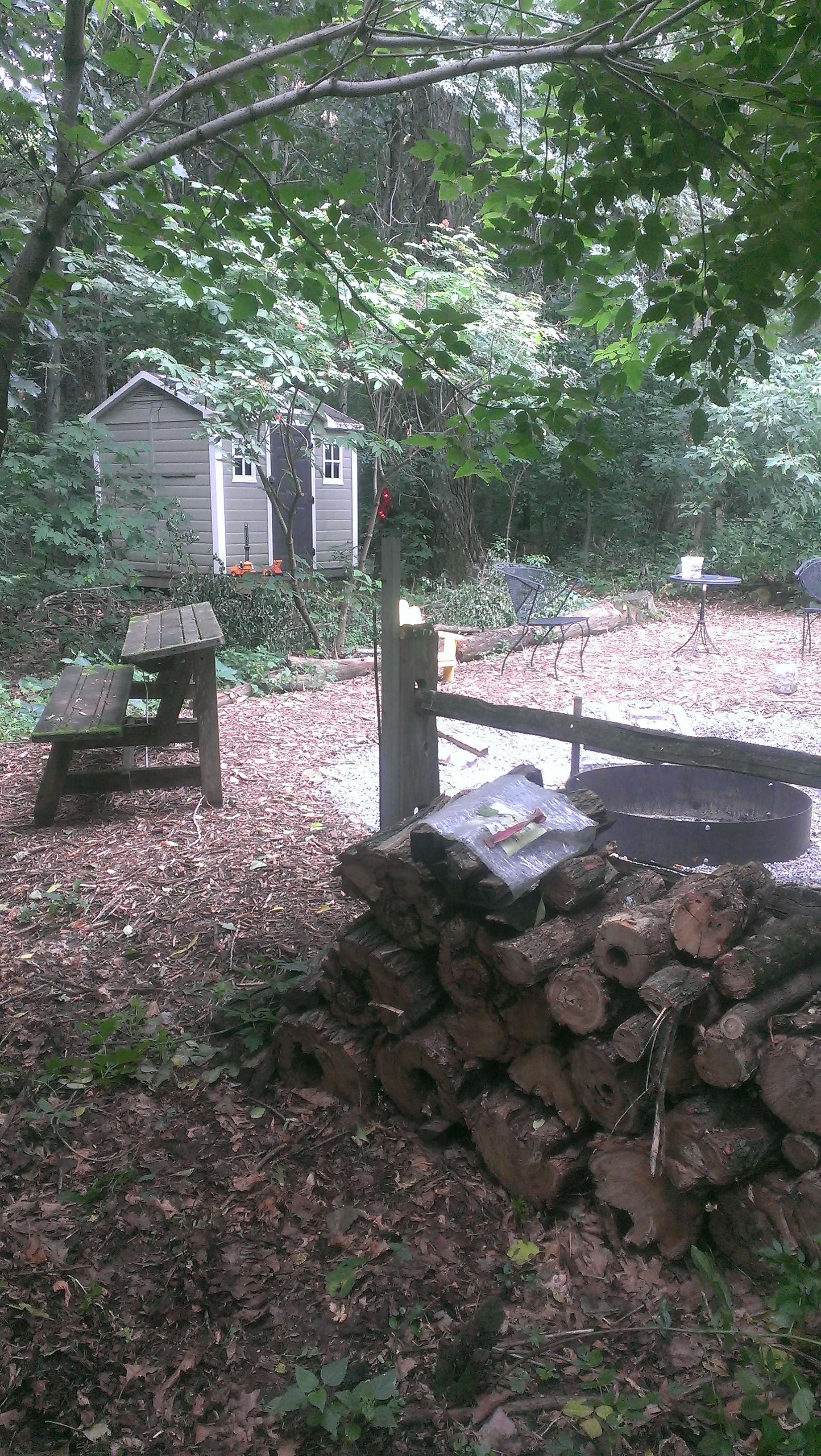
Finished cutting firewood and moving it to the firewood pile near the fire pit.  Less chainsaw work today, but more lifting and hauling.  Left me pleasantly worn out.

Kate’s at work right now trying to remember how to hang all the crystals on the chandelier that used to hang over our piano, but which we moved to the grandkids playhouse when we redid the lighting in the living room.  Later today or tomorrow we’re going to string lights for the fire pit area.  We’re very close to just needing friends to make it complete.

Movies

Summer                                                           First Harvest Moon

More Than Honey, a movie by a Markus Imhoff, is a cinematic marvel.  He worked with special cameras and slowed speeds down so bee activity could be seen in a human time frame.  He also followed bees with mini-helicopters and high speed cameras fitted to endoscopic lenses.  As a result, you can clearly see the bee put out a rear leg as a rudder.  You can see the telescoping proboscis that feeds the honey into the cell for storage.  You can see the drone mate with a queen in mid-air, then fall to earth, dead.

Imhoff gives, in my opinion, the right answer to colony collapse disorder:  insecticides, habitat loss, disease, mites, stress and inbreeding.  It’s multi-factorial and therefore difficult to resolve.  He also introduces us to two Americans who show two different sides of bee-keeping, one a North Dakota migratory bee-keeper, who trucks his bees in a circle summering in North Dakota for honey, then, for example, to California for the almond crops and after that Washington for the apples and apricots.  The other is a Tucson bee-keeper who has begun to keep Africanized bees because their immune systems are stronger, they make great honey and they can live in harsh conditions.

Well worth seeing but only at the Lagoon for one week starting today.

When we came home, we watched another movie: Redemption.  This is the story of Stan (Tookie) Williams, founder of the Crips.  It follows his life in prison as he gradually changes from hardened thug to anti-gang activist through the medium, at first, of children’s books.  A good movie, not a great movie.  What it does do well is give a context for the rise of the Crips and the difficulty in reversing a life of unrelenting savagery.

Lilies, Leeks and Lumber

Summer                                                       First Harvest Moon

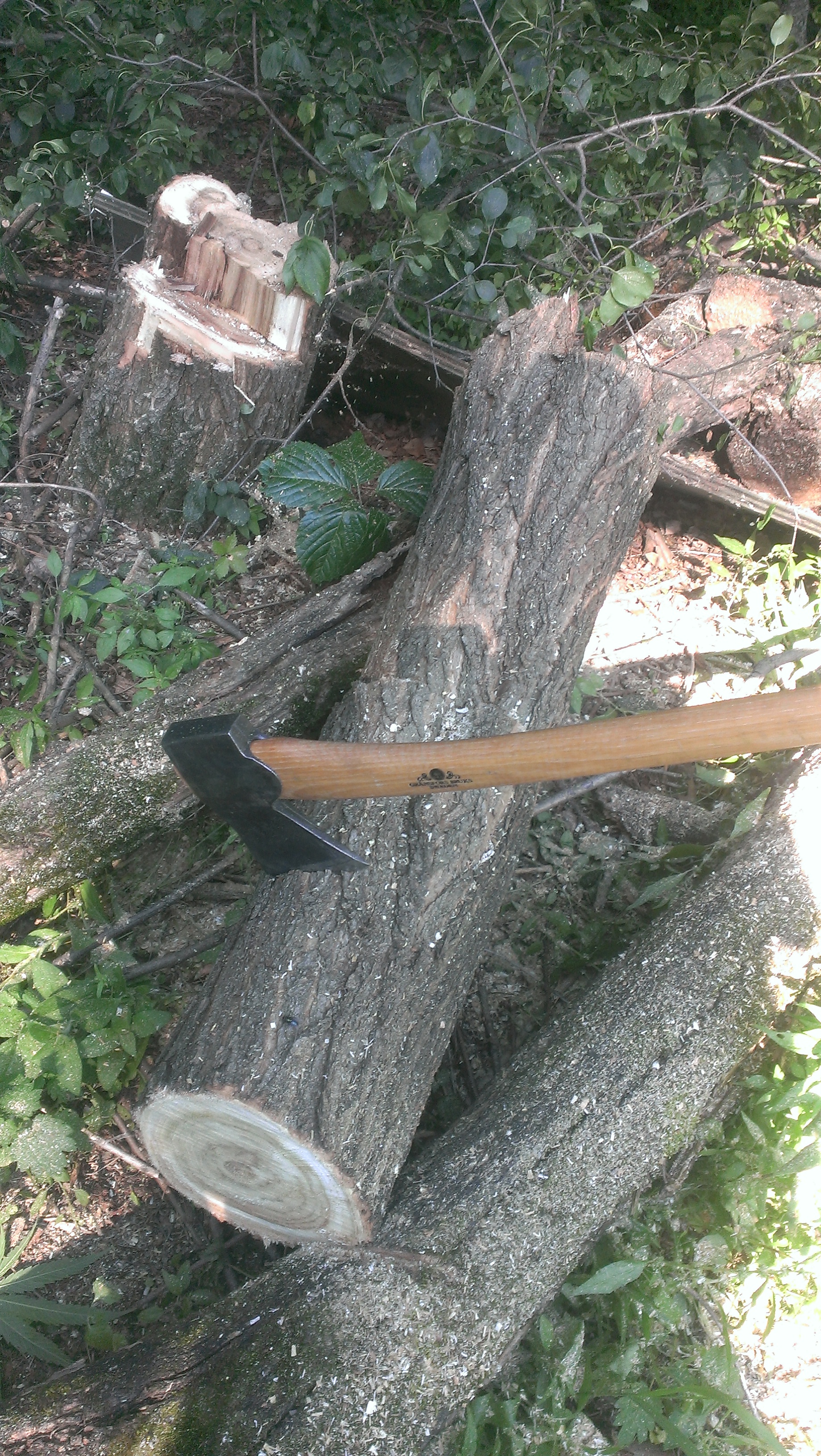
Today, again, harvesting trees.  This time black locust, a thorny tree that grows fast and germinates easily.  In olden days fence posts, foundation posts, anything requiring a sturdy rot-resistant wood were common uses of the black locust.  This tree will get used as firewood for the great Woolly ingathering here on Monday.

Other hardwood trees like oak, in particular, but ash and maple and others as well, require a year or two of drying to get their moisture content below 20%.  Black locust is a low moisture wood even when it’s alive.

In felling this tree my directional cut was at a slight angle and the tree came down on our vegetable garden fence.  But.  Fortuna was with me.  The main branch that hit the fence landed right on top of a fence post, square cedar. It didn’t mind at all.  May have sunk a bit lower in the earth. A slight dent in the gate where a smaller top branch made impact, otherwise, the fence came through fine.  Whew.  Felling trees is art as well as science and I mishandled this one.

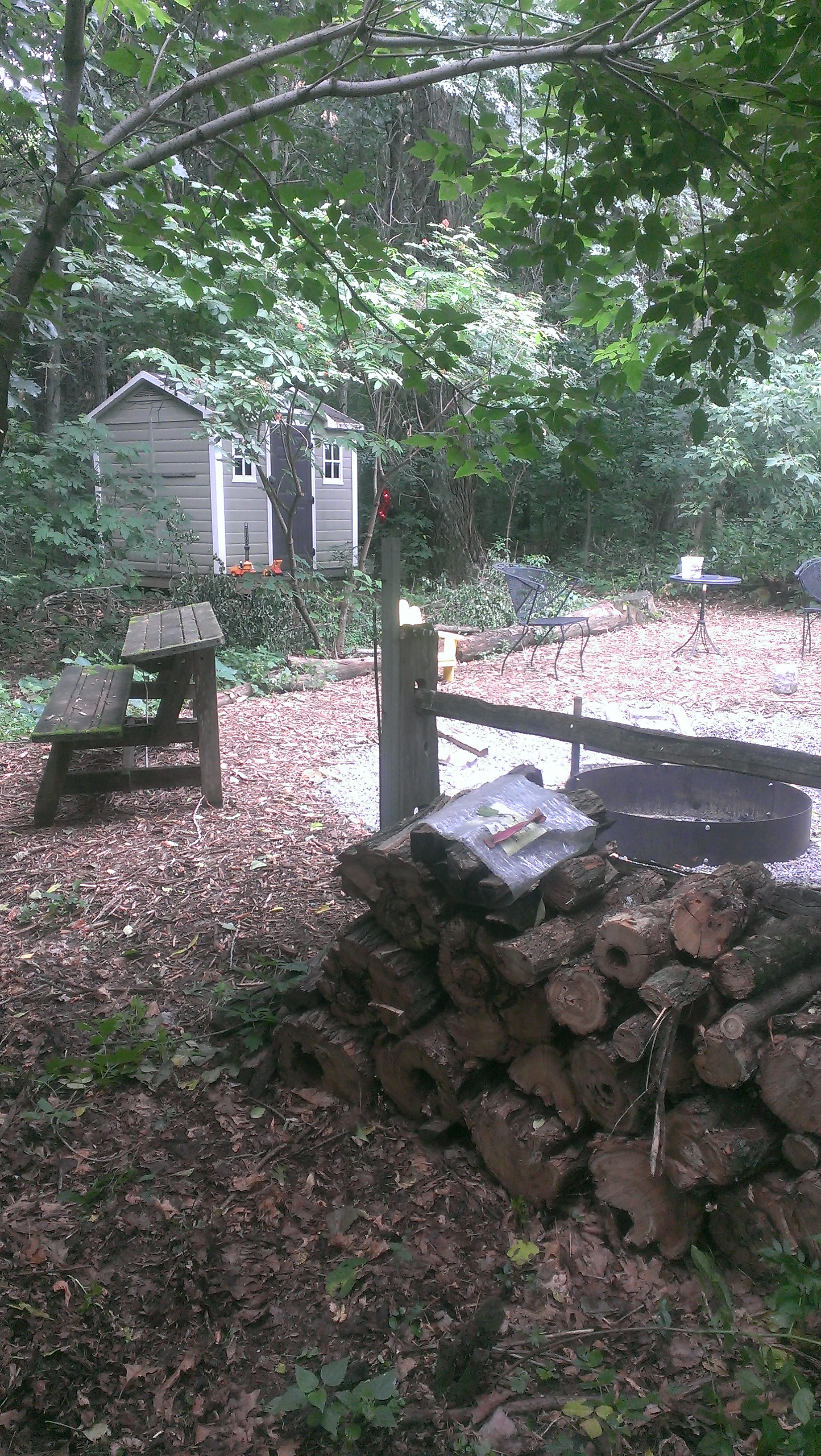
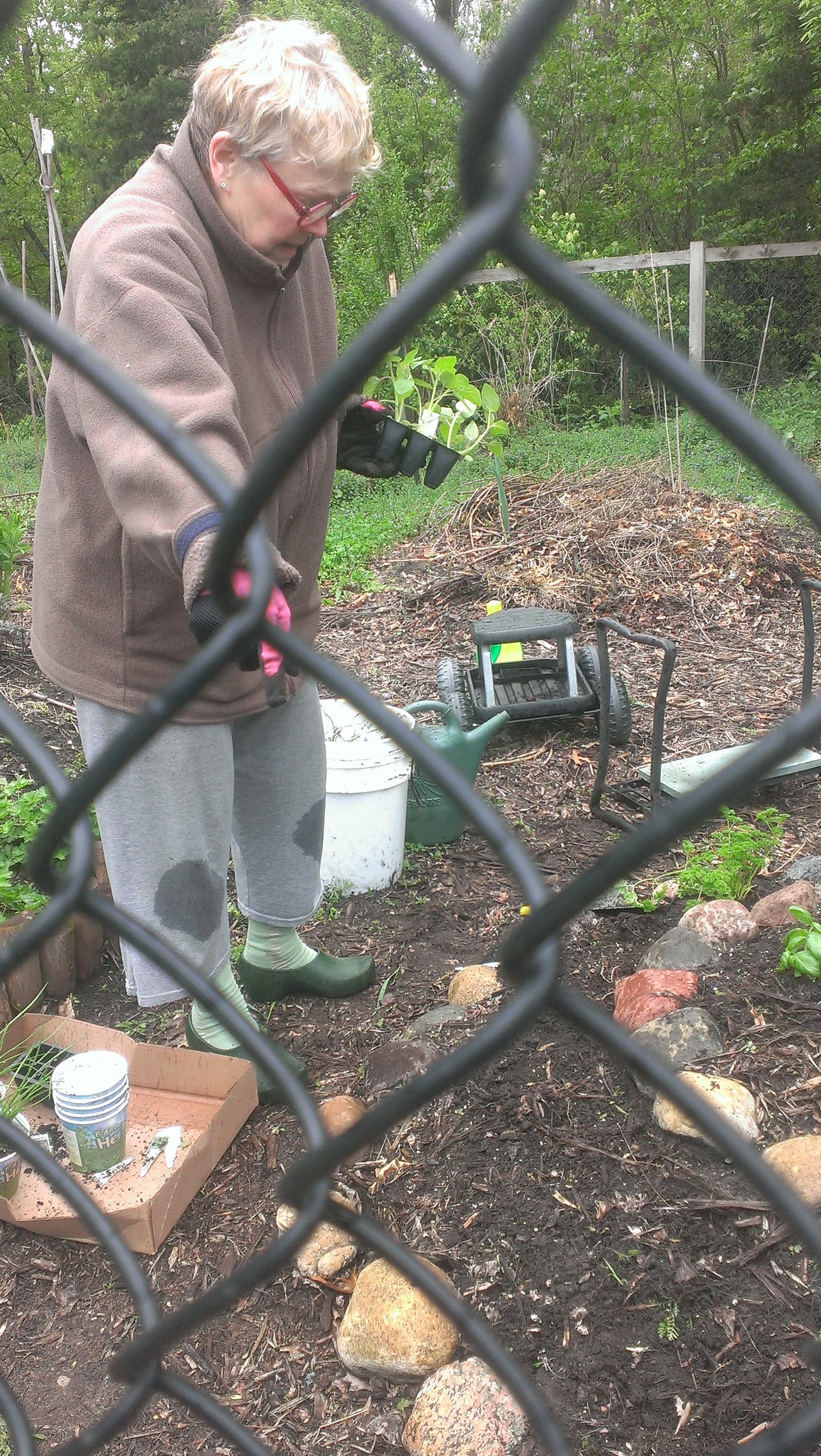
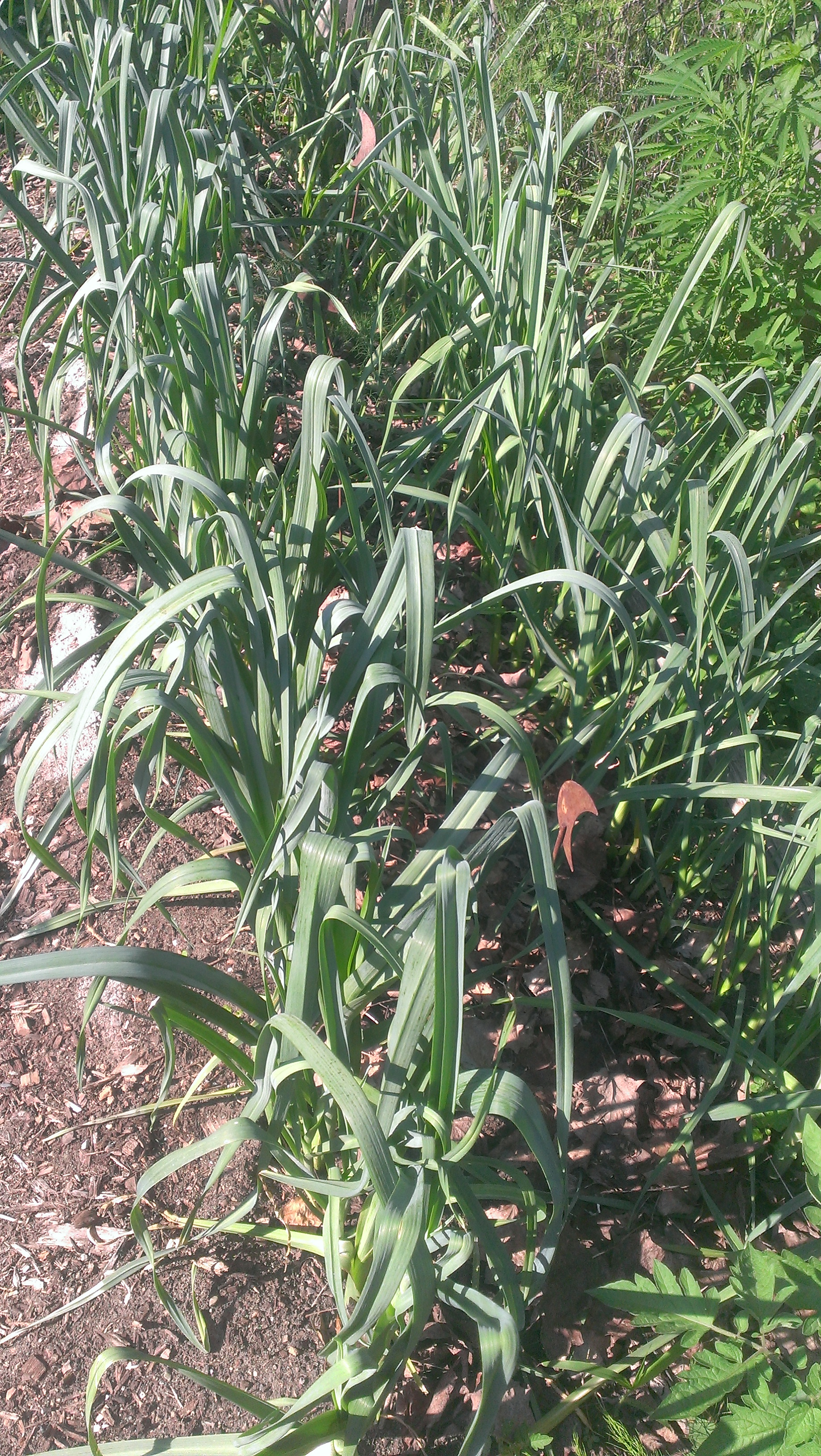
Early this morning I sprayed Enthuse, a product to generally spiff plants, give them an energy boost.  That was over all the vegetables and the blooming lilies.  The lilies are my favorite flowers by far and almost all of the varieties that I have I purchased at the North Star lily sale last spring.  These are lilies grown here, hardy for our winters.  Here are pictures of the current state of the gardens and preparations for the Woolly homecoming.

Good Enough

Summer                                                            First Harvest Moon

Last time the Woollies gathered at Woodfire Grill we got on the topic of Alzheimers.  Warren said many people, around two years in, gain a sense of peace about it.  “I don’t want to gain peace.” one of us said.  That interchange stayed with me, bouncing around, providing background when I read these two quotes recently.

The first one is from a blog I’ve referenced.  A link to it is on the right and in the quote. The second is from an NYT’s book review.

“In the last month or two, some of that special feeling—my ability to live in the present, my sense that my life is worthwhile even if I can’t accomplish that much, my sense of joy in living—has been diluted, and I’ve wondered why.  Had I slipped back into old patterns, lost the new sense of emotional richness?”   Watching the Lights Go Out  July 6, 2013

“Like Freud, Mr. Grosz is fond of literary allusions, and he’s nimble at excavating the psychological subtext of literary classics. He reads Dickens’s “Christmas Carol” as “a story about an extraordinary psychological transformation.” One of the lessons it teaches, he argues, is that “Scrooge can’t redo his past, nor can he be certain of the future. Waking on Christmas morning, thinking in a new way, he can change his present — change can only take place in the here and now.”   NYT book review of the Examined Life by Stephen Grosz

No, I’m not going to be here now.  Not that.  I’m sensing in these two quotes and in the conversation at the Woollies a profound realization, the one behind the Zen insistence on the now and, I think, these two observations as well.  It’s remarked on most clearly in the first quote.  “my sense…my life is worthwhile even if I can’t accomplish that much…”  There it is.  Right under our nose.

The key to inner peace is not so much living in the present, although that has obvious psychodynamic benefits, but in grasping our true place in the cosmos.  Our achievements do not define us.  Our capacity to do and act does not define us.  Our existence, our very ordinary existence, is sufficient.  Enough.  Adequate.  Good enough.  That’s what the author of the Watching the Lights Go Out discovers, that’s what Grosz suggests when in his reading of the Christmas Carol.  It was not Scrooge’s skills as a money lender and miser that he needed, but the simple acts of human kindness that he could engage in Christmas morning.  He only had to be Scrooge, not a role, bad or good.

And, in the end, if we get to this realization through Zen, knowing ourselves, psychoanalysis or Alzheimer’s, is the quality any different?


Pruning the Woods

Summer                                                              First Harvest Moon

Felled an oak today, about 8 inches thick.  It was too close to other oaks, competing with them.  As I build up our firewood supply, I also think about pruning the forest, trying to put into practice advice given to me years ago by a member of the DNR’s forestry team.  It has taken about 18 years to get started; I don’t like to rush into things.

Every time I use a chainsaw it takes me back to the not-so Peaceable Kingdom.  That was my first and most all-in back to the land moment.  I gave up urban life, a good job and seminary to move onto the 80 acre farm Judy and I bought.  You know the story, she leaves for good shortly after I get there.

That left with me a woodburning stove for heating and one for cooking, so I had to have firewood.  On our 80 there was a small forest, larger than the one out here with plenty of firewood ready for harvest.  I’d put my Jonsered in the bed of my green International Harvester pick-up, drive into the woods, cut down a tree or two, cut them up, toss them in  the truck, then head back to the house.

I stacked the wood there, unless it was dry already.  If it was dry, I’d start splitting it for use right away.  The stuff that wasn’t dry waited until deep winter when the cold would do some of the work.

The wood cutting and using the wood stoves were highlights of that time, a modest form of self-sufficiency, off the grid as far as fuel oil went.

The muscle memory lingers and pops into play every time I yank the starter cord.  Good memories.

Whole

Summer                                                                   First Harvest Moon

Without the Latin I’ve had considerable time to focus on revising Missing.  I’m finding the rhythm of garden work and writing very satisfying.  I can work outside in the earlier morning, then revise until lunch, and pick up the revising again after lunch and until I work out.  This means a steady pace, one that leaves me feeling whole at the end of the day.

Feeling whole means that I’ve kept up with my commitments.

There’s a part of me that feels bad about letting the Latin lie, I’ve put so much energy into it up to now, but the feeling of wholeness I’m gaining suggests I had spread myself too thin.  It may be that I’ll work on the Latin only after garden work falls away sometime in September, then drop it again in May.  I like to adjust my life to the seasons and that would be another way to do it.