I taste a liquor never brewed–

Lughnasa                                                                   Harvest Moon

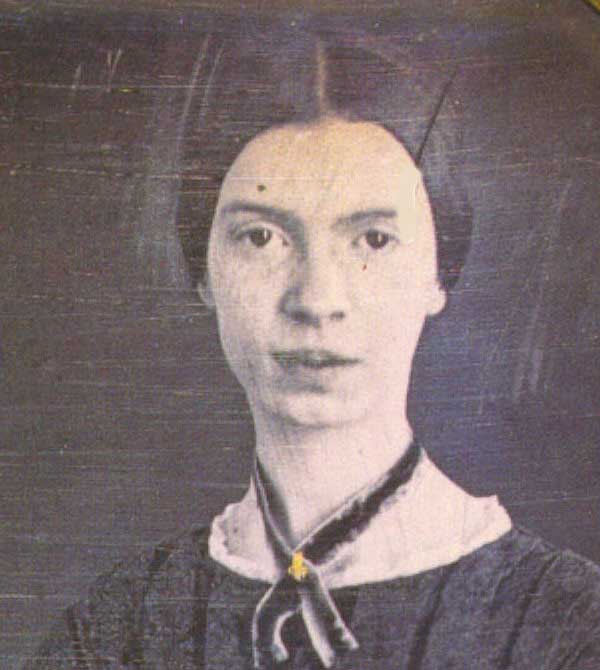
Second draft of my essay for ModPo (Modern and Contemporary Poetry) finished.  It’s emily-dickinson-photo1here and shows what close reading (at least my still learning version) is.  The poem is by Emily Dickinson.
I taste a liquor never brewed —
From Tankards scooped in Pearl —
Not all the Vats upon the Rhine
Yield such an Alcohol!

Inebriate of Air — am I —
And Debauchee of Dew —
Reeling — thro endless summer days —
From inns of Molten Blue —

When “Landlords” turn the drunken Bee
Out of the Foxglove’s door —
When Butterflies — renounce their “drams”
I shall but drink the more!

Till Seraphs swing their snowy Hats —
And Saints — to windows run —
To see the little Tippler
Leaning against the — Sun —

In your short essay, do a close reading of this poem. Use as a model the close readings done in the several filmed discussions of other poems by Dickinson.

You may, for example, discuss at least briefly every line of the poem. Or you may choose what you consider to be key lines (or metaphors or terms) and explain each of them fully.

Your essay will be evaluated according to how well you addresses the poem’s form, its use of (shifting) metaphor, and the extent to which its meaning is open. You should try to explain the story Dickinson tells here. For instance, you might say what happens to the speaker as the result of her inebriation? What does this have to do with the way the poem is written?

My answer (so far, I have more work to do on the question of form and how the poem’s story relates to its form.)

The poem explores a connoisseur’s palate for the ecstatic, probably the ecstasy of creation.fb-seek-those-who-fan-the-flames-rumiShe (Dickinson? Another I?) tastes this ecstasy as a liquor, not one found in package stores, but a liquor never brewed. She drinks it from a beer hall stein that has been filled not with liquid but with pearl or pearls, indicating, I suppose, that it’s used for finery stuff than Alcohol. Dickinson refers to wineries on the Germany river, the Rhine. This is the chief wine producing area of Germany now and was in the mid-nineteenth century, too. Even the famous Rhenish wine makers could not produce a liquor as fine as the poet drinks.
She gets inebriated from breathing alone, an “Inebriate of Air.” It’s easy to imagine here in stanza 2 an early morning walk, breathing in the cooled air of the night and getting wet from the dew; perhaps she picks her feet up and begins a dance, a reeling. This dance becomes an ecstatic one, perhaps like the whirling Dervishes, that continues “thro endless summer days”.

The fourth line of stanza 2 seems to me to read with the first line of stanza 3. The endless summer days—inns of Molten Blue (the gambreled sky of “Tell all the Truth but tell it Slant”?)—have guests. “Landlords” remove the drunken (ecstatic) bee from the Foxglove, could be the flower, could be the name of a pub or bar or inn. The Butterflies give up, renounce, their drams, their tots of liquor. Renouncing is a temperance flavored term or a religious one related to repentance. The Butterfly gives up their nectar willingly while the drunken Bee gets ejected.

Neither ejection or renunciation works for the poet. Dickinson resolves to keep right on drinking. This reminds me of the Sufi poets for whom inebriation and intoxication were euphemisms for religious ecstasy though; I think the poet has a similar, but secular meaning in mind.

The abstract and pantheistic ecstasy of the first three stanzas however, seems to curve seraphim__1acutely toward the explicitly religious when we come to Seraphs and Saints in the fourth. Seraphs were fiery angels, the burning ones, who flew round and round the celestial throne singing holy, holy, holy. Saints, in the context of New England circa nineteenth century probably referred to church goers, not Catholic saints, but church goers still. Both the burning ones and the ordinary Saints of the church stop their explicitly religious activity, the Seraphs “swinging their snow Hats” and the Saints to (church?) windows run. Drawn by voyeurism toward a pagan ecstasy, they see the poet, the little Tippler, the inebriate of air and debauchee of dew, leaning.
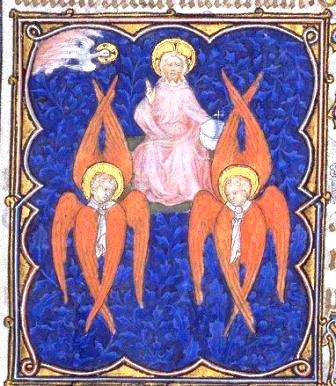
Ah. Does she lean on the everlasting arms of Jesus or in the strong arms of the Father? No. We’ve never really left the abstract and pantheistic ecstasy of stanzas one through 3. No, she leans against the Sun, the burning one that exists within this realm and a metaphor for her creative ecstasy.
Jelly Fish. They’re Back! And After 550 Million Years, Returning to Prominence

Lughnasa                                                          Harvest Moon

Here’s an ecological problem I’ll bet you’ve not heard about unless you’ve traveled by Linblad ships recently.  Maybe not even then.  Read the whole review, well worth it, at New York Review of Books.

(Box Jelly, aka, the most poisonous creature on the planet.)

“From the Arctic to the equator and on to the Antarctic, jellyfish plagues (or blooms, as they’re technically known) are on the increase. Even sober scientists are now talking of the jellification of the oceans. And the term is more than a mere turn of phrase. Off southern Africa, jellyfish have become so abundant that they have formed a sort of curtain of death, “a stingy-slimy killing field,” as Gershwin puts it, that covers over 30,000 square miles.”

quote from:  Stung! On Jellyfish Blooms and the Future of the Ocean
by Lisa-ann Gershwin, with a foreword by Sylvia Earle
University of Chicago Press, 424 pp., $27.50

The Sweet Scent of…Bugbane?

Lughnasa                                                          Harvest Moon

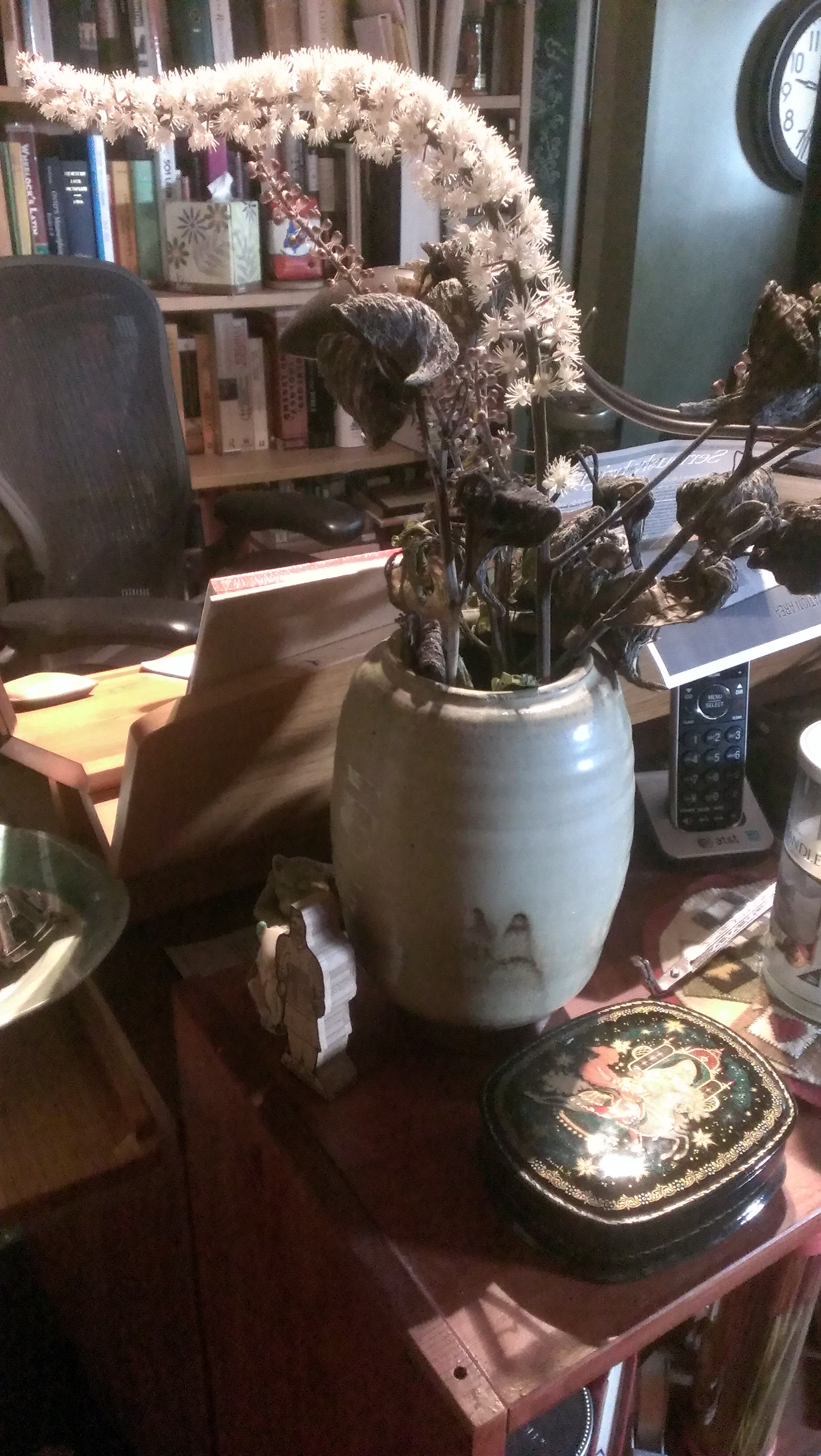
Bet you’ve never heard of a perfume called bugbane.  It’s no name for a fragrance and IMAG0960probably not a familiar plant, but it is one of the joys of early fall.  It’s fluffy white racemes give off a scent that brings to mind gardenia and jasmine, scents of a late night drive along the Kona coast with the top down, coming back from a day exploring Hilo and Volcanoes National Park.  Yet here they grace a plant named like a weed.  If you see one somewhere, stop a moment.  The bugbane will transport you somewhere, somewhere pleasant.

One more run at the creeping charlie this morning, utilizing that fall plant habit of storing food in the roots.

To be outside in the morning, a cool morning, in the dying garden, rejuvenates me.  The deaths of the plants follows a long and, should I say it, fruitful life, so no unusual grief, just the bracing sense death gives to those of us who continue to live.

The Springtime of the Soul

Lughnasa                                                               Harvest Moon

This northern soul breathes easier when the mornings are cooler, even cold.  The bright blue Canadian skies or the dark gray roof of low cumulus clouds make me happy, too.  As we tilt toward September 29th, Michaelmas, the springtime of the soul holiday in my sacred calendar, my inner life revs up, or perhaps better, cycles down.  The humus built up over the growing season sees the first shoots of ideas sowed either long ago or just yesterday.

Right now I’m in the grip of Loki, trying to wrestle a believable and exciting villain from his myth and legend.  He and his kids get their own book, this next one, Loki’s Children, so Dad is important.  He’ll come clearer to me as the fall progresses.  (Death of Balder)


Friends

Lughnasa                                                                  Harvest Moon

Woolly meeting tonight.  Kate baked a ground cherry pie and a raspberry pie.  Big hits.  “All hail, Kate!”  There was applause near the end for the desert.  Yin served her wonderful variations on Chinese originals, tonight a noodle and pork and vegetable dish.

Scott introduced the topic of the Singularity and we talked about technology and change for the rest of the evening.  Mark Odegard brought up a good point about advances in technology contributing to a digital divide with digital haves and digital have nots.  This divide will tend to reinforce class and racial divisions.  He said this in reaction to me saying I wasn’t particularly worried about the Singularity.  His point was that the rapid advances in technology can and will have unintended social consequences.  He’s right.

In this argument I find myself on the conservative side, that is, I believe there are so many fundamental activities that make us human from painting to poetry, music to novels, athletics and theatre.  They are not reducible to code nor products artificial intelligence can reasonably be expected to create. There are also the incredible complexities of life itself, human relationships, the intricate interlocking webs of ecology systems that will always, I believe, outstrip any technological advance.

And I love technology, gadgets, the new.  Just don’t see them hanging out with me at a Woolly meeting as full participants.  Ever.


Tea Making, Merchandising

Lughnasa                                                              Harvest Moon

I set the timer for the Zojirushi water boiler for 6 hours last night.  When I came downstairs this morning, it had heated the water to boiling and allowed the temperature to descend to the holding temperature I selected, 175 degrees.  This allows me to take water from it at that temperature all day, filling my pitcher, my teapot as many times as I wish.

Earlier this morning I made a pot of Yunnan White Jasmine Tea and am now on my second pot.  Each pot brews about 8 ounces which I drink from a tiny Chinese style teacup my sister purchased for me as part of a set.  I use the pitcher and water table from that set, too.  I can make 4 more pots of tea before I have to switch tea leaves.

Did a spray of brixblaster this morning (reproductive plants):  raspberries, tomatoes, IMAG0876ground cherries, broccoli and carrots.  The vegetative plants left are leeks, beets and greens, but not enough to mix up a batch of qualify.  After the spraying, I picked ground cherries.  They will fill out the amount Kate needs for the pie she’s baking for the Woollies tonight.  She’s also making a raspberry pie.

Tonight I’m taking as well a box of Artemis Honey for sale.  The first time I’ve actively marketed our honey.  I feel strange doing it since I have an almost Confucian attitude toward merchants, but I’m trying to learn to honor my labor.  Marketing Missing is the next, similar, activity.


Good Vibrations

Lughnasa                                                               Harvest Moon

Sunday lassitude.  The slow easy feeling that overcomes one when Sunday morning is over.  It dominated my afternoon and early evening.  Ah.

Raspberry picking has become an every other day event.  The red and golden canes put out fruit which seems to ripen on a two to three day cycle.  Picking at these intervals gets ripe fruit and reduces over-ripe berries to a few.  Abundance from a small amount of ground.

Working in Modern and Contemporary Poetry today with William Carlos Williams, a pediatrician who wrote in conscious dialogue with Walt Whitman.

Modpo, as University of Pennsylvania professor Al Filreis calls the course, has, so far, the most effective pedagogy of any of the MOOCs I’ve taken.  The students, six of them, who react to the poems and his questions, give the class a dialogical aspect, real classroom dynamics.  I feel moved into the discussion, almost as if I’m participating directly rather than thinking my response to Professor Filreis’s questions.

Modern and the Post Modern, which is in its eighth week while ModPo is only in its second, today focuses on Freud, especially his Civilization and its Discontents.  These two courses complement each other with ModPo focusing on how modernism took shape in American poetry while the other course traces the development of the idea of the modern from the enlightenment onward.

There’s a positive resonance, an intellectual vibration, one sparking ideas for the other.  I’ll be interest to see how my thinking about modernism and reimagining faith will have grown and changed when I’m done with them both sometime in November.

If We Have the Energy

Lughnasa                                                     Harvest Moon

Then again.  After my presentation this morning, Be Glad You Exist, (see Third Phase header above for the full text) a lively discussion ensued.  One man, a bearded man in his late 70’s, spoke of advice his father, who lived to 96, gave him, “You have to decide whether you want to be an animal or a vegetable.”  An engineer by training, this same man talked of early volunteer experiences which wanted his skills, from age 13, not the mature, thoughtful skills of a lifetime’s learning and practice.  He now volunteers at the Rondo Library in St. Paul as a tutor.

Another woman, also well into retirement, saw many of the folks who had less than $100,000 or less than $25,000 in retirement savings.  They needed, she said, prompts to admit they needed meals on wheels, congregate dining.

Another man, also retired awhile, said, “We invented rock and roll.  And youth culture.” We’re still dealing with the consequences of that we decided.

Leslie, an attorney, whip smart and wanting to lower her stress level by cutting back, admits she fears no work.  How would she keep sharp?  Exercise her mind?

Ginny, who talked about her life on the reservation growing up in dire poverty, said, “Western culture puts so much emphasis on money, but on the res it’s community.  My sister has cancer and I love the way the community has rallied around here.  Whether she’s to stay here or not, she knows she’s loved.”

There was, too, excitement about defining this time, helping it become a new thing under the sun.  “If we have enough energy,” Leslie said.

I believe we do.

Ready to Let Go

Lughnasa                                                              Harvest Moon

Giving a presentation this morning at Groveland UU.  The Third Phase.  I’ll post it later on today.  I find myself surprisingly uninterested.  I forgot several times last night that I was doing it.  Got today planned in my head, then, went, “Oh.  Right!”  Resistance.  This may be the last of it.  There’s no longer the spark of delight I used to get from writing out my thoughts, then presenting them to others out loud.

They say fear of death and public speaking run close together in terms of intensity among most of the population.  Public speaking has never been a fear for me.  I’ve been doing it since I was young, various venues like school politics, church, theatre, classrooms, debate, interpretive reading.  Over the years I’ve come to believe that I have a talent for it, modest, but there.  I’m no Cicero or Richard Burton, but I can get my point across and most of the time make you feel glad you had the chance to listen.

It may not be the public speaking that has soured for me.  I really gave up the ministry years ago with a slight regression in the late 90’s, but I was not sorry when I left the Presbytery in 1992.  The connection with Groveland kept that spark glowing, but the ember has begun to die out, or has died out.  It’s a profession that never did fit me, that I entered through a series of bad choices, like the thug life.  I worked hard to make a place for myself in the church, but the tension and stress made me unhappy.

Now, finally, 20+ years after the fact, I’m ready to let it go all the way.

My Candle

Lughnasa                                                             Harvest Moon

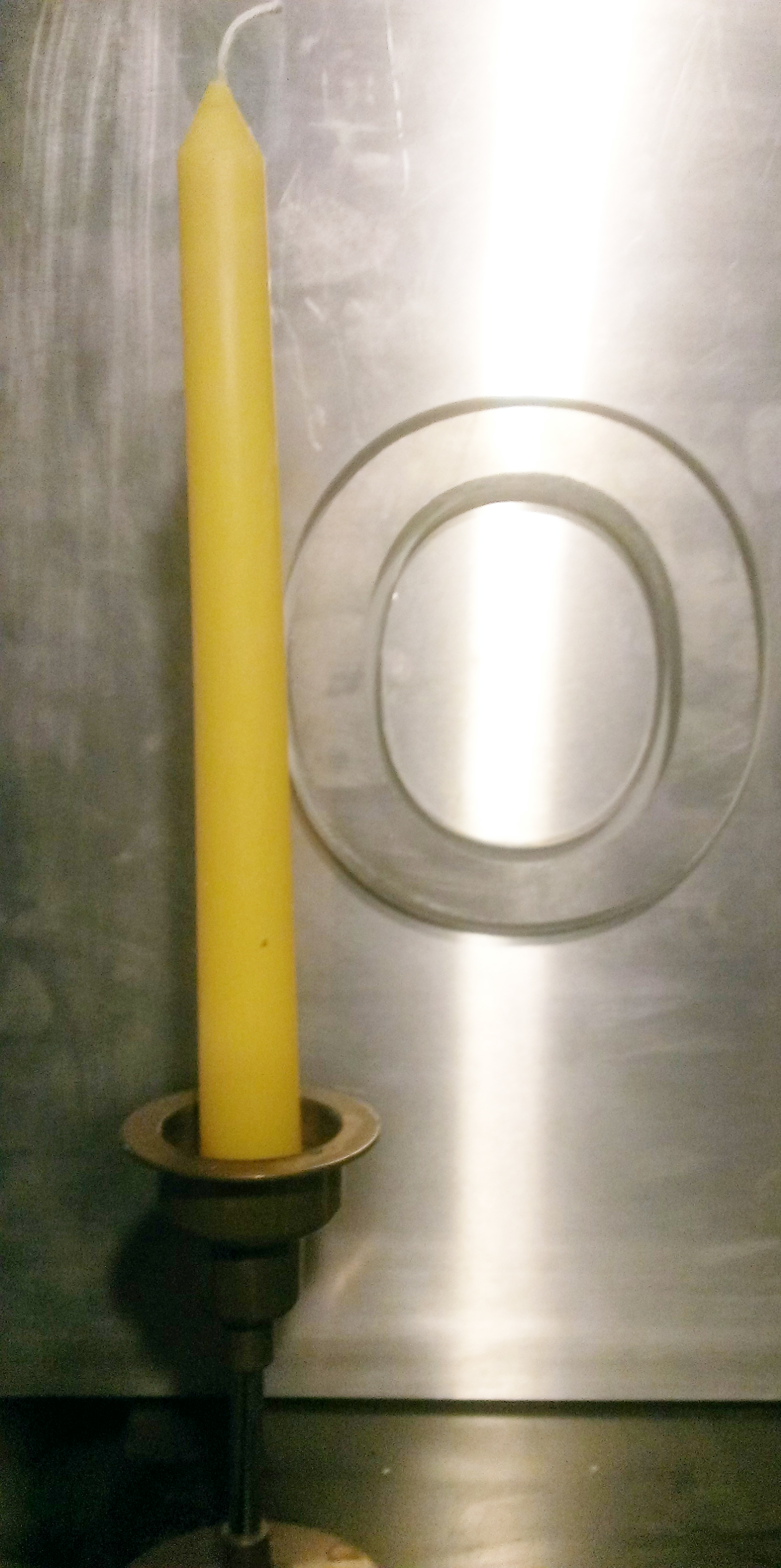
Those of you who paint or sew or fix things or build sheds, who repair the lock or restore IMAG0951croppedthe engine to its former glory, you may not understand the pride I feel in this candle.  It’s a simple thing and making it was a simple process though not without its attendant dilemmas.

Here’s the thing:  I made this candle.  Well, ok, I had help from the bees of Artemis Honey and an assist on the wick thing from Kate, but otherwise I made this candle.  It represents a satisfying process that began when a friend of Kate’s helped me get started in beekeeping 5 years ago.  Since then, I’ve saved wax against the day I could make candles.

Making things with my own hands daunts me, I feel more comfortable with words or ideas, plants or organizations.  That meant I kept putting off the candle making.  How do you render wax?  This year I found out.  What’s involved in making a candle?  Likewise this year I found out.

When this candle slid out of the mold, formed and perfect, looking exactly like, well, a candle, I jumped up and down.  It was beautiful.

I like projects where my involvement takes place over a long arc.  Organizing a new political entity or committee or economic development group.  Planting perennials having first amended the soil, then tending them as they grow.  Writing a novel in which every word started with me.  It’s that long term, personal engagement that makes me feel good.

The candle represents learning how to keep bees, caring for them from year to year, collecting excess wax as we extracted honey or as I did hive inspections.  I saved the wax and kept it until I could learn the other steps necessary.  The result is a candle made from a material for which I know the source and in which I had a collaborative hand.  That makes this candle and the others made this year, too, a new experience for me.  And a good one.