
Midsommar New (Kate’s) Moon
 If you’re an alcoholic like I am, you learn early in treatment that the geographical escape won’t work. Wherever you go, there you are is the saying. It’s true that the addictive part of my personality follows me from place to place as well as through time. Even so, this move to Colorado has awakened me to an unexpected benefit of leaving a place, especially ones invested with a lot of meaning.
I lived in Minnesota over 40 years, moving to New Brighton in 1971 for seminary. I also lived in Alexandria, Indiana until I was 18, so two long stays in particular places. In the instance of Alexandria, I was there for all of my childhood. In Minnesota I became an adult, a husband and father, a minister and a writer.
Here’s the benefit. (which is also a source of grief) The reinforcements for memories and their feelings, the embeddedness of social roles sustained by seeing friends and family, even enemies, the sense of a self’s continuity that accrues in a place long inhabited, all these get adumbrated. There is no longer a drive near Sargent Avenue to go play sheepshead. Raeone and I moved to Sargent shortly before we got divorced. Neither docent friends nor the Woolly Mammoths show up on my calendar anymore with rare exceptions. No route takes me past the Hazelden outpatient treatment center that changed my life so dramatically.
 While it’s true, in the wherever you go there you are sense, that these memories and social roles, the feeling of a continuous self that lived outside Nevis, in Irvine Park, worked at the God Box on Franklin Avenue remain, they are no longer a thick web in which I move and live and have my being, they no longer reinforce themselves on a daily, minute by minute basis. And so their impact fades.
On the other hand, in Colorado, there were many fewer memories and those almost all related to Jon, Jen and the grandkids. When we came here, we had never driven on Highway 285, never lived in the mountains, never attended a synagogue together. We hadn’t experienced altitude on a continuous basis, hadn’t seen the aspen go gold in the fall, had the solar snow shovel clear our driveway.
 This is obvious, yes, but its effect is not. This unexperienced territory leaves open the possibility of new aspects of the self emerging triggered by new relationships, new roles, new physical anchors for memories. Evergreen, for example, now plays a central part in our weekly life. We go over there for Beth Evergreen. We go there to eat. Jon and the grandkids are going there to play in the lake this morning.
Deer Creek Canyon now has a deep association with mortality for me since it was the path I drove home after my prostate cancer diagnosis. Its rocky sides taught me that my illness was a miniscule part of a mountain’s lifetime and that comforted me.
This new place, this Colorado, is a third phase home. Like Alexandria for childhood and Minnesota for adulthood, Colorado will shape the last phase of life. Already it has offered an ancient faith tradition’s insights about that journey. Already it has offered a magnificent, a beautiful setting for our final years. Already it has placed us firmly in the life of Jon, Ruth and Gabe as we’ve helped them all navigate through the wilderness of loss. These are what get reinforced for us by the drives we take, the shopping we do, the medical care we receive, the places we eat family meals. And we’re changing, as people, as we experience all these things.
Well over fifty years ago Harrison Street in Alexandria ceased to be my main street. The Madison County fair was no longer an annual event. Mom was no longer alive. Of course, those years of paper routes, classrooms, playing in the streets have shaped who I am today, but I am no longer a child just as I am longer the adult focused on family and career that I was in Minnesota.
Wherever you go, there you change.

 This evening is the last of the introductory kabbalah classes. We’ll be discussing miracles again and hearing student presentations. Making it personal still seems like the right path for mine, how kabbalah has affected a decades long journey, a pilgrimage toward the world into which I’ve been thrown.
 Here’s a nice paragraph: “While the hermeneutic strategies to “open up the text” that Ricoeur presents are not simple or childlike, they’re only the first step in engaging with the ideas. If you understand “the meek shall inherit the earth” as a radical idea, what do you do with that? How do you apply it? How do you let it change you? Following
  The biggest change will be in how I sense the world around me. I will no longer be so reductive, imagining that even if there is an unseen world, that’s all it is, unseen. Perhaps this is how the reenchantment process works, seeing the living, intricately woven cosmos as manifest everywhere, visibly and invisibly. My pagan sensibility remains. I’m not sure that adding God language to the mix adds anything important.
 Organ recital: Kate does not have throat cancer. Didn’t know that was what Dr. James Chain, an ENT, was thinking until he eliminated the idea yesterday. Nothing quite like dodging the metaphorical bullet you didn’t even hear fired. Her sense of smell, adumbrated, and her sense of taste, flattened, however, may not return. Tough for weight loss. If food doesn’t taste-bad or good, it’s not appealing. We’re working right now to figure out what she can taste so we can emphasize them in our menu choices and cooking.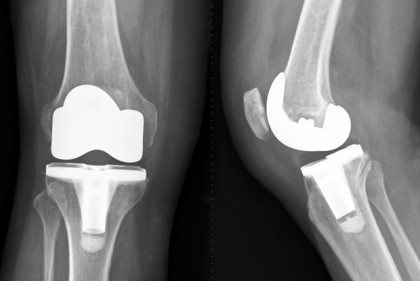

 We’re going to need a sign: A Scandinavian and former Minnesotans live here. It will hang below the window air conditioner we purchased yesterday in Evergreen. Nobody has air conditioning up here. At least not visible from the road. We moved here for the cooler average temperatures and Shadow Mountain has obliged, so that’s not surprising. But. In the summer, for a few weeks, it does get hot up here and the house heats up. So does the loft.
 When we went into Home Depot (our choices for purchasing a unit were two: Walmart or Home Depot. Community busters or a CEO who loves and supports the Donald. Sigh.), I had to go up to Customer Service and say, “I want to buy an air conditioner, but I can’t lift it.” The woman behind the desk said, “All right. Where is it?” Then she came with me. I looked at her. If she can lift the damned thing, I should be able to. But, no. She had a trick. She tilted the box back while I moved the flat-bed cart underneath it, then she worked it onto the low orange bed.
 In other health news an x-ray of my left knee (total knee prosthetic imaging) raised a question. On Monday I see Dr. Peace, my orthopedic surgeon, for a follow up. Kate thinks and I hope he will say nothing’s wrong. I will use the time to ask again about how much I can challenge the knee. Can I, for example, kneel? It’s painful now, yes, but does it actually harm the prosthetic? Is hiking up a mountain trail too stressful for it? Why do I still have pain seven and a half months after surgery? Are my high intensity workouts too much? I don’t want to be too cautious, neither do I want to be cavalier.