
Lughnasa Waxing Back to School Moon
It’s been a wet, cool few days. The Apiguard I picked up last night only works above 60 degrees and 70 is better. It recommends chemical resistant gloves. I’m using this on two colonies, the parent and the divide. I tested the divide and its high, putting the colonies winter survival at risk, though I did not test the parent since the divide began with a hive box full of parent colony bees, it seems reasonable to assume it has a high mite count, too. I don’t like using the medication, but the UofM, which shares my bias toward Integrated Pest Management and leans against treating recommends it. I did count my mites, too, so I know the divide has a high mite count. The package colony, which had only 1 mite all together, I will not treat.
The fumigilin-B treats nosema. In this case the only way to reliably test requires a 400+ microscope, an expensive counter and a bunch of dead bees beat up in a mortar and pestle. The U, again, recommends treatment this year in particular so I’m following their advice. Nosema and varroa mites are two of the culprits in colony collapse disorder and often combine to cause the winter loss of a colony.
Integrated pest management for mites and nosema includes using Minnesota hygienic queens, which I have done, and can include use of a drone frame which attracts mites because drones take longer to pupate. When the drone frame has capped brood cells, the beekeeper removes and freezes it, killing the mites and the drones. This reduces the overall mite load.
Integrated Pest Management (IPM) has been around for a while. It’s sort of a middle ground between all organic and contemporary agriculture/horticulture/apiculture techniques. The idea is to put any chemical treatments as last resorts, utilizing first techniques that either directly mimic nature or are supportive to it. In gardening, for example, companion planting qualifies. So does crop rotation. So does soil improvement. So does hand picking insects and pruning out diseased branches or plants. Another involves acknowledging that some level of disease and infestation is a normal part of the natural world. The problem comes when the level begins to interfere with the plant or animals productive ability or its ability to, say, survive a Minnesota winter in our case.
In apiculture it involves, in addition to what I’ve already mentioned, culling 20% or so of your woodenware as it reaches 5 years of age. This reduces nosema because the nosema organism lays down spores that can last as long as 75 years. Another technique involves making sure your colonies have adequate food supplies for the winter. A colony that struggles for food in early spring has much higher susceptibility to disease.
I use IPM in our perennial flower beds, our vegetable garden and now in the Artemis Hives. I’ve not started in the orchard yet because fruit trees are still a mystery to me. Gotta resolve that over the winter.
 milestone birthday. Happy Birthday, Jean-Marie matchbooks, the whole Jax touch. I met Jean-Marie’s daughters and spent a good bit of time chatting with her oldest who until recently was a graduate student under Marla Spivak, the bee goddess of the UofM. She and Jim of Nature’s Nectar, whom I saw later, convinced me to try and keep my old parent colony.
 house where I pushed in the cork at the end of her wooden home, inserted a marshmallow (tiny) into it firmly, then opened the divide, took off the honey filled top hive box and inserted the queen in the middle of the second box. This is called a slow release. The queen and her workers eat away the marshmallow from one side, workers in the hive from the other. Over the time this process takes, so the theory goes, the new queen becomes less threatening to the workers, who then allow her to come out and become their new monarch. If it doesn’t work, they kill her. I won’t check for another week.
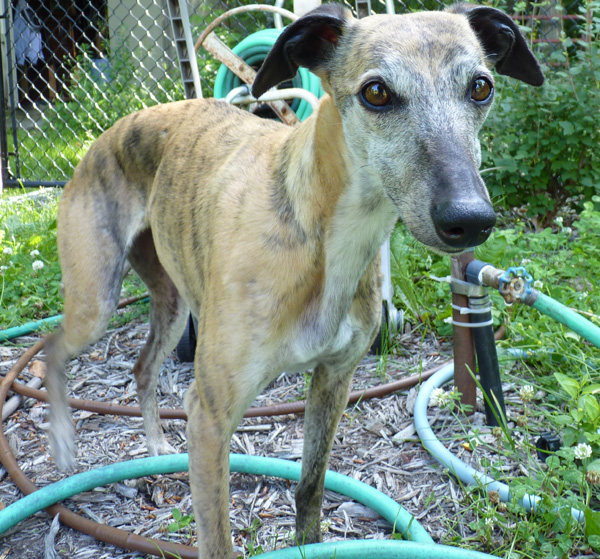 hop eagerly into my lap, sit there for a minute or maybe less, then stand up, moving here and there, trying to achieve some location that felt right to her. Most often she would jump down. She had her opinions about all sorts of things and acted on them.