Let There Be Darkness

Fall                                                Waxing Harvest Moon

Let’s try darkness again.  In Taoism the familiar Taiji makes my point about the essential and complementary nature of light and dark.  Taoism gives equal weight to the yin and yang* represented in the taiji, the small circle of yin within the yang and of yang within the yin, emphasizing the Taoist belief that all things contain their opposite to some degree.  So, one part of my argument simply notes that light and dark are both necessary, necessary to each other, nothing apart from each other.  In the Taoist taiji they represent the dynamic movement of heaven to which all things must conform.

In our Western cultural tradition, though, light has taken precedence over darkness, both in a physical and in an ethical sense.  Jesus is the light of the world.  Persephone goes into Hades and the earth mourns her absence until her return when it blossoms into spring.  Eurydice dies and Orpheus goes to the underworld to retrieve her.  Dante’s Divine Comedy finds Dante wandering, lost in the dark wood of error, before he begins his descent, guided by Virgil, into the multiple layers of hell.  The traditional three-story universe also reinforces these ideas:  Heaven above, earth, and the infernal regions below. Milton’s Paradise Lost follows the rebellion in heaven and the casting out of Lucifer, the Morning Star, into hell where he builds his enormous palace, Pandemonium.  Our common sense understanding of death involves hiding the body beneath the earth.  Why?

Coming out of the spiritualist tradition represented by Camp Chesterfield (see below) death involves a transition into the light, the spirit world.  Ghost Whisperer, a TV program, uses the trope from this tradition, as dead souls are led into the light.  It is, perhaps, no wonder that darkness, night and the soil come off badly in our folk metaphysic:  up and light is good; down and dark is bad.

I wish to speak a word for the yin, symbolized by the moon, the female, the cold, the receiving, the dark.  The moon illustrates the taiji perfectly.  In the dark of night, the moon, yin, reflects the sun’s light, yang, and offers a lambent light, neither yin nor yang, but the dynamic interplay between the two.  So we could look for art that features the moon as one route into the positive power of darkness.

Also, any seasonal display in a work of art, whether of spring, summer, fall or winter can open the question of each season’s value, its role in the dynamic of growth and decay, emergence and return.  This can lead to a discussion of the importance of the fallow season, the season of rest, the earth’s analog to sleep.  This can lead to a discussion of sleep and its restorative powers.

Art work of mother and child, or especially, mother and infant, can stimulate a discussion, in this context, of the womb, of the fecund nature of the dark where fetuses and seeds develop before their emergence into the world of light.

Similarly, death focused works of art can open up a discussion of birth and death as dynamic moments of change, yin and yang of human (or animal) development.  This could lead to conversation about the Mexica (Aztec) belief that life is the aberrant condition and that death is the vital, regenerative moment; we are here, goes one Mexica poem, between a sleep and a sleep.

Winterlight festivals represent a western imbalance focused on the light, the yang, and a tendency to cast the yin in a negative light, something to be avoided or eliminated or held in check.  As I said previously, this is understandable given the pre-historical science which made the return of the sun doubtful and therefore terrifying.  Many of these festivals are, too, our favorites:  Christmas, Deepavali and for a different traditional reason, Hanukkah.

In my own faith tradition, roughly pagan, I look forward to the dying of the light and celebrate as my most meaningful holiday, the Winter Solstice.  Of course, I also celebrate the return of the light that begins on that very day, but first I immerse myself in the long night, the many hours of darkness.  This affords me an opportunity to acknowledge the dark, to express gratitude for its manifold gifts.   In this way my idiosyncratic faith has a ritual moment that honors the taiji, utilizing the cues given by the natural world.

To find art that emphasizes this aspect of darkness I plan to walk the museum from top to bottom, searching for images and objects that can help our visitors understand that when they celebrate the festivals of light that darkness is the reason for the season.  I would appreciate any thoughts or ideas.

*In Chinese culture, Yin and Yang represent the two opposite principles in nature. Yin characterizes the feminine or negative nature of things and yang stands for the masculine or positive side. Yin and yang are in pairs, such as the moon and the sun, female and male, dark and bright, cold and hot, passive and active, etc. But yin and yang are not static or just two separated things. The nature of yinyang lies in interchange and interplay of the two components. The alternation of day and night is such an example.
Diversity

Fall                                            Waxing Harvest Moon

Whew.  Sierra Club am.  Latin at noon.  Touring the Embarrassment of Riches show for Lindquest and Venum from 5:30 to 7:00.  A very diverse day.  Fun in that respect, but also tiring.

Greg took me through some Latin readings to test my level of retention since we paused back in mid-summer.  He decided I was fine to pick up again where we left off in July.  Good to know my brain has not gone soft.

Around 4 pm I took off for the cities and went to the Ford Bridge on 46th street.  Jon e-mailed me and asked for me to take some shots from the bridge looking north.  He wanted some of the fall colors.  Don’t know how good the images are, but I took them, then scooted over to the museum for my stint in the Embarrassment of Riches show.

It came to me while touring this show that it validated many of those who came through in a way similar to African and Chinese galleries for their respective ethnic communities.  That is, these folks saw images that were of the world in which they moved.  They may not all be in it personally, but in working with clients they cross over many of these thresholds.

A different experience than I had anticipated, but not a bad one.  Interesting, rather than revelatory.

A Voice At The Table

Fall                                                  New (Harvest) Moon

Just back from the Sierra Club.  A real dilemma for me resurfaced here.  I manage the legislative process for the Club, as I said, and in that role I organize the legislative priority setting process, its fine tuning and the work of the committee and the lobbyist while the legislature is in session.  This means I do not have to have a very deep knowledge of the particular issues since my role has a mostly administrative/managerial focus.  Thus, in a meeting like the one this morning with a legislator, where ideas get floated and possibilities discussed about a particular matter, in this case, broadly, energy issues, I simply don’t have the details and background necessary to contribute.

As Kate said, I like to participate and have intelligent things to say, but in this context, I didn’t feel like I had a anything to say.  This is disempowering for me.  The obvious solution, to learn more about each issue, runs into my other intellectual pursuits, like art history and Latin and liberal thought.  Dividing time so I have enough to do solid work in those three areas has not left me with enough left over intellectual energy to dig into the scientifically and often politically complicated waters of particular issues.  The fix here is not obvious to me and has me questioning my role.  We’ll see where this goes.

Today and Tomorrow

Fall                                     New (Harvest) Moon

Legislation and Latin today.  Legislation first, then Latin.  On the weekend bulb planting and fall clean up.  Also, a baroque tour to prepare.

Gotta get clearer about the darkness theme and its application to specific works of art, works that can be used in a Winterlights tour.  I know it seems like a stretch, yet it is one of those fundamental ideas that hides just behind the obvious.

How about those twins?

How about those democrats?

Photocentrism

Fall                                              New (Harvest) Moon

OK,I made this up.  Photocentrism is a focus on the virtue of light that, by implication, puts darkness in a negative or bad relative position.  Just because I made it up, however, does not mean I’m joking.  The context:  the docent annual meeting today and the presentation of a new December of the month called Winterlights.  I agree that Winterlights is a complex noun that has a rich associative feel.  I even agree that the celebrations in what I have long called holiseason–Thanksgiving to January 6th, the traditional 12th day of Christmas, Epiphany (visit of the Magi to Bethlehem), and the date for the celebration of Christmas in the Eastern Church–offer an unparalleled opportunity to learn from other cultures about matters deep in the human psyche:  Thanksgiving, Advent, Deepavali, Hanukkah, Posada, Winter Solstice/Yule, Christmas, Western New Year on January 1, the 12 days of Christmas and maybe Kwaansa, though its constructed nature makes me a bit shy of it.  Eid al Adha, the Muslim holiday that marks the end of Hajj by celebrating the Irbrahim and Ishmael story, falls in November this year, but not within holiseason itself, so I’m going to leave it out of this discussion.

The festivals or holidays of light, in particular Deepavali, Hanukkah, Winter Solstice (although is a special case as we shall see) and Christmas (more for what it replaces, Saturnalia, than what it celebrates itself) do have a common thread.  Deepavali, Winter Solstice and Christmas all relate to the despair felt in subsistence agriculture communities when the light of the sun seemed as if it would wink out and perhaps disappear altogether.  This fear, of the Sun’s final rising, put its mark on well-known pre-historical landmarks like Stonehenge, Chichen-Itza and the great Newgrange dolmen in Ireland.  Without a knowledge of the physics and celestial mechanics of the earth’s orbit and the sun’s central place in our solar system, it was frightening to consider the possibility that this time, this winter, the gradual diminishment of daylight might proceed all the way to an apocalyptic darkness.  No light for the crops.  No crops for the animals.  Cold all the time.

What to do?  According to theories of sympathetic magic, like produces like, so the logical response to oncoming darkness was a bonfire, a torch, a brave manifestation of light and heat in hopes that the sun, since it is like light and heat, will either be rekindled or seduced into rising again.  And these practices work.  Each time the bonfires were lit, the torches paraded, the sun did not disappear, but returned to once again start the growing season and stave off starvation and freezing for another year.

All of this makes sense, granting the scientific understandings of these early peoples.  As cultures grew more sophisticated and astronomical knowledge became a bit more advanced, however, it did put out the lingering fear that the darkness would one day come and never leave.  So holidays that focused on light, especially, but fire, too, became integral parts of the cultural and religious traditions of many peoples.

They all leave out one important thing, though.  The virtues of darkness.  I first became aware of the following arguments when I began to research the goddess, the great mother goddess.  I won’t get into here the debate surrounding the contention by some that a great mother goddess preceded the monotheistic, patriarchal deities of the Abrahamic religions, though I’ll tip my hand enough to say that I don’t find the evidence compelling.

What I found out about darkness surprised me and changed my mind about how I view it.  Darkness is as necessary as light.  Seeds start growing in the dark soil, away from light and even after they penetrate the surface, their roots continue to press their way into the surrounding nutrient-filled earth.  Mammal babies live their first few months of life in the moist, nourishment rich environment of their mother’s womb. (OK, not in the marsupials and the platypus and the echidna’s instance, but you get the drift.)  Darkness creates the time of rest and restoration for us and for many animals.  It is when we sleep and when we dream.  Darkness is the natural condition of space, attenuated by billions of stars only in what amounts to a small total area of the vastness of the universe.  Light itself requires a degree of darkness to create vision.  Anyone who’s ever been in a whiteout where snow and sky mix to create a vertiginous world with no up and down, no distinguishing characteristics understands the problem well.  Or consider a bright, very bright light and its affect on your sight.

This argument can be cast as a feminist one in which the light represents patriarchy and the darkness the creative agency of women.  It can also relate to anti-racism work in that we tend to equate darkness, blackness with evil, with corruption and decay.  This denies the regenerative, restorative and generative nature of darkness and narrows our conceptual world in literally dangerous ways.

How could this relate to Winterlights?  Without this kind of background the celebration of light has a sinister side as well its assumed positive one.  The celebrations of light only make sense in terms of the deep cultural background and when we go there we need to understand the fear that created these holidays has also unbalanced our appreciation of the other state, darkness.  I’ve not given it any thought, but I imagine there works of art that make darkness a central theme, that could be used to help put the other holidays in a balanced perspective.

Hanukkah is a special case here in which the focus does not seem to be on the Winter Solstice but on a cultural achievement by the Maccabees, the expelling of the Greeks.  It does however beautiful-darknessshare a darkness dispelling theme with the others.
There is more to say here, much more, but I’m hungry.  Catch you later.

Harvest

Fall                                      New (Harvest) Moon

Second round of apiguard in the parent and the divide.  The top box on the package colony has gotten heavier, but I plan to feed them some more as I will do to the parent once the apiguard comes off in two weeks.  Sometime in early November I’ll get out the cardboard wraps and cover the hives for winter.  That will pretty much finish bee work for the year until late February or early March.  I’ve given away honey and plan to give away more.  Part of the fun.

A quick walk through the vegetable garden shows kale and swiss chard looking good, a few rogue onions that escaped the harvest, plenty of carrots, beets and butternut squash.  The harvest is 2010-10-04_0351not yet over and will go on until the ground threatens to become hard.

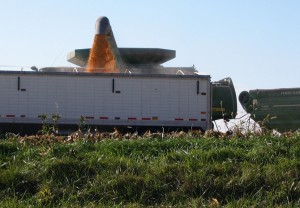
While I drove through the countryside on my way back to Lafayette on Monday, I passed field after field of corn and beans, some harvested, some not, about half and half.  Seeing those scenes put me right back at home, especially the corn fields.  Here’s a field near Peru, Indiana with the combine spilling corn into a tractor trailer for transport either to a corn bin, grain dryer or even straight to the grain elevators, all depending on the price and moisture content of the corn.

Indiana is no longer home, Minnesota is, but Indiana has a large section of my heart, the chamber of childhood and early young adulthood, a room full of corn fields, basketball, small towns, a baby sister and brother, county fairs and James Whitcomb Riley poems.  I was glad to be there the last few days and to walk again in the part of my heart filled there so long ago.

We move now toward Samhain, Summer’s End.  Blessed be.

Reentry

Fall                                             Waning Back to School Moon

Reentry.  Always a challenge after the sweet thrills of no immediate domestic or work related responsibilities.  Up early, fed the dogs, got ready for my appointment with Leslie.

We had a good meeting, discussing UU ecclesiology (if there is such a thing), leadership and being cast in the role of minister.  Lots of good stuff for the future.

Back home, nap.  Afterward, I got started on TV programs I missed.  A few to go, but I’ll get those as time goes on.

I have pink daffodils to plant, bees to treat for mites and check on syrup.  A baroque tour to plan.  Lindquest and Vennum in a corporate evening Friday night and this time I start Latin for sure on Friday.  Plus I have a meeting with a member of the Minnesota House on Friday to discuss some legislation for 2011.  Talk about stepping right back into it.

Quite a Yarn

Fall                                Waning Back to School Moon

October 5th, 2010 Union Station, Chicago, Room 4, Car 0730

Last night I found a Korean restaurant just off State Street in Lafayette. I ordered the Duk Man Guk, a spicy soup with egg, pot stickers, seasoned beef and sliced rice balls. After a quick glance over to t he young woman across the way who looked Korean and had ordered the same thing, I used the long spoon. The owner brought me another dish of kimchee after I finished off the first one fast. She seemed pleased I liked it. There were only Asian students eating there, just off the Purdue campus.

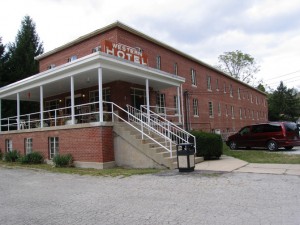
The Hilton Garden Inn had nowhere near the character of the Western Hotel at Camp Chesterfield, but it did have an internet connection. I finished some work I had to stop when I moved into the 19th century over the weekend.

This morning it was up at 6:30 am, shower, pack and walk across the pedestrian bridge over the Wabash to the Amtrak section just at its end. A lovely slice of Back to School moon hung in the dark blue sky while we huddled together in the morning coolness waiting for the train to come around the bend. A young man of 2 or 3 years screamed and hollered. He did not want to go on the train. His mom said he thought it was too big.

It wasn’t.

Three hours later we rolled into Union Station. Backwards. Don’t know why.2010-10-05_0323

Wandered around Chicago for a while, just looking, admiring building facades, enjoying the skyscrapers, blending in with the busy and the distracted. I decided to head down to Printer’s Row, the South Loop, hoping I could pick up a jazz related gift for 88.5 listening wife. There are jazz joints down there. No joy. All closed up at 10:45.

Having missed breakfast I went into an Italian restaurant and had an early lunch.

After lunch I discovered a fancy yarn shop and found a good gift for Kate. She’s a textiles and yarn artist, so I bought her some merino wool yarn. It’s a beautiful multi-colored pattern, 1800 feet worth. Seems like a lot to me.

Back to the Metropolitan Lounge in Union Station and now on the train.  Heading north.

A Life in Ruins: Part II

Fall                                    Waning Back to School Moon

When I visited Angkor in 2005, I wrote a piece for my Pilgrimage series entitled, A Life in Ruins.  Ephesus, Delphi, Delos,Rome. Pompeii, numerous civil war battlefields and Attuthya are among the many ruins I’ve visited, trying to piece together from blocks of stone, information plaques and Blue Guides their meaning and significance. At Knossos I wondered what it felt like to be in the labyrinth of rooms that made up what entered legend as the habitation of the Minotaur.  At Delos I imagined what the birth of Apollo and Diana was like.

Given that history, amazing is an understatement when I discovered my actual life had become a site with ruins, not one, but many.  In my hometown of Alexandria the first factory in which I2010-10-02_0396 worked, Johns-Manville has nothing left but concrete coated pillars and a loading dock.  I worked as a receiving clerk the summer I was there, so I knew exactly what went on there when the trains loaded with coak and limestone rolled onto the factory grounds.
That was the first, but far from the last.  The old High School, my middle school, gone.  Tomlinson, my first elementary school. Gone.  Most of the businesses of my youth, abandoned shells.  This is only in Alex.  In Anderson the mighty General Motors Guide  Lamp and Delco Remy, employers once of 25,000, gone.  Parking lots and concrete factory pads covering thousands of square feet and fenced in with tall chain link are all that remains.

If we had a magic button we could push, one that would light up the home’s lost among those 25,000, we would have a better estimate of the lives ruined along with these structures.  These are the missing elements at Ephesus, Rome, Delos.  What about the lives of the priests, the grounds keepers, the cooks, the sailors?  Like members of my class and their parents forces beyond their control eliminated the places where they earned their livings.  Places made sacred by the holy work of labor.  So much desecration.

These factories, these shops, these shuttered houses, these abandoned people are the friends and family with which I spent the weekend, real people, not statistics.  Never did I think that the mighty flood of cars bearing workers on Highway 9, no absurdly named Highway of Vice Presidents, would dry up.  Never did I think that the vibrant small town of my youth with its mens store, its womens store, two variety stores, two pharmacies, a bakery, two theatres, bars and banks and service stations would fade away only to be replaced by dollar stores and wholesale outlets.

So this weekend, an affair of the heart most of all, a reconnecting with those who lived then, only underscores the pain.  I will never visit a new ruin again with the same detached attitude.  Real people lived there;  real people suffered.

Camp Chesterfield: Blessing of the Animals

Western Hotel, Camp Chesterfield, 8 pm.

This was my day to poke around here at Camp Chesterfield, the reunion over and a day remaining on my stay in the Western Hotel. I picked a poor day. Instead of the usual worship services held today thee was a blessing of the animals. Before that I went back to the gift shop, which has an unusual collection of books and items for sale.2010-10-03_0378

Footfalls on the Boundary of Another World, by Robert Dale Owen seemed the most substantial work on spiritualism, so I picked up a copy. Written in 1860, a California outfit named Health Research has produced a facsimile edition. Most of the works on spiritualism were from the late 19th or early 20th century, the prevailing zeitgeist here at this 124 year old Spiritualist center. It will make for interesting reading.

I looked through many other books, including a series by Alice (?) that fills a bookshelf. A couple of the books interested me: White Magic and Esoteric Knowledge (actually 6 separate volumes), but at $27 or so a copy, I decided to pass. Besides, the book store plans to go online next month, so I’ll have access there whatever titles I want. Most of the ones that intrigued me were by presses I suspect even Amazon doesn’t carry.

Why do they intrigue me you might well ask. In part because this small subculture has shown durability over the centuries, persisting and now beginning, it seems, to thrive again. They tap into the universal hope that something persists after death, that death is not final, rather a transition to the Spirit world, or the non-physical plane. As a writer of fantasy novels, I like to use religious world views grounded in living or once living faith traditions. Not much has been done with Spiritualism and it carries such a strong overlay of Victorian and Edwardian sensibilities, that it makes a good setting for a novel.

As I made away across the grounds from the Western Hotel, the direction of transition in spiritualism, I passed a prayer grotto, a large marble angel, a setting of busts honoring creating of major faith traditions and a setting of concrete tables with two wooden chairs. These last I imagine were at one point the site of outdoor readings.

Just beyond the chairs and concrete tables was the cathedral. That’s what they call it. This is a rather modest cathedral, though it has two ranks of movie style seats and a large stage upon which a pulpit sits. The décor is simple, plain plaster, a couple of small stained glass windows and a statue of Jesus off stage right.

I began with a critical attitude. The nearly bald older woman in the flowery chiffon dress couldn’t pronounce Assissi or covenant, both coming out garbled at best. She also started the service with a CD of a 9/11 fireman singing God Bless America followed by the pledge of allegiance. Peculiar way to start a worship service unless in a militia camp. Then she read a brief bio of Francis, butchering the words yet again.

Once came she came down from behind the pulpit and discarded her professional persona for animal lover, the service got in synch. She loved each animal, from Great Danes to Italian Greyhounds and lively kitties to one brought forward in a roller bag because, as her own said, “She has severe arthritis.”

Our nearly bald celebrant said, “Well, I can identify with that.”

Animal after animal came down, got a sprinkling of holy water and a St. Francis medal and a dose of love. The celebrant assured us that the water and the medallions had been blessed by Fr. Justin. From a traditional theological perspective this was peculiar at best.

One of the Great Danes, almost as big as our Irish Wolfhounds, took it upon himself to lap noisily from the basin holding the holy water. A sanctified stomach.

As a couple of people came up with names of pets who had died, there were asked when the transition had occurred. They were then assured that St. Francis greeted each animals arrival, as did, in one case, another cat who had died—transitioned– in the last year. The grief and the joy which met all the animals or their owners who talked of loss was real and consoling and honoring.

Seeing the animals up there, participating in the service, made me realize how infrequently we give active attention to the sacredness of animals and the human-animal bond. This all felt more authentically spiritual than many services I’ve attended.

I shed a few tears for Hilo and Emma, both recently deceased—transitioned. It was an affecting time and one that convinced me of the sincerity of this unlettered woman who spoke of spirit and transitions.

I hope to get a Tarot card reading before I go, though because this is Sunday it seemed awkward to call people. I’ve got tomorrow morning yet.