
Spring New Shoulder Moon
 As one of Dr. Agronin’s youngest informants said, even when physical decline and losses restrict one’s options, there remains the capacity to appreciate and approach each day with a sense of purpose. “It’s all about how you frame what you have,” she told him.
He cites the concept of “positive aging” developed by Robert D. Hill, a psychologist in Salt Lake City, that is “affected by disease and disability, but not contingent upon avoiding it.” Rather, it is “a state of mind that is positive, optimistic, courageous, and able to adapt and cope in flexible ways with life’s changes.” Finding Meaning and Happiness in Old Age, NYT, March 20, 2018
The third phase of our lives, the one that we enter when career and creating a family have faded in importance, or ended, has a mental image for most of us past 65 of decline, of a gradual decrease of abilities and agency. This image comes from our childhood when retirement was predominantly of the finish line sort, work was over, now we wait. That waiting often wasn’t long with heart disease or stroke or a bad fall ending it.
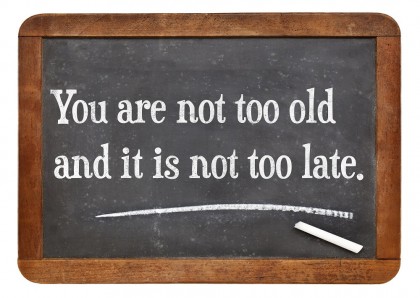
 Hopefully, our children, the millennials among them, will look at us and come to that phase of their lives with a different image. My hope is that they will see that aging is the accumulation of years, not a time of diminished hope and diffuse fear, but life continuing. If that image can become dominant, it will look like the diverse approaches people have to their first and second phases. In other words the third phase will have as many distinct trajectories as there are people who enter it. It will not be dormancy, or a pause before dying, but life itself.
Is the third phase the same, then, as the first two phases, just creakier? No. Like the first two, when education dominates, when building a career and raising a family dominates, it has its distinctiveness. Perhaps its most salient characteristic is open endedness. In the third phase there is, at least now, no culturally limned outline; perhaps that will change, I don’t know, but right now, thanks to the old finish line model of retirement, the third phase has no particular flavor. Or, perhaps, it has a negative flavor as I indicated above, of decline and loss of agency. Even that negative flavor though leaves the third phase open.
That very undefined nature daunts a lot of people. If your life counted on work for self-definition, if your family, with children or not, made your life worthwhile, the thought of years, maybe as many as 25 or thirty, with no such hooks for meaning can make the future look bleak, as if you were entering a time when life flows on around you, in spite of you, even without you.
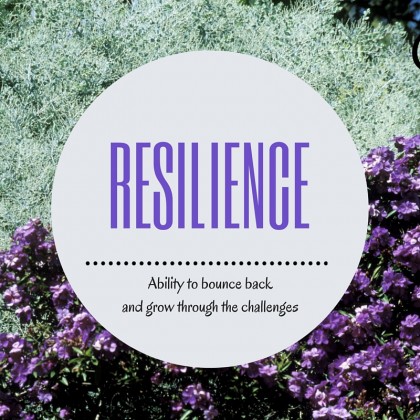
 I like Robert Hill’s definition of positive aging: (It’s) “affected by disease and disability, but not contingent upon avoiding it.” Rather, it is “a state of mind that is positive, optimistic, courageous, and able to adapt and cope in flexible ways with life’s changes.”
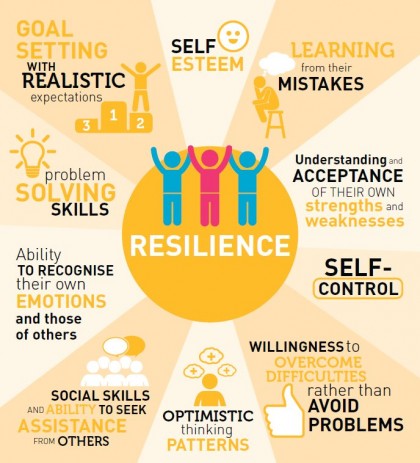
The idea of resilience has gotten a lot of play recently. My sense is that is key to positive aging.
A telling article on resilience in childhood from the Harvard Center for the Developing Child has some hints for us third phase folk. For instance, here are some factors that enhance resilience in children:
- facilitating supportive adult-child relationships;
- building a sense of self-efficacy and perceived control;
- providing opportunities to strengthen adaptive skills and self-regulatory capacities; and
- mobilizing sources of faith, hope, and cultural traditions.
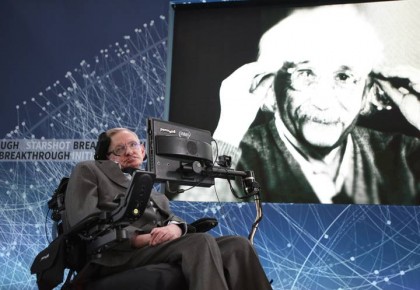
 Not only in children, I think. Resilience can allow us to accept the changes of the aging body without losing hold of the power of our own lives. With a resilient personality even ALS will not cause us to stop growing. Just look at Stephen Hawking.
As we enter the third phase, or as we cope with its vague demands, focusing on enhancing our resilience will help us adapt, remain flexible. Perhaps resilience is nothing more than following the tao, finding the energy and flow of the universe no matter what externalities are present in life. I’d like to think so.

 In a bit of nostalgia for me all the seats in the place were taken up by residents from a group home for the developmentally disabled. A young man with a plastic helmet to protect against seizures, another autistic young man davening and crying out, and four Down’s Syndrome young women. When I worked with the developmentally disabled, which I did from 1974 to 1980, taking clients out to places like the laundromat was a pleasant diversion, teaching independent living skills and being away from the residence.
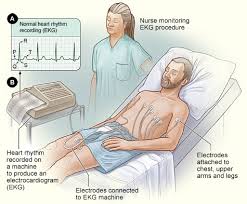 My physical was, at least so far (before lab results), unremarkable. Dull is my favorite medical term. Boring. Nothing happening here. My ekg was like last years. My blood pressure is low enough that Dr. Gidday wondered if I was over medicated. No, I said, I want to keep it low. All those strokes in the family of origin. O2 saturation fine, as it always is when I descend 3,600 feet to her office. Knee? Fine. Other knee? Surprisingly fine. Prostate? Still gone. PSA’s good. No hernia. Lungs and heart sound good. Still upright and moving.
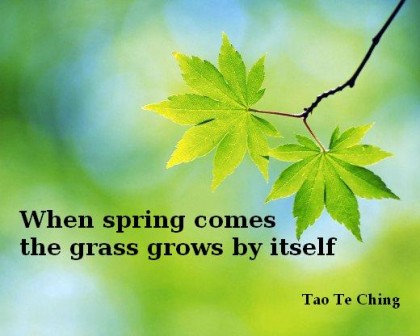 It is the tao of springtime reminding us that winter passes, too, as will all the difficulties; and, that even in the midst of a tough season, underneath is the movement of life itself, struggling to emerge, to take back the moment. All we need to do is follow its cues.
 Mentioned


 Sometimes. Well. So, the washer failed first, on Thursday. Then, a day or so later, the dishwasher. 1 Stop appliance, the folks who do Samsung repairs up here, only have two days in Conifer, Monday and Wednesday. Monday was full, so Wednesday. That’s the day before Kate’s surgery.
 Made corned beef and cabbage for dinner last night. Erin go bragh! When I decided to write novels, now long ago, Kate suggested I find an area that I could relate to. I chose my Celtic heritage, both Welsh and Irish. It is a fertile realm, filled with gods and goddesses, fairies and banshees, this world and the other world. Not so deep into it right now with one exception, the Great Wheel.
 Its sumi-e material material, though, was feeble compared to the hole in wall (by comparison), Red Herring. Meiningers’ selection of brushes were all cheap, beginner’s brushes. They did have a couple of Yasumoto inks that I bought, an Ultra Black and a Black Gold. I also picked up an Olfa knife to cut paper, from the kraft roll that came last week and from the rolls of rice paper I bought from Red Herring and Blue Heron, an online sumi-e store.

 The last letters of the Hebrew alphabet now have renderings in sumi-e, lying on my table ready for quotes and the chop. A member of Beth Evergreen last night referred to me as an artist. Oh. I thought he said audience. Artist is not a word I’ve ever associated with myself so my brain heard something else. A revealing moment. How others see us is not always, perhaps often, not the way we see ourselves.

 The new life moon, which hung in the sky during the Jewish month of Adar, gives way this evening to the new shoulder moon in the month of Nisan. On March 22nd, under a waxing new shoulder moon, Kate will meetup again with Dr. David Schneider, this time at Ortho Colorado, the same hospital where Dr. William Peace put in my new knee. If all goes well, her new shoulder will be in place that day and she will return home on Friday to begin six weeks or so of recuperation.
 There is, as well, another factor. Beth Evergreen. Kate has a community that cares about her and will help us through her surgery and recovery if we need it. We probably won’t need help, but if we do, we know Beth Evergreen is there for us. For two folks living in a new place, with ties of forty years severed by leaving Minnesota, this is a huge comfort. Being part of a beloved community. A gift for which we are both grateful.
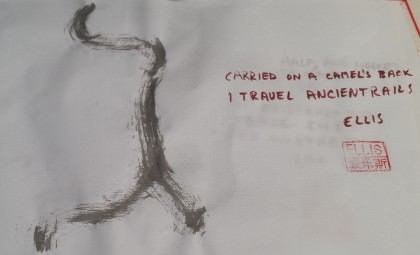 Under the New Life moon a new life has emerged, related to the old one, but different nonetheless. The trajectory and the distance of the change got a marker last night on the final evening of the kabbalah class on the mysticism of the Hebrew letters.
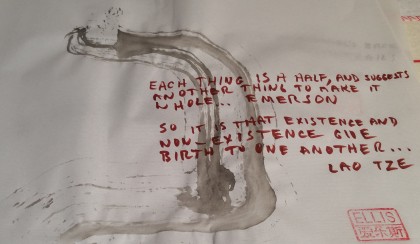 Too, under the new life moon I’ve become the regular dinner cook at our house, experimenting at times, at other times (mostly) using recipes, but enjoying myself immensely. Added to my long practice of working out, even that has a new flavor with the workouts every six weeks or so from On the Move Fitness, I’ve got tactile time each day. I’m using my hands and a non-verbal creative impulse.
 It is no accident, though in real time it was, that this period was also the time of the middot of joy. Joy and sadness are not enemies, rather they are a vital source of learning if we don’t suppress them. Steering away from grief, tamping down joy in favor of a false stability, a false calm defuses the opportunity our soul offers to us through these emotions. They signal the soul’s gladness, the soul’s mourning, both key to a depth appreciation of our journey.