A blur day. Somehow messed up my sleep, felt sleepy in the am. Napped in my chair, then went down to the bed for a nap. No sleep there. Of course. Ruth and Gabe came while Jon went to A-basin to ski. Ruth’s better but her throat’s still sore. Spent most of the day more or less tired or sleepy. No word on Rigel’s x-ray and blood work yet.
Mother’s Day, 2016
Jen had to leave Denver to collect the kids. It was her dinner night with them. She communicates with me, so I arranged it with her. She hasn’t driven to Conifer since Mother’s Day of 2016, just before the divorce storm broke over the Olson sky. She got to the driveway, turned her car around pointed toward Black Mountain Drive and waited on the kids to come out. I didn’t see her. Weird.
Finished off an excellent Netflix series, The Travelers, about visitors from centuries ahead of the 21st, as they call this century, trying to avoid a full on catastrophe in the distant future.
Nosedive
Also watched the third episode, Crocodile, in the 4th season of Black Mirror. This is a dystopian sci-fi anthology which has, some critics say, a marked Luddite tendency that doesn’t let up. That may be, but the show is prescient. For example, the first show of the 3rd season, Nosedive, has a near future culture where the ratings from social media determine life options. Look at the recent news about China’s social credit system which, though voluntary now, will become mandatory in 2020. It’s a broadening of the U.S. concept of the FICO score for financial credit to one that has immediate social implications for the individual, too.
The first show of this, the 4th season, U.S.S. Callister, critiques Trekkies and more significantly, gamer culture. Crocodile, which I just watched, is a cleverly constructed story that takes a while to show the implications of a “memory dredger” used to pull up memories as a tool for investigation. Spoiler alert: don’t buy a guinea pig. This material is entertaining, but in a very dark way, hence Black Mirror. Sort of my sweetspot.
I don’t know whether this is peak TV as some claim, suggesting that the money being pumped into new, innovative series and movies can’t be sustained over time, but it is definitely a golden moment for sci-fiction and fantasy. Battlestar Galactica. Lost Girl. The Travelers. The Magicians. All the various Marvel offerings. Black Mirror. Dr. Who continues, now with the first female Time Lord. True Blood. Game of Thrones. Handmaid’s Tale. Dark. All of these have high production values, are high concept and have excellent actors. As a very early fan of Marvel comics and a life long reader of science fiction, I can only say, yippee!
The nearly full moon lit up the snow outside our bedroom last night. Soothing, gentle. This one presides over the longest nights of the year.
Two of our females had imaging work yesterday. Rigel got an x-ray, looking again for cancer since she has continued to lose weight in spite of therapy for chronic hepatitis. She’s eight, old for a dog of her size. Her condition, whatever it is, caused me to roll back through the death of many of our dogs just before sleep. Sad. Grief is the price we pay for love.
Kate had a makeup c.t. scan since the one she had last week was not done according to protocols for pulmonary embolisms. It required a contrast dye. Like the first, no contrast scan, this one showed nothing new, nothing menacing. Dr. Gidday now wants her to do a stress test, checking for possible heart issues. Don’t know when that will be.
She also has an appointment in late January with an orthopedic surgeon to discuss her painful shoulders, investigating possible shoulder replacements. She takes all this with a calm spirit, not bringing doom into the present, rather waiting for information. Her quick intelligence and vast medical knowledge could make it otherwise. An impressive woman, my Kate.
Ruth’s tonsillectomy seems to be loosening its grip. On day 6 or so the scabs fall off as healing progresses. This can be, and was for her, painful. Yesterday evening though she texted that she’s ready for empanadas. A great sign.
We have a cookbook, Twelve Months of Monastery Soups, and I’ve been making soups out of it that Kate thinks sound good. She has a favorite, vermicelli soup, a vegetable soup with noodles. I made some for her last night.
I’ve decided to give Hebrew this month. I’ll work on it everyday and see if I can get myself back to a place where it’s at least enjoyable. Right now, it isn’t. If I can’t get there in a month, I’m gonna drop it. Banging my head against this particular wall isn’t worth it unless I enjoy it.
The full Moon of the Long Nights glows in the west this morning, roughly over Evergreen. Its gentle light blots out many stars, but makes up for that in its own silvery beauty.
The moon is a place alien to us in spite of its ubiquity. We see it most nights, know its facing terrain intimately, most of it visible through good binoculars. We’ve even sent a few humans to walk upon it, twelve all told, but that small number underscores rather than challenges its wildness. Even if humans settle on the moon, its surface will still be no place for unprotected human bodies. We were not made for that place even though it is our closest solar system neighbor. It is the first outpost of the wilderness, the strange and foreign place, that is everything else in the vastness of space.
There are still places on earth where we can experience wildness. High Country News, a magazine that focuses on issues effecting the contemporary West, has become a favorite read of mine; and, in its Christmas issue, featured an article by Outside writer and editor, Christopher Solomon, “In the Home of the Bear.”
Solomon recounts a visit to the McNeil River Sanctuary. He won a chance to visit this protected spot for the Alaskan brown bear in an annual lottery. The fairly long quote below has rattled around in my mind since I read it a week or so ago. It reveals, at least to me, a path we could walk to accomplish Thomas Berry’s Great Work for our time, creating a sustainable human presence on this planet, our home in the wildness of space.
The he in the first sentence is Larry Aumiller, a manager of the sanctuary for three decades. He “spent three decades studying how humans could live in harmony with Ursus arctos on the landscape.”
“…over time, he learned how humans and bears could reside together.
And what works? First of all, restraint — not bulling into the landscape. Bears don’t like surprises. Moving slow and being predictable are good starts. That’s why humans walk the same trails, about the same times every day, and in the same group size. Over decades of such long and careful practice, the bears here have learned to see humans as another presence on the landscape — neither the source of a meal, nor the cause of pain or fear. They are “neutrally habituated,” in the argot of this place…
Almost everywhere else, the ability for humans and bears to move easily among each other has been lost. What is different at McNeil is that humans don’t try to dominate. We listen. We adjust. We find out how it all fits together, and where we fit in. “Here we learn that we can live among the great bears,” Fair writes. “Here we learn the human behaviors that allow this.”” In the Home of the Bear, High Country News
Humans don’t try to dominate. We listen. We adjust. We find out how it all fits together, and where we fit in. Oh, what a wonderful world it would be…
The solstices mark swings to and from extremes, from the longest day to the longest night, there, and as with Bilbo, back again. Darkness and light are never steady in their presence. The earth always shifts in relation to the sun, gradually lengthening the days, then the nights.
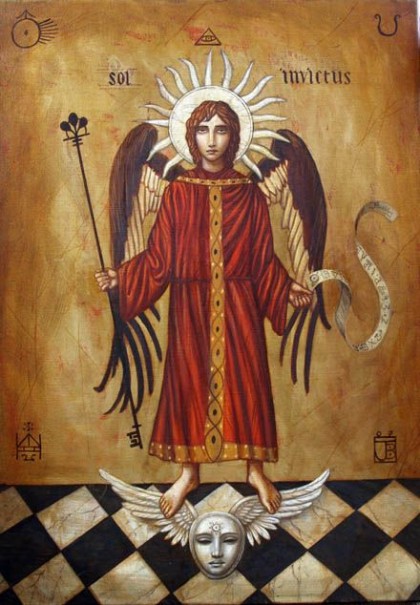
Most folks celebrate the Winter Solstice for its moment of change toward increasing light. Sol Invictus, the Roman sun god, added a martial spirit. The ancients feared that the nights would continue to grow in length, and act as a shroud thrown over the earth marking an end to growing seasons, to warmth, to life. It’s no wonder that relief at the return of the sun, revealed by small increases in the length of the day, caused holidays to be born around this subtle astronomical change.
There are also bonfires and songs and drinking and sex on the Summer Solstice. The sun manifests itself as light giver, light bringer, with the longest days. The growing season is well underway then, the miracle of life that the sun’s increasing light creates is the very relief anticipated on the Winter Solstice. Fear and the vanquishing of fear. Sol Invictus, the conquering sun.
Yet even in ancient times there had to be a few outliers like myself. We don’t begrudge the return of the sun, nor deny all the miracles that its return makes possible, that would be silly; but, for some psychic reason, perhaps not clear even to us, we reverse the common sensibility and find succor in the gradual lengthening of the nights that begins at the Summer Solstice and reaches its maximum on the night of the Winter Solstice.
We know that the cold and the darkness, the fallow time whose genesis each year happens on the longest day, is also necessary, also worthy of honor. It is earth’s sabbath, a time for all the generative powers to rest, to regather themselves, to ready themselves for the next florescence. I suspect somehow in our psyches we honor slight dips into depression or melancholy, knowing that in those times we regroup, rest the eager forward creative parts of our souls and the gradual lengthening of the darkness outside mirrors that.
In these long nights the cold often brings clear, cloudless skies. The wonderful Van Gogh quote that I posted a few days ago underscores a virtue of darkness, one we can experience waking or asleep. Dreaming takes us out of the rigors of day to day life and puts us in the realm where ideas and hopes gather. So, the lengthening of the nights increases our opportunity to experience dream time. Whether you believe in Jung’s collective unconscious or not-I do, the rich resources of dreaming are available to us with greater ease when the nights are long and the cold makes sleeping a joy.
It was, too, many years ago when I pushed the notion of transcendence out of my spirituality in favor of immanence, incarnation over a god in the sky. My focus moved to down and in, not up and out. Our inner world is a mystery, a place of fecundity, but also a place often occulted by the demands of the day. When we shift our focus to the night, to the half of the year when darkness grows, we can use that external change as a trigger to lean inside, to find the divine within. If we can make this discovery, the god that we are, we can stiff arm the notion that revelation stopped thousands of years ago.
each birth, always
Every moment of our existence is a revelation, the path of a god, the most fundamental ancientrail of all. No, we are not omnipotent, that’s an illusion created by the idea of transcendence, the need to find validation outside of our own soul. This is the true polytheism, the one that folds its hands, says namaste, bows to that of god in everyone, in every animal, in every plant and stone and star.
When you reach out in love to another person, to a dog, to a crocus blooming in the snow, you bring the finger held out by the white haired floating god in Michelangelo’s Sistine Chapel ceiling. That moment of creation is always, ongoing, a joint effort between and among us all, human and inhuman, animate and inanimate, the cosmic dance of Shiva brought into this mundane world. He or She is not out there, waiting to be called by prayer, but in here, waiting to be called by the quiet, by the joy, by the persistence held in the soul container that is you.
“We just heard on the news that it is colder in Minneapolis tonight than the Amundsen-Scott weather station in the South Pole. We are -4°; the South Pole is a balmy -1°. Sheesh.” Joann Bizek Platt, Facebook
Ah. In my world mechanical victories, no matter how small, are worthy of celebration. After a snowfall on Wednesday and Thursday, I decided to crank up the snowblower. It had not been started since the end of winter in 2016. My knee surgery coincided with the first few storms of the season last year. It wouldn’t start. Just cranked and cranked. Sigh.
I put gas stabilizer in it at the same time I changed the oil at the end of the 2016 season, so I thought it might just start. I was wrong. An old O2 cannula from Kate’s machine went into the gas tank, gas came out, flowing slowly into a red plastic gas can. Once I’d drained the old gas, in went the fresh gas. Punch the o.f. friendly electric start button. Voila!
The oil was a bit stiff and it took a few passes for things to get warmed up and used to the idea of having to go to work-hmm, sorta like me-but soon the snow flew out of the chute as the cub cadet and I wandered up and down the driveway. Now the driveway is clear and the solar snow shovel will finish off the rest.
Winter break continues. The identity crisis has passed as I knew it would. The crisis focused on my passive choices, taking the path of least resistance after college and I did do that, giving up my intentionality about career to a socialization experience with clergy-focused fellow students. But. Within that decision to just follow the education I had chosen as a way to get out of a dead end job and an unhappy marriage, I was intentional.
The threads that continued from high school through college, into seminary and afterward during my fifteen years in the church were three: a commitment to political action, a desire for spiritual growth, and a thirst for learning. These same threads continue today though political work has taken a diminished role to the other two. When I met Kate, writing became my chosen focus and added itself to the other three as life long pursuits.
My career, if that’s the right word, has involved expressing in whatever context I’ve found myself, a journey on four ancientrails: act, grow, learn, write. The container has not mattered. And, it still doesn’t. That was the piece I was missing the other day, a brief regression, a going back to pick up something lost. Found.
For my unconquerable soul.” William Ernest Henley, Invictus
astronomy today, formation of the moon
The Winter Solstice. Today and tonight. 23.4 degrees of tilt. Explanation for the tilt is not settled science though at least part of the answer seems to lie in the accretion of matter and the occasional outright collisions that occurred during our planets formation early in the history of the solar system. Another interesting theory, perhaps part of the answer too, is that any large imbalance, say a supervolcano with a huge mass, could have caused the earth to tilt so that mass ended up near the equator.
Whatever the exact reason, the current tilt, which remains constant as the earth revolves around the sun, creates our seasons. As the earth orbits, the tilt causes a reduction and increase of the energy of the sun’s light by either concentrating it during the summer solstice (leaning toward the sun) or by spreading the light over a wider area (leaning away from the sun) during the winter solstice. Today at 9:28 MST the northern hemisphere will be at its maximum tilt away from the sun while, of course, the southern hemisphere is thrust toward the sun and celebrating its summer solstice.
All of this is a continuing evolution caused by forces set in motion by the big bang over 13 billion years ago. The fact that I’m sitting at 8,800 feet on a chunk of rock thrust up by the Laramide orogeny, watching snow drift down as the air up here cools toward below zero temperatures, waiting for the longest night of the year, 14 hours and 39 minutes here in Conifer, showcases the violent origins and their ongoing impacts on earth and her sister planets. When we settle into the chair tonight, or hike outside with a headlamp, or listen to some quiet jazz or Holst’s The Planets, the darkness enveloping us is an in the moment result.
As the earth leans away from the sun, we can lean into the darkness, the long night when the woods are lovely, dark and deep. As we do, we have the opportunity to sink into the fecund darkness within us, a soul link with the darkness all around us and our tiny solar system. In it we can recall sleeping animals in their dens, beneath chilled lake waters, in their lodges made of sticks and branches. In the darkness we can rest a moment beneath the surface of the snow and cold covered soil where roots and microbes work feverishly transmitting nutrients and available water into plants slowed, but not killed by the seasonal temperatures.
In the darkness we can attend to the dark things within us, the places in our souls where our own origins and their ongoing impacts create a climate for our growth, down below the conscious considerations of our day-to-day lives. We can embrace this darkness, not as a thing to fear, but as a part of life, a necessary and fruitful part of life.
I’ll sit in my chair this evening as the night unfolds (I love that imagery.) and consider death, my death, my return to the woods, lovely dark and deep. And, I’ll hug close to my heart the life I’ve been given and this opportunity, granted by the stars, to meditate on it.
I’m having a crisis of sorts, it will pass and life will return to normal, probably later today, but right now I’m having an identity crisis. Remember those?
Here’s a Psychology Today article about identity. As I took the short quiz at the bottom, I had two achieved statuses, politics and gender roles, one moratorium status, career choice, and a difficult to assess religious status. This latter status, religion, is perhaps more achieved than my current feelings suggest since I’m deep into a context which challenges my commitment regularly.
I’ll bracket the religious question for this post since I do have a position, one I’ve established over many years of thought and with which I’m comfortable. I think the oscillation, tension there is reasonable to expect given my current immersion in Judaism.
The other moratorium status, career choice, is a different matter. It may seem odd to have a career choice moratorium* at 70, but it is so. Unlikely to change now, too. Having this realization again, (it’s not new) is the emotional side of this crisis.
I thought I had my life direction nailed down. College, graduate school. Some sort of professional career, perhaps lawyer, perhaps professor, perhaps something not visible from within the boundaries of an Alexandria, Indiana horizon. Then, my mom died. That threw my final year of high school into turmoil. God, this hurts just writing about it.
No one’s fault. A random event, but one with devastating emotional consequences for me. I hit my first year of college, just about a year after her death, with high hopes, probably even fantasies. I’d gone through GQ issues over the summer and picked out a navy blue blazer, charcoal pants, oxblood shoes and a madras sport coat. I had a vested herringbone suit from my junior year. These clothing choices symbolized my desire to become someone new at Wabash.
Most kids heading off for college, especially in the fifties and mid-1960’s, had a similar desire. Shape that adult self. Live into an adult role. The expectation was that college would provide room for exploration, trying on this and that persona, in effect researching skills and passions, until something coalesced. Then, earning money and work would merge into an expression of who you were. That’s why college was called then, the moratorium years. College was explicitly a time to be low on commitment, but high on exploration.
Didn’t happen for me, in terms of career. At Wabash I picked up three bad habits: drinking, smoking and self-doubt. The first two were fraternity based, lots of drinking and smoking. This was 1965, just before the emergence of the drug scene, so I was conventional in those choices. But, I was also an addictive personality so drinking and smoking would require much time and energy later to overcome.
Self-doubt happened in a way not uncommon, I imagine, for small town valedictorians. Wabash, at the time, was highly selective, only 200 in each class, all male and each bright, accomplished. I was not only not the smartest person in the room, I wasn’t even in the middle. Over time I imagine this would have sorted itself out, but I was too emotionally fragile, still grieving. My dad tried to understand, tried to be supportive, but I didn’t let him into my agony.
identity-cover socionic
And so began a pattern. I left Wabash the next year, putatively over financial issues though I had a partial scholarship, but really it was the combination of drinking and feeling overwhelmed by the academic demands. I did well enough, mostly A’s, except for German, which almost resulted in my first D or F until I dropped it, but my nights were spent in anxious dreams, waking up with sweaty palms. I didn’t fit in. I hated the fraternity, but had no choice except to be in one due to odd Wabash rules for freshmen.
In 1966, a time of tumultuous change in the country, especially for college students and especially male, draft eligible college students, I chose, for reasons I don’t recall, to go to Ball State. It was close to home. That may have been the reason.
In another odd circumstance my love affair with philosophy, begun at Wabash, found me only a few credits shy of a major after four semester long philosophy courses I took in my freshmen year. That meant I could take a couple of philosophy classes, secure my major and move onto something else. Anthropology.
I loved anthropology, too. Enough, it seemed, to make it a career. I combined my interest in philosophy and decided to enter the narrow field of theoretical anthropology, thinking about how anthropology works, how it could work, how it should work. That turned out to be a mistake and one I didn’t recover from. I applied to, and was accepted, at Brandeis and Rice, for graduate programs. But because my field was theoretical anthropology, I got no financial awards. That meant I needed a fellowship and I was nominated for a Danforth. In the end though, the end of college and of a political career based on radical politics at Ball State, I chose to do nothing. Just. Nothing.
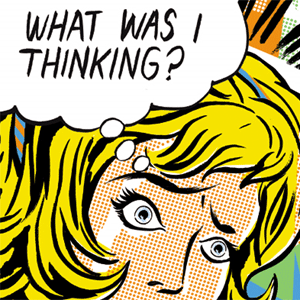
Judy came into my life right at that point. A someone. Another mistake. For both of us. I did end up in Appleton, Wisconsin with her, moving there after a disastrous few months as a manager trainee for W.T. Grant and Company. What was I thinking?
This question, relevant to career, would become synonymous with my choices, one after the other. Seminary. I stayed in and got ordained. WWIT? I worked as an administrator. WWIT? I became a church executive. WWIT? I left the church to write. In this case I knew what I was thinking, but never got all the way there as a writer so, WWIT? For a moment I went back to the ministry as a UU. I was serious enough to intern at a UU church in St. Paul where I agreed to be the development minister. In this case, a really, really big WWIT?
And so, here I am at 70, no career I really chose except writing and that one I couldn’t have sustained had it not been for the grace and love of Kate. There’s my identity crisis. Who have I been? What have I wanted to do with my life? Late in the game to ask these questions though to be honest they’ve surfaced right along since Wabash.
I could use help reframing all this. It’s not like I’ve drifted through life, doing nothing at all. I just never wrapped it up in a social role to which I felt like I truly belonged. Don’t know what that makes me at this point in my life. In a sense the third phase is the point when this question ceases to matter. That particular race finished a while ago and I’ve come into the pits. No more laps. Yet. What does, what did it all mean? I really don’t know at this point.
In yet another sense, and one I fully support with most of my being (ha), the answer doesn’t matter. I’ve lived. I’ve loved. I’m still doing both. The essentials. And, enough. I know. I know.
Yet the question lingers. What did I do?
“People high on exploration but low on commitment are in a category that Marcia called “moratorium.” This means that they have placed a hold on making the major decisions in their lives. They’re thinking hard about what they want to do but aren’t ready to commit.” from the article linked to above.


 We have a cookbook, Twelve Months of Monastery Soups, and I’ve been making soups out of it that Kate thinks sound good. She has a favorite, vermicelli soup, a vegetable soup with noodles. I made some for her last night.
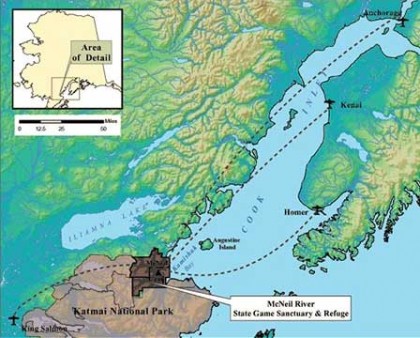 Solomon recounts a visit to the McNeil River Sanctuary. He won a chance to visit this protected spot for the Alaskan brown bear in an annual lottery. The fairly long quote below has rattled around in my mind since I read it a week or so ago. It reveals, at least to me, a path we could walk to accomplish Thomas Berry’s Great Work for our time, creating a sustainable human presence on this planet, our home in the wildness of space.
 The solstices mark swings to and from extremes, from the longest day to the longest night, there, and as with Bilbo, back again. Darkness and light are never steady in their presence. The earth always shifts in relation to the sun, gradually lengthening the days, then the nights.
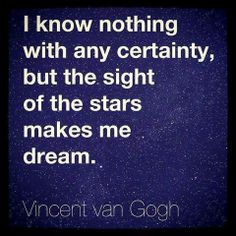 In these long nights the cold often brings clear, cloudless skies. The wonderful Van Gogh quote that I posted a few days ago underscores a virtue of darkness, one we can experience waking or asleep. Dreaming takes us out of the rigors of day to day life and puts us in the realm where ideas and hopes gather. So, the lengthening of the nights increases our opportunity to experience dream time. Whether you believe in Jung’s collective unconscious or not-I do, the rich resources of dreaming are available to us with greater ease when the nights are long and the cold makes sleeping a joy.
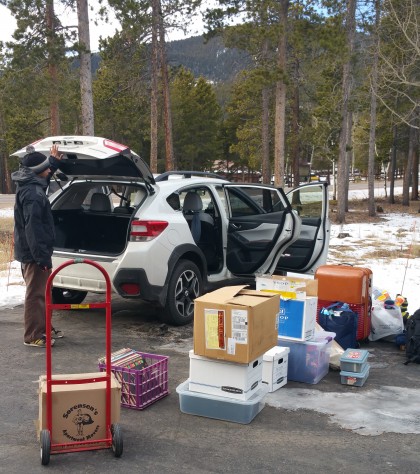
 Ah. In my world mechanical victories, no matter how small, are worthy of celebration. After a snowfall on Wednesday and Thursday, I decided to crank up the snowblower. It had not been started since the end of winter in 2016. My knee surgery coincided with the first few storms of the season last year. It wouldn’t start. Just cranked and cranked. Sigh.
 Winter break continues. The identity crisis has passed as I knew it would. The crisis focused on my passive choices, taking the path of least resistance after college and I did do that, giving up my intentionality about career to a socialization experience with clergy-focused fellow students. But. Within that decision to just follow the education I had chosen as a way to get out of a dead end job and an unhappy marriage, I was intentional.

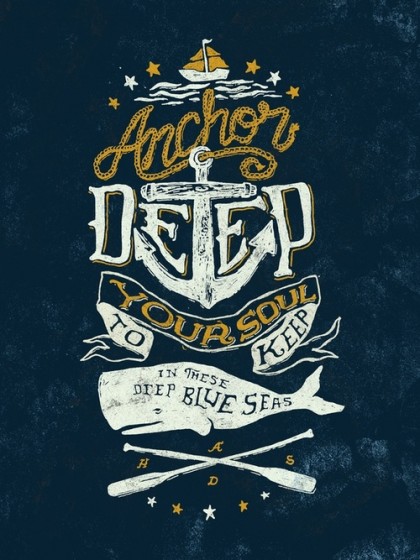 In the darkness we can attend to the dark things within us, the places in our souls where our own origins and their ongoing impacts create a climate for our growth, down below the conscious considerations of our day-to-day lives. We can embrace this darkness, not as a thing to fear, but as a part of life, a necessary and fruitful part of life.
 I thought I had my life direction nailed down. College, graduate school. Some sort of professional career, perhaps lawyer, perhaps professor, perhaps something not visible from within the boundaries of an Alexandria, Indiana horizon. Then, my mom died. That threw my final year of high school into turmoil. God, this hurts just writing about it.
 Most kids heading off for college, especially in the fifties and mid-1960’s, had a similar desire. Shape that adult self. Live into an adult role. The expectation was that college would provide room for exploration, trying on this and that persona, in effect researching skills and passions, until something coalesced. Then, earning money and work would merge into an expression of who you were. That’s why college was called then, the moratorium years. College was explicitly a time to be low on commitment, but high on exploration.
 I loved anthropology, too. Enough, it seemed, to make it a career. I combined my interest in philosophy and decided to enter the narrow field of theoretical anthropology, thinking about how anthropology works, how it could work, how it should work. That turned out to be a mistake and one I didn’t recover from. I applied to, and was accepted, at Brandeis and Rice, for graduate programs. But because my field was theoretical anthropology, I got no financial awards. That meant I needed a fellowship and I was nominated for a Danforth. In the end though, the end of college and of a political career based on radical politics at Ball State, I chose to do nothing. Just. Nothing.
 And so, here I am at 70, no career I really chose except writing and that one I couldn’t have sustained had it not been for the grace and love of Kate. There’s my identity crisis. Who have I been? What have I wanted to do with my life? Late in the game to ask these questions though to be honest they’ve surfaced right along since Wabash.