Beltane Woolly Mammoth Moon

We drove yesterday where others walked long ago. The drive from the visitor center at Mesa Verde to the Cliff Palace where we went on an hour long tour took a long while, maybe 30 minutes up an incline. The land at Mesa Verde slopes up at an angle with fingers of land separated by eroded valleys. At the end of these wide fingers the land slopes down again, gently. As a result, according to an exhibit at the Spruce Tree dwelling museum, Mesa Verde is not a mesa at all, but a cuesta. Mesa’s have sharp cliffs while cuesta’s slope, as they do here, toward the lower ground.

The route down to Cliff Palace (I’ll post pictures when I get back home) was the same one the cliff dwellers used, narrow steps cut into sandstone, augmented a bit by the occasional iron railing. There was, too, a ten foot ladder on the way down and two ten foot ladders on the way out which also followed a cliff dweller path. It would have been a fun place to grow up as a kid, scrambling up and down over rock and ladders, a more or less level surface above the home site where games could be played.
As at many sites where rock was a primary building material, the skill level was high with walls that were plumb, right angles, and a mortar that both bound the rock together and allowed water to seep through without loosening.

Mark asked an interesting question about wall coverings. These rocky appearing structures would have had several coats of plaster on them and would have been painted. That means they would have looked much different than they do now.
A ranger at the visitor center compared Mesa Verde to Giza and other World Heritage sites. When Tom asked him what was good about working there, “We get visitors from all over the world.” Another Ranger I talked to, Doug Crispin, had an obvious reverence for this Park. He was a first generation immigrant and said, “This is an American story. I’m honored to be here to share it.” He and I mused over a thousand years from now, “Will anyone be coming to look at the ruins of Durango? Probably not. But Mesa Verde will still be here.”
Right outside my hotel room is a small balcony with two chairs, a small table and a view of the Animas River. Had I been in this room on April 7th of 2015 the Animas would have been a sickly, mustard yellow thanks to the toxic spill from the Gold King Mine upstream from here. It’s clear now, with people kayaking, long boarding, even fishing, but it took a long time. Here’s a hardly reassuring couple of paragraphs from the Durango Herald, April of this year:

“San Juan Basin Public Health said water samples taken throughout the Animas River indicate there’s no risk to human or environmental health from normal use of the waterway.
However, the health department suggests people who come in contact with the river to wash with soap, keep a close watch on children who are more susceptible to unintentionally swallowing river water and treat water before consumption.”
Meanwhile, the 416 fire, from the same newspaper, an hour ago: “The 416 Fire hasn’t exhaled its last column of smoke yet, but steady rainfall Saturday did help tame the 16-day-old wildfire and allow firefighters to increase containment lines around the 34,161-acre blaze.”
 I slept last night with the patio door open, screen closed. I could hear the Animas, the river of souls, running. When I woke up this morning, it was raining. My ear was eager for the sound, found it soothing, familiar in a humid East, Midwestern way.
Being with Tom, Paul, and Mark has reminded us all of the depth our long time relationships has nurtured. We move together through the day easily, listening to each other, making decisions, continuing lines of thought, sparking new ones. One of Paul’s hopes is that this trip might encourage us to use a meeting app like Zoom to get together even while far apart physically. I’d like that and hope we can make it work, too.
Kate says the stump grinder got a lot done in 2 hours. I’m excited to see it. An outdoor room. Later we’ll have him back to do the front, leaving widely spaced trees with no stumps.
 Working on a second Aickmanesque short story. School Spirit is done though it can use editing. Working now on Main Street, a story inspired by Kaye Cox who, along with three of his friends, was decapitated by a sheet of iron that fell off a truck while he and his buddies were behind it. High school. I’m finding that writing with Alexandria in mind is a rich mine, lots of feelings, lots of stories. My current plan is to write at least 12 short stories, all in Aickman’s style, all based in Alexandria. Enough for a book. Jennie’s Dead is not done, but it’s still sitting there, throbbing away. I’ll get back to it at some point. It will call to me.
 Kate and I went out for the first time since her shoulder surgery, except for Beth Evergreen events. We went to the Center Stage venue in Evergreen to hear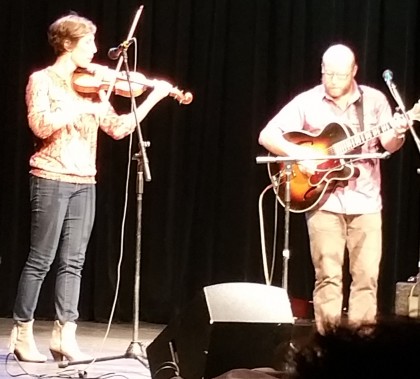
 Today is 4/20. In Colorado and elsewhere it’s a pot linked holiday and here’s a brief explanation of its strange origin.* A couple of years ago I was downtown Denver near the National Western Stockshow Grounds on April 20th. Driving to a small taqueria for lunch I passed hundreds of people walking along the road, smoking joints, smiling, lots of dreadlocks under Rastafarian knit saggy caps. Last year the 4/20 crowd made such a mess at a city park that Denver stopped the celebration for this year.
 Now Hitler is mostly a boogeyman, a perfect example of either evil or the potential power of white supremacy. His Nazi party serves a similar function, offered up in movies if an ultimate villain is needed. Just as the Vietnam War, which dominated my life in the late sixties and early seventies, has faded from the memory of millennials, so even the holocaust has begun to fade from memory. Yes, it’s dangerous to lose sight of this horror; but, it’s also human. As an event moves further away from us, it changes, transforms.
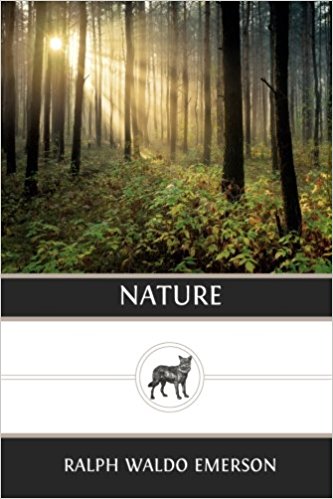 Emerson knew this. “The foregoing generations beheld God and nature face to face; we, through their eyes. Why should not we also enjoy an original relation to the universe? Why should not we have a poetry and philosophy of insight and not of tradition, and a religion by revelation to us, and not the history of theirs?” From the introduction to his essay, Nature.


 Mentioned


 As melancholy begins to lift, where does it go? Does it go back into memory, added to a store of melancholic episodes over a life time, each one different, unique, becoming part of the polyvalent stew that is our psyche? What triggers the end or, better, the gradual tailing off of doubt? Of the heaviness? Of the stasis? Where do all those moods and temporary inner states (and, they’re all temporary) go? Do they just float up into some neuronic cloud, then get washed away through the body’s toxic cleansing processes?
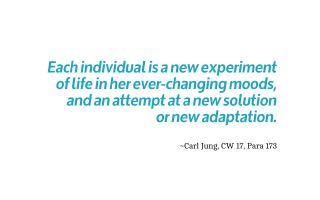 I’m not talking here about depression or anxiety or mania, serious and long lasting mental states; rather, I’m talking about fleeting, sometimes changing moment by moment, atmospherics. Joy. Sadness. Glad. Mad. Eager. Reluctant. Energized. Slow. Crisp or dull. They come and go like the lenticulars over Black Mountain or the high white mare’s tail cirrus. Sometimes they crowd our mind with the darkness of a thunder head or roar through us like a tornado. And then they go, pushed away by a high or low pressure system, perhaps a psychic La Nina.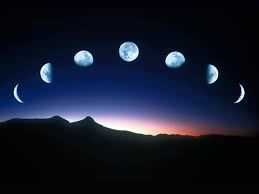
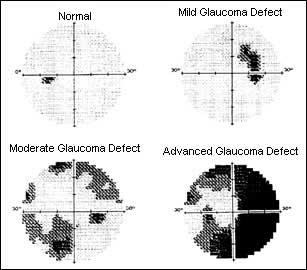 Glaucoma stable. Did a visual field exam yesterday, space invaders with a clicker and dots of light flashing off and on, testing peripheral vision.
 So. More flannels and plaids. Fleece vests. Another pair or two of blue jeans. Some new hat, though I don’t have a particular one in mind right now. There is a tiny part of me that relates to loggers, lumberjacks. Not the whole lumberjack look that spread out from Minnesota a few years back. That’s not still a thing, is it? But related to it. With all the chainsaw work I’ve done over my lifetime I feel I’ve earned some of that.
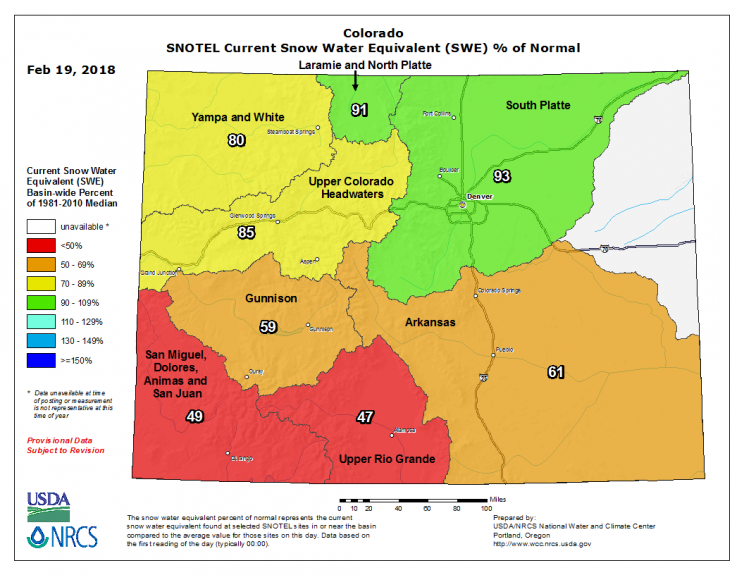 Wow. Weather station says the humidity outside is 66%. Inside 2%. Aridity is the norm, humidity a rare phenomenon here. Like most rarities it’s welcome. Most welcome.
 Life still trickling by. A bit of snow over the last few days, colder now, in the Colorado measure of that term. So relative. Saw a facebook meme with Texans in parkas at 70 degrees. Could have countered that with a Minnesotan in shorts at ten below. Meanwhile 11, last night, felt pretty cold after three years here. These gross physical acclimatizations are easy to spot, but what about the more subtle mental adjustments?
 This is all by way of becoming native to this place, a key element in my pagan creed borrowed from Wes Jackson at the
  Kate and I did it on the Great Anoka Sand Plain. Over the Andover years we listened to the soil, to the rhythms of the growing season. We stuck our hands in the soil, partnered with it. We planted trees and fruit bearing shrubs. There was the open prairie we cultivated on either sides of the more traditional suburban lawn carpet. Bees, with whom we partnered, for honey. Dogs who used the woods as their home and hunting ground. By the time we left we were native to that place. Its rhythms shaped our own and together we created a place to live.