
Lughnasa Harvest Moon
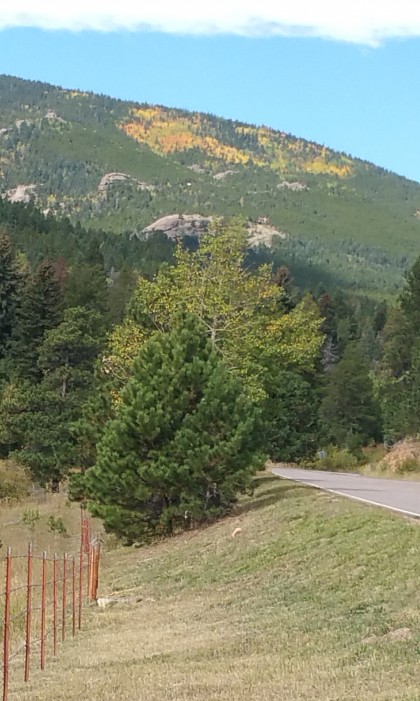
Tomorrow we peek over the transom toward the fallow season. Six more weeks of harvest, the heart of the harvest season is now, then Samain, summer’s end. Up here the temperature cooled off overnight and we’re at 35 degrees right now, getting close to a first frost. There’s even a small hint of snow for next Wednesday. As I wrote earlier, Pike’s Peak and the much closer Mt. Rosalie had snow last week. Happy with the change.
Deb Brown, my personal trainer at On the Move Fitness, really made me feel good yesterday. “You move better than most of the 30 & 40 year olds I see. And, you’re strong.” She was sincere and I was touched. I told her about the odd finding I got from the 23&me folks; I have the same genetic muscle profile as elite power athletes. “Well, you’re capitalizing on it.” “My wife said, ‘What happened?” “Tell to her to ask you that again when you’re 108!” We laughed. Left me smiling.
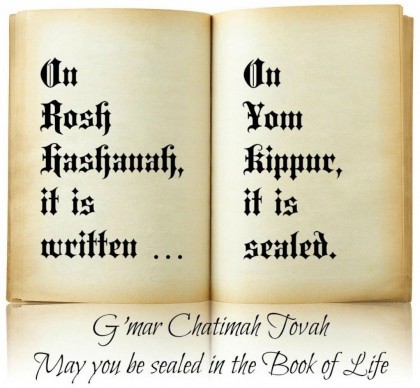 The book of life closed on Wednesday. It was a fast day, unusual in Judaism which finds asceticism puzzling, but on this day, once a year, there is a fast for the whole of Yom Kippur*. That’s from evening to evening. The point is to make us tune into our bodies, to remember that the body carries our soul, and to make the final push for teshuvah, return to the holy soul our body carries.
OK. I’ll admit I surprised myself, right here, with this keyboard. It happens, but not often like this. I wrote “make us tune in to our bodies.” Oh. It may be, as Bill Schmidt suggested obliquely earlier this month, that this Jewish experience runs deeper than I’m admitting.
*“The purpose of fasting is to bring one to repent, and true repentance brings about a change in actions. However, repenting without fasting is not enough,” Jewish educator Aliza Bulow explains on Aish.com.
Although there are medical exceptions to fasting, the Yom Kippur tradition dates back to biblical times, according to Chabad.org. When the Jewish people were wandering in the desert for 40 years after enslavement in Egypt, they worshiped a golden calf — which is contradictory to the religion’s monotheistic tenets — and Moses went to Mt. Sinai to ask for God’s forgiveness. Moses came down from the mountain after God forgave (them) him, and that day became known as Yom Kippur. The tradition of Yom Kippur continued when the Jews reached the land of Israel — Jews gathered in the first two temples until they were destroyed — and persisted again when they were ultimately exiled and dispersed across the globe.” Time
 Today is Yom Kippur, the day of atonement, the day when God seals the book of life for another year. May you be inscribed in the book of life (for the coming year) is a greeting we will hear today. It completes the ten days of awe that began back on September 9th, Rosh Hashanah, New Year’s day and by rabbinic logic the 6th day of creation, the New Year for humans.
 Kate and I had a sweet moment, a grace filled moment, when I sat down with her and asked her forgiveness for the times I’ve wounded her in the last year, for the times I’d been short, thoughtless. Sure, we could do this at any time, but these holidays encourage it. We rested our heads together, aware of the reality that we’re just two folks traveling our journey, doing the best we can. “I’ve not always been at my best.” “Neither have I.”
 Lughnasa and the Harvest Moon. We are in the season of reaping what has been sown. From the first of August or so until Samain on October 31st gathering in is the main theme on the Great Wheel. The fall equinox, Mabon, is near. September 22nd. It comes with the Harvest Moon, that fluke of planetary dynamics that has lit up farm fields at just the right moment for as long humans have been farming.
 The Great Wheel turns, but its turning is the original local expressing a universal. Here the golden aspen in the Midwest the great harvest machines lumbering through fields. In the Midwest stunning colors here a dichromatic palette. How the harvest season manifests depends on weather and here in the Rockies altitude. Pikes Peak and Mt. Rosalie near Bailey, for instance, have already had their first snow, passing out of the harvest season.


 Got that old debil feeling in this mix. You know. What I have done with my life? Here I am 71 years old, with much less time. Much less time to do whatever it is that floats like a dark cloud out of reach. Too little discipline. Too much fear. Too little desire. Too much distraction. Oh, look, a new book! A movie. TV. Yet this has been my life. Always. Work hard, rest, work hard again, rest.
 Happy medical people. “Everything looks good. We didn’t find any problems!” Sounds good, right? Well, we’ve reached the odd juncture with Kate where these are not the exclamations we want to hear. We want to hear, “Ah, so this is what causes the nausea.” Yesterday’s endoscopy was yet another “positive” result. So frustrating. Another test in the near future, looking for something in the liver, gallbladder area.
 It seems to me that the more important issue with gossip is judgment. When gossip spreads a negative judgment about another, another who is not present to contest the judgment, then it becomes serious and harmful. The old cliche says it well, “If you can’t say anything nice about someone, don’t say anything.” I did show up late to the class, so I missed the early part of the discussion.
 Tomorrow, in our second religious school class, this one unscripted by Moving Traditions, we’re going to do a get to know each other exercise. Your life in 5 objects. Taking my cue from the American History in 101 Objects display at the Smithsonian, I’ll start with my own five objects: a newspaper, a globe, artemis honey and apples, great wheel, family picture.
 Kate and I went in early yesterday morning to help prepare the board’s luncheon for those attending the Rosh Hashanah service. I peeled laser cut lox off salmon fillets while Kate put schmeer on tiny bagels. The lox went on the bagels. Lois and Fran were making egg salad bagels. We set up water, lemonade, coffee stations, put out trays of cookies, dressed round tables with flowers, cutup fruit and vegetables. A platter with sliced apples and honey is traditional for Rosh Hashanah, dipping an apple in honey is symbolic of a wish for a sweet new year.
 As the moon’s change, so does the Jewish calendar. We’re now in the month of Tishrei, its first day, Rosh Hashanah, the new year of the world. All over the world, throughout the diaspora and in Israel, Jews will be celebrating the new year, shana tovah. This is short for l’shana tova tikateyvu, “May you be written [in the Book of Life*] for a good year.”
 I thought about two boys of a man I know. I pictured them both, slovenly and overweight, and thought, what went wrong with them? I had added to those two judgments an assumption that they were lazy, had not fulfilled whatever potential their father, a successful and kind man, hoped for. Since I don’t know either of them, it’s obvious this reaction said more about me than about them.


 Like Charlie H. in the Woollies, this person threatened to leave the group. It struck me that both used their own intransigence and subsequent reaction to it as a means of manipulating the group into reinforcing their willingness to include them. I feel extorted in those situations, like I have to simply roll over and say, oh, please stay. In Charlie’s case I would not have done it, had I been in the Twin Cities and able to face the daily consequences of defying him. In the mussar group instance I only held my hand up half way when asked if we wanted this person to remain in the group. I felt similarly manipulated, but did not feel my cohesion with the group quite strong enough to withstand outright defiance.
 It was the kickoff event last night for the religious school and it was well attended. Each kid came with one or both parents. Usual glitches. Somebody forgot to order food. Solution: Dominoes. I forgot the beachballs. Solution: listen. Facilitation was by committee. Alan did the introduction. Jen Kraft, the regional person from Moving Traditions, spoke about the development of the curriculum. Jamie facilitated a piece about what the sages thought was appropriate for ages from 5 to 100. Tara facilitated a group exercise in which adults and kids called out descriptors for child, teen, adult.

 Getting back to five days a week exercise. Always feel better. Trying to regain my former high intensity workouts on the off days from resistance work. These workouts increase cardiac fitness, important especially in the mountains. In my case I do two five minute sets, varying speeds each minute from medium intensity (30 seconds), high intensity (20 seconds), and as fast as possible (10 seconds), with a two minute rest between them. I like high intensity because it’s effective and short in duration.
 Looked into stamina after last week’s exhausting day at CBE with Alan. Discovered that I’m doing, mostly, what can be done. The part I’d let drift away was the high intensity workout. So, I’ll return to that. But, the real message is that stamina decreases with age, even with good sleep, decent diet and exercise.
 I finally realized that a problem oriented therapeutic approach kept me trapped in a continuing circle of what’s wrong? What do I need to do? How can I change? In other words my life was always problematic. Like whack a mole for psychological issues. No relief, just unending work on what was wrong. What was wrong was me.
 Kate and I, I think, are at a similar cross roads. We need to accentuate the resources, the strengths that we each have, and they are considerable. Loss of stamina and chronic diseases (which we both have) are part of our lives, yes, but they are not our lives. Our lives are about sewing, quilting, the board at CBE, old friends, grandchildren, sons, our life together. They’re about writing and teaching and hiking and reading. About filling our days with purpose and love. Death is a certainty, but we don’t have to reach for it. It will come for us, in its own time. Until then, carpe diem!