Category Archives: Faith and Spirituality

TGIF

Spring                                                                             Rushing Waters Moon

Health south denver cardiology
South Denver Cardiology

Took Kate yesterday to her electro phys (pronounced, fizz) appointment. This one monitors her pacemaker. Unremarkable in terms of her health, really, since it hardly ever fires, but if necessary it’s there. What was interesting to me is the building. It looks like Valhalla for cardiologists. After that final operation, after that final payment on the Maui condo, after that last beat of their own hearts, cardiologists might gather in this Viking long house and feast on Sæhrímnir, the ever dying, ever resurrecting beast that feeds the fallen doctors of the heart. If such a final destination is anywhere, here near the Rockies seems appropriate. May they upcode in peace.

Max Bruckner (1836-1918), The Walhalla, backdrop for the scenic design of The Ring of the Nibelungs by Richard Wagner (1813-1883). Bayreuth, Richard-...
Max Bruckner (1836-1918), The Walhalla, backdrop for the scenic design of The Ring of the Nibelungs by Richard Wagner (1813-1883). Bayreuth, Richard-…

Afterward we went to Tony’s Market. I like Tony’s because you can spend a hundred dollars and still only have one bag to carry to the car. We’ve kicked our frequent eating out down two notches and do it at home now. We buy things at Tony’s like a tenderloin roast. Expensive? Yes. Compared to tenderloins at a steak house? Not at all. Tonight with asparagus, home cooked bread, boiled potatoes.

Kate’s much better. Her stamina has improved enough that we went to CBE last night for the Grateful Dead shabbat. Rabbi Jamie loves to perform and the CBE house band is better than good. Steve Posner on lead guitar rips it out. The harmonica player is wonderful. Drummer and bass ditto. Cheri Rubin, my friend Alan Rubin’s wife, an accomplished musician, plays the piano. She made a living in New Orleans before turning to reinsurance. Four singers, two men and two women, provided voice backup.

music dead bearsThis particular Grateful Dead shabbat, they occur occasionally, honored Leah, who recently left her position as synagogue administrator. She’s a Dead-head who sells tie dyed shirts and other craft items at Grateful Dead tribute concerts. She had a small shrine to the Dead over her desk. What was remarkable about this evening was that Leah’s leaving the job was not completely voluntary.

In a small community this could have been cause for bitterness or dissension. Instead folks got up and told Leah how much they appreciated her. Rabbi Jamie altered the words to a Dead song, changing the name of the woman in the song to Leah. She came up and sang with the two women in the backup group. It was delightful, charming, and altogether unlikely (in my experience of leave takings in churches that weren’t voluntary.). And, Leah responded by saying that she looked forward to getting back into the congregation, volunteering. Pretty damn amazing.

Legendary

Spring                                                                      Recovery Moon

IMG_0612

Tom Crane sent me this street poet’s work, found on Maui. I wrote him back after reading it and said we could go for an epic third phase. I meant legendary, but epic appeared anyhow. He wrote back, said he’d like that, too, but didn’t know how. I agreed. Beginner’s Mind, eh? We’d have to redefine epic, Tom replied. Yes.

And, we don’t want to get stuck in the success trap. That trap can consume the second phase, career and family, but it can be set aside in the third. So the question could be, what would a legendary third phase look like? Better than epic. Epic has that Hollywood feel, doesn’t it? Let’s forget I transmuted legendary into epic and go back to the poem.

Sadhu
Sadhu

What does an open spirit look like in the third phase? What risks might we take if we had one? What risks are particular to the third phase? To get an idea of where this might go, I looked up the Hindu sadhu. A sadhu intentionally creates a fourth phase of life.* Of course in a Minnesota winter like the last one the Jain option of wearing nothing would require modification unless the sadhu phase was to be short.

I wonder if other cultures have similar ideas? Don’t know. What I do take from the sadhu is that they have an open spirit, moving toward moksa means getting free from samsara, the worldly enmeshment that the second phase presses upon us with such vigor.

Part of a legendary third phase might involve letting go, leaving the old desires of life, shaped by education, work, and family behind. But, if they’re left behind we might be left wondering, what else is there? Those desires are the ones that motivated us, got us up in the morning, out the door coffee in hand, ready to do. The old finish line model of retirement pretended that this was as easy as buying a set of Pings, selling the house in Kenwood, and moving to a Del Webb village to drive, chip and putt. Or, head out to Margaritaville, collect umbrellas in the sand next to your beach chair. Doesn’t sound like a sadhu approach, does it?

Song dynasty
Song dynasty

Another image, similar to the sadhu, was the Chinese scholar who would retire from the bureaucratic life, paradigmatic of the second phase in that culture, and move into the mountains to write poetry and live amongst wildlife and forests. This is a Taoist vision, one that took over from the Confucian when either work was over or changes in the political life forced a scholar out of the court. I like this one a little better than the sadhu because I like clothes.

Wu wei: “a state of being in which our actions are…effortlessly in alignment with the ebb and flow of the elemental cycles of the natural world” is the Taoist principle these mountain hermits follow. And, a sound one, though as I’ve written before, I’m also a “take arms against a sea of troubles and by opposing end them” sort of guy. This may be the key attitude that prevents me from fully letting go of success, of my set of Pings, that beach chair.

I’m not talking here about monastics or hermits who take to those lives, as Thomas Merton did, in the midst of their second phase. These are escapist lives, profound in their way of course, but ones that set aside the second phase much earlier. What I want to consider is the legendary third phase possible after the more traditional transition from work and raising a family.

Look forward to any ideas you might have. This preliminary look suggests some things to me. Let go. Seek spiritual liberation. Attune life to the seasons, to the natural world. Live in some seclusion from the old, second phase world.


“The sādhu is solely dedicated to achieving mokṣa (liberation), the fourth and final aśrama (stage of life), through meditation and contemplation of Brahman. Sādhus often wear simple clothing, such saffron-coloured clothing in Hinduism, white or nothing in Jainism, symbolising their sannyāsa (renunciation of worldly possessions).” wiki


Ruach. Breath. Wind. Spirit.

Spring                                                                  Recovery Moon

breath ruachHead. Mostly clear. Lungs. Mostly clear. I’m beginning to feel the illness bidding me goodbye. So long, it was good to know ya. Nah, it wasn’t. And don’t come back, please.

Kate continues to show steady, if incremental, gains. She smiles more, laughs more. Until, that is, she opened the letter from Swedish Hospital advising us that our balance with them was $25,000. Oooff. Our insurance provider has not, for some reason, paid them. I get to chase that down today. Being sick in America. If the illness doesn’t get you, the debt collector will.

If we didn’t have resources, didn’t have enough education and chutzpah to front the insurance company about this, we might end up stuck with the bill. Kate’s experience since September has been long, invasive, and expensive. Without insurance we’d be eating away at our IRA. I don’t think this should be too hard to clear up; but the ominous nature of a letter like that creates an unpleasant frisson. To say the least.

I’m debating going to see my doc about o2 sats. They’re below normal, though not in a dangerous range. The high 80’s a good deal of the time. Normal is above 95, though above 90 nobody worries. Since we’ve gotten here, my sats have been around 90 most of the time. As Tom pointed out, we’ve lost 75% of our available oxygen just by being at 8,800 feet. That would make a normal reading 93 if I’m doing my math and physiology right.

breath in outI really don’t want to confuse Kate’s journey right now, especially since we see the same doc, so I may wait a bit, be sure the flight of respiratory illness I sampled over the last two months has actually ended. In time I would like to know if anything in my lungs compromises my breathing. It’s certainly possible. I smoked for 13 years. Not proud of it, but I did. I also worked in a couple of high particulate matter jobs in my younger days, cutting rags at a paper mill and moving completed asbestos ceiling tiles to pallets. And, Dad had severe asthma, using an inhaler virtually his whole life.

Ruach. The Hebrew word for breath, wind, and for spirit. The Greek word is pneuma. God breathed ruach into the lungs of Adam and he lived. Since the traditional test for death was holding a mirror or a hand up to the nostrils, no moisture on the mirror, no felt breath, it’s not a stretch to equate breath and breathing with life. No breath, no life. Many traditions, especially Hindu and Buddhist, have breathing related practices. So do the Sufi as my friend Debra Cope has taught me.

breath dive reflexWhat impedes breathing, impedes life itself. Impedes the spirit of all life that dwells within us. Like health breathing is unremarkable to most of us until its ease experiences an interruption. Water boarding, or extreme interrogation (not torture as our CIA likes to say), is horrific because it emulates drowning. Our body has reflexes built in, the diving reflex, for example, that protect us in the case of sudden immersion in water. This means that our DNA carries a history of dangers to our breathing.

The pulmonologist treats matters related to breathing. But the pulmonologist, no matter how skilled and learned, deals with the physical challenges to breathing, not the spiritual implications. No, that is up to us and our own way of understanding the body/mind/spirit links.

Breath jacob-wrestling-with-the-angelA breathing issue is not, then, solely the province of pulmonology. It is also the province of theology broadly understood. Theology, for me, is the way you identify, organize, and deal with matters of ultimate importance. Life itself is, of course, a matter of ultimate importance to an individual; therefore, life and how it is for us at any particular point is a directly theological matter. Breath, the spirit of life that fills our lungs, provides our cells with oxygen so that they can carry out the physiological functions that are life in the body, is also of ultimate importance.

Here’s a website devoted to breath meditation.* Note in the second sentence that prana, a Sanskrit word, means both breath and life. No breath. No life.

My journey right now forces me to investigate my breathing at both a physiological and a theological level. It’s all o.k., too. None of us get leave this ancientrail alive. Something takes our breath away. That something shows the fragile nature of even the most master of the universe sort of person. Right now I’m going to attend to my breathing, my o2 sats, the spirit and life they make possible within me. An ancientrail of the third phase, no doubt.


*Breath is the universal factor of life. We are born the first time we inspire, and we die the last time we expire. Breath is life itself. In Sanskrit the same word–prana–means both breath and life.

All that lives, breathes–even plants and the bacteria that make bread rise. The process of breath is identical in all, consisting of inhalation and exhalation. It is the most immaterial factor of our existence, being a link-manifestation of the mind/spirit that dwells in all. For this reason, the breath is the natural and logical basis for meditation, the attempt to “enter into life.” The breath is the key to the cultivation of pure consciousness.

The Velveteen Rabbit aspect of human identity

Spring                                                                            Recovery Moon

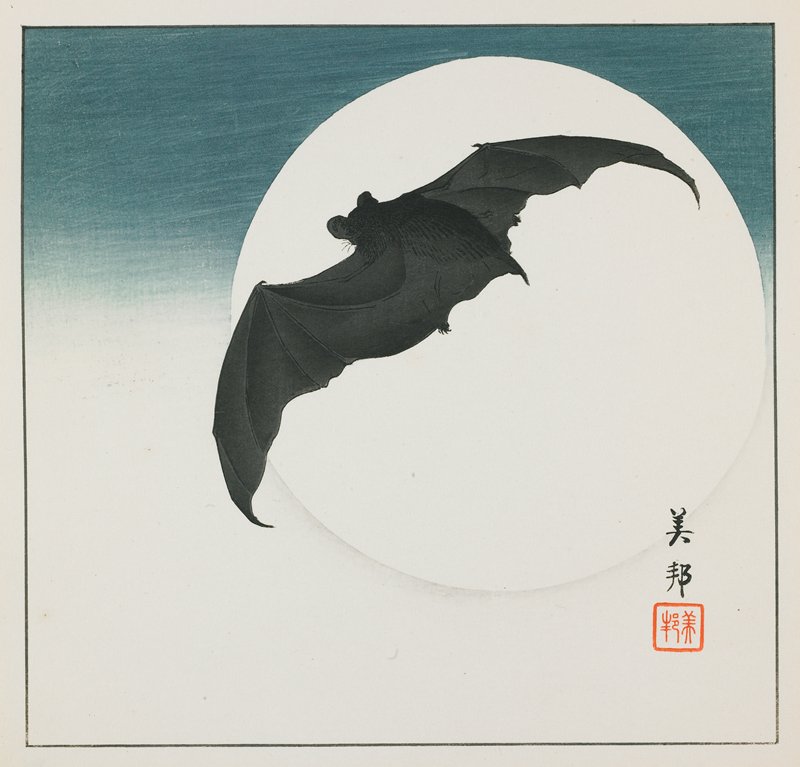
Bat and Moon, 1930s Takahashi Bihō. MIA
Bat and Moon, 1930s
Takahashi Bihō. MIA

The Recovery moon illuminates Black Mountain this morning. The ski runs carved out on the mountain are white strips reflecting back moon shine. A light breeze moves the lodgepoles and a thin dusting of snow covers the solar panels. Early spring in the Rockies.

Kate made a salad last night. We bumped into each other in our galley kitchen for the first time in months. She also tossed her friendship quilt from the Bailey Patchworkers into the washing machine. She’s beginning to emerge from a long time in the chrysalis of illness. Wow.

Since the recovery moon seems to find us both on the uptick, my doctor’s nurse called with lab results, actually a second call due to confusion there occasioned by a weeks long problem with their computer systems. The first call came when I was still pretty sick and I didn’t pay close attention. This time I did. My PSA has moved up from .o1 to .012. Doesn’t seem like much, but when your prostate’s gone, it’s supposed to stay at .1, which is effectively .0. A recurrence is defined, for those of us who had our prostate’s removed, when the PSA hits .2. Concerning, but not yet a problem. Further testing required.

Rabbi Jamie called last night, wondering how we were. We were both steady and frequent attenders of things at CBE up until Kate’s bleed on September 28th. I continued until my own illness which began in early February. Since then, I’ve only been back for the chicken soup cook-off. Our sudden disappearance from the synagogue’s life caused him to say last time he talked with Kate that the schul isn’t the same without us. Kate was on the board and I was teaching religious school. We both attended mussar on Thursdays. We went to services less frequently, but showed up at education and special events, too. We’ve woven ourselves into the fabric that is CBE.

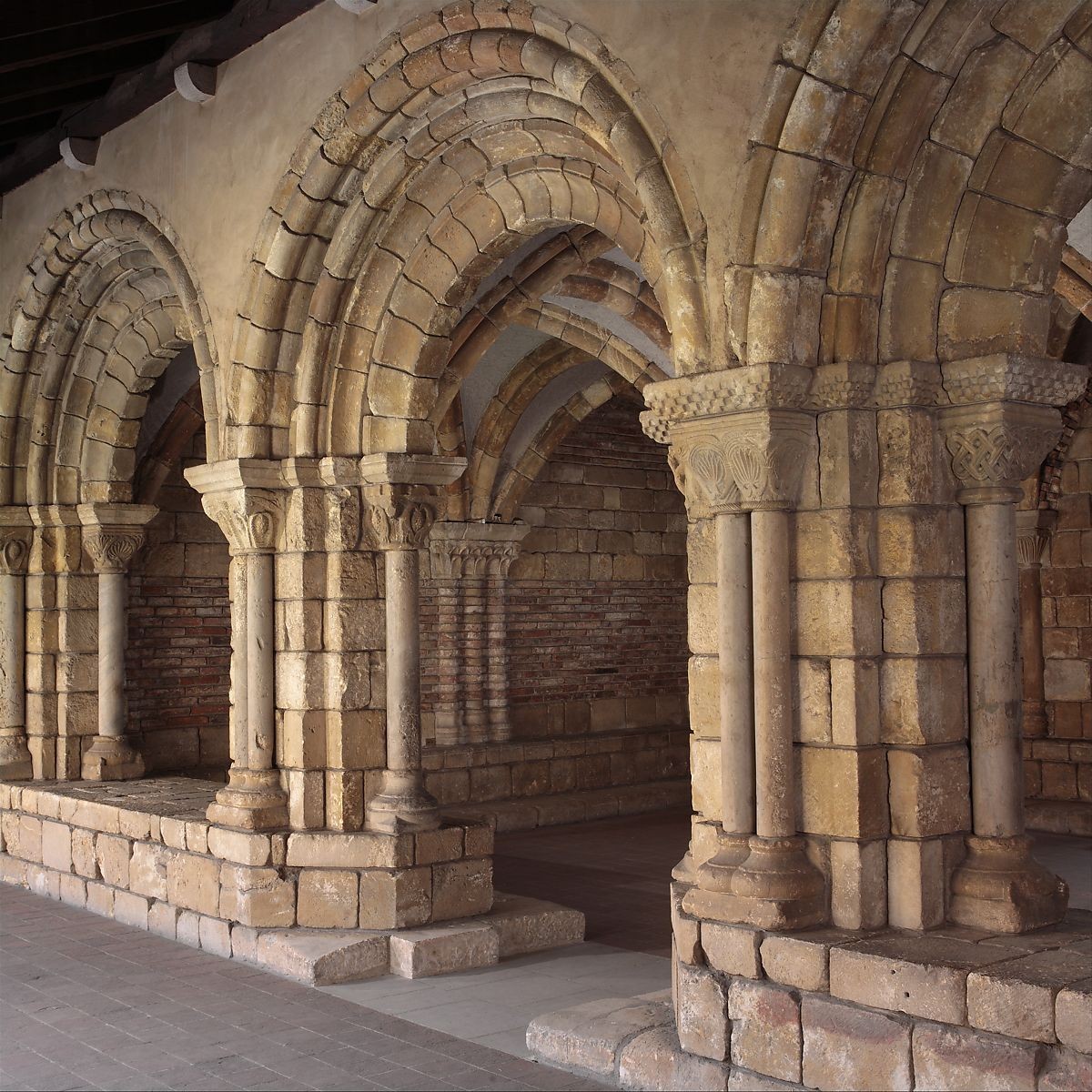
Chapter House from Notre-Dame-de-Pontaut,12th century French MMA

Community, like friendships, is reciprocal. You put your left foot in, then your right foot, then you shake it all about. With others doing the same thing. Over time we get to know each other, see each other, acknowledge each other. The line between thee and me is both more and less than we usually think. It’s more in that we don’t know our own selves well, our own depths eluding even the most introspective and life examining of us. How could others see into that, then? It’s less in that our perception of ourselves is constantly poked and prodded by interactions with others. In fact, much of our personhood gains definition as we sit down to coffee with someone, engage in critical thought, listen to music, sing with them. In community, in friendships, in family we become who we are.

At CBE, as with the Woolly’s, the docents, the political folks I’ve worked with, and our family, who I am has been in dialectical tension with both individuals and the collective. I’ve had to consider how Frank Broderick’s anti-Catholicism fits into my mostly positive assessment of religious life. I’ve offered ideas at CBE and had them put into action, changing myself and others in the process. As I got to know my fellow docents, I observed how they related to the art, to the art history we learned, to the museum visitors we guided on tours. And, how I was as a docent shaped itself in response.

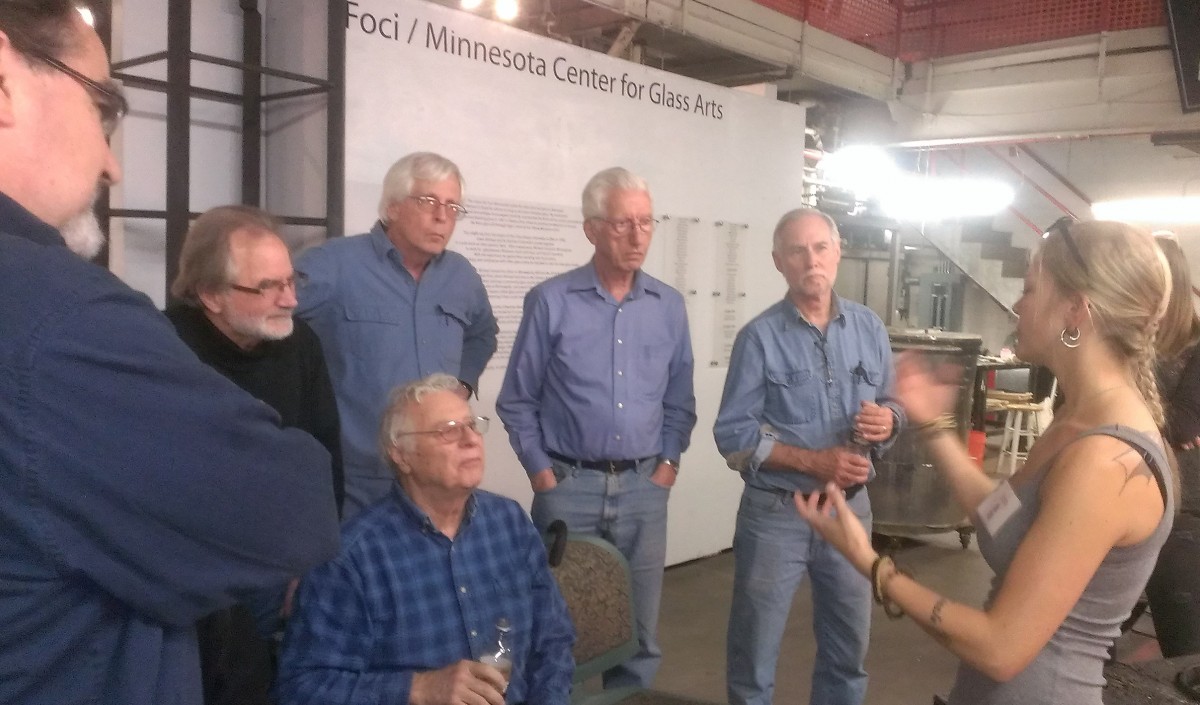
Woolly Mammoths instructed in glass blowing

In the instance of the Presbyterian ministry the two millennia plus history of Christianity was a body of thought and actions within which I had to find my particular place just like the thousands of year old history of art demanded I find a personal patch of ground on which to stand in relation to it. Both interactions shaped me and I, in turn, in small, individual ways reshaped both Christianity and the history of art. Not making a big, hubristic claim here, just observing that the dialectical tension affects both parties though not in equal ways.

This is, I suppose, the Velveteen Rabbit part of human identity formation. We rub ourselves up against people, animals, things and in the process we become real. And, we serve that same role for others. It’s an awesome responsibility. How do I, in my interactions, encourage the best in others? Or, do I? But that’s a question for another day.

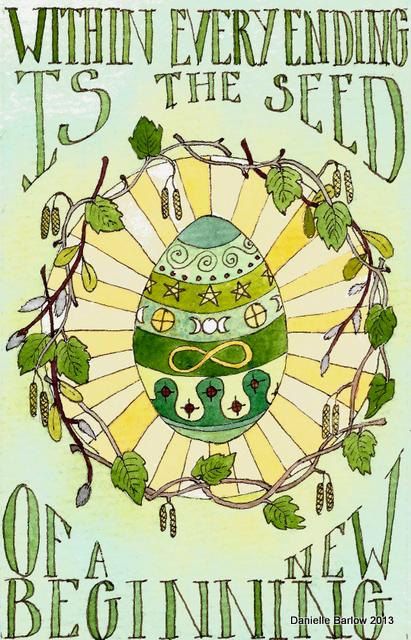
Spring, 2019

Spring!                                                                       Recovery Moon

ostaraA full recovery moon on the spring equinox. Lot of powerful juju in the air. The season that announces the return of life (except in Nebraska) begins as the moon swells into its most potent form. Of course, this is only meteorological spring, the date we agree on to name the season’s start, so you have to check local listings for time and channel. Here in the mountains spring’s another month away at least. Probably more like six weeks.
Minnesotans are both happy and wary about the coming of spring. It’s been a long, hard winter and to see it in the past will be welcome. As will be the warmth and color. But. There’s a lot of pent up water there, too, just like in Nebraska, water that will get released as the air grows warmer. Could be a major flooding year. The rivers in Nebraska have exceeded historic high water levels by feet. This is the new normal. Extremes.

We’ve got a string of 40+ degree days ahead, including a couple in the 50’s. Then, more snow. Colorado mountain living. As the melting begins here in earnest, Cub Creek, Blue Creek, Bear Creek, Maxwell Creek will all show their might, taking down the mountains from which they run, taking their stony surfaces and moving them toward the plains. It will take a while, but the creeks are patient and wait each year for the spring winds to melt the snow that has fallen and to melt the ice. They’re a wonder in the spring.

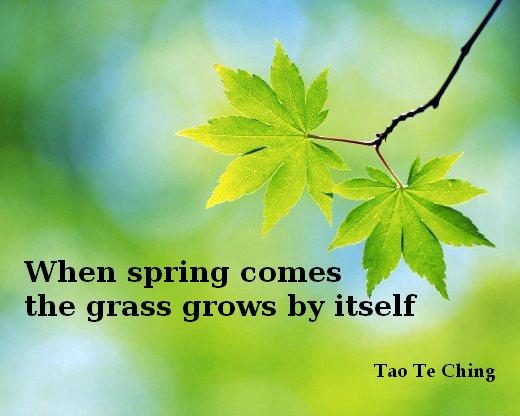
Tao4Alan Watts has a book I like a lot called The Water Course Way. It describes the tao as like water, going around obstacles, over obstacles, not stopping, going on its way regardless of what’s in its path, not troubling itself over temporary stoppages, boulders, canyons, even lakes. Soft wins over hard. The soft water slowly picks away at mountains of granite, basalt, gneiss and takes them a grain at a time, over centuries, millennia, eons back to the oceans.

I struggle with this. I’m more, as I think I said here recently, more of a take arms against a sea of troubles and by opposing end them sorta guy. An unreconstructed activist still clinging to the fever dreams of the 1960’s. Yet there is truth in the tao. Is it the only truth? Don’t think so. But in regard to Kate’s circumstances over the last year or so, it has taken a certain let the process work its way out attitude to survive it with our mental health intact. Had we been pushing, pushing all the time (which I am wont to do) then we would have harmed ourselves in the process of making her well. Not only not necessary, but harmful.

20180405_144305
April 5, 2018. Near CBE in Evergreen

Spring will come. The flowers and the grasses of the montane ecosystem will burst forth, bring us their ephemeral beauty. The creeks will run full down Shadow Mountain, down Conifer Mountain, down Black Mountain always gouging, prying at the very thing that created them. The lodgepole pines will green up, the aspens and willows along the creeks will leaf out. There will be mule deer fawns, elk calves, fox kits, bear cubs, mountain lion cubs. Skis and poles and boots will go in storage and rock climbing gear, bicycles, hiking boots come out.

This is our home now. And we don’t want to leave it. Still uncertain. Waiting for the tao to show us the right path.


Hail a New Creation

Imbolc                                                                         Valentine Moon

My life flows on in endless song;
above earth’s lamentation,
I catch the sweet, though far-off hymn
that hails a new creation.      “How can I keep from singing?”  Robert Lowry

When I opened this page, Robert Lowry’s hymn came to the surface. I could sing this verse with no pauses for personal editing. The rest of them? Not so much. But, no matter. This one has a powerful, here and now message and it came to me from my unconscious.

third phaseThe woes of the body, our lamentations here on Shadow Mountain, are of the tactile world, the one bound up in life and death; but, they are not of the soul, the spirit, the ohr, the imago dei. No. In my soul (a word I’ve come to use more freely of late, meaning that part of me that bows to the god in you, namaste.) I can hear the sweet, though often very far-off hymn. It hails a new creation coming into existence even now, one shaped by the lamentations, but not determined by them.

That new creation is a new sort of intimacy for Kate and me, one forged not in the upbeat, I did it, achievements of the family and career second phase, but in the existential reality of the third phase. In the third phase the body begins to let go of life, gradually, a bit here, a bit there. At the same time the fruits of a lifetime of meditation, awareness, thought, friendship ripens. The soul begins to unfold, ready.

Rudolf Steiner, the founder of Anthroposophy, said that September 29th, the Saint’s Day of the Archangel Michael, is the springtime of the soul. (odd coincidence. Kate’s bleed was on September 28th) What I’ve always liked about this idea is that it marks soul growth as occurring best in the fallow time. The fallow time, especially after Samain, Summer’s End, on October 31st, is that point when the growing season ends. An analogy to the third phase seems apt to me. The fallow time is a time for going within, going deep, finding nourishment in the eternal parts of ourselves, our soul.

That is what is happening for us. Our souls are flowering in the decay of the body. That flowering of the soul (I see a lotus.) is the new creation, perhaps not as far off as it seems.

Blessed be.


More Health Stuff.

Imbolc                                                                  Valentine Moon

Gradually getting more stamina. Felt good enough to go in and pick up Kate from Swedish yesterday afternoon.

She’s home now, again. Trying to imagine what this whole ordeal must be like from within her frame of reference. Difficult. So many procedures, hospital and doctor visits. So many different interventions. And the needle sticks. She has rotten veins and it often takes four, five times to put an iv in or draw blood. Sounds medieval.

Home health from Mt. Evans’ Home Health Care comes by today to hook up the tpn. They offered to come last night around 7, but Kate was too weary. A delivery guy from an outfit called Medspeed dropped off two thermo insulated white boxes and an ordinary cardboard one, supplies. We’re entering new territory here with home health care and medical apparatus on site on Shadow Mountain.

Kate has had an important insight. Now that she’s well hydrated through the tpn nutrition her dry mouth is much, much better. We need to figure out how to keep up that level of hydration for her. This is a big deal because the dry mouth makes eating difficult.

We see Edwin Smith on the 28th about placement of the feeding tube. He wanted her on the tpn to get her stronger. Since medicare has severe restrictions on the use of tpn, we were lucky to get the ten days granted to us. Somebody was a good advocate.

I’m feeling incrementally better each day. Able to stay up longer, do more. Still watching it because I want, need, to stay healthy. Follow up chest x-ray today, probably. I have my annual physical on Monday. There will be lots to talk about.

I’m over my foot on our neck whine. Back to head down, move forward, take it as it comes.

Of course this whole process, starting with Kate’s bleed on September 28th until now, has been stressful. As near as I can tell, I’ve not added to the stress by becoming anxious about outcomes. Not sure the toll the stress has taken on me, though I imagine it did lower my immune response to whatever viral truck slammed me down to the pavement.

Grateful for all the care and time and thought given to Kate, and to me. Grateful for the snow and the cold, more like Minnesota this last week or so, and welcome. Grateful for those dogs who wag their tales and put up with our chaotic schedule. Grateful for the Valentine Moon, for 72 years. Grateful for my recovery that’s underway. Grateful we live Rocky Mountains. Yes, adversity unveils gratitude. Strange. True.


The Death of Opportunity

Imbolc                                                                        Valentine Moon

Hendrick Andriessen (1607–1655)

So here’s my summary of the last 17 days. I got ill. My doc thought it was influenza A. That lasted 10 days, then I got really sick. The pneumonia is clearing. I have more energy each day, though I’m still weak. Eating and sleeping. Still the main activities.

All these mortality signals keep whizzing by. The third phase is an existentialist phase no matter your theological orientation. Somewhere in the no longer so distant future is a personal and permanent extinction event. Made me read the news of Opportunity with a pang I might not have otherwise felt.

The struggle we have over these deep questions in our own day to day has gotten interlaced with our creations. It seems like taffy or a Chinese finger puzzle. The more we try to answer them the tighter the puzzle grips our finger. And when a plucky, brave, dogged machine just keeps on ticking, year after year, moving and sensing and communicating, all on a planet not our own, we see its slow, but confident progress, its unwillingness to stop until the last trickle of current ran from its batteries, as life itself. Until we say it out loud. Do we put quotations marks around death? What do we do with the emotions we feel for something made of silicon and metal?

death and friend“Our beloved Opportunity remained silent,” Thomas Zurbuchen, associate administrator for NASA’s Science Mission Directorate, said Wednesday… Her power dropped to a trickle, and she was last heard from on June 10…Keri Bean was among those who helped send that last radio signal. Losing Opportunity, she says, is like a death in the family…But at least it was Mars that killed her — it wasn’t the rover failing or something else. It was Mars. And I feel like that’s really the only appropriate death for her at this point.” NPR

It’s possible that we’ve been making a category mistake all along about death. We assume that we are individuals, clothed in an impenetrable skin with a mind mysterious and often hidden even from its self. What if that is too narrow? Way too narrow. What if we are also those things in which we invest our life? That is, I am not only the meat sack that turned 72 yesterday, but I am also Kate, our house, the dogs, even our Rav4. I’m not making a weird boundary issues statement here. I’m trying to point to what Buber calls the I-thou*. Buber saw the I-thou as a relationship with another that is permeable. I love this idea, but want to say that we can extend it, in some instances, even into the realm of what Buber calls I-it relationships.

IMAG0649
Andover

Those instances are not as few as we might think. Yes, family. Yes, friends. Yes, members of a community important to us. Yes. But also the dog who sleeps in your bed. The tree you care for each spring and fall. The flowers that you plant. And, yes, the machines that extend your self into the wider world. These machines, like Opportunity, do function independently from us, are definitely an it in the usual understanding of the term, but perhaps we misunderstand the distance, the separateness. “Our beloved Opportunity remained silent.” “Like a death in the family.”

Opportunity was not only the physical entity on Mars. It was also a literal physical extension of those who made it, those who guided it, interacted with it, and gathered its data. It was like a hand or an eye, an arm or a leg, not separate, though able to operate independently. As such Opportunity’s death was just that, a death, the loss of an I-thou relationship.

How do these relationships happen? I believe this quote says it very well:

“Real isn’t how you are made,” said the Skin Horse. “It’s a thing that happens to you. When a child loves you for a long, long time, not just to play with, but REALLY loves you, then you become Real.”

“Does it hurt?” asked the Rabbit.

“Sometimes,” said the Skin Horse, for he was always truthful. “When you are Real you don’t mind being hurt.”

“Does it happen all at once, like being wound up,” he asked, “or bit by bit?”

“It doesn’t happen all at once,” said the Skin Horse. “You become. It takes a long time. That’s why it doesn’t happen often to people who break easily, or have sharp edges, or who have to be carefully kept. Generally, by the time you are Real, most of your hair has been loved off, and your eyes drop out and you get loose in the joints and very shabby. But these things don’t matter at all, because once you are Real you can’t be ugly, except to people who don’t understand.”    chewy.com


*Buber’s main proposition is that we may address existence in two ways:

  1. The attitude of the “I” towards an “It”, towards an object that is separate in itself, which we either use or experience.
  2. The attitude of the “I” towards “Thou”, in a relationship in which the other is not separated by discrete bounds.

One of the major themes of the book is that human life finds its meaningfulness in relationships. In Buber’s view, all of our relationships bring us ultimately into relationship with God, who is the Eternal Thou.  wiki


What next?

Winter                                                                          Waxing Moon

Wednesdays have a tendency to get busy. Today, for example. Make soup, eat some, deliver the rest. Drive Kate back home and myself over to CBE for religious school. At 5 pm Irene will do a class on dreams. I’d love to stay for it; but, when she comes, I’m leaving and heading over to Aurora for Jon’s opening. Looking forward to seeing his new prints. As I’ve mentioned before, Aurora (the sun rises first on the Denver metro in Aurora) is almost as far away as the airport. Drive home, then. This is retired busy, of course, with much more choice involved than obligation.

Monday was 4 months since Kate’s bleed and subsequent hospitalization. Weight gain still eludes her, possibly because shortness of breath, waking up nauseated (some days), lack of stamina, and her dry mouth from Sjogren’s Syndrome make eating a chore, a have-to, not a want-to. Whatever it is, we both feel stuck, wheels spinning on the icy surface of recovery. Not sure where we go from here; but, it’s life; so, moving forward even without clear direction.

Gertie’s healing up from her latest experience as a pin-cushion for Kep’s canines. She’s still a little down, a little sore, but she’s up and moving around. Dogs typically don’t linger over insults. Look at all the tripods. Kep has no remorse, that’s part of not lingering over results. Rigel, our healthiest big dog ever, has developed a strange habit. She eats some out of her bowl, walks away from her food to the glass in the outside door, looks outside, then returns to eating. This may happen a couple of times in a feeding.

After a mussar friend did a short riff on responsibility, I began to wonder about my role here. Her husband died of a lingering illness, took months. She says, “I look back and am certain my husband and I would have fared better had I interpreted my responsibility as being his wife rather than his nurse (just commenting in broad strokes).” She went on about a party. “I recently hosted a large party and, in contrast to my usual MO, relinquished some of the logistics in favor of engaging and having fun with my guests; to a person, each told me it was the best ever.”  And she finished, “It makes me reconsider the languages of love:  gifts, acts of service, quality time, words of affirmation, and physical touch.”

Am I really doing what I need to be doing? I’ve emphasized cooking, laundry, some cleaning up, grocery shopping, being present with Kate at the hospital, rehab center, doctor’s appointments, taking care of the dogs, other home related chores. Am I replacing doing with graceful being? Not an either or. The domestic chores have to get done, but am I not husbanding enough? This is not an abstract question. It’s present to me right now. Do I need to learn new languages as my friend suggest?

These are difficult questions that every couple has to answer throughout their marriage. Illness can make them fraught.


The Holy

Winter                                                                     Waxing Moon

Going for calories
Going for calories

Took Kate to Bailey yesterday, the social hall of St. Mary’s of the Rockies. She stayed several hours for a meeting of the Bailey Patchworkers. It was the first time she’d been back since August, a session when she piled up the good eats for a quilt documentation day. That was also the day I backed into her friend’s car. With said friend in it. Sigh. Kate’s stamina has improved markedly. So good to see.

After Bailey, I drove not home, but to Evergreen where I had lunch with Tara and Alan. Murphy’s sits right on Bear Creek, a lovely place in the spring, summer, and fall for an outside lunch. Tara and Alan and I talked CBE religious school. Alan returned Saturday from a couple of weeks in Argentina. In Patagonia, at a national park, he was told, no, you can’t walk on the glacier. You’re over 65. Didn’t know glaciers took notice of such brief lifespans; but, it was Argentina.

gods celtic twilight yeatsI’m responsible for the next lesson, tomorrow, as I was last week, but with Alan as back up this time. Last week we worked with the middah, character trait in the Jewish ethical discipline of mussar, chesed, or loving-kindness. This week we stay in mussar, but focus on yirah. Yirah often translates as fear in the Torah, as in “the fear of the Lord.” I prefer awe as a translation, but it does mean both and we’ll use that in the class.

Rudolf Otto, a famous theologian of the early 20th century, wrote a book called, The Idea of the Holy. I mentioned his thinking from this work in a post a couple of days ago. It’s one of a handful of theological texts that have had a radical effect on my thinking. Another is Moses and Monotheism by H. Richard Niebuhr. In both cases the authors try to dig behind religious concepts often simply accepted to find their phenomenal roots. Otto wants to understand the strange nature of the sacred. Niebuhr was after the psychic meaning of monotheism.

Otto’s work has a lot to do with yirah. His idea of the numinous, a distinctive feeling we often equate with the holy or the sacred, has two components: mysterium tremendum et fascinans. When we encounter the numinous, we encounter mystery, a mystery that both attracts us, we want to move toward the experience (awe, yirah, fascinans), and repels us, (fear, yirah, tremendum).

alvarez-adventure-caving-spelunking-1I have had many encounters of this kind and they vary in which characteristic of the Holy they emphasize. I’ve written before about my mystical experience on the quad at Ball State. Fascinans dominated. I wanted to be there, in a state of total linkage with all. I wanted to stay. In high school I attended a summer church camp at Epworth Forest in Indiana. We learned a lot about communion and in particular I took to the heart the idea that if we didn’t reconcile with others, we might “eat and drink our own damnation.” OK. I was an impressionable guy in that moment. But the fear occasioned by that idea made me find a young woman whom I’d teased and ask for her forgiveness. Stepping into the Sistine Chapel. Awe. Driving to Bailey and seeing the Continental Divide capped with snow. Awe. Contemplating my own death. Fear moving toward awe.

Processed with VSCOcam with p5 preset

Another. In Ely, Minnesota at the International Wolf Center, during a week long wolf studies immersion, we did a necroposy on a collared wolf that had been hit by a car. When we opened his rib cage, a space opened up in front of me where the mystery of life and death vibrated, took me in, absorbed me. This was both fascinans and tremendum. I wanted to look away, to be elsewhere. Right now. I wanted to dive in, swim in the galaxy revealed by this too intimate experience.

How about you? Got any experiences of the holy or the sacred? I especially encourage considering Otto’s point that an experience of the Holy is without moral freight. It simply is. We apply the morality later, much later.


iottoru001p1
iottoru001p1

*”In his most famous book, Das Heilige, Otto turned from a critical philosophical account of the possibility of religious experience to a descriptive psychology of the content of that experience and its relationship to the “rational,” symbolic dimension of religion. To designate religious feelings at their most distinctive he coined the word numinous, which referred, he said, to the Holy or Sacred minus the moral dimension. But he soon encountered a methodological limitation. Conscious experience is only available to the person who has it; therefore, it is possible to formulate a descriptive account of religious feelings only on the basis of introspection, informed by apparent similarities in what others have said. In other words, in order to study the experience that is the ultimate source of religion, a scholar must have a sensus numinis, an ability to experience numinous feelings—just as the description of color in painting or pitch in music requires certain kinds of perceptual abilities. Those who have such abilities, Otto suggested, experience the numinous as a mysterium tremendum et fascinans. As a mysterium, it is completely other, beyond the realm of ordinary existence, apprehensible but not comprehensible, evoking in human beings the feeling of stupor and stunned silence. People find this mysterium both attractive (fascinans ) and repulsive (tremendum ). On the one hand, it arouses the sense of grace, love, and mercy. On the other, it arouses feelings of terror and awe and the conviction that human beings are in reality nothing—feelings to which Otto, countering tendencies to equate genuine religion with love, gave a great deal of attention.” encyclopedia.com