Clouds. So. Clouds at 9,000 feet. In Minnesota, in the flatlands, this sounds normal. There they are, fluffy, white, cotton balls against blue. However. When you live at 8,800 feet, clouds at 9,000 feet means fog. Or, like this morning. I drove down to Aspen Park, about 800 feet lower than us. Fog there. Clouds at 8,000 feet. Things considered usual for 69 years now quite different. Odd.
Shadow Mtn. Drive, about a mile from home. Black Mtn ahead
Reminded yet again of the evanescence of our human life span. As I’ve driven 285 down the hill into Englewood and back up again, some days two and three times in the last week (today is a week from Kate’s trip to the E.R.), I’ve become aware of the mountains in a new way. Always I pay attention to them, rocky outcroppings of gneiss and marble, sandstone, carved by small, powerful streams and covered with lodgepole pine, ponderosa, aspen, shrubby oak. The exposed layering, sometimes all aslant, sometimes straight up and down, and in at least one very beautiful, curious instance, curved like wooden planks bent for canoe hulls, lies open like a literal book of the ages.
The new part of my experience is this, motion and upheaval. Mountains are stolid, perhaps they define stolid in a way most earthly features do not. They stay there, the same each day, Black Mountain’s peak still in the same place as it has been since we moved here four years ago. But there is that spot, just before Hwy 470, where 285 slices between the hogbacks*, then the mountains are gone, receding in the mirror as I drive on east at the very end of the Midwest, the last hurrah of the great plains.
It is there, right there. Between 80 and 85 million years ago the Laramide orogeny found tectonic plates crushing against each other in that slowest of slow dances, continental formation and reformation. The result here at the hogbacks and all along the long collection of peaks and valleys we know as the Rocky Mountains shoved formerly settled layers of the earth’s crust into the air, up from the subsurface. The power and violence of the orogeny ripples past me, past all of us on 285, especially at the cut just before it dips under 470.
Apparently immobile now, the hogbacks steeply upthrust layers show the direction of its unearthing, no longer laid down below an ancient ocean’s floor, but blinking slowly like a lithic lizard gazing at the unexpected sun. I have no trouble seeing it slowly emerge, pushed up, up, up as forces way beyond human imagining tore it out of its dark home. 80 million years ago.
And here we are, tiny creatures in small metal containers passing back and forth through it, living our 70 or 80 or 90 years, then disappearing from existence. Let’s say 80 years for ease of calculation. At 80 million years ago that’s 1,000,000 human lifetimes. I would have to live and die 1,000,000 times to know the earth like those hogbacks.
shiva nata raja, Shiva Lord of the Dance
Four years ago I wrote about the consolation of Deer Creek Canyon during my episode of prostate cancer. It was a similar feeling and I’m calling this the Laramide Consolation. Our days are precious, our lives unique, our presence in the universe irreplaceable. Just like the hogbacks. We, all features of cosmic evolution, wink in and out of existence, even the Laramide Orogeny being a mayfly moment compared to the creation of our planet and its creation a blink compared to the creation of the solar system and so on back in infinite regress until that thunderous blaze of first light.
The consolation here, at least for me, is to know that our life and death expresses what the Hindus call Shiva, the ongoing destructive and creative forces that underlie all. Death is not, in other words, a cruel punctuation, but a delicate force that refreshes and renews. Our consciousness of it, of course, colors our experience but in no way changes its necessity and its pervasiveness. There will never, never be anything like true immortality, nor, if we are sane creatures, should we reach for it.
*In geology and geomorphology, a hogback or hog’s back is a long, narrow ridge or a series of hills with a narrow crest and steep slopes of nearly equal inclination on both flanks.
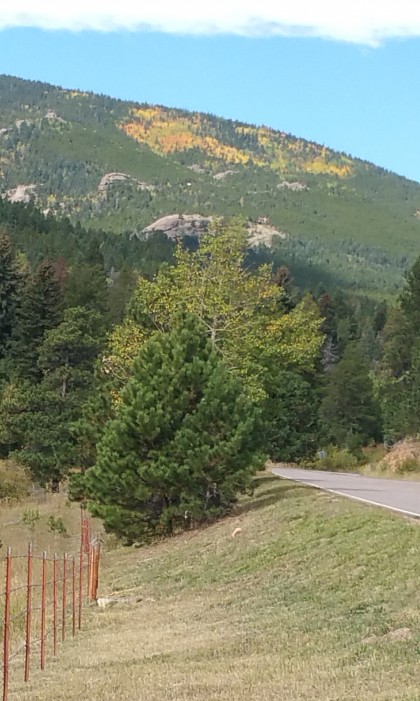
Clouds have begun to creep down Black Mountain while sunlight bathes its slopes facing us, lighting up the golden patches of aspen. Another of Black Mountain’s infinite looks. She’s a lady who dresses for the season and often appears mysterious, as she does right now.
Kate had an abdominal x-ray, an ultrasound of her arm, and began to receive nutrition through a mid-line. I’m glad because she’s had no food, except one clear liquid meal, since last Thursday. Her hemoglobin was up yesterday though some bleeding was ongoing. Contradictory (at least to me), so not sure what to make of it.
Learned yesterday that she’ll not be coming straight home from the hospital but will go to a subacute (whatever that means) rehab center, probably one in Littleton. Again, not sure why, though I imagine it’s because she’s been in bed so long and will need some physical therapy.
Surgical waiting room on Sunday
I’m cautiously optimistic though so far it seems to be forward and backward with her. We’re still not sure why she bled or from where. The nausea, which has been a cruel insult given her past six months or so, seems to be from her bowels not functioning.
The surgeon ordered a sort of lidocaine bath for the surgery site, surrounding the bowels in this non-opiod pain reliever. She’d been getting dilaudid, but any opium derived pain reliever tends to impede bowel function. Complicated and tricky caring for her.
Mountain spirit visiting
And, yes, I’m pretty weary. Annie, sister-in-law, will be here tomorrow. She will be able to manage the dogs so I’m not feeling I should be home when I’m at the hospital and at the hospital when I’m home. I have been eating well, sleeping as much as I can, trying to create a regular routine so the dogs have a semblance of normal. But, that’s all I’ve been doing. At some point I have to pay bills, exercise, do grocery shopping. I have done some laundry.
One really big plus this time around is that we have a functioning dishwasher. When Kate went in for shoulder surgery in April, our dishwasher had just died and it took almost her entire recovery period to replace it. Having dirty dishes in the sink was a drag on the heart.
That’s the Shadow Mountain report for yesterday, October 3rd.
Tomorrow we peek over the transom toward the fallow season. Six more weeks of harvest, the heart of the harvest season is now, then Samain, summer’s end. Up here the temperature cooled off overnight and we’re at 35 degrees right now, getting close to a first frost. There’s even a small hint of snow for next Wednesday. As I wrote earlier, Pike’s Peak and the much closer Mt. Rosalie had snow last week. Happy with the change.
Deb Brown, my personal trainer at On the Move Fitness, really made me feel good yesterday. “You move better than most of the 30 & 40 year olds I see. And, you’re strong.” She was sincere and I was touched. I told her about the odd finding I got from the 23&me folks; I have the same genetic muscle profile as elite power athletes. “Well, you’re capitalizing on it.” “My wife said, ‘What happened?” “Tell to her to ask you that again when you’re 108!” We laughed. Left me smiling.
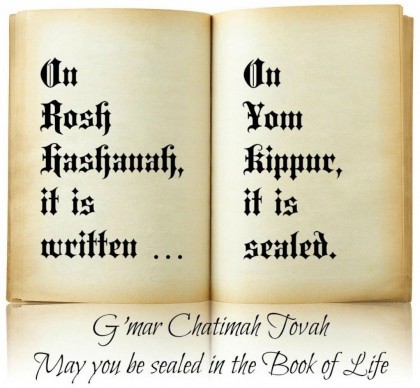
The book of life closed on Wednesday. It was a fast day, unusual in Judaism which finds asceticism puzzling, but on this day, once a year, there is a fast for the whole of Yom Kippur*. That’s from evening to evening. The point is to make us tune into our bodies, to remember that the body carries our soul, and to make the final push for teshuvah, return to the holy soul our body carries.
OK. I’ll admit I surprised myself, right here, with this keyboard. It happens, but not often like this. I wrote “make us tune in to our bodies.” Oh. It may be, as Bill Schmidt suggested obliquely earlier this month, that this Jewish experience runs deeper than I’m admitting.
*“The purpose of fasting is to bring one to repent, and true repentance brings about a change in actions. However, repenting without fasting is not enough,” Jewish educator Aliza Bulow explains on Aish.com.
Although there are medical exceptions to fasting, the Yom Kippur tradition dates back to biblical times, according to Chabad.org. When the Jewish people were wandering in the desert for 40 years after enslavement in Egypt, they worshiped a golden calf — which is contradictory to the religion’s monotheistic tenets — and Moses went to Mt. Sinai to ask for God’s forgiveness. Moses came down from the mountain after God forgave (them) him, and that day became known as Yom Kippur. The tradition of Yom Kippur continued when the Jews reached the land of Israel — Jews gathered in the first two temples until they were destroyed — and persisted again when they were ultimately exiled and dispersed across the globe.” Time
Lughnasa and the Harvest Moon. We are in the season of reaping what has been sown. From the first of August or so until Samain on October 31st gathering in is the main theme on the Great Wheel. The fall equinox, Mabon, is near. September 22nd. It comes with the Harvest Moon, that fluke of planetary dynamics that has lit up farm fields at just the right moment for as long humans have been farming.
No longer a Midwesterner, I don’t see the combines in the long rectangles of wheat, the corn pickers going through the tall stands of sturdy green, the hay balers saving alfalfa and timothy for feed. There are no ads here for hay rides through the apple orchards, no pick your own gardens for late season fruits. That sort of agriculture depends on rain and once past the 100th parallel, oops now the 105th as the arid West creeps eastward across the Great Plains, average rainfall becomes less, often much less than 20 inches a year.
Here fall and Mabon announce themselves in the gold of the aspen, jewel like groves set among larger stands of forever green lodgepole pine. Along the mountain streams Maxwell, Cub, Bear some dogwood flashes bright red. Low lying marshy areas turn a green gold and the cattail spikes stand proudly. Too, the mule deer and elk begin to come down from their summer fields, following food. There will be, in a week or two, the elk rut, with that strangled sound the bull elks make, a bugle. There will also be many more tourists here this week and next. The come for the jewels on the mountain sides, scenes I can see from my study window.
The Great Wheel turns, but its turning is the original local expressing a universal. Here the golden aspen in the Midwest the great harvest machines lumbering through fields. In the Midwest stunning colors here a dichromatic palette. How the harvest season manifests depends on weather and here in the Rockies altitude. Pikes Peak and Mt. Rosalie near Bailey, for instance, have already had their first snow, passing out of the harvest season.
The expression of the season also depends on the plant species that have adapted themselves to a particular locale. One dominant deciduous tree, the aspen, makes our montane ecosystem much different from the remnants of the great woods that dominates the Midwest. Then there are the animals. Pheasants in the Dakotas and Nebraska. Elk and mule deer on the Front Range. Coordinates matter, too. Fall is different here at latitude 39 degrees than in, say, Warroad, Minnesota at 49 degrees. The other marker, the longitude, we’ve already referred to.
green knight
I celebrate the turning of the wheel, await its changes with anticipation. There is comfort, at least to me, in the regularity and predictability of the seasons. They tell me that time is not linear, that it is instead a spiral, cork-screwing its way through spacetime. They tell me that eternal return is written into the way of the universe, that even our life and its mayfly like time compared to the mountains on which I live, is, too, part of a great coming and going, a leaving and coming home. Somehow, through some mechanism now hidden to me, this life I’ve lived will matter and its significance, like your own, will revisit humanity, tempered and changed by the seasons of the universe. I suppose, in this way, we are all immortal, at least until the cold death of this cosmos. But, perhaps, even in that case, we will live on in one of the infinite multiverses, offering our harvest of human consciousness to feed other souls.
Tanya. Carla. Kenya. Mom. Mary. Mark. Grandma Ellis. Jean. Others whose names I can’t remember. Teachers. All of them. Now, for one night, me. Well, I’ve taught adults in various formats over the years, but never kids. Last night I sat down with 13 kids, 6th and 7th graders, and talked with them about what makes them anxious or worried about their bar or bat mitzvah. “Falling off the chair. I watch a lot of fail videos.” “Chanting the Torah and my voice cracking.” “Having to give a speech.” “Being the center of attention.” “I can’t afford the outfit.”
It was a sweet moment and I got so into listening to them that I forgot the beach ball toss game we were supposed to do. We went from that question to what Jewish values do you want to express at your b’nai mitzvah? What values do both you and your parents share and want to express? “Being a good host.” “Honoring my friends.” “Honoring my family.” “Learning the Jewish tradition and passing it on.” “Throwing a good party.” “Learning Hebrew.”
It was the kickoff event last night for the religious school and it was well attended. Each kid came with one or both parents. Usual glitches. Somebody forgot to order food. Solution: Dominoes. I forgot the beachballs. Solution: listen. Facilitation was by committee. Alan did the introduction. Jen Kraft, the regional person from Moving Traditions, spoke about the development of the curriculum. Jamie facilitated a piece about what the sages thought was appropriate for ages from 5 to 100. Tara facilitated a group exercise in which adults and kids called out descriptors for child, teen, adult.
There were some gumups, but on the whole I thought it went well. I dressed up, which always means I’m nervous. Realized last night that I’ve been doing that long enough that wearing fancier clothes make me nervous, rather than more confident. Makes sense. Learned behavior.
21 sessions still ahead. Most of them won’t be this complex. I have a different sort of respect for all you teachers out there. Will have even more, I imagine, as the school year continues.
Quite a combination greeted me in the southeastern sky this morning as I made my way to the loft. The Waning Summer Moon’s waning quarter stood just above a faint, but still clear Orion. My first sighting of him since April. I don’t look for him once I stop seeing him since I imagine he’s in the daytime sky, but apparently he’s visible at some time in all months except May through July, just not when I’m awake and outside.
The two of them together, the Waning Summer Moon and the constellation that is my winter companion appearing the day after Labor Day sends a strong autumnal signal in my world. Flecks of gold will start to appear in the aspen groves on Black Mountain.
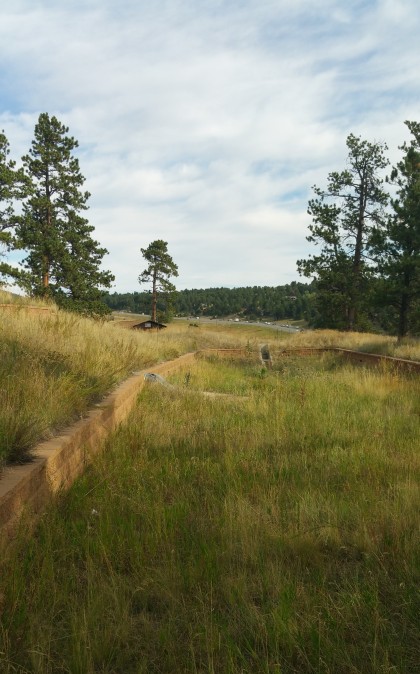
The meadow at the base of Shadow Mountain Drive had hay bales in it a couple of days ago, all gone now. The sight brought back memories of alfalfa and timothy fields in Minnesota and Indiana, the smell of haylofts, hay rides. Apple picking.
September 17, 2013
In Andover this was the month of garlic planting, of soil amending in the perennial flower beds and the planting of bulbs, corms, rhizomes. Tulips, daffodils, iris, hyacinth, crocus, anemone. I would turn on Folk Alley radio, get out the kneeler and the Japanese garden knife. Sometimes the Andover High School marching band would be rehearsing a couple of miles away but still audible. Blue skies, the sun’s angle noticeably lower. The golden raspberries were ripe, too, and the dogs, especially Vega, would pick them off the canes that poked through the fence around our vegetable garden.
Later in the month will come Mabon, the second of the harvest festivals and the fall equinox. After that is Michaelmas, September 29th, the feast day of the Archangel Michael which Rudolf Steiner refers to as the springtime of the soul. I can feel the change, the buildup that begins with the victory of light on the Summer Solstice, the gradual lengthening of the night which will culminate in the Winter Solstice, my high holyday.
The loft is clean. Sandy does such a great job. And, she does it while living with the after effects of two brain surgeries and the yet remaining tumor which necessitated a round of radiation to shrink. A tough way to earn your daily bread.
We tried a Colorado cure for Kate’s nausea symptoms. She toked up yesterday morning, lighting one of the pre-rolled Jilly Belly spliffs. She took four hits. Result: nausea subsided, heartburn began. And, she said, I feel spacy. Which she didn’t like. So she went back to bed anyhow. A work in progress. Next time she’ll try two tokes. If it does reduce the nausea, we will get her a bong and use ice in the water to cool down the smoke. I told her she was one toke over the line sweet Jesus; then added, well, maybe better, one toke over the line sweet Moses.
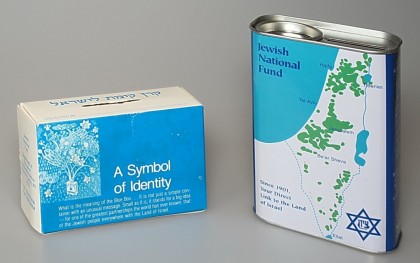
At mussar Ariel, the defense lawyer turned consultant to lawyers on how to navigate court procedures, gave a powerful and well-researched hour and a half on the concept of tzedakah. Tzedakah boxes are an art form in Judaica and usually have a slot for change or bills. The money collected typically goes to charities, in the American diaspora often charities that support the state of Israel, though the money can go to any good cause. In this way tzedakah has come to be associated with charity, but its real translation is justice, equity.
In the packet that he offered, Ariel quoted Rabbi Abraham Heschel, a great friend to Martin Luther King: “There is immense silent agony in the world, and the task of man is to be a voice for the plundered poor, to prevent the desecration of the soul and the violation of our dream of honesty.” And, “Morally speaking there is no limit to the concern one must feel for the sufferings of human beings, that indifference to evil is worse than evil itself, that in a free society, some are guilty while all are responsible.”
After mussar Kate and I went with many members of the group to a place called Go, Paint in downtown Evergreen. It was the start of an interesting local expression of an international movement called Empty Bowls. (the link is to an Empty Bowls event in Hopkins, Minnesota) Go, Paint has many objects in bisque (the stage for pottery after throwing and before firing when glazes and paints can be applied.). In this case we all had bisque bowls, dull white and maybe 8 inches across. There were various paints and glazes we could apply, even small clay creatures. Kate, for example, put a turtle in the bottom of her bowl.
We paid for the event. The bowls get fired, then distributed to two sites nearby which run Empty Bowl events. One is Mt. Vernon Country Club and the other is a church in Evergreen. At the empty bowl event a meal is served, $65 at Mt. Vernon, $20 at the church. When the meal is over, each participant gets a bowl. The money goes, in this instance, to the Mountain Resource Center. A friend of Kate and mine’s, Marilyn Saltzman, will be the incoming president of the MRC in January. Interesting idea.
Alan came over for work on the religious school lesson plans. Kate made her oven pancakes (always delicious) and Alan told us stories about early Jewish Denver. West Colfax (think Lake Street) between Federal and Sheridan was an orthodox Jewish community when he grew up. He said on Friday afternoons with folks scurrying from the deli to the bakery to the kosher butcher it looked like, well I can’t recall exactly, but any typical European Jewish community.
His dad was going to be a University professor before the Holocaust. Instead he came here and ended up in the dry cleaning business. In those day Alan’s friends and neighbors were either children of Holocaust survivors or survivors themselves. That old neighborhood, like north Minneapolis, has completely changed. The first synagogue in Denver is now an art museum on the Auraria campus of the University of Colorado. The Jewish community concentrated itself in south Denver, more to the east.
We worked for a couple of hours, putting specific lesson plans on the calendar, deciding which days to do the Moving Traditions curriculum, which days for middah, which days for Jewish holidays, which days for our own lesson plans. I’m experiencing some anxiety about this since we start next Wednesday with the first family session of the Moving Traditions curriculum. This approach to the student preparing for their Bar or Bat Mitzvah will, apparently, be controversial because it doesn’t focus on the ritual of the morning service, but on the students’ social, emotional, and developmental needs. Alan, Jamie, and Tara will deal with that. Not me.
Kate’s had several days in a row with no nausea. Yeah! That means she feels better and can get some things done. In doing so, however, the extent of her loss of stamina, weight loss and Sjogren’s Syndrome, has become apparent. She still needs to rest frequently. If she can modulate the nausea, either through careful eating or an eventual diagnosis or using medical marijuana, the next step is to get some weight gain, some stamina improvement. If possible. Or, we may have to adjust to a new normal.
I’ve been absorbed in lesson planning, training for the school year, climbing my steep learning curve about matters Jewish and matters middle school. That’s my way. Dive into something new, leave most other things behind until I’ve gotten where I feel like I need to be. Not there yet, though I imagine after a few class sessions, I will be. Sort of a head down, blinkers on time. My writing has dwindled and so have submissions.
Over the last couple of weeks, while I work out, I’ve been watching a Teaching Company course on the aging brain. I recommend it. Highly. It’s helped me understand why this approach, head down blinkers on, is developmentally appropriate for me. For example, the aging brain, on average, loses some processing speed, executive functions, and crispness of episodic memory (memory tied to a person or place and seen from a first person perspective.) over each decade, beginning in the twenties.
Myelin Sheath – a layer of fatty cells covering the axon, helps speed neural impulses.
The underlying issue seems to be gradual demyelination of the axons which constitute the white matter in our brain. With myelin sheathing over their length axons can carry information very fast, without it somewhere around 2 meters per second, or human walking speed. As our processing speed declines, so do brain functions like the executive management of brain activity by the prefrontal cortex. It’s this one, the decline in executive function, that requires the head down, blinkers on approach to new activity or to tasks we need to complete. As we age, we no longer handle distractions as well, getting pulled away from this to focus on the shiny that.
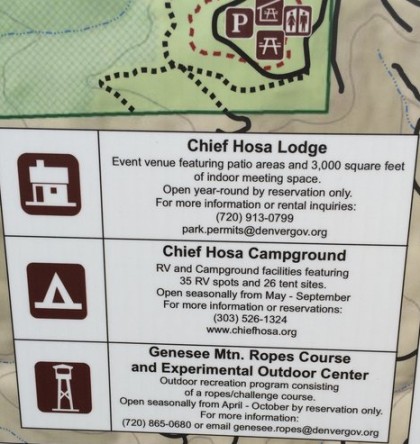
I like knowing this because it helps me understand my daily third phase life better. The thinking process itself is not impaired, just the speed and our ability to stay with a task. It helped explain a very uncomfortable moment for me at the Genesee Ropes Course on Sunday. Jamie and I were with the 6th and 7th graders. Adrienne, a ropes course employee had just explained the rules of a warmup game. One of the rules was that we had we could not throw a soft toy to someone who’d already gotten one on that round.
I got the stuffed unicorn on the third or fourth toss. When I tossed it to Alex, Adrienne asked, “Did he break a rule?” All the kids and Jamie nodded. Yes, he had. Why? Alex had already gotten the unicorn. Oh, shit. This was the first interaction between me and these kids as a group and I looked like a doofus. I didn’t remember the rule at all. There were plenty of things to distract me. The continental divide in the distance. A wind blowing through the trees. Trying to concentrate on learning kid’s names. General anxiety about not knowing the kids at all. Whatever it was, my executive function let me go, Oh, fish on bicycle, instead of hearing, no throwing to someone who’s already received it.
It still looks the same to the outsider. I missed the rule, and as a result, screwed up in its execution. But now I understand that this is not a sign of dementia or other deep seating problem, but rather a normal, though irritating, side effect of demyelination.

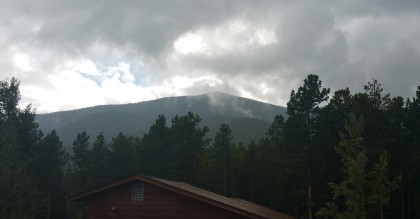 Clouds. So. Clouds at 9,000 feet. In Minnesota, in the flatlands, this sounds normal. There they are, fluffy, white, cotton balls against blue. However. When you live at 8,800 feet, clouds at 9,000 feet means fog. Or, like this morning. I drove down to Aspen Park, about 800 feet lower than us. Fog there. Clouds at 8,000 feet. Things considered usual for 69 years now quite different. Odd.
 It is there, right there. Between 80 and 85 million years ago the Laramide orogeny found tectonic plates crushing against each other in that slowest of slow dances, continental formation and reformation. The result here at the hogbacks and all along the long collection of peaks and valleys we know as the Rocky Mountains shoved formerly settled layers of the earth’s crust into the air, up from the subsurface. The power and violence of the orogeny ripples past me, past all of us on 285, especially at the cut just before it dips under 470.


 The book of life closed on Wednesday. It was a fast day, unusual in Judaism which finds asceticism puzzling, but on this day, once a year, there is a fast for the whole of Yom Kippur*. That’s from evening to evening. The point is to make us tune into our bodies, to remember that the body carries our soul, and to make the final push for teshuvah, return to the holy soul our body carries.
 Lughnasa and the Harvest Moon. We are in the season of reaping what has been sown. From the first of August or so until Samain on October 31st gathering in is the main theme on the Great Wheel. The fall equinox, Mabon, is near. September 22nd. It comes with the Harvest Moon, that fluke of planetary dynamics that has lit up farm fields at just the right moment for as long humans have been farming.
 The Great Wheel turns, but its turning is the original local expressing a universal. Here the golden aspen in the Midwest the great harvest machines lumbering through fields. In the Midwest stunning colors here a dichromatic palette. How the harvest season manifests depends on weather and here in the Rockies altitude. Pikes Peak and Mt. Rosalie near Bailey, for instance, have already had their first snow, passing out of the harvest season.

 It was the kickoff event last night for the religious school and it was well attended. Each kid came with one or both parents. Usual glitches. Somebody forgot to order food. Solution: Dominoes. I forgot the beachballs. Solution: listen. Facilitation was by committee. Alan did the introduction. Jen Kraft, the regional person from Moving Traditions, spoke about the development of the curriculum. Jamie facilitated a piece about what the sages thought was appropriate for ages from 5 to 100. Tara facilitated a group exercise in which adults and kids called out descriptors for child, teen, adult.

 We tried a Colorado cure for Kate’s nausea symptoms. She toked up yesterday morning, lighting one of the pre-rolled Jilly Belly spliffs. She took four hits. Result: nausea subsided, heartburn began. And, she said, I feel spacy. Which she didn’t like. So she went back to bed anyhow. A work in progress. Next time she’ll try two tokes. If it does reduce the nausea, we will get her a bong and use ice in the water to cool down the smoke. I told her she was one toke over the line sweet Jesus; then added, well, maybe better, one toke over the line sweet Moses.
 In the packet that he offered, Ariel quoted Rabbi Abraham Heschel, a great friend to Martin Luther King: “There is immense silent agony in the world, and the task of man is to be a voice for the plundered poor, to prevent the desecration of the soul and the violation of our dream of honesty.” And, “Morally speaking there is no limit to the concern one must feel for the sufferings of human beings, that indifference to evil is worse than evil itself, that in a free society, some are guilty while all are responsible.”
 After mussar Kate and I went with many members of the group to a place called Go, Paint in downtown Evergreen. It was the start of an interesting local expression of an international movement called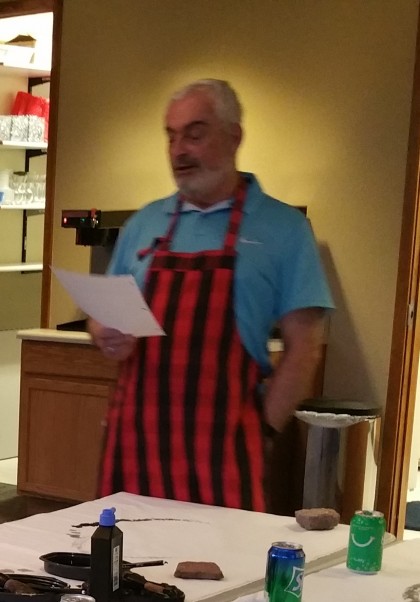
 Kate’s had several days in a row with no nausea. Yeah! That means she feels better and can get some things done. In doing so, however, the extent of her loss of stamina, weight loss and Sjogren’s Syndrome, has become apparent. She still needs to rest frequently. If she can modulate the nausea, either through careful eating or an eventual diagnosis or using medical marijuana, the next step is to get some weight gain, some stamina improvement. If possible. Or, we may have to adjust to a new normal.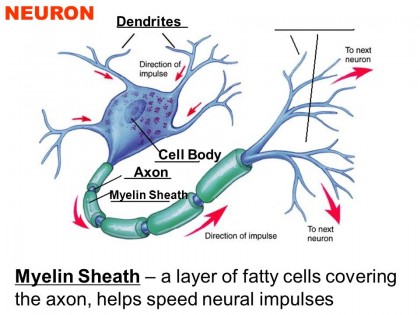
 I got the stuffed unicorn on the third or fourth toss. When I tossed it to Alex, Adrienne asked, “Did he break a rule?” All the kids and Jamie nodded. Yes, he had. Why? Alex had already gotten the unicorn. Oh, shit. This was the first interaction between me and these kids as a group and I looked like a doofus. I didn’t remember the rule at all. There were plenty of things to distract me. The continental divide in the distance. A wind blowing through the trees. Trying to concentrate on learning kid’s names. General anxiety about not knowing the kids at all. Whatever it was, my executive function let me go, Oh, fish on bicycle, instead of hearing, no throwing to someone who’s already received it.