Category Archives: Mountains

Up in Smoke

Spring                                                                Mountain Moon

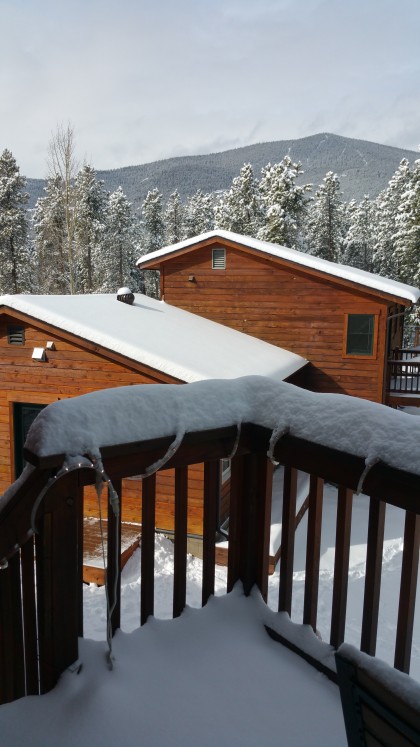
A cloud crawls down Black Mountain,

Cotton embraces ski runs, blue above.

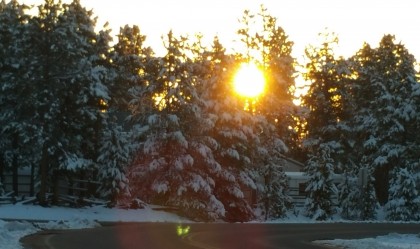
A light scrim of snow covers our solar panels,

The sky falls toward us, slowly.


four twentyToday is 4/20. In Colorado and elsewhere it’s a pot linked holiday and here’s a brief explanation of its strange origin.* A couple of years ago I was downtown Denver near the National Western Stockshow Grounds on April 20th. Driving to a small taqueria for lunch I passed hundreds of people walking along the road, smoking joints, smiling, lots of dreadlocks under Rastafarian knit saggy caps. Last year the 4/20 crowd made such a mess at a city park that Denver stopped the celebration for this year.

4/20 is also Adolph Hitler’s birthday, my brother Mark reminded me. Hitler is a figure in the childhood dark closet of most Baby Boomers whose parents, like mine, were veterans of WWII. My dad had a beaten up copy of Mein Kampf, Hitler’s autobiography. It always seemed strange to me as a boy; but, as an adult, I came to realize how large Hitler loomed over his life, occasioning several years in the military for both him and my mom.

Nazis+on+parade.Now Hitler is mostly a boogeyman, a perfect example of either evil or the potential power of white supremacy. His Nazi party serves a similar function, offered up in movies if an ultimate villain is needed. Just as the Vietnam War, which dominated my life in the late sixties and early seventies, has faded from the memory of millennials, so even the holocaust has begun to fade from memory. Yes, it’s dangerous to lose sight of this horror; but, it’s also human. As an event moves further away from us, it changes, transforms.

Most, all?, religions are an attempt to hold a historical moment close, to keep it vibrant, vital. Easter and Passover. Even these though show the great difficulty in maintaining the urgency of something that has been covered over by distance and lack of direct experience. Max Weber called this the rationalization of charisma. As the charismatic figure or moment recedes, institutions grow up to protect its memory, but that very fact, the institutionalization of a matter of the heart, encrusts the event and eventually depletes it of its power. It becomes covered over by dogma, by tradition, by the ridigities of too much thought.

Emerson'Emerson knew this. “The foregoing generations beheld God and nature face to face; we, through their eyes. Why should not we also enjoy an original relation to the universe? Why should not we have a poetry and philosophy of insight and not of tradition, and a religion by revelation to us, and not the history of theirs?” From the introduction to his essay, Nature.

We need to discern not only, perhaps not even most importantly, the facts of the holocaust, though they are incalculably significant, but we need to look evil in the face in our time, confront it now, name it now. Stop it now. Evil, like good, does not stop in a historical moment, but gains new, contemporary expressions. If we keep looking for revelation about what it means to be human in sacred texts or historical tragedies, we can easily miss the revelation appearing in the neighborhoods and rural areas of our own country.


*In 1971, Steve Capper, Dave Reddix, Jeffrey Noel, Larry Schwartz, and Mark Gravich, five high school students[4] in San Rafael, California,[5][6] calling themselves the Waldos[7][8] because “their chosen hang-out spot was a wall outside the school”,[9] used the term in connection with a fall 1971 plan to search for an abandoned cannabis crop that they had learned about,[7][10] based on a treasure map made by the grower. wiki
 

Rivers and Mountains, Bees and Kate

Spring                                                            Mountain Moon

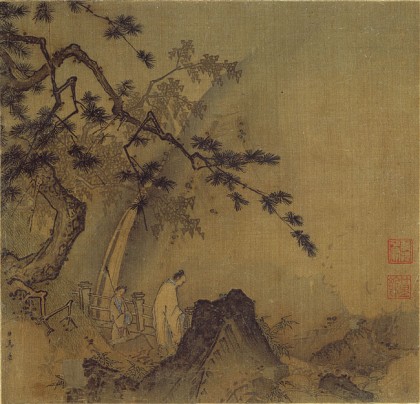
fan kuan, travelers among mountains and streams
Fan Kuan (960-1030, a.c.e.), travelers among mountains and streams, Song Dynasty

So my mind is filling with rocks, pines, mountain streams, magpies and mountain lions; a sign that the mountain theme has begun to take hold. I plan to spend this spring and summer sketching and photographing rock formations, mountains, summits, animals, water, trees and other plants, then interpreting them with sumi-e. I’m continuing to read the shan-shui (mountains and rivers) poets, moving back into the world of Chinese classical painting.

Qabbalah study continues. We’re investigating time and the qabbalists have their own unique approach to it. Here’s an example. To experience what I would call sacred time-they use the phrase eternal time-qabbalists want us to pay closer attention to what I would call ordinary time. This is far different from trying to collapse the hold of ordinary time through meditation or koans or mystical experience. The easiest example is the week. In the qabbalist’s world we count six ordinary days, then we experience shabbat. Shabbat is a time out of time, a moment in the week when the observer exits the world as usually experienced and enters sacred time. But. It’s observable as sacred time because of its contrast to the six days that precede it and the six that follow it. Thus we can find sacred time through attention to measured/ordinary time.

honey supers after the harvest, 2013

Getting ready to hive bees for Beth Evergreen on Saturday morning. Had to dig around in all the bee stuff we brought from Andover since Rich Levine, local bee enthusiast, needed a hive box and twenty frames plus accessories. I had enough. Getting out the hive tool, scraping propolis off the frames, moving supers put me right back into beekeeper mode. Still don’t think I’m willing to do it here, too much hassle with the need for a bear proof enclosure which means strong electric fencing. I will enjoy helping others, though.

Singapore, 2016
Singapore, 2016

Kate’s gained almost five pounds! This after a long period of weight loss. I called her my incredible shrinking wife. Our consult with Betsy, the nutritionist for New West Physicians, was a turning point.

Kate’s building momentum. The Sjogren’s conference left her feeling less alone with this nasty disease since there were hundreds in attendance from all across the U.S. who not only have it, but have similar experiences to hers. She also had her second session of physical therapy this morning and continues to be excited and enthusiastic about it.

Makes me smile.


Old Man of the Mountain

Spring                                                                              Mountain (New) Moon

Filling the Rav4 with gas, Legault Mountain behind me

Today the new shoulder moon sets. Since I name the moons each month, either using a traditional name or one I’ve created, I sometimes use them to remind me of something over the course of the month. Without melancholy this time I’ve come to an additional revelation, a sudden insight into who I am here in Colorado. Sorta obvious, but I’m a mountain man, a man of the mountains.

Song dynasty
Song dynasty

However. I’ve been reading a lot of the mountain poetry of China, a very old tradition extending from the Eastern Jin Dynasty into the present. The Eastern Jin Dynasty began in 317 A.C.E. T’ao Ch’ien (365-427) began writing poetry about his mountain life.

I’d long felt these mountains and lakes

Calling, and wouldn’t have thought twice,

But my family and friends couldn’t bear

Living apart…

After Mulberry-Bramble Liu’s Poem, T’ao Ch’ien

I just ordered more books of Chinese mountain poetry and I’m going to start looking for more poetry about mountains. If you know any, I’ll appreciate the reference. Not just poetry though. I’m also looking through my books of Chinese art, especially the (many) paintings that feature mountains, often scholars and poets by streams or in mountain huts. I want to learn from these how to use sumi-e to paint mountains. Lots of them here to serve as subjects and they politely remain in their pose. There are also many paintings in the Hudson School tradition: Bierstadt, Cole, Church, e.g.

Cotopaxi, Frederic Edwin Church

Too, I’m fascinated by the geology and orogeny of the Rockies. How did they get here? Where are they going? How do they compare to other mountain ranges?

And, even more obvious. Get out there, dude. No use repairing the knee if you don’t use it to wander in the mountains. To be my kinda pagan you need to immerse yourself in the local, the around you. It’s not only the soil, the animals, the plants, the trails, the streams and lakes though they are essential. It is too the human deposit of art about the place to which you’ve become native. Science, too. Also, if you can, adding to the expressive vocabulary that art shares with the world.

So, this is the Mountain Moon and I’m under it, nourishing another new turn in my attention.


Ancient Holidays

Spring                                                                       New Shoulder Moon

Chagall, Pesach
Chagall, Pesach

It’s the second night of pesach tonight and tomorrow morning is easter. Liberation and resurrection, or liberation and death’s final bow. Resurrection is hard to integrate since its hard proof lies beyond the veil of this world. Liberation, on the other hand, is much easier to integrate because it applies to so many this worldly situations: slavery, imprisonment, forced poverty, mental illness, racial and gender and sexual preference discrimination, being in Trump’s America.

Both are important to me. I long ago left behind the death is no more school of theology. It seems cruel to me, an assertion confounded at every death bed, every school shooting, every war. Death still rides her pale horse, galloping through the living world and pruning, pruning, pruning.

I do, however, retain my confidence in resurrection; that is, the power of the changing world to incorporate death and decay as precursors for life. Each spring, as our temperate latitude winter fades away, bright green shoots spear their way through the soil’s surface. Flowers bloom. Vegetables grow. Trees leaf out. Lambs and kids and calves and piglets are born. All these are evidence of transubstantiation, the literal changing of grapes and bread into our bodies. This transformation happens regularly and green burial will help us remember that we humans do participate in it, that concrete, water-tight “vaults” and expensive coffins do not shield us from our part in the web of life.

El Greco
El Greco

This weekend presents to us two powerful stories, stories that have changed the world: the exodus from Egypt of Hebrew slaves and the crucifixion and resurrection of Jesus, known by many as the Christ. Narratives have real potency, the ability to change lives, turn the pages of history, answer our deepest questions, quiet our deepest fears. Oddly, you can see this power even more clearly if you take a stance just outside the metaphysical claims, but not in the camp of folks like the new atheists, who are simply boring.

I’m neither Christian nor Jew, my metaphysics is bound up in the ongoing evolution of the universe and literally rooted in the soil of the midwest and the hard rock of these mountains where I now live. Even so, liberation and resurrection, through the stories of the passover and easter, are important to me, tell me about human possibility, about the human capacity to face enslavement and grief with hope, with the chance to turn both into moments of human triumph.

Though it has taken me a while to learn the rudimentary geology of our immediate neighborhood, I now know that we live among three mountains. We live on Shadow Mountain, up a valley that runs from its base to our home. On the opposite side, the west side of this valley, is Conifer Mountain and then, the mountain most visible from our house, Black Mountain.

Black Mountain
Black Mountain

Think of the changes evidenced by these huge landforms. This is rock that was once, millions of years ago, imprisoned far below the earth’s surface, held there by weight and history, perhaps even put there by accretion when another planet slammed into the still forming earth. Yet now I live on it, can see it clearly, far above the surface, pushed out and up by forces wielding power unimaginable, unavailable to us humans.

Is this liberation and resurrection? Not from a human perspective, but from the perspective of our planet, very much so. And yet it does not end there. Once liberated from their stony dungeons wind and water act upon them taking these high mountains gradually down to sea level, then into the ocean itself. In the soil formed in this way plants will grow, animals will feed off the plants. Liberation and resurrection are everywhere, if only we see what we’re looking at.


Kate Still At Ortho Colorado

Spring                                                                            New Shoulder Moon

Kate, costumed for Purim

Kate had break through pain yesterday and nausea that they couldn’t control well. So, she’s still at Ortho Colorado. Plenty uncomfortable, but problems that seem, at least to me, manageable. Unpleasant sequelae from the meds and the cutting. I imagine she’ll come home today. Still convinced this was the right thing and that her care has been very good.

A strange sense of exhilaration with all the changes occasioned by Kate’s surgery. I find myself whistling on the way into the hospital, generally feeling good. It’s as if the additional load is something I needed. Weird, eh?

As also happens in these situations, often enough to be predictable, a lapse in the daily routine led to Gertie consuming a substantial number of Kate’s thc edibles. My fault. Gertie is, right now, pretty stoned. We had a similar incident with Kepler a couple of months ago and he slid down the stairs, looking confused. Apparently all mammals have a cannabinoid system and cannibis receptors. Gertie seems very unhappy, I imagine because her left leg makes her unsteady to begin with and the mary jane? Adds to it.

Beloved community dr-martin-luther-king-jr-quote-beloved-community-09.16.15-v2-1800Beth Evergreen has reached out to us in several ways. Individual members have offered to bring food or otherwise help. Leah, the executive director, called, wanting to know if we needed anything. Several folks from our mussar group responded to my e-mail on Thursday with love and concern. For both of us. A thought that keeps going through my mind: beloved community. Christian churches aspire to this, Beth Evergreen achieves it. I’m proud to be a member of the congregation.

One other thing I noticed. Both Kate and I were worried about her dying during surgery. Why? Well, it happens. Rarely, but it happens. Jeff Glantz, a member of Beth Evergreen, had a successful operation to remove a malignant brain tumor, then four days after surgery, he died. This was a couple of weeks ago. Jeff’s situation was on our minds, too.

I mention this because neither of us owned up to this concern until the surgery was over. By not talking about it before, by letting the death taboo keep it hidden, we lost a chance to console each other, to go a little deeper into our relationship.


The Future of Food

Imbolc                                                                           New Shoulder Moon

third plate Mentioned The Third Plate a few posts ago. A book by chef Dan Barber, owner of the Blue Hill restaurant in Manhattan and a principle in the Stone Barns Center for Food and Agriculture in Westchester County.

SELECT TASTING OR DAILY MENU
Rotation Grains
smoked farmer’s cheese and broccoli pistou
~
Maine Diver Scallop
bacon, winter squash and kohlrabi
~
Stone Barns Pig
tsai tsai, horseradish and pickled grapes
~
11 day dry-aged bolero carrot steak
mushroom, kale and onion rings
~
blue hill farm milk
yogurt, turmeric and ginger
~
Malted Triticale porridge
White Chocolate, quince and Beer Ice Cream
Stone Barn Center for Food and Agriculture
Stone Barns Center for Food and Agriculture

He uses four big concept areas, pictured at the top: Soil, Land, Sea, Seed to tell a story about what he sees as the future of food. He’s trying to take the conversation about food beyond the now well known critiques of books like Hard Tomatoes, Hard Times, Michael Pollan’s The Omnivore’s Dilemma, Aldo Leopold’s The Sand County Almanac, and any number of books published in the late sixties like Eull Gibbons, Stalking the Wild Asparagus, Small is Beautiful by E.F. Schumacher. Throw in Wes Jackson’s Becoming Native to This Place, almost anything by Wendell Berry and the thought world championed by John Muir and Edward Abbey and you can see the big conceptual field Barber has tried to plow.

He seems on to something. Using examples like the dehesa in Spain that produces jambon iberico, The Bread Lab run by Washington State plant geneticist Stephen Jones, the farm of Klaas Martens who teaches him about reading the language of the soil, Veta La Palma, a Spanish aquaculture corporation set up in an estuary of the Gulf of Cadiz, and Anson Mills, a fascinating concept by Glenn Roberts who uses landrace farming to resurrect old grain crops and nurture new ones, he seems to propose a recursion to localized crops, that is, wheat, for example, that grows best in upstate New York.  This recursion includes animals, too, where their rearing takes on the characteristics that oenologists call terroir in wines.

nutrition

This recursion would have chefs take their cues, their menus, from what farmers can grow in their immediate area and from those sites with a focus on sustainability and ecosystem regeneration. The fascinating aquaculture experiment that is Veta La Palma  uses the Guadalquivir River and the salt water of the Gulf of Cadiz to farm high quality sea bass. The focus does not have to be only local or regional but can include instances of food production with ecosystem supportive techniques.

This seems similar to the disaggregation idea in power production, local solar and wind and geothermal and hydro.  Anything that deemphasizes the industrial and the corporate in favor of the local and ecological.

EatLocal

He talks about his idea in agriculture as middle agriculture, that is agriculture smaller than corporate, but larger than the small family farm or the boutique garden. He’s trying to get to scale sufficient that it could actually feed large numbers of people.

It makes me want to cook in the way he suggests. That is, find food grown here in the Rockies, use it along with food sourced from the Veta La Palmas, the dehesas or the Bread Labs, and build our menus at home around it, changing with the seasons. Right now that would take a good bit of work, but it might be possible and it would certainly be worth it.

A continuing theme.

Regress to advance

Imbolc                                                                             New Shoulder Moon

“All changes, even the most longed for, have their melancholy; for what we leave behind us is a part of ourselves; we must die to one life before we can enter another.”
– Anatole France

melancholyThe last letters of the Hebrew alphabet now have renderings in sumi-e, lying on my table ready for quotes and the chop. A member of Beth Evergreen last night referred to me as an artist. Oh. I thought he said audience. Artist is not a word I’ve ever associated with myself so my brain heard something else. A revealing moment. How others see us is not always, perhaps often, not the way we see ourselves.

An obituary on Terry Brazelton had this summary of a major finding of his research: “Development does not occur on a linear path, with each skill building on earlier ones. Rather, it unfolds in a series of major reorganizations in which children temporarily regress before mastering a new developmental milestone.” NYT

Well. That explains melancholy, at least as I’ve experienced it. There’s a plateau effect, then a hesitation, a pause while the psyche incorporates a new way of being, one probably not available to consciousness at the time of the pause. Since it’s inchoate, the reorganization seems like a regression, a stutter. The mind and the body both slow down, awaiting something they don’t understand. Result: melancholy.

 Van-Leyden St. Jerome in his Study by Candlelight (1520)
Van-Leyden St. Jerome in his Study by Candlelight (1520)

If you’ve read my posts over the last month or so, I think you’ll see what I’m talking about. My psyche had moved on, already aware that I needed more tactile moments in my daily life, already aware that it was time to resort my priorities based on a new constellation of possibilities made real by our move.

Last night at the shabbat service a rabbi friend of Jamie’s gave a short reflection. She had us consider an unusual moment in the Torah when the former Hebrew slaves remembered fondly the foods they had in Egypt. Using this seemingly inscrutable nostalgia for a time of bondage, she suggested that during transitions, a time of instability, wandering in the dessert for example, we often want to return to the stable state we know to ease the anxieties and uncertainties of a transition. Thus, when faced with a period of eating manna during an often frustrating movement toward the land promised, but not yet reached, even slavery seemed to have its charms.

That nostalgia, I think, is the root of melancholy, a hope that the past can ease the upset of the present. The psyche knows that’s a false hope, a trap, but is unable to articulate why. So, stasis, moving neither forward nor backward, which the ego interprets as negative without knowing why. Really, the moment is gestational, a new way awaits its birth. Not back to Egypt, but on to the promised land. Not back to the life of forty years in Minnesota, but on to the new life developing in Colorado.


the tao

Imbolc                                                                       New Life Moon

taoHad a strong sense yesterday of the tao. Often elusive for me, yesterday had a distinct flavor, a wind blowing through the events of the day and I rode with it.

Gabe’s sick, a croupy respiratory bug. Now, Jon has to deal with this as a single parent. A sick kid and two working parents is hard, but a sick kid and two divorced working parents is harder.

Into Aurora yesterday at eight a.m. to pick Gabe up and bring him up here. It was daylight saving time, the next day, and I felt loggy, off, a mild buzzing in my head and stomach not quite settled. There’s only one route to Aurora from here, Hwy 285 which becomes Hampden Road in Denver. Hampden runs through southern Denver, four lane at points, six lanes at others, lots of businesses, especially past Interstate 25 headed east.

I’d waited until eight to leave to avoid rush hour. The tao of the day laughed. At about Swedish hospital traffic seemed to slow, slow, slow, then crawl. And, occasionally, stop. Three lanes of traffic clotted. And, the clot lasted. Usually, from Swedish Hospital to Colorado Avenue is about a three minute drive. Thirty minutes. A lot of it with plenty of time to read the warning label about the semi-fluid lubricant in tire bearings on the semi sitting next to me.

1514204365009It was jaggedy, edgy tao, putting up barriers, then releasing. Gabe had his own struggle with this tao. I was forty minutes late picking him up.

We drove back to the mountains in silence. My hearing aid battery died in Lakewood, about thirty minutes from home. Even with the hearing aid, the noisiness of the Rav4 makes hearing Gabe’s soft voice from the back seat impossible for me.

Once home Kate had to leave for a mani-pedi, so I remained in the house in case Gabe needed anything. He came with a cooler containing ginger ale and cheese.

I felt jangly, stomach still off. Reading the Third Plate kept my mind distracted, a positive barrier to temporary discomfort. This book has a lot to teach. Of the many key learnings so far, one that keeps coming back like a ruminant’s cud was a short encounter between Dan Barber, the author, and Wes Jackson, a hero of mine who runs the Land Institute in Kansas.

Stone Barns and Dan Barber's Blue Hill restaurant
Stone Barns and Dan Barber’s Blue Hill restaurant

Dan had visited an organic farmer in upstate New York who “listened to the language of the soil,” reading soil health from the weeds that grew in his fields. This particular formulation, language of the soil, grabbed me because I had come to the same metaphor over my years of gardening in Andover. The soil speaks, tells you what it needs. You just have to see what you’re looking at. This farmer’s attention to that language resulted in an organic farm, growing mostly heirloom varieties of corn, wheat and other grains, intermixed with soil healing crops like spelt and clover.

After Dan told Wes about this farmer, he nodded. “Yes, Dan. He sounds like a great guy, but it won’t last.” Someone else, he went on, will buy the farm and all of the careful reading of the soil’s language will disappear. The chemical/industrial farming ethos will return. When Wes recognized Dan’s disappointment, he said to him, “What can I say? We live in a fallen world.”

tao3This anecdote has stuck with me, I think, because of the sale of our land in Andover. We did so much, worked hard at creating soils that would grow healthy, vibrant plants, but then we moved on.

It was the tao of Monday, a slow pulsing tao that put up obstacles, then took them down. It placed Gabe’s illness alongside a huge accident with ambulances and fire trucks, wreckers, clean up crews and three lanes of traffic forced down to one lane. It put Wes Jackson’s sigh alongside my sensitive stomach, alongside Kate’s beautiful nails, calming her and getting her ready for surgery next week. Rigel once again pushing her nose into us, pacing. An obstacle. Back on the metronidazole.

Riding with this tao I let the obstacles and their resolutions wash over me, not as frustrations (mostly), but as the way of this Monday. When the day was over, I was glad, especially glad to have been sensitive to the tao.

A Horticulturist

Imbolc                                                                           New Life Moon

As my melancholy continues to lift, new and old values push themselves forward, wanting to be included or excluded. I didn’t, for example, attend the Democratic caucus last night. Though I did want to be home for Kate, who uncharacteristically has anxiety about her upcoming surgery, Sjogren’s adds an unknown, I also didn’t want to go. Kate pushed back on this, saying the activist has been an important part of me, well, almost forever. True. And maybe, probably, I’ll alter course on this one, but right now I want to focus on other things.

third-plate-dan-barberIn addition to cooking, the sumi-e (ink brush painting), and working out, I mentioned the possibility of a greenhouse. Expensive, so we’ll see about that. But. I began reading a book I’ve had for a while, The Third Plate. It puts me back in the mental and very physical world of Andover. In fact, the feeling, while I was reading it, was so comfortable, a sort of ah, here I am at home feeling, that I recognized it as an old value pushing itself forward.

It’s more than just getting my hands in the soil, nurturing seeds. It’s about being part of the farm-to-table movement, about acting on eating better food, about staying connected, directly, with mother earth. While reading this, I realized horticulture was a deep part of me, one Kate and I spent a lot of time, energy and money on, not because we had to, but because it was significant and nourishing.

carey_reamsBuddy Bill Schmidt will recognize the quote that begins the chapter on Soil: “See what you’re looking at.” Carey Reams, an unlikely looking radical, used to say this. He was the founder of the outfit from which I purchase soil additives, the High Brix Gardening folks in Farmington, Minnesota. He contended, as do many now in the farm-to-table world, that agriculture went astray long ago, moving toward products that fit mechanized food production rather than human nutrition.

There are too many examples that prove this, unfortunately. One is that the bulk of corn grown in the U.S. either goes for corn syrup or feeding cattle. Another is the development of tomatoes with skins hard enough to stand a mechanical picker.

wheatThe vast wheat fields of the Great Plains grow an annual wheat, two varieties that work well in steel rolling mills. Not only have these annual crops destroyed the ten feet or more of top soil that buffalo and deeply rooted grasses developed there, but the steel mills which make this crop profitable separate the germ and bran from the kernel, leaving only fluffy white flour. What’s bad about that? Well, turns out the nutrition in wheat lies in the germ and the bran.

IMAG0619I guess this is the native Midwesterner in me. I grew up driving past corn fields, pastures filled with Holsteins and Guernseys, pigs and beef cattle. The Andover gardens, the orchard and the bees, along with our small woods satisfied this part of my soul. I’m going to investigate local CSA’s, see if that’s a route back into this world. We have to buy groceries anyway, so why not from folks who share a philosophical position close to my own.

This is different, you see, than being attentive to the lodgepole pines and the aspen, the mule deer and the elk, the fox and the mountain lion. These are part of wild nature and beautiful, also important to my soul. But the world of horticulture, of growing and consuming food and flowers, fruits and honey is, too. A reemerging part of me. And I’m happy to see it, to feel it come.