Another big medical week. But they all seem to be right now. Minor: had my teeth cleaned yesterday. “Your teeth are so clean.” Hygienist. So one part of my body’s in good shape.
Kate and I visit Ed Smith today. He’s the surgeon who will, we’ve been hoping for several months now, implant the j-tube. The pulmonologist has cleared her, the last remaining hurdle. I’m expecting (hoping?) that we will schedule a date.
On Thursday I have the standard of care imaging studies for prostate cancer reemergence, a ct and an mri. The axumin scan is a pet-scan. In a followup visit to Dr. Gilroy, the radiation oncologist, we’ll see what these tests have to say and revisit the axumin scan if it seems like it would increase the accuracy and efficacy of treatment.
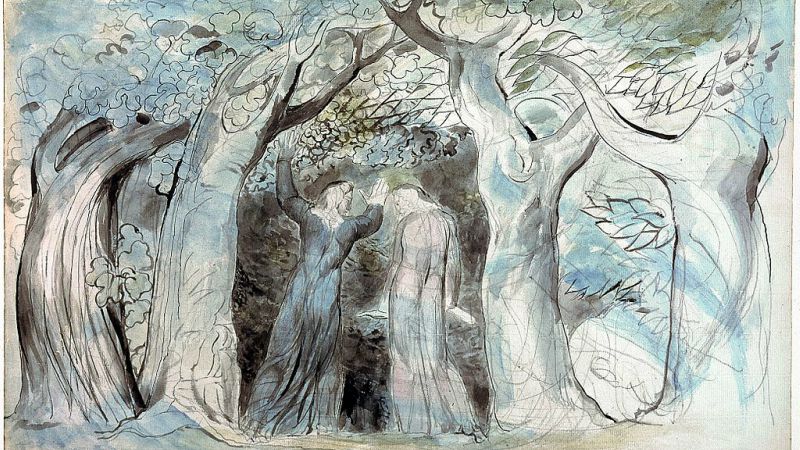
William Blake
Each step on this journey makes things a bit more real. A bit more sphincter tightening. Right now, I have no idea where I am, except that I’m in a place I’d rather not be. No diagnosis except a rising PSA. No treatment plan. Just the knowledge that somewhere in my body are cells working against my survival.
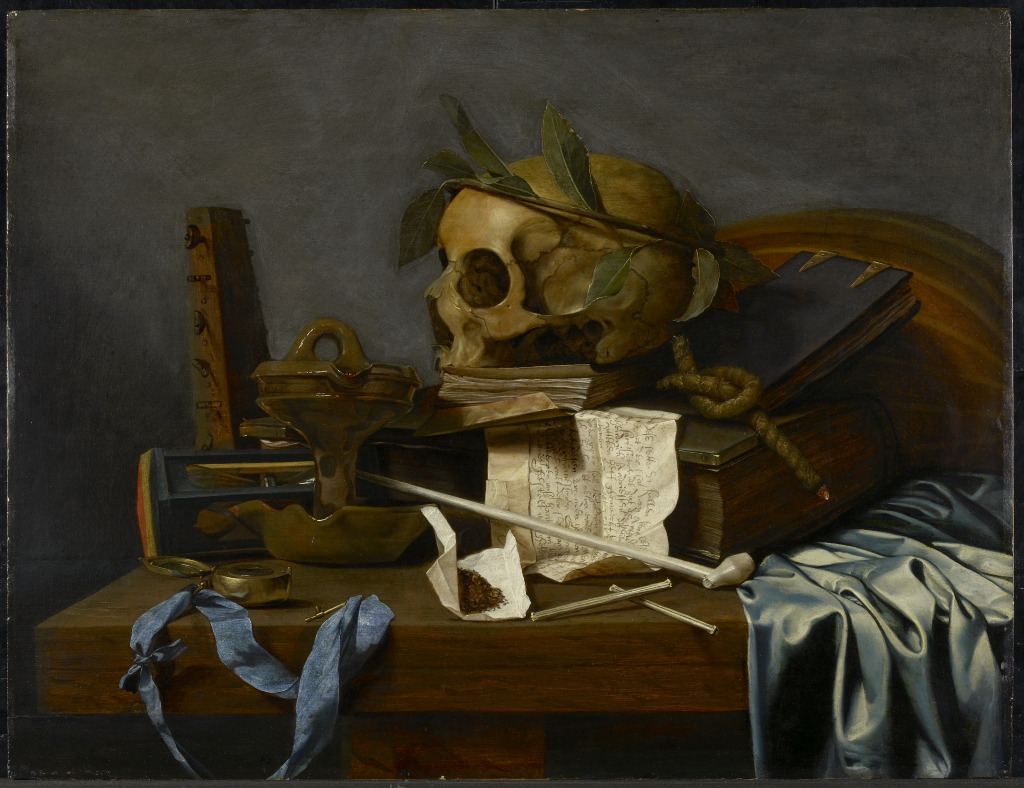
Death Hendrick Andriessen 1607–1655
It’s a strange place to be, ethereal, filled with fantasy. They’ll find distant metastases and I’m doomed. They’ll find a small, localized tumor, zap it with a Buck Roger’s ray gun. I return to a new life free of cancer. The disease is slow, but not fully treatable. I’ll have to live for years with an invader slowly gaining more and more territory. A losing game of go.
I’m sleeping well, not overly distracted or anxious. Yet this is a moment of existential angst, the sort of moment that defines existential angst. Dante helps me see it more clearly. Here are the famous first lines from Canto One, modified just a bit.
Two thirds through the journey of my life
  I find myself within a forest dark,
  For the straightforward pathway has been lost.

Ah me! how hard a thing it is to say
  What is this forest savage, rough, and stern,
  Which in the very thought renews the fear.

So bitter is it, death is little more...
“But, since it came to good, I will recount all that happened there.” This is v. 4 of the Canto and my hope. We’ll see.
Had to go at this head on, today, while it’s fresh. When I got to my appointment with Anna Willis, Dr. Eigner’s P.A., the first person in the room was Eigner himself. Grayer and thinner, he smiled, shook my hand. When I said it was good to see him, he said, “It’s good to see you, too, but I’m not happy about the reason.” When I told him my anxiety made me move the decimal place on my PSA, his relief was obvious, “Thank god.” Anna came in about then.
They both remembered me. Anna remembered my glasses and our visits. Eigner remembered me partly because I’d sent him a couple of emails over the years thanking him, telling him about my life. It was one of the warmest visits I’ve had in a doctor’s office and that felt good.
Davinci robotic arm, Sky Ridge (where I had my surgery)
Turns out though. “When you’ve been perfect (a .1 psa which means essentially undetectable) and that changes, it’s scary.” He went on to say that it most likely does mean a recurrence, a relatively rare thing for those who choose prostatectomy, even rarer if the pathology report read, as mine did, clear margins. Clear margins means no cancer was found on the outside of the prostate. The best news.
Dr. Eigner took out a piece of paper and drew a sort of oblong on it. “This is the prostate. They can’t take sections from every part, so they take representative slices. If the cancer is between those slices, it won’t show up on the path report.” Oh, shit.
Since it is three and a half years since my surgery, and since the number for the uptick is relatively small, it means the recurrence is probably local, that is, in the area where the prostate used to be. That’s good news, much better than metastasis.
The plan is to redo my PSA in three months, doing the super sensitive one that can take the numbers 3 or 4 places rather than just two. If it’s still rising, I’ll get a referral right away to the oncologists to discuss radiation. “We’ll just go in there and kill it,” he said. “If you were older, I’d tell you not to do anything. This will take ten years to manifest anyhow, but at 72 you’ve still got a lot of life ahead of you.” That’s my opinion, too.
the Prostate Specific Antigen
Radiation has some potential downsides, so I hope we don’t have to go that route. But, as I said to Kate, I’ve always chosen treatments that offer the best chance to remain active, and alive. I chose repair for my torn Achilles even though it means two months of no walking and crutches for a good while after. I chose knee replacement over other treatment options because I wanted to continue exercising. I chose a radical prostatectomy because that gave me the best shot at a cure. Likewise here, if radiation is the option that gives me the best chance to survive and thrive, I’ll choose it. No doubt.
All that’s the rational side, and that’s pretty damned important because these are high risk, high reward decisions. But they’re not all of it.
On the way back from Eigner’s I drove through Deer Creek Canyon. When my biopsy confirmed my prostate cancer in 2015, I drove Deer Creek Canyon, too. Going through there I felt the rock, rock so old that our human scale word ancient is quaint. This rock rose millions of years ago and it will slowly soften, the rough edges frozen and thawed, rained on, plant roots will crack them, and Deer Creek will carry the pebbles and sand to the Platte River on its way to the Gulf. Not only will I be dead long, long before then, it may be that the human race will have ended itself well before then, too. This comforts me.
Laramide Orogeny, 70 million years ago, begun. 35 million years ago, ended. Built the Rockies
William Cullen Bryant’s “Thanatopsis” came to mind. See the opening stanza below.* He goes on to make the point that the earth itself is a great tomb, holding all those who once lived. Again, this comforts me. Death has not chosen me for a special fate. No, death itself is a universal for all who live. It seems harsh and cruel, yet it is, rather, the opposite. Death ends suffering. Allows the world to carry many creatures, but not all at once.
Here there were Utes and Apaches, Comanches, too. And even they were not the first. Older humans preceded even them. And before all came the Rockies, then the trees, the lodgepole pines and the ponderosa and the bristle cone, the aspen. Mountain lions, deer, elk, rabbits, raccoons, pikas, prairie dogs, bison, moose, wolves, fox, martens, fishers, beaver. All here before humans, most will be here after we are gone. I can look at the lodgepoles in my front yard and know that their direct ancestors flourished here thousands of years ago and will do so after I’m dead.
All this brackets whatever troubles I may experience, even cancer. And cancer may be that friend that carries me off to the mighty sepulchre. Or, it might be something else. Whatever is my death-friend will not be an enemy, but the specific cause of my life ending. And that is, for all of us, in spite of our fears, a good thing.
Kindred Spirits by Asher Durand William Cullen Bryant and Thomas Cole
* “To him who in the love of Nature holds
Communion with her visible forms, she speaks
A various language; for his gayer hours
She has a voice of gladness, and a smile
And eloquence of beauty, and she glides
Into his darker musings, with a mild
And healing sympathy, that steals away
Their sharpness, ere he is aware. When thoughts
Of the last bitter hour come like a blight
Over thy spirit, and sad images
Of the stern agony, and shroud, and pall,
And breathless darkness, and the narrow house,
Make thee to shudder, and grow sick at heart;—
Go forth, under the open sky, and list
To Nature’s teachings, while from all around—
Earth and her waters, and the depths of air—
Comes a still voice—
Yet a few days, and thee
The all-beholding sun shall see no more
In all his course; nor yet in the cold ground,
Where thy pale form was laid, with many tears…
The oak
Shall send his roots abroad, and pierce thy mould…
Things we think about here. The snowpack, in all regions of the state, is way above average, nearly 150%. That means three things: an easing of the drought that has plagued the state, especially the southwest corner, a solid supply of water for the Colorado River basin states, and a much lessened fire danger over this summer. So much nicer to go into the summer months with good water supply. The arid west.
It means one other thing, too. Rushing waters. As the snow melts, our mountain streams will swell, spill over their banks. Our waterfalls will peak, like the ones just below us, the Maxwell Falls. The sound of these streams racing toward the South Platte (up here, anyhow) is one of my favorite mountain sounds. The soughing of the winds. The bugling of the elk. Late spring streams full and bubbling, babbling, crashing.
These are the Rockies now and have been the Rockies for thousands upon thousands of years. We’re here for a moment. We living things witness. It may be our most important act. We are the universe aware of itself and its wonders.
April, 2016 Gwangju. Just before the wedding
Kate had a not so good day yesterday. Some nausea. A Sjogren’s flare, maybe related. I hate to see her that way. I wish her recovery was one smooth arc from 77 pounds to 100, 105. It’s not and it will not be, but I wish it anyway.
Ruth had her third or fourth Destination Imagination state contest appearance yesterday. D.I., as she calls it, is a national program that has kids join with 4 or 5 of their peers, invent plays, and, this year, respond to improv challenges. There are judges and her team has placed at state the last couple of years in their age bracket. Don’t know how she did yet.
Jon says he’s tired of living in an unfinished house. Due to remodeling at his school, he gets done much earlier than normal this year, April 21st. He plans to use the long break to get a lot of work done. He’s done rewiring, replumbing, cleared out the old kitchen and purchased newer appliances. He’s done work on the kid’s rooms first, building Ruth a platform bed and Gabe a desk.
The first glimmers of new work. I’m taking my cousin Diane’s idea seriously. She wrote: “I think your writings deserve a wide (wider?) daily audience — they so compellingly chronicle daily life along with stretching the readers’ mind — and also possibly they could be gathered/edited in to a book that would appeal to our age group. Have others suggested any such to you?”
My plan is to print out all of ancientrails. I started a while back, but gave up pretty far from completion. That way I can fuss with them in the physical world, compile sheets and posts. Much harder to do, ironically, on the computer. Not sure what I plan to do, but that’s the place to start.
Probably going back to Jennie’s Dead. It’s unfinished and I want to complete it. Though. I may take time, too, to start the book Elise and I talked about, the one that comes from the heart. Main point, work is beginning to reassert itself after the long barren period.
Painting? Yes, that too. Not yet, but soon.
Ta for now. Gotta go down and take Kate off her feed bag. She’ll be free for 10 hours. She sounds much better.
We hit 58 yesterday, predicted 60 today. Snow piles melting, but plenty of snow remains in our north facing backyard. I took a chance on the ice dams, hoping they’d disappear before any damage was done. Not my brightest move ever, but while I was sick dealing with the company who would have had to clean them off and while we were contemplating moving overwhelmed me, and I went into stasis on them. So far, it’s ok. Sometimes you get lucky.
Brief political note: we have a President who’s proud he wasn’t found smoking gun guilty of collusion with a foreign power. Any other president, ever, would have been sunk by the very implication of a treasonous act. How he can be so puffed up about this escapes me. Life in Trumpworld is life down the rabbit hole. The Red King says off with his head!
After my third cancellation due to illness I’m going in Thursday for my new workout. My o2 sats have been low, but not dangerous, then middling, but ok. I think working out over the last four years has kept them in safe territory and I’d like to put that concern to rest. I’ll check them over the next month or so as I return to a more active life. BTW: Kate says my reasoning about a 93% sat in a 75% reduced o2 environment is not sound. “It’s not a linear process,” she says. Makes sense. Still, life in thin air has an effect and not a positive one on 02 saturation.
Just back from my monthly THC run to Bailey’s Happy Camper. Great views of the continental divide, many peaks covered in snow. Their inventory is always in flux and though we prefer Love’s Oven, I had to settle for a couple of brands I don’t know, Green Hornet and Wanna. It still feels a little strange to get in the car to go buy marijuana. No baggies on street corners. No phone calls to your buddy’s dealer. Just walk in, say I’d like this and this and some of that. Pay. Walk out.
Lunch with Alan today at the Lakeshore Cafe in Evergreen. Looking forward to it.
A full recovery moon on the spring equinox. Lot of powerful juju in the air. The season that announces the return of life (except in Nebraska) begins as the moon swells into its most potent form. Of course, this is only meteorological spring, the date we agree on to name the season’s start, so you have to check local listings for time and channel. Here in the mountains spring’s another month away at least. Probably more like six weeks.
Minnesotans are both happy and wary about the coming of spring. It’s been a long, hard winter and to see it in the past will be welcome. As will be the warmth and color. But. There’s a lot of pent up water there, too, just like in Nebraska, water that will get released as the air grows warmer. Could be a major flooding year. The rivers in Nebraska have exceeded historic high water levels by feet. This is the new normal. Extremes.
We’ve got a string of 40+ degree days ahead, including a couple in the 50’s. Then, more snow. Colorado mountain living. As the melting begins here in earnest, Cub Creek, Blue Creek, Bear Creek, Maxwell Creek will all show their might, taking down the mountains from which they run, taking their stony surfaces and moving them toward the plains. It will take a while, but the creeks are patient and wait each year for the spring winds to melt the snow that has fallen and to melt the ice. They’re a wonder in the spring.
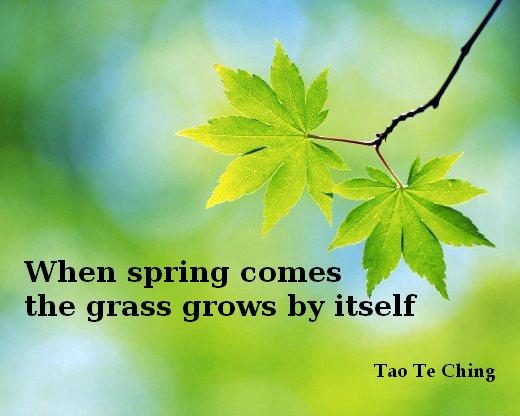
Alan Watts has a book I like a lot called The Water Course Way. It describes the tao as like water, going around obstacles, over obstacles, not stopping, going on its way regardless of what’s in its path, not troubling itself over temporary stoppages, boulders, canyons, even lakes. Soft wins over hard. The soft water slowly picks away at mountains of granite, basalt, gneiss and takes them a grain at a time, over centuries, millennia, eons back to the oceans.
I struggle with this. I’m more, as I think I said here recently, more of a take arms against a sea of troubles and by opposing end them sorta guy. An unreconstructed activist still clinging to the fever dreams of the 1960’s. Yet there is truth in the tao. Is it the only truth? Don’t think so. But in regard to Kate’s circumstances over the last year or so, it has taken a certain let the process work its way out attitude to survive it with our mental health intact. Had we been pushing, pushing all the time (which I am wont to do) then we would have harmed ourselves in the process of making her well. Not only not necessary, but harmful.
April 5, 2018. Near CBE in Evergreen
Spring will come. The flowers and the grasses of the montane ecosystem will burst forth, bring us their ephemeral beauty. The creeks will run full down Shadow Mountain, down Conifer Mountain, down Black Mountain always gouging, prying at the very thing that created them. The lodgepole pines will green up, the aspens and willows along the creeks will leaf out. There will be mule deer fawns, elk calves, fox kits, bear cubs, mountain lion cubs. Skis and poles and boots will go in storage and rock climbing gear, bicycles, hiking boots come out.
This is our home now. And we don’t want to leave it. Still uncertain. Waiting for the tao to show us the right path.
Zoomed yesterday with old friends Paul, Tom, Bill, Mark. Paul’s in Maine, the other three are still in the homeland, getting blasted by an old-fashioned grit your teeth, squeeze the steering wheel, freeze up the nasal passages Minnesota winter. Nostalgic, eh? Given my 40 year residence there I’m ashamed to say that I’m not sorry to have missed it. Minnesota macho no longer.
30 years + I’ve known these guys. There’s an ease to being with them, even in little squares (Hollywood Squares sort of) created by the magic of pixels and bytes. We know the back story, the good times and bad, the struggles and the victories. When we speak together, the subtext is often as loud as the spoken. When Roxann’s mother faces the transition from home to assisted living, we know about Tom’s mother and the long process finding her a safe place. When Bill says, how do you solve a problem like Regina, paraphrasing the Sound of Music, his history with the Jesuits and hers as a nun is unspoken. So is the difficult time span of her death from cancer now some years ago. Old friends, like old dogs, are the best.
Ode signed in from near Muir Woods, a cottage overlooking the Pacific. Two weeks of vacation. Tom’s headed for Hawaii and Mama’s Fish House later in the month. Bill spent five days in Florida. Paul had, and I think I had something very similar, a disease that his doctor called the plague. His doctor fingered the same culprits as Kate did for me: kids. Fomites, Kate says. Paul visited grandkids; I taught 6th and 7th graders.
post furmination
Took the Kep in for furmination yesterday. Before our now below zero temps we had a run of 50 degree weather. (The reason Minnesota macho has faded from my body.) Blew his coat. When he blows his coat, he looks like a ragamuffin, small tufts of fur his body deems not necessary hanging all over, falling off, making Kate crazy. Off to Petsmart for a thorough wash, comb out, vacuuming. He looks pretty good now.
Ode talked about living a stress free life. I know what he means, no work deadlines, no income needs, no drama at home, much less home maintenance (condo), the chance to go where you want, when you want. Like California in the midst of a brutal Minnesota winter. The chance to work on art projects either set aside while working or not pursued. The chance to visit with old friends, go to the Robert Bly evening at Plymouth Church. In general a life peaceful, not troubled by the undercurrents of the workaday world. He calls this The New Senior Reality Game-plan. And good for him.
Not my goal. I thought about it. I see the allure. In some ways I wish I could want that, too, bow out of the ongoing stream of pressures, both domestic and personal. But I don’t want it. To be clear I’m not a stress junkie, nor an adrenaline junkie. I manage my anxiety much, much better than I ever have, not letting the day’s troubles spill over into what might happen next. I’ve tried and often succeed at acting without care for results. But stress per se still keeps me engaged.
I like the challenge of learning to teach middle schoolers, of integrating enough of the Jewish tradition to walk among my friends at CBE, of caring for Kate and the dogs. I like the challenge of coming up with a new novel, even though I’ve never sold one. I like the challenge of becoming a better painter, of finding my voice with oils. I could give up home maintenance responsibilities, like when we have ice dams to deal with or a driveway to plow or electrical matters to resolve. The priority of the living ones in our nuclear family, Kate, the dogs, and myself vitiate that for now, however. I enjoy the challenge of learning about astrology, keeping up with science, especially NASA and genetics.
still me
Stress itself is neutral. In fact, it can be a good thing, motivating us to stay in life, to learn, to engage, rather than become socially isolated. It can, of course, be too much. And recently I’ve had more, much more, than I want. I would appreciate it if some of this stress would fall away. Kate gains 20 pounds, gets her stamina back. I’m back to working out, a real stress reducer. I have a novel and a painting underway again. But for all the stress in my life to go? No, not for me.
I’m in this life fully until it’s over and for me that means stretching myself intellectually, emotionally, spiritually. Stress free is not for me.
we’re waiting to transition to a feeding tube placed in the jejunum
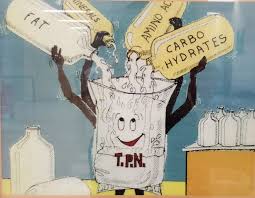
UPS delivers vitamins and bags of nutrients for Kate. On Tuesday we got a box with a styrofoam container, two gel packs to keep things cool, bubble wrap filling the container, about 12x12x12. Two vials of vitamins. Next day, two more boxes, same size, syringes, nutrient bags, batteries (a fresh 9 volt goes into the pump every day), saline flushes, heparin locks, tubing for the pump that connects to Kate’s picc line.
The logistics of this tpn feeding are remarkable. Not only do they have to ship us the right amount of stuff, it has to get here on a timely basis. And, the nutrient bags have a mixture that is tuned according to Kate’s labs, which can change on a weekly basis. Somebody has to coordinate all that and make sure the counts are right, the nutrient’s up to date, and that it gets here so we can use it. But, you can’t send too much at once because the tpn might be stopped, or certain things, like the vitamins and nutrients might spoil.
It’s no wonder medical costs are high. All of these things are one use only: syringes, nutrients, saline flushes and heparin flushes (each in their own individual packing), batteries, tubing, alcohol wipes, even the packaging for the deliveries. The need for sterility drives most of this. Kate’s picc line ends near her heart in the superior venous cava, which means there is a direct link between the outside, non-sterile world and that vip organ. Even the tiniest mistake in sterile procedure could have disastrous, catastrophic results. No pressure, eh?
I’ve gotten more facile with the various steps required to change out Kate’s nutrient bags. She draws the vitamins out of their vials using syringes. She and Julie, the home health nurse, make that look easy, but my fingers don’t find it so. As Kate said, my dexterity is in my brain, not my fingers. The rest of it, I can do. I could figure that one out, too, but with Kate’s expertise, why?
Grieving now. Looking at things around the house with that critical, ok what do we need to do with this in order to sell the house eye. Driving up the mountain considering how many more times I’ll be able to see Black Mountain on my left as I climb Shadow Mountain to our home near its peak. Not anxious about it, just sad.
Place is very important to me. Andover taught me that. Even though we lived there twenty years I never made my peace with the suburban blandness. No there there, was the way I put it. Oh, yes, our property had a definite sense of place, but it was set in a context that numbed the mind. At least my mind. Here, the opposite is true. I love the mountains, the vistas, the curves in the road. The weather. The ever changing face of Black Mountain.
As the John Muir quote on my e-mails says, “You are not in the mountains, the mountains are in you.” It’s an aesthetic sensibility. Over my years at the MIA I learned how important aesthetics were to me. Always have been. Deep in my soul. Perhaps it’s even the root of my pagan leanings, the aesthetic link I feel between myself and the natural world.
The support team arrived. We went to three Baily landmarks. The Rustic didn’t open until 11:00, so we wandered back across 285 to the Cutthroat Trout Cafe. Which Mark observed, “Doesn’t serve any fish.”
The food was good, straight breakfast, no fancy names or ingredients. Eggs, pancakes, hash browns, coffee, toast, jelly. Our waitress had been there since 5 am. “Yes, mostly coffee drinkers before six, but there are two gentlemen who come in and eat pretty regularly.” She had on an I love Goonies t-shirt.
Since the Sasquatch Outpost was right next door, we walked in there. I bought Kate a Sasquatch doesn’t believe in you either t-shirt from among the many, many Sasquatch themed items on offer: a bar of soap shaped like a Bigfoot foot, a Bigfoot riding a motorcycle, signs: Caution Big Foot Breeding Area, avoid eye contact, Warning Big Foot Area Stay on Marked Trails, hats, sweatshirts, books, scarves.
Shoppin’ for weed
Next stop. The Happy Camper. These old enough to remember dial phones and black and white tv guys stepped into the brave new world of cannabis with a cash register to take your money. Mark had a bit of culture shock. So many options, so little hassle. He chose some thc capsules. That night both he and Tom enjoyed a better sleep. A big deal for both of them.
After Bailey we came back to the loft and hung out. Talking. Then it was nap time so we rolled out our mats, oops, no, kindergarten. Tom and Mark went back to the unusually decorated B&B, Arrowhead Manor, and I went downstairs.
We reconvened at 5 pm for a trip to Sushi Win. Sushi Wins’ owner no longer accepts credit cards or checks, just cash. Mark had an unusual roll that came in a seaweed cone wrapped in black and white checkerboard paper and presented in an ice cream cone stand. Very mod. Tom and I had the sashimi bowl. As usual Sushi Win had few customers, quiet.
I’m gonna say between 12 and 15 inches over the last 36 hours. We’ve been plowed twice and our contract specifies 6 inches as the minimum for a push. I’ve cleared the back decks 4 times, or 5, and this morning it was as much as it was yesterday morning, maybe more. I’m pretty weary from it. With the new palette/deck it increases the amount of snow I have to move and reduces the places I can put it. Creates a tough situation.
All of us up here love the snow, in part for the beauty and in part for the practical reasons I mentioned yesterday. That doesn’t mean it’s always easy to remove or a joy to drive in. Right now, I could wait a bit for our next big storm. Nothing on the horizon right now.
Considering some snow shoeing. I’ve not done that much here. Great cardio and beautiful, quiet here in the mountains.
Gonna look at material for the religious school class on the 16th. Alan will be back from Argentina. Our lesson theme is yirah, awe. Getting fifteen inches of snow over 36 hours creates yirah. We do not impact the weather, at least not directly. Yes, climate change is effecting the sorts of weather we get, but we don’t get to choose the diverse effects of our self-genocide. Fifteen inches of snow is like a volcanic eruption or a tsunami or a tornado, sudden, unpredictable except just before the fact, a natural act that changes the immediate environment dramatically. Though not as devastating as those violent manifestations, a great snow storm does show the power of the natural world, something to which we have to adapt rather than something we can manage.
Those of us inside homes with heat, water, plumbing, a full refrigerator, a kitchen can, and often do, ignore the rain, the snow, the high winds, perhaps only remarking casually, “Listen to the rain.” “The snow’s so beautiful.” “Those winds are really howling.” In doing so we shield ourselves from yirah. Yirah is the Hebrew word often translated as fear in the Torah, as in fear of the Lord. Remember Moses and the burning bush? Yirah.
Yirah and kadosh, holy or sacred, go together. Rudolf Otto defines sacred as an experience of awe, yirah, and the mysterium tremendum et fascinans: mysterious, awesome, urgent, attractive in spite of our fear. “As mysterium, the numinous is “wholly other”– entirely different from anything we experience in ordinary life.” Kenyon College. I disagree here. We experience natural acts, acts that have a cause in the world we know, that are so far beyond our control that though we do find them in ordinary life, they are also, at the same time, wholly other. Ask anyone who’s seen the ocean recede, then come blasting in as a tsunami hits. Ask anyone who’s felt the earth, the solid stable never-changing earth, shake beneath their feet. Anyone who’s been been faced with pyrocastic flow.
When I was 10, back in 1957, I visited my aunt and uncle in Mustang, Oklahoma. About 3 am one morning, my uncle Rheford came in and shook me awake. “We have to go.” I followed him out the backdoor of the house and into the ground. Wind and rain battered us as we went down the steps into the storm shelter. The wooden doors closed behind us and a thick chain was passed through inside door handles then linked to a hook set in the concrete floor. When the tornado crossed over us, the oxygen got swept up and out of the shelter, the doors banged and clanged like living things. Afterward, we went back up the stairs, fearing what we might see. The post office, attached to the front of Uncle Rheford and Aunt Ruth’s house, was gone. Just. No. Longer. There.
Something experienced in ordinary life but also wholly other. I’ve been following a sailing race, the Golden Globe, in which several skippers competed against each other in solo jaunts around the world. Ask any sailor, solo or not, who’s navigated the roaring forties about yirah and mysterium. They’re manifesting every day, every hour in places most of us will never go; but, a few do. Wholly other, but also part of the same puzzling universe which coughed us up into life.
A long road to an old observation, the sacred in the ordinary. Religion has too long tried to cordon off the domains of holiness, of the sacred, of the divine. And not only cordon them off, but claim control over the experience of them. This is human, yes, to identify our own experience as unique, as special to us and ours. But it is not true that either awe or mysterium tremendum et fascinans, is only wholly other, and it is especially not true that Christianity or Hinduism or Tibetan Buddhism or Islam or Mormonism has the only safe way to encounter them.
In just a moment I’m going to go back downstairs in a world transformed by snow. It’s awesome and mysterious. And right here, right now.
Geez. Talk about over performing. The WeatherGeek, a nearby Conifer Mountain resident who posts on Pinecam.com, says he cleared 12 inches off his drive this afternoon. 8-10 inches here, at least. Maybe 12. Certainly will be a foot plus by the time the snow ends early tomorrow morning. The mountains feel weird if they stay dry and brown well into January as has largely been the case until today.
Reminds me of Per Hansa’s death in Giants in the Earth. Our house.




 My plan is to print out all of ancientrails. I started a while back, but gave up pretty far from completion. That way I can fuss with them in the physical world, compile sheets and posts. Much harder to do, ironically, on the computer. Not sure what I plan to do, but that’s the place to start.
 A full recovery moon on the spring equinox. Lot of powerful juju in the air. The season that announces the return of life (except in Nebraska) begins as the moon swells into its most potent form. Of course, this is only meteorological spring, the date we agree on to name the season’s start, so you have to check local listings for time and channel. Here in the mountains spring’s another month away at least. Probably more like six weeks.
 Alan Watts has a book I like a lot called The Water Course Way. It describes the tao as like water, going around obstacles, over obstacles, not stopping, going on its way regardless of what’s in its path, not troubling itself over temporary stoppages, boulders, canyons, even lakes. Soft wins over hard. The soft water slowly picks away at mountains of granite, basalt, gneiss and takes them a grain at a time, over centuries, millennia, eons back to the oceans.
 Zoomed yesterday with old friends Paul, Tom, Bill, Mark. Paul’s in Maine, the other three are still in the homeland, getting blasted by an old-fashioned grit your teeth, squeeze the steering wheel, freeze up the nasal passages Minnesota winter. Nostalgic, eh? Given my 40 year residence there I’m ashamed to say that I’m not sorry to have missed it. Minnesota macho no longer.
 Not my goal. I thought about it. I see the allure. In some ways I wish I could want that, too, bow out of the ongoing stream of pressures, both domestic and personal. But I don’t want it. To be clear I’m not a stress junkie, nor an adrenaline junkie. I manage my anxiety much, much better than I ever have, not letting the day’s troubles spill over into what might happen next. I’ve tried and often succeed at acting without care for results. But stress per se still keeps me engaged.

 It’s no wonder medical costs are high. All of these things are one use only: syringes, nutrients, saline flushes and heparin flushes (each in their own individual packing), batteries, tubing, alcohol wipes, even the packaging for the deliveries. The need for sterility drives most of this. Kate’s picc line ends near her heart in the superior venous cava, which means there is a direct link between the outside, non-sterile world and that vip organ. Even the tiniest mistake in sterile procedure could have disastrous, catastrophic results. No pressure, eh?
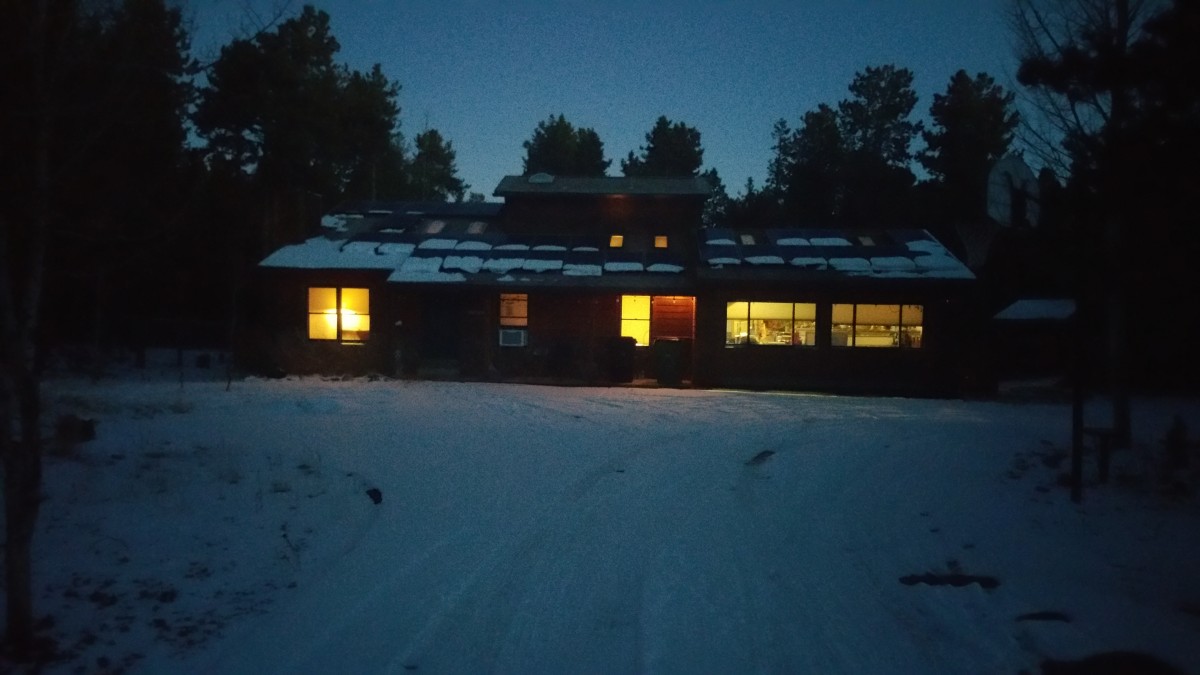 Grieving now. Looking at things around the house with that critical, ok what do we need to do with this in order to sell the house eye. Driving up the mountain considering how many more times I’ll be able to see Black Mountain on my left as I climb Shadow Mountain to our home near its peak. Not anxious about it, just sad.


 Gonna look at material for the religious school class on the 16th. Alan will be back from Argentina. Our lesson theme is yirah, awe. Getting fifteen inches of snow over 36 hours creates yirah. We do not impact the weather, at least not directly. Yes, climate change is effecting the sorts of weather we get, but we don’t get to choose the diverse effects of our self-genocide. Fifteen inches of snow is like a volcanic eruption or a tsunami or a tornado, sudden, unpredictable except just before the fact, a natural act that changes the immediate environment dramatically. Though not as devastating as those violent manifestations, a great snow storm does show the power of the natural world, something to which we have to adapt rather than something we can manage.
 Yirah and kadosh, holy or sacred, go together. Rudolf Otto defines sacred as an experience of awe, yirah, and the mysterium tremendum et fascinans:
  Something experienced in ordinary life but also wholly other. I’ve been following a sailing race, the Golden Globe, in which several skippers competed against each other in solo jaunts around the world. Ask any sailor, solo or not, who’s navigated the roaring forties about yirah and mysterium. They’re manifesting every day, every hour in places most of us will never go; but, a few do. Wholly other, but also part of the same puzzling universe which coughed us up into life.


