Spring New Shoulder Moon
 As one of Dr. Agronin’s youngest informants said, even when physical decline and losses restrict one’s options, there remains the capacity to appreciate and approach each day with a sense of purpose. “It’s all about how you frame what you have,” she told him.
He cites the concept of “positive aging” developed by Robert D. Hill, a psychologist in Salt Lake City, that is “affected by disease and disability, but not contingent upon avoiding it.” Rather, it is “a state of mind that is positive, optimistic, courageous, and able to adapt and cope in flexible ways with life’s changes.” Finding Meaning and Happiness in Old Age, NYT, March 20, 2018
The third phase of our lives, the one that we enter when career and creating a family have faded in importance, or ended, has a mental image for most of us past 65 of decline, of a gradual decrease of abilities and agency. This image comes from our childhood when retirement was predominantly of the finish line sort, work was over, now we wait. That waiting often wasn’t long with heart disease or stroke or a bad fall ending it.
 Hopefully, our children, the millennials among them, will look at us and come to that phase of their lives with a different image. My hope is that they will see that aging is the accumulation of years, not a time of diminished hope and diffuse fear, but life continuing. If that image can become dominant, it will look like the diverse approaches people have to their first and second phases. In other words the third phase will have as many distinct trajectories as there are people who enter it. It will not be dormancy, or a pause before dying, but life itself.
Is the third phase the same, then, as the first two phases, just creakier? No. Like the first two, when education dominates, when building a career and raising a family dominates, it has its distinctiveness. Perhaps its most salient characteristic is open endedness. In the third phase there is, at least now, no culturally limned outline; perhaps that will change, I don’t know, but right now, thanks to the old finish line model of retirement, the third phase has no particular flavor. Or, perhaps, it has a negative flavor as I indicated above, of decline and loss of agency. Even that negative flavor though leaves the third phase open.
That very undefined nature daunts a lot of people. If your life counted on work for self-definition, if your family, with children or not, made your life worthwhile, the thought of years, maybe as many as 25 or thirty, with no such hooks for meaning can make the future look bleak, as if you were entering a time when life flows on around you, in spite of you, even without you.
 I like Robert Hill’s definition of positive aging: (It’s) “affected by disease and disability, but not contingent upon avoiding it.” Rather, it is “a state of mind that is positive, optimistic, courageous, and able to adapt and cope in flexible ways with life’s changes.”
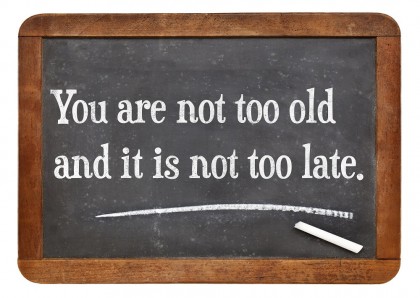
The idea of resilience has gotten a lot of play recently. My sense is that is key to positive aging.
A telling article on resilience in childhood from the Harvard Center for the Developing Child has some hints for us third phase folk. For instance, here are some factors that enhance resilience in children:
- facilitating supportive adult-child relationships;
- building a sense of self-efficacy and perceived control;
- providing opportunities to strengthen adaptive skills and self-regulatory capacities; and
- mobilizing sources of faith, hope, and cultural traditions.
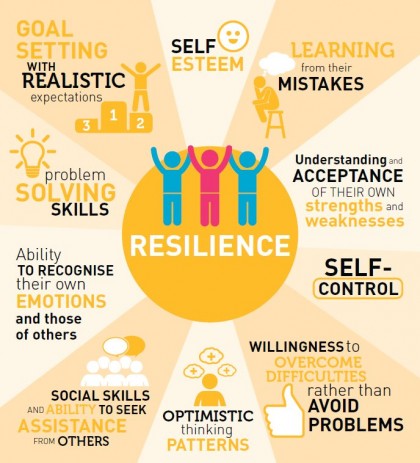
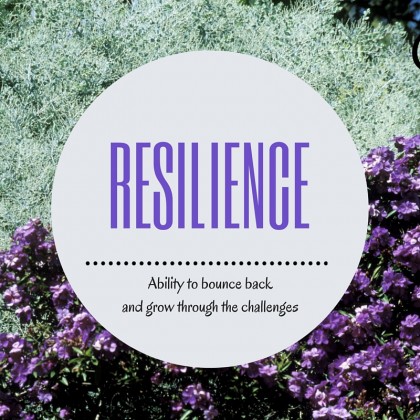 Not only in children, I think. Resilience can allow us to accept the changes of the aging body without losing hold of the power of our own lives. With a resilient personality even ALS will not cause us to stop growing. Just look at Stephen Hawking.
As we enter the third phase, or as we cope with its vague demands, focusing on enhancing our resilience will help us adapt, remain flexible. Perhaps resilience is nothing more than following the tao, finding the energy and flow of the universe no matter what externalities are present in life. I’d like to think so.
 The last letters of the Hebrew alphabet now have renderings in sumi-e, lying on my table ready for quotes and the chop. A member of Beth Evergreen last night referred to me as an artist. Oh. I thought he said audience. Artist is not a word I’ve ever associated with myself so my brain heard something else. A revealing moment. How others see us is not always, perhaps often, not the way we see ourselves.


 71 times Valentine’s Day and I have shared a moment. This was a quiet one, a good one. Decided I would cook Kate a special meal. In all our years together I’d never done that. It felt great. Went to Tony’s Market (upscale groceries, great meat). Bought a ribeye and some model thin asparagus. Kate found some tiny potatoes. Candles and jazz from Kate’s Pandora Satchmo and Ella channel. Just right. Later, a dusting of snow.
 At one point concentrating on Colorado and the west. At another, more Taoism. Stop writing novels. Read more. A lot more. A year of the Tao or a year of the West. Travel. In our immediate region. As much as possible. Continue with the sumi-e. Take classes? Go to a Progoff workshop?
 Hippity hop to the ortho shop. Kate’s got an appointment at Panorama Orthopedics today. Her right shoulder. She can no longer hold things up with her right arm and has to use two hands to put dishes away, sometimes to lift a cup. Annoying and painful. Screws up her sleep, too. She needs some kind of solution, more than likely a shoulder replacement. This is the first step, a consult to see what her options are.
 An interesting week ahead. A session on green burial tomorrow night at CBE. It’s part of a conversation about creating a Jewish cemetery up here in the Evergreen/Conifer area. Oddly, I think I’d like to work on that. The next night, Wednesday, is Tu B’Shevat, the New Year of the Trees. Judaism has a lot of pagan inflections, Tu B’Shevat and Sukkot, a harvest festival at the end of the High Holidays, for example. Looking forward to this one because there’s a seder, too, with seven species of fruit and nuts. I’ll explain more on Wednesday. After the this celebration is another Kabbalah session, more double letters in the Hebrew alphabet.
 Rigel has her second appointment at the Vet Referral Clinic with Dr. Bayliss this Friday, too. I’m excited about it because we’ll get a clearer picture of what’s going on with her. And, it’s not the dire prognosis we anticipated when we took her in a week ago last Friday.
 We have a cookbook, Twelve Months of Monastery Soups, and I’ve been making soups out of it that Kate thinks sound good. She has a favorite, vermicelli soup, a vegetable soup with noodles. I made some for her last night.
 Winter break continues. The identity crisis has passed as I knew it would. The crisis focused on my passive choices, taking the path of least resistance after college and I did do that, giving up my intentionality about career to a socialization experience with clergy-focused fellow students. But. Within that decision to just follow the education I had chosen as a way to get out of a dead end job and an unhappy marriage, I was intentional.
 I thought I had my life direction nailed down. College, graduate school. Some sort of professional career, perhaps lawyer, perhaps professor, perhaps something not visible from within the boundaries of an Alexandria, Indiana horizon. Then, my mom died. That threw my final year of high school into turmoil. God, this hurts just writing about it.
 Most kids heading off for college, especially in the fifties and mid-1960’s, had a similar desire. Shape that adult self. Live into an adult role. The expectation was that college would provide room for exploration, trying on this and that persona, in effect researching skills and passions, until something coalesced. Then, earning money and work would merge into an expression of who you were. That’s why college was called then, the moratorium years. College was explicitly a time to be low on commitment, but high on exploration.
 I loved anthropology, too. Enough, it seemed, to make it a career. I combined my interest in philosophy and decided to enter the narrow field of theoretical anthropology, thinking about how anthropology works, how it could work, how it should work. That turned out to be a mistake and one I didn’t recover from. I applied to, and was accepted, at Brandeis and Rice, for graduate programs. But because my field was theoretical anthropology, I got no financial awards. That meant I needed a fellowship and I was nominated for a Danforth. In the end though, the end of college and of a political career based on radical politics at Ball State, I chose to do nothing. Just. Nothing.
 And so, here I am at 70, no career I really chose except writing and that one I couldn’t have sustained had it not been for the grace and love of Kate. There’s my identity crisis. Who have I been? What have I wanted to do with my life? Late in the game to ask these questions though to be honest they’ve surfaced right along since Wabash.
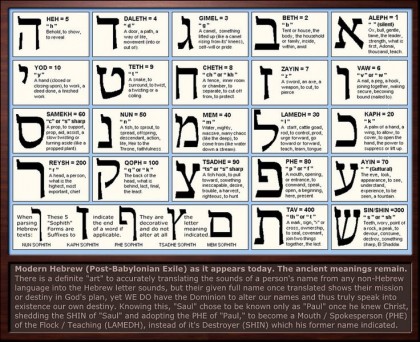 Finished chapter 1 in the Hebrew text, about half way through chapter 2. My plan is to keep working on the chapters until I’ve finished. The Hebrew class itself is a bit chaotic, lots of great information, but they’re teaching Aleph and Bet, beginners and next level, together. I’m out to sea at least part of the time. OK. Most of the time. Still, I can now recognize shabbat in Hebrew and pronounce five letters. Slooooowwww. Next class with Joann Greenberg at 4:30. Two weeks ago Bill and Tom were here for the class.
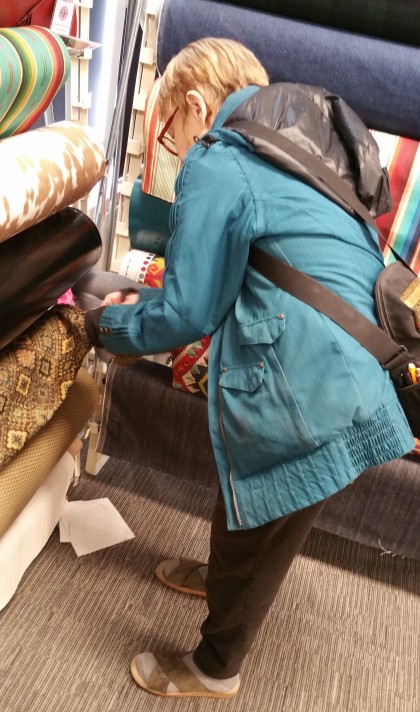 Kate and I have begun an ongoing effort to help her manage the fatigue which Sjogren’s, rheumatoid arthritis, sarcopenia and reduced available oxygen cause her. We have to be smarter about what mix of activities she does and what ones I do, yet we can’t set up a situation where she becomes housebound. Not good. A delicate balance. Right now we’re looking at the week ahead and trying to imagine how the week will challenge her, then planning for that. A transition to a new phase of life for us.
 Trying out another browser, Firefox Quantum. Changing browsers is a hassle, but the benefits of Quantum seem considerable. Right now I’m still on Chrome, but I plan to complete the transition today. I’ll let you know how the transition goes-for those who might care.
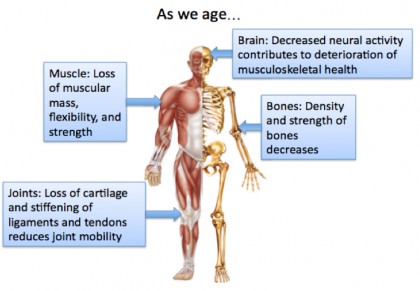 Set a time on Thursday to get a new workout. The old one has grown stale, but it brought me to a new level of fitness, one I can feel in day to day activities. Exercise kicks in endorphins for a right now feel good, but it’s most important role is health maintenance. Sarcopenia, the slow decrease in muscle mass that begins in our 40’s, accelerates in our 70’s. You know, opening jars, lifting boxes, pushing a snow shovel, cleaning up the garage, carrying in groceries, all those everyday uses of our body become harder and harder.
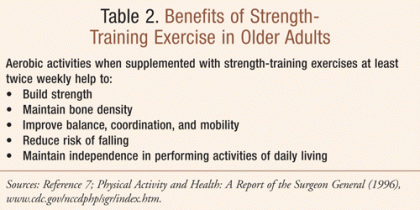 Exercise is a way to push back against these changes. It doesn’t solve them, but it helps. The cardio work maintains the pump that literally keeps us alive, helps it respond to crisis modes without giving up. Been at it so long it’s just part of my day.