Red Herring Art Supply: Life is a Red Herring for Art. Life distracts from creating your next master piece. Be strong. Take control. Make your Art.
Casa Bonita
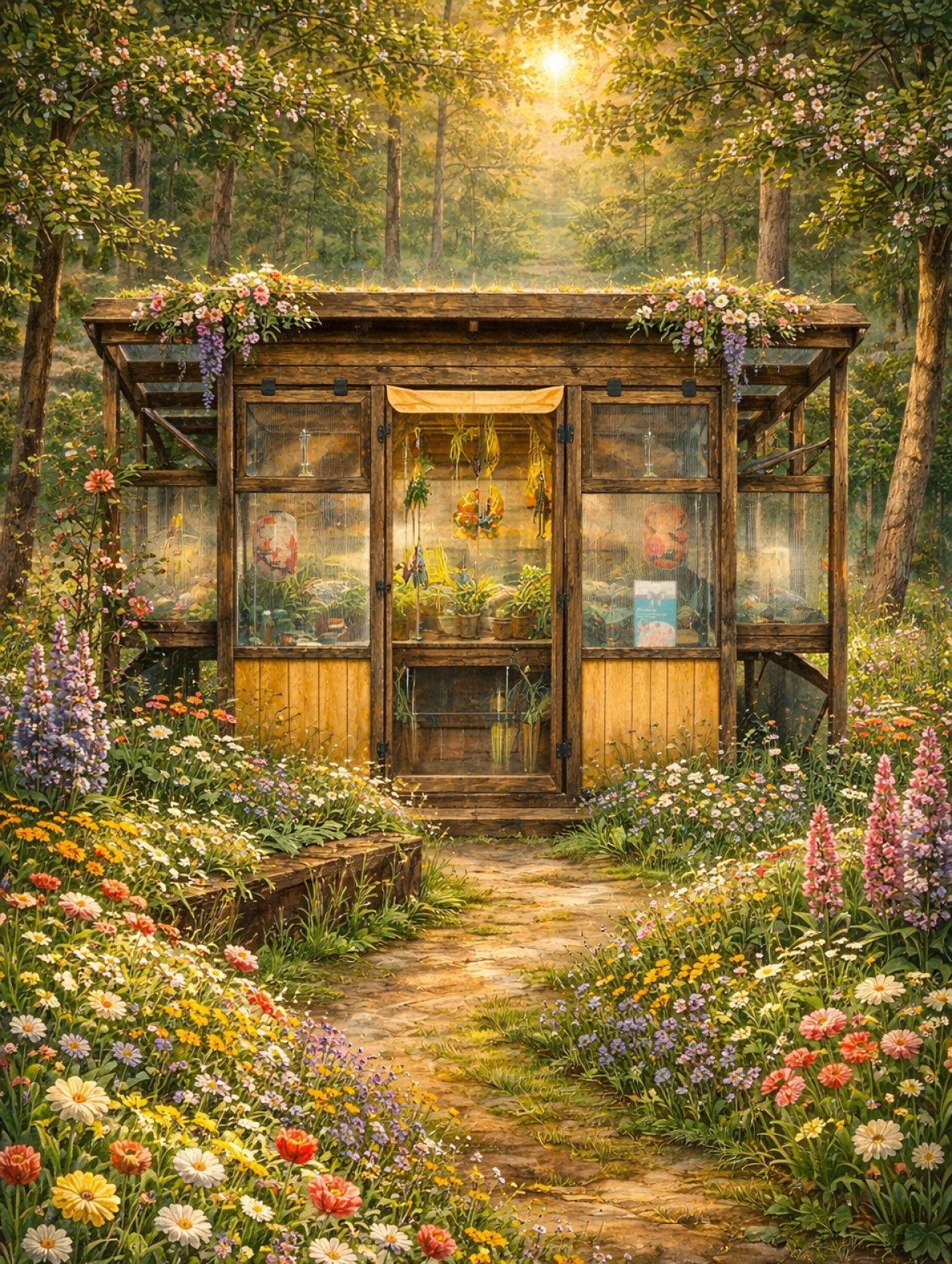
This odd little gallery cum art supply store sits at a right angle to the biggest Mexican restaurant in Denver, Casa Bonita. Not to get too distracted but Casa Bonita has cliff diving! inside. It defines whatever Spanish is for kitsch. And pink at that.
Kristi, the owner of Red Herring Art, is a pleasant, voluble person. The Colorado Sumi-e Society meets at Red Herring, so when I gravitated to the brushes and rice paper and ink sticks, we started to talk. She showed me a brush with faux jade beads as handles. “Would you like to try the rooster tail brush?” Say what? “Yes,” she said, “since we raised chickens when I was a kid, I was surprised to see rooster tail feathers uses in a sumi brush.”
I picked up the brush, a bigger one, with, sure enough rooster feathers hanging down where the usual goat or sable hairs would be. Dipping in the pot of water she offered me, I brushed a zen circle on a board she has that is reactive to water. It surprised me. In that it worked. “I don’t think I’m ready for this one yet.”
After buying a pad of larger rice paper and a larger roll, I picked out a new goat hair brush and a set of Japanese water colors for sumi-e. All the while we were talking and Kristi invited me to come to the Colorado Sumi-e meetings on the last Tuesday of the month. “You know, I use Kraft paper and plain old newsprint for practice.” Huh. Kraft and newsprint is cheaper than rice paper, for sure.
Kristi liked me, apparently, because after she rang me up, she said, “I’m going to give you the 40West discount. Because you should really be in it.” Took 10% off my bill. Nice. 40West is a Denver creative arts district that includes the area around Red Herring and Casa Bonita. Just up a slight rise behind Casa Bonita is the Rocky Mountain College of Art and Design.
“Oh, I’m just playing I said. I don’t have any real ambitions.” “We’re all just playing, especially when we take up a new medium.”
Pushed me back a bit to Thursday and those instances of joy. Play and joy go together, too. Maybe, come to think of it, that was the real message behind my last melancholy. Stop being so serious. Let go, lighten up. Have more fun.
“The noun simcha is mentioned in the Bible 94 times and is derived from the verb samach, which appears 154 times in the text. It is rooted in the Akkadian word shamahu meaning sprout or flourish.” Simcha, The Dayton Jewish Observer
A thing of beauty is a joy forever. So says Keats in his Endymion. Kate and I are leading the mussar class on Thursday, focused on joy and sadness. What else is a joy forever?
Most of the material I’ve read about joy distinguishes it from pleasure with a time distinction. A bite of food, a kiss, a winning hand, a new toy brings pleasure in the moment, but the pleasure dissipates quickly. Joy, to paraphrase Keats, is a thing of beauty forever. Joy, in other words, is lasting.
Rabbi Jamie says true joy can be recalled and experienced again whenever we want. Not fully sure about that, but a finger on the scale in favor of a lasting experience seems right to me.
Chagall, Fiddler
Kate has come up with an exercise that will get us started on considering joy in our own lives. She designed a sheet with three columns: single-digit, adolescence, adult. We will write as many instances of joy as we can recall from each of these life phases. My hope is that in telling our stories of joy that we can experience them again and help others experience them with us.
How can we increase joy in our lives? Can we? (A)…rabbinic teaching concerning simcha points to the inner self as the source of contentment and joy. “Aizehu ashir? Hasameach bechelko, Who is rich? He that rejoices in his own portion (Avot 4:1).” ibid
So at least part of joy is perspective. What makes our life rich? Joyful? Knowing what is enough. What is enough? No less than we need, no more than we require. This seems to link joy to gratitude. If we have enough, we are grateful for what we have. Our life gains in simplicity since we don’t end up on the constantly promoted hedonic treadmill.
With simplicity, then, we know deep satisfaction. Not only do we have enough, but we do not waste our energy and our worry on getting more. Ah.
Last week at mussar we had a fascinating conversation on the essential dourness of both Jewish and northern European cultures stimulated by the Norwegian concern that they had won too many medals in the winter Olympics. In both cases happiness, and by correlation, joy, are suspect. Why are you so happy? What makes you think that will last?
In the Jewish instance this trait seems to correlate with the multiple times in Jewish history, starting with slavery in Egypt, that a golden age or at least a comfortable existence had been destroyed by pogroms, the expulsion from Spain, the holocaust. Are you happy now? Just wait.
In the northern European instance it seems to have more to do with seriousness. “For the soul is dead that slumbers, And things are not what they seem. Life is real! Life is earnest! And the grave is not its goal; “Dust thou art, to dust returnest,” Was not spoken of the soul.” Psalm of Life, Henry Wadsworth Longfellow
early cave painting
Both cultures, in other words, find joy and delight and glee and exultation, ecstasy and exhilaration suspicious at best and distracting at worst. Distracting from what? From the possibility of life’s stability being snatched away in an instance. From the need to keep the shoulder to the grindstone, quite literally. From the guardedness that protects us from disappointment, suffering, pain. Joy may make us vulnerable.
So it’s no wonder that joy is a middot, a character trait that needs cultivation. The soil for it is rocky, like that in our backyard here on Shadow Mountain, at least in these two cultures.
Joy Brown, creative joy
How to do that? I chose to scan my life looking for joyful moments. My hope is that I can begin to identify in the now, embrace them, live in them. Looking at my list (it’s posted here.) I can see some common threads. Intimacy: seeing Orion at night, dogs nuzzling, the mountain night sky full of stars, hugging Kate, hearing from Tom, Bill, Mark, seeing them. Challenging myself: learning Latin, using my sumi-e brushes, grinding ink, having a new idea, reading a new book, writing ancientrails. Letting the world in: driving over Kenosha pass and seeing South Park laid out ahead, the golden aspen among the lodgepoles on Black Mountain, paying close attention to the natural world. Being in community: working with Marilyn and Tara and Anshel, setting up for adult education events at Beth Evergreen, having an idea, sharing it, seeing something happen. Travel: hearing the howler monkeys on the road to Angkor, leaving for a trip, rolling retreats (roadtrips), the earthen smells when getting off the plane on Maui, Kauai, Hawai’i. Inner moments: the moment of mystical connection with the universe in 1967, meditation, remembering the two year old me who learned to walk after polio, mindful cooking.
One track for increasing the joy in my life then would be to seek intimate moments, identify new ways to challenge myself, stay alert and let the world in, continue at Beth Evergreen, travel, allow time to cultivate the inner life.
“On the bright side, simcha is a word laden with exhilaration and festive activities. Simcha expresses not only the joy of an event, but it is also the noun which means a happy event.
A holiday is a simcha, a family gathering is a simcha, a wedding is a simcha, the birth of a child is a simcha and a Bar or Bat Mitvah is a simcha.
The host of an event is a baal simcha and the sound of joy resonating from the event is kol simcha.
Simchat yetzirah, a joy of creativity, is a way to describe the exhilaration one feels while being engaged in a creative process…
(A)…rabbinic teaching concerning simcha points to the inner self as the source of contentment and joy. “Aizehu ashir? Hasameach bechelko, Who is rich? He that rejoices in his own portion (Avot 4:1).” ibid
Hippity hop to the ortho shop. Kate’s got an appointment at Panorama Orthopedics today. Her right shoulder. She can no longer hold things up with her right arm and has to use two hands to put dishes away, sometimes to lift a cup. Annoying and painful. Screws up her sleep, too. She needs some kind of solution, more than likely a shoulder replacement. This is the first step, a consult to see what her options are.
A friend of Kate and mine is having surgery for breast cancer today, too. It’s a cancer that has the improbable, but very desirable, cure rate of 100%. In the sort of piling on that getting older can deliver, her husband, only a week later, got a diagnosis of idiopathic pulmonary fibrosis. It’s a killer, but slow, maybe 5-10 years. He’s mid-70’s. Mortality is always stalking us, but seems to knock on the door more often past three score and ten.
Sister Mary tells me she’s been invited as a visiting professor to a university in Kobe, Japan this summer. Very close to Kyoto. And, great beef. Congrats to Mary. Brother Mark is in Bangkok right now, chillin’ in the tropical heat.
An interesting week ahead. A session on green burial tomorrow night at CBE. It’s part of a conversation about creating a Jewish cemetery up here in the Evergreen/Conifer area. Oddly, I think I’d like to work on that. The next night, Wednesday, is Tu B’Shevat, the New Year of the Trees. Judaism has a lot of pagan inflections, Tu B’Shevat and Sukkot, a harvest festival at the end of the High Holidays, for example. Looking forward to this one because there’s a seder, too, with seven species of fruit and nuts. I’ll explain more on Wednesday. After the this celebration is another Kabbalah session, more double letters in the Hebrew alphabet.
Rigel has her second appointment at the Vet Referral Clinic with Dr. Bayliss this Friday, too. I’m excited about it because we’ll get a clearer picture of what’s going on with her. And, it’s not the dire prognosis we anticipated when we took her in a week ago last Friday.
Meanwhile, I’ve finally levered myself back into writing, now on both Jennie’s Dead and Rocky Mountain Vampire (only a working title). Not sure exactly how I did it, just did it, I think.
Getting closer to using the sumi-e brushes, maybe today. Yesterday I tied string at the base of each new brush after applying a bit of glue all round, too. That had to set for a day. I gathered some towels, watched a couple more videos. Youtube is a fantastic resource for all kinds of things. Jon watches Japanese woodcrafting videos to calm down, for example.
Next week is Kate’s quilting retreat in Buena Vista.
Kate sewed most of the day yesterday. May not seem like a big deal, but it is. Her energy and her energy management skills are both improving and she’s enjoying life more. I’m so glad to see it.
Rigel’s feeling better, too. Acts better. Less needy. Appetite more normal. The rabbit protein diet, which includes small chunks of frozen canned dog food as treats, seems to agree with her though I can’t tell whether she’s gained weight or not. Dr. Bayliss said Rigel will get a b-12 injection on her next visit to the VRCC. After that, not sure. I’m glad to see Rigel feeling better, too.
Today I’m going to spend some time on sumi-e, ink wash painting. Youtube videos. Preparing my new brushes. Learning to grind ink. Going to use some of my less expensive tea cups with it because they’re beautiful and fit the aesthetic. My goal right now is to learn the strokes, what the brushes can do. How to make ink. How to set up the area for a productive session. How the paper reacts to the brush. Beginner’s mind.
Work on online education for Beth Evergreen will continue today, too. Marilyn Saltzman found some mussar sites and I’m going to add Coursera and EDx courses. I also plan to look at other, more general online education sites. So far I’ve focused on online education focused on Jewish studies, but I imagine there are more courses. A fun project.
Might pop over to Tony’s Market. Not a place to do regular grocery shopping, but for special meals, white table cloth, jazz, and candle sticks meals, it’s the best I’ve discovered here so far. They have a wide selection of sea-food, meats and prepared side dishes.
B-12 deficiency. That’s the latest on Rigel. Fixable with either injections or oral tablets. What causes it? Don’t know yet. Might not be important. She’s looking better, her coat is more lustrous and she no longer has a starved appearance. Sounding like a manageable diagnosis at this point. Good prognosis.
Beach, Jon Olson
Went down the hill yesterday to Aurora. Each year around this time the art teachers in the Aurora School District have a show of their own at DAVA, Downtown Aurora Visual Arts. Because the show happens right around the time of the National Western Stock Show, Kate and I have been to several of them. This was the best of the shows I’ve seen over a period of 10 years or so. Less cluttered and with higher quality objects, it was a good showcase of the talents that lead these folks into teaching art.
Jon’s work, six prints in his found metal series, were the most daring. He’s doing something new and having fun with it. This one, Beach, moves away from his more somber color schemes in the earlier works, but retains the underlying concept: prints made by inking flattened pieces of metal found along the roadside. I don’t recall what the metal piece was for Beach, but it has striations that allowed Jon to use color in a fun way.
Here’s another one, which he titled, Can’t. This is forward art, playing with the notion of found objects and the limits of traditional print making. As often happens with art, this work came out of the struggles he had during the long divorcing.
He began to use the time after his school day to work on prints of his own. He’s experimented with several methods, but hit on this one and has pursued it actively for a couple of years now.
He’s also working hard on his new house. He’s built a loft bed for Ruth with a long desk, art space underneath it, complete with pegboard for her tools. The steps up to the bed itself are kitchen cabinets, artfully reused. The kitchen needed extensive remodeling, so he removed the cabinets a while back.
Jon is a closet architect, regularly filling multiple sheets of graph paper with ideas for houses, for projects inside houses, for stadiums, which he loves to design. He’s a clever, craftsman level skilled guy.
Last night over ramen at Katsu Ramen, an authentic Japanese ramen shop, he laughed and smiled. Not so common in the past few years, especially the last two. It was good to see.
No word yet on Rigel’s further tests, the ones focused on her GI tract. We do have her now on a diet exclusive of all proteins other than rabbit and those from milk products. She seems less needy, appears happier and to have gained a bit of weight, or, at least doesn’t look as emaciated as she did. These are all good signs and we’re hopeful, but still tentative. We go back to see Dr. Bayliss next Friday.
Cooking and sumi ink painting are my gardening equivalents here on Shadow Mountain. I realized not that long ago that I need some active, physical work in my life. This surprised me because I think of myself as an intellectual, a reader, a writer, sort of an in my head guy a lot of time. Which is of course true. Partially. I’m also an emotional guy with Kate and the dogs, family and friends. And, I also spent 20+ years as a serious horticulturist and beekeeper. Oh, right. Yeah.
I don’t miss the heavy lifting (the literal heavy lifting) for the most part, though part of my time at Beth Evergreen involves setting up for Adult Ed events and I do like moving chairs and tables, that sort of thing. Go figure. But I also need purposeful, intellect engaged physical activity. Different from exercise, which I also need. Cooking is physical and intellectual, also creative.
I’m challenging myself, trying to do things I’ve not been comfortable with. Don’t laugh, but I made pan gravy last night after pan frying some nice pork chops. I’d not done that before. Seemed, I don’t know, too delicate or fussy for my skills. Easy peasy. I also did the pork chops. It’s pretty easy to heat pork out of its flavor and tenderness zone, not as easy to cook it so it’s moist and tender. Got it last night!
The sumi painting I’ve not yet fully engaged, still collecting materials, setting up my work space, learning techniques, but I intend to stay at it as long as it takes to get some proficiency. Precise or artistic hand work has never been my thing, but I’m going to change that, at least to some degree.
I have two areas I want to investigate. The first is the Zen calligraphy typified by circles and crescents, done mindfully with brush and paint as a meditation. The second is Hebrew calligraphy, drawing the letters as art. This last one interests me because I’m learning (well, sort of) the language itself and, more interesting for this work, I’m also learning the history of the individual letters, their symbology and their story. Their shapes are intriguing and I think focusing on making individual letters in the same style as Zen calligraphy may open them up to me in a new way. We’ll see.
This guy needs his hands in, something or other. Right now, the stove and the ink brush will do.
“The more I have looked into the Quest for the Grail, it is clear it is a Western form of Zen. There is no grail, it is understanding that the veil is the mystery of existence, it is nothing, but our interactions with everyone and everything.” Woolly and friend, Mark Odegard
Mark is an artist, an author, a sweet guy and a friend of 30 years. He’s done many retreats at a Zen Buddhist retreat center in Minnesota and done calligraphy with that giant brush Zen monks use. He has an ability to come at ideas from the side, or behind, seeing what cannot be seen; the Zen work has informed his sight in substantive ways.
He’s asking the Woolly Mammoths this New Year’s question for their next meeting:
“What personal tool/skill do I need to refine for my quest for the grail’? I will write down your answer to this, and ask you again at the end of the year.
The story represents our own encounter with the mystery of life (often occurring in our late teen years). The meaning is veiled for us, what do you need to lift the veil.”
Mark’s question made me start because I’d just written this, only two or three days ago here on Ancientrails:
“Torah study is about loving attentiveness. It is a way of engaging the sacred world which we can know first from within our own person and which permeates that which we encounter throughout our lives…
God lit up for me. Ah, if I do Torah study, if I engage in loving attentiveness to my Self, my own Soul, and those of others and of the broader natural world, then I can find the knowledge which permeates all things, that very same shards of the sacred that shattered just after the tzimtzum to create our universe. That is God being available everywhere. This is far different from the Latinate imponderable of omnipresence, sort of an elf on the shelf deity lurking in every spot, finding you everywhere. And judging.
No. God is another word for the intimate linkage between and among all things, from the smallest gluon to the largest star. God is neither a superparent nor a cosmic Santa Claus writing down your behaviors in the book of deeds; God is a metaphor for the sacred knowledge which permeates the perceivable, and the unperceivable, world.” Ancientrails
I’m not trying to revive the word God here, nor am I trying to reinsert myself into the thought world which includes God. I’m on the same grail quest I started years ago in Alexandria First Methodist sitting beside the huge stained glass window of Jesus praying in the Garden of Gethsemane. Back then I read the Bible as history, not as mythology. Back then it mattered if there was a Jesus who prayed in that Garden that the burden of crucifixion be lifted.
I pushed those beliefs away long ago, passing through a moment, a long moment of second naivete with them, then moving into the world of the Great Wheel and the cyclical, spiraling time through which all life moves, in fact, all things. Over the last year or so my intense program of Jewish immersion has taken me another big step along this ancientrail, a true Grail quest began when, as a sixteen year old, I began to doubt the stories I’d heard growing up.
Frederick J. Waugh, The Knight of the Holy Grail, c. 1912
My true philosophical (qua religious) home, existentialism, found me in the aftermath of that doubting and my first encounter with philosophy at Wabash College. When I went into my Christian immersion, through seminary and in the Presbyterian years, my faith went mystical, seeing the divine as divinely personal, as a bright light shining within the darkness of my inner world, a light whose purpose was not to dispel the darkness, but to integrate, Taoist style, both of them.
Now, with Rabbi Jamie, I’m studying the kabbalah. Like Zen it insists on not seeing with eyes alone, but with the heart, with a poetic sensibility that understands religious language, I think all religious language, as metaphor, even and especially for the kabbalists, the written Torah.
The veil is a very important metaphor in kabbalistic thought. Like Mark observed above the kabbalists know there is a veil between us and the mystery of existence. The veil underscores the humility necessary for this work and without humility the quest will fail.
canterbury pilgrims
This idea is ultimately significant. Or not. We cannot penetrate the veil. Ever. Yet we all stand together on the other side of it. To see through the veil, to actually find the Grail, is not given to us, yet that place which we see through a glass darkly is the place where we stand right now. Yes, right now the Grail is in our hands, a cup from which we can drink at any moment.
This ancientrail, the quest for the Grail, the turning of the Great Wheel, the lifting of the burden of our crucifixion, flowing up and down with divine energy through the Tree of Life, is our life, is the life of this world, this cosmic pulsing brilliant reality. Yet we let so many things: work, fear, hope, pride blind us.
The Woolly Mammoths have been my companions, fellow pilgrims, on the way to Canterbury. Or, fellow Tibetan Buddhists inch worming their way around the sacred mountain, Meru. Or, my fellow Torah scholars, davening as we read the sacred texts. Or, fellow Lakotas, our skin pierced and tied to the world tree during the Sun Dance. Or, friends traveling through this life together until it ends.
“What personal tool/skill do I need to refine for my quest for the grail?” Out of far left field, I’m going to answer, “A Sumi brush, rice paper, an ink stone. And the courage to use them.”
The solstices mark swings to and from extremes, from the longest day to the longest night, there, and as with Bilbo, back again. Darkness and light are never steady in their presence. The earth always shifts in relation to the sun, gradually lengthening the days, then the nights.
Most folks celebrate the Winter Solstice for its moment of change toward increasing light. Sol Invictus, the Roman sun god, added a martial spirit. The ancients feared that the nights would continue to grow in length, and act as a shroud thrown over the earth marking an end to growing seasons, to warmth, to life. It’s no wonder that relief at the return of the sun, revealed by small increases in the length of the day, caused holidays to be born around this subtle astronomical change.
There are also bonfires and songs and drinking and sex on the Summer Solstice. The sun manifests itself as light giver, light bringer, with the longest days. The growing season is well underway then, the miracle of life that the sun’s increasing light creates is the very relief anticipated on the Winter Solstice. Fear and the vanquishing of fear. Sol Invictus, the conquering sun.
Yet even in ancient times there had to be a few outliers like myself. We don’t begrudge the return of the sun, nor deny all the miracles that its return makes possible, that would be silly; but, for some psychic reason, perhaps not clear even to us, we reverse the common sensibility and find succor in the gradual lengthening of the nights that begins at the Summer Solstice and reaches its maximum on the night of the Winter Solstice.
We know that the cold and the darkness, the fallow time whose genesis each year happens on the longest day, is also necessary, also worthy of honor. It is earth’s sabbath, a time for all the generative powers to rest, to regather themselves, to ready themselves for the next florescence. I suspect somehow in our psyches we honor slight dips into depression or melancholy, knowing that in those times we regroup, rest the eager forward creative parts of our souls and the gradual lengthening of the darkness outside mirrors that.
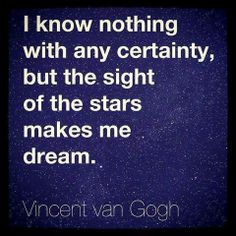
In these long nights the cold often brings clear, cloudless skies. The wonderful Van Gogh quote that I posted a few days ago underscores a virtue of darkness, one we can experience waking or asleep. Dreaming takes us out of the rigors of day to day life and puts us in the realm where ideas and hopes gather. So, the lengthening of the nights increases our opportunity to experience dream time. Whether you believe in Jung’s collective unconscious or not-I do, the rich resources of dreaming are available to us with greater ease when the nights are long and the cold makes sleeping a joy.
It was, too, many years ago when I pushed the notion of transcendence out of my spirituality in favor of immanence, incarnation over a god in the sky. My focus moved to down and in, not up and out. Our inner world is a mystery, a place of fecundity, but also a place often occulted by the demands of the day. When we shift our focus to the night, to the half of the year when darkness grows, we can use that external change as a trigger to lean inside, to find the divine within. If we can make this discovery, the god that we are, we can stiff arm the notion that revelation stopped thousands of years ago.
each birth, always
Every moment of our existence is a revelation, the path of a god, the most fundamental ancientrail of all. No, we are not omnipotent, that’s an illusion created by the idea of transcendence, the need to find validation outside of our own soul. This is the true polytheism, the one that folds its hands, says namaste, bows to that of god in everyone, in every animal, in every plant and stone and star.
When you reach out in love to another person, to a dog, to a crocus blooming in the snow, you bring the finger held out by the white haired floating god in Michelangelo’s Sistine Chapel ceiling. That moment of creation is always, ongoing, a joint effort between and among us all, human and inhuman, animate and inanimate, the cosmic dance of Shiva brought into this mundane world. He or She is not out there, waiting to be called by prayer, but in here, waiting to be called by the quiet, by the joy, by the persistence held in the soul container that is you.
Winter break continues. The identity crisis has passed as I knew it would. The crisis focused on my passive choices, taking the path of least resistance after college and I did do that, giving up my intentionality about career to a socialization experience with clergy-focused fellow students. But. Within that decision to just follow the education I had chosen as a way to get out of a dead end job and an unhappy marriage, I was intentional.
The threads that continued from high school through college, into seminary and afterward during my fifteen years in the church were three: a commitment to political action, a desire for spiritual growth, and a thirst for learning. These same threads continue today though political work has taken a diminished role to the other two. When I met Kate, writing became my chosen focus and added itself to the other three as life long pursuits.
My career, if that’s the right word, has involved expressing in whatever context I’ve found myself, a journey on four ancientrails: act, grow, learn, write. The container has not mattered. And, it still doesn’t. That was the piece I was missing the other day, a brief regression, a going back to pick up something lost. Found.


 After buying a pad of larger rice paper and a larger roll, I picked out a new goat hair brush and a set of Japanese water colors for sumi-e. All the while we were talking and Kristi invited me to come to the Colorado Sumi-e meetings on the last Tuesday of the month. “You know, I use Kraft paper and plain old newsprint for practice.” Huh. Kraft and newsprint is cheaper than rice paper, for sure.

 Last week at mussar we had a fascinating conversation on the essential dourness of both Jewish and northern European cultures stimulated by the Norwegian concern that they had won too many medals in the winter Olympics. In both cases happiness, and by correlation, joy, are suspect. Why are you so happy? What makes you think that will last?


 Hippity hop to the ortho shop. Kate’s got an appointment at Panorama Orthopedics today. Her right shoulder. She can no longer hold things up with her right arm and has to use two hands to put dishes away, sometimes to lift a cup. Annoying and painful. Screws up her sleep, too. She needs some kind of solution, more than likely a shoulder replacement. This is the first step, a consult to see what her options are.
 An interesting week ahead. A session on green burial tomorrow night at CBE. It’s part of a conversation about creating a Jewish cemetery up here in the Evergreen/Conifer area. Oddly, I think I’d like to work on that. The next night, Wednesday, is Tu B’Shevat, the New Year of the Trees. Judaism has a lot of pagan inflections, Tu B’Shevat and Sukkot, a harvest festival at the end of the High Holidays, for example. Looking forward to this one because there’s a seder, too, with seven species of fruit and nuts. I’ll explain more on Wednesday. After the this celebration is another Kabbalah session, more double letters in the Hebrew alphabet.
 Rigel has her second appointment at the Vet Referral Clinic with Dr. Bayliss this Friday, too. I’m excited about it because we’ll get a clearer picture of what’s going on with her. And, it’s not the dire prognosis we anticipated when we took her in a week ago last Friday.
 Kate sewed most of the day yesterday. May not seem like a big deal, but it is. Her energy and her energy management skills are both improving and she’s enjoying life more. I’m so glad to see it.
 Work on online education for Beth Evergreen will continue today, too. Marilyn Saltzman found some mussar sites and I’m going to add Coursera and EDx courses. I also plan to look at other, more general online education sites. So far I’ve focused on online education focused on Jewish studies, but I imagine there are more courses. A fun project.
 Here’s another one, which he titled, Can’t. This is forward art, playing with the notion of found objects and the limits of traditional print making. As often happens with art, this work came out of the struggles he had during the long divorcing.
 I don’t miss the heavy lifting (the literal heavy lifting) for the most part, though part of my time at Beth Evergreen involves setting up for Adult Ed events and I do like moving chairs and tables, that sort of thing. Go figure. But I also need purposeful, intellect engaged physical activity. Different from exercise, which I also need. Cooking is physical and intellectual, also creative.
 The sumi painting I’ve not yet fully engaged, still collecting materials, setting up my work space, learning techniques, but I intend to stay at it as long as it takes to get some proficiency. Precise or artistic hand work has never been my thing, but I’m going to change that, at least to some degree.
 “The more I have looked into the Quest for the Grail, it is clear it is a Western form of Zen. There is no grail, it is understanding that the veil is the mystery of existence, it is nothing, but our interactions with everyone and everything.” Woolly and friend, Mark Odegard

 The Woolly Mammoths have been my companions, fellow pilgrims, on the way to Canterbury. Or, fellow Tibetan Buddhists inch worming their way around the sacred mountain, Meru. Or, my fellow Torah scholars, davening as we read the sacred texts. Or, fellow Lakotas, our skin pierced and tied to the world tree during the Sun Dance. Or, friends traveling through this life together until it ends.
 The solstices mark swings to and from extremes, from the longest day to the longest night, there, and as with Bilbo, back again. Darkness and light are never steady in their presence. The earth always shifts in relation to the sun, gradually lengthening the days, then the nights.
 In these long nights the cold often brings clear, cloudless skies. The wonderful Van Gogh quote that I posted a few days ago underscores a virtue of darkness, one we can experience waking or asleep. Dreaming takes us out of the rigors of day to day life and puts us in the realm where ideas and hopes gather. So, the lengthening of the nights increases our opportunity to experience dream time. Whether you believe in Jung’s collective unconscious or not-I do, the rich resources of dreaming are available to us with greater ease when the nights are long and the cold makes sleeping a joy.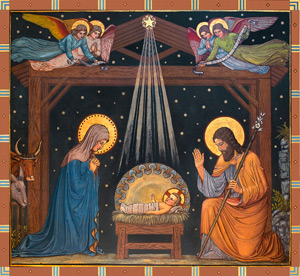
 Winter break continues. The identity crisis has passed as I knew it would. The crisis focused on my passive choices, taking the path of least resistance after college and I did do that, giving up my intentionality about career to a socialization experience with clergy-focused fellow students. But. Within that decision to just follow the education I had chosen as a way to get out of a dead end job and an unhappy marriage, I was intentional.