Category Archives: Art and Culture

Yamantaka for the New Year

Winter                                                              Cold Moon

Existentialism is a philosophy for the third phase. No matter what other metaphysical overlays you may have the tick-tocking grows louder as you pass 65. When this clock finally strikes, it will take you out of the day to day. Forever. Strangely, I find this invigorating.

In case you don’t get it the occasional medical bomb will go off to make sure you pay attention. Last year, prostate cancer. This year, that arthritic left knee. Kate goes in for an endoscopy on January 3rd. She’s waiting approval for a biologic drug to help her rheumatoid arthritis. All these are true signs of the pending end times, but they are not the end itself. These medical footnotes to our lives press us to consider that last medical event.

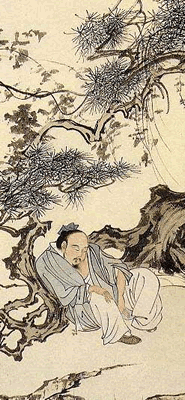
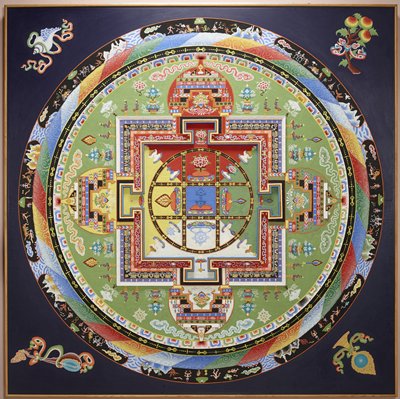
I’ve followed, off and on, the Buddhist suggestion about contemplating your own corpse. I imagine myself in a coffin, or on a table somewhere prior to cremation. This is the work of Yamantaka, the destroyer of death, in Tibetan Buddhism. I’m not a Buddhist, nor do I play one on TV, but I became enamored of Yamantaka while learning about the art of Tibet and Nepal at the Minneapolis Institute of Art.
yamantaka-mandala
yamantaka-mandala

This mandala is a profound work of art on view in the South Asia gallery (G212). Adepts of Tibetan Buddhism use this mandala as a meditation aid to make the journey from samsara, the outer ring representing the snares that keep us bound to this world, and the innermost blue and orange rectangle where the meditator meets the god himself. The impact this work and the portrait of Yamantaka that hangs near it have had on me is as intimate and important as works of art can evoke.

Death is more usual, more understandable, more definitive than life. Life is an anomaly, a gathering of stardust into a moving, recreating entity. Death returns us to stardust. Yamantaka encourages us to embrace our death, to view it  not as something to fear but as a friend, a punctuation point in what may be a longer journey, perhaps the most ancientrail of all. Whatever death is, aside from the removal of us from the daily pulse, is a mystery. A mystery that has served as muse to artists, musicians, religions and poets.

Yamantaka has helped me accept the vibration between this life and its end. That vibration can be either a strong motivating force for meaningful living (existentialism) or a depressive chord that drains life of its joy. I choose joy, meaningful living. Perhaps you do, too.
 

Caution: Not Election Related

Samain                                                                       Thanksgiving Moon

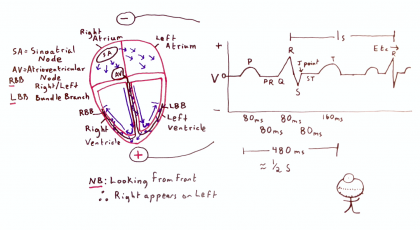
ekgPre-op physical yesterday. EKG within normal parameters. Dr. Gidday walked me through the pre-op questions including one which wondered if I had dementia. When I asked her how I would know, she laughed, slapped my hand, “Everybody says something like that.”
As long as I was in the area, I went over to Health Images and picked up a cd of Kate’s left shoulder x-rays for her visit with the rheumatologist next month. Let no month pass without significant medical moments.

We’re all in a bit of buzz here with a winter storm predicted for tomorrow. It’s not much of a storm but it’s precipitation and we need it. It’s also the first winter storm prediction in November so far. A lot of folks with snow deprivation. Folks on pinecam.com talk about doing their snow dance.

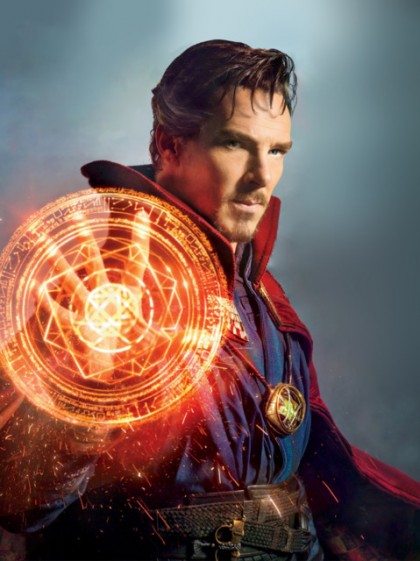
dr-strangeI’ve seen two movies in the past couple of weeks, Dr. Strange and Arrival. I saw Dr. Strange in 3-D. Fantasy and science fiction still have my attention after all these years. Dr. Strange was fun, great CGI, a cast that includes Tilda Swinton and Benedict Cumberbatch, and the Dr. Strange origin story.
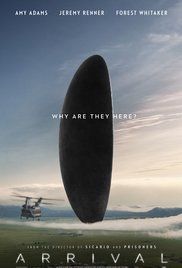
Arrival was a stunner. I’m promoting WWHD. What would the heptapods do? Amy Adams gives a somber, slightly distracted by melancholy performance. She carries the film with her delicate humanity. The story telling is not linear, arrivalneither is the heptapod language. Time is more flexible than we think, malleable. No Randy Quaid flying his jet into the mothership, no Luke flying his fighter into the weak spot of the death star. In fact, no onscreen violence at all with the exception of an explosion, a brief one. Though you won’t understand unless you see it, Arrival is about the power of language.
Today is Kate’s needleworker group and it’s here at our house. Preparations have been underway. More to come this morning: ebelskivers, muffins, cheese, coffee, furniture moving, that sort of thing. My job? Keep the dogs from biting the guests. That means I’ll have them outside or up in the loft most of the day.

Yesterday

Fall                                                                                         New (Thanksgiving) Moon

lycaon_and_zeus___veneziano_by_himera

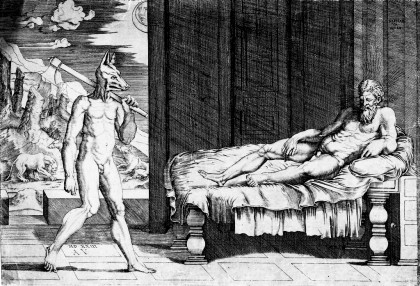
Had a couple of days in a row where the writing didn’t happen. This and that. Now I have to finish my critiques for the writing group Monday night. Critiques are difficult to do well, at least for me. Superior Wolf continues to grow in size though. It’s at 60,000 words now, 2/3’rds of the way toward my goal of 90,000.

We went to see Miss Peregrine’s Home for Peculiar Children. A long movie and a dark one. As friend Tom Crane said, it’s a good movie, not a great one. A bit slow in the beginning and a bit scattered near the end. It has a grandpop as a central, heroic character.

Set in 1943 and 2016 the holocaust is the background. The grandfather is from Poland where, “There were real monsters.” The Home gets bombed by Nazi bombers. The grandfather and his son, a lead character, Jake, can see the Hollows, short for holocaust Ruthie said, but no else can.

Afterward we ate at a Brooklyn style pizza joint.

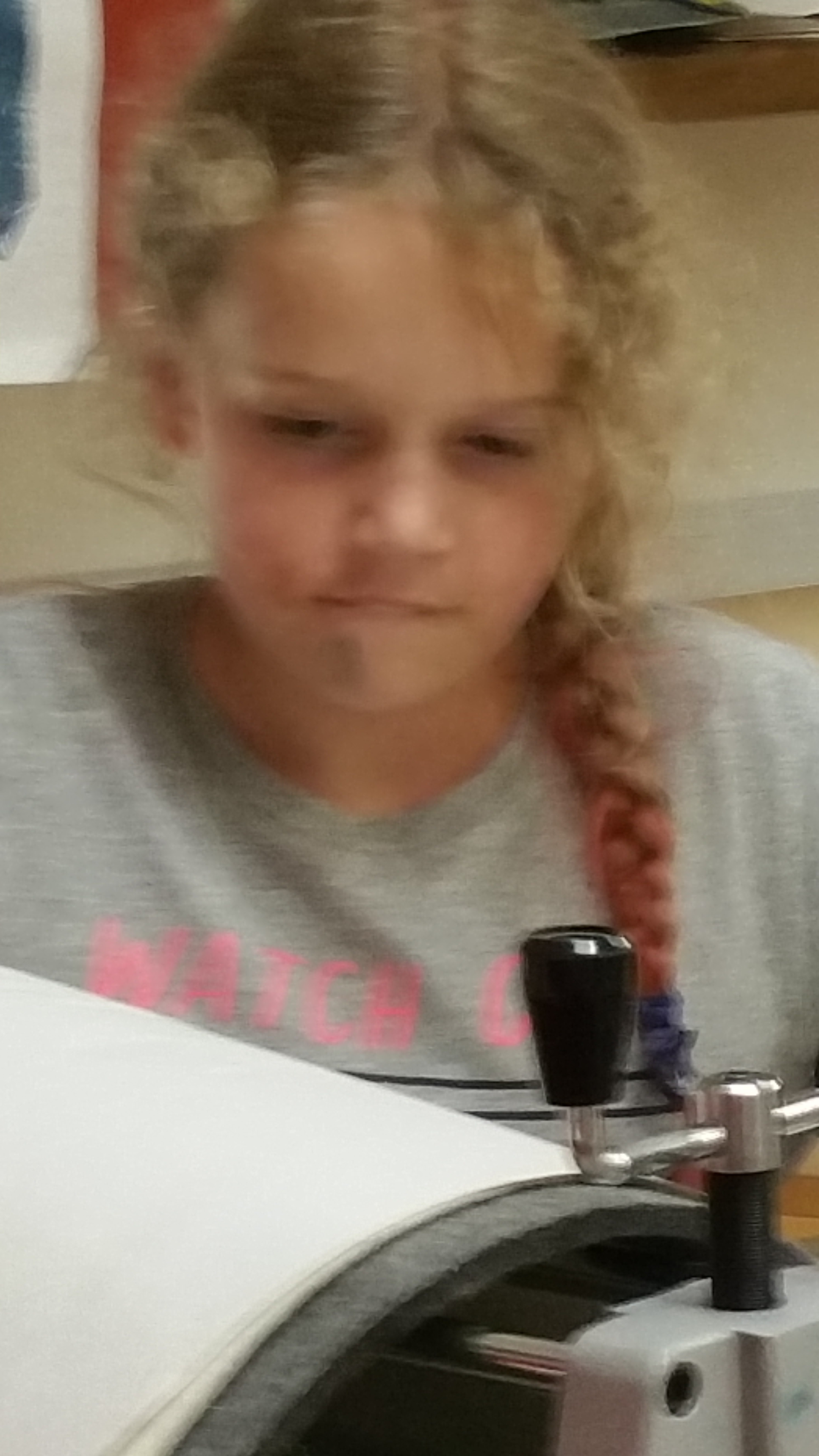
20160903_113024Ruth is filling out her application for the Denver School of the Arts. The application process includes an audition sometime in January. She’s going for fine arts. Ruth is a printmaker, a painter. She draws well, too. I really hope she gets in. She needs peers, other kids with her level of talent, intelligence and curiosity. Otherwise, she gets in trouble. Grandpop did, too.


Gertie is doing well. She’s a rascal and can’t keep her long, prehensile tongue from snaking up onto a plate without permission. Rigel bounds in the car when she can go. Most of the time she sits up in the back, looking this way and that. And Kepler, serious Kepler, watches and listens. Barks and growls. He also does athletic food catches.


Eating Sunshine

Fall                                                                                         Hunter Moon

naftali-bezem-israeli-born-1924

We had two ribeye steaks last night. After Kate and Ruth lit the shabbos candles, I said my piece about the cattle we knew from the meadow. The primary point was to say thank you to the animal who gave his or her life. The words felt clumsy and anachronistic in my mouth, but right. It was a simple moment, not long, but placing us, as brother Mark pointed out, among others from Jain to Native Americans who stop to honor their food.

It particularly felt right juxtaposed against the familiar Midwestern grace, Bless this food to the use of our bodies. The food is all about us. We can safely ignore the real animals, the real vegetables because God made them for us to eat. This is another way in which traditional Christian values deflect believers from the world around them to the world beyond or at least to a source beyond.

This was a pagan ceremony, one that directs us toward the vital and necessary web of interdependence that sustains us all. This particular cow was not a sacrifice to an abstract principle. In fact there was nothing abstract about it at all. This meat came from an animal that lived this year, ate grass that grew this year, nourished by rain that fell this year, breathed oxygen this year. And her essence did not reach the gods through an altar fire, rather it entered into the truest and most significant transubstantiation, the same transubstantiation that occurred when the grass entered her four stomachs, a transubstantiation facilitated by water falling from the mountain skies of Colorado and the true and astounding miracle of photosynthesis. cattle-country-750

Ultimately our meal, not only the beef, but the green beans, the baked potatoes, the pasta and pineapple, the bacon bits and sour cream, was on the table, hecatombs for humans, by the power of nuclear fusion. The sun projects light and warmth into the solar system it holds in its gravitational thrall. On this earth the also miracle of evolution, began among the deep sea vents billowing out sulfur and heat from earth’s own interior, has found a way to embrace Sol, our sacred source of life and light.eat-sunshine (eatsunshine) We eat sunshine. Reimagining faith then must embrace astronomy, evolution, plant biology, animal science, human culture. This embrace occurs most intimately each time we sit down to eat, no matter the culture or religious beliefs represented. We live and move and have our being thanks to the elemental forces driving our local star and the astonishing fact that our planet has shaped its own elements into hands and leaves and hearts and minds able to receive those forces into our own bodies. Quite amazing.

Complicated

Fall                                                                              Hunter Moon

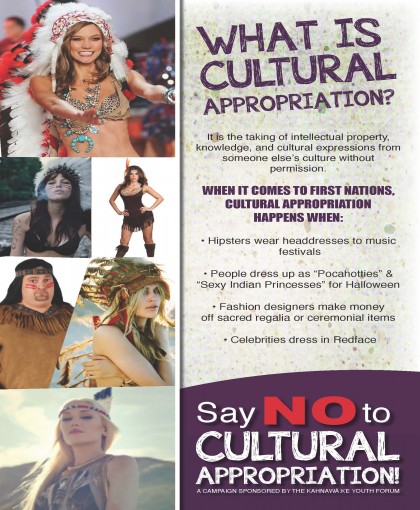
stop-trying-to-be-other-culturesRuth wanted to see the Queen of Katwe, the story of a poor Uganda country girl who became a chess champion. So we did. It was a good movie, not great; but, its almost all black cast reminded me of Luke Cage, which also has an almost all black cast. I have been and am suspicious of the idea of appropriation* as bad, but these two media pieces have made rethink it.
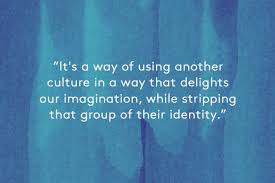
The problem I have with the idea of cultural appropriation is its clash with the aims of art. We could not write books, make movies, script plays, probably even compose music if we did not borrow both from the realm of our personal experience and from the experiential realm of others. At its most fundamental, a man could not write about women, or a woman about men. And, to drill even deeper into this morass, since we can never know the interior life of another, I could not write about anyone else.

Also, to have no characters or roles or melodies that have roots in cultural experiences other than your own would make novels, films, plays and music monuments to cultural isolation. Too, the voice of one culture’s representative commenting on another’s is the stuff of art and provides important information, reflection for our common life as members of a diverse human community.

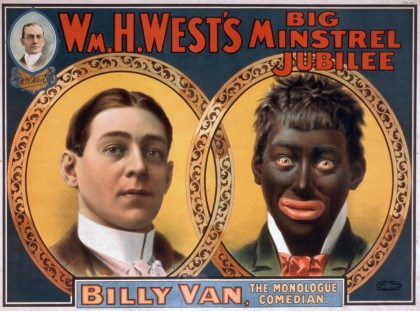
minstrel_posterbillyvanware_editHaving said that I found myself intrigued with both Luke Cage and Queen of Katwe because they had almost all black casts. The voice of the characters, the setting, the narrative drive had an integrity, a cohesiveness different from a white dominated movie or television program. The vulnerabilities, tensions, outright conflicts reflect immersion in Uganda and Harlem. They help open up a world, a way of being, a certain thrownness, as Heidegger put it, that is well outside my white, male, middle class, small town Midwest USA experience.
This presentation of the panorama of black and African characters humanizes them, makes them real, in a way that appropriated roles often cannot. What I’m saying here is that the positive argument stemming from the idea of cultural appropriation, that members of a group or culture can tell their own story best, seems validated for me by this particular movie and this television series.

stop2However. The notion of silos, common in critique of bureaucracies, corporate or governmental or academic, seems to me to apply here, too. Silos are self contained domains, segments of a differentiated work place. The easiest place to see silos is in academe where biology and physics occupy different departments, often different buildings, and usually do not communicate. The internal culture of the military makes it secretive while congress wants transparency, the EPA is a separate agency of quasi-cabinet rank, so it is separate from the department of Agriculture where many matters of critical environmental concern receive attention. The critique is that while the silos differentiate and protect, the world is not so divided. Biology and physics operate within each organism. In the world as it is, Federal Superfund sites, under the administration of the EPA, interact directly with farms and municipalities. There was no bureaucratic barrier between the toxic waste pouring from the Gold King Mine and the waters of the Animas River.
Sorry to have belabored that but my point is this: even if cultural appropriation was to become a norm, it would create its own problems by cordoning off the experience of one culture from another, creating silos of African-American experience or LGBT experience.

It seems to me that the best world would allow and encourage both works by members of all cultures that include and therefore reflect on other cultures and works by and about members of one culture. Let the reader, or the movie goer, or the symphony audience experience the tensions and conflicts. That’s the way to a richer and more intense dialogue among and between all people.

*Cultural appropriation is the adoption or use of elements of one culture by members of another culture.[1]Cultural appropriation is seen by some[2] as controversial, notably when elements of a minority culture are used by members of the cultural majority; this is seen as wrongfully oppressing the minority culture or stripping it of its group identity and intellectual property rights.  wikipedia

Shana Tova

Fall                                                                                 Hunter Moon

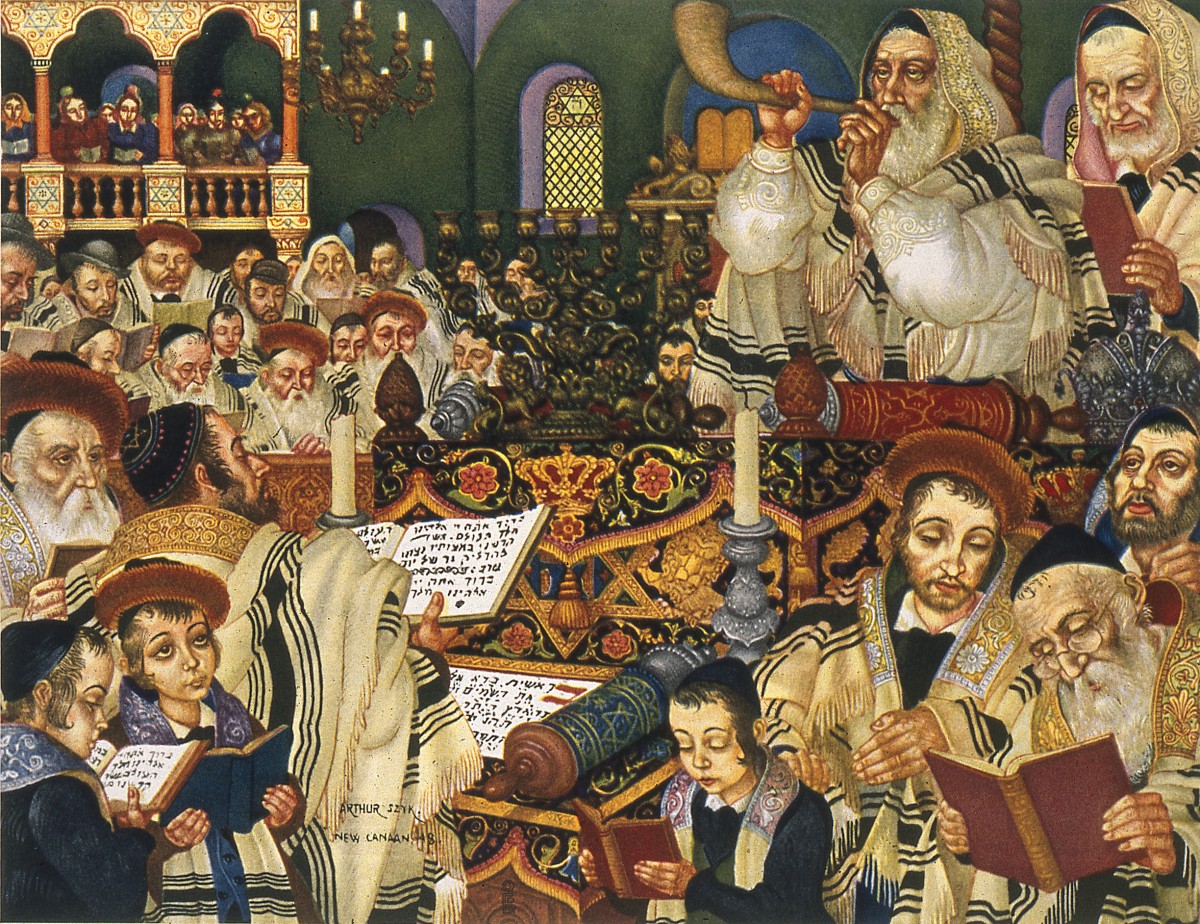
arthur_szyk_1894-1951-_the_holiday_series_rosh_hashanah_1948_new_canaan_ct

The winds howled from Mt. Evans early this morning, signals of a sudden change in the weather. We’re cooling down. The winds blow finished gold leaves into the air, creating bright spots of light fluttering in the shadows of the lodgepole pines. This is the time of that not-so-gentle stripping of the deciduous tree’s leaves. Up here that means the aspens will soon be leafless and slowing down like the calorie gorging bears. Winter, as they say on HBO, is coming.

The sliver moon that rose last night marked the beginning of ten days of High Holy Days for Jews across the world. Today is Rosh Hashanah, the Jewish New Year. Shana tova! Happy new year in Hebrew.

Kate, Jon and I went to the service at Beth Evergreen last night. It was a joyful event with lots of singing punctuated by readings from the prayerbook. Occasionally certain men would bow. Others had prayer shawls, many wore yarmulkes, many (including me) did not. It was not fancy dress, though some were dressed up, including me.

rosh-hashanah

The service commemorates the creation of the world and a Jewish belief that God must continuously recreate the world. This opens up the possibility of a truly new world being formed at the new year just as it opens up the possibility of a truly new you. So, this is a moment of celebrating the coming of the new year, 5777, and the opportunity to shed last year’s skin and to redecorate.

In this case I reinterpret God as the creative principle in the world, along the lines of process metaphysics, a notion made popular by Alfred North Whitehead. If we lean into that creative principle, we can reshape ourselves and our environment. The actual execution of such changes are made much easier by life in community, especially a beloved community. That’s the potential power of a congregation.

Having all this come while the sky is bright blue, while the aspens are showing what they’ve done with their one wild and precious life, while the crispness of autumn begins to change the nights, makes the Great Wheel and the cycle of the Jewish calendar sync up.


Printmaking and a Dead Elk

Lugnasa                                                                       Harvest Moon

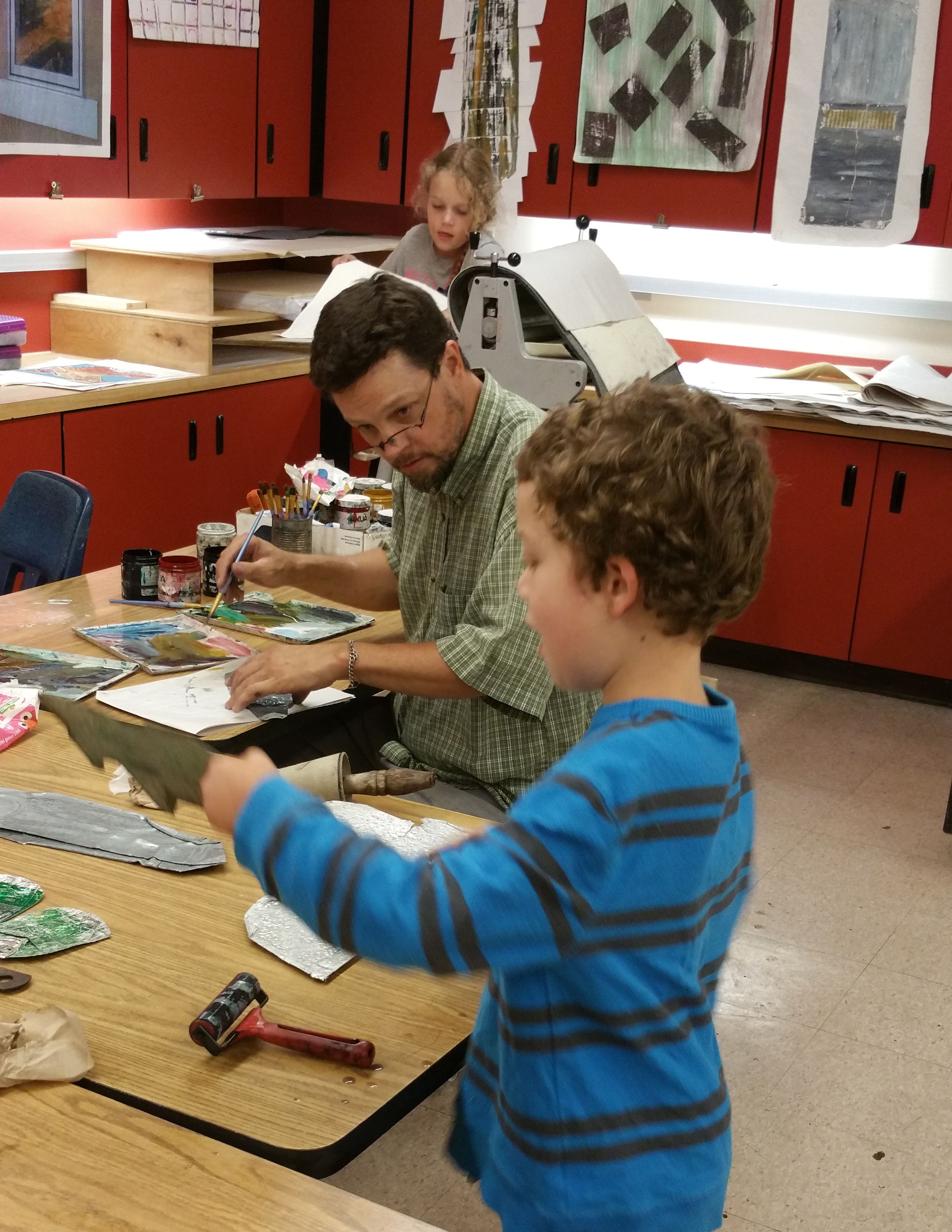
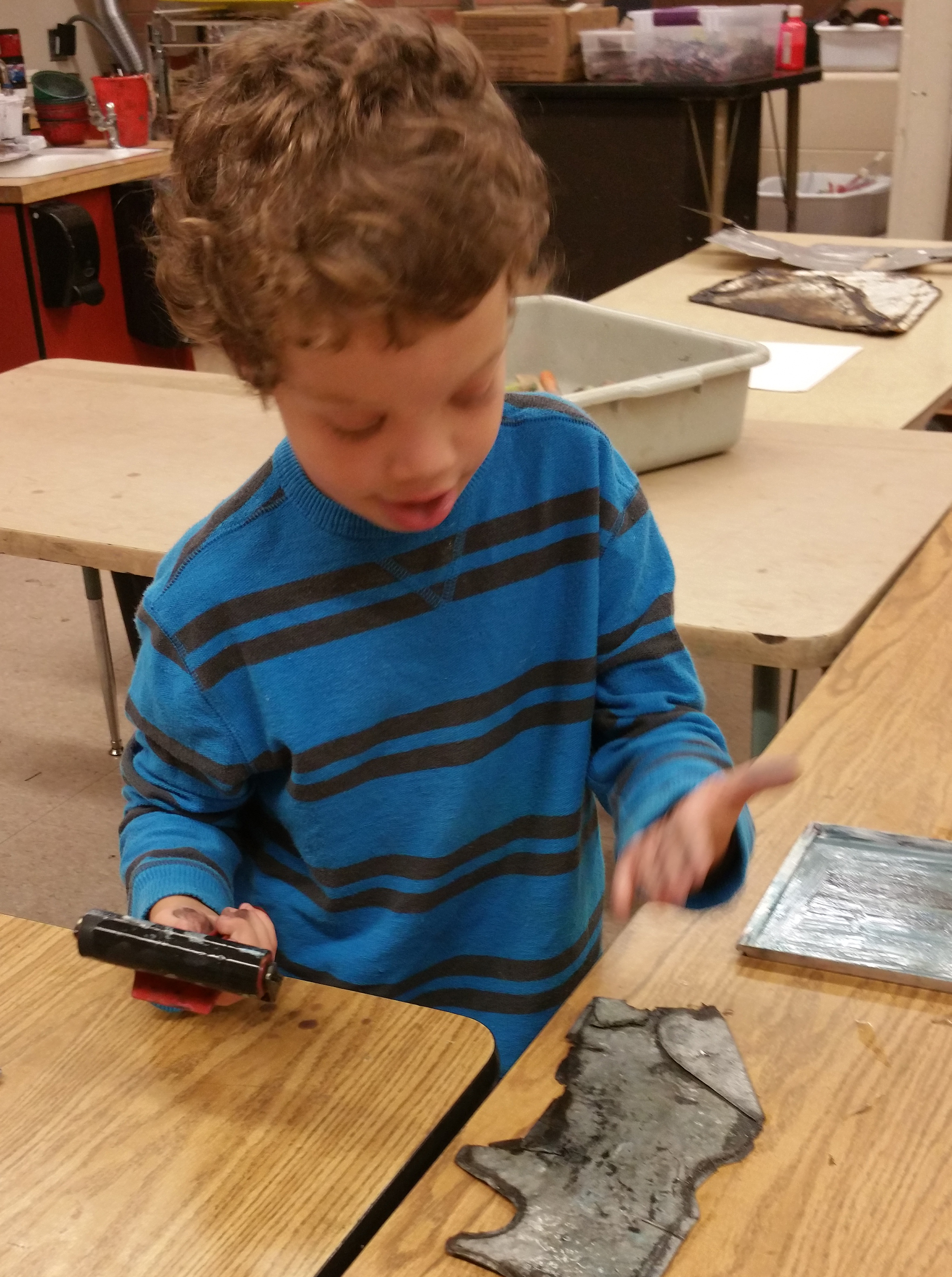
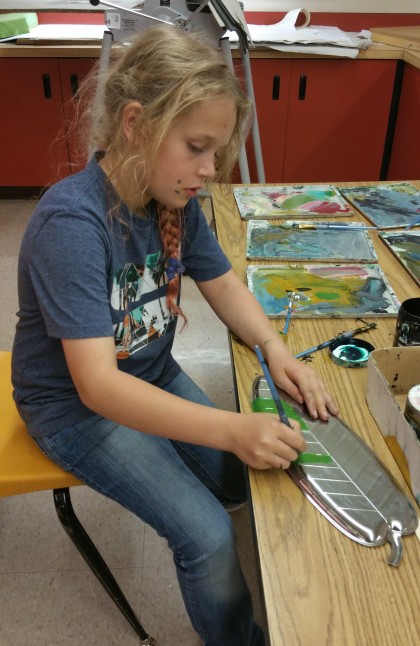
20160907_180656Spent another evening at Montview Elementary with Jon, Ruth and Gabe. We ate a light supper of foods selected at King Sooper (grocery store chain here), then began to make more prints. Ruth has gotten into the spirit of found objects used as surfaces for print making. She bought some things at Goodwill to print: a leaf shaped metal serving dish and a small metal kitchen utensil that looks surprisingly like a giraffe when inked. I printed another spoon, gray-white this time. Gabe made wheeled objects with something like tinker-toys.
The whole divorce matter, which moves like boulders pressed underneath a glacier, slowly and with a lot of friction, has begun to move into more hopeful territory. But the pace. Lawyers love proposals and counter proposals. Sometimes it feels like the lawyers have oppositional defiance disorder. If you say yes, I say no. If you say up, I say down. Very frustrating. Not to mention expensive. Still, the glimmers of a positive solution appeared yesterday.

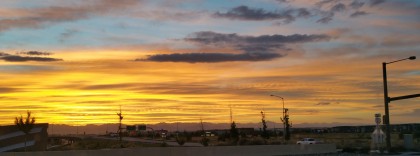
20160907_192837After the printmaking, Jen picked up Ruth and Gabe. I headed over to I-70, turned onto it going west and drove into this amazing sunset. The mountain silhouette in the evenings often looks like a Potemkin village, a prop set against the backdrop of a falling sun. This night it was something.


Kate was in Evergreen at the Beau Thai restaurant, waiting on me for a ride home. She had completed her first class in an 18 week Hebrew class at Beth Evergreen. After I picked her up, we got on the familiar Colorado 74, one of two main highways, 73 and 74, that intersect in Evergreen. At the base of a long hill there were three fire trucks and a police car parked in the middle of the road.

bull with water lily September 2015 in Evergreen

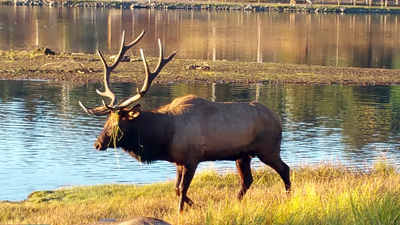
The elk crossing sign had been flashing yellow as we descended. This is the month of the rut so elk behavior is not as predictable as at other times. When we moved around the nearest fire engine, a yellow and chrome vehicle from Evergreen Fire, I looked to my left and saw two black helmeted, yellow uniformed fire fighters bent over, pulling. They had a large elk doe by the feet and were dragging her away from a Toyota Rav4 that had hit her. Shattered safety glass dotted her path across the highway.

Sad.


Into This World We’re Thrown

Lugnasa                                                                        Superior Wolf Moon

mattisPolitical correctness. What a genius it was who invented that phrase. An oxymoron that sounds like a platitude while really functioning as a self-imposed conservative censor. Let’s be clear, there is no such as the politically correct. There are only those cultural observations and changing traditions that reflect a certain political perspective. So, in that sense, I agree with the conservatives.

(The danger in not knowing yourself and being willing to impose your perceptions. Taken to the extreme here.)

When I react negatively to a woman being called a girl, to a black man being called colored or nigger, to a lesbian or gay being called queer (although that community has embraced this epithet), it is precisely my point that the world has moved on. Find people who aren’t like your idea of normal as people nonetheless. Am I right, or correct, in this perspective. I certainly think so. Do you think so? Maybe not. If not, I’m interested in your rationale for your language.

Now, having said that, I find the University of Chicago letter to its incoming students both unobjectionable and positive. Trigger warnings, intellectual safe places and sanctioning speakers on campus are the precise opposite of what colleges and universities are about. If you go to college and don’t find yourself challenged, embarrassed, overwhelmed, exhilarated and scared, you’re not only not getting your money’s worth, you’re being actively cheated.

atlantic-baby-2No matter where you come from you arrive at the beginning of a college education with a set of biases and conceptual short cuts framed by the world into which, as Heidegger put it, you were thrown. This is neither a negative or a positive, it just is. A university education is about pulling those blinders off so you can see the whole street. This is the moment when we learn that our way is not the only way, that our understanding about religion or agriculture or class or gender or race is not shared by 100% of earth’s population. In fact, it’s shared by only a tiny percentage of the seven billion or so alive right now. Again, that’s neither negative or positive, it just is.

We also learn that the perspectives and biases of everyone alive right now are not the end of it. Over time, that is both historically and pre-historically, humanity has entertained a plethora of forms of government, religious practice, kinship patterns, artistic conventions, military custom and all other forms of human activity that can be imagined.

The only way to enter the human experience fully is to learn a reflexive humility when confronted with difference. The only way to gain that humility is to learn yourself inside and out, to know why you view the world the way you do. And the only path to self-knowledge is a gauntlet of hits to your self-complacency.

Zhzi44College is the safe space. It’s not safe in terms of no discomfort. It’s not safe in terms of reinforcement of your cherished beliefs. It’s safe in terms of its recognition that we all need to learn who and what we are within the context of the great body of human knowledge and within the vast sea of living humans. It’s safe in that it provides a place where that is the purpose of daily life.

This is, btw, the soundest argument I can make for the humanities. While science may challenge your understanding of the physical and natural world, it will not, except in rare instances, challenge your mores, your prejudices. It will also not train you in the vast number of options of how to be human, or the vast number of options of how we can be human together. No, for those learnings you need art, literature, philosophy, music, history, political history. Where do you find those? Yes, in a college space.


Making Things

Lugnasa                                                                      Superior Moon

As the weather cools down, the work level goes up for this former Minnesotan. One thing Kate and I have always agreed on is that cool is better than hot. How much cool, not always, but temps trending down, but not up? Delightful. And so it is here right now. 40 this morning at 7:00 am. Orion, too, rises with the morning sky, bringing with him the change toward fall.

Yesterday was busy. Writing: ancientrails, Superior Wolf, Reimagining Faith. Workout. Into Denver for Wednesday dinner and art with the grandkids. After eating at Minnesota’s own Famous Dave’s restaurant, we went back to Montview Elementary and made prints.

Here are a few photos of the experience.

20160824_185806

montview

jon's found objects
jon’s found objects
mointview gabe
Gabe inking up an object to print
Ruth printing her spoon

A Shadow Mountain Salute to Ode

Lugnasa                                                                 Superior Wolf Moon

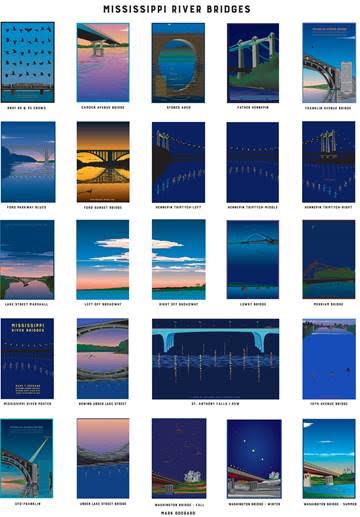
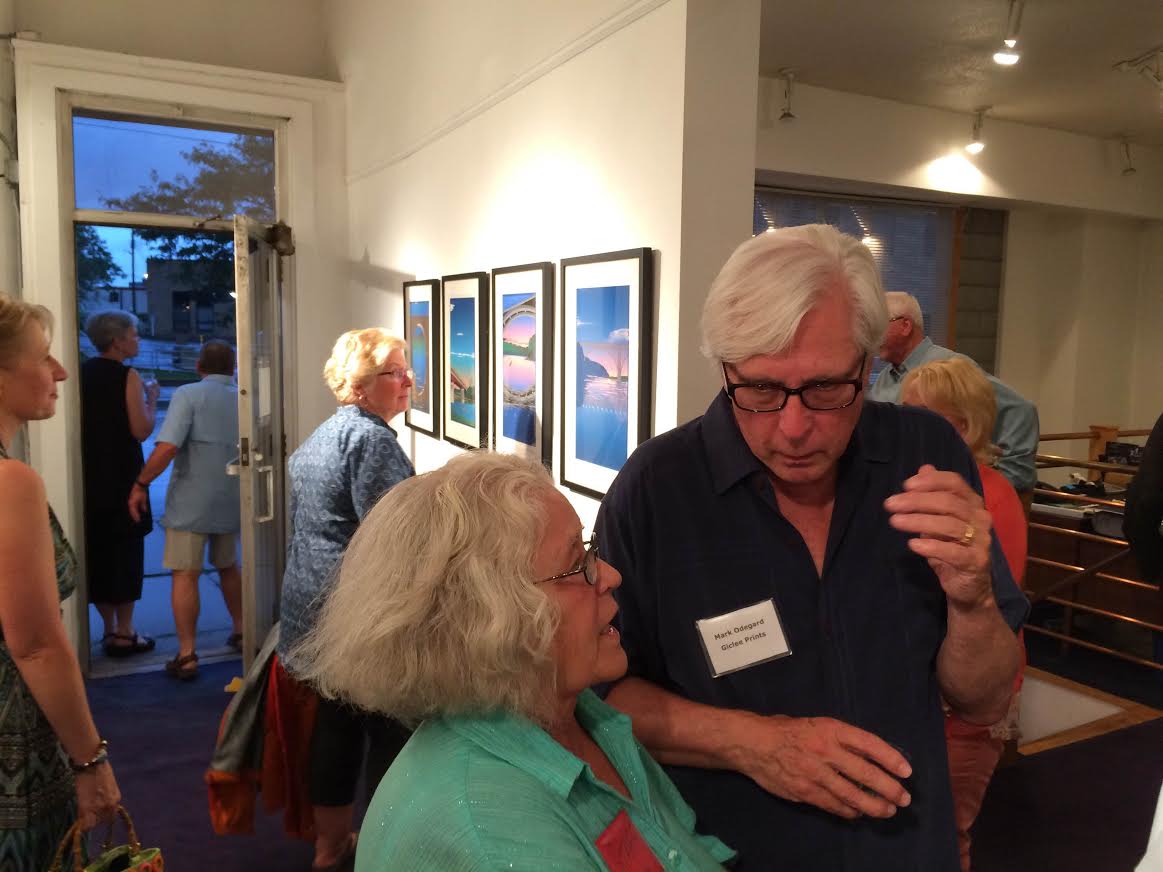
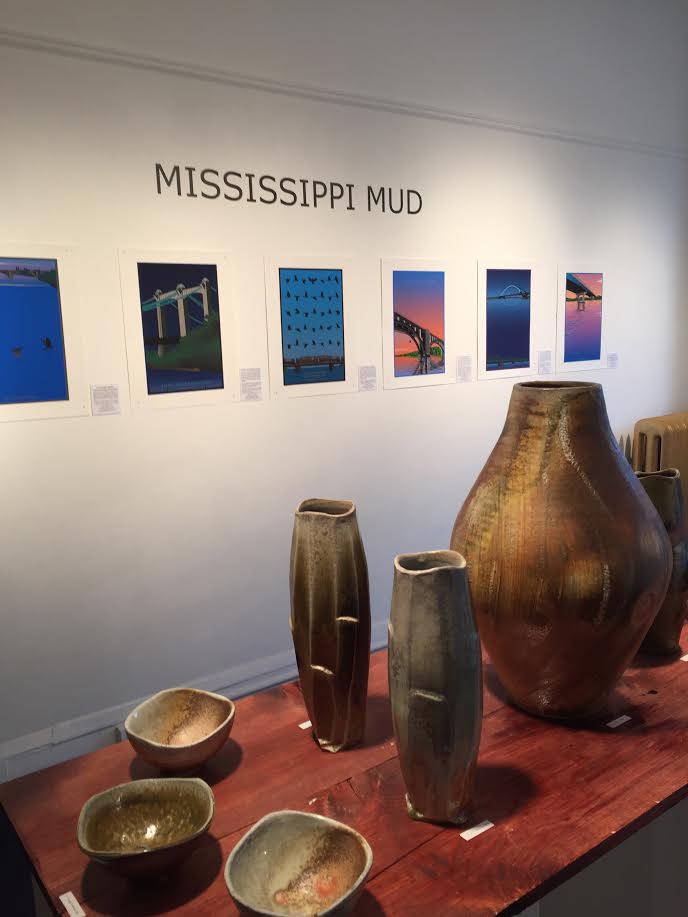
Proud of my buddy Mark Odegard who conceived of this project last year and saw it through to the opening Friday, August 19th.

At the Raymond Avenue Art Gallery in St. Paul until September 23rd.

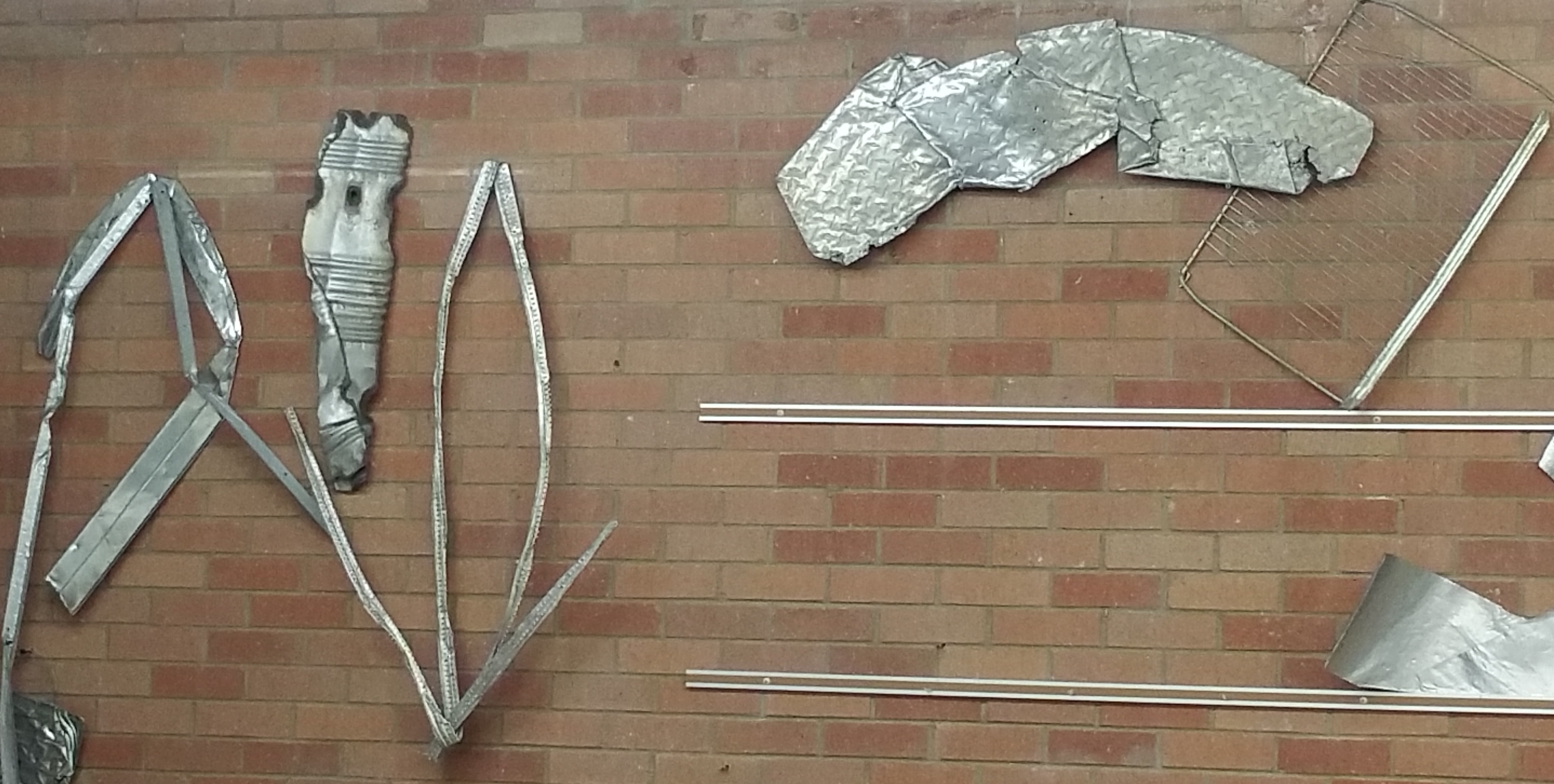
ode7ode6ode5ode4

Mark Odegard lives in Minneapolis, received his BA at the University of Minnesota in sculpture. He also attended the LA Art Center to study design and typography. He volunteered for the Peace Corps in the Fiji Islands, creating museum exhibitions of traditional artifacts. He returned and became head of design at the Science Museum of Minnesota for 20 years. He was active in the American Institute of Graphic arts, served as president, and started Insights Lecture Series at the Walker Art Center. In the last 15 years he has worked in Asia at the National Science Museum of Thailand, taught art and design at Bemidji University, and worked as a lockman at Lock and Dam #1.​